

FiiO SP5 black (set of 2)



Specifications and features


Overview
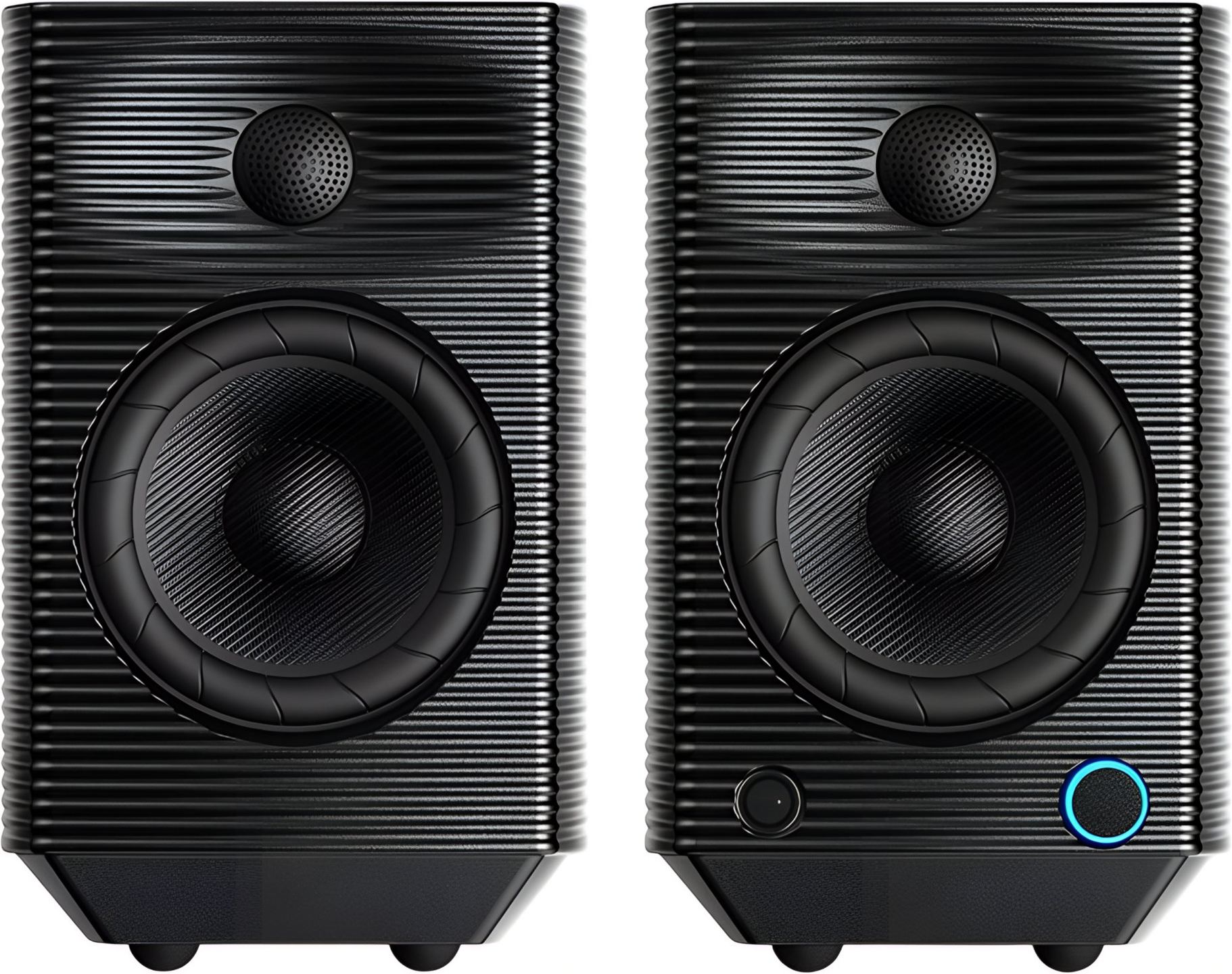
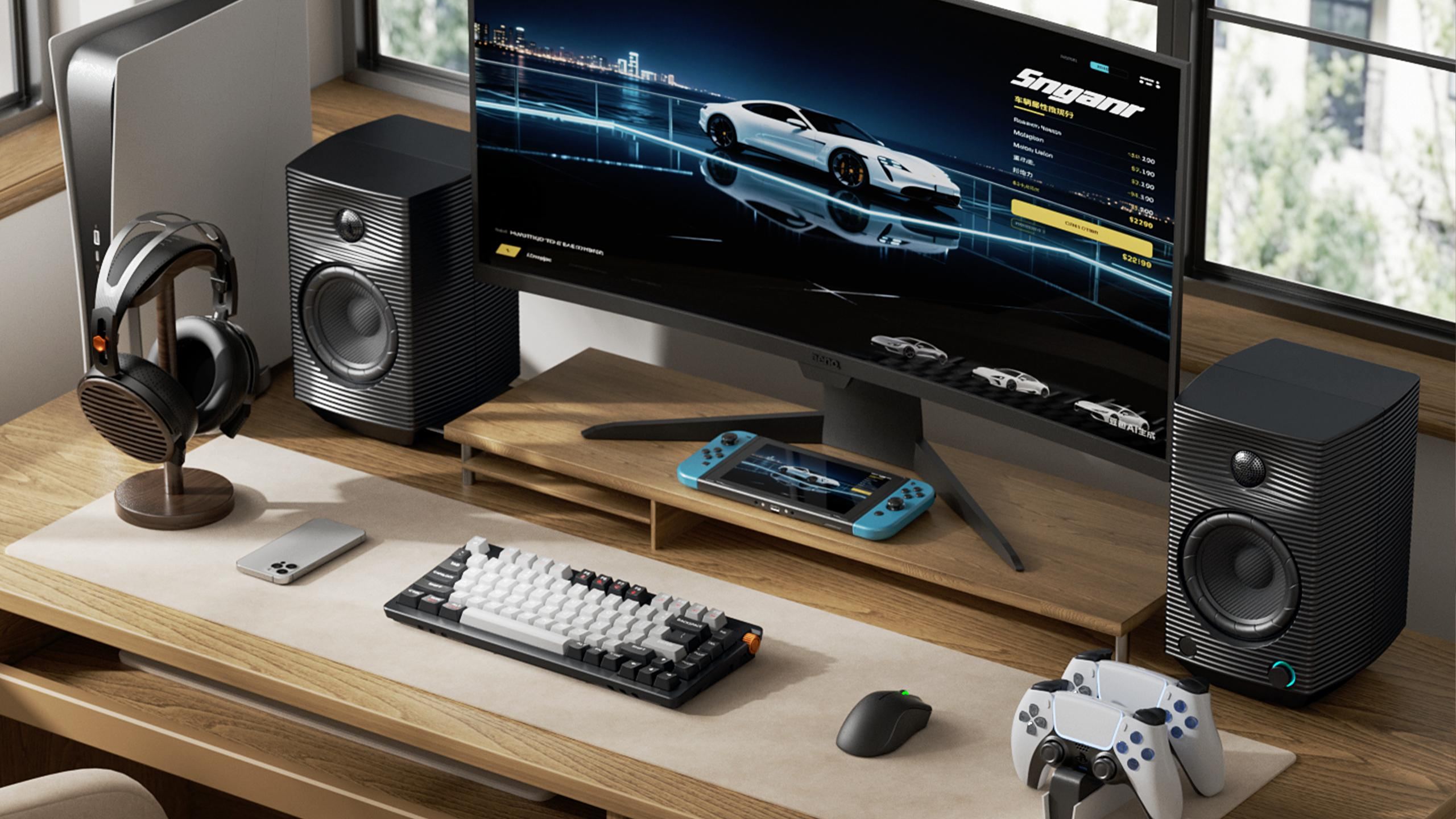
FiiO’s SP5 marks the brand’s move upmarket in the world of powered nearfield speakers. Two years after the SP3, this new model adopts a 13.3 cm bass driver with a composite diaphragm inspired by Continuum technology, amplification raised to 120 watts RMS per speaker, and expanded connectivity notably including a balanced XLR input. Designed for desks and small listening rooms, these bi-amped speakers aim to deliver precise, detailed sound thanks to their dual ESS ES9068AS DACs and fully balanced architecture.
A metal build engineered for acoustics
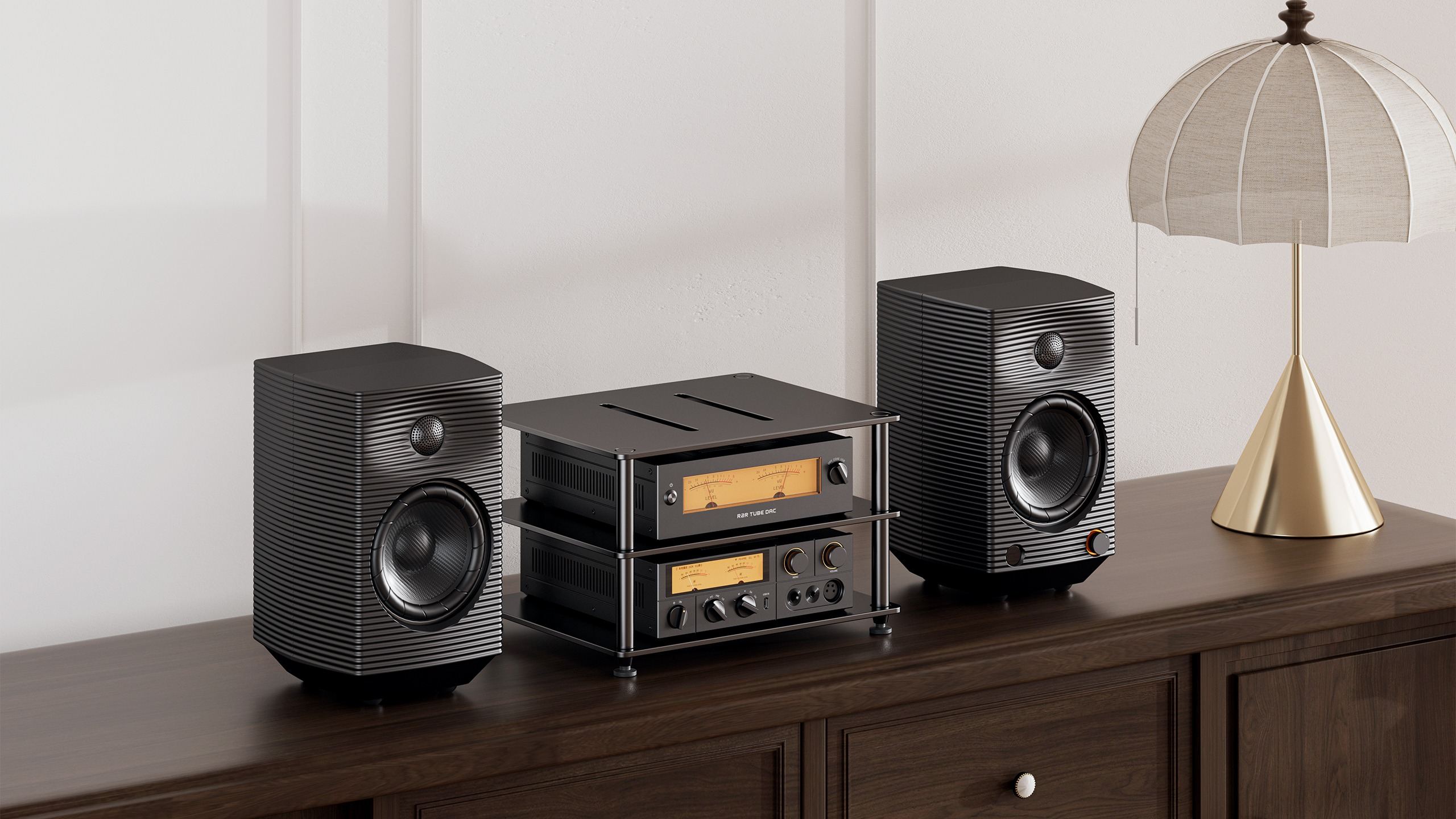
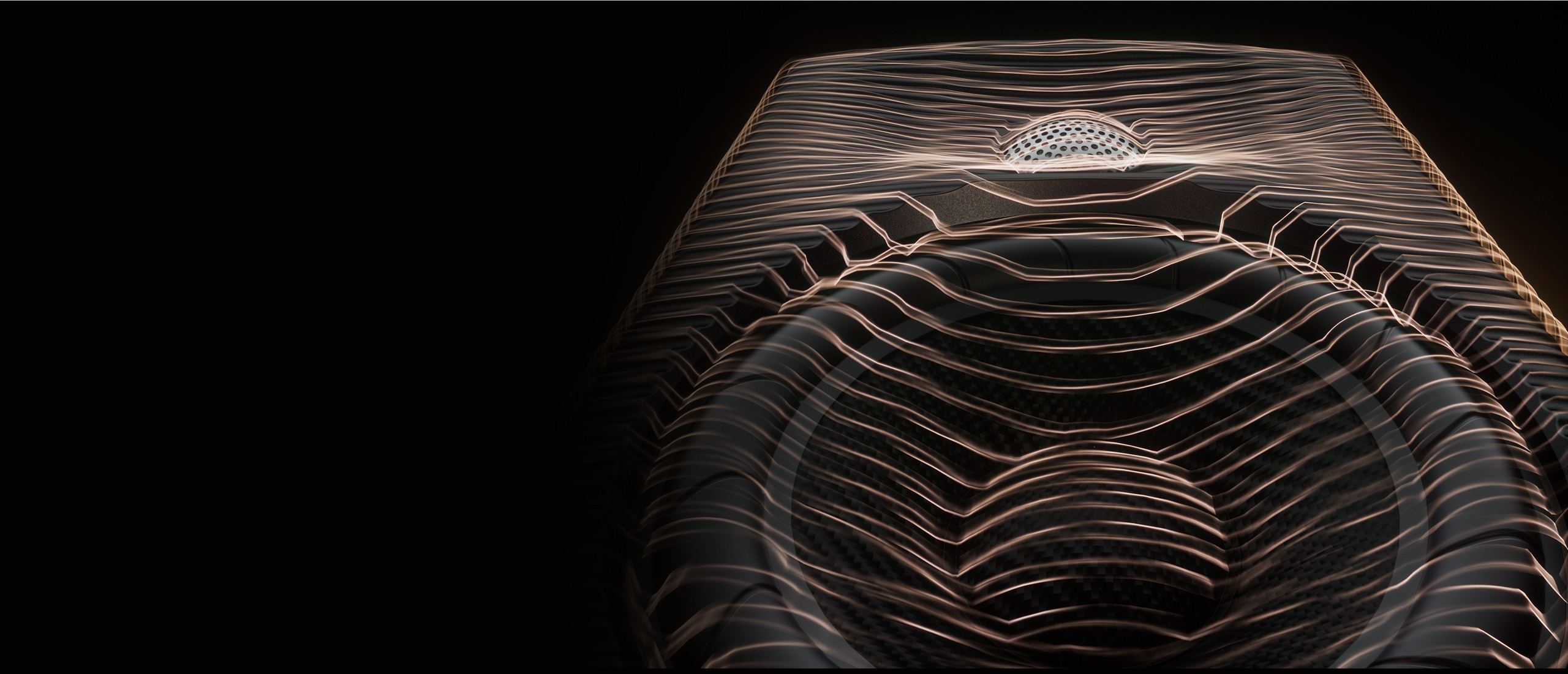
Each SP5 speaker begins life as a 10-kilogram aluminum block melted at 650 °C and then die-cast. This manufacturing process, more costly than panel assembly, yields a one-piece enclosure with remarkable rigidity. The side panels feature horizontal grooves that are not merely decorative: they serve a dual purpose by reinforcing the structure and diffusing sound waves to limit unwanted resonances.
The SP5’s slightly curved sides follow strict acoustic principles. This curvature is designed to disrupt standing waves that would otherwise form in a perfectly rectangular volume. The rear bass-reflex port adopts a horn shape, a technical solution aimed at improving low-frequency dispersion while limiting air turbulence. The drivers are positioned at a calculated angle to ensure time and phase alignment, a key element for coherent imaging in nearfield listening.
At the base of the cabinet, an RGB LED strip provides visual feedback on the selected source. The indicators change color according to the active input, making it easy to identify the playing signal. This feature can be disabled via the FiiO Control app for those who prefer a discreet installation.
Transducers inspired by high-fidelity audio
The SP5’s bass driver measures 13.3 cm in diameter, 4 cm larger than the one used in the SP3. Its diaphragm uses a fiber composite inspired by the Continuum material found in Bowers & Wilkins’ 700 Series. This composite weave aims to achieve high rigidity while keeping mass in check, enabling a fast transient response. FiiO’s engineers optimized the entire transducer chain: the magnetic circuit, the cone surround, and the voice coil have all been refined to combine control and dynamics in the bass and midrange.
The 2.54 cm soft dome tweeter combines a silk composite base with ferrofluid cooling. This technical solution, borrowed from high-end drivers, helps dissipate the heat generated by the voice coil during sustained operation. The tweeter also includes a large rear cavity and an internal magnetic structure. The development team designed a flexible hemispherical structure inside the dome to absorb unwanted harmonics emanating from the back of the diaphragm. This oversized rear cavity allows the tweeter to extend down to 800 Hz, giving it unusually wide latitude for a high-frequency driver.
A precisely engineered waveguide controls the tweeter’s directivity to optimize nearfield listening. Combined with the horizontal grooves etched around the driver, this setup enlarges the sweet spot and enhances soundstage perception, even when the listener is not perfectly on-axis.
Four independent amplification channels
The SP5 adopts a configuration uncommon in its segment: each speaker has its own dedicated 120-watt power supply and a four-channel amplification system. This architecture separates the power supplies for the left and right channels, reducing crosstalk and ensuring stable energy distribution. Both the master and the secondary speaker benefit from this symmetrical design.
Amplification is based on Texas Instruments TPA3116D2 Class D modules. Each bass channel receives 60 watts while each tweeter gets 20 watts. This active bi-amping allows each transducer to operate with its own power stage, avoiding compromises inherent to passive crossovers. The amplifiers include protections against short circuits, overheating, and voltage fluctuations, with the processor alerted in case of overload to prevent damage.
For the SP5, FiiO developed a high-power switching power supply with multi-stage filtering. The internal architecture converts the single source into a dual symmetrical supply via a transformer resonance system, delivering clean, stable energy to the sensitive circuits of the input stage. This design aims to eliminate DC-DC noise at the source, contributing to the signal-to-noise ratio and a clean background.
A complete integrated digital chain
Unlike the SP3, which only offered analog inputs, the SP5 incorporates two ESS ES9068AS digital-to-analog converters, one for each channel. This pair of DACs, arranged in a balanced architecture, handles digital signals from the USB-C and Bluetooth inputs or external digital sources. Volume control uses an NJW1195A chip, a component renowned for precision. With total harmonic distortion of 0.0003% and a 100 dB signal-to-noise ratio, this digital volume controller preserves transparency across the full adjustment range.
The front-mounted rotary encoder provides smooth level adjustment without loss of resolution. This type of electronic control, as opposed to traditional analog potentiometers, preserves signal integrity at all listening levels. Each input retains its own volume setting in memory, avoiding repetitive adjustments when switching sources.
Wired and wireless connectivity
The SP5 features a balanced XLR input, also compatible with 6.35 mm TRS, addressing one of the requests from SP3 users. This balanced connection reduces noise pickup during signal transmission and supports longer runs without degradation. It allows pairing the SP5 with FiiO’s R7 or R9 network players in a fully balanced setup from source to amplification.
Stereo RCA and 3.5 mm mini-jack inputs carried over from the SP3 make it easy to connect various sources: computers, portable players, external DACs. The USB-C input accepts digital signals and can power certain compatible devices. A 12 V trigger input enables automatic power-on of the speakers in sync with other equipment, a popular feature in studio installs or multi-source setups.
The Bluetooth 5.1 module is built around a Qualcomm QCC5125 chip. The SP5 supports LDAC and aptX Adaptive for high-resolution wireless transmission, as well as aptX HD, AAC, and SBC to ensure compatibility with all devices on the market. An infrared remote control is included, offering remote adjustment of volume, source selection, and basic settings.
Fine-tuned sound customization
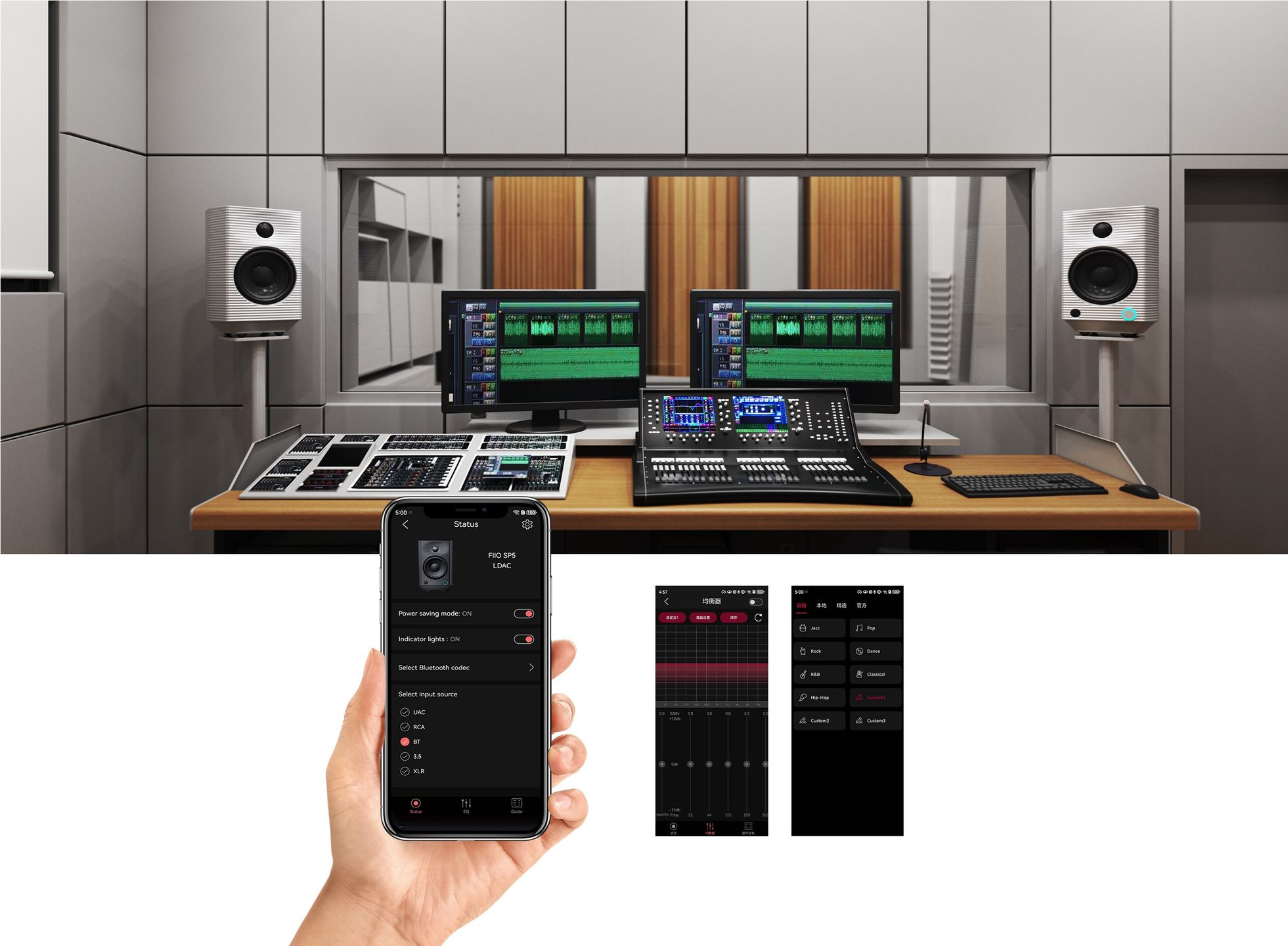
The FiiO Control app, available for iOS and Android, centralizes all SP5 settings. The 10-band parametric equalizer allows precise frequency response adjustment to suit room acoustics or listening preferences. Unlike a graphic EQ with fixed bands, this parametric tool lets you individually set the center frequency, gain, and bandwidth (Q) for each intervention point.
Three physical switches on the back of the main speaker provide quick tweaks. Bass can be boosted by 0, +3, or +6 dB, while treble adjusts in three positions: -2, 0, or +2 dB. Low-frequency extension can be set to either 50 Hz or 60 Hz. These hardware settings let you quickly adapt the speakers to their placement without using the app.
An intelligent standby mode reduces power consumption when the speakers receive no signal. They wake instantly upon music detection. This feature, enabled by default, can be disabled in the app for those who prefer to keep the speakers constantly powered.
Built-in storage for standalone playback
The SP5 includes 8 GB of internal memory and a microSD slot supporting cards up to 256 GB. This functionality turns the speakers into a standalone player, capable of playing locally stored high-resolution audio files without needing an external source. PCM up to 32-bit/768 kHz and DSD are supported, as is high-resolution wireless audio via Bluetooth.
Evolution from the SP3
The move from SP3 to SP5 brings several substantial improvements. The bass driver diameter increases from 8.9 to 13.3 cm, enabling deeper low-end: frequency response now extends down to 50 Hz versus 65 Hz on the SP3. Total power per speaker doubles, rising from 40 watts (30 W + 10 W) to 80 watts (60 W + 20 W) per channel.
Connectivity is significantly enhanced with the addition of the balanced XLR/TRS input, USB-C, and the integrated digital-to-analog conversion. The SP3 only offered analog RCA and mini-jack inputs, limiting versatility. The SP3 BT version later added Bluetooth and optical/coaxial digital inputs, but still didn’t reach the SP5’s level of integration.
The move to Bluetooth 5.1 and the Qualcomm QCC5125 chip improves wireless connection stability. Weight and dimensions increase accordingly: each SP5 weighs about 10 kilograms versus roughly 3 kilograms for the SP3, reflecting a far more substantial build.
Technical specifications
Acoustic transducers
- Woofer: 13.3 cm Continuum fiber composite cone (inspired by the B&W 700 series)
- Tweeter: 2.54 cm soft silk composite dome with integrated waveguide
- Magnetic fluid cooling for improved power handling
- Total power: 120 W RMS
- 60 W × 2 for the woofers
- 20 W × 2 for the tweeters
Electronics and amplification
- Texas Instruments TPA3116D2 Class D amplification
- Dual ESS ES9068AS DAC (one per channel)
- Fully balanced end-to-end design
- NJW1195A volume control
- THD+N: 0.0003%
- SNR: 100 dB
- Independent 120 W power supply per speaker (main and secondary)
- High-power switching power supply with multi-stage filtering
- Smart standby mode can be disabled via the app
Connectivity and inputs
- Balanced XLR (XLR3 / 6.35 mm TRS)
- Stereo RCA
- Bluetooth 5.1 (Qualcomm QCC5125)
- Codecs: LDAC, aptX Adaptive, aptX HD, AAC, SBC
Audio settings
- Frequency response: 50 Hz – 20 kHz (extendable)
- Bass boost: 0 / +3 / +6 dB
- Treble: -2 / 0 / +2 dB
- Bass extension: 50 Hz or 60 Hz
- 10-band parametric equalizer via the FiiO Control app
Construction and materials
- One-piece aluminum cabinet cast at 650 °C (approximately 10 kg per speaker)
- Curved walls and horizontal fins to limit standing waves
- Anti-resonance structure
- Furukawa oxygen-free copper power cords (3 × 1.5 mm², 24-karat gold-plated plugs)
- Materials: aerospace-grade aluminum and Furukawa copper
- Optimized waveguide for a wide soundstage in nearfield listening
- Time and phase alignment for precise imaging
Control and features
- FiiO Control app (Android / iOS)
- Management of inputs and Bluetooth codecs
- Bass and treble settings, bass extension
- Activation of automatic standby mode
- 10-band parametric equalizer
- RGB backlight control
- 8 GB internal memory and microSD slot (up to 256 GB)
- Hi-Res Audio and Hi-Res Wireless compatibility
Box contents
- 2 FiiO SP5 active speakers (main and secondary)
- 2 Furukawa oxygen-free copper power cords, 24-karat gold-plated
- 1 XLR audio cable
- 1 inter-speaker link cable
- User guide and documentation
Frequently Asked Questions
What’s the main difference between the FiiO SP5 and the SP3?
The SP5 stands out with a larger bass driver (13.3 cm versus 8.9 cm), doubled power (80 W versus 40 W per speaker), richer connectivity including balanced XLR and USB-C, and dual integrated digital-to-analog conversion via ESS ES9068AS DACs. The build is also much more substantial, with a 10 kg cast aluminum cabinet versus 3 kg for the SP3.
Do the SP5 require an external amplifier?
No, the SP5 are fully powered active speakers. They integrate all necessary stages: digital-to-analog conversion, amplification, and active crossover. Simply connect them to an audio source (computer, network player, smartphone via Bluetooth) and to power. The main speaker drives the secondary speaker via an included dedicated cable.
Can the SP5 be used in a home studio for monitoring?
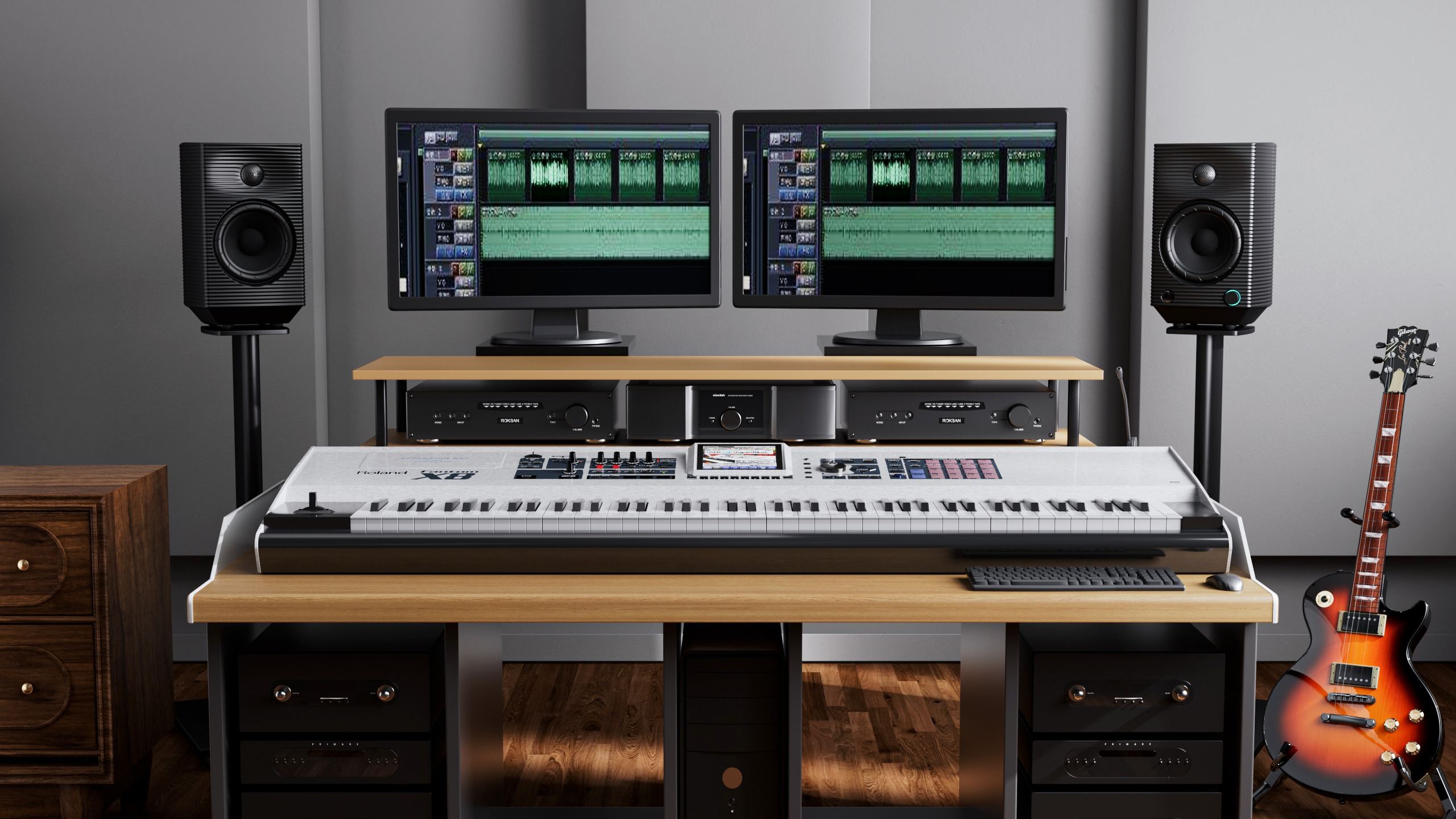
The SP5 offers features suited for monitoring: extended 50 Hz to 20 kHz frequency response, balanced XLR input, 10-band parametric EQ for room correction, and a trigger input for sync with other gear. Their design targets neutrality and precision. However, their compact format and positioning make them better suited to small production spaces than full-size professional studios.
How do the SP5’s bass and treble settings work?
Three physical switches on the back of the main speaker provide quick adjustments: bass can be boosted by 0, +3, or +6 dB; treble adjusts by -2, 0, or +2 dB; low-frequency extension toggles between 50 Hz and 60 Hz. For finer corrections, the FiiO Control app offers a 10-band parametric EQ, letting you target any frequency with control over gain and bandwidth.
- Eco-contribution of €2.58 included in the sale price.
- Manufacturer reference: FIISP5BK
- GTIN / EAN: 6953175721215