Cayin N6 III C201
Specifications and features


Overview
The Cayin N6 III C201 is a modular digital audio player that continues the N6 II concept. This Android DAP is equipped with a Snapdragon 665 processor, 6 GB of RAM, and a second-generation swappable motherboard system, allowing you to tailor the sound signature. The included C201 board uses eight Cirrus Logic CS43198 DACs in a full differential parallel matrix, a configuration designed to reduce distortion and increase sound density.
A modular system that evolves with the times
The N6 III retains the modular principle introduced with the N6 II in 2019, allowing you to replace the entire digital-to-analog conversion and amplification circuit. This approach differs from non-upgradable all-in-one players. The N6 II offered six different motherboards during its lifecycle, including the R01 with an R-2R ladder, used in a special Titanium edition.
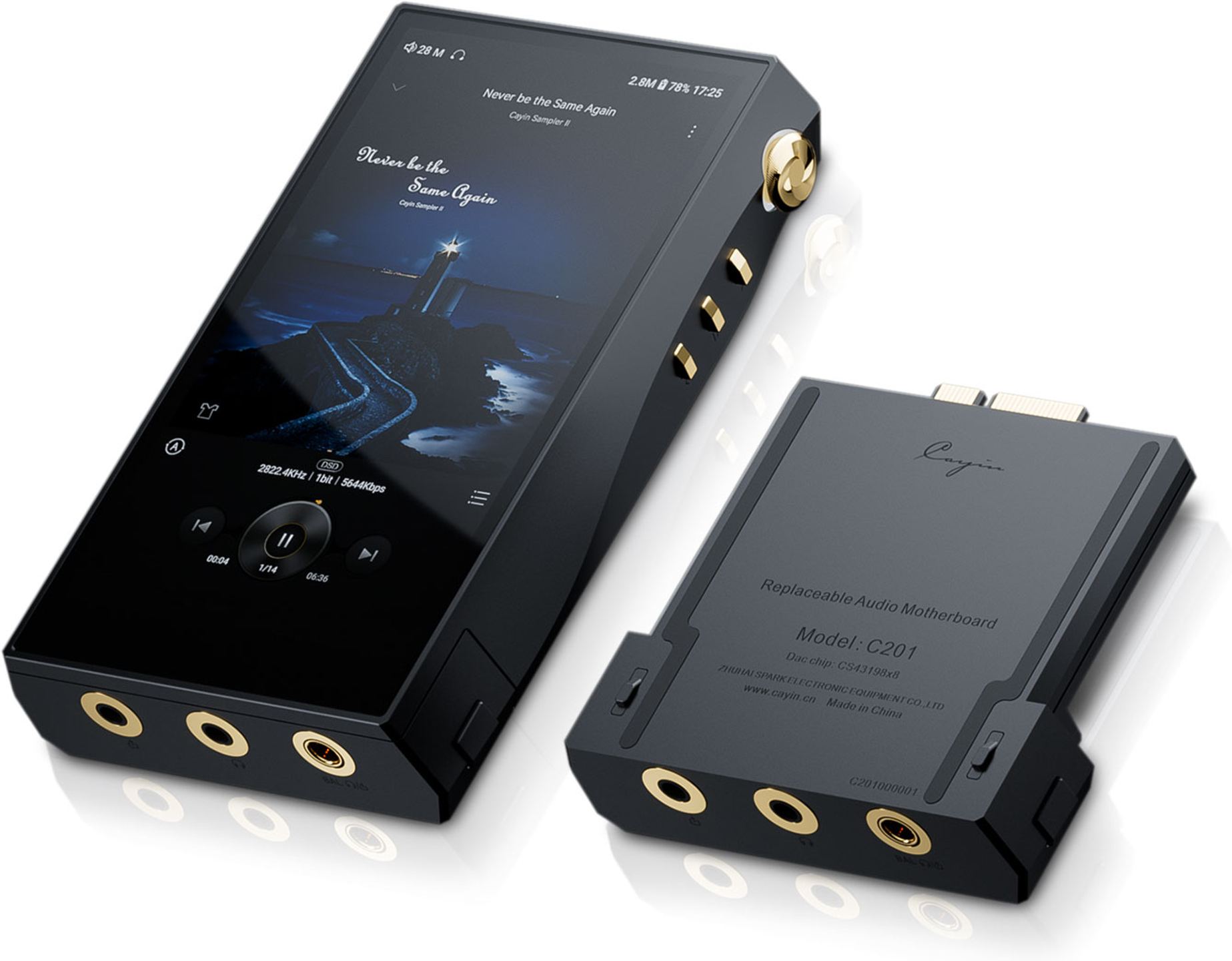
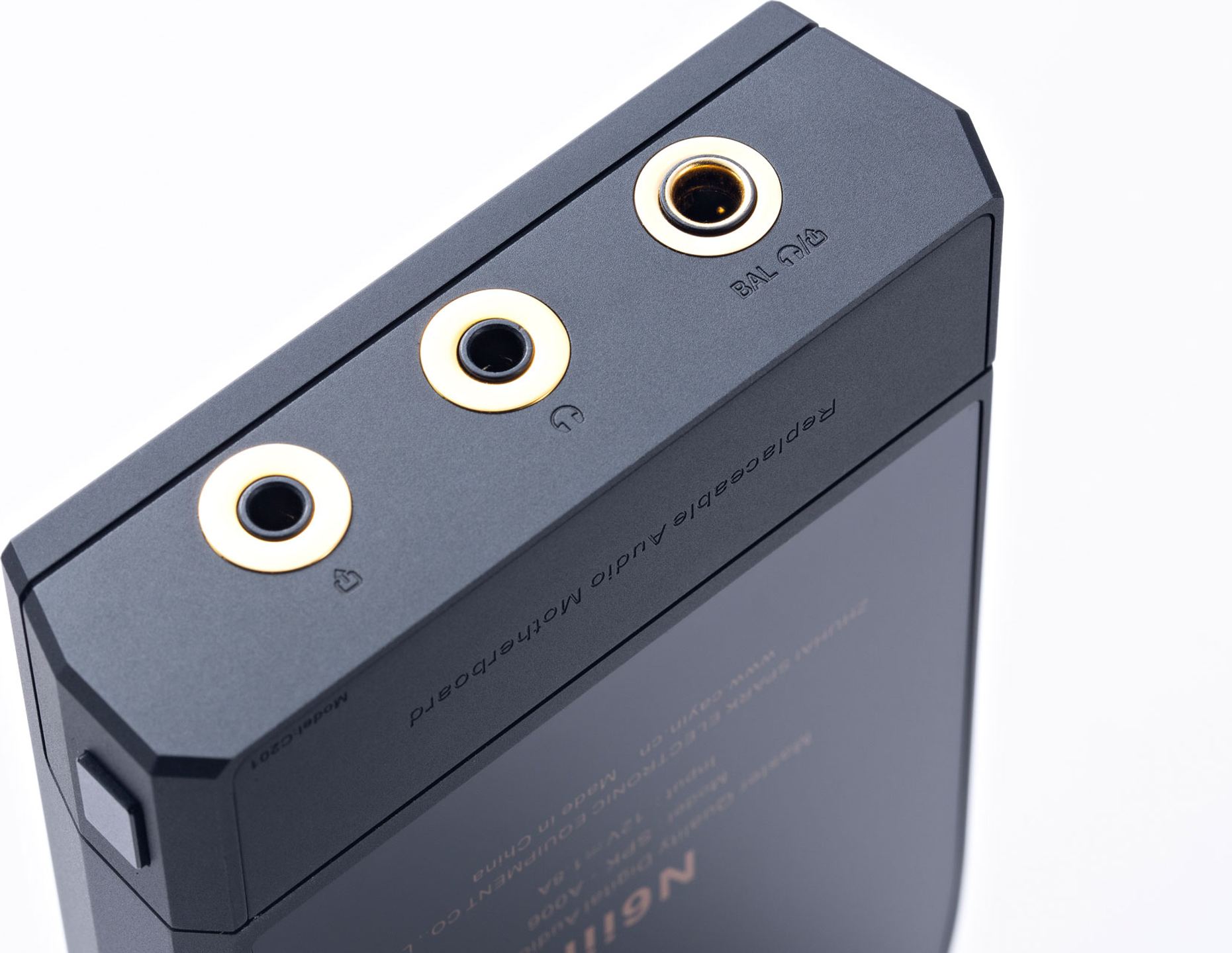
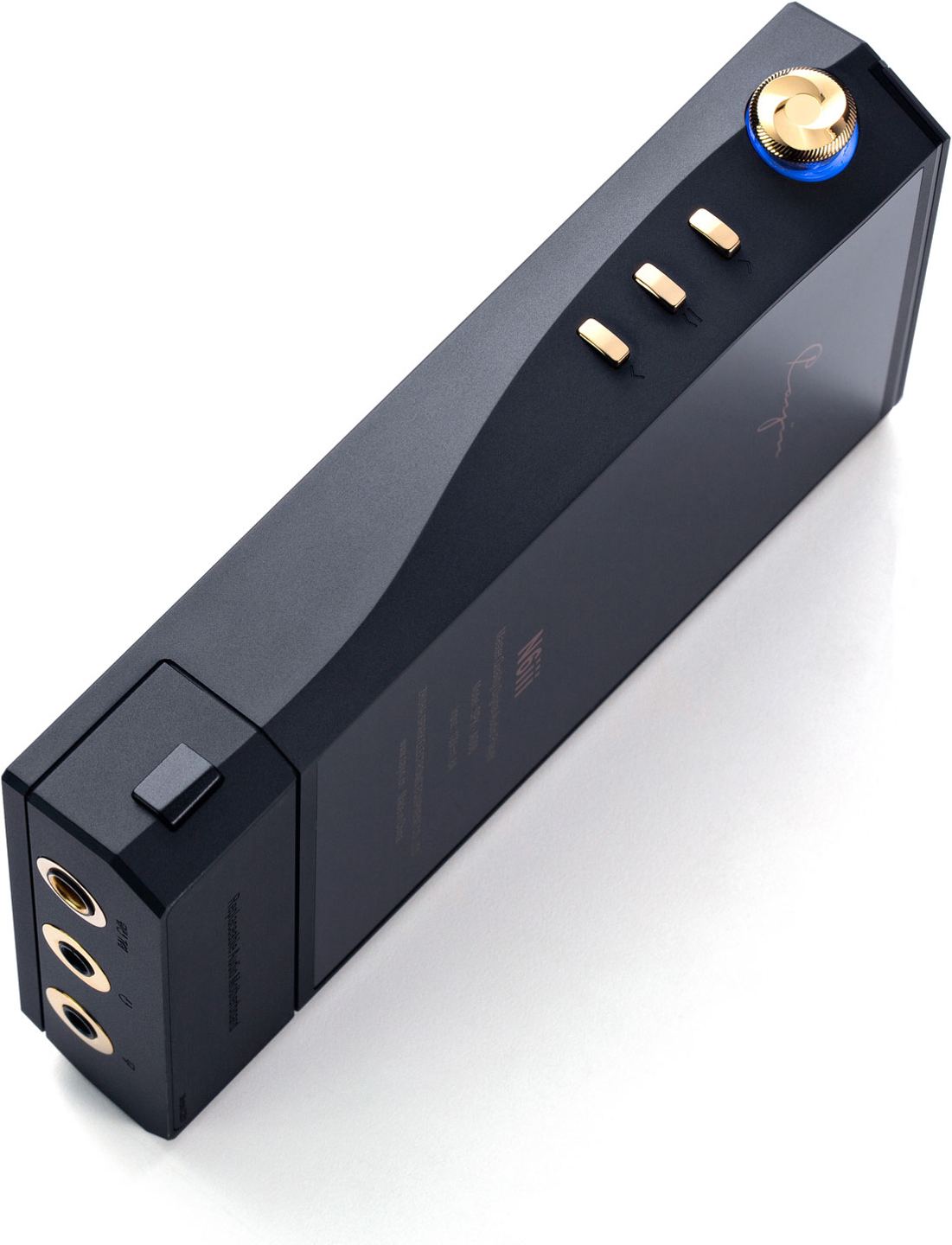
The N6 III introduces a three-point locking swap mechanism inspired by the C9 II. Two side buttons let you remove and insert the motherboard without tools, even with the device powered on. A microcontroller on each board communicates with the Snapdragon 665 processor to adjust specific parameters.
Second-generation boards are not compatible with the N6 II. The PCB has been enlarged by 30.9% to integrate audio technologies developed on the N7, N8 II, and N30LE models. This increased surface area led to a slight enlargement of the chassis, which remains comfortable for one-handed use. The board nomenclature indicates the DAC manufacturer (C for Cirrus Logic, E for ESS), the generation (2 for second generation), and a two-digit serial number.
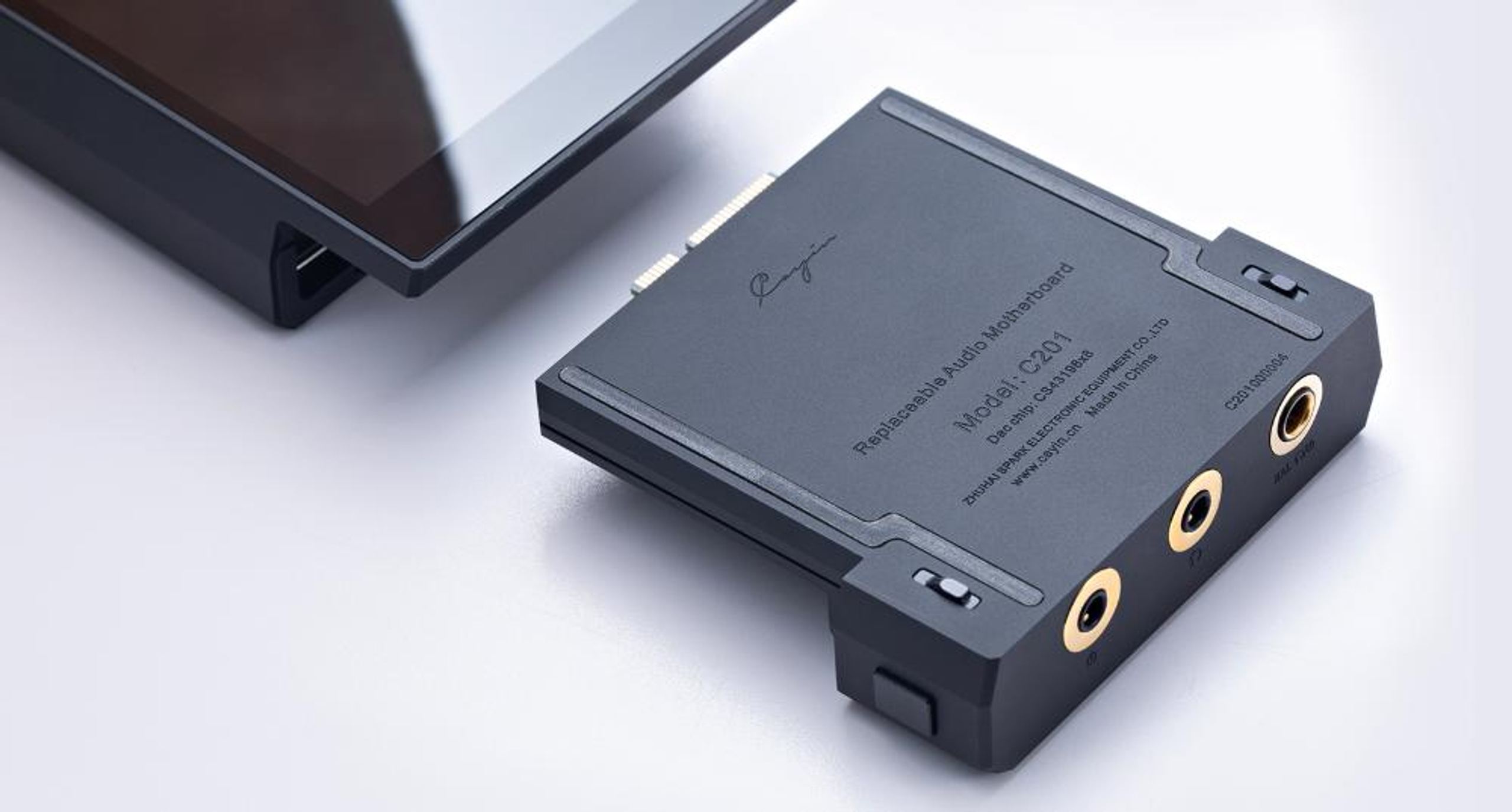
The C201 board: Cayin’s first foray into Cirrus Logic for a portable product
The C201 board marks a shift in Cayin’s choice of DACs for portable devices. Historically, the company favored CS4398 and PCM1792 chips in its early 2000s CD players and home DACs. For its DAPs, other solutions had been used until now.
The CS43198 chosen for the C201 is a direct descendant of the CS4398, retaining its core principles while adapting to portable audio constraints: lower power consumption, minimal footprint, yet preserved performance. This 32-bit stereo converter supports sampling rates up to 384 kHz in PCM and integrates a patented DSD processor that allows filtering and volume control directly on the DSD stream, without intermediate decimation. Five digital filter responses are available, with pseudo-linear phase and ultra-low latency to minimize pre-echoes and ringing artifacts.
Cayin doesn’t use a single CS43198 but eight, arranged in a topology called a “full differential parallel matrix.” The FPGA embedded in the N6 III feeds each converter individually via a dedicated I²S signal. All eight DACs operate in mono mode, delivering differential signals (L+, L-, R+, R-). Four converters are grouped to form a complete stereo channel, their outputs paralleled to create a fully differential output channel. The power supply and peripheral circuits of each DAC chip adopt a discrete and symmetrical design.
This multi-parallel configuration provides several measurable advantages: increased signal stability thanks to redundancy, reduced distortion through averaging, enhanced drive capability, improved channel separation (80 dB single-ended, 110 dB balanced), and lower noise and jitter thanks to dedicated power rails. The result is higher sound density and improved overall performance.
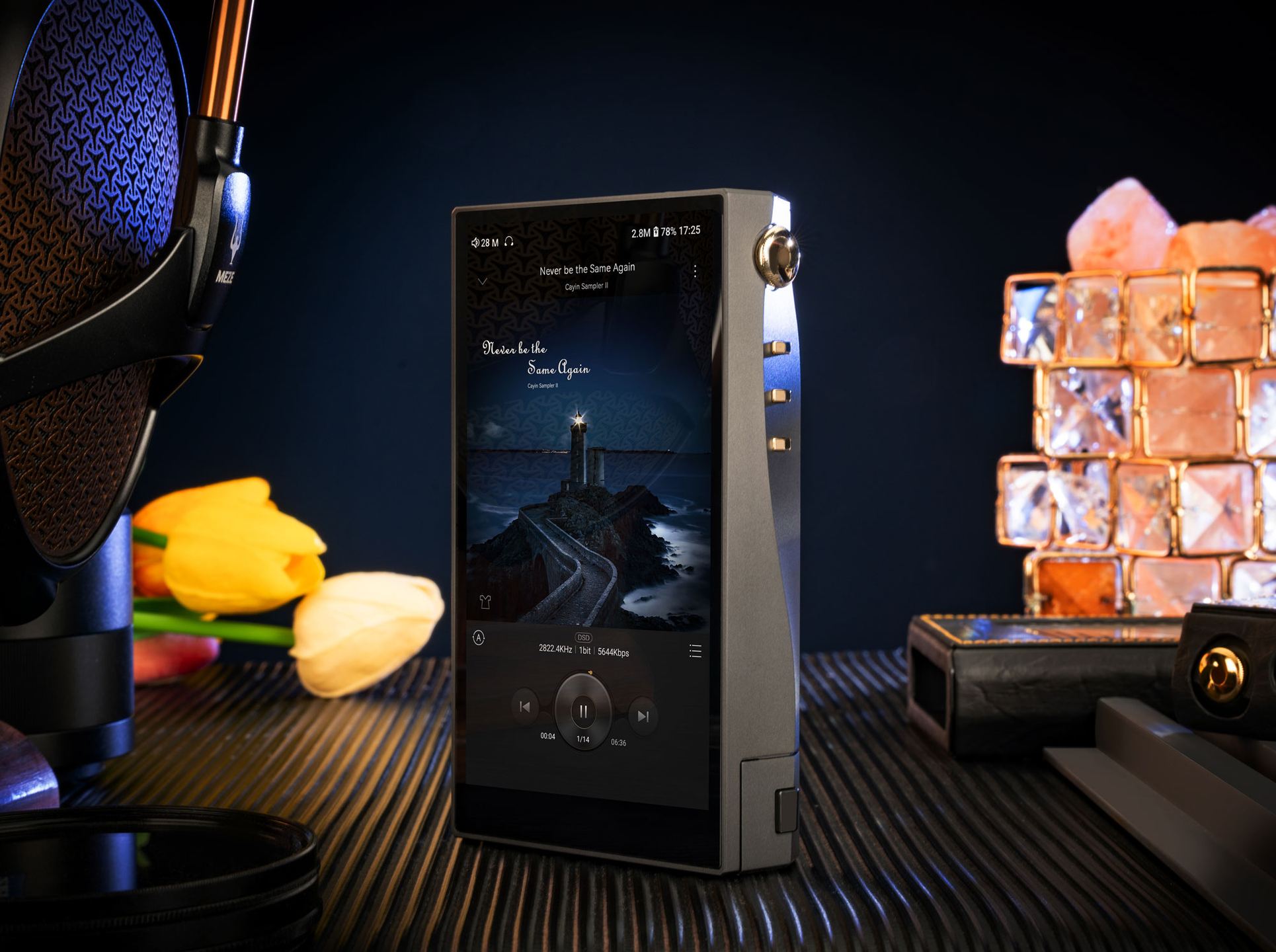
Amplification and volume control: prioritizing precision
The C201 board’s headphone amplification relies on four Texas Instruments OPA1622 op-amps in parallel. This arrangement delivers 260 mW into 32 Ω from the 3.5 mm single-ended output, and 700 mW into the same load from the 4.4 mm balanced output. Total harmonic distortion remains contained at 0.0004%, with a dynamic range of 126 dB single-ended and 130 dB balanced.
Volume control uses four Nisshinbo NJU72315 chips in cascade. This technical choice ensures fine, precise adjustment across the entire usable range, without the channel imbalance sometimes found with low-end digital potentiometers. The cascaded solution also helps maintain a high signal-to-noise ratio, even at low listening volumes.
Line outputs, available on 3.5 mm single-ended and 4.4 mm balanced, allow the N6 III to integrate into a home Hi-Fi chain. Output voltage is adjustable in steps (1 V / 1.5 V / 2 V single-ended, 1.5 V / 3 V / 4 V balanced), providing welcome flexibility depending on the connected amplifier.
Hardware and software platform designed for versatility
The N6 III abandons the N6ii’s Snapdragon 425 in favor of an octa-core Snapdragon 665, paired with 6 GB of DDR4 RAM (up from 4 GB). This performance bump improves UI fluidity and multitasking, particularly when using demanding streaming apps like Tidal or Qobuz. Internal storage increases from 64 GB to 128 GB, expandable up to 2 TB via microSD.
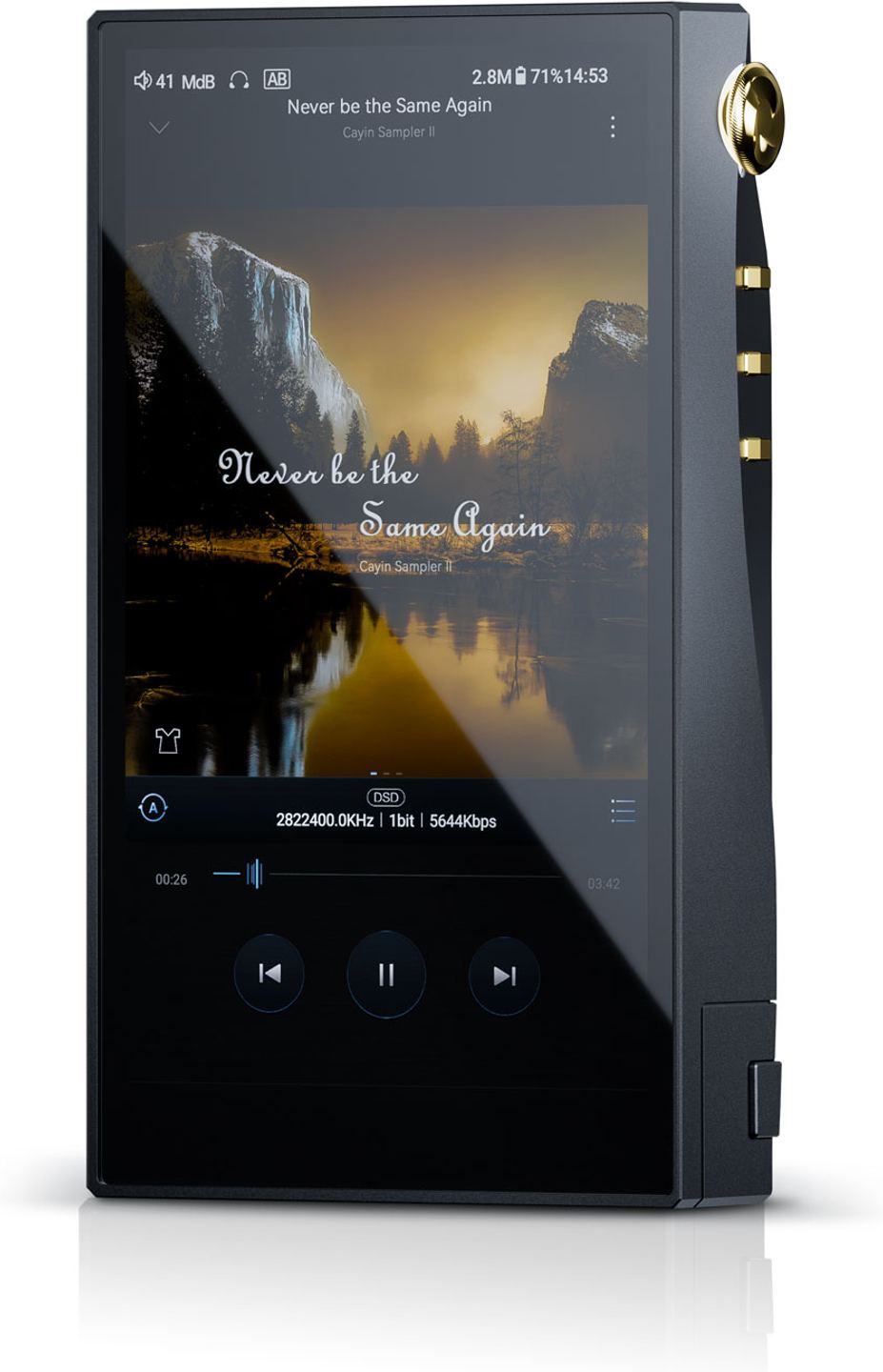
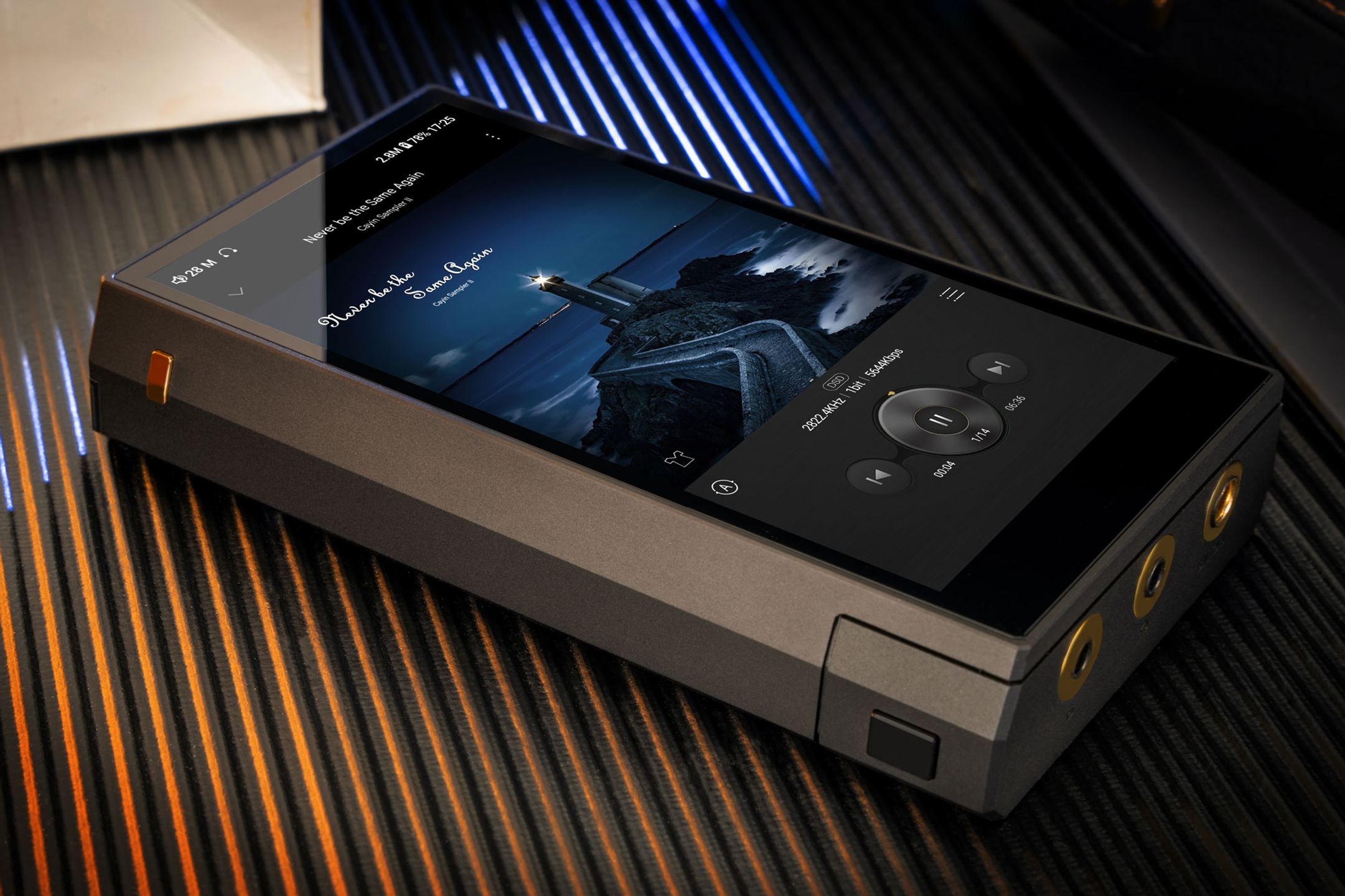
Customized Android 12 forms the software backbone, with access to the Google Play Store to install your preferred apps. Two music players come preinstalled: Cayin Music, the in-house app, and HiBy Music, a third-party solution well-regarded in the audiophile DAP scene. The 5-inch Full HD TFT display (1080 × 1920 pixels) offers ample screen real estate without making the device excessively heavy. Cayin removed structural extensions around the chassis, giving the front face a near all-screen appearance.
Playback buttons and the volume potentiometer are housed beneath the screen, freeing lateral space. Curved sides improve grip, even with this larger display compared to the N6ii. The final dimensions of 126 × 77.8 × 23 mm at 350 g keep the N6 III in the portable DAP category, unlike some competitors that easily exceed 400 g.
Comprehensive wired and wireless connectivity
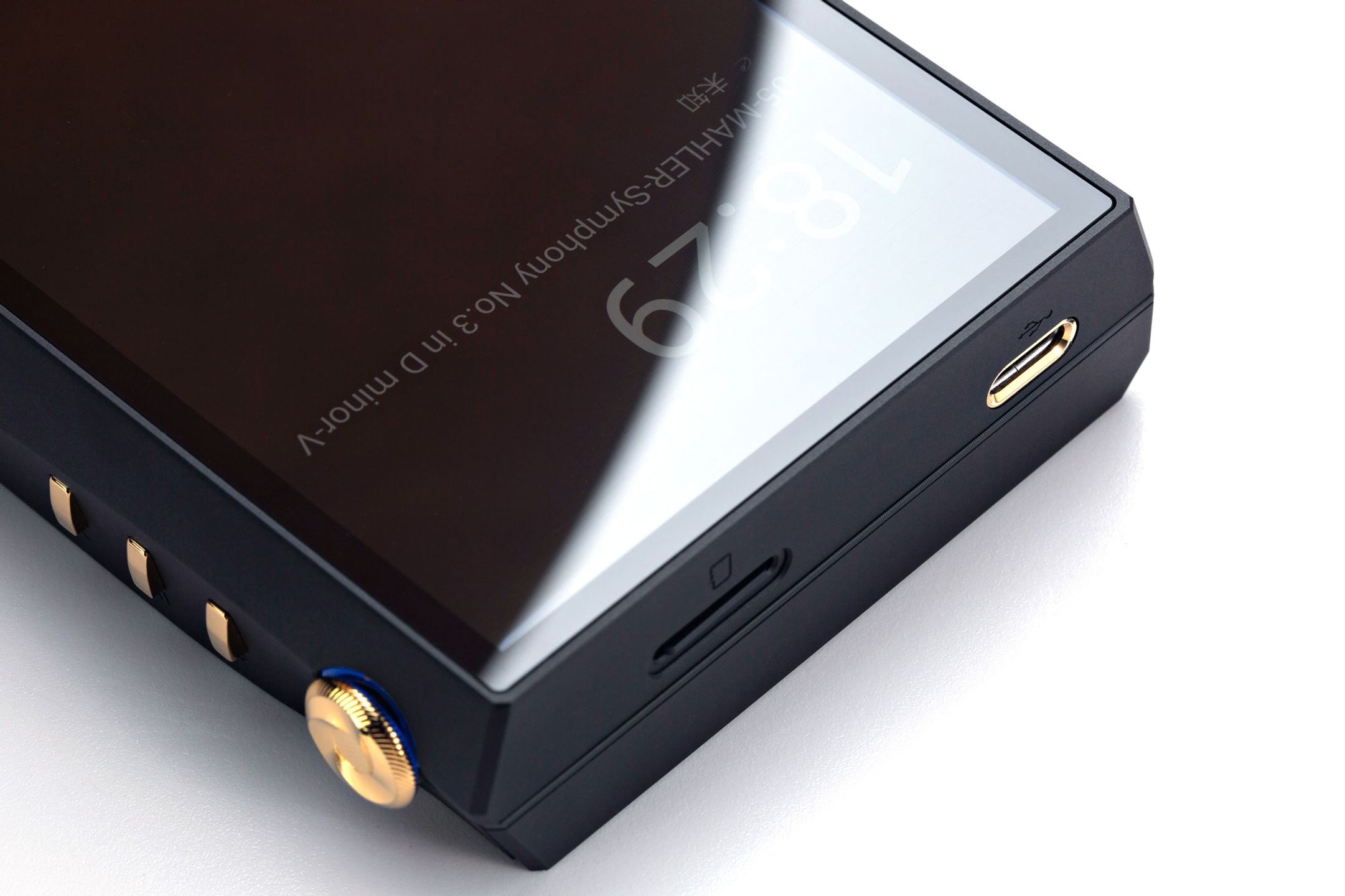
The USB-C port handles multiple protocols simultaneously. In USB DAC mode, the N6 III becomes an external converter for a computer or smartphone, accepting PCM 24-bit / 768 kHz and DSD256. In digital transport mode, the coaxial S/PDIF output (requires a specific USB-C-to-coaxial cable, not included) transmits PCM 24-bit / 192 kHz and DSD64 DoP to an external DAC.
Wireless features combine Bluetooth 5.0 and dual-band Wi-Fi 2.4/5 GHz. Available Bluetooth codecs include UAT (192 kHz), LDAC (96 kHz), AAC, and SBC, covering most current needs. Wi-Fi enables not only streaming from online services but also OTA firmware updates, a process reported by users as fast and seamless.
The N6 III’s antenna adopts a middle-ground position between the fully integrated antenna of the N6ii (low gain but zero interference) and the external ring antenna of high-end models N7, N8ii, and N30LE (high gain but increased bulk). It sits in a semi-exposed area just under the top panel, offering better gain than the N6ii while preserving overall compactness. Streaming performance remains excellent, with minimal interference on the analog audio circuits.
Generous battery life and faster charging
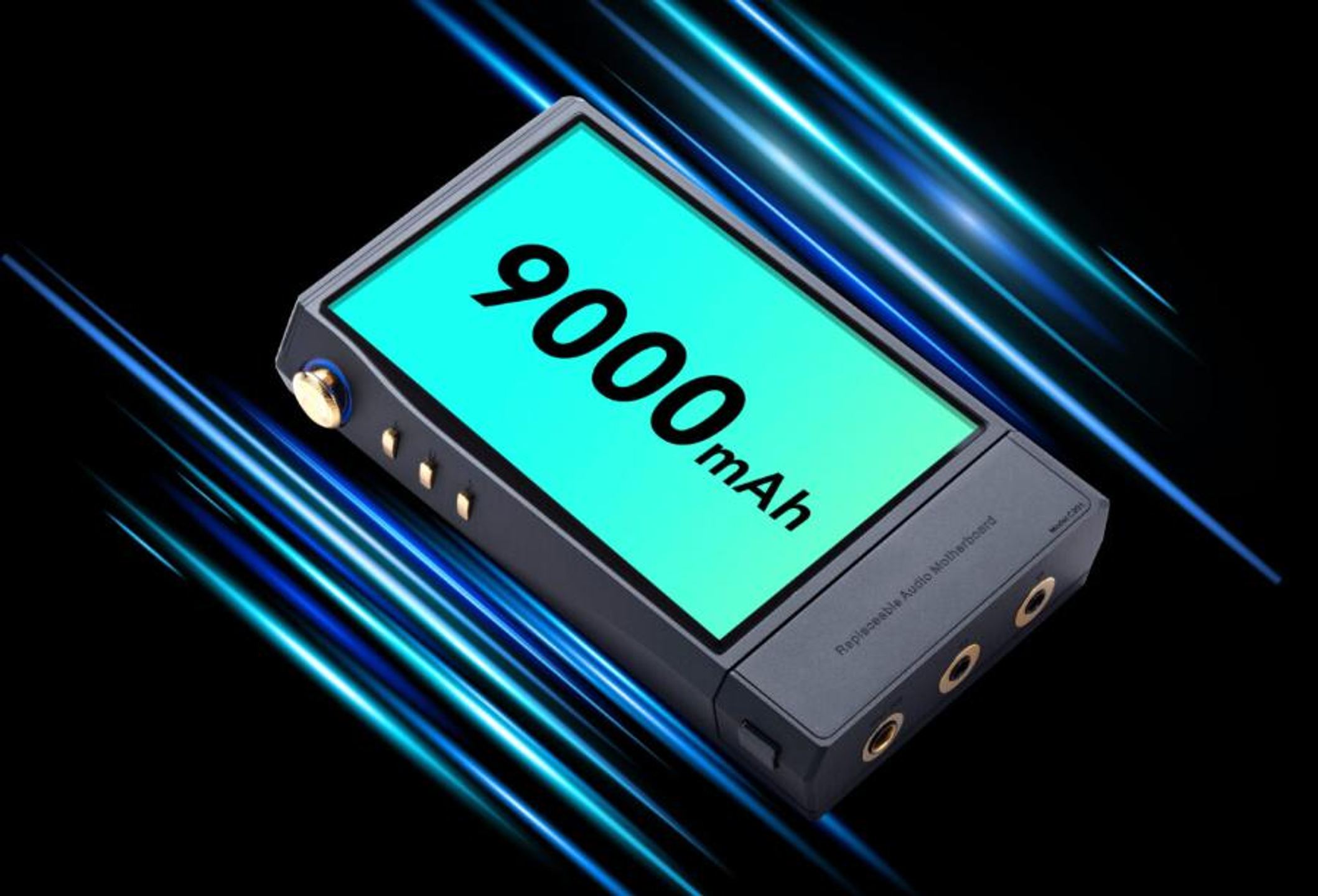
The 9000 mAh (34.2 Wh) battery provides between 12.4 and 16 hours of listening, depending on output type and headphone impedance. High-impedance headphones on the single-ended output reach up to 14.2 hours, while low-impedance headphones can get up to 16 hours. In balanced mode, figures are slightly lower: 12.4 hours with high impedance, 13 hours with low impedance.
Charging is via USB-C with two possible speeds. The standard 5 V / 2 A mode requires 6.3 hours for a full charge. Quick Charge 2.0 reduces this to 4 hours for a full charge, or 2 hours to go from 20 to 80%, after which the charging speed tapers off to preserve battery longevity. This comfortable battery life clearly surpasses many competing DAPs equipped with more power-hungry ESS-based motherboards.
C201 board sound signature: balance and clarity
User and reviewer feedback converges on several sonic traits of the C201 board. Soundstage unfolds rounded and holographic, with notable width and decent depth. Sub-bass has solid presence and quick punch, while the mid-bass adds body without undue softness.
The mids exhibit a slight smoothness, avoiding digital harshness while preserving detail resolution. This subtle coloration imparts an analog character without tipping into excessive warmth. Treble has enough sparkle to provide air, with a slightly softened roll-off that avoids listening fatigue over long sessions.
Compared to the N6ii equipped with various boards, the C201 is more precise, more dynamic, and less laid-back. It offers more detail in the mids and more treble brilliance, while retaining a pleasing naturalness. Versus the ESS E203 boards available for the N6 III, the C201 stands out as the more energy-efficient, cooler-running, and more affordable option, while delivering slightly lower output power.

Technical Specifications
Audio Motherboard and DAC Architecture
- Model: C201
- Digital-to-Analog Converter: 8 × Cirrus Logic CS43198 in a fully differential parallel matrix architecture
- Headphone amplifiers: 4 × OPA1622 in parallel
- Volume control: 4 × NJU72315 in cascade
- Hot swap: yes, tool-free motherboard replacement
Headphone Outputs
- Single-ended 3.5 mm output
- Power: 260 mW into 32 Ω
- Total harmonic distortion: 0.0004%
- Dynamic range: 126 dB
- Signal-to-noise ratio: 126 dB
- Channel separation: 80 dB
- Balanced 4.4 mm output
- Power: 700 mW into 32 Ω
- Total harmonic distortion: 0.0004%
- Dynamic range: 130 dB
- Signal-to-noise ratio: 130 dB
- Channel separation: 110 dB
Line Outputs
- Single-ended 3.5 mm output
- Output voltage: 1 V / 1.5 V / 2 V into 47 kΩ
- Total harmonic distortion: 0.0004–0.0005%
- Signal-to-noise ratio: 126 dB
- Balanced 4.4 mm output
- Output voltage: 1.5 V / 3 V / 4 V into 47 kΩ
- Total harmonic distortion: 0.0004–0.0005%
- Signal-to-noise ratio: 132 dB
Digital Connectivity
- USB-C port
- Audio output: PCM 32-bit / 768 kHz, native DSD512 / DoP / D2P
- USB DAC mode for Windows / Mac / Android: PCM 24-bit / 768 kHz, DSD256
- Coaxial S/PDIF output: PCM 24-bit / 192 kHz, DSD64 DoP
Wireless Connectivity
- Bluetooth 5.0: UAT (192 kHz), LDAC (96 kHz), AAC (48 kHz), SBC
- Dual-band Wi‑Fi: 2.4 / 5 GHz
System and Hardware
- Processor: Qualcomm Snapdragon 665 Octa-Core X64
- Memory: 6 GB DDR4 RAM
- Internal storage: 128 GB, expandable up to 2 TB via microSD card
- Operating system: Custom Android 12 with Google Play Store, Cayin Music, and HiBy Music
- Display: 5-inch Full HD (1080 × 1920) TFT
- Controls: power button, volume potentiometer, playback buttons below the screen
Battery and Battery Life
- Capacity: 9000 mAh (34.2 Wh)
- Single-ended 3.5 mm output battery life: 14.2 h (high impedance), 16 h (low impedance)
- Balanced 4.4 mm output battery life: 12.4 h (high impedance), 13 h (low impedance)
- Standard charging 5 V / 2 A: 6.3 h
- Quick Charge 2.0 fast charging: full charge in 4 h, 20–80% in 2 h
Physical Characteristics
- Dimensions: 126 × 77.8 × 23 mm
- Weight: 350 g with motherboard
Included Accessories
- Leather case
- USB cable
- Screen protector
Frequently Asked Questions
Can you change the N6 III motherboard without turning the device off?
Yes, hot-swapping is fully supported. Just pause playback, press the two side buttons to release the board, then insert the new one. The player automatically detects the change and adjusts its interface. This feature facilitates direct comparisons between different boards, though there may be a brief wait during the first recognition of a module.
Are N6II motherboards compatible with the N6 III?
No, there is no backward compatibility. Second-generation boards for the N6 III use a PCB that is 30.9% larger and a different locking system. This incompatibility is a deliberate choice: integrating the technological advances of the past five years required more space, which was impossible without enlarging the PCB.
What’s the difference between headphone outputs and line outputs?
Headphone outputs (3.5 mm and 4.4 mm) are amplified to drive earphones or headphones directly. Line outputs (also 3.5 mm and 4.4 mm) deliver a non-amplified, adjustable fixed-level signal intended to feed an external amplifier or a home Hi-Fi system. On the C201 board, the 4.4 mm output is dual-purpose headphone/line depending on the menu setting, while the 3.5 mm has two separate jacks.
Can the N6 III serve as a USB DAC for a computer?
Yes, USB DAC mode turns the N6 III into an external converter for Windows, macOS, and Android. It then accepts PCM 24-bit / 768 kHz and DSD256. This function lets you leverage the C201’s conversion quality in a desktop setup without buying a dedicated desktop DAC. Control is via the USB-C connection, which simultaneously handles audio data and power.
How many different motherboards exist for the N6 III?
At launch, three boards are available: C201 (Cirrus Logic CS43198 × 8), E203 (ESS ES9039PRO with Class A/AB/Hyper modes), and R202 (dual discrete 24-bit and 1-bit R-2R DAC). Other modules may be developed later, in line with Cayin’s philosophy of gradually enriching the modular ecosystem. The N6ii saw six boards over its lifespan.
Do streaming apps run smoothly?
User feedback confirms smooth navigation in apps like Tidal, Qobuz, and Spotify, thanks to the Snapdragon 665 and 6 GB of RAM. Scanning large libraries (8000 tracks) takes about an hour with the Cayin Music player. Wi-Fi stability and fast OTA updates are also praised by users.
Can the C201 board drive demanding planar headphones?
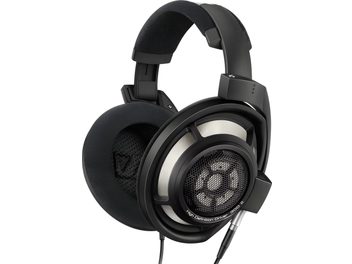
With 700 mW into 32 Ω from the balanced output, the C201 drives most portable headphones well, including some sensitive planars. For more demanding planars like the HiFiMAN Arya or the Sennheiser HD600, the E203 board in Hyper mode (900 mW) is a better choice. The C201 shines with medium- to high-impedance dynamic headphones and well-matched in-ear monitors, where its balanced signature and low power consumption make perfect sense.
- Eco-contribution included in the sale price.
- Manufacturer reference: CAYN6IIIC201
- GTIN / EAN: 6957914912070