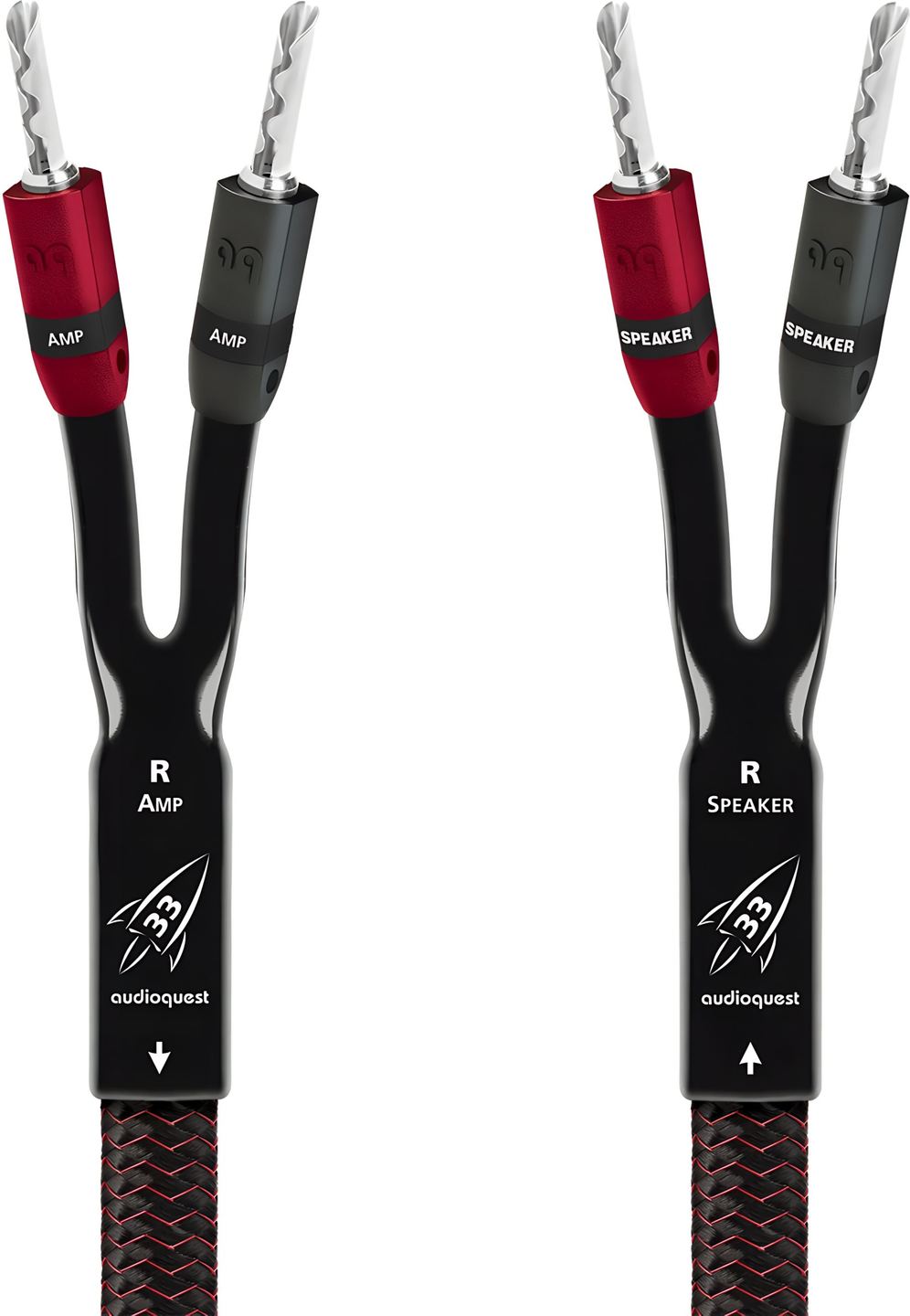
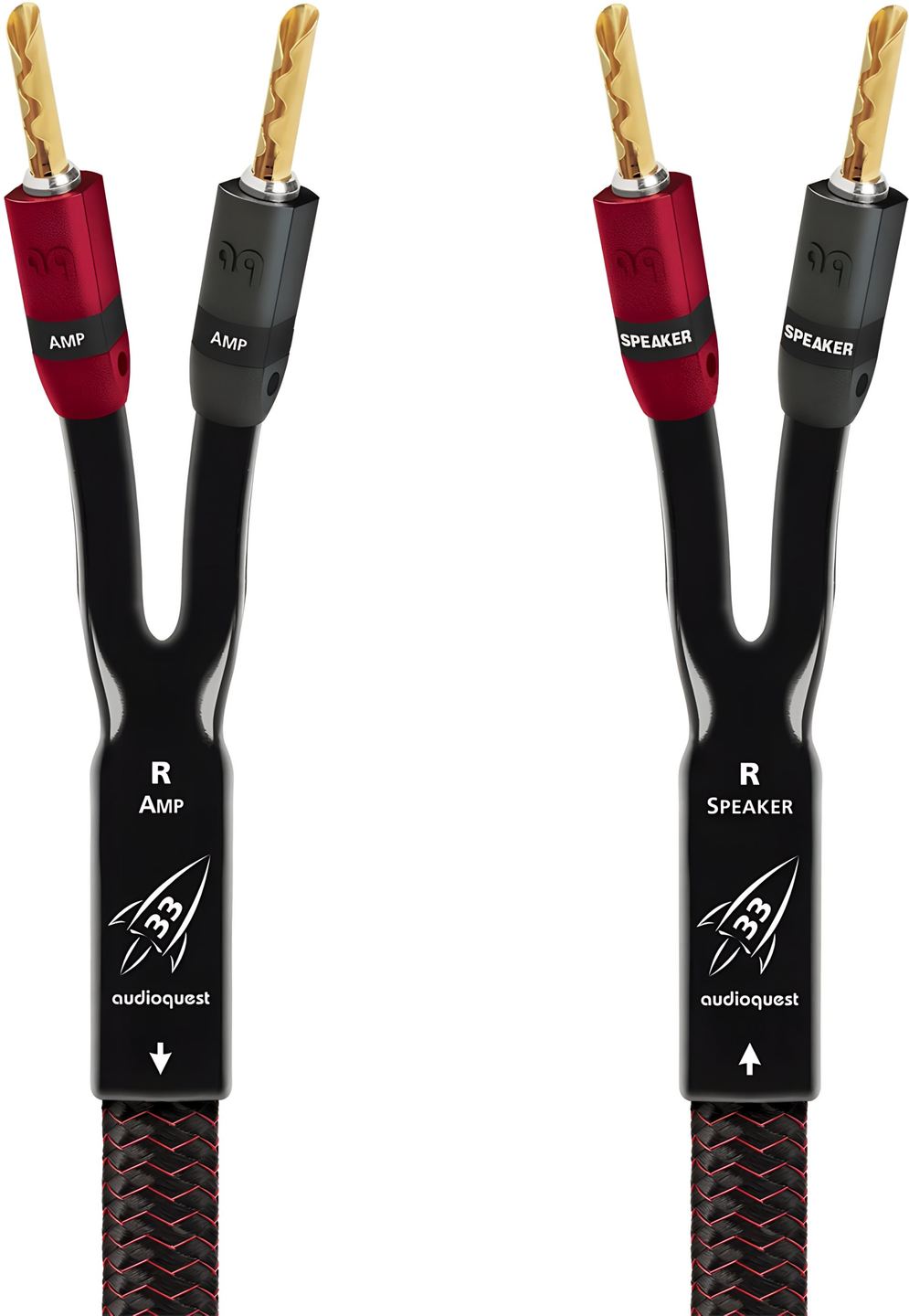
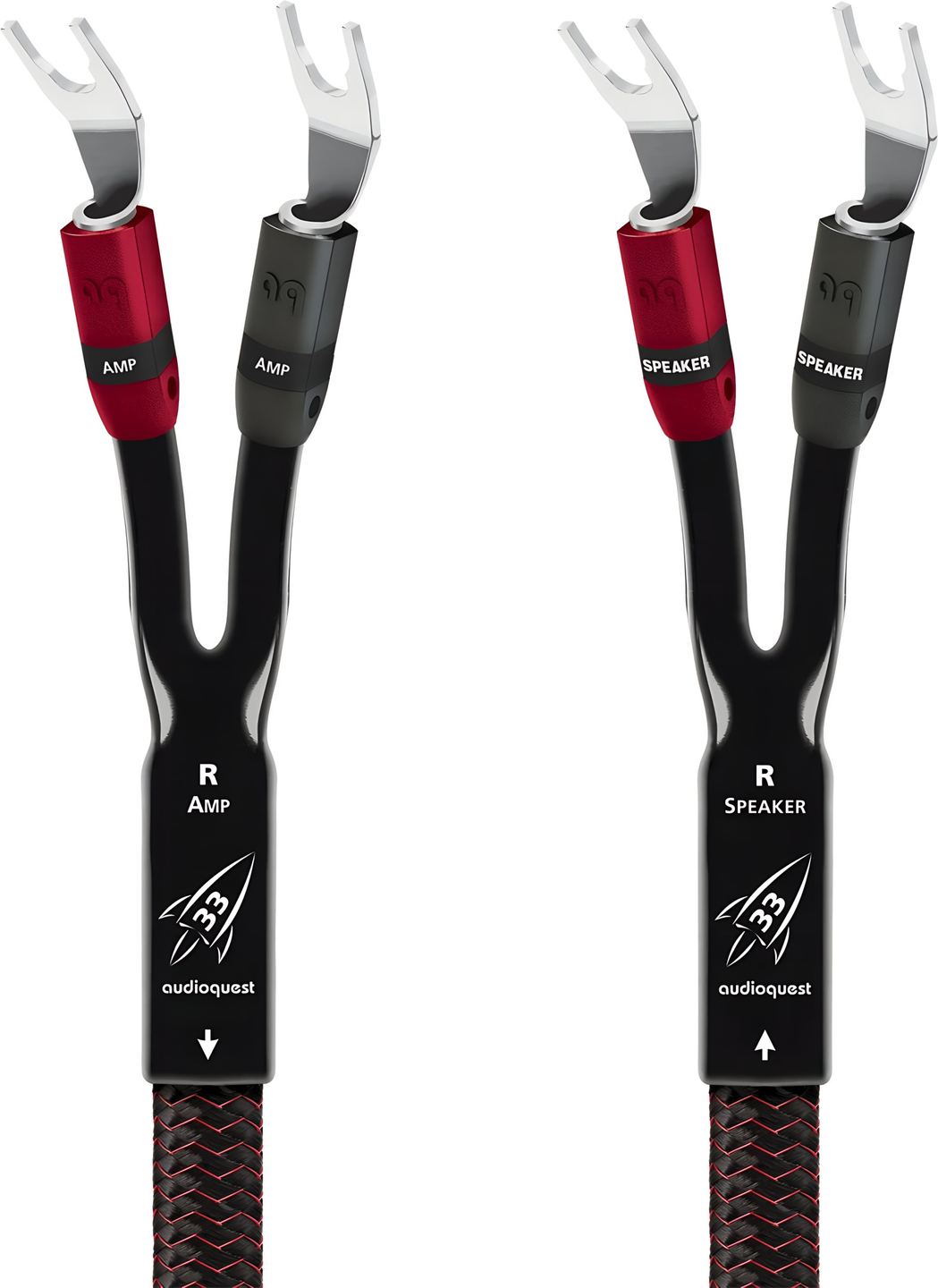
Direct heir to the legendary Type 4— a cable that spanned three decades without showing its age — the Rocket 33 builds on the core principles that made the range famous, while adding a second Star-Quad configuration and the benefits of PSC copper. This Double Star-Quad architecture sets the model apart as the first in the Rocket series to enable true bi-wiring, thanks to the magnetic independence of each conductor group.
Eight solid conductors dedicated to clarity
The Rocket 33 features eight solid-core conductors arranged in two groups of four, a construction that eliminates electrical interactions between strands, a major source of distortion in multi-strand cables. Each group forms an independent Star-Quad, and it is the combination of these two quads that defines the cable’s distinctive Double Star-Quad geometry.
The conductors combine LGC (Long-Grain Copper), whose elongated grains reduce oxides, impurities, and crystal boundaries, with PSC (Perfect-Surface Copper), whose polished surface improves high-frequency reproduction. This dual approach allows the cable to blend the robustness of LGC in the mid-bass with the finesse of PSC in the treble, creating a coherent tonal balance across the entire spectrum.
The total cross section of 2.08 mm² (equivalent to 13 AWG) is particularly well-suited to bookshelf and compact floorstanding speakers, where cable lengths remain reasonable and power levels moderate.
Shielding focused on noise reduction
The negative conductors are insulated with carbon-loaded, partially conductive polyethylene, a material that absorbs radio-frequency interference before it can be fed back into the amplifier. This carbon-based dissipation system also reduces interactions between positive and negative polarities. An outer layer completes the setup by protecting the signal from surrounding electromagnetic interference.
Insulation for the positive conductors is based on foamed polyethylene (Foamed-PE), a material with a high air content that absorbs very little energy. This characteristic limits the storage and subsequent delayed release of energy, a phenomenon that typically creates a blurred or smeared sound.
All conductors are direction-controlled: the cable carries distinct markings on the amplifier end and the speaker end, which must be followed during installation to optimize the evacuation of induced noise.
SureGrip 300 terminations and built-to-order construction
SureGrip 300 connectors use a beryllium-copper base, an alloy that is more conductive and more durable than the phosphor bronze used in most conventional plugs. The gold or silver plating is applied directly, without an intermediate nickel layer— hence their matte rather than shiny appearance, and the absence of the sonic coloration associated with nickel.
The connection between plugs and conductors is made by cold-weld, a technique that avoids thermal damage to the copper and preserves signal integrity. A supplied hex key allows you to tighten the plugs.
Each cable is assembled to order at AudioQuest’s headquarters in Irvine, California. Custom lengths and termination options (bananas or spades, gold- or silver-plated) are available through the network of authorized dealers.