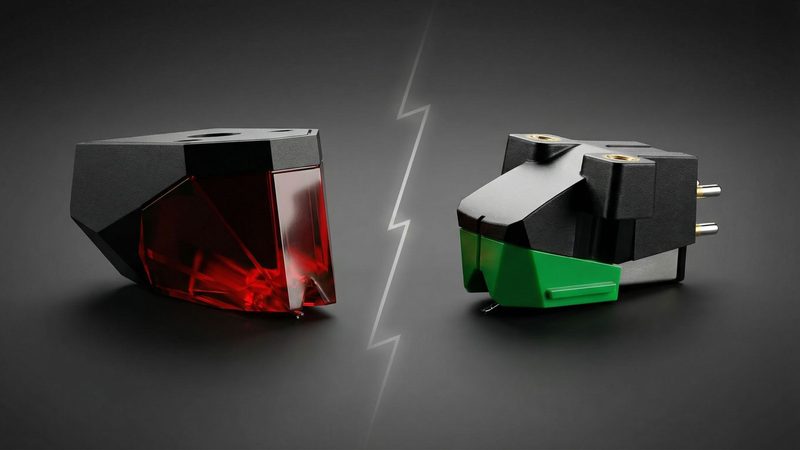
Audio Technica AT-VM95ML/H: Microlinear cartridge with headshell
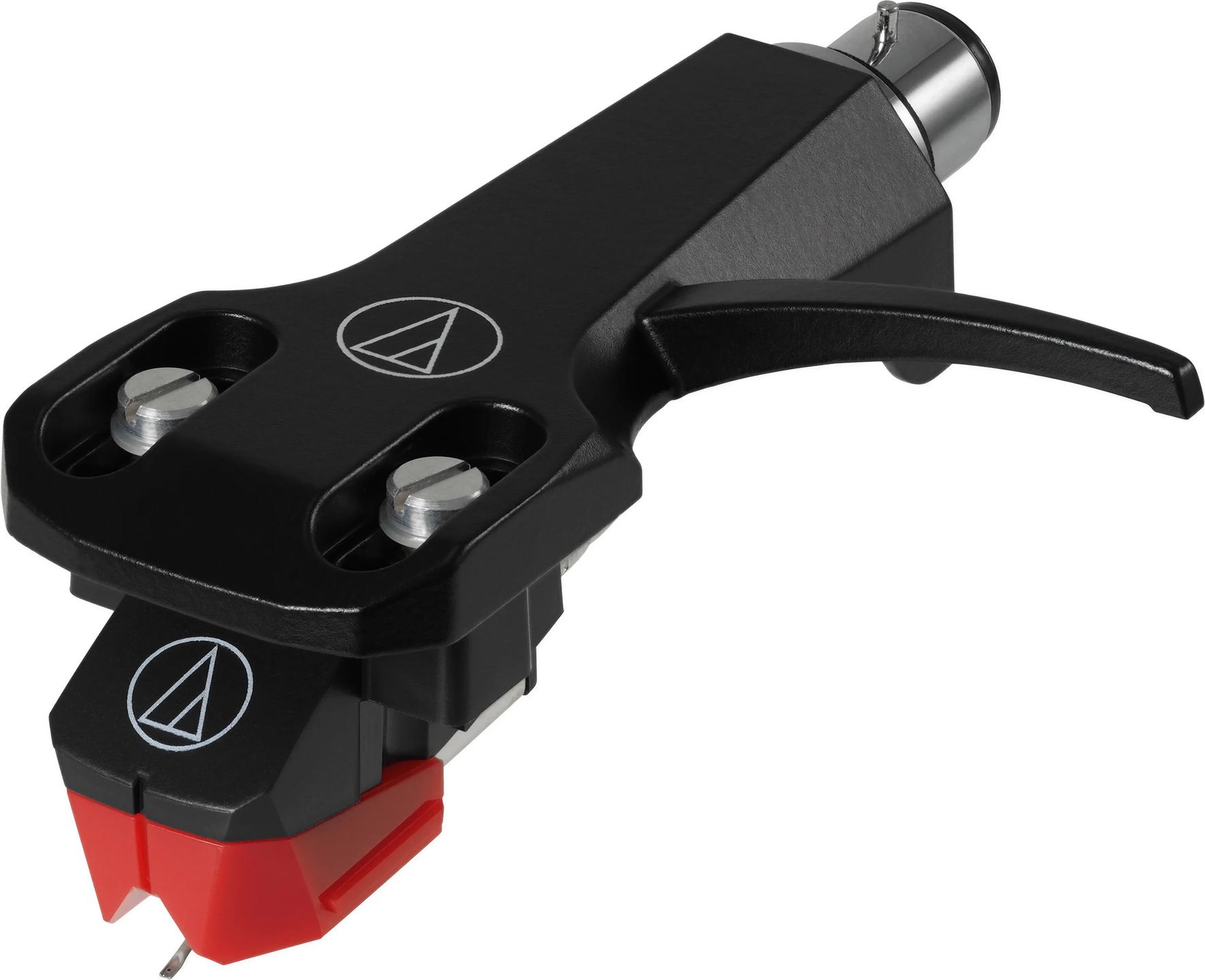
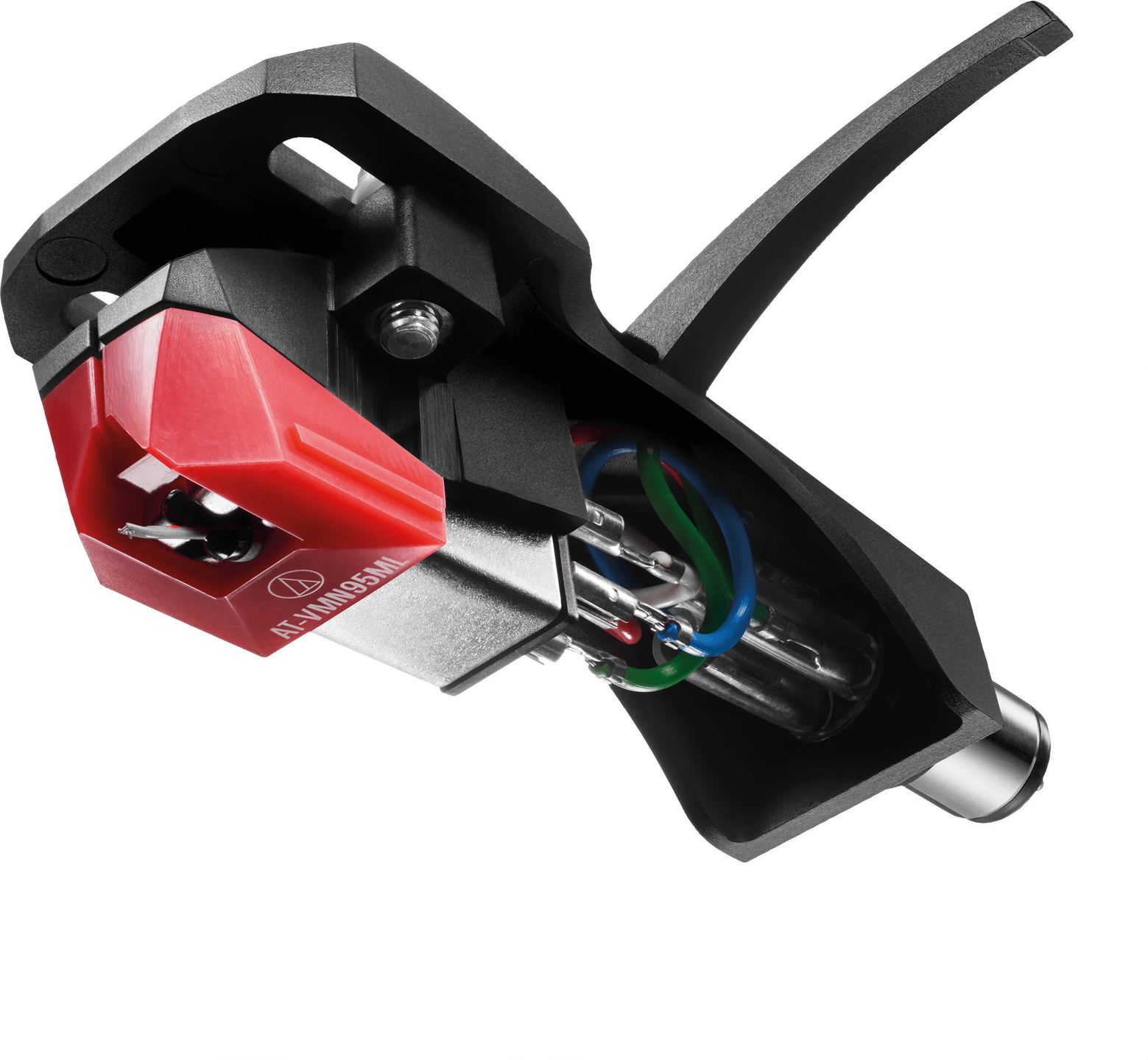
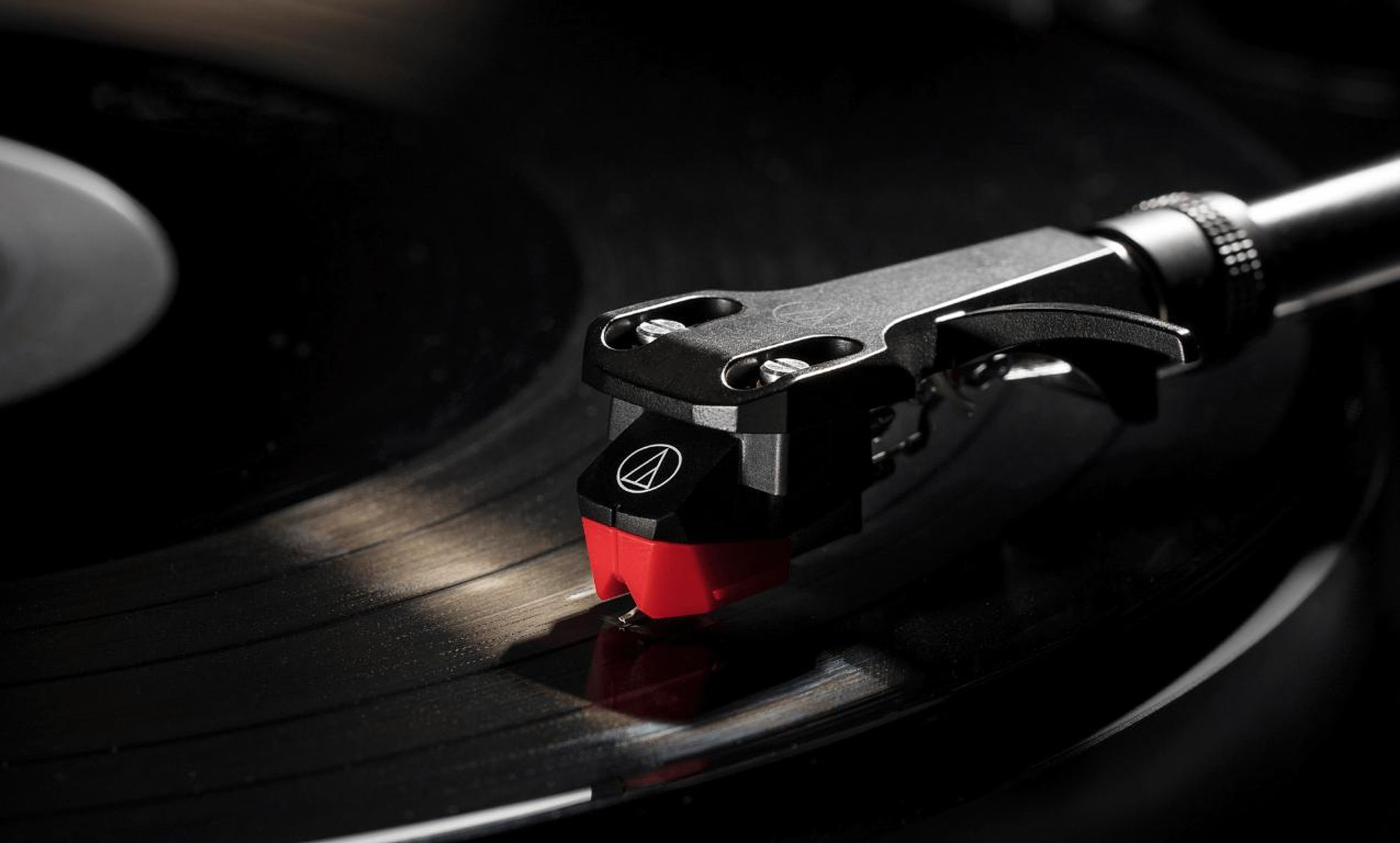
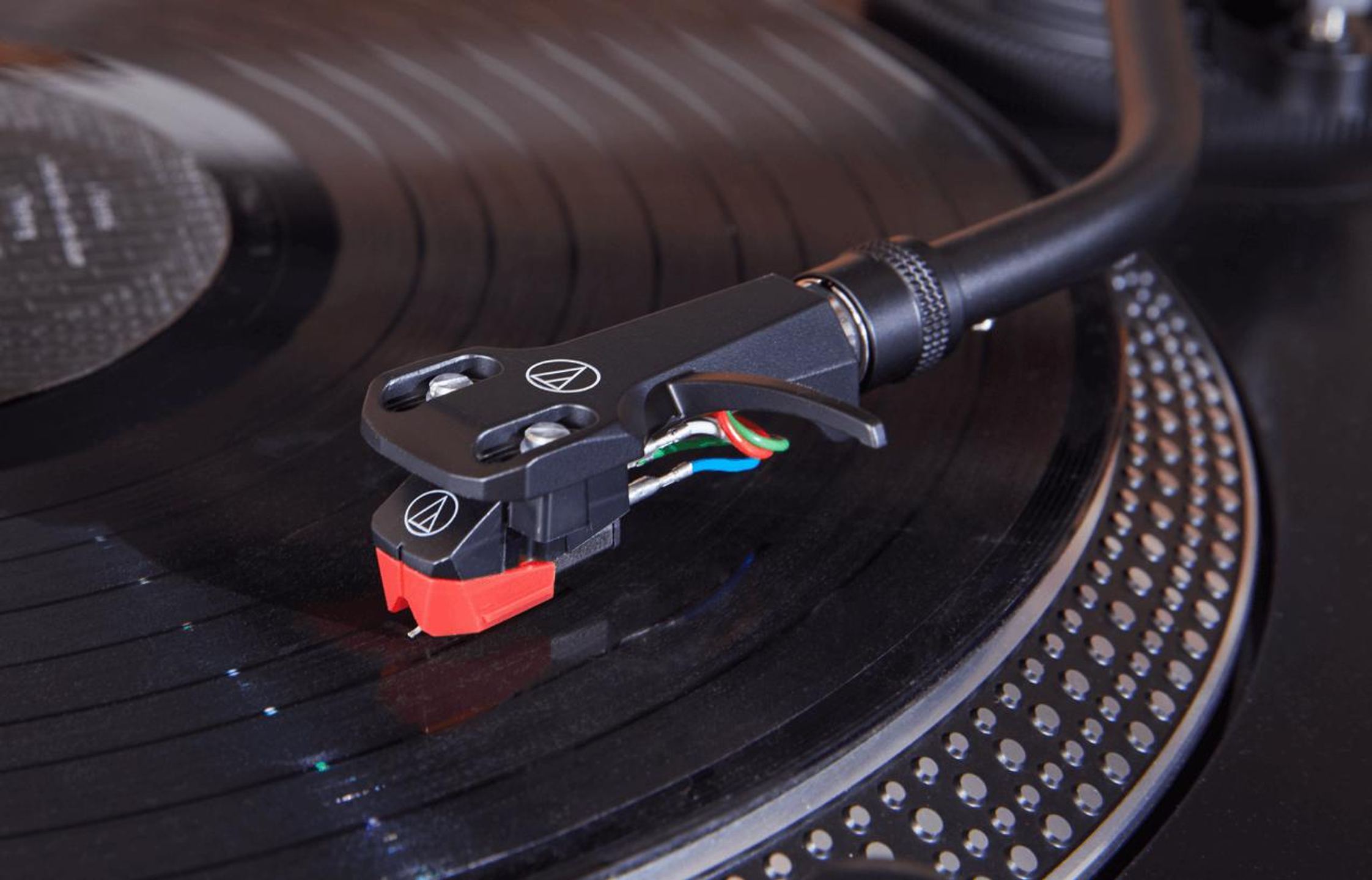
Ready to use, the AT-VM95ML/H combines the AT-VM95ML cartridge with a die-cast aluminum AT-HS6BK headshell. This pairing lets you quickly equip a vintage turntable with a detachable tonearm without complex handling or prior adjustments. The Microlinear stylus, at the top of the VM95 range alongside the Shibata, delivers precise groove tracking and a longer lifespan compared with elliptical or conical profiles.
Dual Magnet technology serving the signal
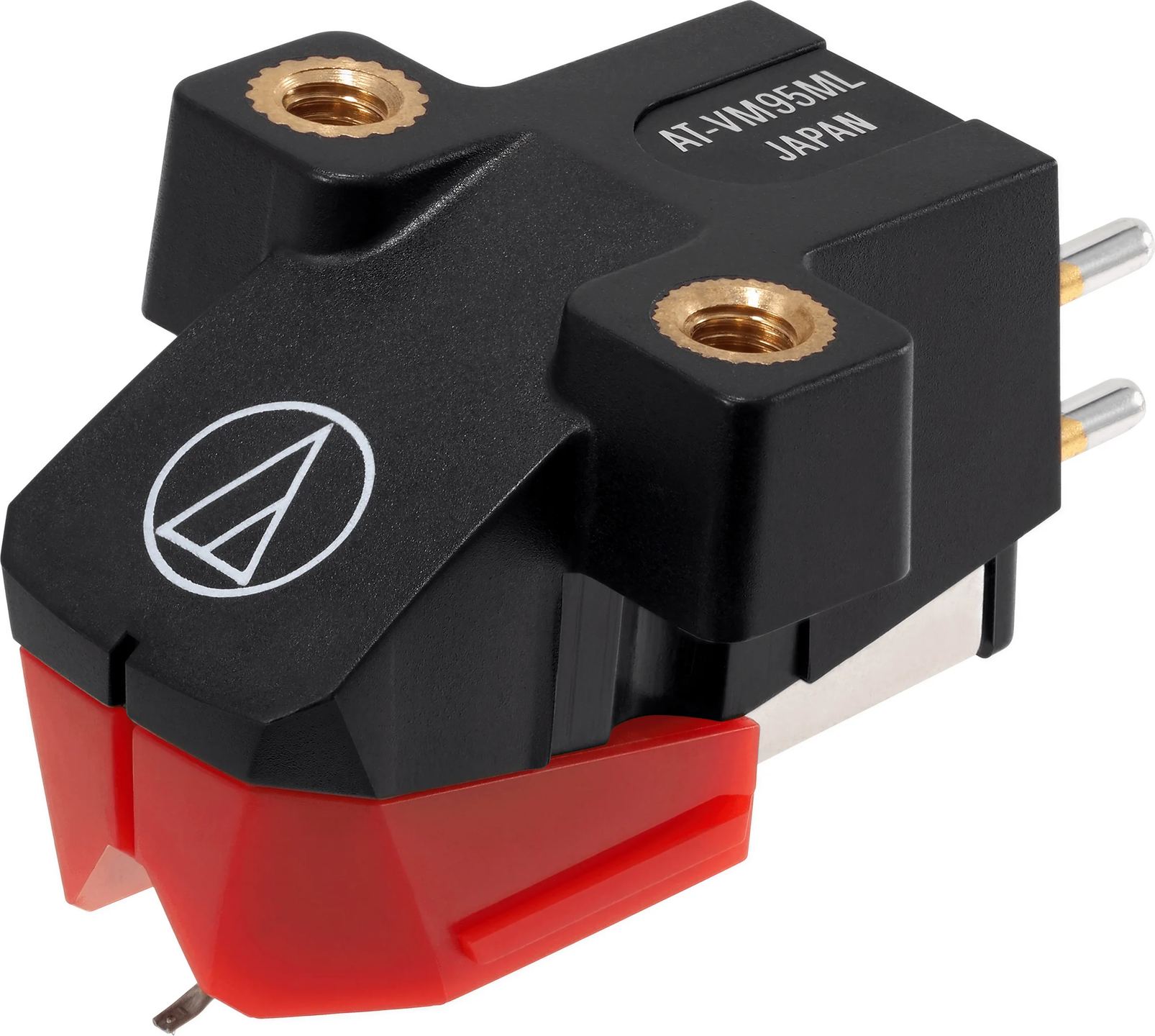
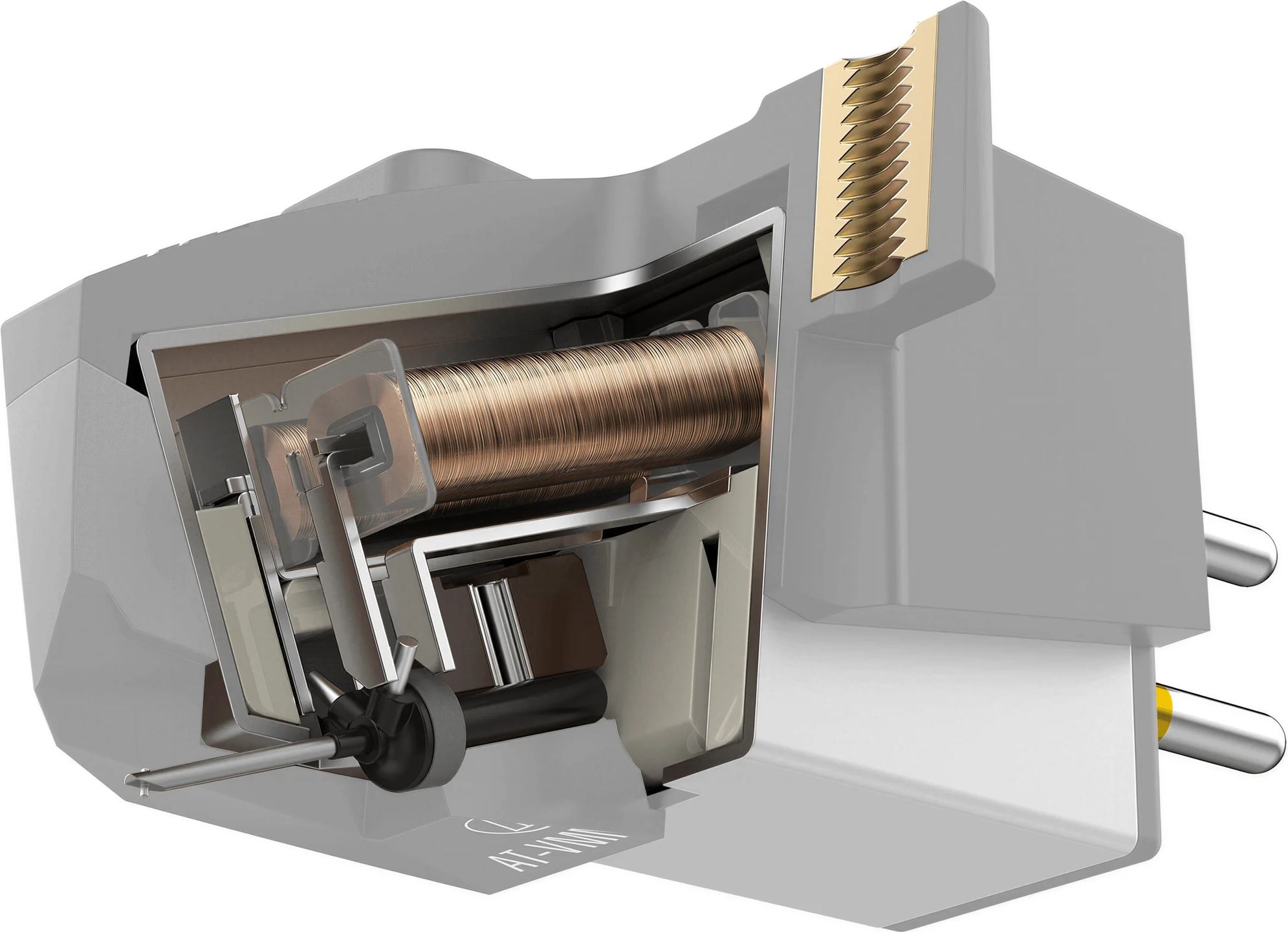
In the VM95 series, Audio Technica uses a dual moving magnet system arranged in a V shape, an architecture that replicates the configuration of the original cutting stylus. This symmetry between the left and right channels promotes 23 dB stereo separation at 1 kHz and minimizes crosstalk between channels. The generator, shielded by a mu-metal screen, is protected from stray magnetic fields and static charges.
The coils, wound with T.P. copper (tough pitch copper), deliver an output voltage of 3.5 mV, sufficient to drive any standard 47 kΩ phono preamplifier without difficulty. The dynamic compliance of 10 × 10⁻⁶ cm/dyne at 100 Hz makes this cartridge compatible with most medium to high-mass tonearms, which covers the majority of turntables available on the market.
The Microlinear profile: accurate tracing and even wear
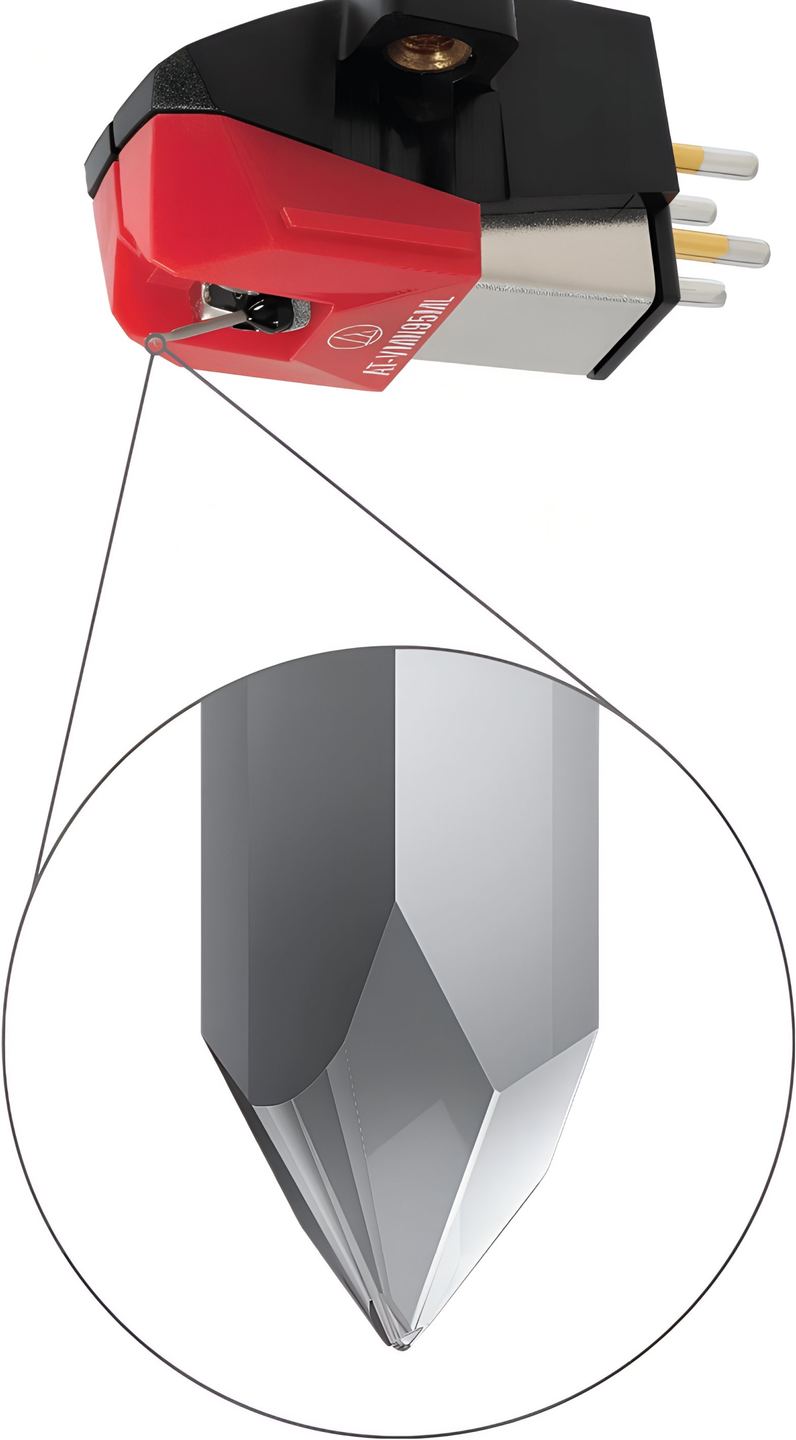
The Microlinear stylus is distinguished by its multi-level shape that closely reproduces the profile of the stylus used to cut the masters. With dimensions of 2.2 × 0.12 mil, it establishes an extended vertical but very narrow horizontal line-contact, which allows it to reach parts of the groove that elliptical or conical tips cannot explore. This elongated contact spreads the pressure over a larger area, reducing wear on both the vinyl and the diamond.
This geometry offers several concrete benefits. The frequency response extends up to 25,000 Hz, compared with 22,000 Hz for the elliptical tip in the same series. Distortion is significantly reduced in the inner grooves of the record, where the narrowing of the groove makes tracking more difficult. Transients gain in clarity, and ambient information captured during recording emerges with greater precision.
The nude diamond, cut from a single piece and mounted on a tubular aluminum cantilever via a square shank, benefits from accurate alignment in the cantilever’s laser-cut housing. Audio Technica estimates its lifespan at around 1,000 hours, roughly three times that of a standard elliptical stylus from the range.
A headshell designed for simplicity
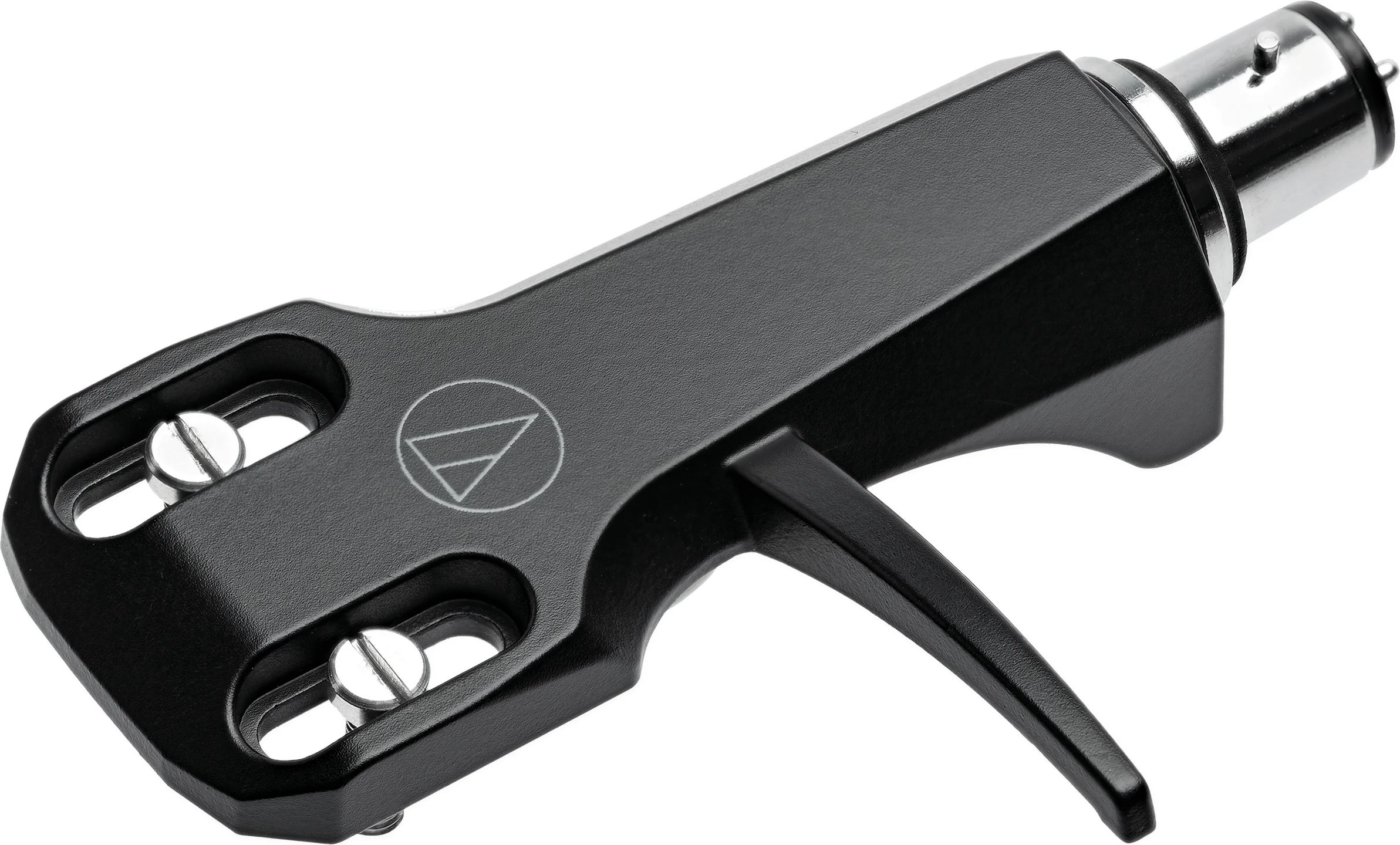
The die-cast aluminum AT-HS6BK headshell weighs only 9 g. Its design aims to limit unwanted vibrations that could color the signal. A finger lift positioned near the front helps you place the stylus in the lead-in groove without risking scratching the record surface.
Connections are made via four color-coded wires terminated with gold-plated clips, ensuring reliable contact and lossless transmission. The standard 1/2” mount is suitable for both S-shaped and J-shaped tonearms, thus covering most turntables equipped with a removable headshell system.
The complete cartridge and headshell assembly weighs 15.5 g once assembled. This weight, combined with the cartridge’s compliance, yields a resonance frequency in the recommended 8–12 Hz range with most tonearms having an effective mass between 12 and 25 g.
Installation and adjustments
The kit arrives ready to install: simply slide the headshell into the tonearm collar, lock it, then connect the four wires to the corresponding pins if this has not already been done. The recommended tracking force is between 1.8 and 2.2 g, with a nominal value of 2.0 g. Anti-skating is generally set to an equivalent or slightly lower value.
Line-contact styli such as the Microlinear are sensitive to the vertical tracking angle (VTA/SRA). Excessive positive VTA causes an emphasis in the treble and surface noise; too negative, and it produces veiled highs and a poorly defined bass. However, the cartridge tolerates a reasonable adjustment range, and tonearms without VTA adjustment can still deliver good results if their base height roughly corresponds to the standard thickness of a 180 g record.
Assembly and quality control
Each AT-VM95ML/H cartridge is assembled and tested at Audio Technica’s factory in Fukui, Japan. Quality control focuses in particular on channel balance, specified at a maximum of 1.5 dB at 1 kHz. Independent measurements published by several reviewers show that production units generally meet this specification with comfortable margin, some samples achieving differences below 1.3 dB.
In addition to the pre-mounted cartridge, the kit includes two pairs of screws (8 mm and 11 mm), two washers, and a non-magnetic screwdriver. These accessories allow you to remount the cartridge on another headshell if necessary, or to replace the original headshell with a different model.
Technical specifications
Electrical specifications
Frequency response: 20–25,000 Hz
Output voltage: 3.5 mV (@ 1 kHz, 5 cm/s)
Recommended load impedance: 47 kΩ
Coil impedance: 3.3 kΩ (@ 1 kHz)
DC resistance: 485 Ω
Coil inductance: 550 mH (@ 1 kHz)
Recommended load capacitance: 100–200 pF
Channel separation: 23 dB (@ 1 kHz)
Channel balance at output: 1.5 dB (@ 1 kHz)
Mechanical specifications
Recommended vertical tracking force: 1.8–2.2 g (standard 2.0 g)
Vertical tracking angle: 23°
Static compliance: 20 x 10⁻⁶ cm/dyne
Dynamic compliance: 10 x 10⁻⁶ cm/dyne (@ 100 Hz)
Headshell weight: 9 g
Total weight: 15.5 g
Stylus and cantilever
Stylus type: nude MicroLine with square shank
Stylus dimensions: 0.056 x 0.003 mm
Cantilever: aluminum pipe
Replacement stylus: AT-VMN95ML
Approximate stylus life: 1000 hours
Advantages of the MicroLine stylus
Excellent reproduction of transients and high frequencies
Minimal distortion on the inner grooves of records
Extended life compared with elliptical and conical styli
Dimensions and mounting
Dimensions (H x W x D): 21.2 x 21.4 x 62.4 mm
Mounting: standard 12.7 mm centers
Compatibility and replacement
Headshell: AT-HS6BK (die-cast aluminum)
Styli compatible with the VM95 cartridge body
AT-VMN95C: conical
AT-VMN95E: bonded elliptical
AT-VMN95EN: nude elliptical
AT-VMN95ML: MicroLine
AT-VMN95SH: Shibata
AT-VMN95SP: Special / Pro
Frequently Asked Questions
Is the AT-VM95ML/H cartridge compatible with my turntable?
+
The AT-HS6BK headshell fits all tonearms equipped with a standard SME connector (bayonet system). This includes most Technics, Stanton, Reloop, Audio Technica turntables and many other brands. Turntables with integrated tonearms (Rega, Pro-Ject, some Audio Technica models) require the cartridge alone, without the headshell.
What input capacitance should I set on the phono preamplifier?
+
Audio Technica recommends a load capacitance between 100 and 200 pF. This value includes the capacitance of the cable between turntable and preamp. If your preamp does not offer adjustment, the default value is generally suitable, unless you notice a treble peak or a metallic sound.
Is the Microlinear stylus suitable for worn or damaged records?
+
Line-contact styli read areas of the groove that simpler tips cannot reach. On a record worn by a conical or elliptical stylus, the Microlinear can thus retrieve preserved information. However, on a heavily scratched or dirty record, it may accentuate certain defects. Careful record cleaning is recommended.
What is the difference between the Microlinear (ML) and the Shibata (SH) in the same range?
+
Both profiles belong to the family of line-contact styli, but their geometry differs. The Microlinear has a finer tracing edge (0.12 mil versus about 0.15 mil for the Shibata), which can provide a slight increase in treble definition. The Shibata offers a slightly larger contact area, which can result in even slower wear. The sonic differences remain subtle and often come down to personal preference.
Can I use XP series (DJ) styli on this cartridge body?
+
Technically, AT-XP styli are compatible with the VM95 body. However, they are designed for a 3 g tracking force and intensive use (scratching, back-cueing). For hi-fi listening at 2 g, their behavior is not optimal. The reverse is also true: VM95 styli are not designed to withstand DJ handling.
Is the AT-VMN95ML replacement stylus identical to the one supplied originally?
+
Yes, the separately sold AT-VMN95ML stylus is strictly identical to the one fitted on the AT-VM95ML or AT-VM95ML/H cartridge. It is installed in the same way and does not require any additional adjustment.
User reviews
Gert
Everyone thinks this component is great. I think it’s good, but it lacks dynamics. The finish is perfect and appropriate for the price.
Comment from September 24, 2026 — Experience from September 07, 2026
Automatically translated — Show original (Dutch)
Iedereen vind dit element top. Ik vind het goed maar mist dynamiek. Afwerking perfect en voor de prijs correct.
To better understand our visitors, measure marketing effectiveness and personalise ads, we and our partners use cookies and mobile advertising identifiers on your device. This data makes it possible to display personalised and non-personalised ads and measure their performance. Some cookies, which are technically necessary, are exempt from consent. You can accept those that require your consent, refuse them by clicking "Refuse", or customise your choices via the settings screen.
To find out how Google uses the data collected once you have given your consent, see Google’s Business Data Responsibility site (opens in a new window).
You can change or withdraw your consent at any time via the "Consent and cookies" link. Your choices will apply on our site for 12 months.