Since 1986, the factory in Horgen, on the shores of Lake Zurich, has been crafting speakers that combine acoustic precision with aesthetic refinement. With the Ace 30, Piega condenses this expertise into a surprisingly compact format, adopting the AMT-1 ribbon tweeter that built the brand’s reputation, while pairing it with a new bass-midrange driver redesigned for this generation of speakers.
An aluminum cabinet with uncompromising rigidity
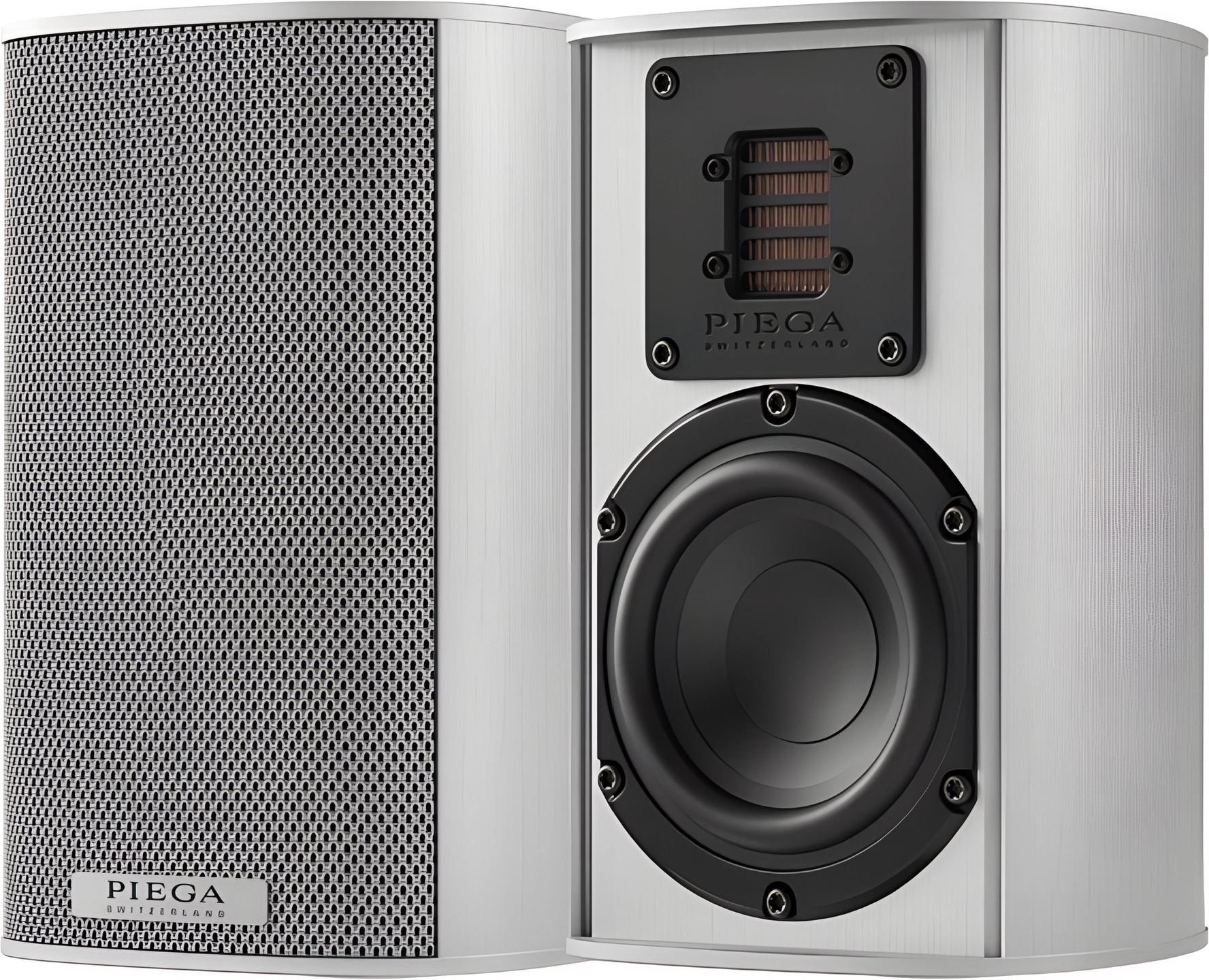
Swiss designer Stephan Hürlemann created for the Ace 30 a cabinet with the oval profile characteristic of Piega, measuring only 14 cm wide by 16 cm deep. The aluminum, extruded from a single piece, eliminates visible joints and removes the parallel edges that typically promote standing waves inside the speaker. This monobloc construction gives the Ace 30 a rigidity that only this material can provide in such a small volume.
The front grille, stretched with fabric matched to the chosen finish, follows the curves of the cabinet without the slightest discontinuity. The speaker’s 3 kg weight attests to the density of the whole, unusual for such small dimensions. Three finishes are available: natural silver aluminum, black anodized, and glossy white lacquer.
The AMT-1 tweeter, a pleated-diaphragm technology
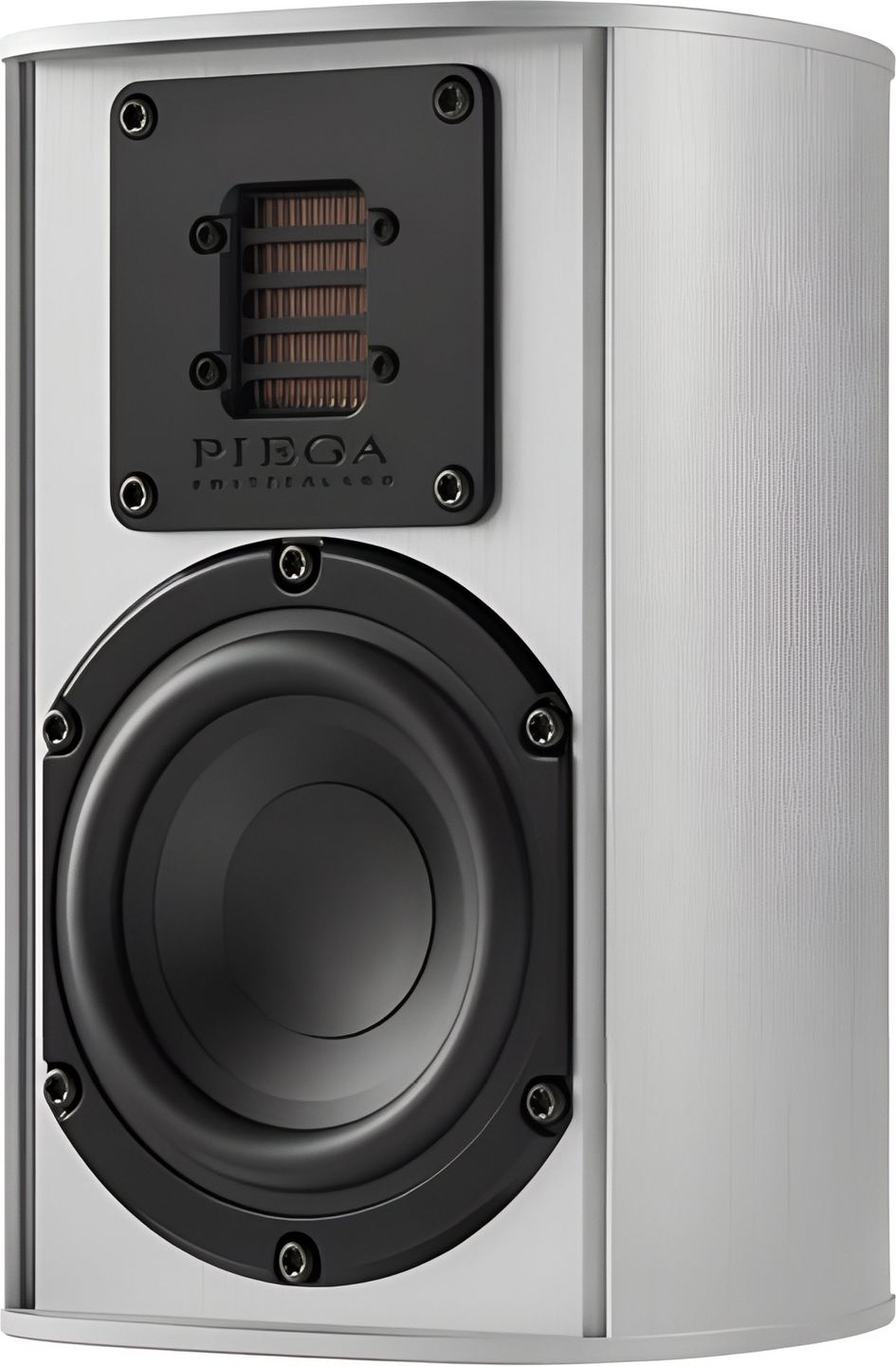
The heart of the Ace 30 lies in its AMT-1 tweeter, for Air Motion Transformer. This transducer operates on a principle distinct from dome or flat ribbon tweeters: its extremely light 24 × 36 mm pleated diaphragm compresses and accelerates air laterally, like an accordion bellows. The speed of the expelled air reaches about five times that of the diaphragm’s own movement, hence the name “air motion transformer.”
This design, combined with a powerful high-purity neodymium magnet motor, gives the Ace 30 treble reproduction with excellent transient response and an especially low distortion rate. The AMT-1 tweeter covers frequencies up to 40 kHz, well beyond the audible spectrum, which contributes to the sense of ease and naturalness in the upper range.
A redesigned bass-midrange driver for this generation
The 120 mm MDS woofer has been specifically reworked for the Ace series. This driver, developed in-house by Piega, is solely responsible for reproducing the low and midrange frequencies in this two-way configuration. The stated frequency response starts at 50 Hz, which remains respectable for a driver of this diameter housed in such a compact cabinet.
The pairing of this woofer with the AMT tweeter creates a tonal balance that favors clarity and definition over sheer power. The bass is articulated and fast, without the artificial heft that some compact speakers aim to produce to compensate for their size. This sonic signature is particularly well suited to acoustic music, jazz, or chamber classical music, while still being capable of reproducing more energetic genres like rock or pop.
A 4-ohm impedance that requires a suitable amplifier
With a sensitivity of 87 dB/W/m and a nominal impedance of 4 ohms, the Ace 30 requires an amplifier capable of delivering sustained current. Piega recommends power between 20 and 150 watts. An amplifier that is too modest or uncomfortable with low-impedance loads will limit dynamics and bass control.
This characteristic deserves careful attention when choosing partnering electronics. Properly dimensioned class A/B amplifiers or quality integrated units will bring out the best in these small speakers.
Integration into the living space and positioning
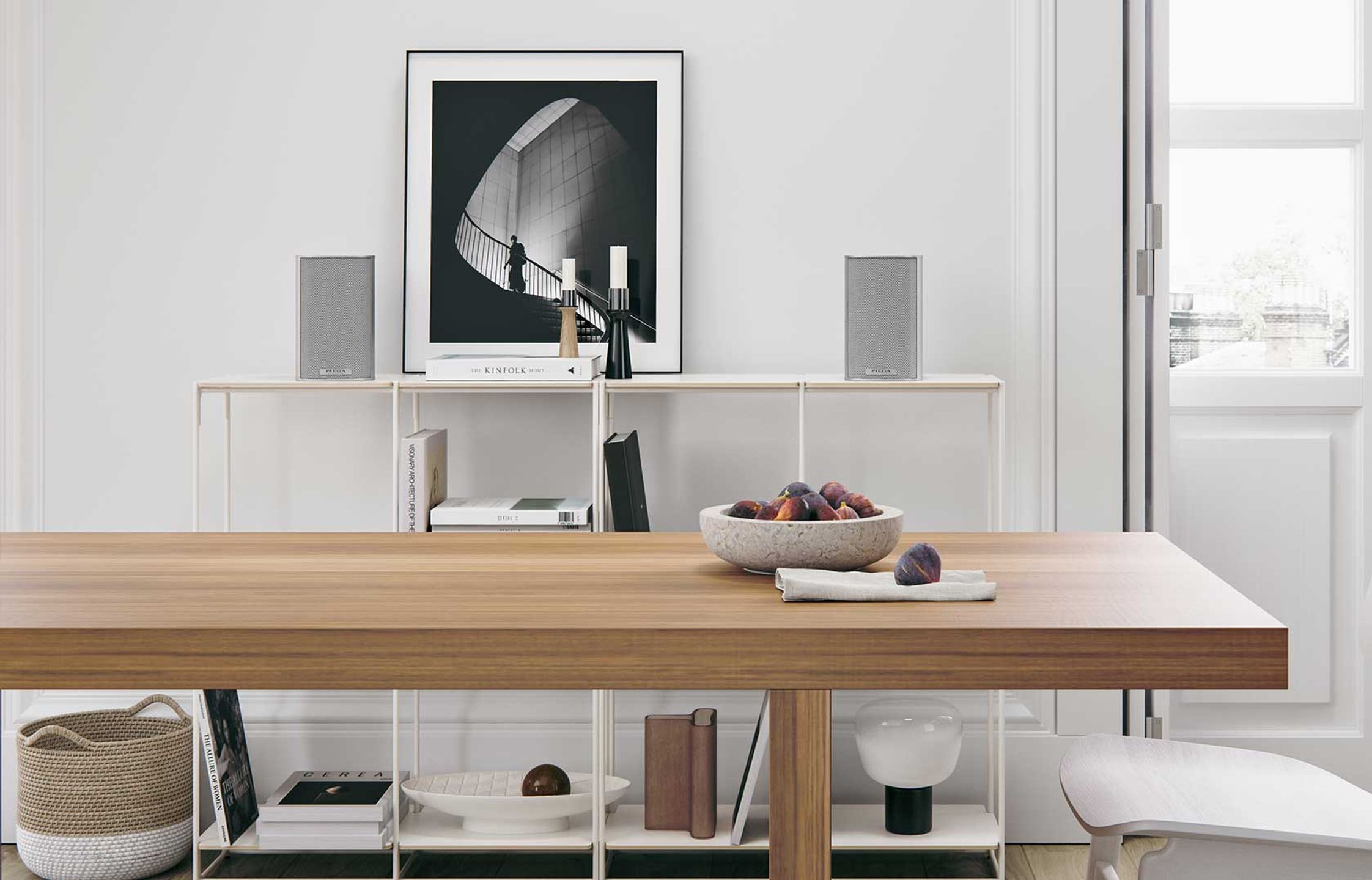
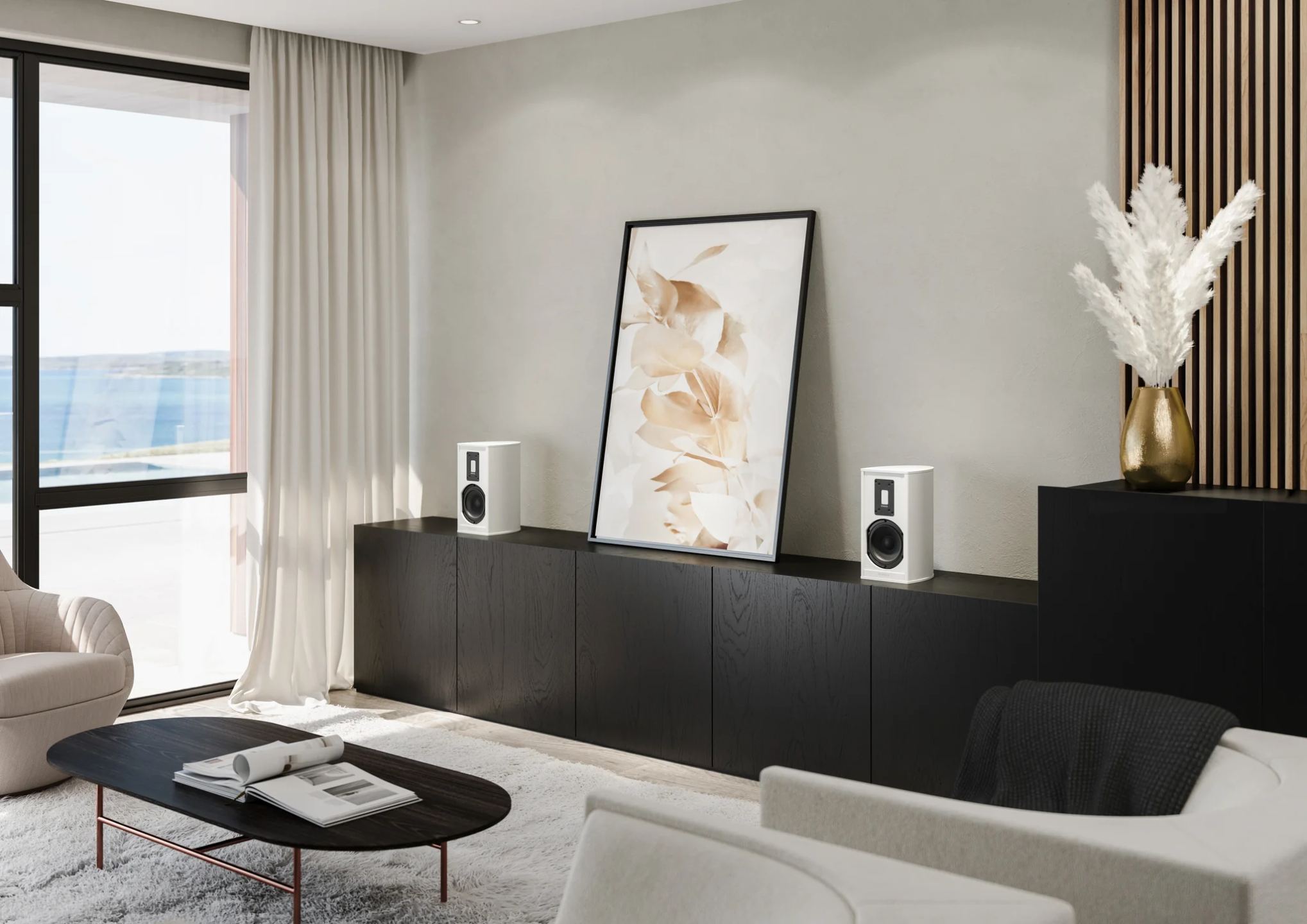
The Ace 30’s compact dimensions (22 × 14 × 16 cm) allow it to be set up on a desk, a shelf, or dedicated stands. Placement against a rear wall can reinforce the bass, partially offsetting the cabinet’s limited volume. In a free-field stand-mounted setup, adding a subwoofer becomes relevant for listeners who enjoy deeper bass.
The speaker also fits into a multichannel home theater system alongside the Ace 50 and Ace Center, with all three models sharing the same acoustic signature. This coherence makes it easier to build a homogeneous surround system in which the Ace 30 can take on the role of rear speaker.
Contemporary design: characteristic oval shape created by Swiss designer Stephan Hürlemann
Available finishes
Silver aluminum with silver acoustic fabric grille
Black anodized aluminum with black acoustic fabric grille
White lacquer with white acoustic fabric grille
Key features
Musical versatility: perfect for subtle jazz and classical music, but also for powerful rock and energetic pop
Award-winning sound experience: design acclaimed for its musicality and sonic impact
Frequently Asked Questions
Can the Ace 30 fill a large living room without a subwoofer?
+
In large spaces, the Ace 30 reaches its limits in terms of bass foundation and sound pressure. A subwoofer then becomes desirable to extend the lower register and relieve the woofers during demanding passages. Piega offers subwoofers compatible with the Ace series.
What type of stand is best suited to the Ace 30?
+
Speaker stands that place the tweeter at ear level in the listening position will provide the best spatial imaging. Piega sells a ball-joint wall mount compatible with the Ace 30. On a shelf, make sure the speaker is not pushed into a closed recess, which would color the sound.
Can the front grille be removed?
+
Yes, the woven grille is removable. It then reveals the golden AMT-1 tweeter and the MDS woofer. Listening without the grille may slightly alter the high-frequency response, but the difference remains subtle.
Is there an active or connected version of the Ace 30?
+
Piega does indeed offer the Ace 30 Wireless, an active version with built-in amplification, DAC, and wireless connectivity (Wi-Fi, Bluetooth, HDMI eARC, Chromecast, Roon Ready). This version is a separate product with its own specifications.
How does the Ace 30 compare to the older TMicro 40 AMT?
+
The Ace 30 succeeds the TMicro series with an exterior design reworked by Stephan Hürlemann and a cabinet with more harmonious curves. The AMT-1 tweeter remains the same, but the MDS woofer has been optimized. The dimensions are very similar, with the Ace 30 being slightly more compact.
Is the Ace 30 suitable for nearfield use on a desk?
+
Its compact size and precision in the midrange and treble make it an interesting candidate for nearfield listening. However, its 4-ohm impedance means you must use an amplifier or DAC/amp capable of driving this load, which rules out most headphone outputs or miniature amplifiers.
User reviews
Dan
A really good purchase. They play really well, even though they don't take up much space. Can only be recommended
Comment from May 21, 2026 — Experience from March 01, 2026
Automatically translated — Show original (Danish)
Et rigtig godt køb.
De spiller rigtig godt , selvom de ikke fylder ret meget.
Kan kun anbefales
Claude
Not worth its price
Comment from February 05, 2026 — Experience from January 18, 2026
To better understand our visitors, measure marketing effectiveness and personalise ads, we and our partners use cookies and mobile advertising identifiers on your device. This data makes it possible to display personalised and non-personalised ads and measure their performance. Some cookies, which are technically necessary, are exempt from consent. You can accept those that require your consent, refuse them by clicking "Refuse", or customise your choices via the settings screen.
To find out how Google uses the data collected once you have given your consent, see Google’s Business Data Responsibility site.
You can change or withdraw your consent at any time via the "Consent and cookies" link. Your choices will apply on our site for 12 months.