

Supra LORAD 2.5 CS-16-EU angled 2m

Overview
Since 1976, Swedish manufacturer Jenving Technology has been developing its own cabling solutions in Ljungskile, following a philosophy it describes as “No-Nonsense”: measurable technical choices, top-grade materials, and fully controlled in-house manufacturing.
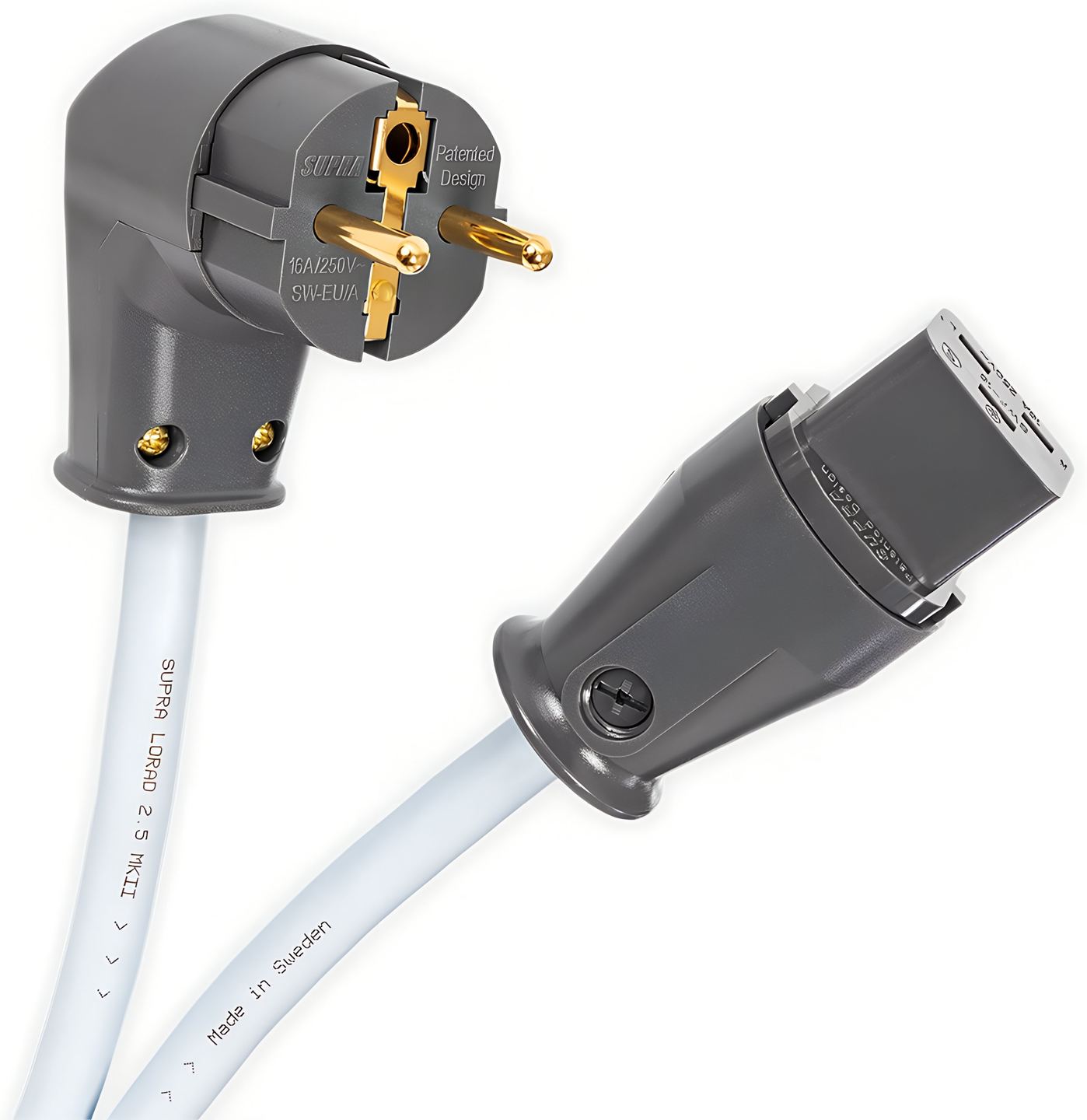
The angled LoRad 2.5 CS-16-EU embodies this approach applied to mains power, combining advanced shielding, high current capacity, and an angled Schuko connector for setups where space behind devices is limited.
A cable designed for demanding environments
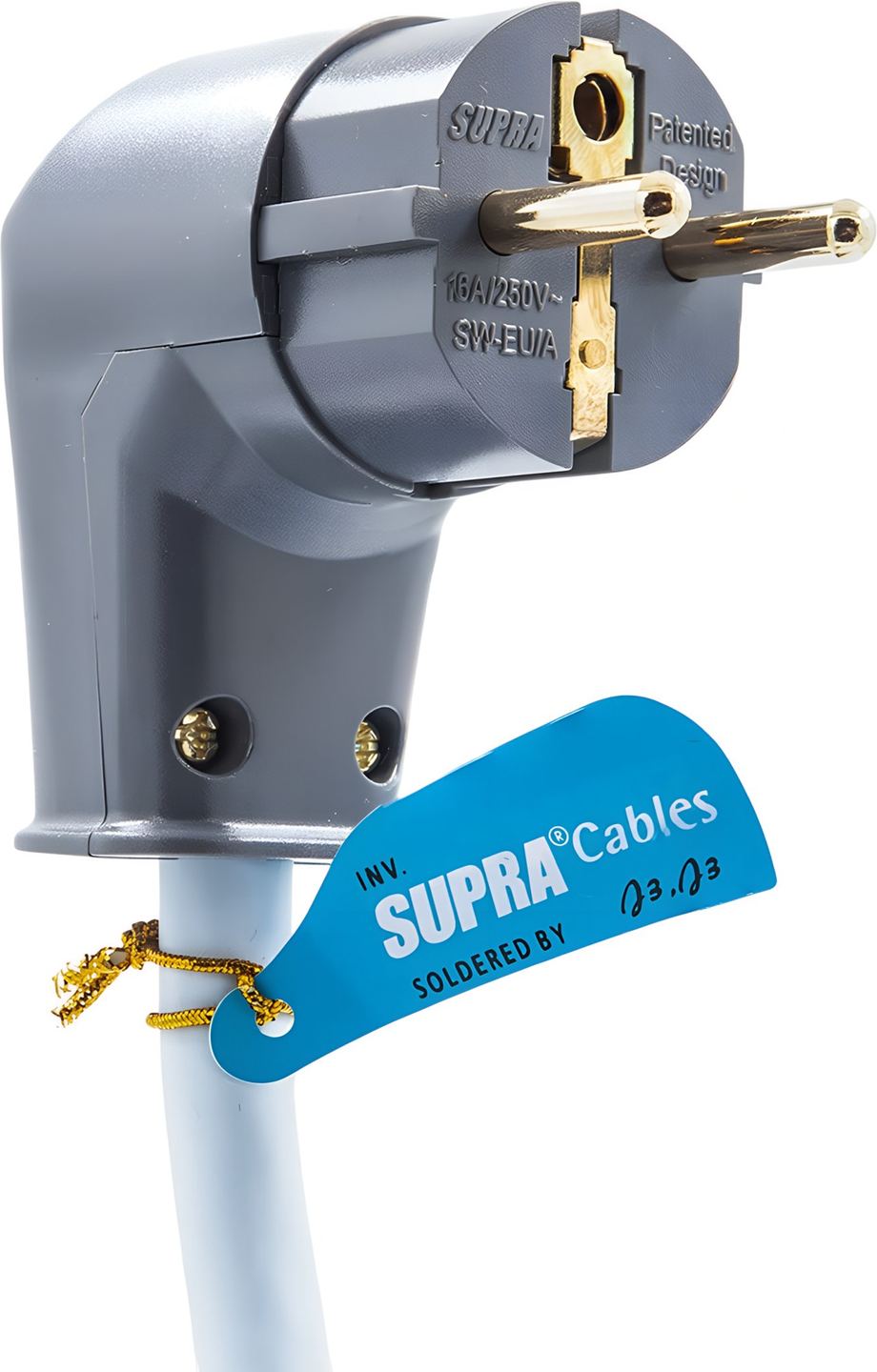
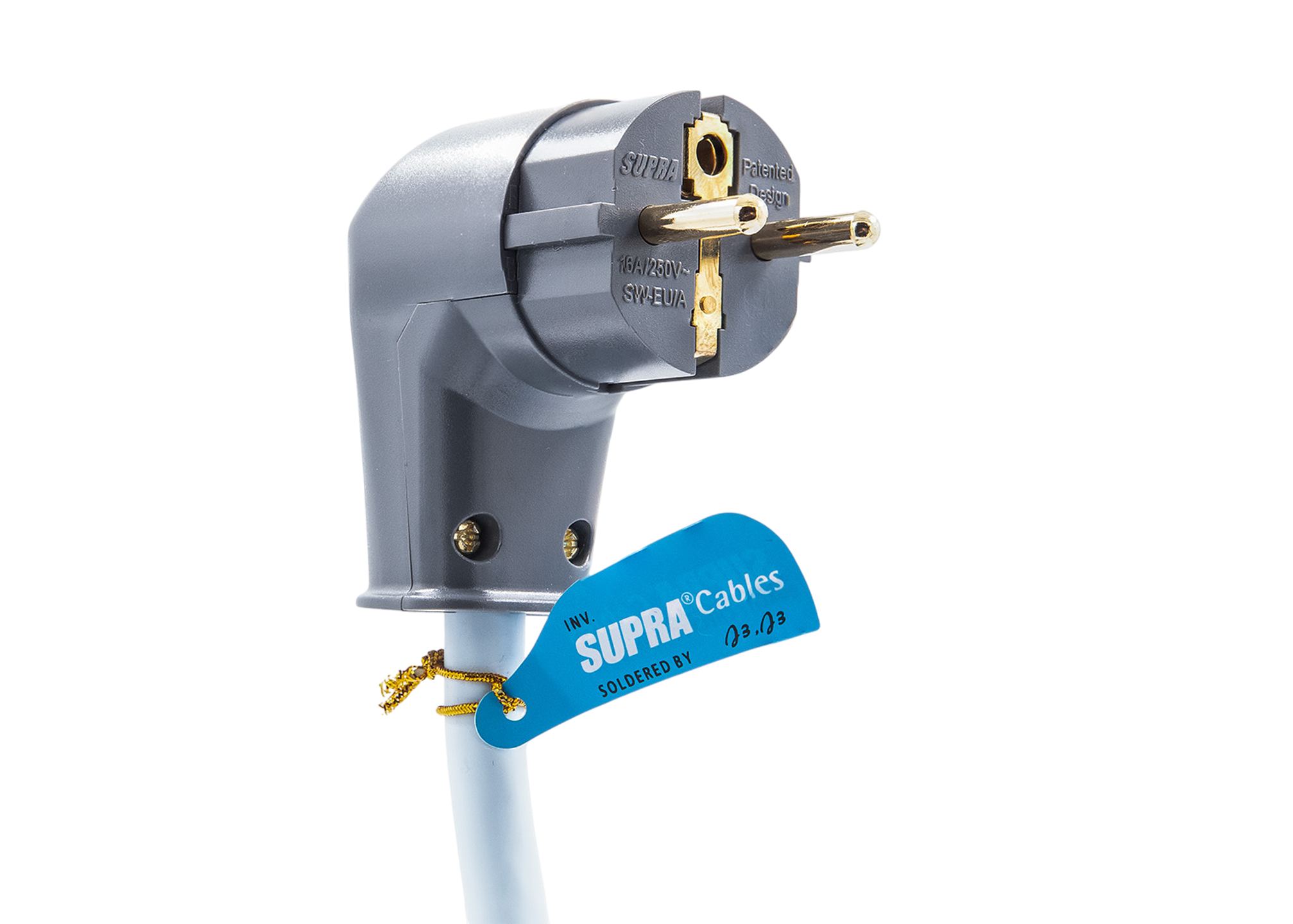
The 90° angled Schuko connector allows the cable to be installed in configurations where a straight plug would cause problems: tight racks, shallow furniture, wall outlets close to a perpendicular wall. This orientation reduces the required bending radius and limits mechanical stress on the cable at the plug.
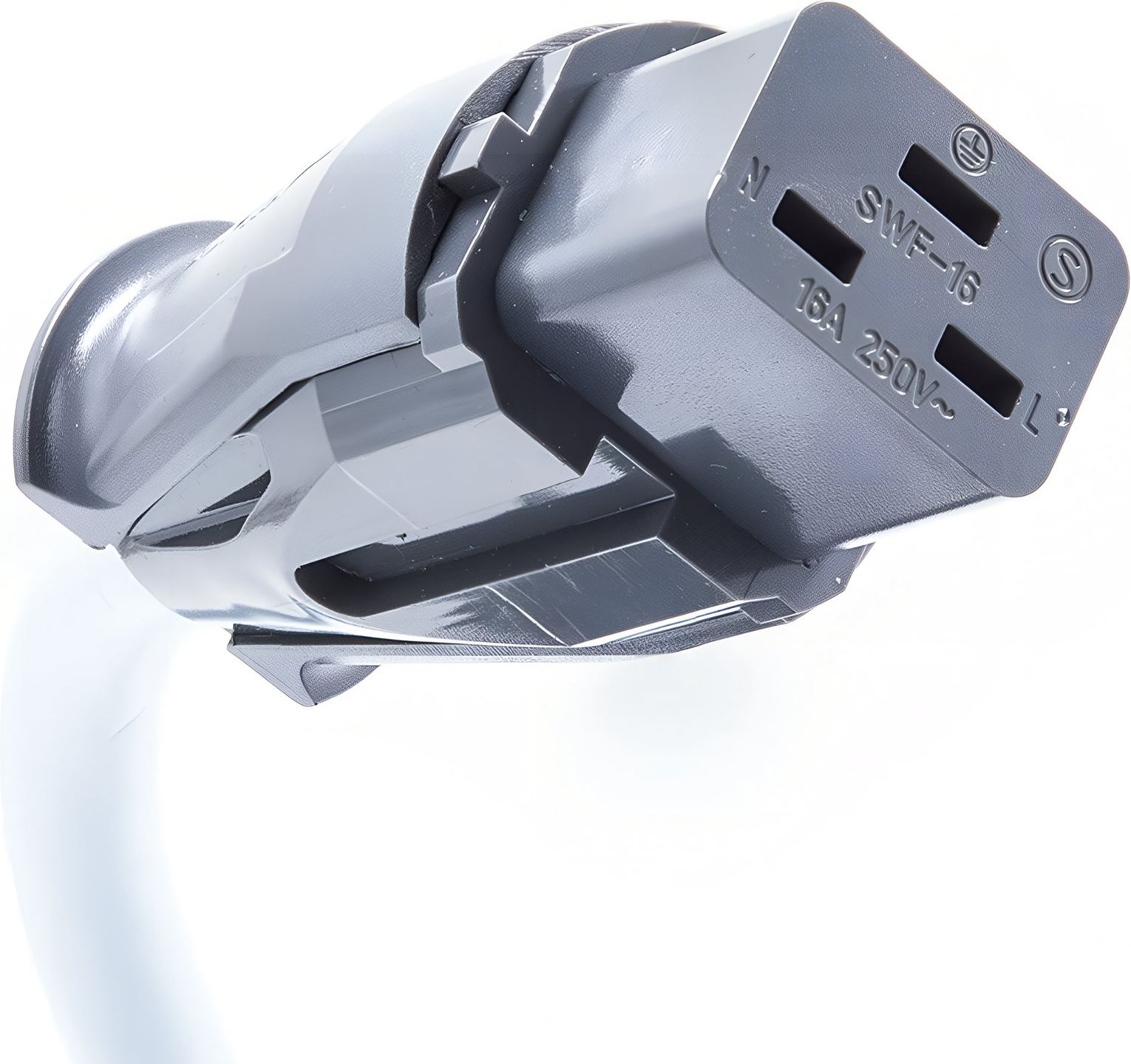
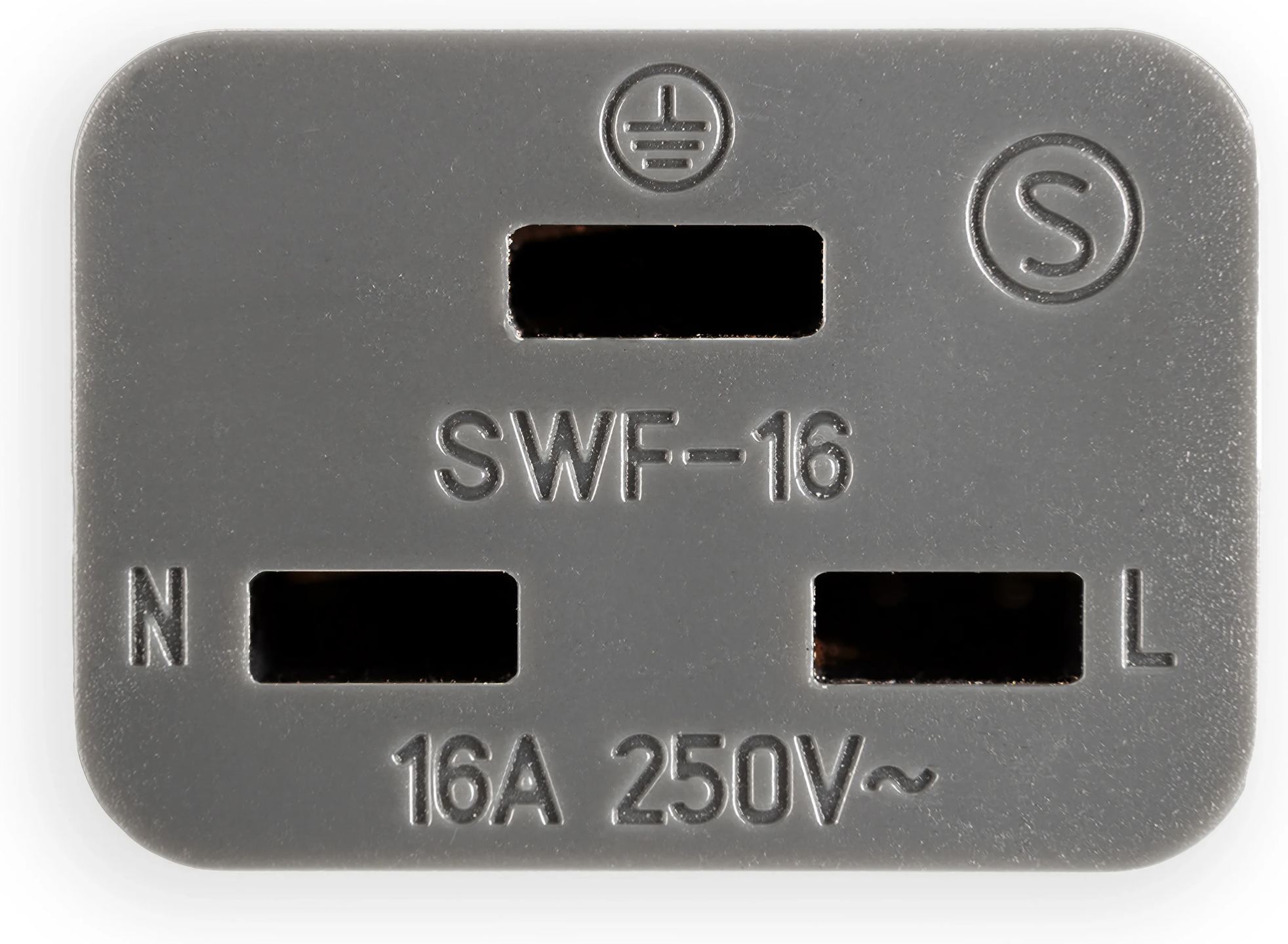
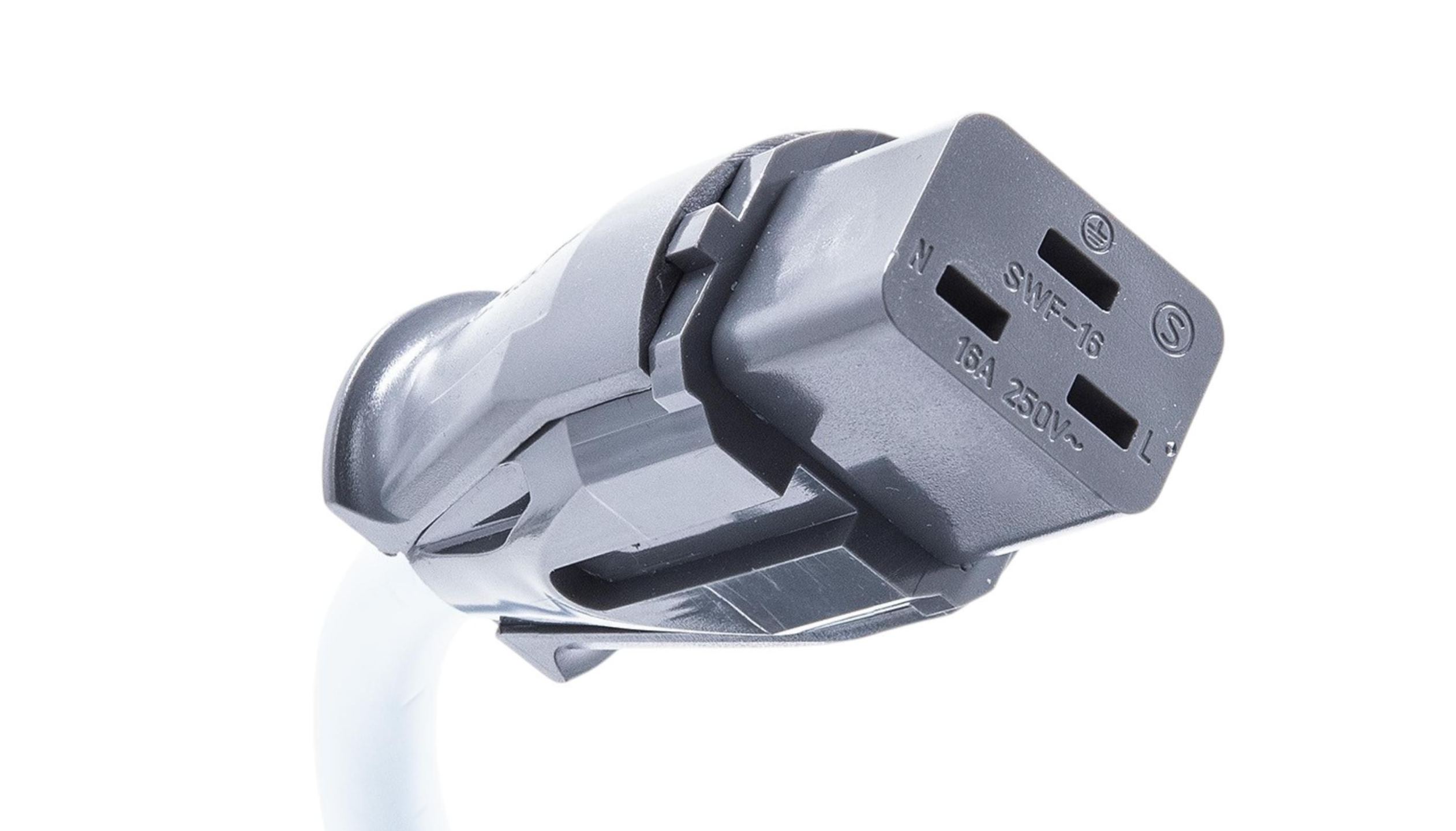
On the equipment side, the SWF-16 female connector (IEC-320 C19 standard) supports continuous currents of up to 16 amps. This format, larger than the standard C13 limited to 10 A, is typically used on power amplifiers, server power supplies, certain medical devices, or high-load mains distribution blocks. The 24-carat gold-plated contacts ensure stable conductivity and resist oxidation, even after many connection/disconnection cycles.
LoRad technology: reducing stray fields
LoRad stands for “Low Radiation,” a patented approach by Tommy Jenving to limit both the electromagnetic radiation emitted by the cable and the pickup of surrounding interference (cordless phones, Wi-Fi, radio waves). Two complementary mechanisms are at work.
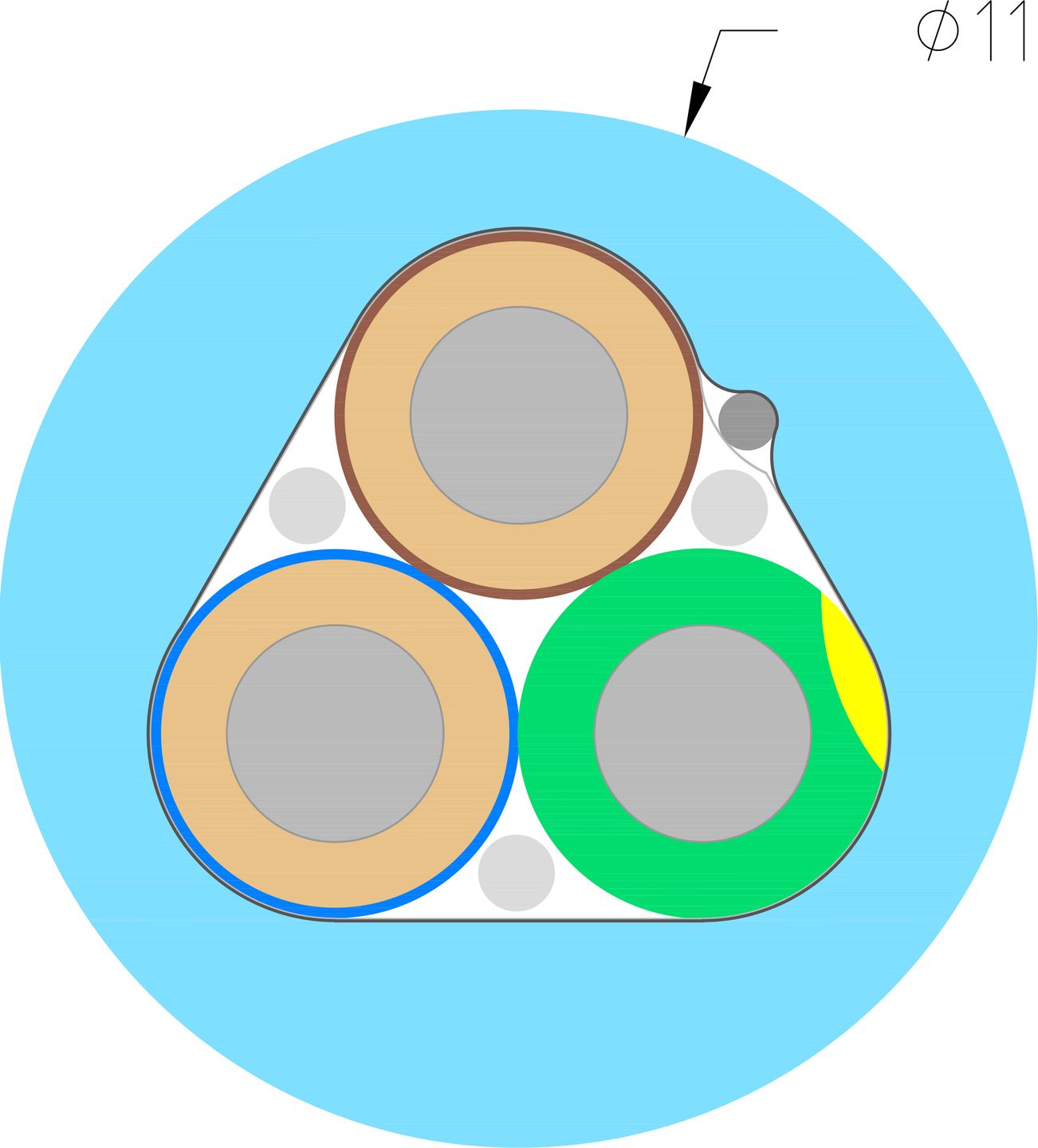
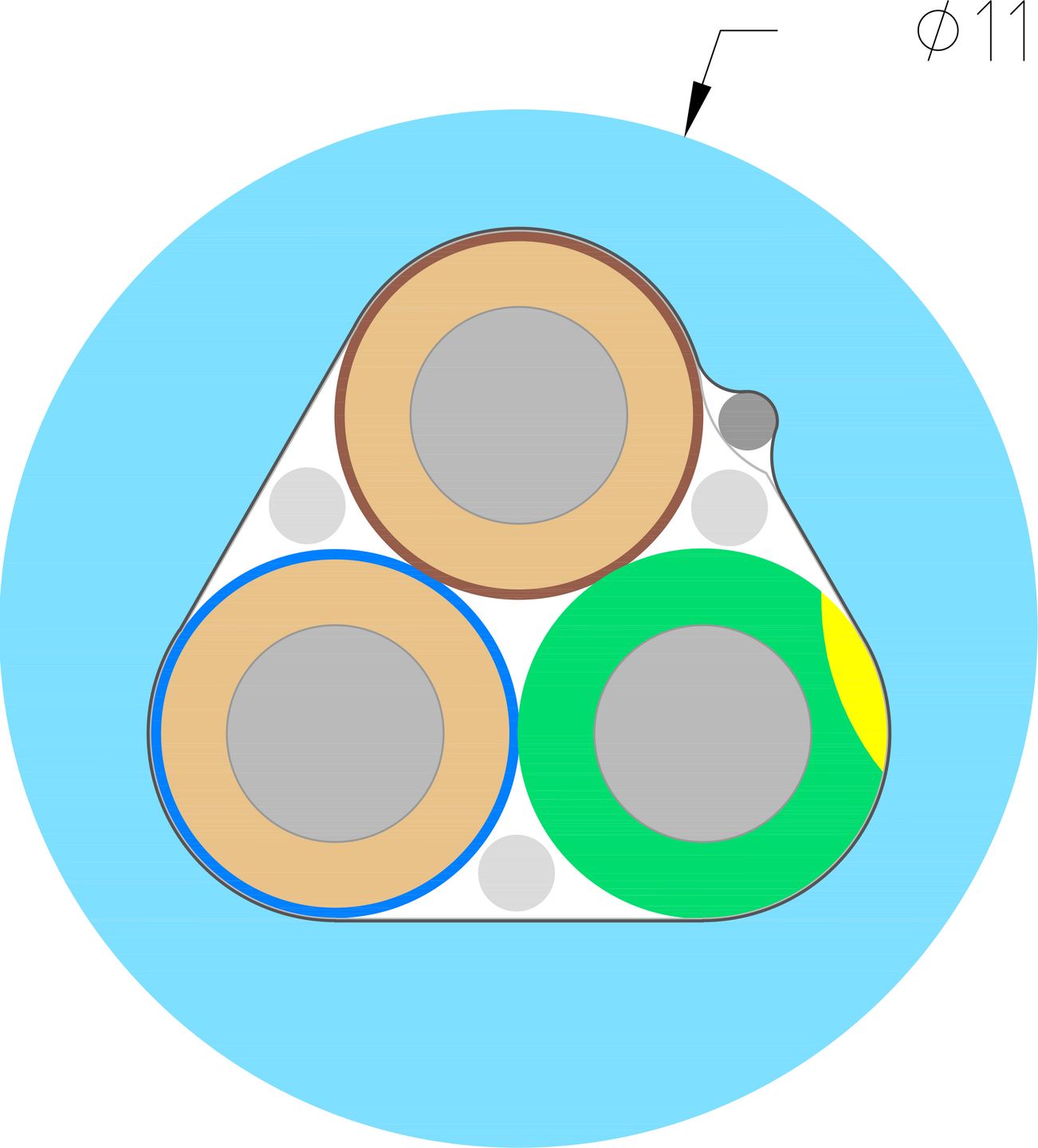
The first relies on a carbon/nylon semi-conductive screen that surrounds the conductors. This shielding attenuates alternating electric fields and blocks radio-frequency interference (RFI) before it reaches the connected equipment. Unlike traditional shielded cables that require a bare drain wire, the LoRad MkII system connects the screen to ground via a semi-conductive plastic applied to the protective conductor (yellow/green). This design enabled the cable to pass European flex tests (60,000 bending cycles according to HD21.5 S3), whereas a conventional drain wire would eventually damage the internal insulation.
The second mechanism concerns magnetic fields: the three conductors are twisted with a short pitch, which causes the fields generated by the phase and neutral currents to cancel each other out. The practical result is a reduction in electrical background noise that could affect nearby signal cables.
Construction and materials
The cable uses tinned OFC (Oxygen-Free Copper) conductors with a cross-section of 3 × 2.5 mm² (equivalent to AWG 13). Tinning protects the copper from oxidation and makes soldering easier during factory assembly. Each conductor consists of 320 fine strands, giving the cable appreciable flexibility despite its generous cross-section.
The outer PVC jacket features Supra’s characteristic “Iceblue” color, although other colors are available on request. The overall diameter remains modest, making it easier to route through conduits or behind furniture. Standard lengths range from 1 meter to 4 meters, with custom lengths available.
Fields of application
The 16 A / 250 V rating opens this cable to a wide variety of uses. In audio and video, it is suitable for high-power amplifiers, power supplies for sophisticated home cinema systems, and studio equipment (mixing consoles, monitor amplifiers, rack power supplies). The LoRad shielding really comes into its own in these situations where signal cables run close to mains power cables.
Beyond the audio field, this type of cable is well suited to laboratories (measurement instruments sensitive to interference), medical installations (where reduced electromagnetic fields may be required), and IT environments (servers, UPS units). Supra notes that institutions such as the Swedish National Forensic Laboratory, the Swedish Air Force (JAS project), and several European hospitals use LoRad cables for their critical equipment.
Certification and safety
The cable is tested and certified by Intertek Sweden in accordance with European standard HD21.5 S3, which governs flexible cables for domestic and similar appliances. This certification confirms compliance with electrical safety and mechanical strength requirements. To fully benefit from the shielding effect, the cable must be connected to a wall outlet with a functional earth.
Documentation
Technical specifications
Electrical specifications
- Rated voltage: 250 V
- Rated current: 16 A continuous
- Cable cross-section: 3 x 2.5 mm² (AWG 13)
- Suitable for high-power systems and professional environments
Construction and materials
- Tinned oxygen-free copper conductors for maximum conductivity and increased durability
- Advanced Carbon / Nylon braid shielding for protection against RF interference and mains noise
- Carbon / Nylon semi-conductive tape screen
- Short wire twist for reduced magnetic interference and preservation of the quality of neighboring signals
- Durable PVC outer jacket
Connectors
- Angled male Schuko connector (SW-EU/A) optimized for compact installations without compromising performance
- Female C19 IEC-320 connector (SWF-16)
- 24 K gold-plated connectors for optimal conductivity, corrosion resistance, and increased longevity
Technology and performance
- LoRad technology: reduced electric and magnetic fields for clean power delivery
- Noise suppression at the source for purer sound and sharper images
- Optimized dynamics, transients, and 3D soundstage
- Reduced electrical radiation for a safe environment
Dimensions and finishes
- Available lengths: 1 m, 1.5 m, 2 m, 4 m
- Color: Iceblue
Safety and certifications
- Tested and certified by Intertek Sweden according to European standard HD21.5 S3
- For optimal performance and safety, always connect to a grounded wall outlet
Recommended applications
- High-fidelity audio systems and home theater
- Recording studios, stages, and professional video installations
- Medical equipment and laboratory instruments
- Noise-sensitive environments and electrohypersensitive (EHS) users
Frequently Asked Questions
What is the difference between the C19 (SWF-16) connector and the standard C13 connector?
The C19 connector is sized to support 16 amps continuously, compared with 10 amps for the C13. Its wider rectangular shape and horizontal pins make it visually distinctive. It is typically found on high-consumption equipment: high-end amplifiers, servers, professional UPS units. Before buying this cable, check that your device actually has a C20 inlet (the corresponding male connector) and not a standard C14 inlet.
Why choose the angled version rather than the straight version?
The 90° angled Schuko plug reduces the space required behind the device when the wall outlet is close to an obstacle (wall, furniture, other equipment). It prevents excessive bending of the cable and limits mechanical stress at the connection point. If you have sufficient clearance, the straight version remains a valid option.
Does LoRad shielding really improve sound or picture quality?
The shielding reduces electromagnetic and radio-frequency interference picked up or emitted by the power cable. The perceptible effect depends on the environment: in a room saturated with interference (numerous wireless devices, switching power supplies, dimmers), the difference can be significant. In an already electromagnetically quiet environment, the improvement will be more subtle. The main benefit is to avoid degrading neighboring signal cables through radiation from the mains cable.
Is this cable suitable for IT equipment such as servers?
Yes, as long as the equipment has a C20 inlet and requires a current below 16 A. Servers, UPS units, and professional power distribution units (PDUs) frequently use this type of connector. LoRad shielding can help reduce noise on nearby data lines.
- Eco-contribution included in the sale price.
- Manufacturer reference: 3002100091
- GTIN / EAN: 7330060205477




