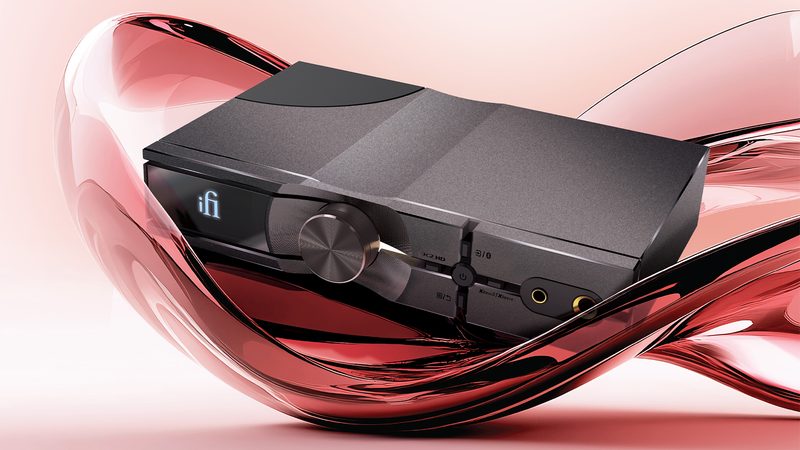
iFi Audio Neo Stream 3

Specifications and features


Overview
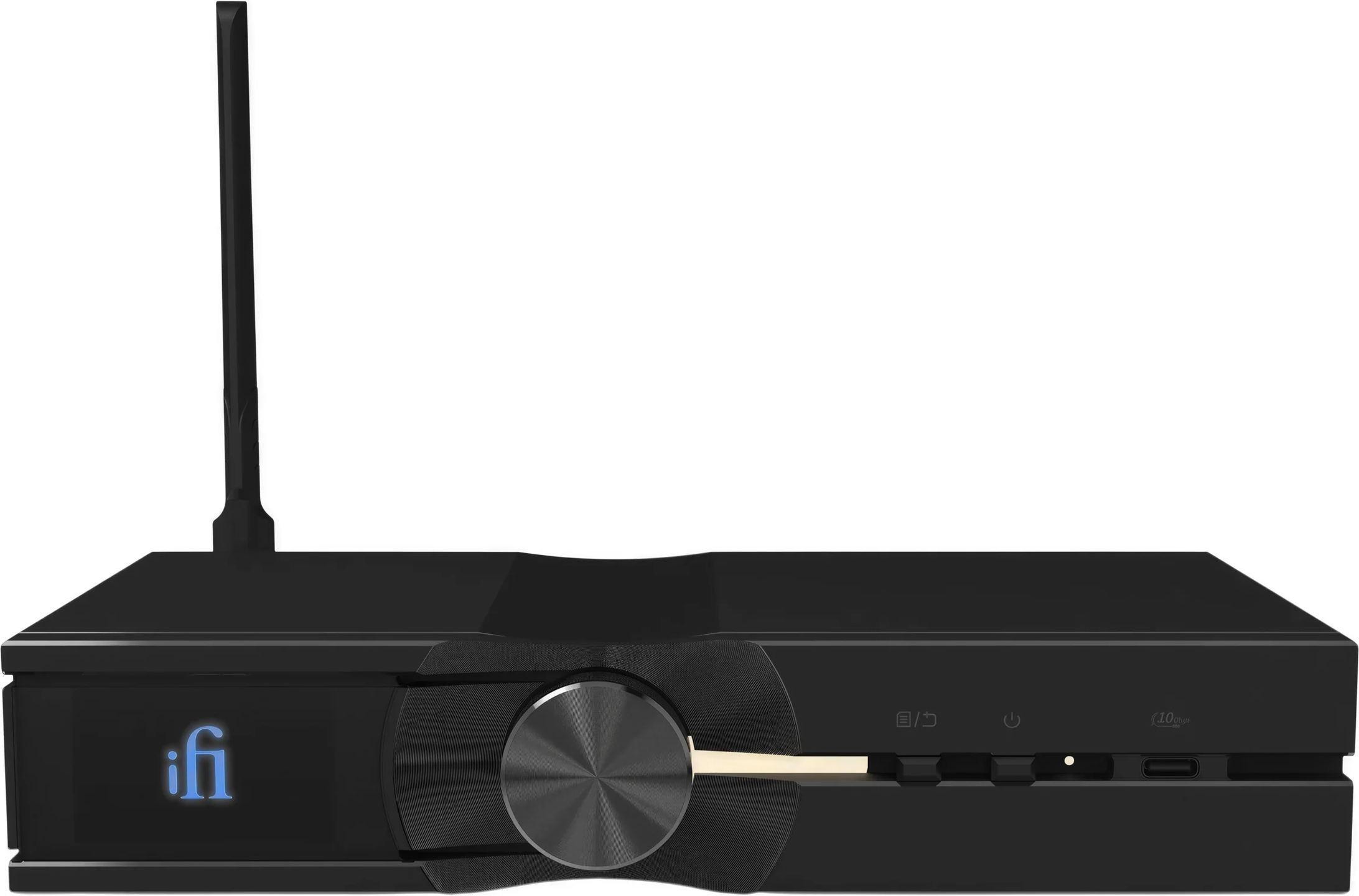
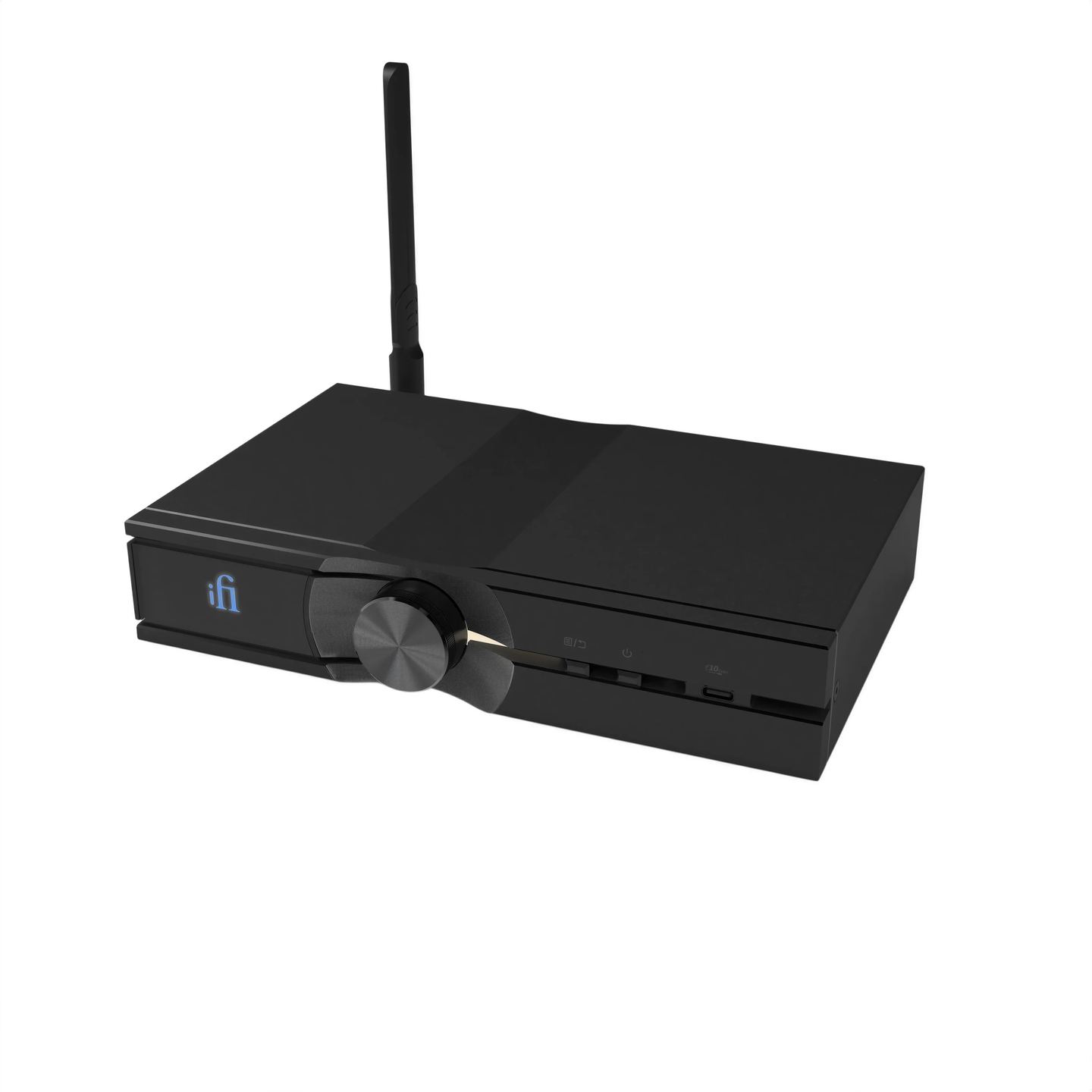
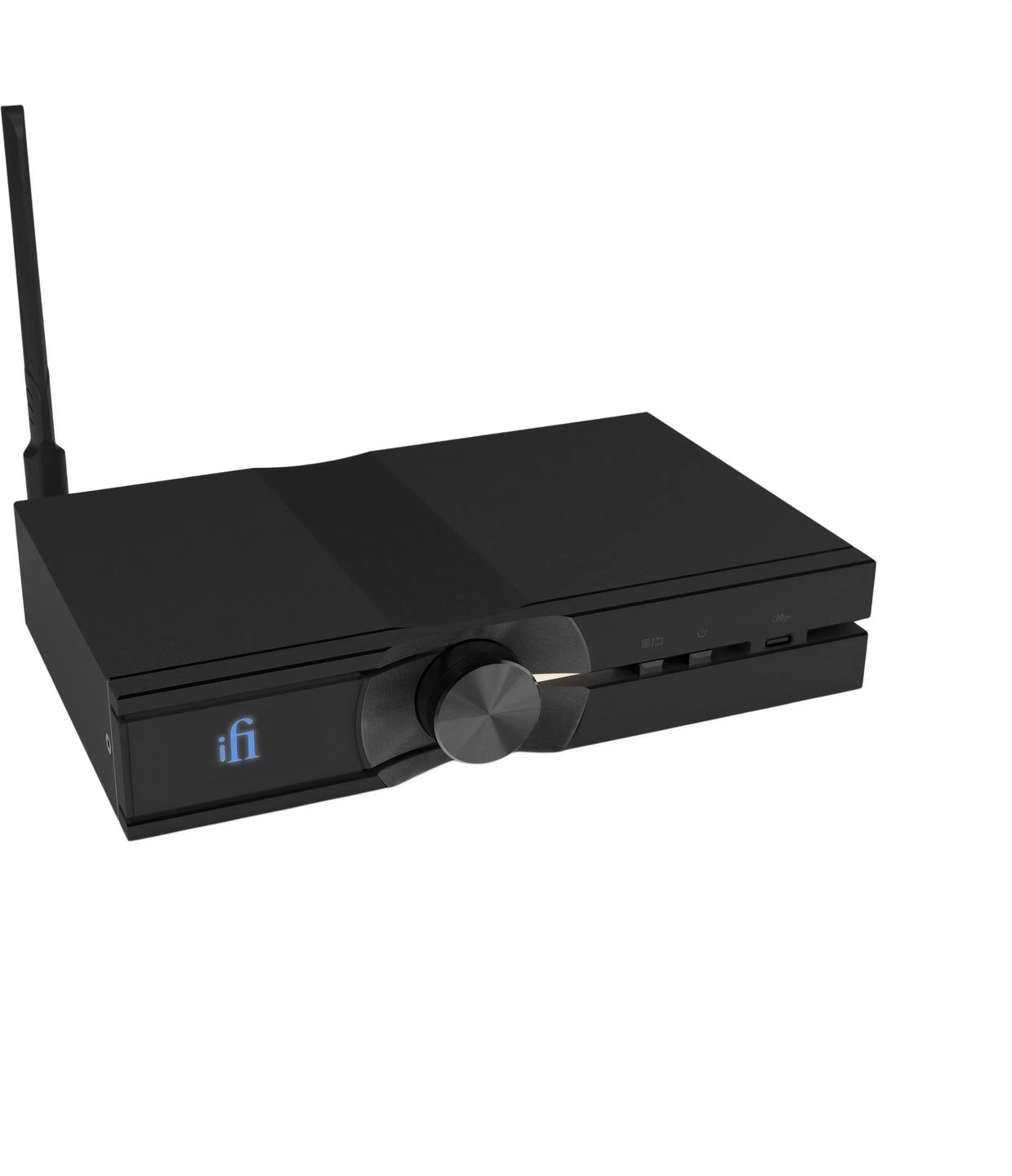
Third generation of iFi Audio network streamers, the Neo Stream 3 takes over the conversion stage of the Neo iDSD 2 and combines it with a revamped streaming engine. The device adds two notable ingredients to the mix: support for Qobuz Connect, absent from the previous model, and the K2HD technology developed by JVCKENWOOD. The format remains compact (214 × 151 × 41 mm for 1 kg), with an aluminum chassis identical to that of its predecessor.
A Burr-Brown DAC with separate signal paths
The Neo Stream 3 uses a Burr-Brown chip whose architecture handles PCM and DSD via separate circuits. This design choice preserves signal integrity all the way to analog conversion, with no intermediate transcoding. Supported formats go up to PCM 768 kHz and DSD512 (22.6 MHz), resolutions that far exceed what current streaming services offer but allow uncompromised playback of files from personal libraries.
The analog section delivers 4 V RMS in balanced mode via a 4.4 mm jack output and 2 V RMS in unbalanced mode on RCA connector. The signal-to-noise ratio reaches 106 dBA and total harmonic distortion remains below 0.0025% at 0 dBFS, figures consistent with the product’s positioning.
K2HD technology to reprocess digital recordings
For the first time in its streamers, iFi Audio integrates K2HD technology, the result of a partnership with JVCKENWOOD. Two modes are available: K2 preserves the file’s native resolution while reconstructing part of the harmonic content lost during digital encoding; K2HD goes further by upsampling PCM files below 192 kHz to that frequency.
This technology is based on an algorithm developed by JVC engineers using comparative analysis of original analog tapes. The result varies depending on the recordings: some gain in warmth and body, others benefit less from this processing. The mode can be disabled for those who prefer an unaltered signal.
Network connectivity: three Ethernet inputs, including one optical
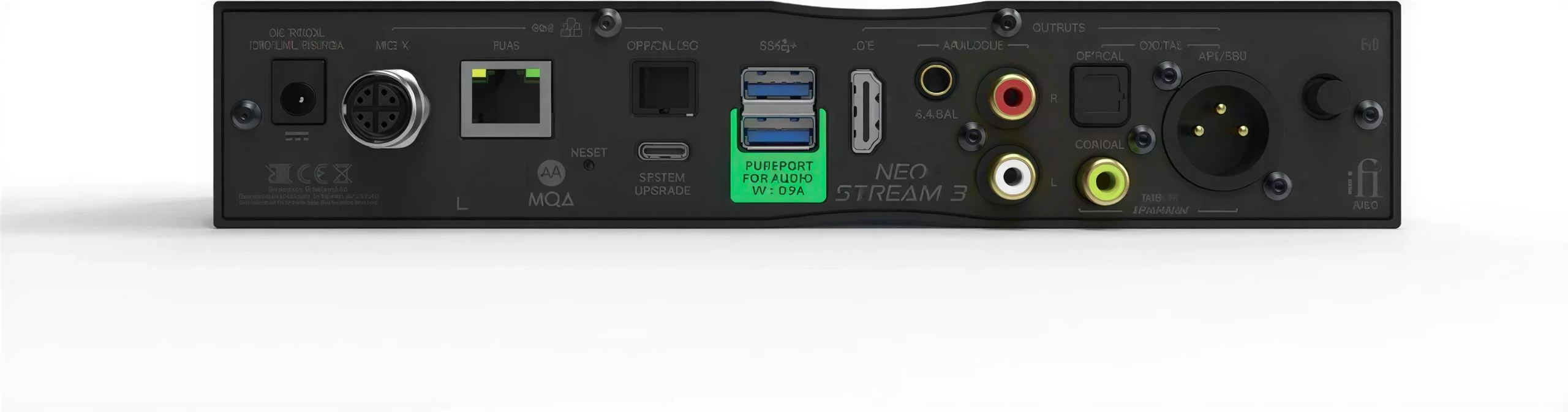
The rear panel of the Neo Stream 3 features an unusually high density of connectors for a device of this size. On the network side, three options coexist: a standard RJ45 port, an M12 input (a format originating from industrial Ethernet), and an SC optical input paired with the supplied OptiBox.
The OptiBox is a small unit that connects to the router via RJ45 and transmits the signal to the Neo Stream 3 over optical fiber. This link provides complete galvanic isolation between the network and the device, eliminating electrical interference that could be carried by a copper cable. The signal is regenerated, re-clocked, and rebalanced in the process. Optical transmission works over distances up to 1 km without notable degradation, a mostly anecdotal capability in a home setting but one that illustrates the robustness of the system.
Multiple digital outputs to feed an external DAC
Even with its built-in converter, the Neo Stream 3 can serve as a digital transport for an external DAC. Digital outputs include coaxial and optical S/PDIF, AES/EBU on XLR, and an I2S interface via HDMI connector. Two USB-A ports round things out, one of which is dedicated to audio output with ANC (Active Noise Cancellation) technology to reduce line noise.
The S/PDIF outputs incorporate iPurifier technology, a signal regeneration circuit that iFi also sells as standalone products. The femto clock (precision on the order of a femtosecond) drives all digital outputs.
Streaming services and software compatibility
The streaming engine supports Qobuz Connect, Tidal Connect, Spotify Connect, and AirPlay 2 natively. Qobuz Connect integration, new to this generation, allows bit-perfect playback directly from the Qobuz app without going through an intermediate server. Roon Ready certification ensures smooth integration for users of this software.
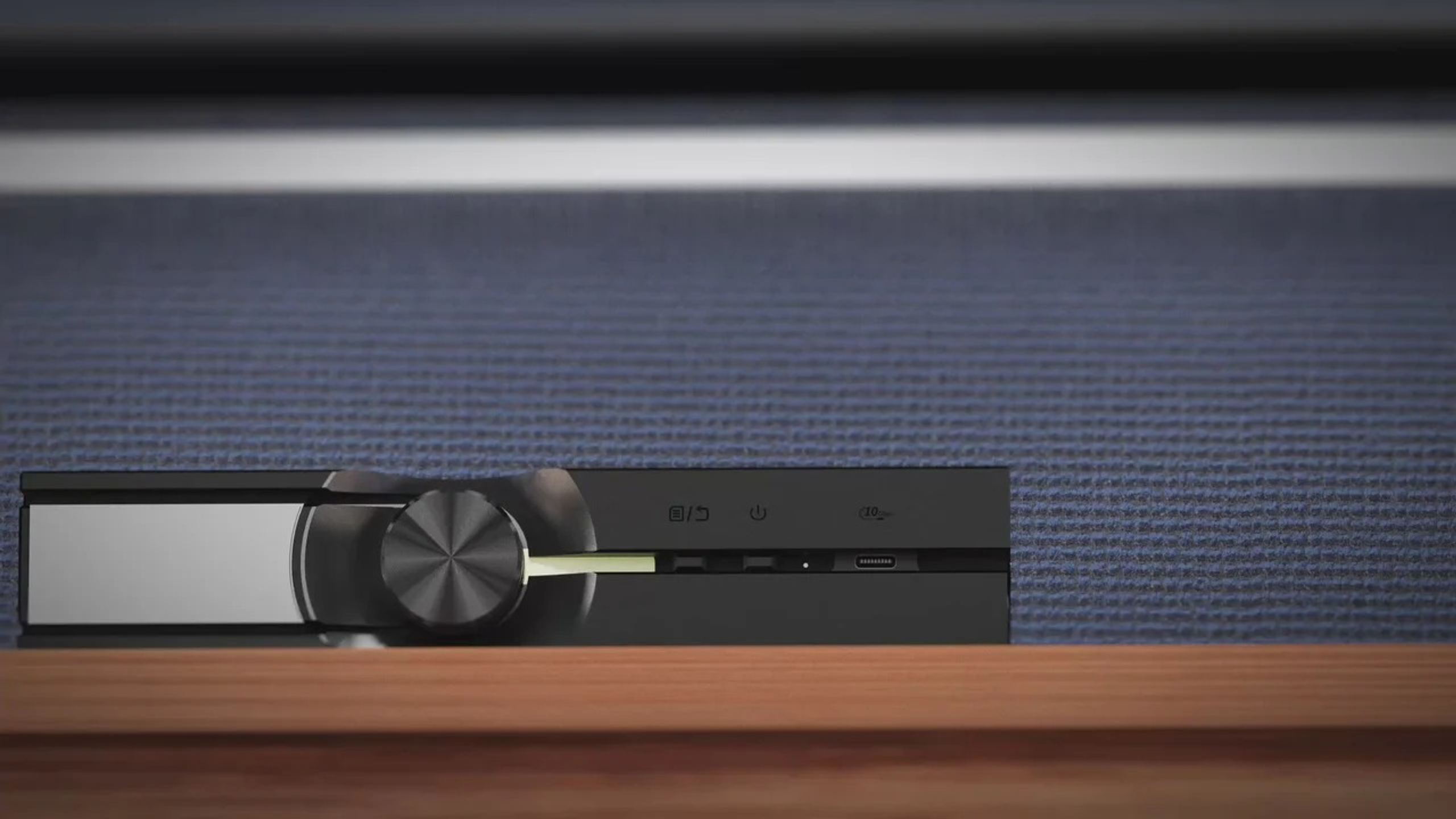
For local file playback, the Neo Stream 3 supports NAS via DLNA/UPnP and USB storage devices connected to its three ports (two USB-A on the rear, one USB-C on the front). The Volumio 3 operating system, optimized for audio, manages the whole platform.
The iFi Nexis app simplifies setup
One of the criticisms leveled at the original Neo Stream concerned the complexity of its initial setup. iFi Audio has gone back to the drawing board with a new IoT chip that enables simplified Wi‑Fi pairing via the iFi Nexis app. Once connected, the app serves as a control interface without requiring browser access or manual IP address handling.
The “Exclusive Modes” allow unused system processes to be disabled during playback to minimize software jitter. This option targets users who want to optimize performance for critical listening.
Improved passive components
Compared with the previous generation, iFi Audio has reworked the power supply section with polymer capacitors and ELNA Silmic II. The latter, known for their favorable behavior on high frequencies, contribute, according to the manufacturer, to a smoother treble response and a lower noise floor.
The external iPower X power supply, included with the unit, also incorporates noise reduction circuits (ANC, RF filtering) to limit interference upstream of the device.
Use with active speakers or existing amplification
The Neo Stream 3 features digital volume control that allows it to be used as a preamplifier. When connected directly to a pair of active speakers, it forms a complete network audio playback system. The other approach is to set the volume to maximum and let the integrated amplifier handle this parameter.
The balanced 4.4 mm jack output requires the use of a suitable cable (to XLR or another format) if the amplifier does not provide this input, an adapter that iFi offers as an option.
Documentation
French
Technical specifications
Audio architecture
- High-performance Burr-Brown digital-to-analog converter
- Bit-perfect architecture with separate PCM and DSD signal paths
- Native support for high-resolution formats
- PCM up to 768 kHz
- DSD up to DSD512 (22.6 MHz)
- JVCKENWOOD K2HD technology for harmonic and musicality restoration
- Precision femto clock for jitter reduction
- Integrated ANC and iPurifier technologies for noise suppression
- Optimized audiophile-grade polymer and ELNA Silmic II capacitors
Audio performance
- Analog output voltage
- Balanced: 4 V RMS
- Unbalanced: 2 V RMS
- Output impedance
- Balanced: ≤ 74 ohms
- Unbalanced: ≤ 37 ohms
- Signal-to-noise ratio: ≥ 106 dBA
- Total harmonic distortion (THD+N): ≤ 0.0025% at 0 dBFS
Streaming features
- Compatible services: Qobuz Connect, TIDAL Connect, Spotify Connect, AirPlay 2
- Network streaming via Wi-Fi or Ethernet
- iFi Nexis control app for configuration and management
- Volumio 3 operating system optimized for audio
Connectivity
- Digital inputs
- Wi-Fi
- RJ45 Ethernet
- Industrial M12-X Ethernet
- OptiBox optical input (galvanic isolation)
- USB-C (front)
- 2 × USB-A
- Digital outputs
- 2 × USB-A
- Optical S/PDIF
- Coaxial S/PDIF
- AES/EBU
- I2S
- Analog outputs
- 1 × unbalanced RCA
- 1 × balanced 4.4 mm jack
Network connectivity and control
- Built-in Wi-Fi with external antenna
- Gigabit Ethernet
- Control via dedicated smartphone app
- Exclusive modes optimized to reduce jitter and improve sound quality
- OptiBox optical galvanic isolation to eliminate network interference
Power supply and physical characteristics
- Power supply: 9–15 V DC
- Dimensions (W × D × H): 21.4 × 15.1 × 4.1 cm
- Weight: 1 kg
- Finish: matte black
Frequently Asked Questions
What is the difference compared with the ZEN Stream 3?
The ZEN Stream 3 has no built-in DAC and is limited to the role of digital transport. It supports K2 mode but not K2HD with upsampling. Its price is around 60% lower.
Can the Neo Stream 3 operate without the built-in DAC, as a pure digital transport?
Yes. The digital outputs (USB audio, S/PDIF, AES/EBU, I2S) allow it to be used exclusively as a source for an external converter. The internal DAC is simply left unused in this configuration.
Does K2HD technology permanently alter the files?
No. The processing is performed in real time during playback and does not modify the source files. It can be disabled at any time from the interface.
Which file formats can be played from a USB drive?
The device supports common formats (FLAC, WAV, AIFF, ALAC, MP3, AAC, OGG) as well as high-resolution formats (DSD in DSF and DFF, DXD). The resolution limit remains that of the DAC: PCM 768 kHz and DSD512.
Does the Neo Stream 3 have a headphone output?
No. For headphone listening, you need a dedicated amplifier connected to the analog outputs, or you can opt for the Neo iDSD 3, which includes this function.
- Eco-contribution included in the sale price.
- GTIN / EAN: 5061043051805