
Yohann
Very good product… but who said it was quiet…?
Comment from September 06, 2026 — Experience from June 18, 2026
Automatically translated — Show original (French)
Très bon produit… par contre qui a dit silencieux…?
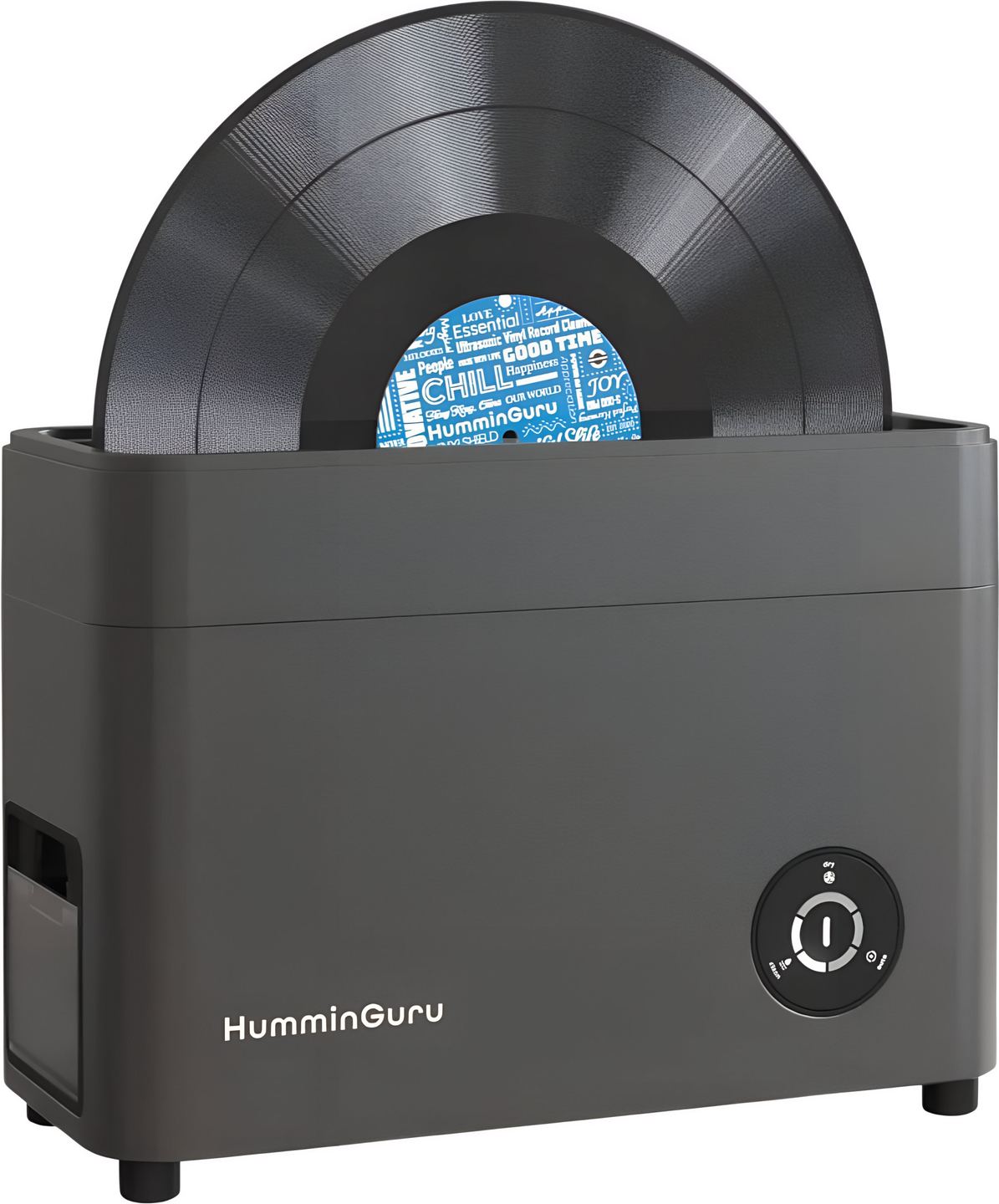
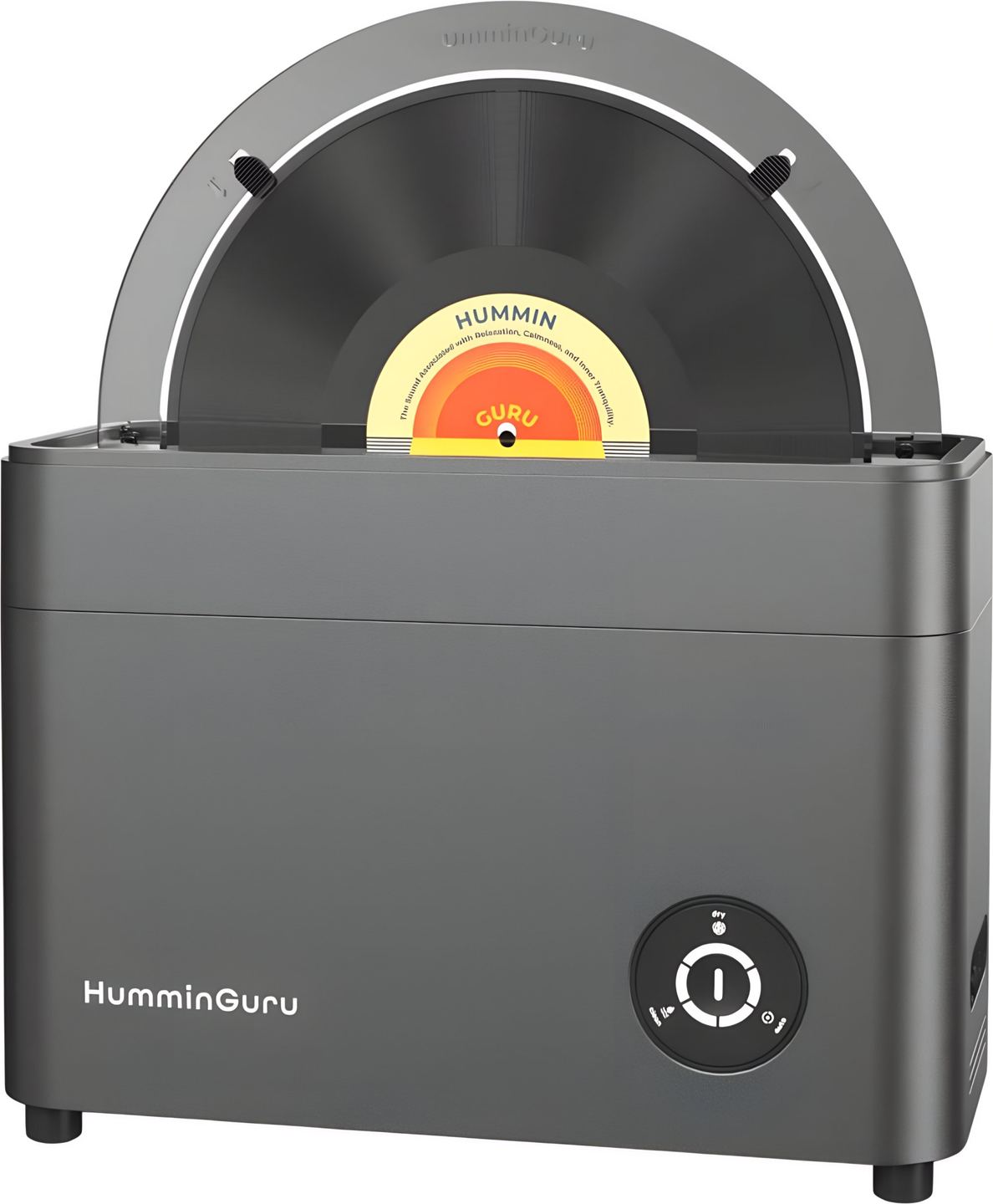
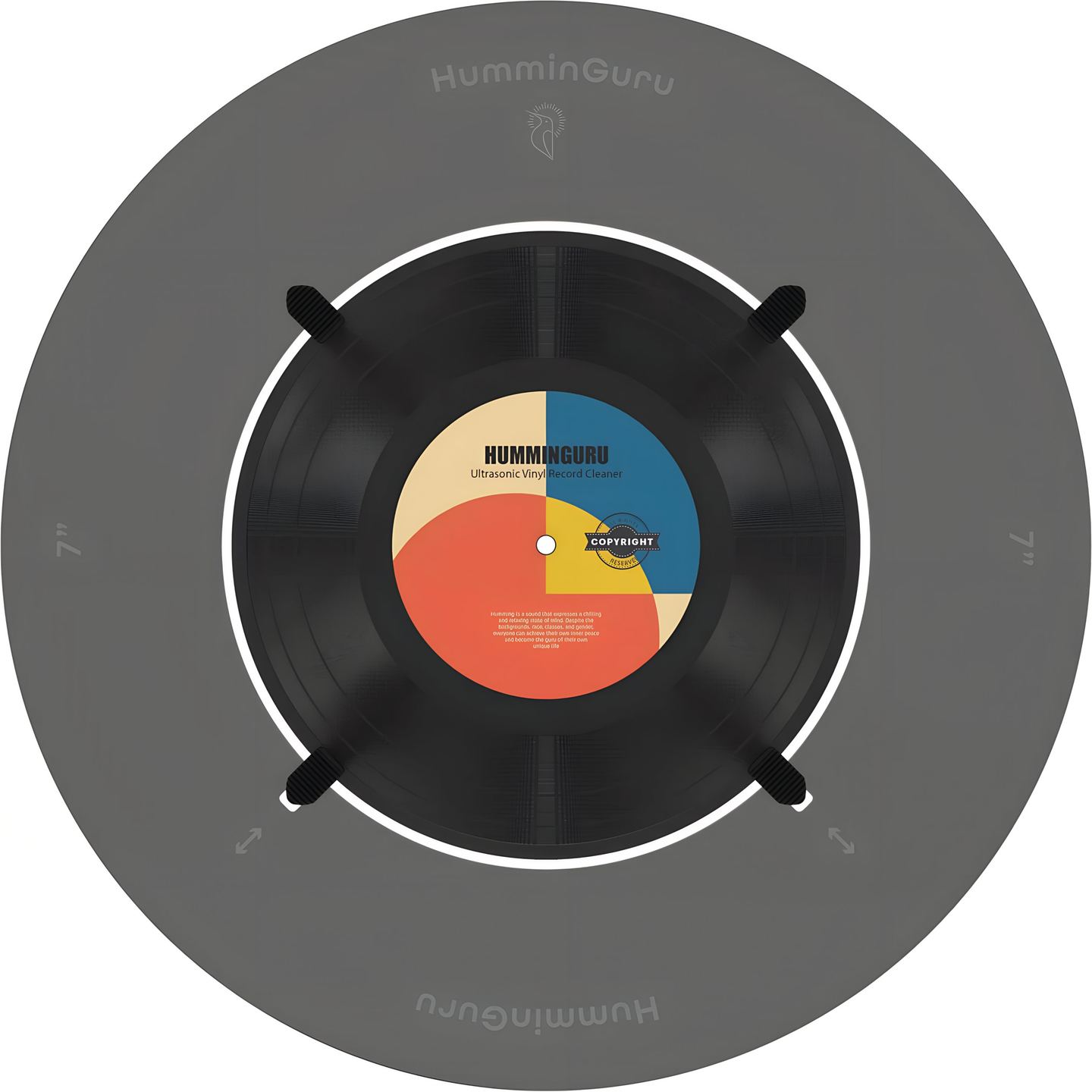
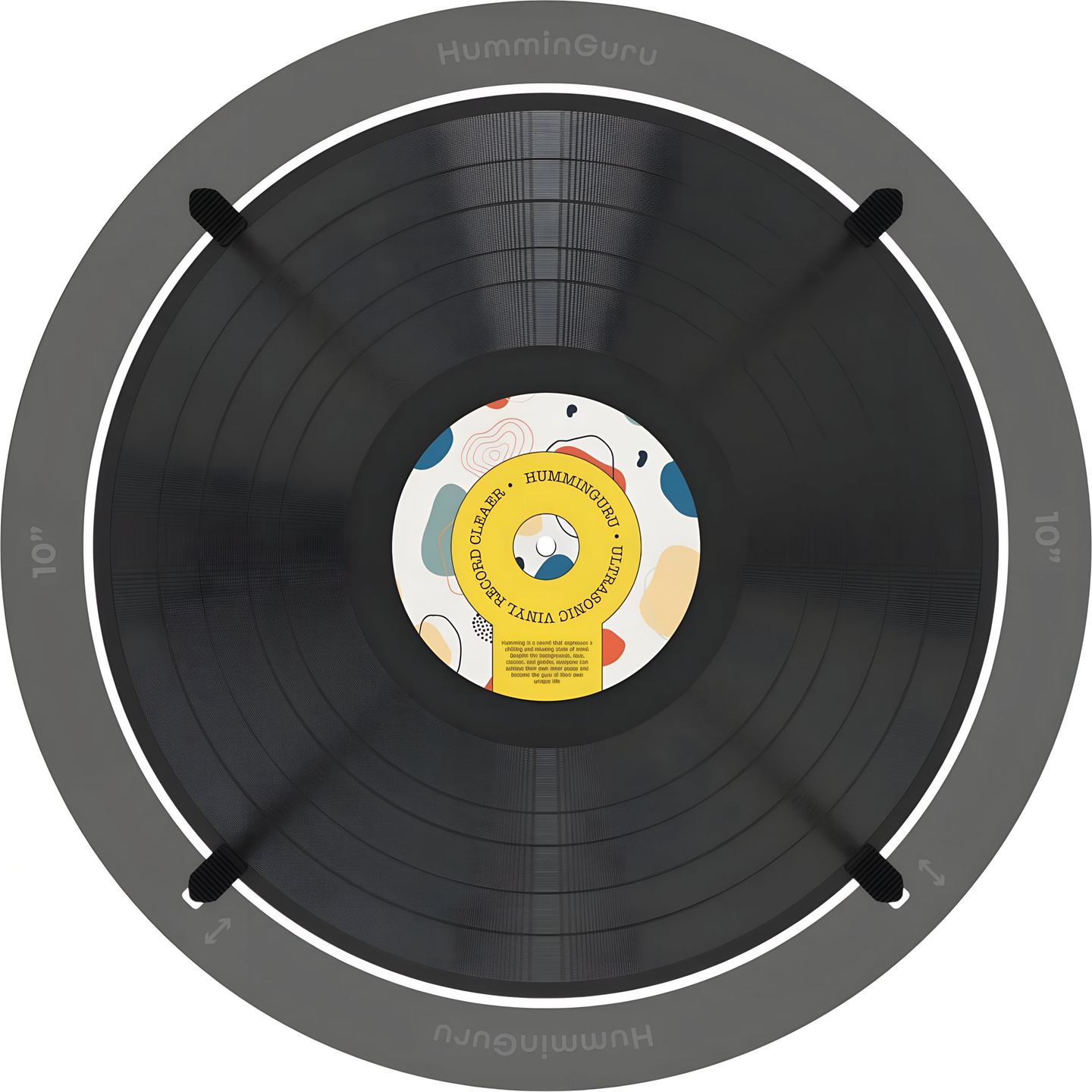
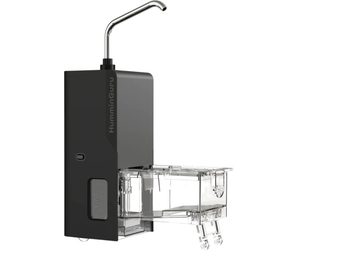
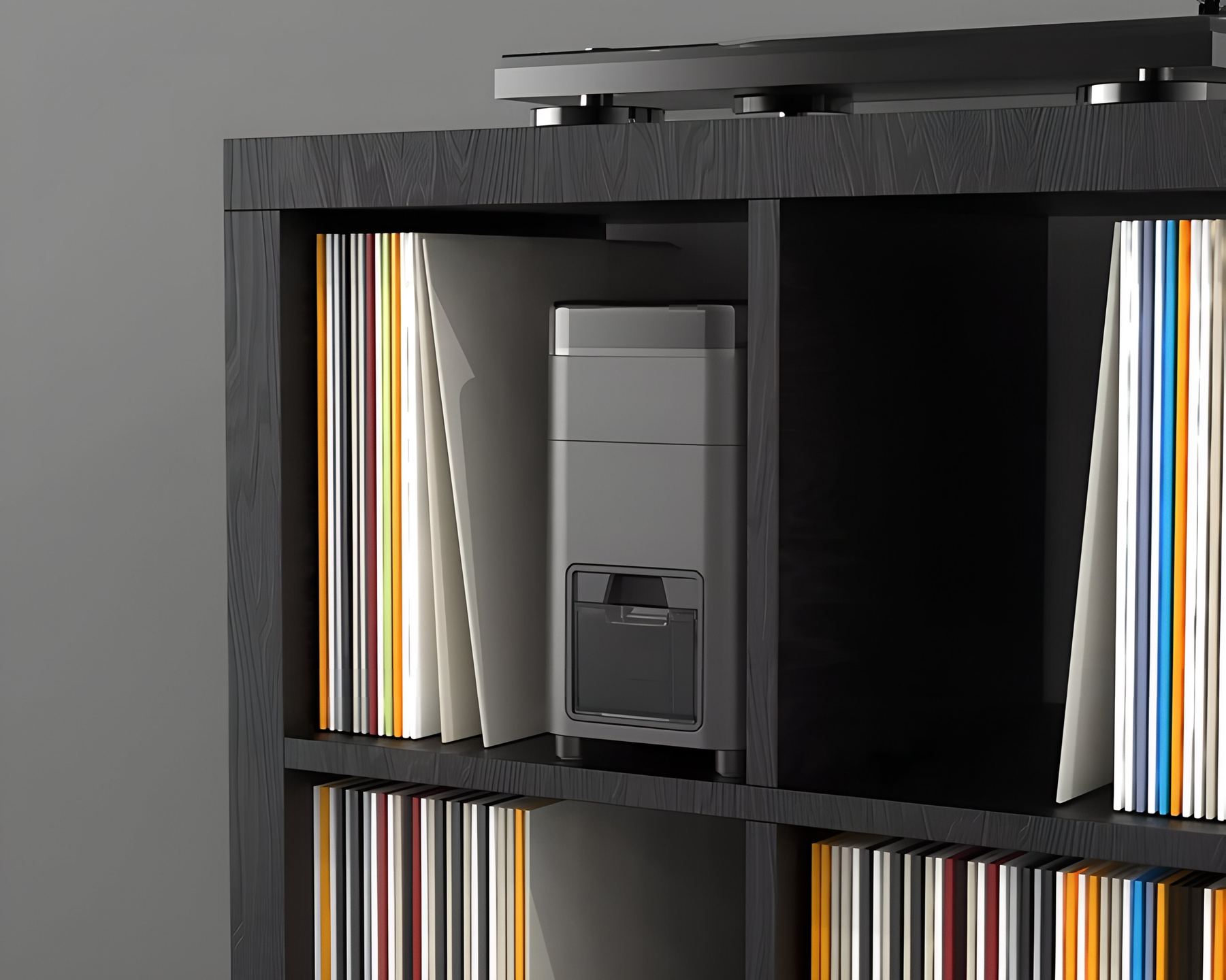
Ultrasonic cleaning, long reserved for machines costing several thousand euros or DIY enthusiasts equipped with industrial tanks, is becoming accessible with the HG01. This all-in-one machine cleans and dries a record in seven to fifteen minutes, without contact with the grooves. HumminGuru, a Hong Kong company born from a Kickstarter project in 2021, designed a device that fits on a Kallax shelf and weighs only 3.1 kg.
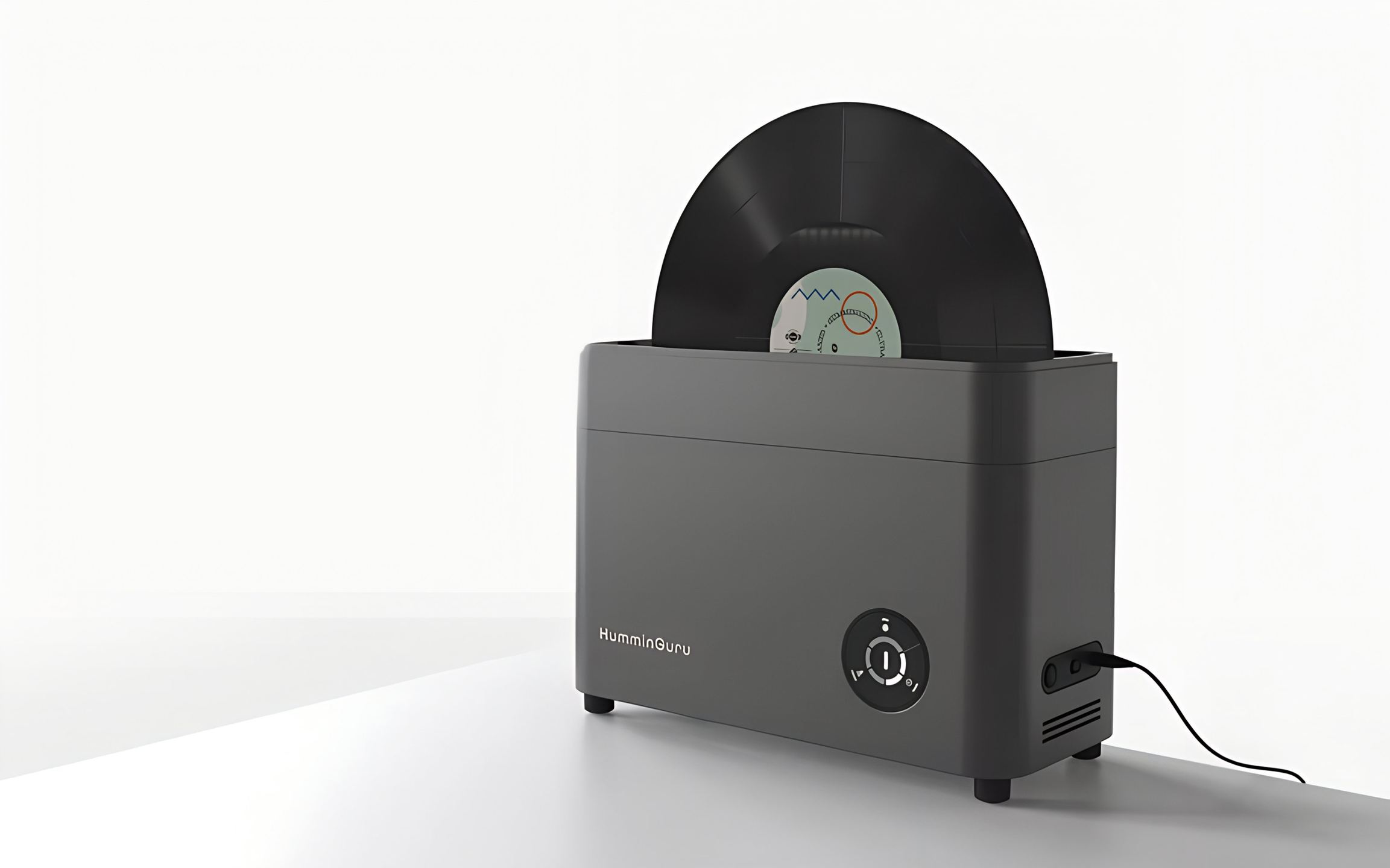
The HG01 uses a 40 kHz frequency, a deliberate choice: powerful enough to dislodge particles embedded in the grooves, but not aggressive enough to damage the vinyl. Two transducers, placed on either side of the record, generate micro-bubbles through cavitation in the water bath. These bubbles implode against the surface of the record and lift off dust, molding residue, and fingerprints without any brush touching the grooves.
The tank is a single-piece stainless steel construction. This choice limits the loss of ultrasonic energy that occurs with assembled tanks. The space between the record and the walls of the tank is only 10 mm, allowing the waves to act directly on the vinyl surface rather than dispersing into a large volume of water.
The rotation system holds the record by its edge via two contact points. No part touches the grooves, and the record rotates slowly in the bath to expose its entire surface to the ultrasounds. The drive rollers can be replaced by the user if they wear out.
Once washing is complete, the machine automatically drains the water into the removable tank, then two fans dry the record on both sides. An integrated air filter prevents ambient dust from settling back onto it during this phase. Drying takes place at room temperature, without heating.
Automatic mode combines washing and drying: seven minutes for quick cleaning (2 min + 5 min), fifteen minutes for deep treatment (5 min + 10 min). The cycles can also be separated if a record needs several washing passes or if you prefer to let it air-dry.
Where traditional ultrasonic machines require several liters of water, the HG01 operates with 350 to 400 ml of distilled water depending on the record format. The tank includes a filter that allows the water to be reused for about twenty records before changing it. Distilled water is recommended because tap water leaves mineral deposits in the grooves after drying.
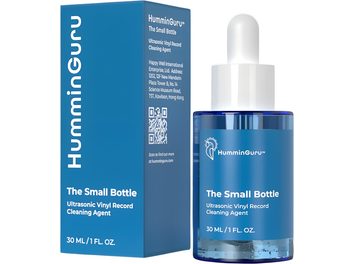
HumminGuru offers an alcohol-free surfactant (The Small Bottle) that reduces the surface tension of the water and improves its penetration into the grooves. Two to three drops per bath are enough. It is not mandatory, but drying is faster and results are more consistent, especially in a humid environment. One 30 ml bottle treats more than one thousand records.
With dimensions of 34 × 15 × 27.4 cm, the HG01 slips into a standard vinyl cabinet. The top cover includes a storage space for the power cord, avoiding cables lying around when the machine is not in use. At 3.1 kg, the device is easy to move.
The noise level is around 60 dB during operation, equivalent to a normal conversation. The most noticeable noise comes from the water pumping during tank drainage.
The HG01 natively accepts 12-inch records (33 and 45 rpm maxi format). 7-inch records (45 rpm singles) and 10-inch records require adapters sold separately. All common weights are supported: 130g, 160g, 180g, and 220g.
Shellac 78 rpm records must not be cleaned with this machine. The fragility of this old medium makes it vulnerable to ultrasounds, which can worsen existing micro-cracks.
No, provided the water level indicated on the tank is respected. The water reaches only the groove area. The correct level positions the water just above the deadwax area, without touching the paper label. A level-checking tool is supplied with the machine.
This is not recommended. Tap water contains minerals that settle in the grooves after evaporation. These deposits can cause crackling and require a new cleaning.
Yes. New records often carry mold release agent residue (MRA) used during pressing. These residues are not always visible but affect playback. A run through the machine generally improves sound quality from the very first listen.
One record requires 7 to 15 minutes depending on the selected mode. For batch processing, the bottleneck is the handling time between each record rather than the machine itself. The water can be reused for about 20 records before being changed.
No. The machine removes particles and deposits from the grooves, but cannot fill physical scratches. Nor does it damage already worn records. A record scratched before cleaning will still be scratched afterward, but crackling caused by dust will disappear.
Yohann
Very good product… but who said it was quiet…?
Comment from September 06, 2026 — Experience from June 18, 2026





