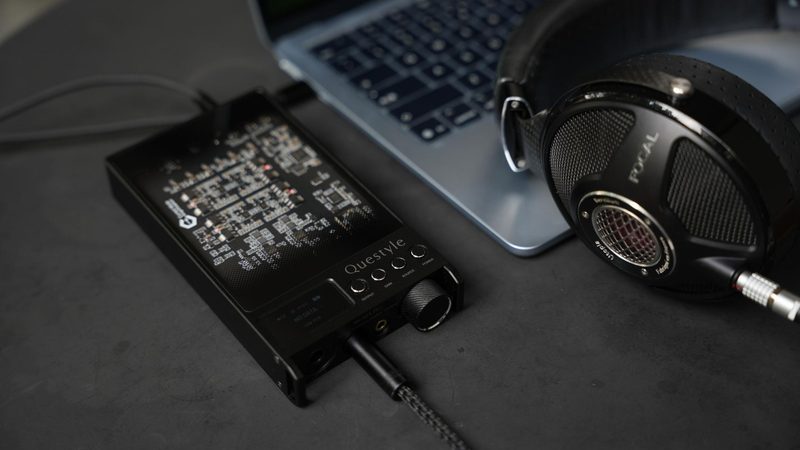
FiiO JM21 MKII

Specifications and features


Overview
The original JM21 laid a solid foundation: dual Cirrus Logic DAC, 700 mW balanced output, slim and lightweight form factor, full Android. The MKII does not change the audio electronics. It fixes the two weaknesses users reported most often: RAM limited to 3 GB, too little for Android 13, and 32 GB of storage that filled up quickly with lossless files or streaming caches.
Dual Cirrus Logic DAC and bypassing Android resampling
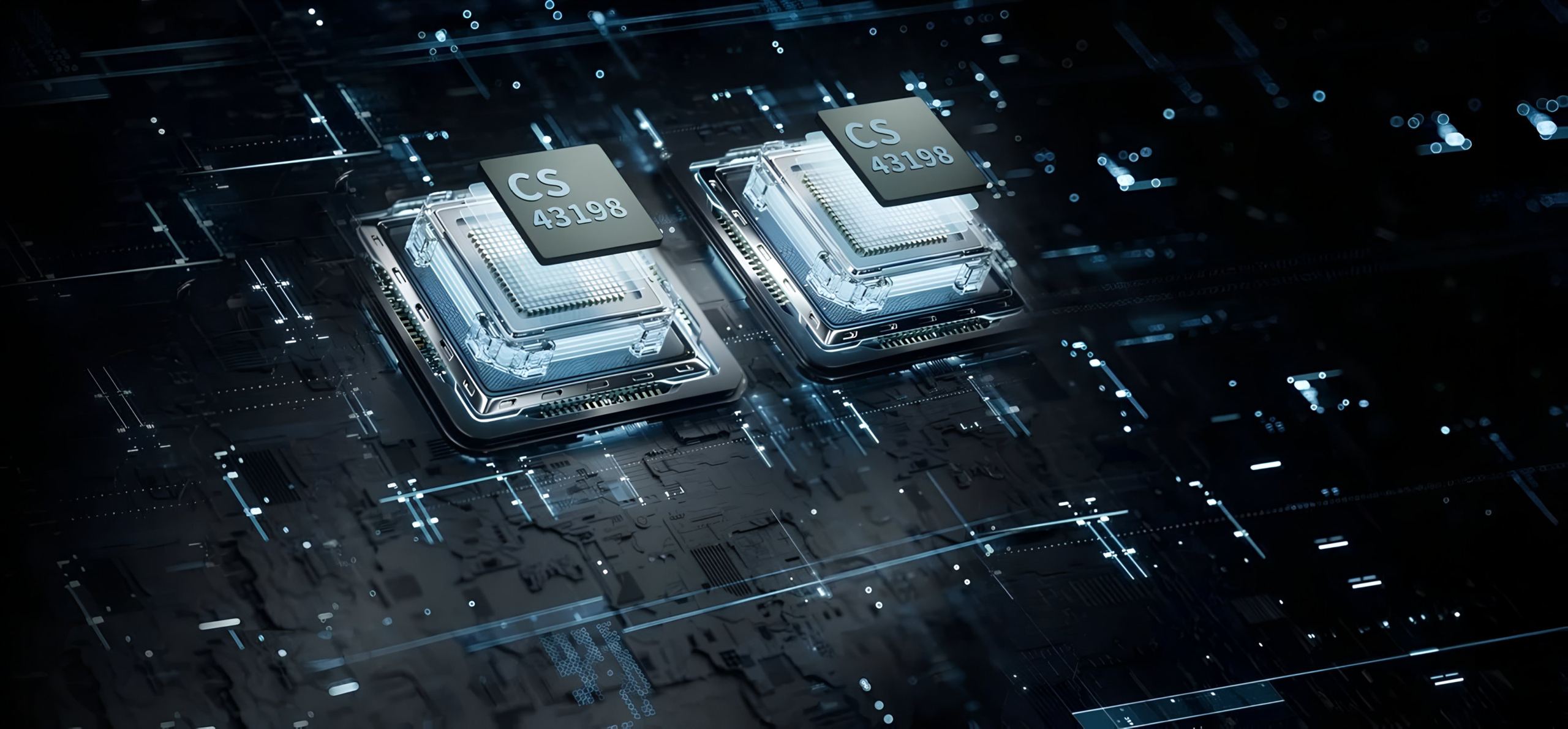
Audio processing is based on two Cirrus Logic CS43198 chips mounted in a balanced configuration, each paired with a dedicated SGM8262 operational amplifier. One channel per DAC, one op-amp per channel: separation between the left and right channels exceeds 124 dB in single-ended mode and 129 dB in balanced mode, values not usually found in this category of portable players.
Upstream of conversion, an FPGA chip manages the DAPS (Digital Audio Purification System), developed by FiiO. Its role is concrete: bypass the resampling that Android applies by default to all audio streams (the famous SRC). Whether music is played from the FiiO Music app, Apple Music, Qobuz, or any other third-party player, the signal keeps its original sampling rate all the way to the DAC. The JM21 MKII supports PCM up to 32-bit / 384 kHz and DSD up to DSD256.
Two low thermal drift quartz oscillators, selected at the femtosecond level, provide the reference clock. This care devoted to reducing jitter contributes to the signal’s timing precision before analog conversion.
700 mW balanced in a 13 mm-thick chassis
The amplification stage is physically isolated from the rest of the electronics by internal shielding, and each section (digital, DAC, amplification) has its own power supply. This separation limits interference between circuits and maintains a very low noise floor.
The 4.4 mm Pentaconn balanced output delivers 700 mW into 32 Ω (605 mW into 16 Ω, 80 mW into 300 Ω) with distortion below 0.0006%. The 3.5 mm single-ended output provides 245 mW into 32 Ω, with an output impedance below 1 Ω. These two outputs can be switched to line mode to connect the JM21 MKII to an external amplifier, powered speakers, or a home hi-fi system. The 3.5 mm jack also serves as an S/PDIF coaxial output.
Three gain levels are available, each with its own volume curve. In low gain, volume rises very gradually over the first steps: a real advantage with sensitive IEMs, where you can adjust precisely without jumping from too low a level to too high a level. In high gain, the power reserve is enough to drive planar headphones or high-impedance models such as the Sennheiser HD 600 or the Beyerdynamic DT 880. A 7-band graphic equalizer completes the setup, with an AutoEQ function that offers automatic corrections based on a database of earphones and headphones.
4 GB of RAM and 64 GB of storage: what really changes
The original JM21 ran with 3 GB of RAM. Android 13 consumed a significant share of it, leaving little headroom for third-party apps. Slowdowns could be felt when switching from one streaming app to another, or when browsing a large library.
The MKII moves up to 4 GB of RAM. Navigation through menus and apps becomes smoother. Loading times are reduced and transitions between apps happen without the micro-latencies that could be observed on the previous model. Internal storage doubles: 64 GB total, of which about 22 GB are available after the system. That is not much for a high-resolution file library, but it is enough to store offline files from several streaming services. And the microSD card reader, compatible up to 2 TB, remains the real solution for carrying a substantial FLAC collection.
Bidirectional Bluetooth, Wi-Fi, and built-in streaming
The JM21 MKII runs Android 13 with access to the Google Play Store. You can install Qobuz, Tidal, Spotify, Deezer, Apple Music, and most audio apps available on Android. Pure Audio mode disables the Android layer to focus on local playback via FiiO Music, with no background processes or notifications.
Bluetooth 5.0 works both ways. When transmitting to wireless headphones, it supports LDAC, LHDC, aptX HD, aptX, and SBC codecs. When receiving from a smartphone or computer, it accepts LDAC, AAC, and SBC. The JM21 MKII can therefore serve as a high-quality Bluetooth receiver connected to wired headphones, a useful setup for benefiting from the player’s DAC/amplification section while keeping the music on your phone.
Wi-Fi opens access to streaming, AirPlay, and DLNA/UPnP. You can play music stored on a local NAS without going through Bluetooth. The FiiO Link function lets you control the player remotely from a smartphone.
A form factor that slips into a pocket
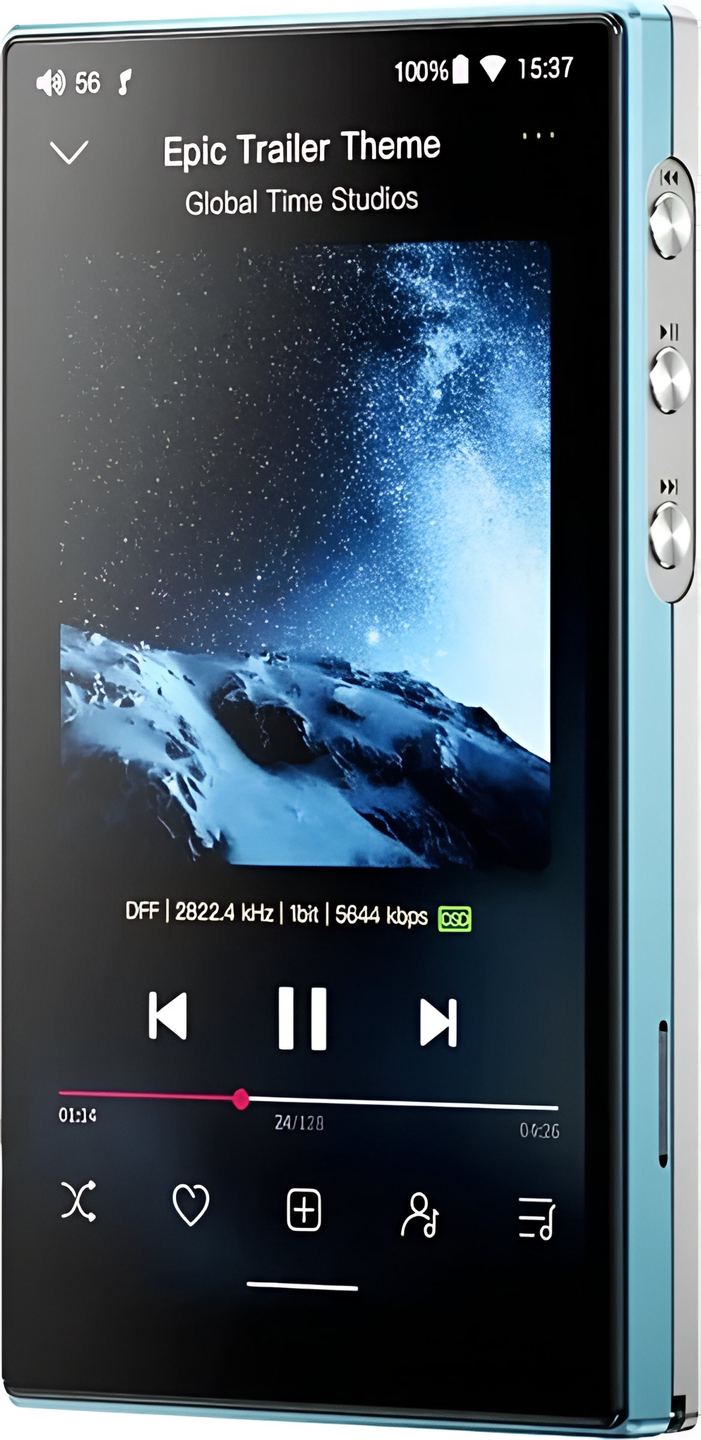
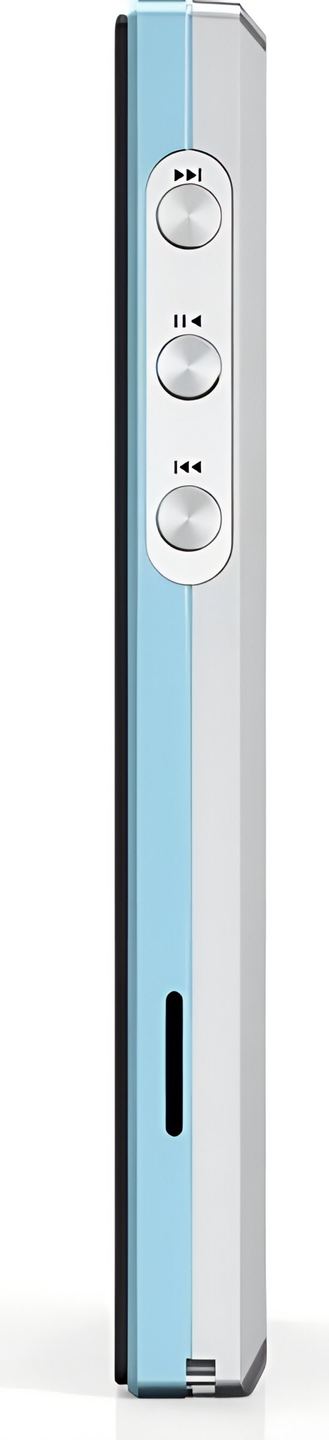
At 68 x 120 x 13 mm and 156 g, the JM21 MKII has the proportions of a compact smartphone. It sits comfortably in one hand. The 4.7-inch touchscreen (750 x 1334 px) is responsive, and gesture navigation works like on a regular Android phone. The physical buttons on the side let you control volume and playback without turning on the screen, a real plus for mobile use.
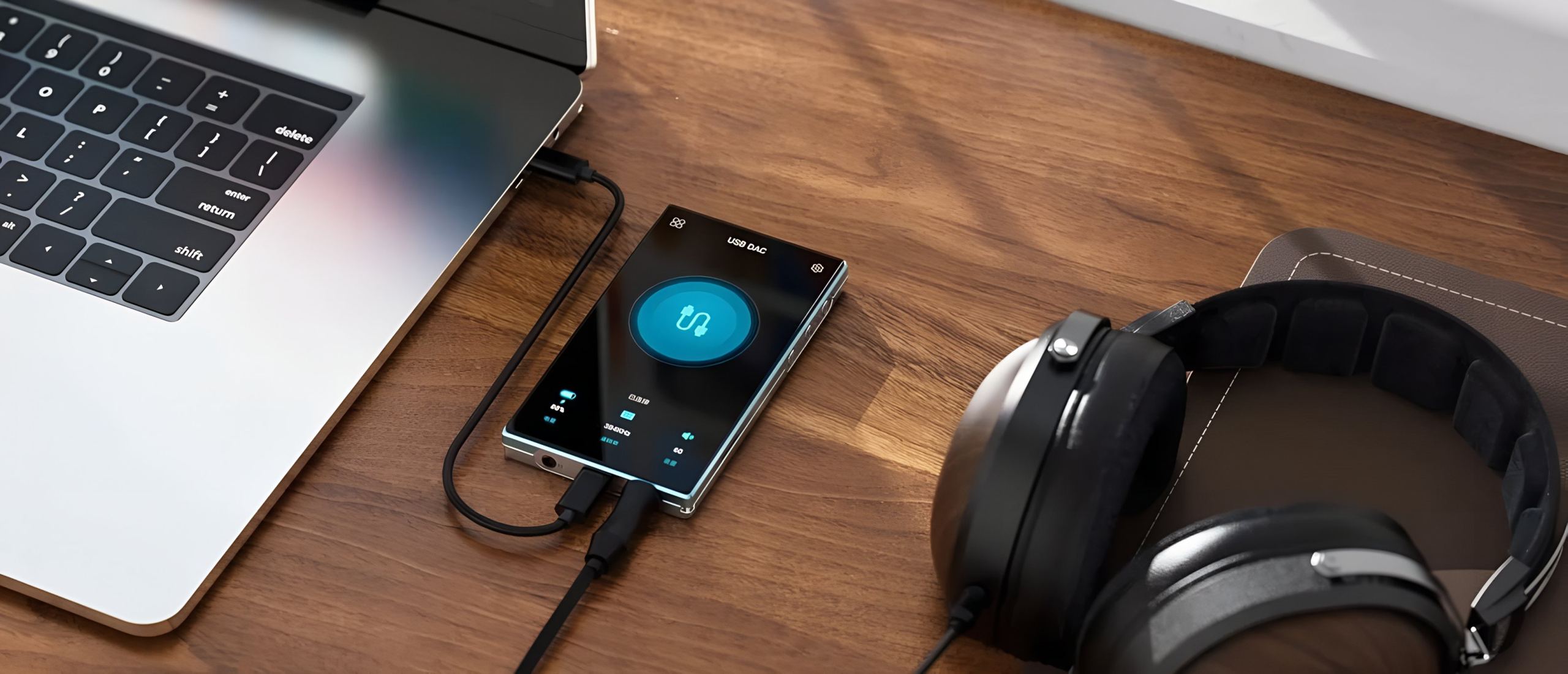
The USB-C port (USB 3.0) is used for charging (about 2 hours, fast charge), file transfer, and USB DAC mode. The latter turns the player into an external converter/amplifier for PC or Mac, with support for PCM up to 384 kHz / 32-bit. This USB DAC mode has noticeable latency (around 250 ms), which makes it suitable for music listening but not for synchronized video playback.
Claimed battery life reaches 12 h 30 in 3.5 mm single-ended output. In 4.4 mm balanced use, it is more around 9 to 10 hours. Wi-Fi streaming reduces these figures by about two hours. The 2400 mAh lithium-polymer battery remains modest, but the controlled power consumption of the Snapdragon 680 built on a 6 nm process contributes to decent endurance for everyday use.
When the player becomes a hi-fi source
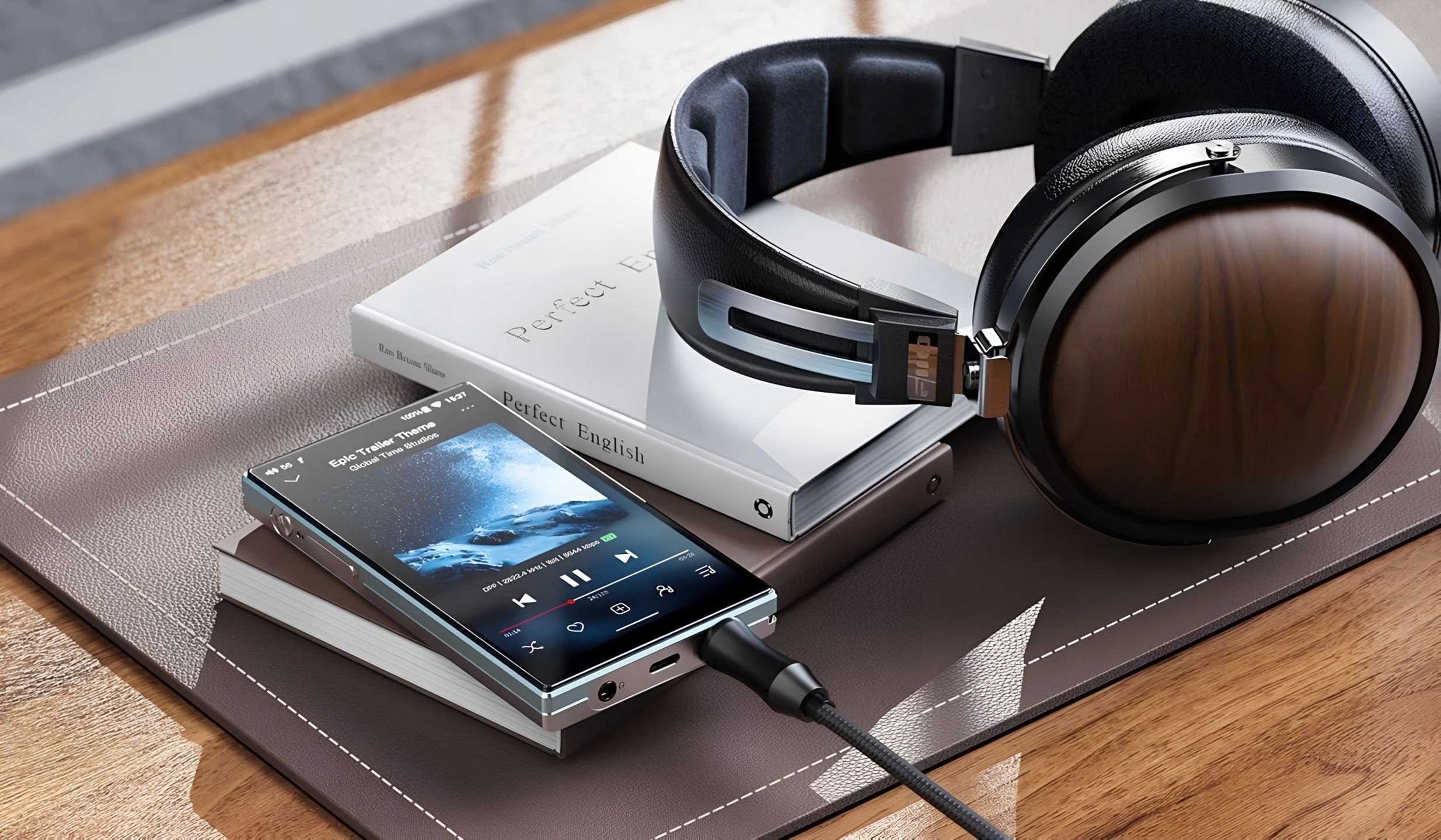
Beyond headphone listening, the JM21 MKII can fill several roles in an audio chain. In line-out mode, it becomes an analog source for an integrated amplifier or powered speakers. Via coaxial output (through the 3.5 mm jack), it feeds an external DAC. In USB DAC mode, it improves a computer’s audio output. And as a Bluetooth receiver, it serves as a wireless bridge to wired headphones.
This versatility makes it a device that goes beyond the scope of a simple portable player. It can be used as the main source in a small listening system, as a secondary unit on a desk, or on the go with IEMs. The eight-core Snapdragon 680 (Kryo 265 architecture, 6 nm process) keeps the interface fluid in these different usage modes, provided installed apps are limited to music players and services. Android 13 remains resource-hungry, and the JM21 MKII is not designed for intensive multitasking.
Technical specifications
Architecture and audio processing
- Digital-to-analog converter: 2 x Cirrus Logic CS43198 (balanced architecture)
- Processor: Qualcomm Snapdragon 680 (octa-core)
- FPGA with DAPS technology (jitter reduction)
- Audio conversion
- PCM up to 32-bit / 384 kHz
- DSD256
- 7-band graphic equalizer
- Operating modes: Android / Pure Audio
Unbalanced headphone output (3.5 mm mini-jack)
- Output power
- ≥ 360 mW at 16 Ω
- ≥ 245 mW at 32 Ω
- ≥ 30 mW at 300 Ω
- Output impedance: ≤ 1 Ω
- Total harmonic distortion + noise (THD+N): < 0.0012%
- Frequency response: 20 Hz – 80 kHz
- Channel separation: > 124 dB
Balanced headphone output (4.4 mm Pentaconn)
- Output power
- ≥ 605 mW at 16 Ω
- ≥ 700 mW at 32 Ω
- ≥ 80 mW at 300 Ω
- Output impedance: 1.5 Ω
- Total harmonic distortion + noise (THD+N): < 0.0006%
- Signal-to-noise ratio: ≥ 129 dB
- Frequency response: 20 Hz – 80 kHz
- Output modes: headphone / line / coaxial (via 3.5 mm)
Connectivity and streaming
- Wi-Fi
- Bidirectional Bluetooth
- Transmission: LDAC, LHDC, aptX HD, aptX, SBC
- Reception: LDAC, AAC, SBC
- AirPlay
- DLNA / UPnP / NAS
- FiiO Link
- Compatible services: Qobuz, Tidal, Spotify, Deezer, Apple Music
System and interface
- Operating system: Android 13 (Google Play Store)
- Interface: touch screen with gesture control
- Screen: 4.7 inches (12 cm) – 750 x 1334 px
Memory and storage
- RAM: 4 GB
- Internal storage: 64 GB (about 22 GB available to the user)
- Expansion: microSD up to 2 TB
Connectivity
- USB-C (USB 3.0)
- Charging
- Data transfer
- USB DAC / USB Audio
- Audio outputs
- 3.5 mm: headphone / line / coaxial
- 4.4 mm balanced: headphone / line
Power supply and battery life
- Battery: 2400 mAh lithium-polymer
- Battery life: up to 12 h 30
- Charging time: about 2 hours
- Fast charging: yes
Dimensions and weight
- Dimensions: 68 x 120 x 13 mm
- Weight: 156 g
Included accessories
- Transparent case
- USB cable
- Quick start guide
Frequently Asked Questions
What are the differences between the original JM21 and the JM21 MKII?
The MKII goes from 3 to 4 GB of RAM and from 32 to 64 GB of internal storage. The battery has also been increased compared with the first model. The audio section (DAC, amplification, FPGA, oscillators) remains strictly identical. Sound quality is the same; it is everyday ease of use that improves.
Can you install applications other than music players?
Technically yes, the Google Play Store gives access to the entire Android catalog. In practice, FiiO recommends limiting use to audio applications. With 4 GB of RAM and a screen with a moderate refresh rate, the JM21 MKII is not suited to gaming, intensive web browsing, or multitasking between heavy apps.
Is USB DAC mode usable for watching videos?
No. Latency in USB DAC mode is too high (about 250 ms, or even more depending on the connections) to maintain proper audio-video synchronization. This mode is designed for music listening from a computer.
- Eco-contribution included in the sale price.