FiiO M33 R2R black



Specifications and features


Overview
After integrating its in-house R2R technology into desktop DACs (K11 R2R, K13 R2R) and a portable CD player (DM15 R2R), FiiO is taking things a step further by bringing it to a full Android portable player. The M33 R2R is the brand’s first DAP to feature a resistor ladder converter, a radically different approach from the delta-sigma chips found in the vast majority of current portable players, including the M23 it replaces and the M27, the flagship model in the lineup.
A passive R2R DAC with 192 resistors
The M33 R2R’s converter is based on a network of 192 thin-film resistors, matched to 0.1% tolerance with low thermal drift. The whole system operates in a fully differential topology across four channels (left +/-, right +/-), with 24-bit resolution. Where a delta-sigma DAC reconstructs the analog signal through massive oversampling and noise shaping, the R2R converts each bit of the digital signal into a proportional voltage via its resistor ladder. Processing is more direct, shorter, and the sonic result reflects that: playback often described as more organic, rounder, with a sense of timbre and temporal fluidity that delta-sigma chips struggle to reproduce.
This technical choice comes with a manufacturing cost significantly higher than that of an integrated DAC, which partly explains why R2R portable players remain rare on the market.
Clocking and digital processing inherited from the M27
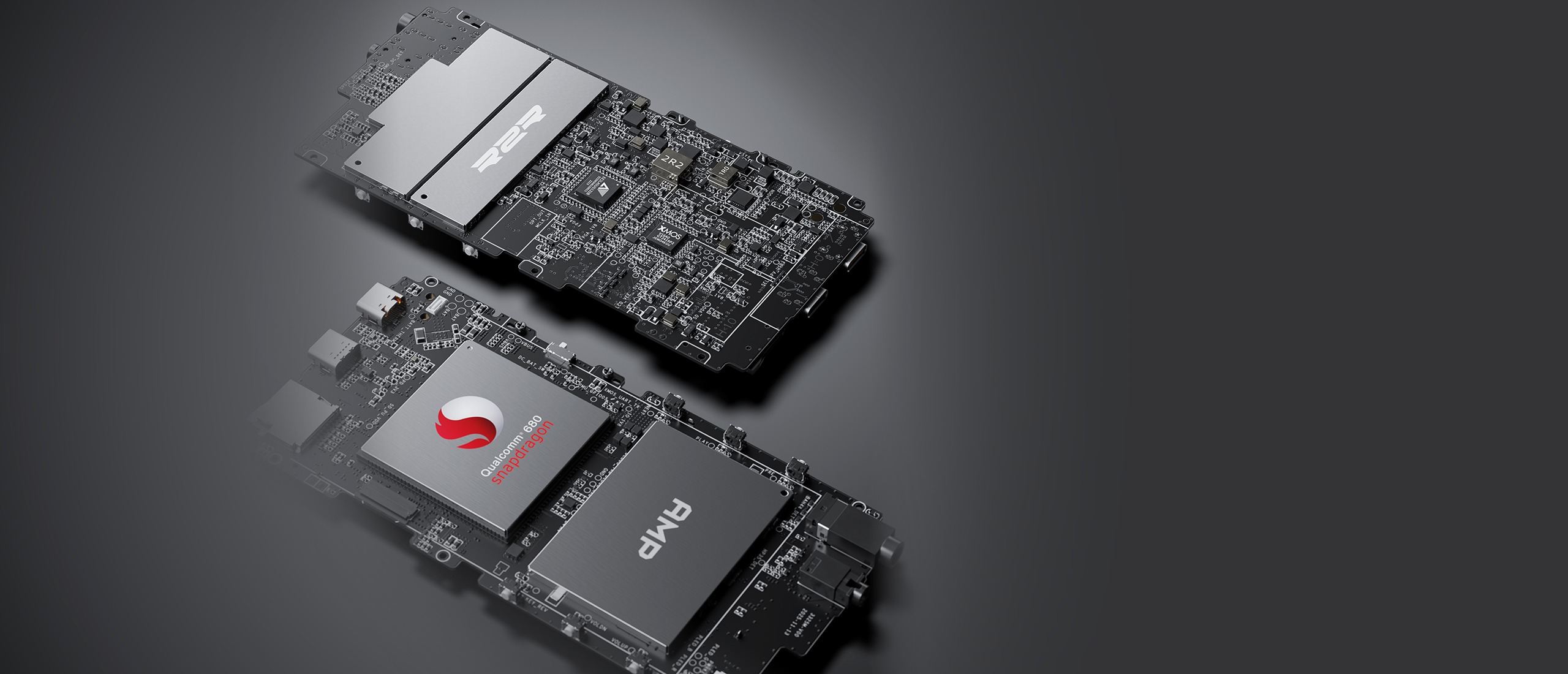
Digital signal processing relies on the DAPS (Digital Audio Purification System) developed by FiiO, already present on the M27. It is based on a new-generation FPGA equipped with 4480 logic units (versus 1152 on the previous generation in the M23), paired with two dedicated femtosecond oscillators, calibrated respectively at 49.152 MHz and 45.1584 MHz to cover the two sampling frequency families. This clocking foundation manages synchronization between the Qualcomm SoC, the XMOS XU316 USB interface, and the four R2R channels in native I2S and DSD, with the goal of minimizing jitter across the entire chain.
The XMOS XU316 interface is a common component in high-end DACs. It supports PCM up to 768 kHz / 32 bits and DSD512, and ensures very low latency in USB DAC mode, a valuable point for video playback or gaming.
Powerful, segmented amplification
The amplification stage borrows from FiiO’s higher-end models. The pre-amplification stage uses TI Burr-Brown OPA1637 operational amplifiers for I/V conversion and an OPA1662 low-pass filtering stage, while four INA1620 amplification chips in parallel configuration drive the headphone outputs. Volume control is handled by an NJW1195A, a precision electronic potentiometer that offers fine adjustment and good channel matching.
Output power reaches 1100 mW per channel on the balanced 4.4 mm jack and 470 mW on the 3.5 mm jack. Four gain levels allow the M33 R2R to be used equally well with sensitive IEMs and with planar or high-impedance headphones. The analog and digital circuits are physically separated and independently shielded, and the analog power supply itself is divided into three distinct circuits for the R2R network, the preamp, and the amplifier.
Four sound colors in a single device
The M33 R2R offers two digital processing modes, OS (oversampling) and NOS (non-oversampling), which can be combined with two sound profiles, Flat and Warm. NOS mode preserves the original sampling rate for a rawer, more direct signal, while OS mode applies conventional filtering. The Flat profile remains neutral, while the Warm profile slightly thickens playback and softens the top end. The result is four distinct combinations that noticeably change the character of the player, from the most analytical (OS + Flat) to the most musical (NOS + Warm).
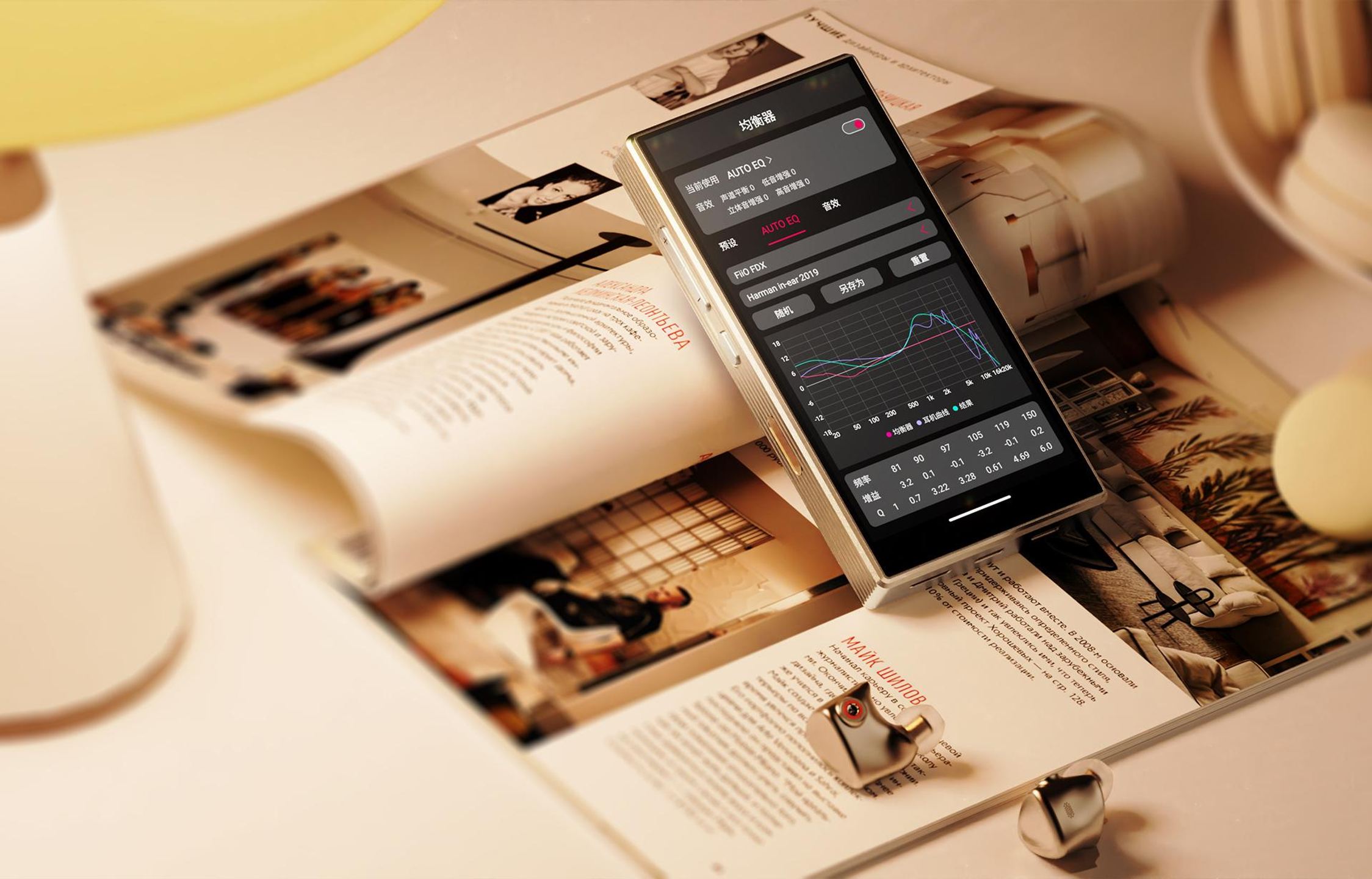
In addition, a 10-band parametric equalizer is available, with an Auto EQ mode that automatically adapts the correction curve to FiiO IEMs and headphones. An All-to-DSD mode makes it possible to convert all streams to DSD. These settings also work with third-party apps, not just the FiiO player.
A compact format and refined chassis
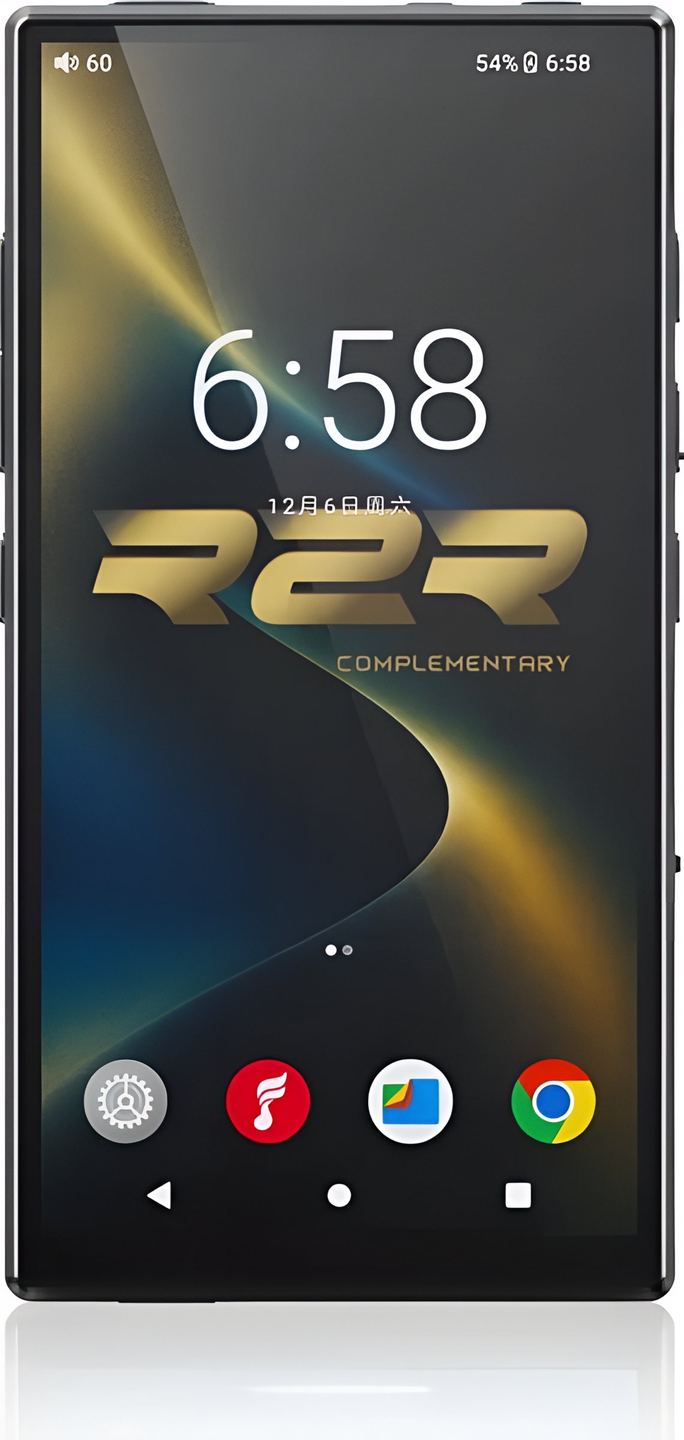
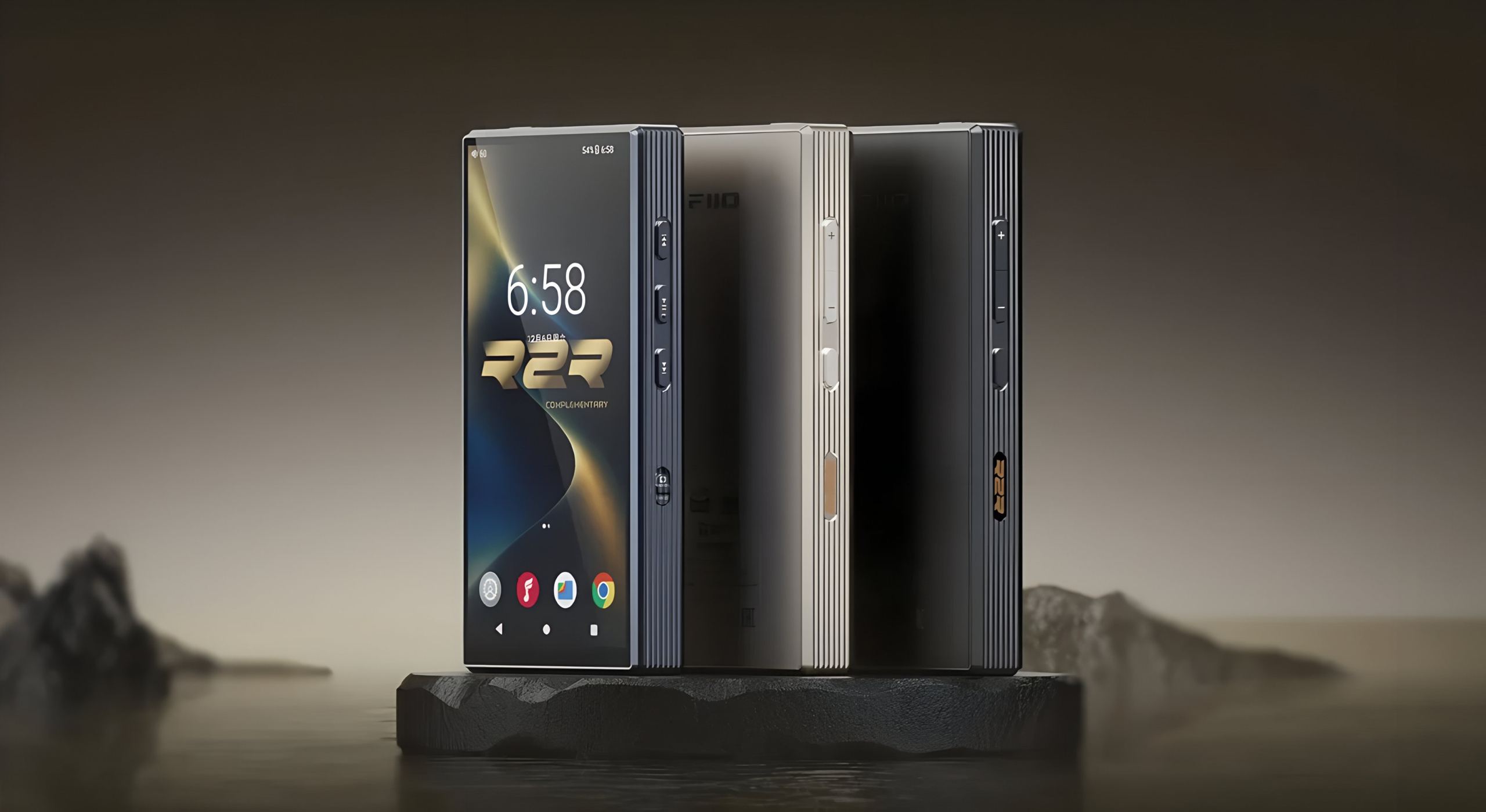
At 138.2 × 71.5 × 17 mm and 258 g, the M33 R2R is smaller and lighter than the M21, its predecessor in size, despite superior capabilities. Its 18:9 format gives it handling similar to that of a smartphone, and the beveled edges avoid unpleasant sharpness during extended listening sessions. The chassis is aluminum, while the back is AG matte glass (anti-glare and resistant to fingerprints). Three colors are available: black, dark blue, and retro gold, each supplied with a matching leather case and a tempered glass screen protector.
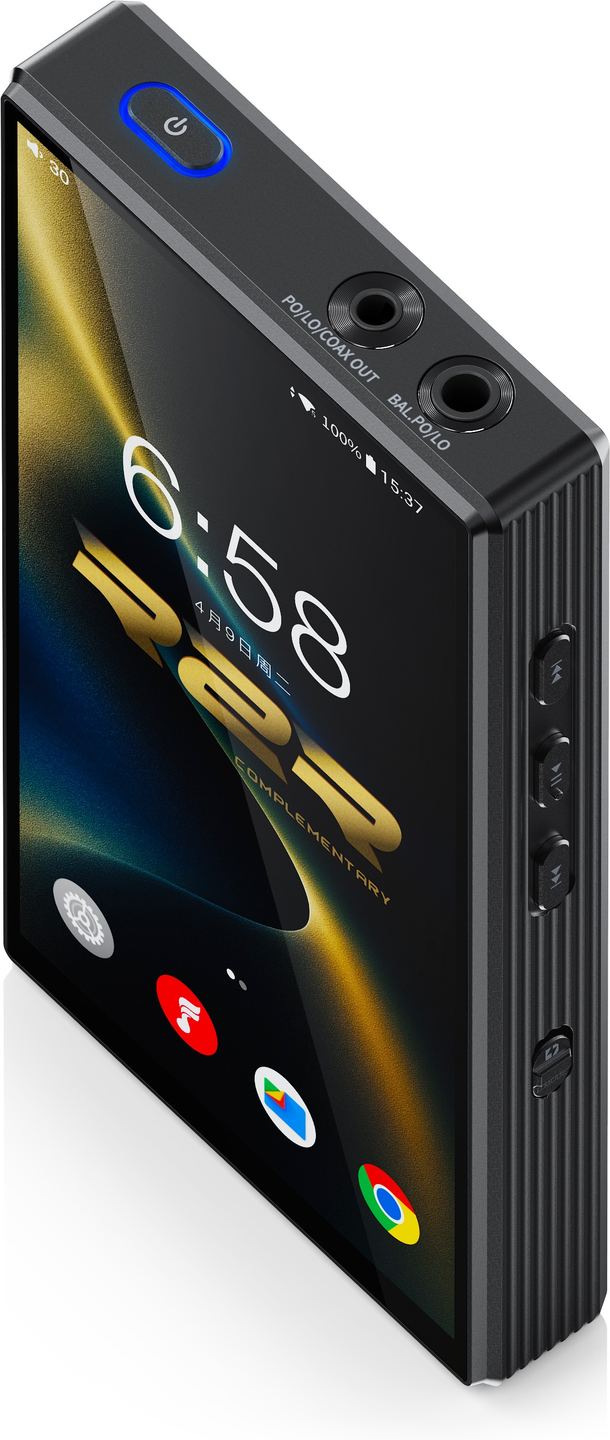
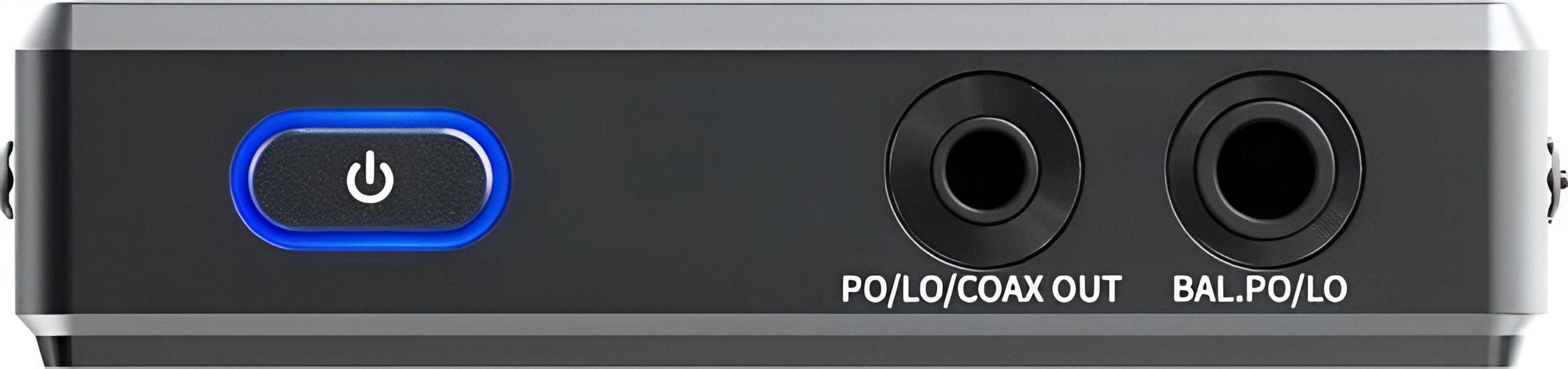
The 5.5-inch IPS touchscreen displays a resolution of 1080 × 2160 pixels with a laminated panel. The 3.5 mm and 4.4 mm headphone outputs are placed on the top edge, making it possible to set the player down flat or slip it into a pocket with the cable facing upward. The side edge houses the volume wheel, the power button, a dedicated desktop mode button, and a programmable multifunction key.
Android 13 and extensive connectivity
The M33 R2R runs Android 13 with a Qualcomm Snapdragon 680 SoC, 8 GB of LPDDR5 RAM, and 128 GB of internal storage (around 112 GB usable), expandable via microSD up to 2 TB. The Google Play Store provides access to Spotify, Deezer, Qobuz, Tidal, Apple Music, Amazon Music, and any other Android app. Navigation is smooth, startup is fast, and switching from one app to another does not suffer from noticeable latency.
In addition to standard Android mode, the M33 R2R offers a Pure Music mode (lightweight system for local playback), a Roon Ready mode, Bluetooth mode (reception), AirPlay, and DLNA for network playback. Dual-band WiFi (2.4 and 5 GHz) ensures a stable connection for high-resolution streaming.
Bluetooth 5.0 is bidirectional: for transmission, it supports the SBC, aptX, aptX HD, LHDC, and LDAC codecs; for reception, SBC and LDAC. The player can therefore be used as a Bluetooth receiver from a phone, a practical option for those who want to centralize playback on the M33 R2R without a cable.
Two USB-C ports and a desktop mode
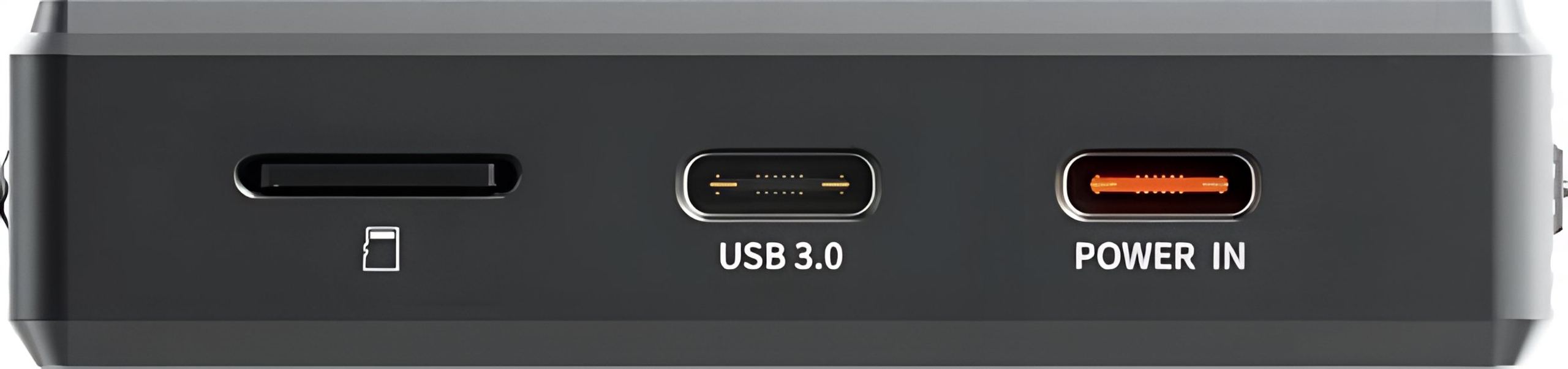
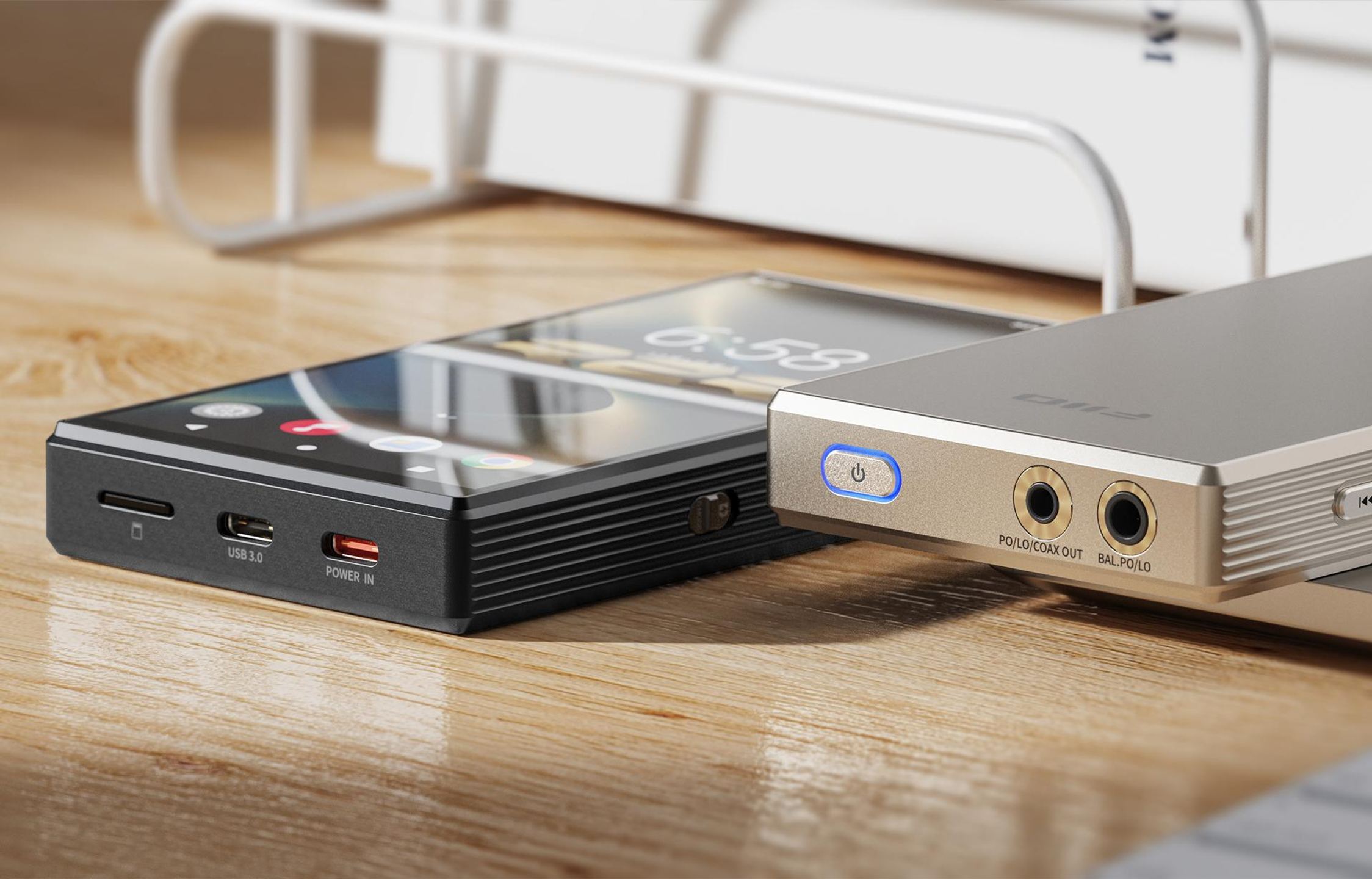
Two USB-C ports split the tasks. One handles USB audio, data transfer, and the external DAC function; the other is dedicated to charging and desktop mode. This desktop mode, activated by a physical button, bypasses the battery to power the player directly from mains power. The benefit is twofold: extending battery lifespan (fewer charge/discharge cycles) and unlocking higher output power for the most demanding headphones.
The 3.5 mm jack output is versatile: it serves as a headphone output, line output, and optical or coaxial digital output (with a suitable cable sold separately). The balanced 4.4 mm output works in headphone or line mode. The line outputs have their own amplification circuit, separate from that of the headphone outputs.
Battery life and fast charging
The 4400 mAh battery provides up to 14 hours of listening through the 3.5 mm output and about 12 h 30 on the balanced 4.4 mm output (FiiO even states 15.5 h and 13.5 h in certain configurations). Low-temperature fast charging (12 V / 1.5 A) allows a full cycle in about 1 h 30, without excessive overheating. Battery life represents an improvement over the M23, thanks to Android 13 software optimization and the efficiency of the Snapdragon 680.
Technical specifications
Digital-to-analog conversion
- 24-bit passive R2R DAC
- Network of 192 matched resistors
- Non-oversampling conversion (native R2R approach)
- 4-channel architecture in fully differential topology
- Supported formats: up to 32-bit / 768 kHz and DSD512
- All-to-DSD mode: conversion of all streams to DSD
Amplification
- Configuration: 8 operational amplifiers in parallel
- End-to-end balanced topology
- Output power
- 4.4 mm balanced jack: up to 1100 mW
- 3.5 mm single-ended jack: up to 470 mW
- Separation of analog / digital circuits
System and interface
- Operating system: Android 13
- Processor: Qualcomm Snapdragon 680
- RAM: 8 GB
- Internal storage: 128 GB (expandable via microSD up to 2 TB)
- Operating modes
- Android
- Pure Music
- Roon Ready
- Bluetooth
- AirPlay
- DLNA
Streaming and apps
- Access to the Google Play Store
- Compatible streaming services: Spotify, Deezer, Qobuz, Tidal, Apple Music, Amazon Music
- Network protocols: DLNA / UPnP
- FiiO Link function (remote control)
Wireless connectivity
- Dual-band WiFi 2.4 / 5 GHz
- Bidirectional Bluetooth 5.0
- Supported codecs: SBC, AAC, aptX, aptX HD, LDAC, LHDC
- Hi-Res Audio Wireless certification
- Apple AirPlay compatible
Connectivity
- USB-C (x2)
- USB Audio / USB DAC / data transfer
- Charging and desktop mode
- Outputs
- 3.5 mm jack: headphone / line / optical / coaxial
- 4.4 mm balanced jack: headphone / line
Screen and ergonomics
- 14 cm (5.5-inch) multitouch IPS screen
- Resolution: 1440 x 720 px (312 ppi)
- Display: 16 million colors
- Physical controls
- Rotary volume knob
- Playback / navigation buttons
- Dedicated desktop mode
Power supply and battery life
- Battery: 4400 mAh
- Battery life
- Up to 14 h (3.5 mm output)
- Up to 12 h 30 (4.4 mm output)
- Fast charging: approximately 1 h 30 (12 V / 1.5 A)
- Desktop mode: optimized mains power supply
Advanced features
- 10-band parametric equalizer
- Selectable digital filters
- Configurable oversampling
- Use as an external USB DAC
- NAS / network playback compatible
General information
- Aluminum chassis
- Format: portable audiophile player
- Interface: touchscreen and physical controls
Frequently Asked Questions
What is the difference between the M33 R2R and the M23?
The M23 used delta-sigma DAC chips (ESS). The M33 R2R adopts a discrete resistor R2R converter developed by FiiO, a completely different technology that produces a more organic sound rendering. It inherits the M27’s DAPS clocking system, features 8 GB of RAM (versus less on the M23), moves to Android 13, and gains battery life.
Does NOS mode degrade audio quality?
No. NOS (non-oversampling) mode preserves the signal at its original sampling rate, without additional digital filtering. The rendering is more direct, with a warmer and more fluid character. OS (oversampling) mode delivers a cleaner, more analytical sound. Both are aesthetic choices, not quality compromises.
Can the M33 R2R drive difficult headphones?
With 1100 mW per channel on the balanced 4.4 mm output and four gain levels, the M33 R2R can drive most planar and high-impedance headphones. Desktop mode, powered from mains, unlocks even more power for the most demanding loads.
Does Auto EQ work with earphones from other brands?
The built-in Auto EQ is calibrated to the target curves of FiiO IEMs and headphones. It does not offer automatic profiles for models from other brands, but the 10-band parametric equalizer allows precise manual adjustments compatible with any transducer.
Can the M33 R2R be used as a USB DAC with a computer?
Yes. Connected via USB-C to a computer, the M33 R2R works as an external DAC/amp and supports PCM up to 768 kHz / 32 bits and native DSD512, thanks to its XMOS XU316 interface.
- Eco-contribution included in the sale price.