Cambridge Audio MSX Sub 200 black


Overview
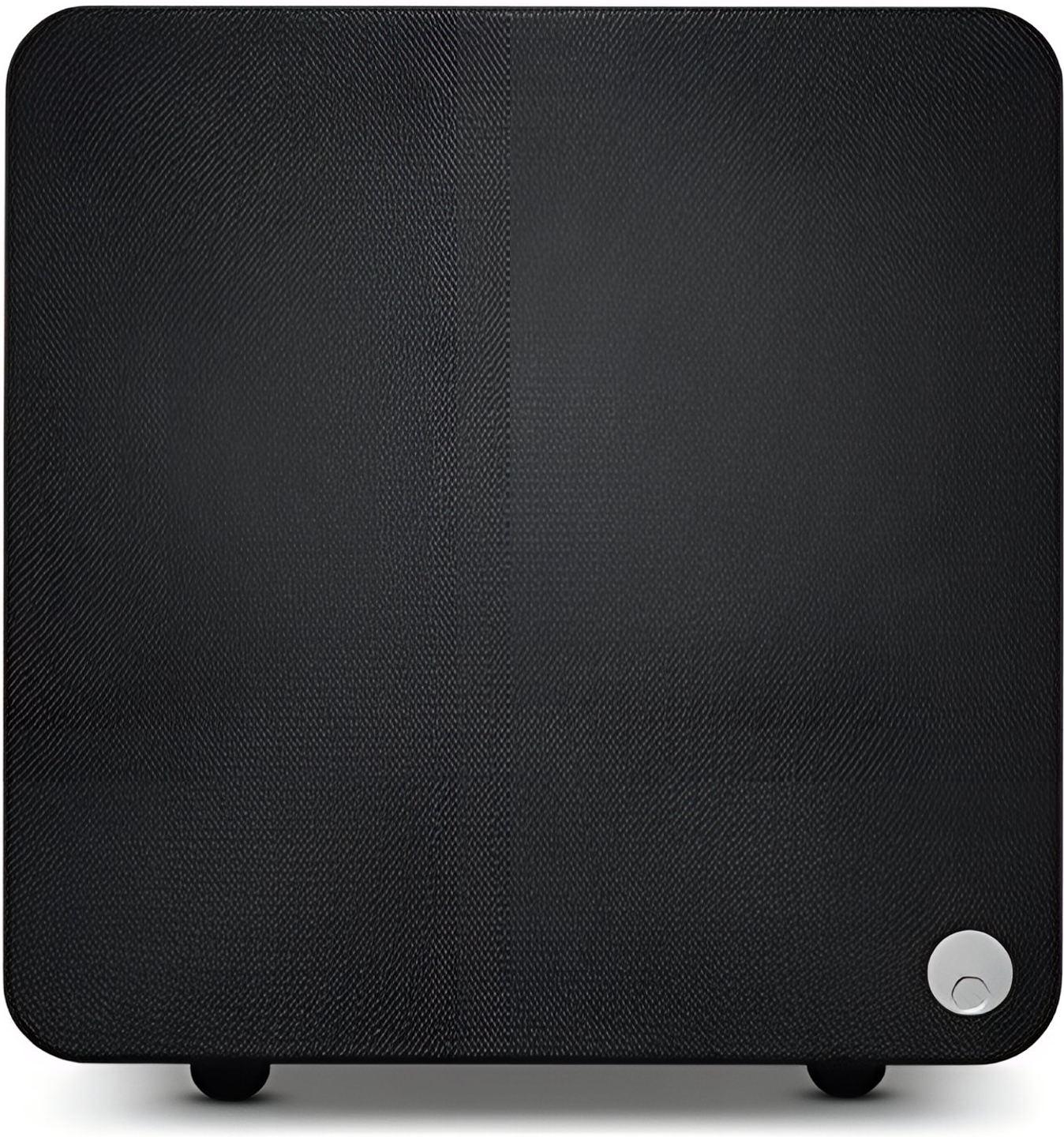
Successor to the Minx X201, the MSX Sub 200 carries on the formula that made its predecessor a success: a very compact active subwoofer capable of reaching deep bass without taking up much space. Cambridge Audio has revised the finish and aligned the name with its current nomenclature, but the philosophy remains the same. A 21 cm cube, 5 kg on the scale, and 200 W of amplification to support the smaller speakers in the MSX range.
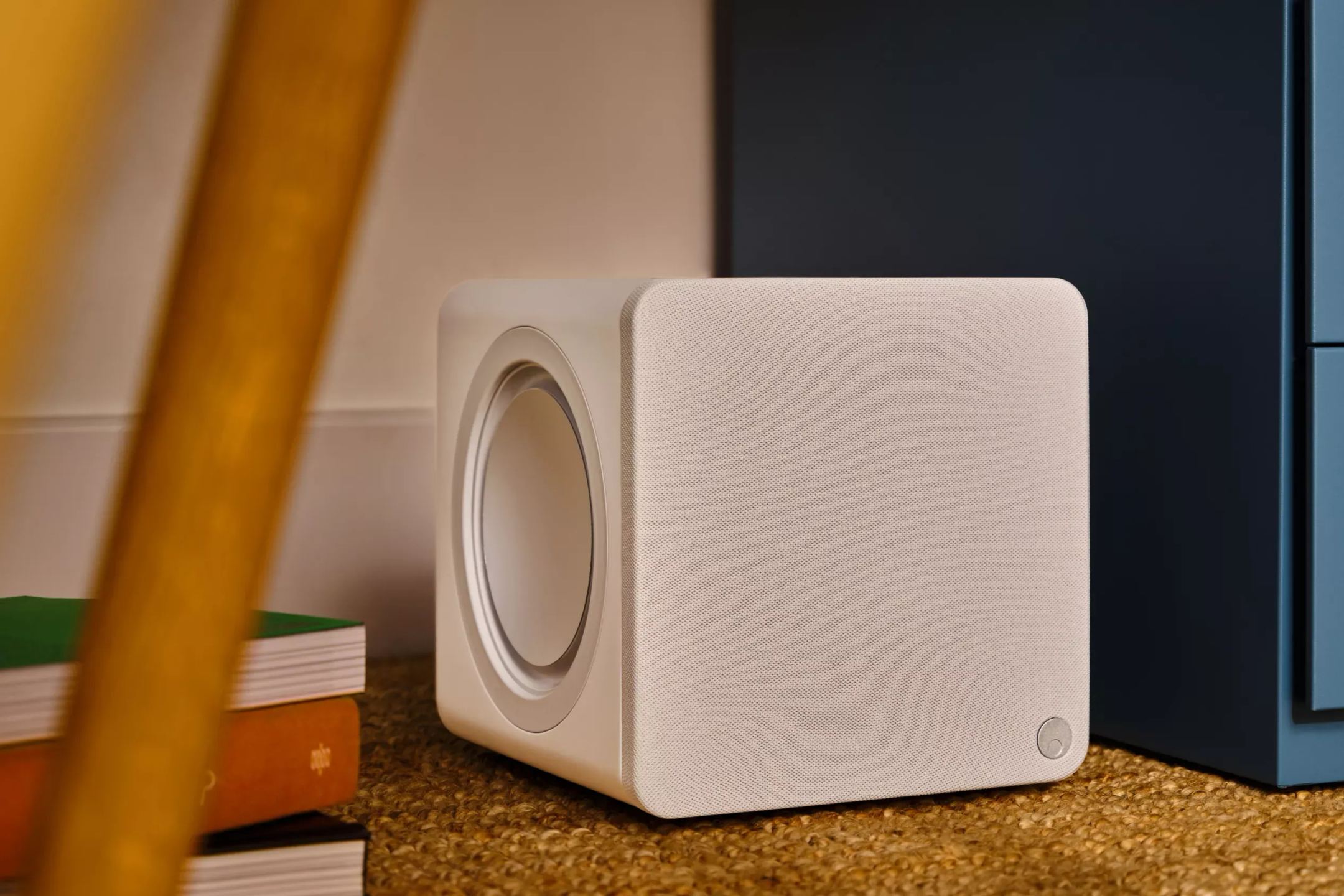
An active driver and two passive radiators in a 21 cm cube
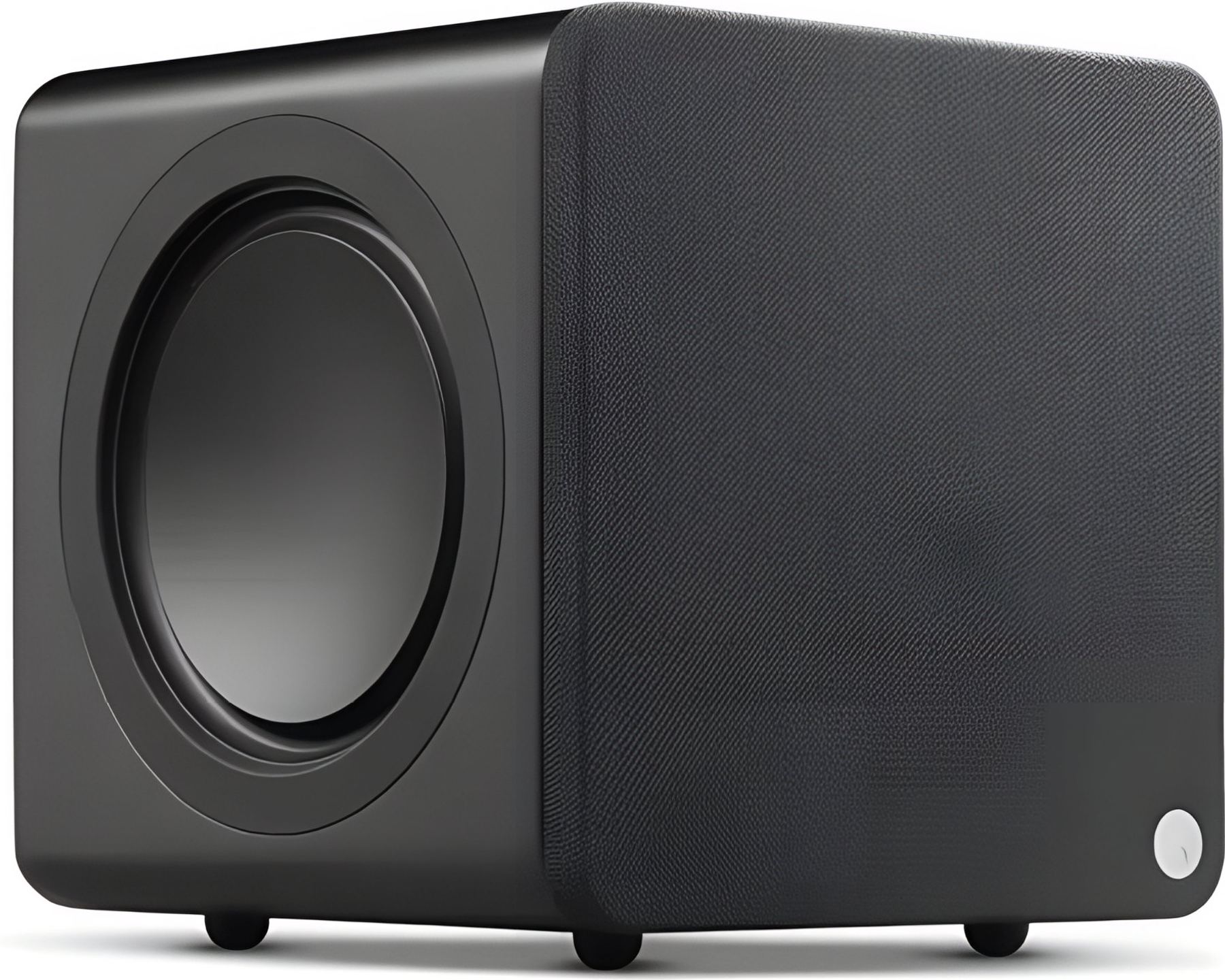
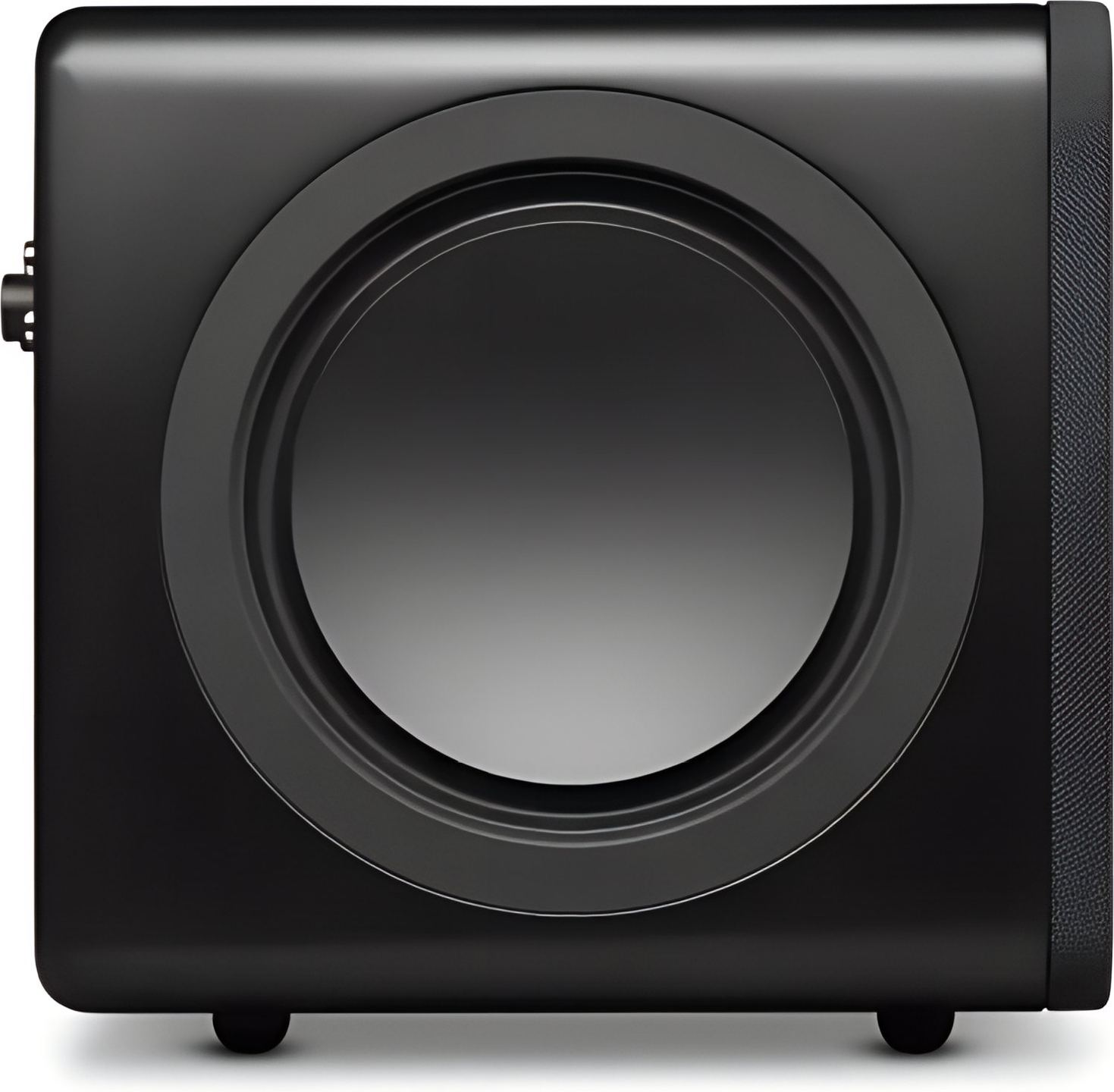
The MSX Sub 200 is built around a three-transducer configuration: a front-firing 16.5 cm (6.5-inch) active driver, assisted by two passive radiators (ABR) of the same diameter. The passive radiators act as non-motorised membranes that amplify the air displacement generated by the main driver. This principle delivers bass extension comparable to a much larger ported enclosure, while minimising air turbulence and port noise.
The stated frequency response reaches down to 36 Hz (-6 dB), placing the MSX Sub 200 in the range where the fundamentals of the deepest instruments are felt (double bass, kick drum, synthesisers). For a subwoofer of this size, that is a notable achievement.
A DSP to maintain control at high volume
The built-in 200 W amplifier is driven by a digital signal processor (DSP). The DSP serves a dual purpose: protecting the driver by keeping cone excursion within safe limits, and correcting the frequency response to maintain tight, accurate bass even as the volume increases. Cambridge Audio states that the system was developed at its London offices and at Melomania, its private concert venue.
In practice, the DSP avoids the classic pitfall of small subwoofers pushed to their limits: a loose, sluggish sound that muddies the lower end of the spectrum rather than defining it.
Controls and connectivity
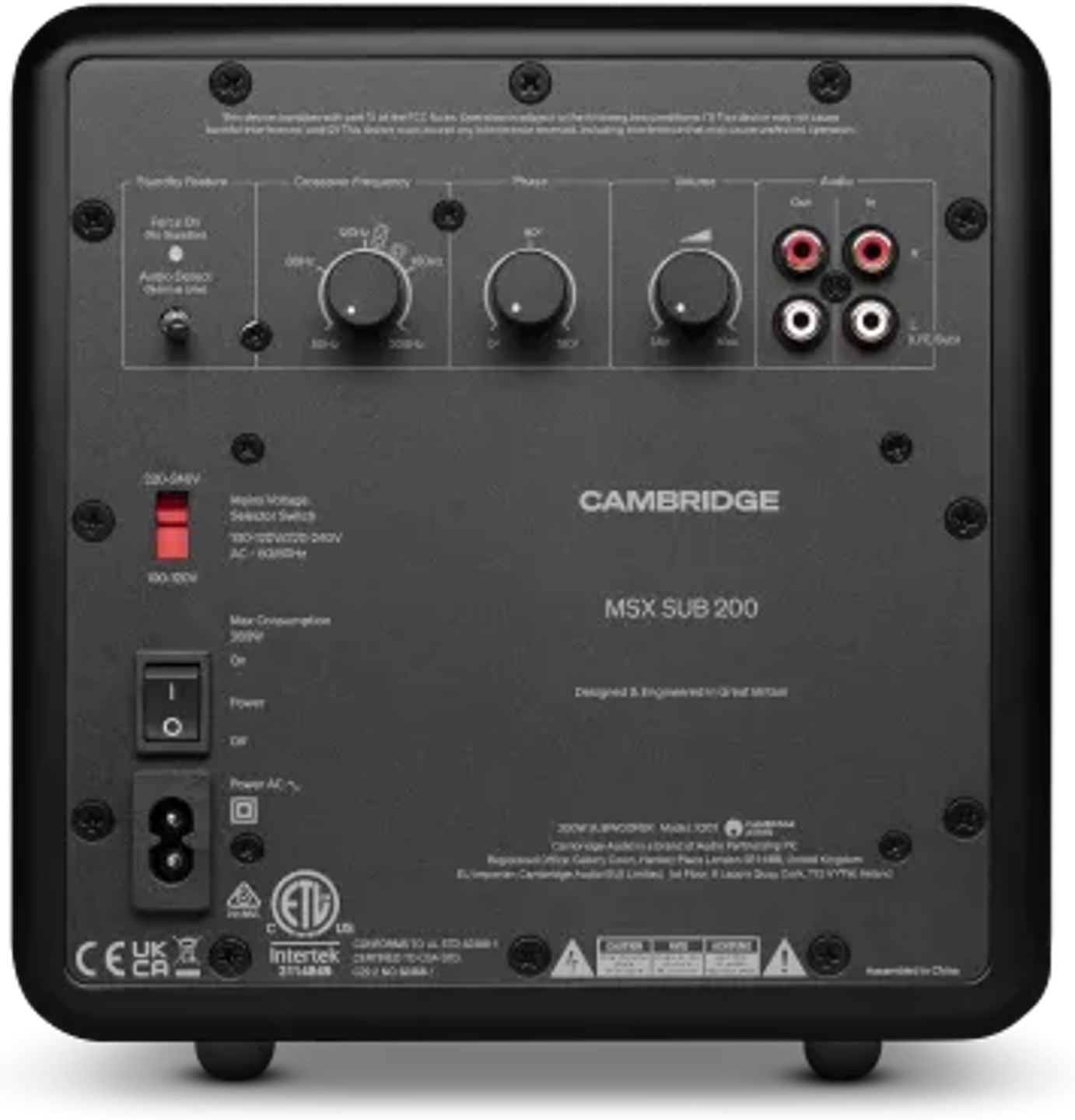
The rear panel provides access to two continuous adjustments. The low-pass filter (crossover) is adjustable from 50 to 200 Hz, allowing the crossover point to be matched to the satellite speakers in use. The phase control, variable from 0 to 180°, compensates for acoustic path differences between the subwoofer and the main speakers: a poorly set phase can cause partial bass cancellation at the listening position.
In terms of connectivity, the MSX Sub 200 keeps things simple: a stereo RCA input (line level) and an RCA pass-through output for chaining a second unit. An amplifier or AV receiver with a dedicated subwoofer output or compatible pre-outputs will be required. Within the Cambridge Audio range, the CXA61, CXA81, and EXA100 are straightforwardly compatible. The AXR100 also works, but its fixed low-pass filter limits integration precision.
An automatic standby mode cuts power in the absence of a signal, then reactivates the subwoofer as soon as an audio signal is detected.
Size, finish, and integration into an MSX system
At 210 × 220 × 232 mm, the MSX Sub 200 fits on a shelf, slides under a piece of furniture, or sits on the floor in a corner without drawing attention. The matte finish, available in black or white, matches the rest of the MSX range and other Cambridge Audio products.
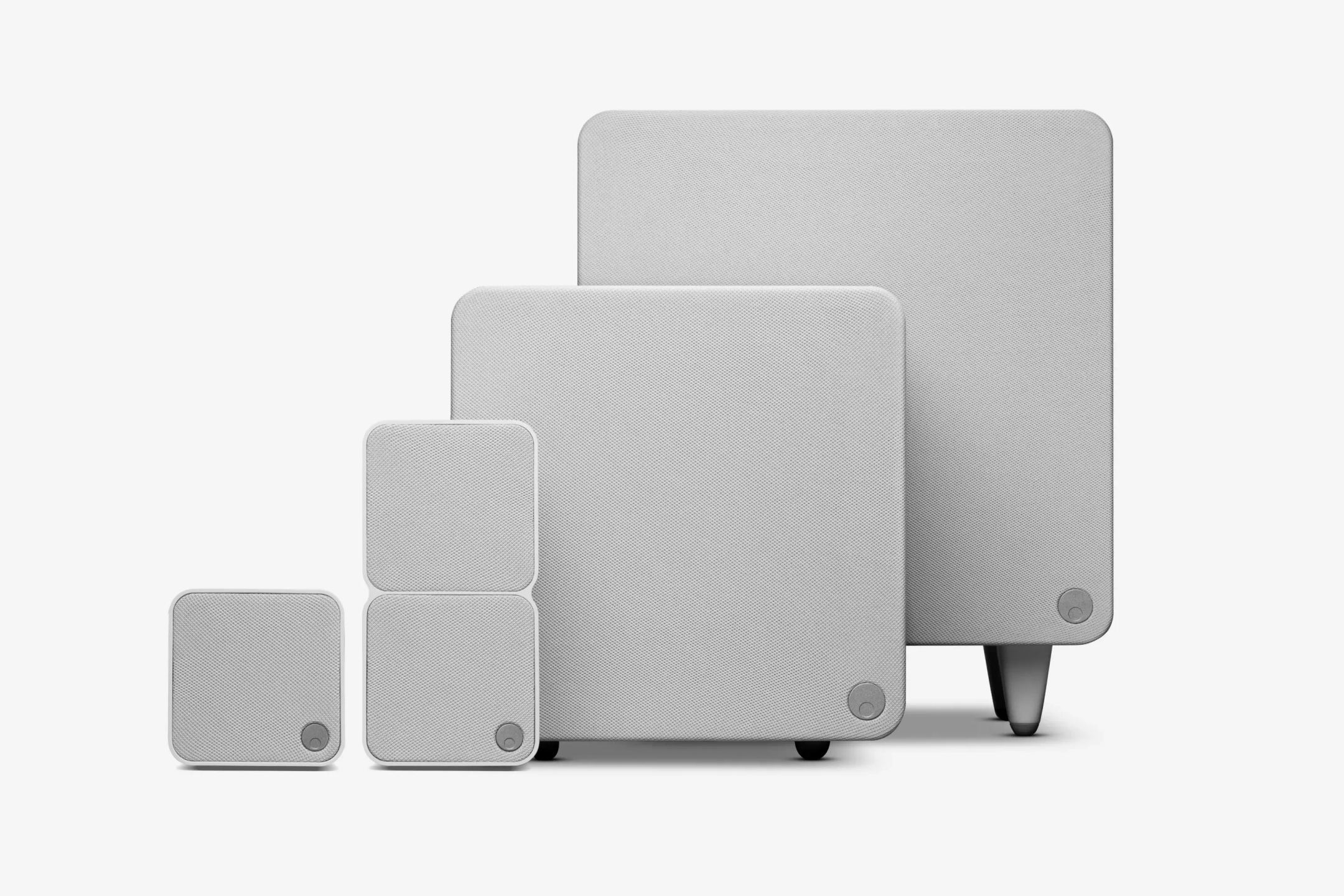
The subwoofer was designed primarily to work with the MSX10 and MSX20 satellite speakers, which use Cambridge Audio’s BMR (Balanced Mode Radiator) technology. These miniature speakers offer very wide sound dispersion (up to 180°) but naturally lack bass: the Sub 200 fills out the lower end of the spectrum. Together they form a modular system that can range from a simple 2.1 stereo configuration up to a 5.1 home theatre system or beyond, by progressively adding speakers.
There is nothing to prevent using the MSX Sub 200 with speakers from other brands, provided the amplifier has the appropriate output. The wiring is standard, with no proprietary connectors.
What sets the Sub 200 apart from the Sub 300
Cambridge Audio also offers the MSX Sub 300, which is more powerful (300 W) and features a 20 cm (8-inch) driver in a slightly larger enclosure. The Sub 300 likely reaches a little deeper and handles higher volume levels. The Sub 200 is the logical choice for small to medium-sized rooms, where an overly powerful subwoofer would overwhelm the space rather than enhance it.
What the press says
The Cambridge Audio MSX20 & MSX Sub 200 is a capable mix of satellite speakers and a subwoofer that provides an immersive sound with tight bass, a surprisingly wide soundstage and rich mids for such a compact set of units that can be placed virtually anywhere.[...] The treble can feel a little smooth, though, and once you add a streamer and amp, it can get a little dearer than some active units.
Technical Specifications
Design and amplification
- Type: active subwoofer
- Amplification power: 200 W (built-in amplifier)
- Signal processing: DSP (digital signal processing) for precise bass control
- Automatic standby mode: yes
Speakers
- 1 active 16.5 cm driver
- 2 passive 16.5 cm radiators
- Configuration optimized for better bass extension without distortion
Audio performance
- Frequency response: 36 Hz (-6 dB) to 200 Hz
- Low-pass filter (crossover): variable from 50 to 200 Hz
- Phase control: adjustable from 0 to 180°
- Sound reproduction: deep, controlled, and dynamic bass
Connectivity
- Input: 1 stereo RCA (line level)
- Output: 1 RCA pass-through
Dimensions and weight
- Dimensions (W x H x D): 210 x 220 x 232 mm
- Weight: 5 kg
Design and integration
- Compact format for easy integration into any type of space
- Finish: premium matte
- Designed to pair with speakers from the MSX range (MSX10, MSX20)
Box contents
- 1 MSX Sub 200 subwoofer
- 1 power cable
- Quick start guide
- Registration card
- Safety guide
Frequently Asked Questions
Can the MSX Sub 200 work with speakers outside the MSX range?
Yes. The subwoofer accepts any audio source via its line-level RCA input. The amplifier or AV receiver simply needs a subwoofer output or compatible pre-outputs. The low-pass filter adjustment allows the crossover point to be tailored to speakers with varying characteristics.
Is a separate amplifier needed to power the MSX Sub 200?
No, the subwoofer is active: its 200 W amplifier is built in. It only requires a mains power cable and an audio signal from an amplifier, preamplifier, or AV receiver.
How do you set the phase correctly?
The principle is straightforward: while listening, vary the phase control between 0° and 180° while playing a musical passage with prominent bass. The position that produces the fullest, most substantial bass at the listening position is the correct one. A poorly set phase results in weak or hollow-sounding bass.
Is the MSX Sub 200 suitable for home theatre?
It can reinforce the low frequencies of a compact home theatre system, particularly with the MSX10 or MSX20 satellites. For a large room or cinema use with high-impact scenes (explosions, orchestral music), the Sub 300 with its 20 cm driver will be better suited.
- Eco-contribution included in the sale price.
- GTIN / EAN: 5055300424716