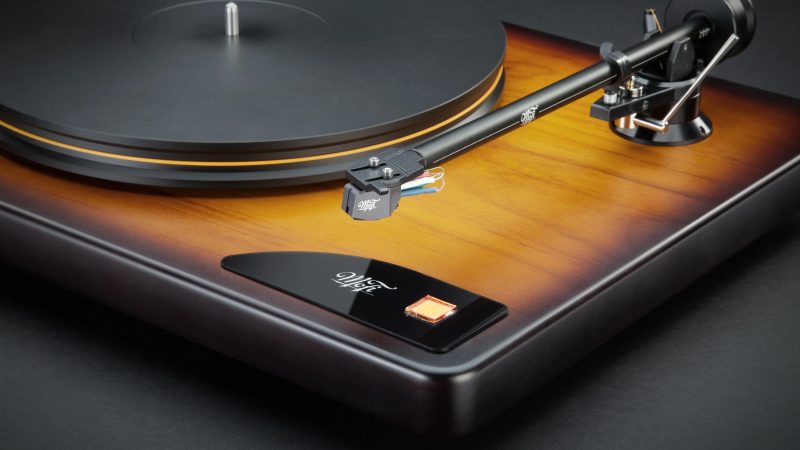
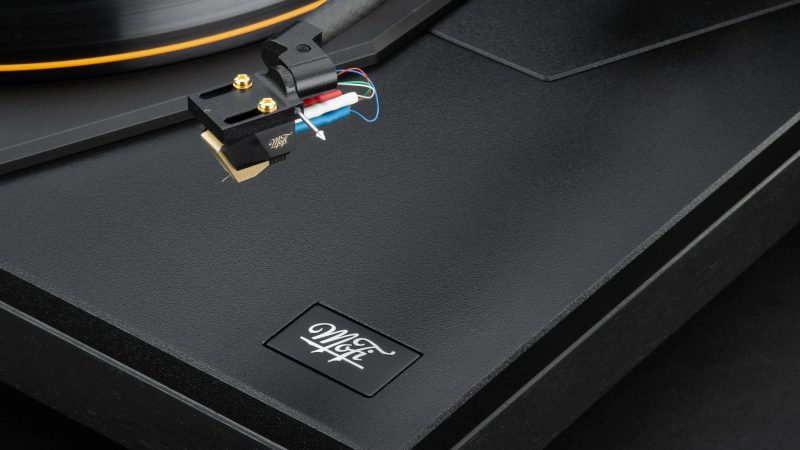
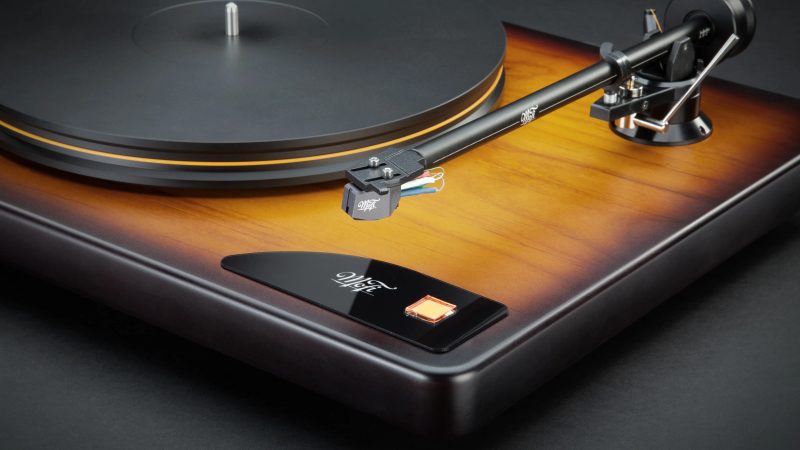
Mofi Electronics MasterDeck black


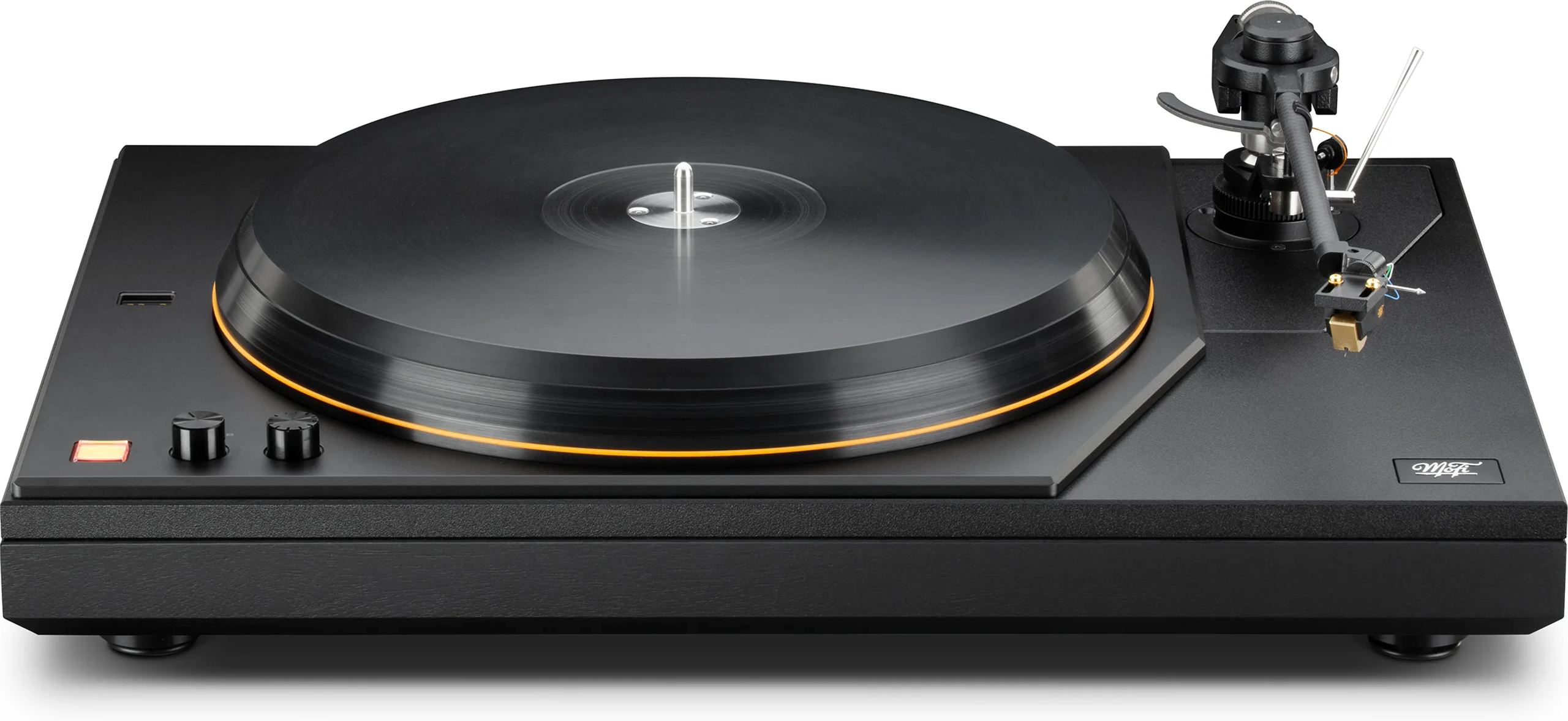
Overview
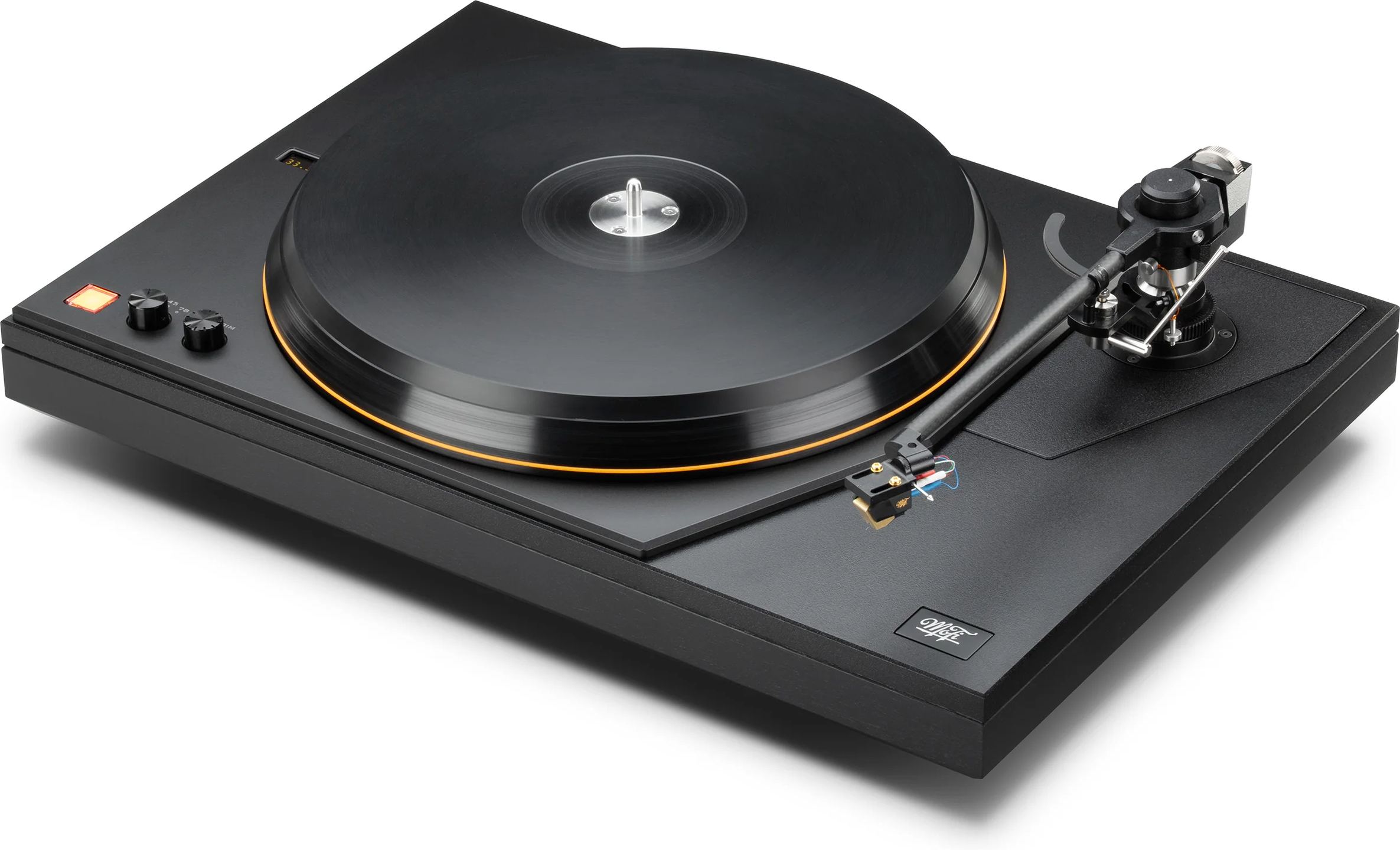
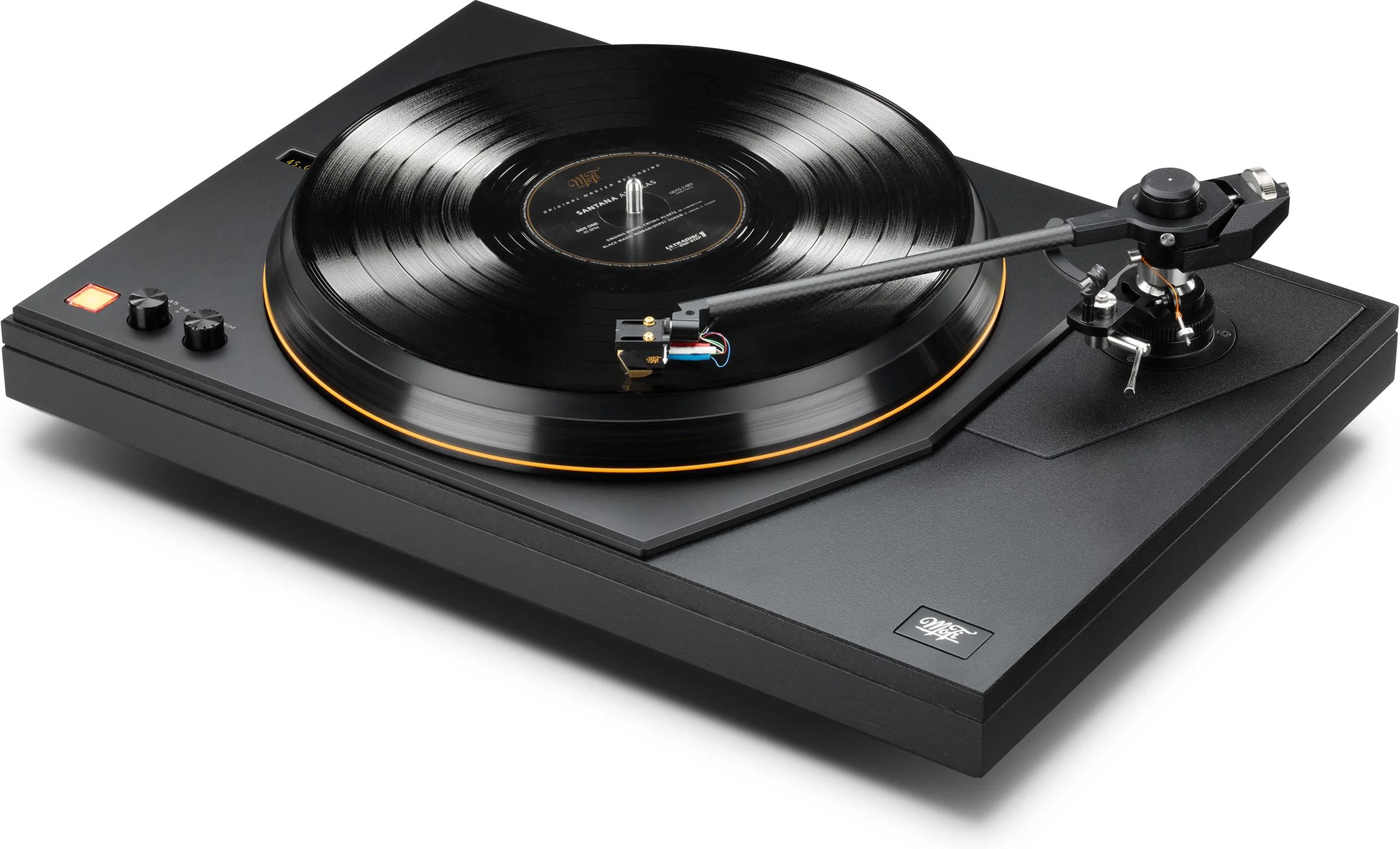
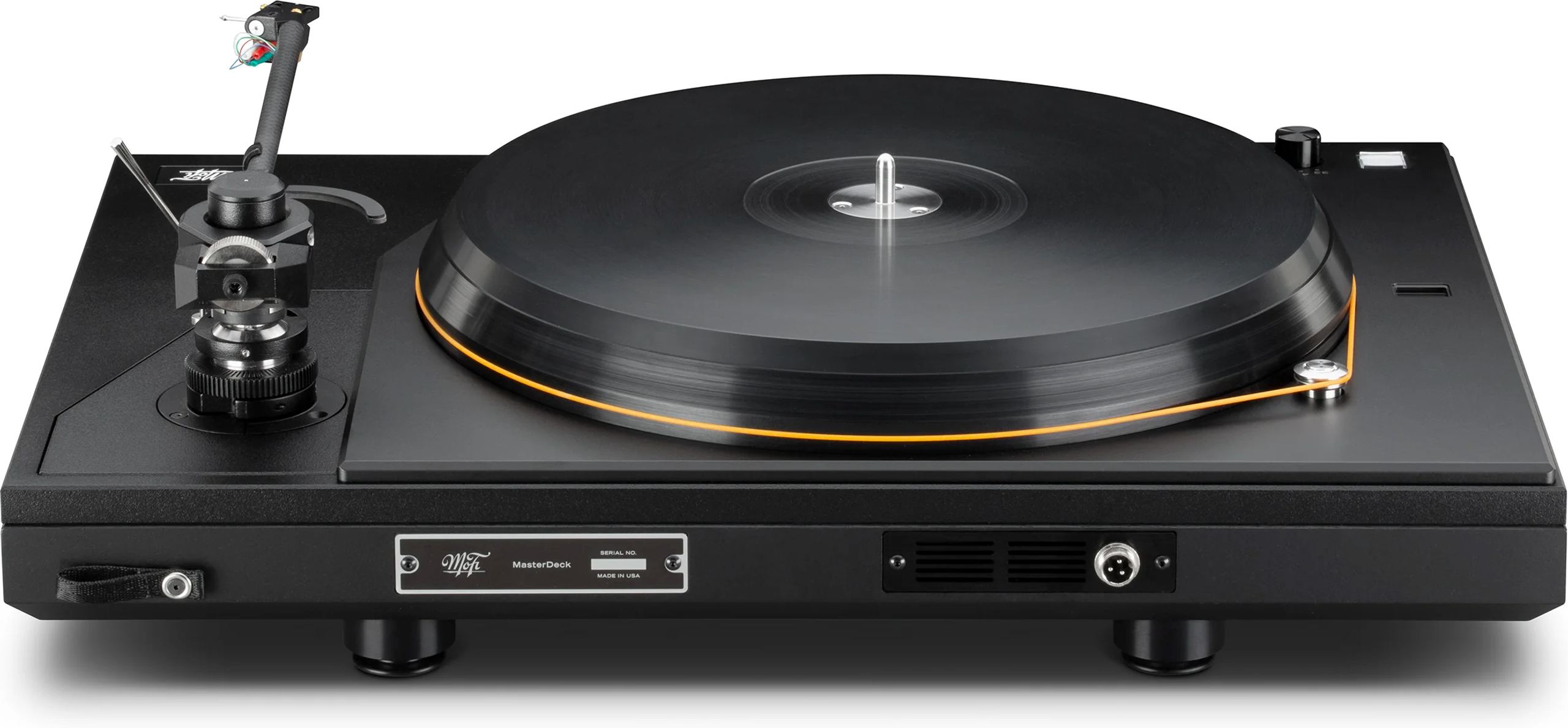
After the StudioDeck and UltraDeck, which have established MoFi Electronics in the high-end turntable landscape since 2016, the MasterDeck raises the bar. Designed by Allen Perkins, a renowned analog designer (Spiral Groove, Immedia RPM, SOTA), it brings together more than three decades of expertise in turntable design. Hand-assembled in small batches at MoFi’s factory in Ann Arbor, Michigan, it is available in walnut or black ash finish.
A hybrid tonearm drawing from two schools
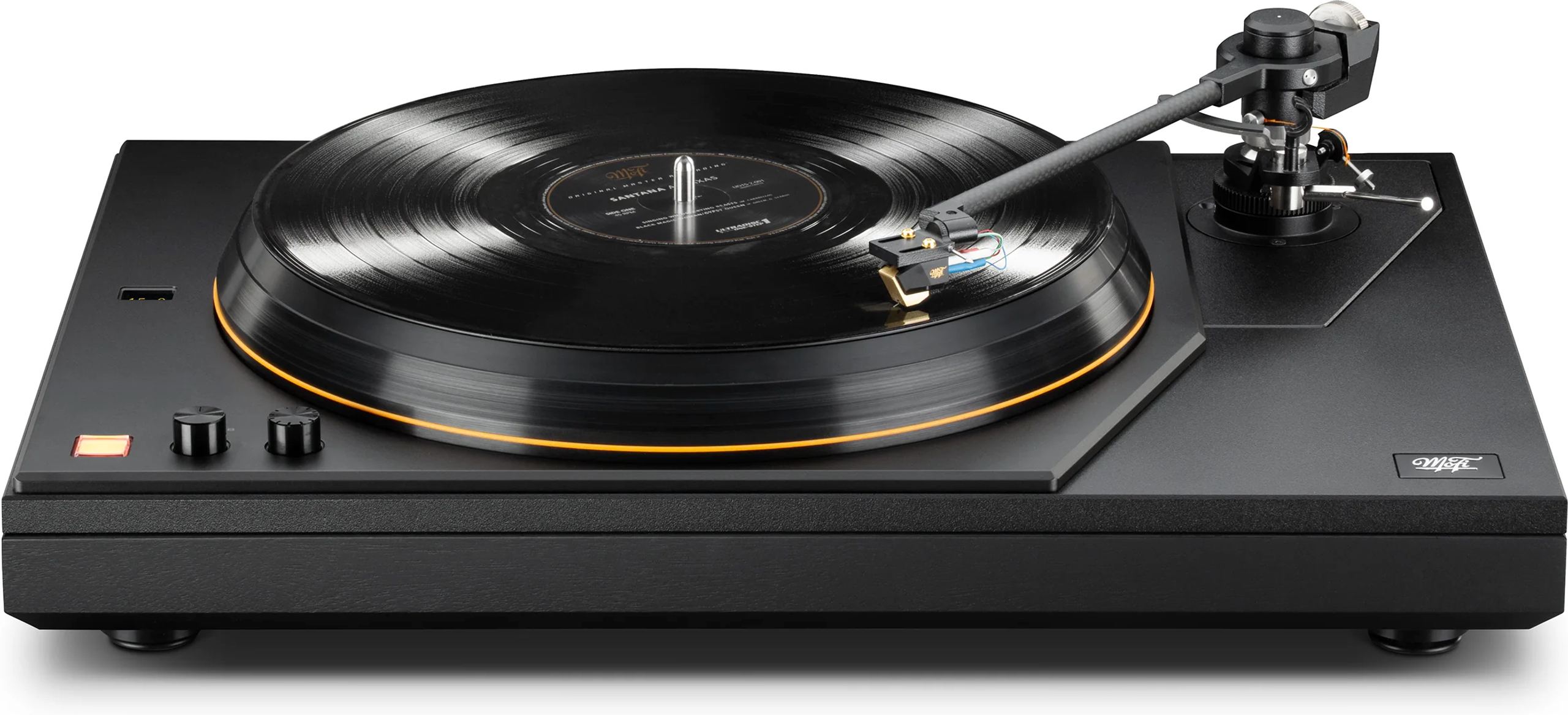
The MasterDeck’s tonearm is an original creation by Allen Perkins. Measuring 10 inches long, compared with 9 inches on most turntables in this category, it reduces tracking error thanks to a gentler sweep arc across the entire surface of the record.
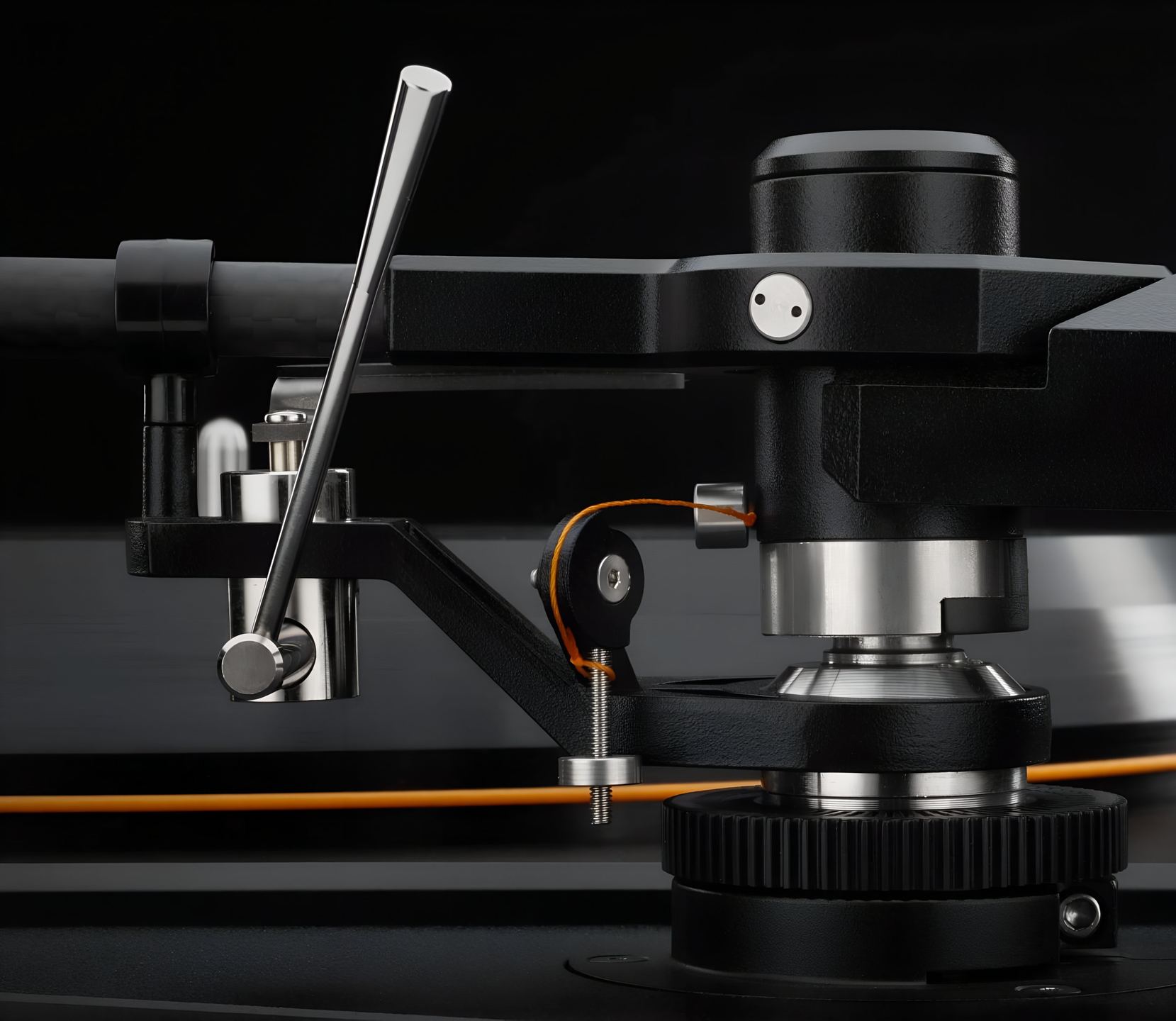
Its hybrid design combines a unipivot bearing for horizontal movements and a gimbal bearing for vertical movements. Perkins explained this choice: the unipivot offers fast energy transfer and excellent detail retrieval, while the gimbal provides the lateral stability often lacking in pure unipivot arms. Three contact points (the vertical pivot and two ruby balls for rotation) ensure this combination.
The tube is made of carbon fiber, with a tapered inner profile that promotes rigidity and damping at the same time. The removable headshell is made of aluminum, with a precision collar that is more secure than standard mountings. This system makes cartridge changes easier and allows azimuth adjustment by simply rotating the headshell, without handling the entire arm. The spiral-groove counterweight (a Spiral Groove patent) keeps the mass close to the pivot, which limits inertia while handling cartridges from 5 to 14 grams. The internal wiring is Cardas Audio copper, connected directly to the cartridge without any intermediate connector, even with the removable headshell.
Adjustments are comprehensive: VTA (vertical tracking angle) via threaded collar, azimuth, overhang, antiskating by wire and weight. The VTA collar is machined precisely enough to allow adjustments while listening, if you have a steady hand.
Platter and bearing: mass and silence
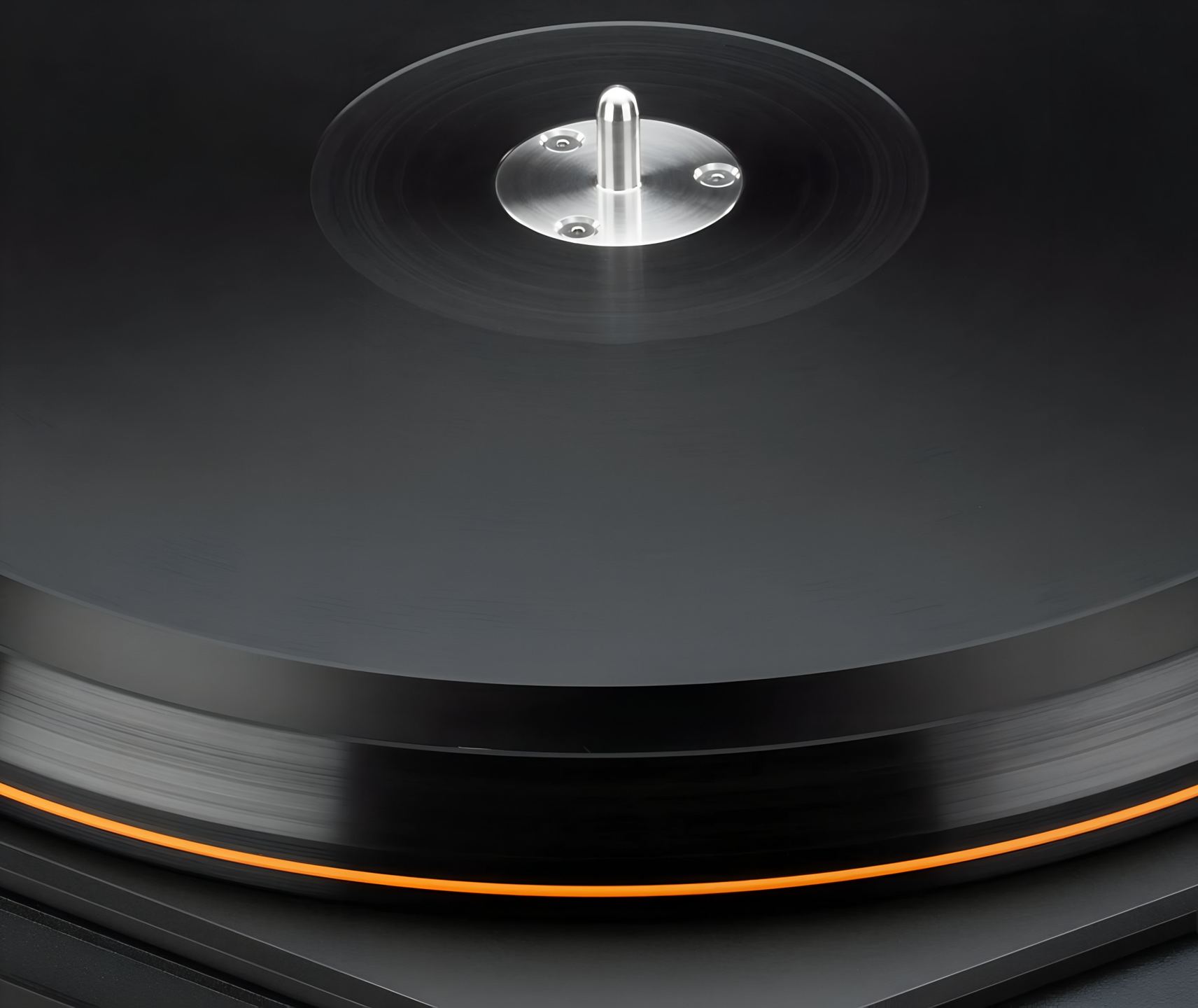
The hybrid platter combines a layer of aluminum topped with a layer of Delrin (polyoxymethylene). This engineering plastic has a vibrational impedance close to that of vinyl, making it an excellent damper for the record placed on it. The denser aluminum provides mass and inertia. The result: a platter weighing 6.5 kg and 44 mm thick, heavy enough to maintain stable, consistent rotation.
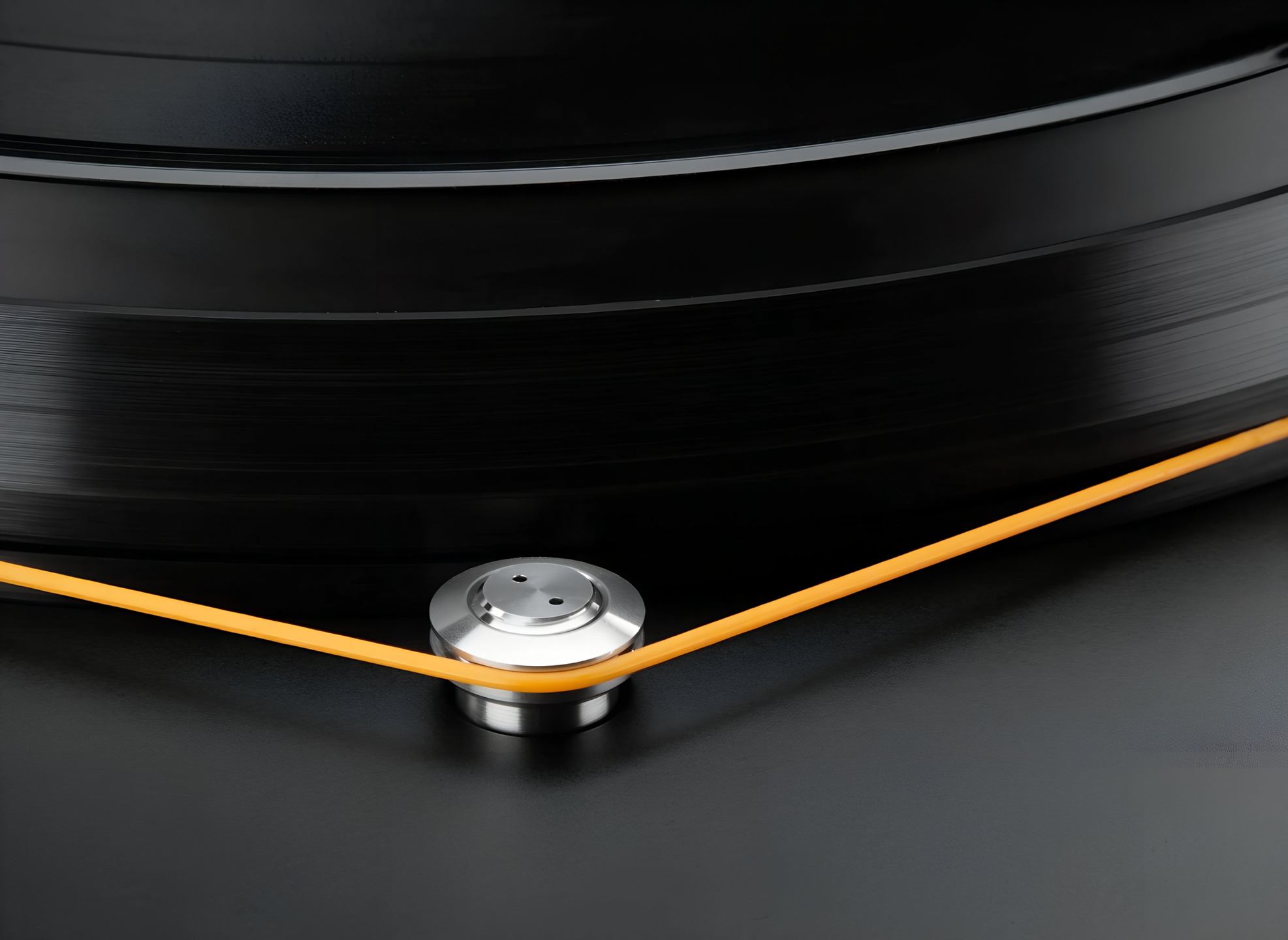
This platter rotates on a sealed inverted bearing derived from the Spiral Groove lineage. Contact between the spindle and the main bearing is made at a single point, on a Teflon thrust pad, with a body made of stainless steel, bronze, and aluminum. The belt drives the platter at mid-height, which preserves balance above and below the rotation point. The bearing requires no maintenance.
Motor drive regulated by optical sensors
The MasterDeck uses a three-phase brushless DC motor (sinusoidal BLDC), housed in an isolated enclosure to prevent any transmission of vibrations to the chassis. Rotation speed is continuously monitored by optical sensors that correct the slightest variation.
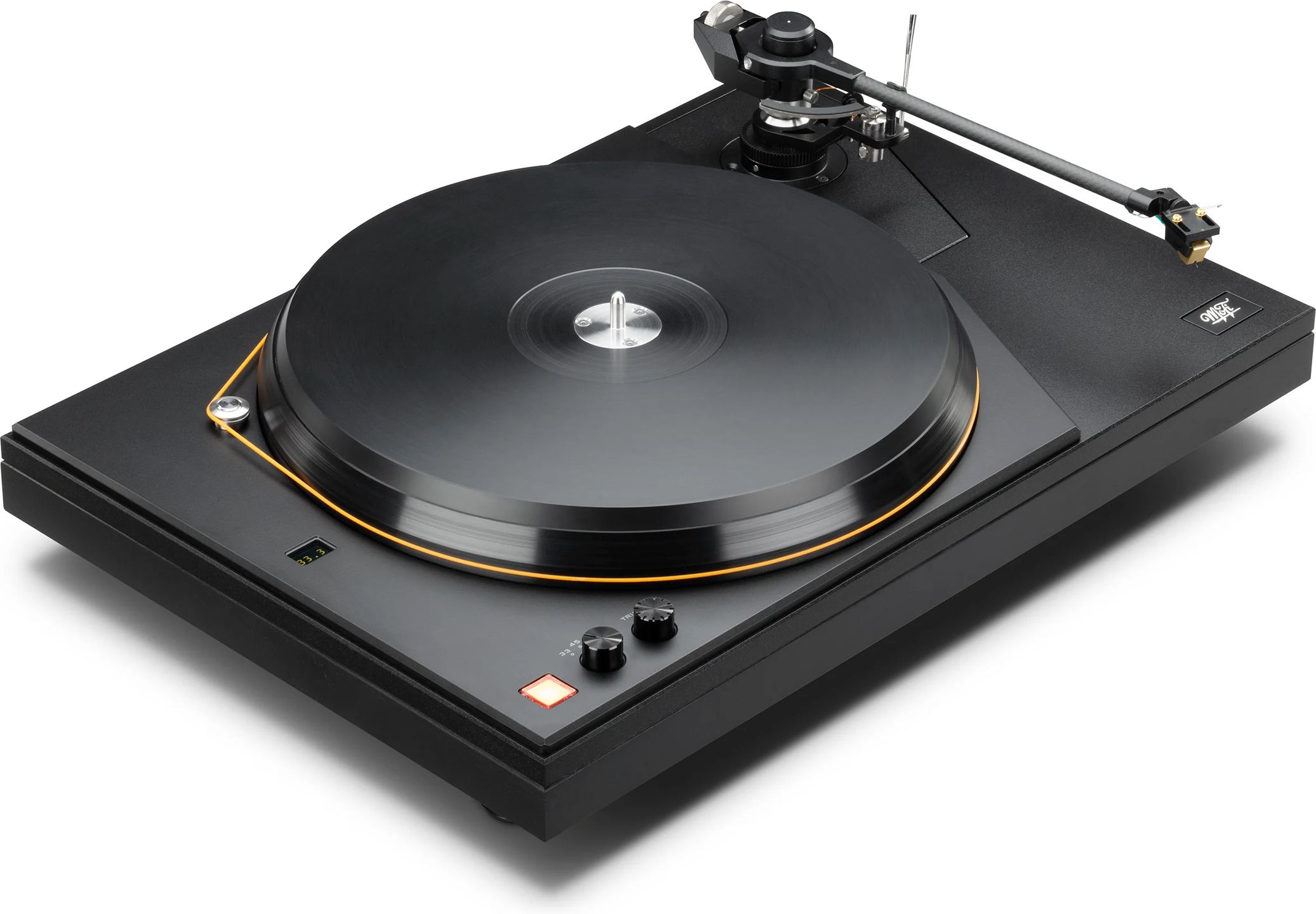
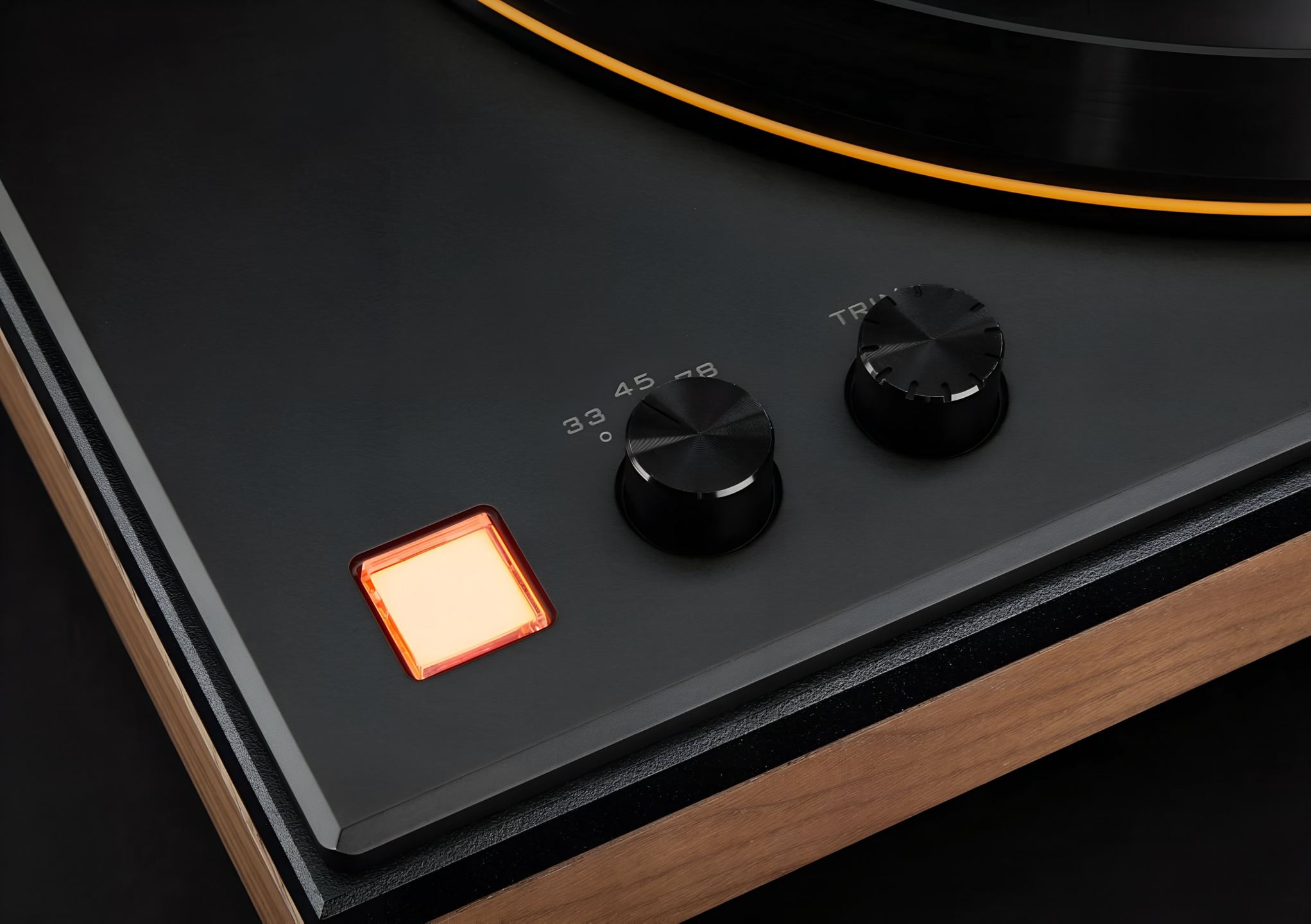
Three speeds are available: 33 ⅓, 45, and 78 rpm. A four-digit digital display shows the speed in real time, and a fine adjustment potentiometer (trim) allows each speed to be adjusted precisely. This is a clear departure from the StudioDeck and UltraDeck, where speed changes are made manually by moving the belt on the pulley.
When first powered on, the turntable performs an automatic calibration cycle lasting about two minutes. For optimal calibration, MoFi recommends placing a record on the platter, setting the record weight on it, and leaving the stylus in the groove during this operation, as the system is highly sensitive. A warm-up time of one to two hours, followed by a second calibration cycle, further refines performance. Power consumption remains below 5 W.
Mechanical isolation and chassis construction
The turntable base is built according to a constrained-layer principle: an MDF body topped with two black anodized aluminum plates that house the electronics and switches. These materials of different densities, bolted against one another, provide natural vibration damping. The whole assembly is clad in a solid wood frame (walnut or black ash depending on the chosen finish).
The MasterDeck rests on four anti-vibration feet developed by Harmonic Resolution Systems (HRS), adjustable for leveling. These feet offer 5.5 degrees of freedom and make the turntable “float” on its support, decoupling it from vibrations transmitted by the floor and furniture. This is a point shared with the lower models in the range, but the implementation here is more advanced. The total weight of the assembly reaches 17 kg, which contributes to overall stability. The dimensions (50.8 × 13 × 38.4 cm) remain compact despite the 10-inch arm.
One point to note: the MasterDeck is supplied without a dust cover.

78 rpm playback and versatility
78 rpm compatibility sets the MasterDeck apart from most turntables in this range. This is not a gimmick: combined with fine speed adjustment, it opens access to collections of old shellac records with playback precision that period turntables could not offer.
The accepted cartridge weight range (5 to 14 grams) and the extent of the arm adjustments allow fitting both lightweight moving magnet (MM) cartridges and heavier moving coil (MC) cartridges. MoFi optionally offers its UltraGold MC cartridge, with a Shibata stylus on a boron cantilever, which can be factory pre-installed.
What you need to know before buying
The MasterDeck requires a time investment during setup. Tonearm adjustment (VTA, azimuth, overhang, antiskating, tracking force) is comprehensive but demanding: each parameter influences the others. You should allow for a break-in and calibration phase, and using a record weight (sold separately) noticeably improves bass and tracking.
The counterweight has slight lateral play once screwed onto its thread, and speed calibration is performed only at startup, with no continuous dynamic correction during listening, which may be surprising on a turntable at this level. The power button is placed on the side opposite the cartridge, an improvement over the UltraDeck where it was located directly under the stylus at rest.
Documentation
Technical Specifications
Motor and Drive
- Motor: synchronous DC belt drive with optical regulation
- Optical regulation: extreme speed stability, no drift, maximum rhythmic precision
- Speeds: 33 ⅓ / 45 / 78 RPM with fine adjustment (trim)
- Power consumption: < 5 W
- Encapsulated inverted spiral bearing: minimal friction, ultra-smooth rotation, exceptional longevity
Platter
- Hybrid Delrin / aluminum platter
- Thickness: 1.75” (approx. 44 mm)
- Weight: 6.5 kg
- Benefits: very high inertia, drastic reduction of resonances, ultra-silent noise floor
Tonearm
- 10” hybrid unipivot / gimbal arm
- High-rigidity carbon fiber construction
- Removable headshell
- Cardas Audio internal wiring
- Compatible cartridges: 5 g to 14 g
- Full adjustments:
- VTA
- Azimuth
- Overhang
- Anti-skating
- Technical characteristics: maximum rigidity, near-zero friction, ultra-precise groove tracking, maximum extraction of micro-details
Mechanical Isolation
- Advanced HRS isolation system, developed with Harmonic Resolution Systems
- Complete decoupling from external vibrations
- Optimal playback stability
Dimensions and Weight
- Dimensions (W × H × D): 50.8 × 13.0 × 38.4 cm
- Weight: 17 kg
Key Features
- MoFi absolute reference turntable
- 33 / 45 / 78 RPM playback with fine speed adjustment
- Ultra-precise dual-pivot carbon tonearm
- Very high-mass hybrid aluminum and Delrin® platter
- Optically regulated DC motor
- Advanced HRS mechanical isolation
- Handcrafted in the USA
Sonic Signature
- Extreme resolution
- Holographic stereo imaging
- Deep, fast, and controlled bass
- Exceptionally realistic midrange
- Very extended and natural highs
- Near-absolute silent noise floor
Recommended Uses
- Reference hi-fi systems
- Highly demanding audiophiles
- Rare vinyl collectors, including 78 RPM records
- High-level analytical listening
Frequently asked questions
Is the MasterDeck compatible with any cartridge?
The arm accepts cartridges from 5 to 14 grams, which covers the vast majority of MM and MC cartridges on the market. The patented spiral-groove counterweight moves the mass close to the pivot for light cartridges and farther away for heavy cartridges, limiting inertia in both cases. The available adjustments (VTA, azimuth, overhang, antiskating) allow fine optimization regardless of the cartridge chosen.
What is the main difference between the MasterDeck and the UltraDeck?
The arm is entirely new: carbon fiber instead of aluminum, hybrid unipivot/gimbal design, removable headshell with direct wiring. The motor drive moves from manual belt speed changing to an optical-sensor-regulated system with three electronic speeds and digital display. The platter gains thickness and mass (6.5 kg versus about 3 kg). The base adopts a more sophisticated multilayer construction.
Is a specific phono preamplifier required?
Yes. The MasterDeck does not have a built-in phono preamplifier. MoFi offers the MasterPhono, designed by Peter Madnick (formerly of Constellation Audio), as a natural companion. Any quality phono preamplifier compatible with the chosen cartridge (MM or MC as applicable) is suitable.
Is the record weight essential?
It is not included, but MoFi strongly recommends it. The Delrin platter has no mat, and a record weight (such as MoFi’s Super Heavyweight or Super Heavyweight Champion) improves coupling between the record and platter, bass control and tracking, and corrects any vinyl warps.
Can the MasterDeck play 78 rpm records?
Yes, it is one of the three available speeds. The fine adjustment (trim) allows the exact speed to be set, which is useful for old 78s whose nominal speed varied from one label to another. A suitable cartridge with a wide-profile stylus is recommended for these records.
- Eco-contribution included in the sale price.
- Manufacturer reference: 00032677