

Kanto UKI matte green (set of 2)


Specifications and features


Overview
Succeeding the YU2, one of Kanto’s best-selling desktop speakers, was no small feat. The UKI takes the compact format of its predecessor, adds Bluetooth 5.3 and USB-C, and trades the angular lines for a cabinet with soft curves inspired by artisan ceramics. All of this comes with bi-amplified Class D amplification delivering 100 W peak (50 W RMS) across two drivers per speaker. This is far from your generic PC speakers.
A clamshell cabinet that stands apart from the competition
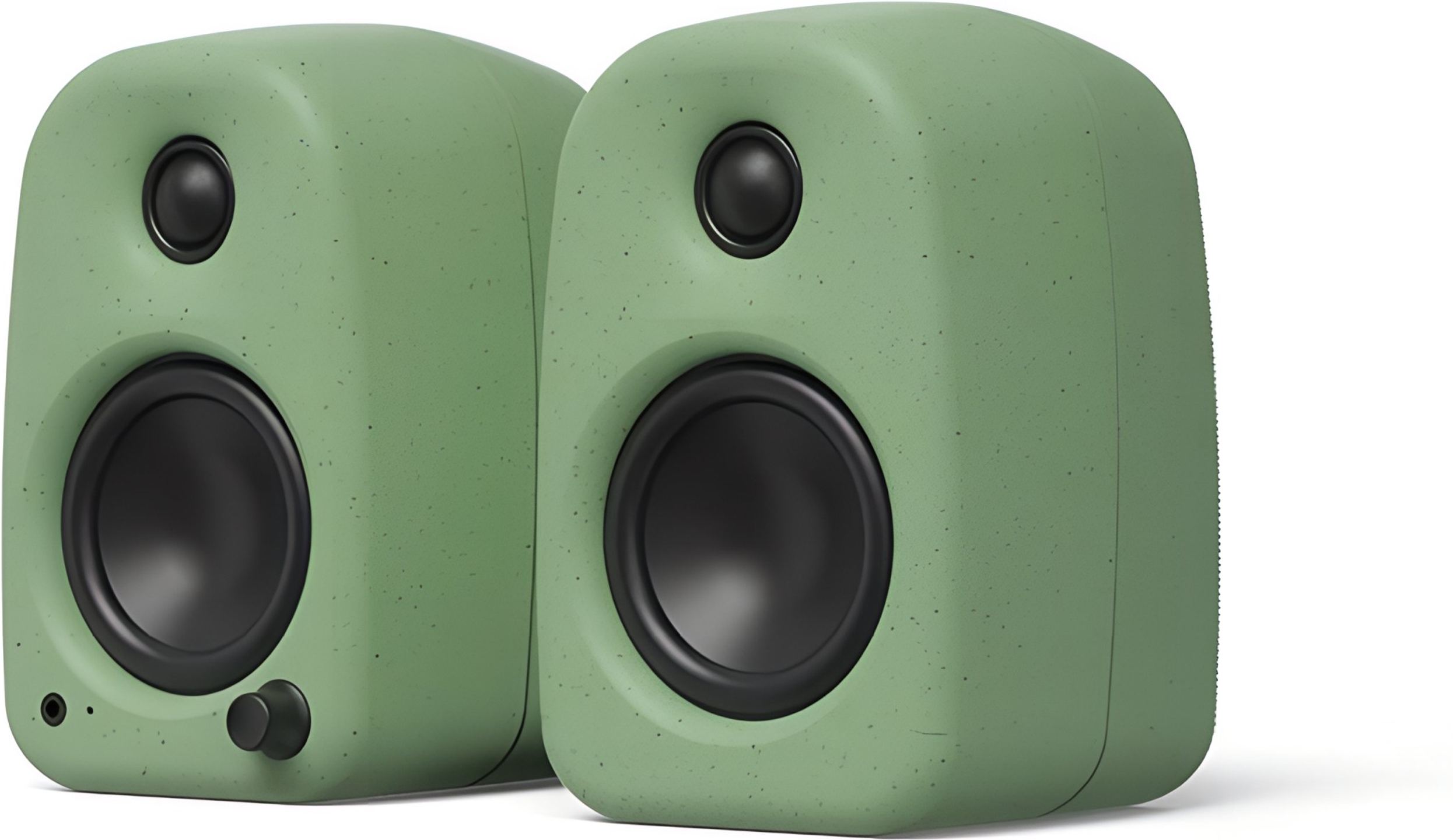
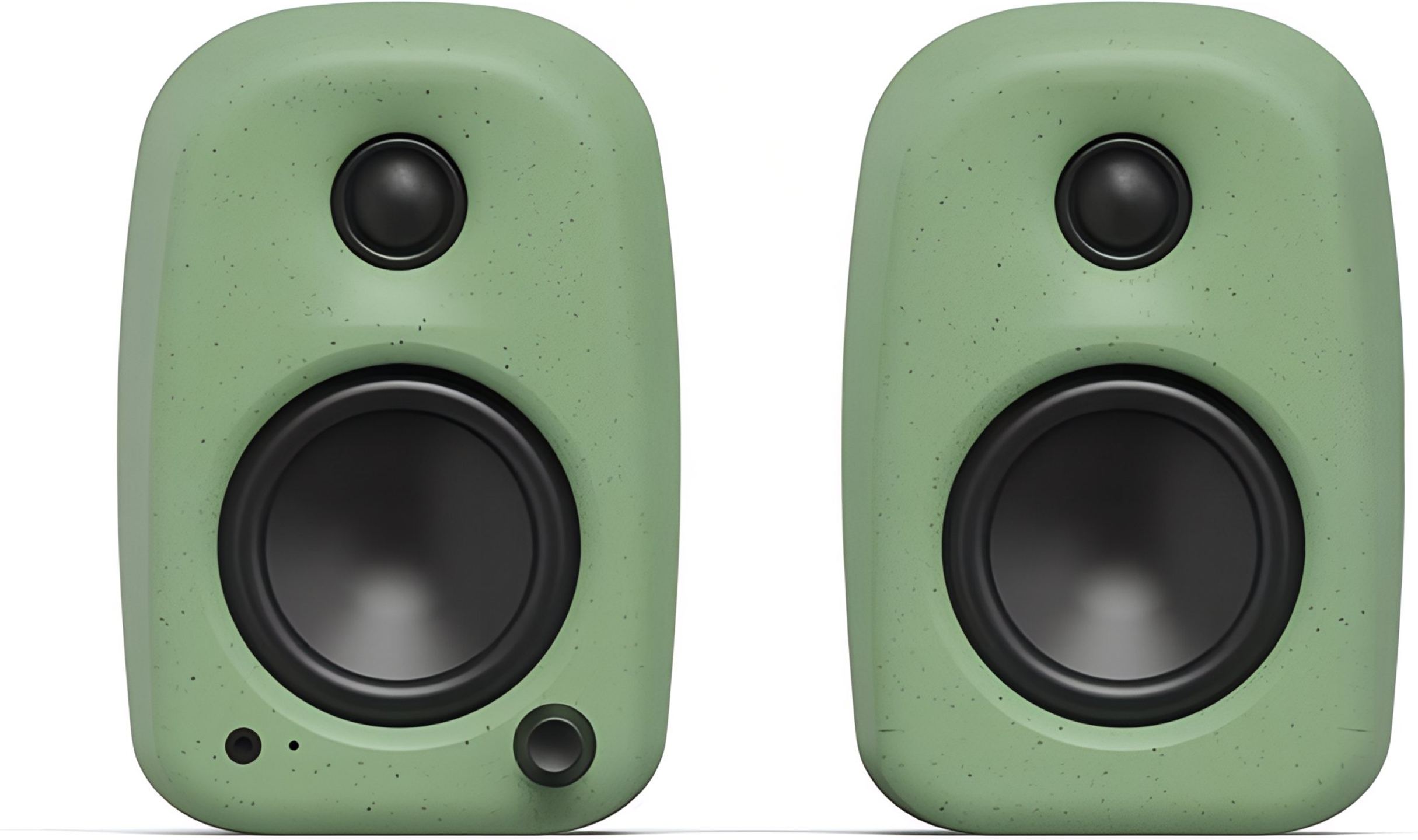
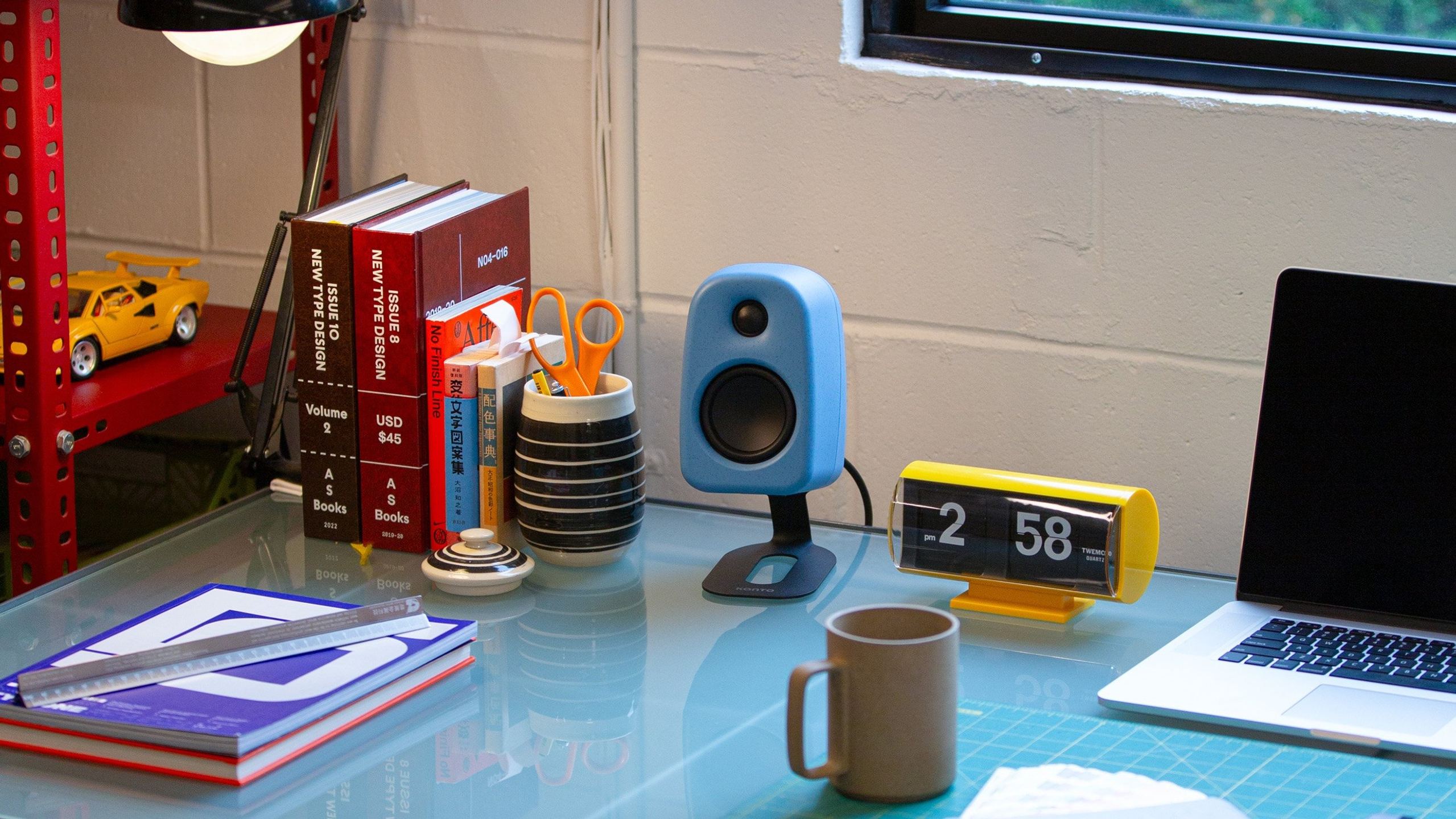
The UKI looks like no other conventional desktop speaker. Its injection-molded plastic cabinet adopts a two-part clamshell shape, with no sharp edges or right angles. The matte, slightly textured finish — with fine speckles visible depending on the lighting — comes from Kanto’s use of partially recycled materials in manufacturing. Each pair has a subtly different appearance.
Five color options are available: Onyx, Chalk, Pumice, Cornflower, and Sage. The dimensions remain very compact: 112 × 110 × 165 mm per speaker, weighing 1 kg (active speaker) and 0.9 kg (passive speaker). On a desk, the footprint is minimal.
The drivers — a 19 mm silk dome tweeter and a 76 mm paper cone woofer — are recessed into the front baffle with no protective grille. A rear bass-reflex port completes the acoustic loading. Keep fingers (especially children’s) away from the exposed drivers.
Bi-amplification and sound reproduction
Active bi-amplification is the UKI’s most notable technical feature. Each channel has its own Class D amplification stage: 9 W RMS for the tweeter, 16 W RMS for the woofer. This separation allows each driver to receive an independently filtered and amplified signal, reducing distortion and improving power handling compared to a single amplification stage.
The stated frequency response runs from 80 Hz to 22 kHz. Bass extension is therefore limited — a direct consequence of the compact format and 76 mm woofer. In the midrange and treble, reproduction is detailed and airy, with a silk dome tweeter that avoids harshness during long listening sessions. The stereo image, at close range on a desk, proves surprisingly wide for speakers of this size.
One thing to note: Bluetooth only supports SBC and AAC codecs. No aptX or LDAC. For the best audio quality, the USB-C connection (16-bit / 48 kHz) remains the preferred choice, as it bypasses the computer’s audio converter and feeds directly into the speaker’s built-in DAC.
Connectivity and subwoofer integration
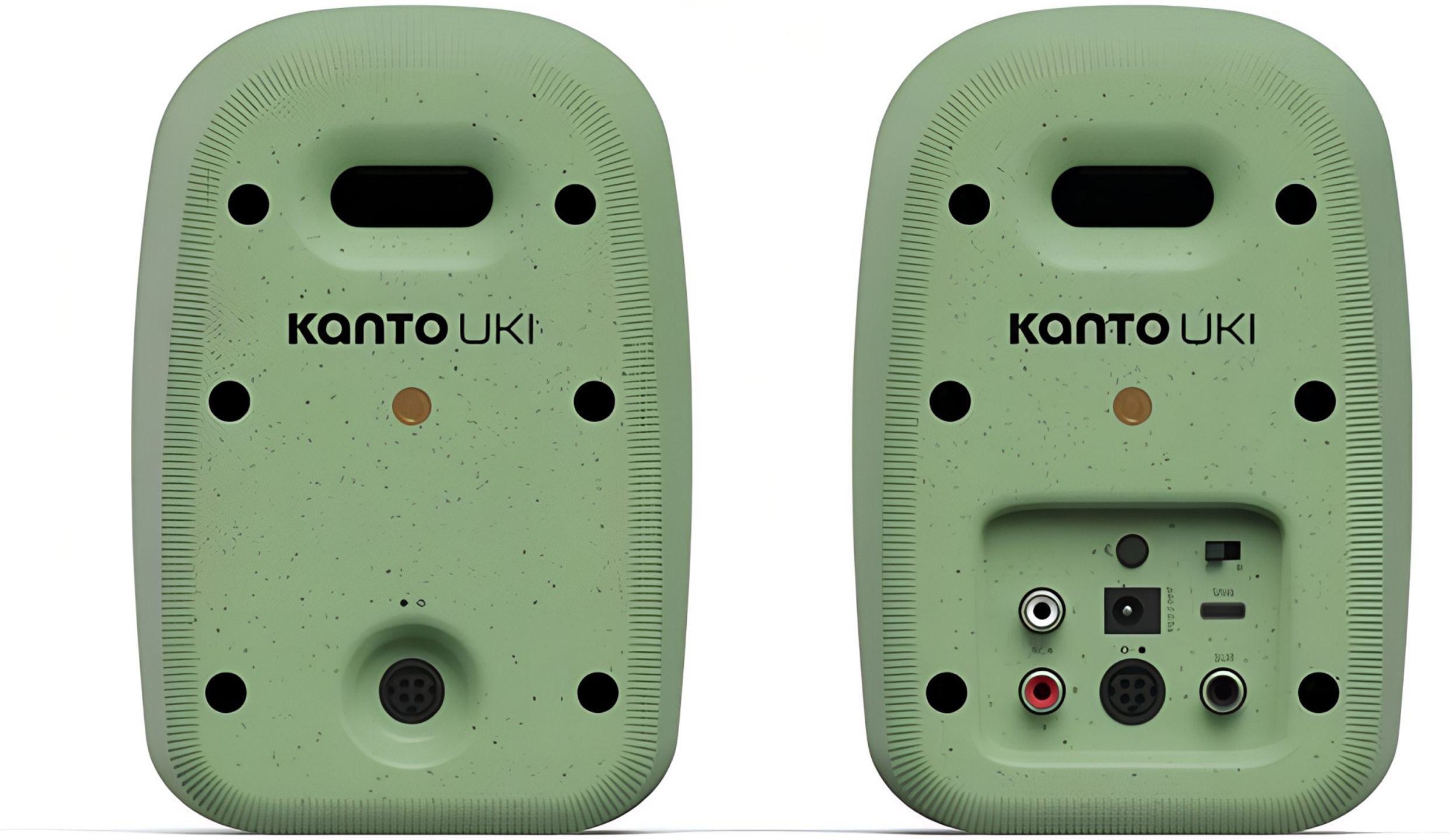
The UKI offers three inputs: Bluetooth 5.3 for wireless connection, USB-C for a digital link with a computer, and a pair of RCA inputs to connect a turntable (provided it has a built-in phono preamplifier, as the UKI does not include one). A front-panel LED changes color depending on the active source: blue for Bluetooth, yellow for USB, green for RCA.
The subwoofer output (Sub Out) is worth highlighting. When a subwoofer is connected, the UKI automatically activates a 100 Hz high-pass filter and redirects lower frequencies to the subwoofer. The 76 mm drivers then focus on the midrange and treble, reducing distortion and freeing up power. The connection is straightforward: a single RCA cable between the Sub Out and the subwoofer’s input is all that’s needed, with no manual crossover adjustment required on the speaker side.
A 3.5 mm headphone jack output is also present on the front panel, always accessible.
Controls designed for the desktop
The active speaker consolidates all controls on the front panel into a single rotary knob: a short press changes the source, a long press turns the system on or off, and rotating it adjusts the volume. No app, no software, no menu. Setup is as simple as plugging in the power cable, connecting the two speakers with the included 4-pin cable (1.8 m), and selecting a source.
The left/right switch on the back of the active speaker is a practical feature that is all too rare in this category. It allows you to place the main speaker (the one with the volume knob and headphone jack) on whichever side of the desk is most convenient, regardless of where the power outlet is located. The internal DSP processing then automatically corrects the stereo image. No more running cables from one end of the desk to the other.
Mounting and positioning
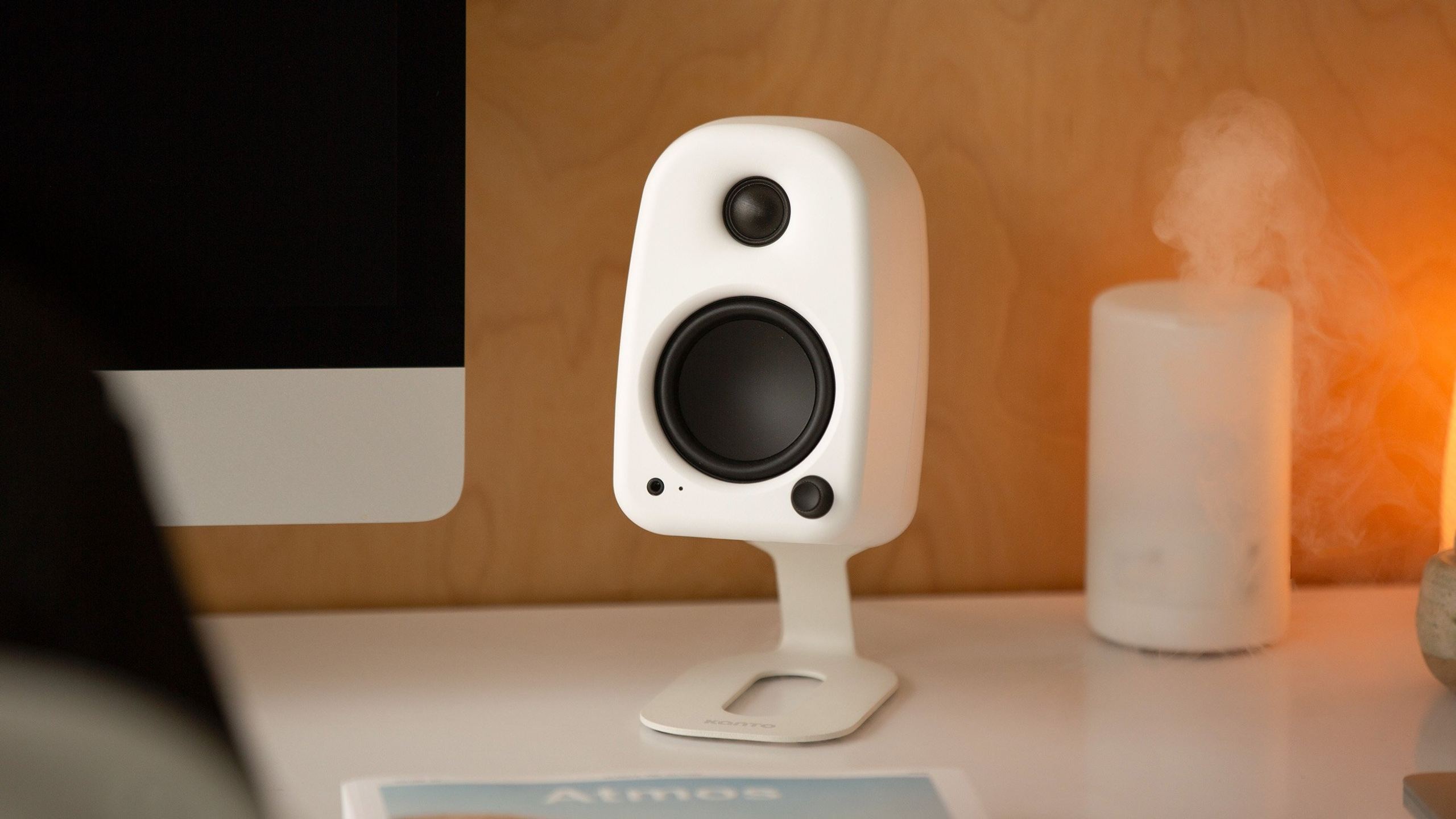
A ¼”-20 threaded insert on the back of each speaker allows them to be mounted on a wall bracket or on Kanto’s SU2 desktop stands (sold separately). These stands elevate and tilt the speakers to direct the tweeters toward ear level, noticeably improving the soundstage for near-field listening. Placing the speakers directly on a wooden or glass desk can cause unwanted resonances in the lower frequencies: decoupling is recommended, even with the eight rubber feet included.
The cable connecting the two speakers measures 1.8 m, leaving plenty of room to position them on either side of a monitor or even a moderately sized television.
Documentation
French
Technical specifications
Speakers
- Tweeters: 2 × 19 mm (¾”) silk dome
- Woofers: 2 × 76 mm (3”) paper cone
Amplification and audio
- Amplification type: Bi-amplified Class D
- Total power: 100 W peak (50 W RMS)
- Power distribution
- Tweeter: 9 W RMS per channel
- Woofer: 16 W RMS per channel
- Frequency response: 80 Hz – 22 kHz
- Crossover
- Automatic active crossover (high-pass / low-pass) at 100 Hz
- Automatic crossover management for subwoofer
Connectivity
- Bluetooth 5.3
- USB-C (up to 16 bits / 48 kHz)
- RCA analog input (line level)
Outputs
- Subwoofer output (Sub Out)
- 3.5 mm headphone output
Features
- Active bi-amplification
- Automatic left / right switching (speaker orientation)
- Automatic crossover for subwoofer integration
- Integrated front-access controls
Dimensions and weight
- Dimensions per speaker (W × D × H): 112 × 110 × 165 mm
- Weight
- Active speaker: 1 kg
- Passive speaker: 0.9 kg
- Threading: rear ¼”-20 insert for mounting
Included accessories
- Speaker linking cable (4-pin, 1.8 m)
- Power cord
- 8 rubber feet
- User manual
Frequently Asked Questions
Does the UKI have a built-in phono preamplifier?
No. To connect a turntable via the RCA input, it must have its own built-in phono preamplifier, or an external phono preamplifier must be placed between the turntable and the speaker.
Can any subwoofer be used with the UKI?
Yes. The Sub Out works with any active subwoofer equipped with an RCA input. The 100 Hz high-pass filter activates automatically on the speaker side as soon as a subwoofer is detected. There is no need to use a Kanto subwoofer.
Which Bluetooth codec does the UKI support?
SBC and AAC only. High-resolution codecs such as aptX, aptX HD, or LDAC are not supported. For the best wireless audio quality on an Apple device, AAC remains a good compromise.
Is the USB-C connection compatible with smartphones?
Yes, provided the smartphone supports USB audio output. The UKI recognizes digital audio signals via USB-C up to 16-bit / 48 kHz.
What are the differences between the UKI and the YU2?
The UKI succeeds the YU2 with three main additions: Bluetooth 5.3, a USB-C port (replacing the YU2’s older USB connector), and an automatic active filter for subwoofer integration. The design also shifts from a rectangular cabinet to the rounded clamshell shape. Driver size and power output remain comparable.
- Eco-contribution of €2.58 included in the sale price.
- GTIN / EAN: 800152725048