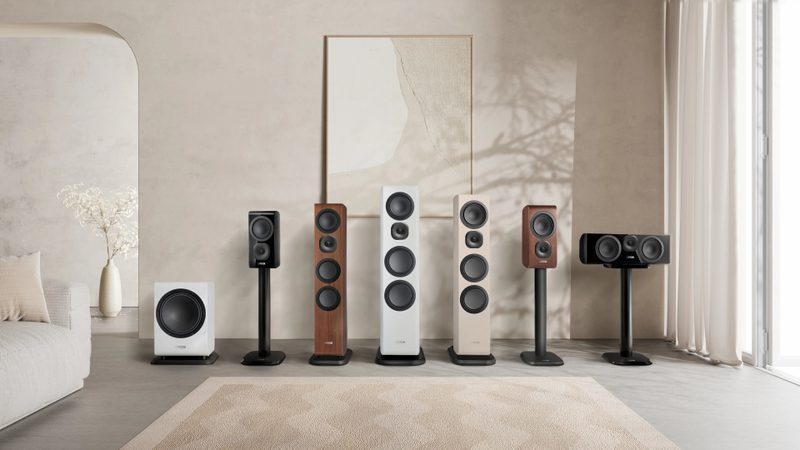
Canton Vento 51 black lacquer


Overview
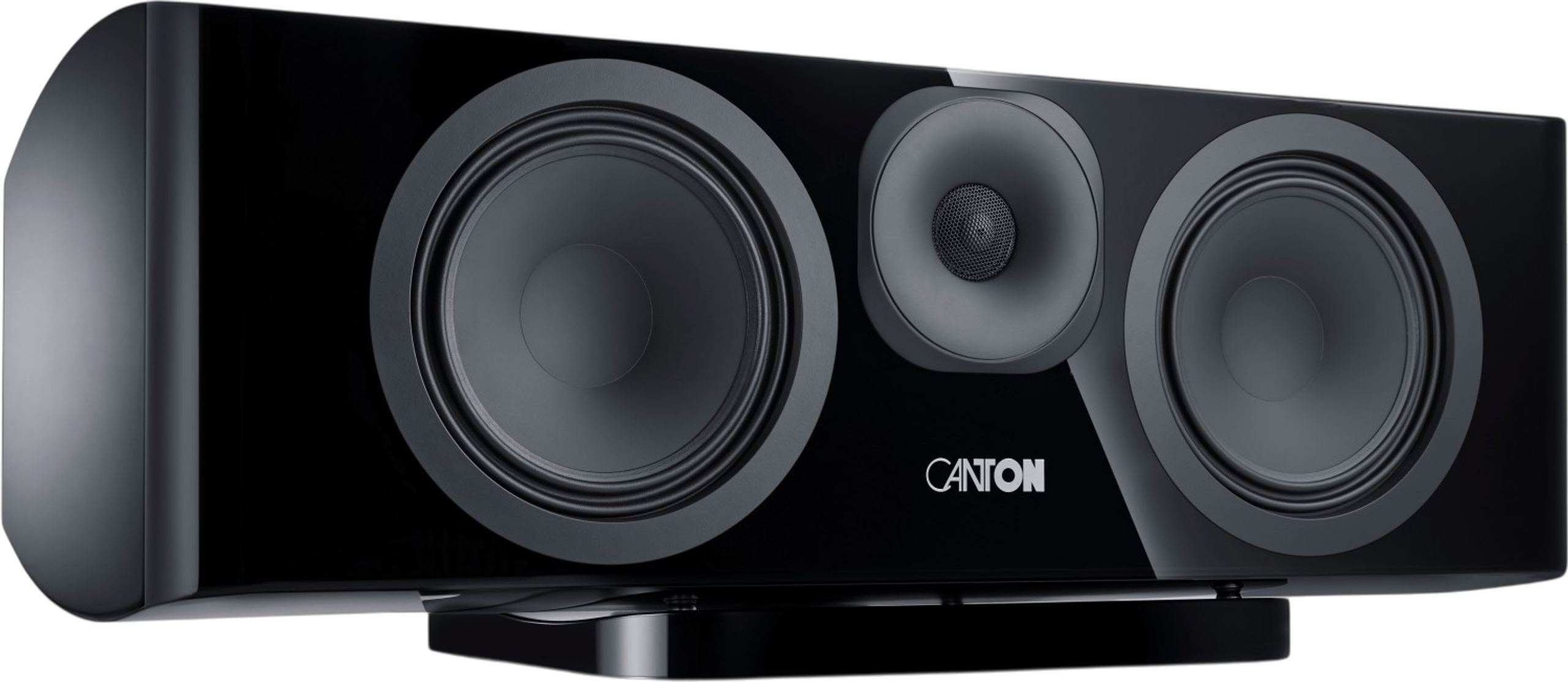
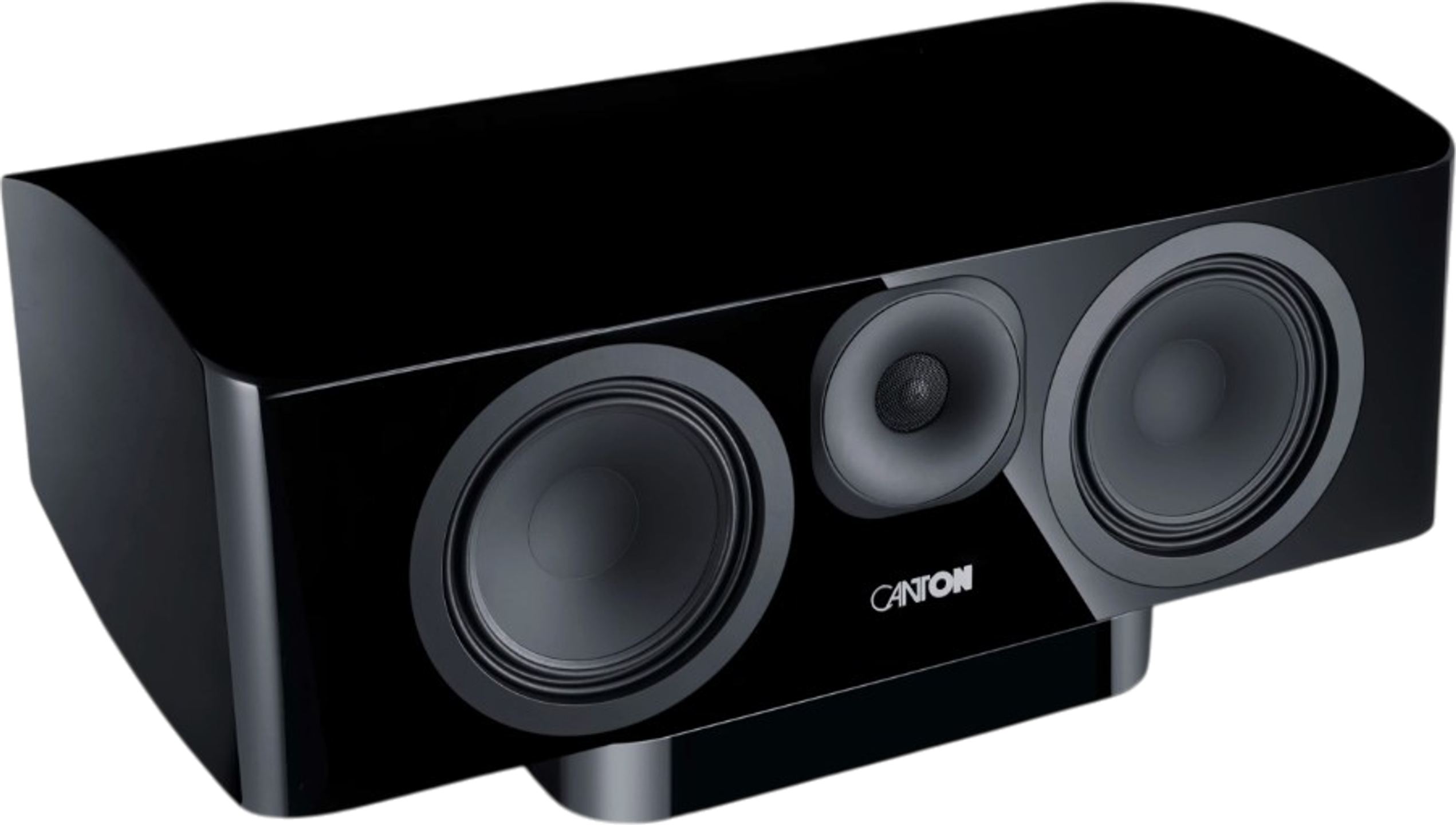
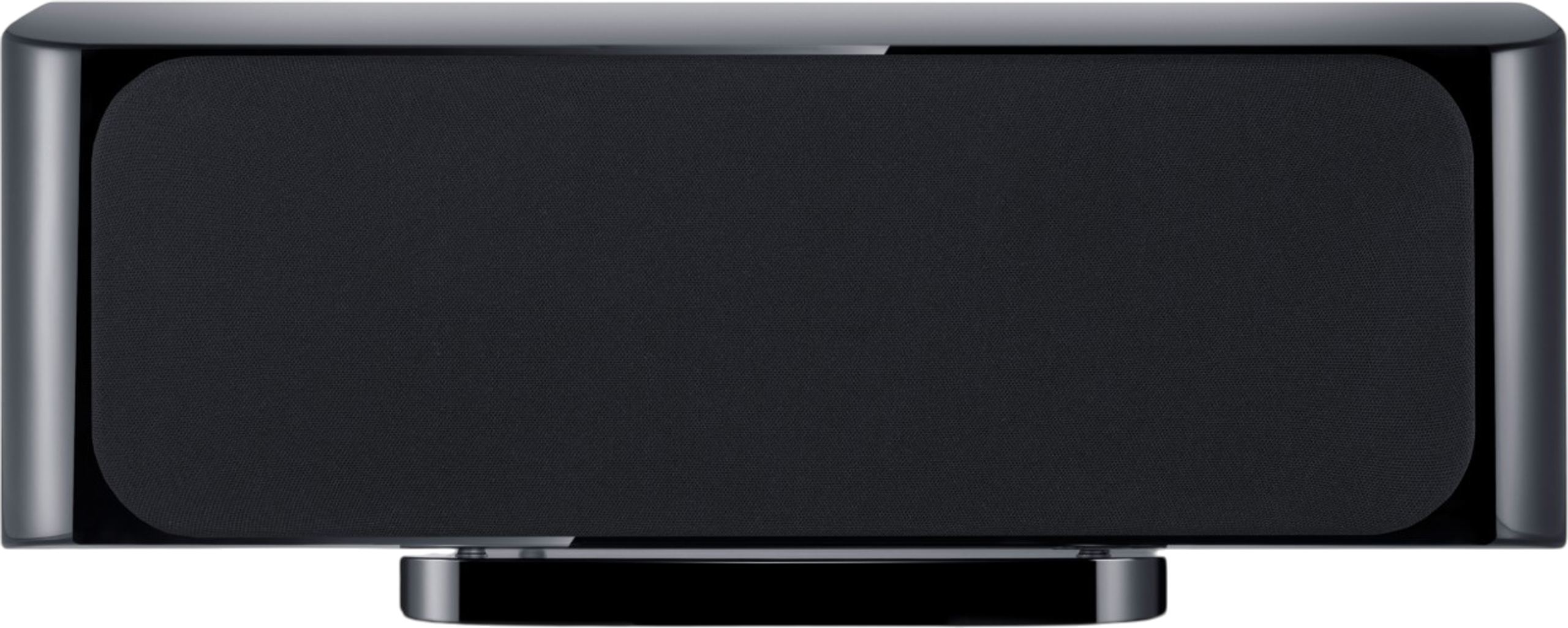
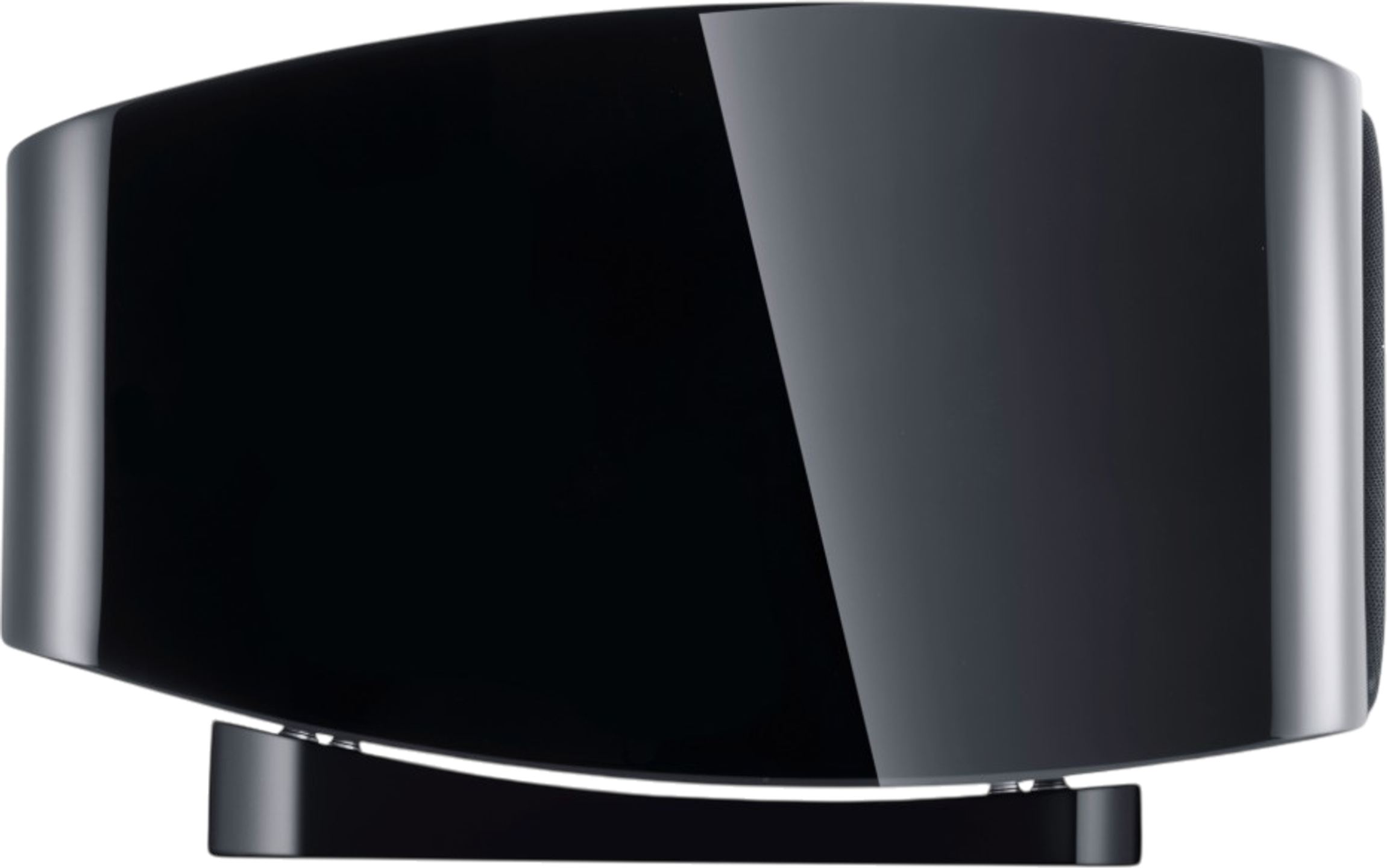
Seventh generation of the Vento line, the Vento 51 takes over the center-channel role previously held by the Vento 50. Canton has redesigned it from top to bottom: new curved cabinet, brand-new ATB drivers, ceramic tweeter derived from the Reference series, and square waveguide, all handmade in the factory in Weilrod, Germany. The result is a 21 kg speaker that does not hide its home theater ambitions.
Three-way design for dialogue
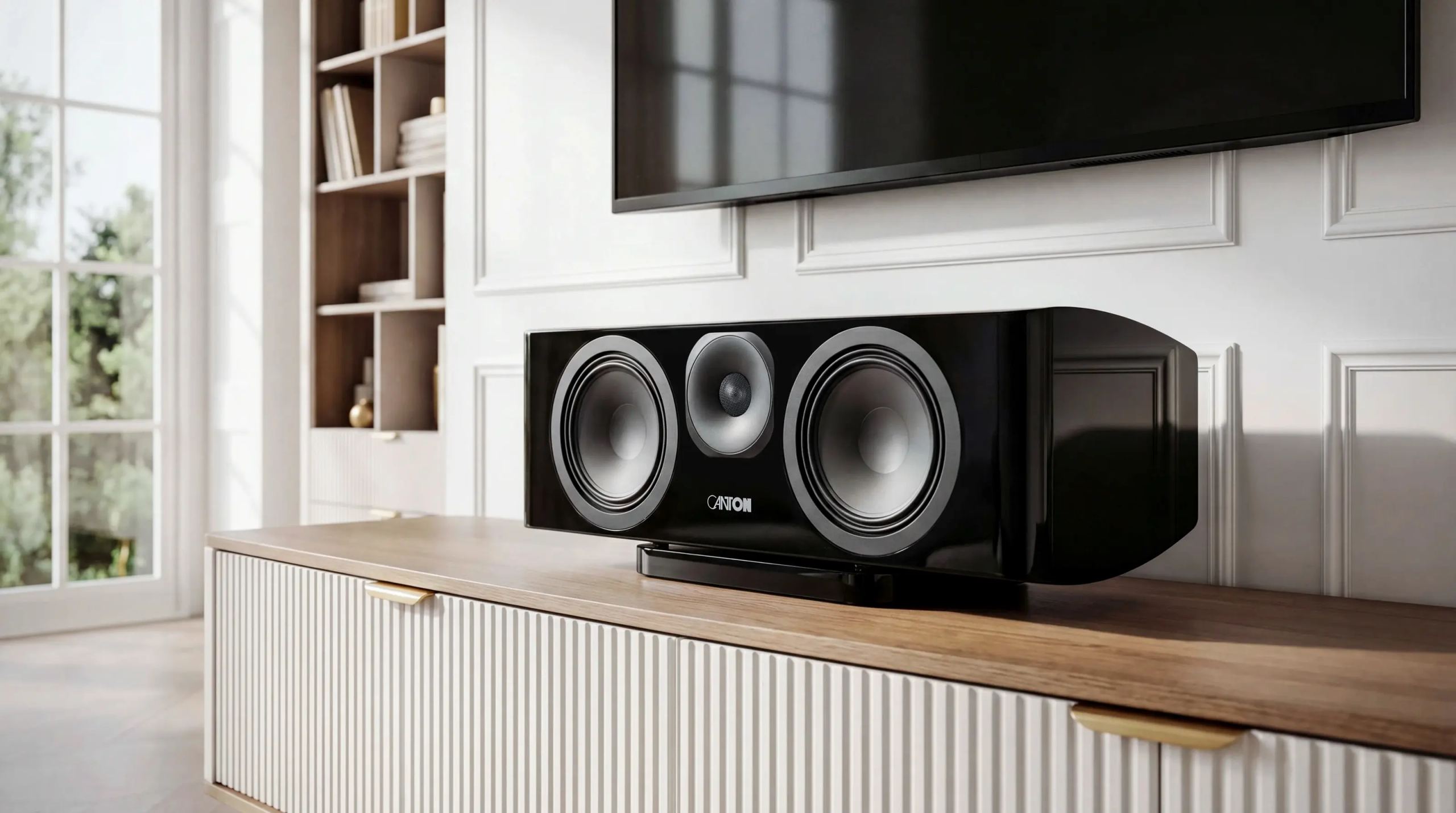
The Vento 51 is a 3-way center speaker with rear bass-reflex loading. Two ATB (Aluminium-Titanium-Black) drivers share midrange and bass reproduction, while a 25 mm BC ceramic dome tweeter tops it all off. This three-way distribution allows each driver to handle a narrow frequency band, which limits distortion and promotes voice clarity.
The ATB acronym refers to a composite diaphragm combining aluminum, titanium, and a surface treatment. Stiffer and lighter than the titanium-graphite diaphragms of the previous generation, this diaphragm reduces partial vibrations that color the signal. The Vento 51’s ATB drivers use long-throw “Wave” surrounds, capable of tracking the rapid transients of a soundtrack without audible compression.
A tweeter borrowed from the Reference series
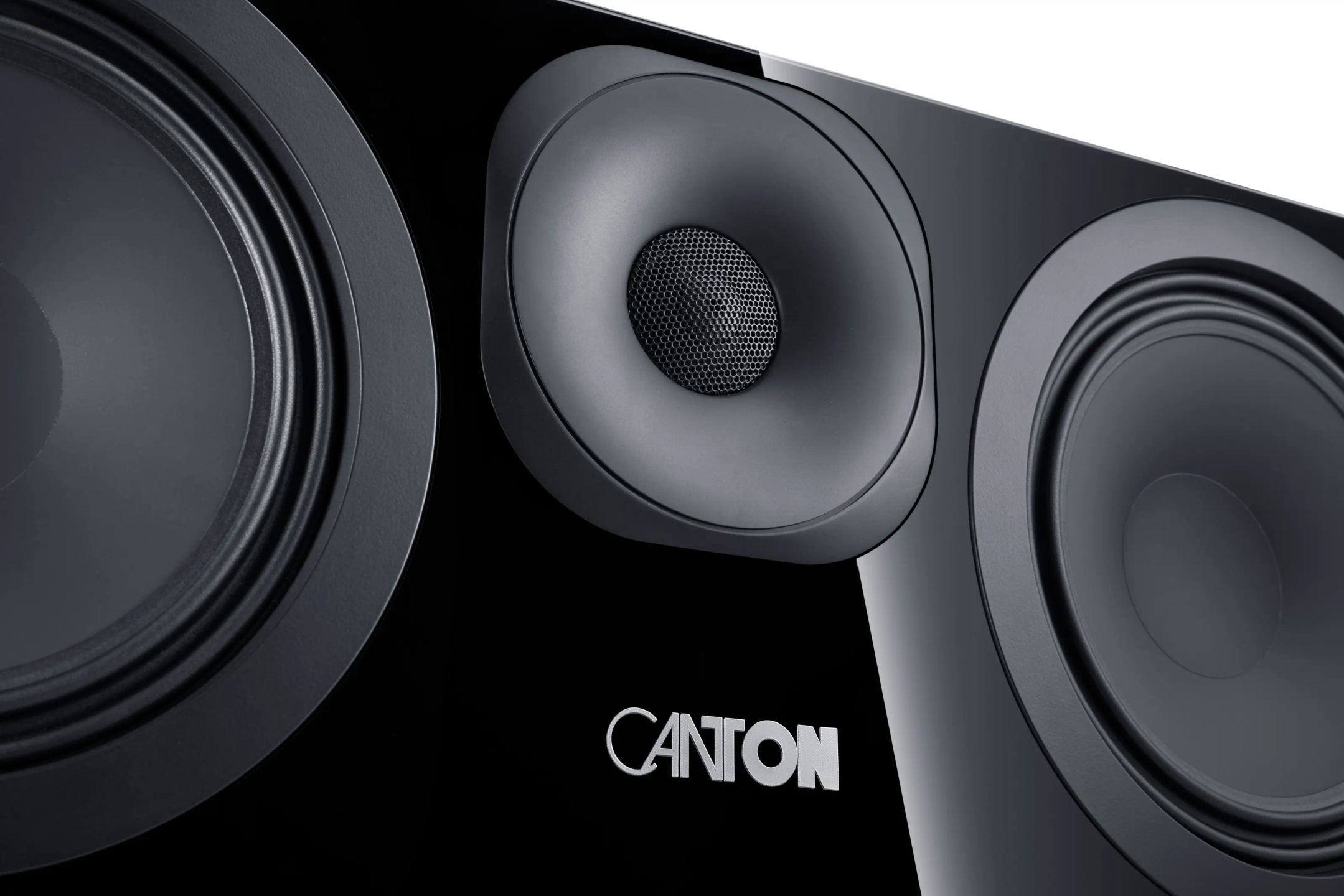
The 25 mm BC (Black Ceramic) ceramic dome is the same as the one used in Canton Reference speakers. Its aluminum oxide dome is light, very rigid, and can reproduce frequencies up to 40,000 Hz according to the manufacturer’s data. Its high-frequency dispersion is managed by a new square waveguide, called “Transmission Front Plate” by Canton, whose design is inspired by a watch bezel. This waveguide adjusts the tweeter’s directivity to align it with that of the ATB drivers: the transition between frequency ranges becomes more consistent, and the soundstage remains stable across a wide listening area. Canton claims an efficiency gain of up to 3 dB thanks to this component.
Curved cabinet and internal damping
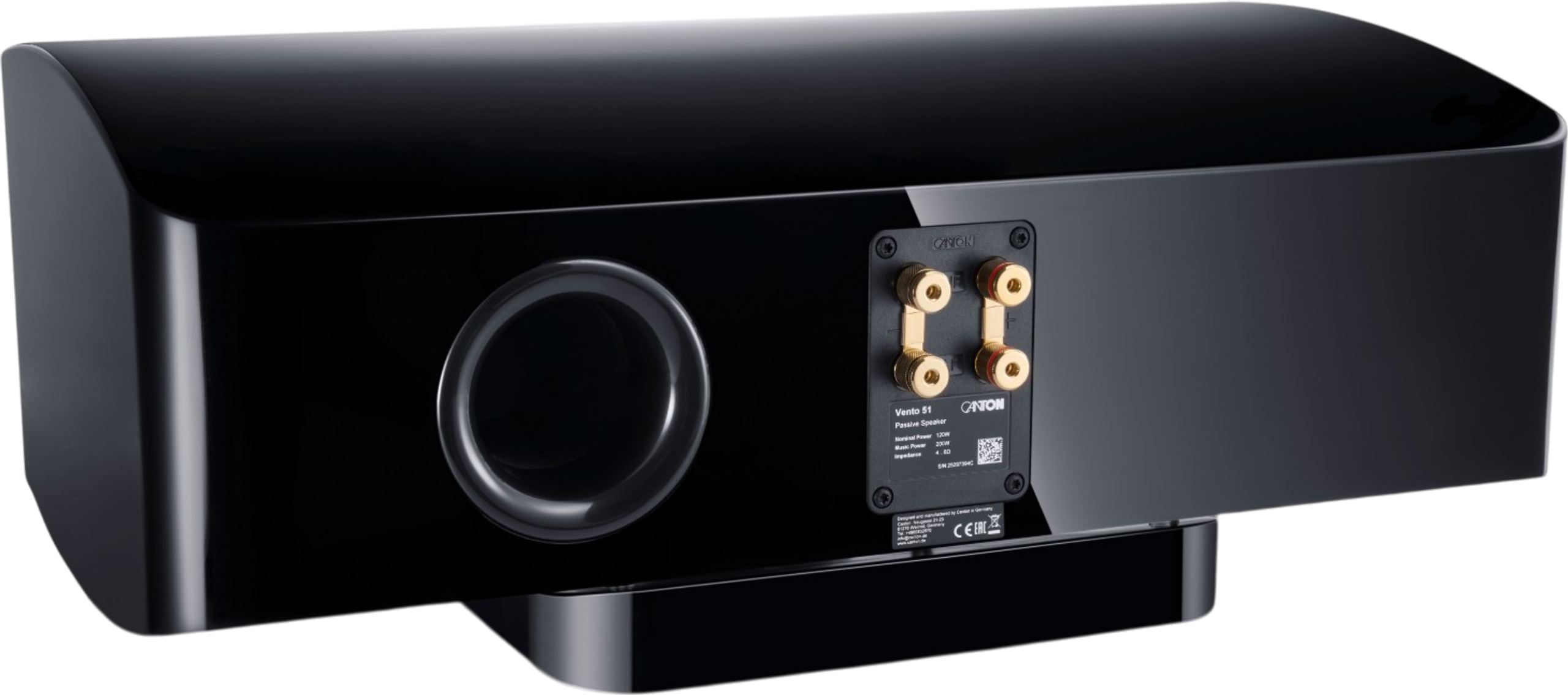
The Vento 51 cabinet is built from curved multilayer MDF. The rounded panels eliminate the sharp edges responsible for acoustic diffraction, a phenomenon that blurs the localization of sound sources. Canton has revised the basic shape compared with the Vento 50: the curves are more pronounced, both the front and rear are rounded, and the internal volume has increased to allow for more extended bass-reflex tuning in the low end.
A system of internal chambers separates the drivers from one another, preventing the acoustic energy generated by the mid-bass drivers from rising toward the tweeter. Targeted damping completes the design to control reflections inside the cabinet. The intended result is more neutral voice reproduction, where consonants and sibilants are easier to distinguish without cabinet-related coloration. The 21 kg weight for dimensions of 60 x 24 x 39 cm (W x H x D) reflects the density of construction.
Connectivity and setup
At the rear, a gold-plated terminal accepts cable cross-sections up to 10 mm², with the option to use banana plugs or spades. The Vento 51 supports bi-wiring and bi-amplification, allowing separate power delivery to the bass-mid drivers and the tweeter if the amplifier or processor allows it.
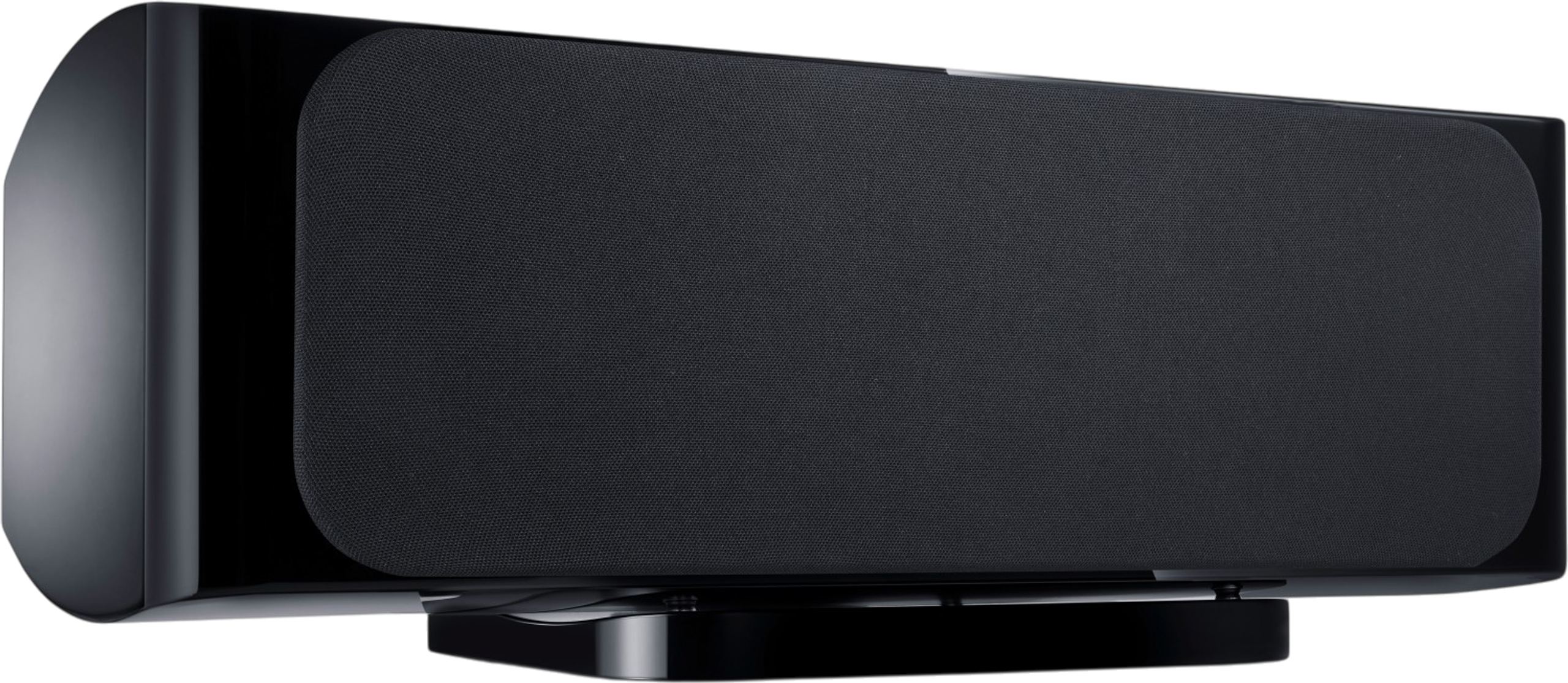
The fabric grille attaches magnetically and can be removed effortlessly. Canton describes it as acoustically neutral. The speaker features adjustable tilt, a useful setting when it is placed under a screen on a low cabinet: aiming the tweeter toward the listeners’ ears noticeably improves dialogue intelligibility.
Consistency within the Vento line
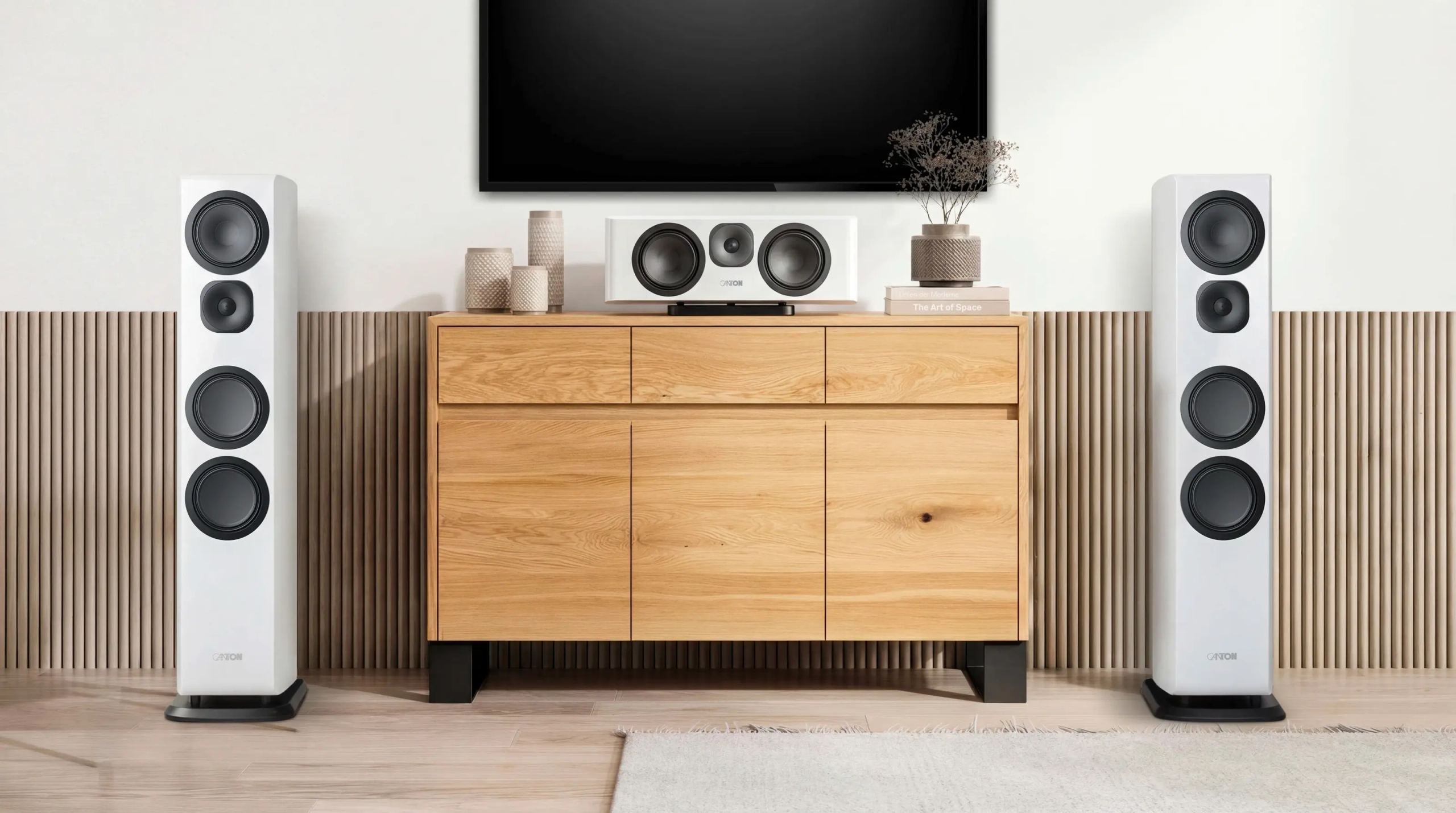
The Vento 51 shares its drivers and tweeter with the floorstanding and bookshelf speakers in the series. Canton has tuned the entire range to the same sound signature, which means the timbre does not change from one speaker to another in a multichannel configuration. The series includes floorstanding speakers (Vento 81, 91, 101), bookshelf speakers (Vento 21, 31), a subwoofer (Vento Sub 1), a Dolby Atmos module (Vento AR 1), and a wall speaker (Vento 11). A complete 5.1.2 system can therefore be built within a single family, without tonal matching compromises between channels.
Documentation
Technical specifications
General overview
- Type: 3-way bass-reflex center speaker
- Range: Vento
- Model: Vento 51
- Purpose: ideal integration into a premium home theater setup
- Consistent sound signature with the other speakers in the Vento series
Acoustic configuration
- 3-way architecture dedicated to high-precision dialogue
- ATB driver technology (Aluminum-Titanium-Black)
- Tweeter: high-precision BC ceramic dome, derived from the Reference series
- Waveguide: new optimized square waveguide
- Midrange / woofer drivers: dedicated dual ATB driver
- Acoustic loading: rear bass-reflex
Sound performance
- Music power: 200 W
- Sound reproduction: precise dialogue, stable and consistent soundstage
- Controlled and even dispersion
- Balanced reproduction of midrange and bass, even during the most dynamic action scenes
- Consistent diffusion and stable dialogue localization thanks to the new-generation waveguide
Cabinet and construction
- Curved multilayer MDF cabinet
- High-rigidity anti-resonance construction
- Curved multilayer cabinet limiting unwanted vibrations
- More neutral reproduction and better voice intelligibility thanks to reduced internal resonances
Connectivity and installation
- Gold-plated binding posts
- Bi-wiring and bi-amplification compatibility
- Acoustically neutral fabric grille with magnetic attachment
- Orientation: adjustable tilt
Design and finishes
- Premium design with curved lines and luxurious finishes
Dimensions and weight
- Dimensions (W x H x D): 60 × 24 × 39 cm
- Dimensions with base: 60 × 24 × 39 cm
- Weight: 21 kg
Frequently Asked Questions
Can the Vento 51 be used without a subwoofer?
It can in a modest-sized living room, because its bass-reflex loading and two ATB drivers give it decent low-frequency extension for dialogue and music. For soundtracks rich in low-frequency effects, a subwoofer such as the Vento Sub 1 is still recommended.
What amplifier is needed to power the Vento 51?
Canton specifies a music power rating of 200 W. The nominal impedance is between 4 and 8 ohms. An amp or home theater processor capable of delivering between 80 and 150 W into 4 ohms will be comfortable with this speaker. The device’s 4-ohm compatibility should be checked.
What is ATB technology?
ATB stands for Aluminium-Titanium-Black. It is a diaphragm composite whose stiffness and lightness reduce parasitic vibrations compared with the titanium-graphite diaphragms used in the previous generation (Vento 50).
What is the difference between the Vento 51 and the older Vento 50?
The Vento 51 introduces ATB diaphragms (versus titanium-graphite for the Vento 50), a BC ceramic tweeter derived from the Reference series (versus standard ceramic), a brand-new square waveguide, and a more rounded cabinet shape. The system of internal chambers for driver decoupling is also new.
- Eco-contribution included in the sale price.
- Manufacturer reference: 04582
- GTIN / EAN: 4010243045825