Feliks Audio Euforia Evo
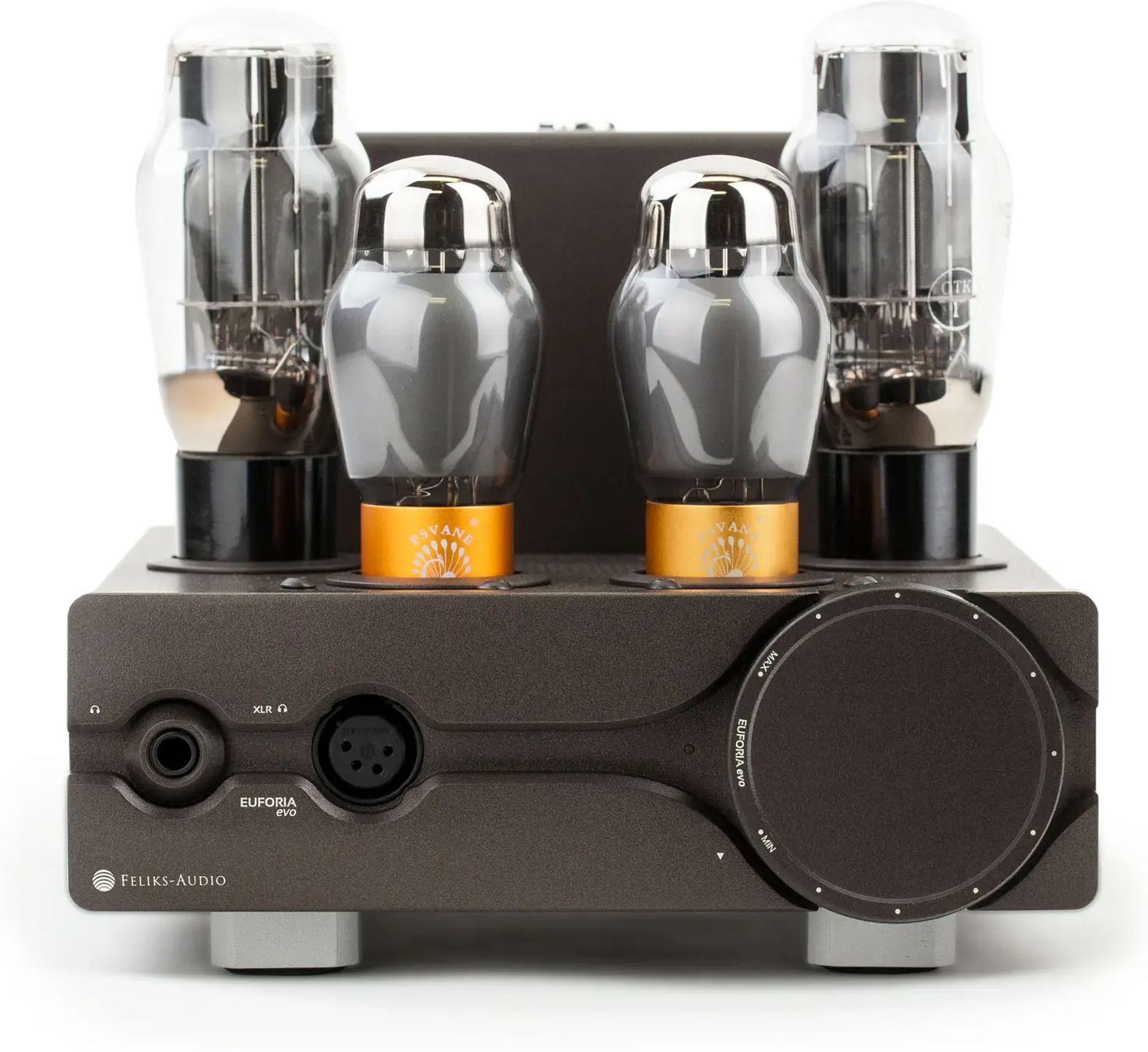
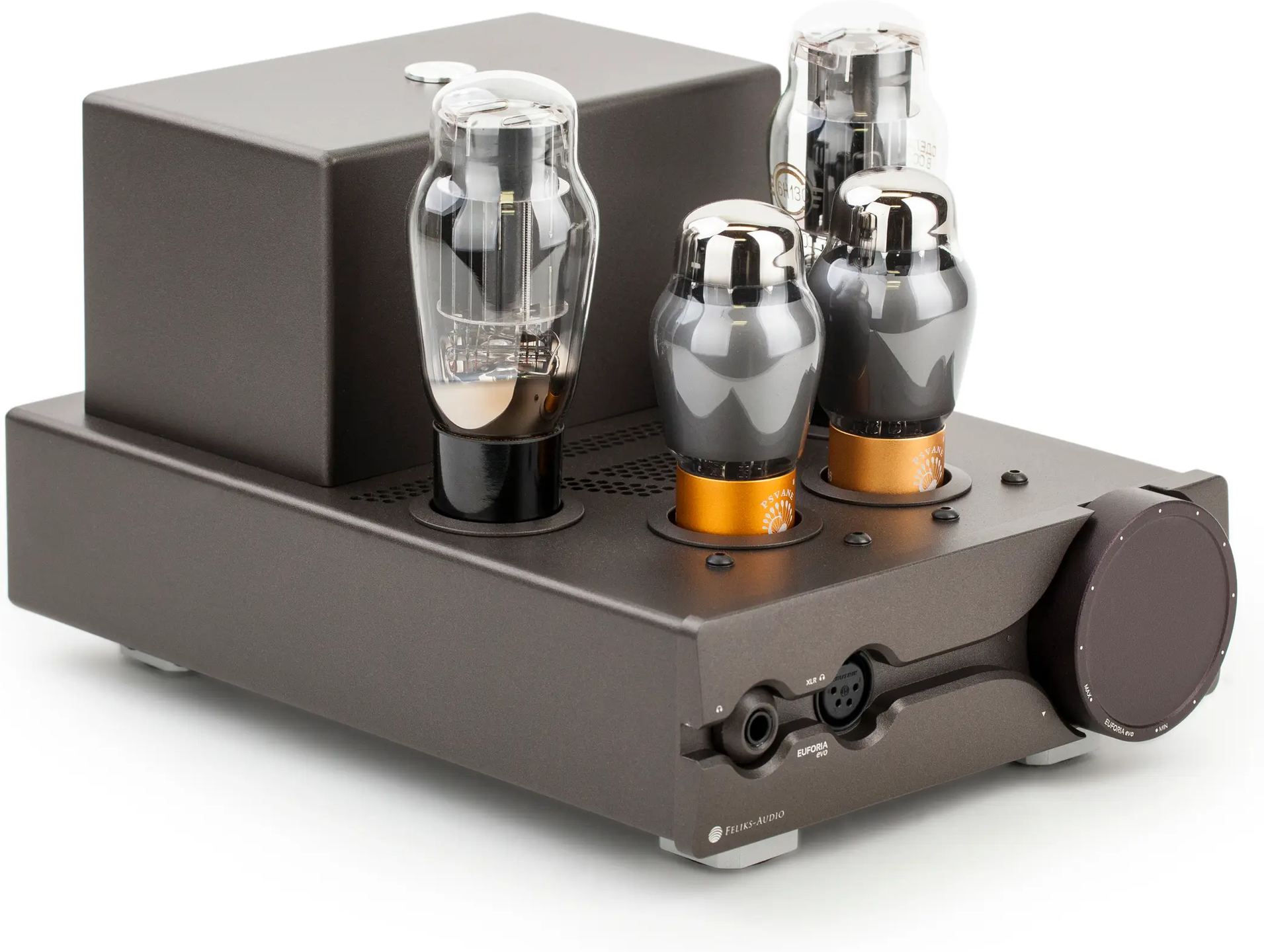
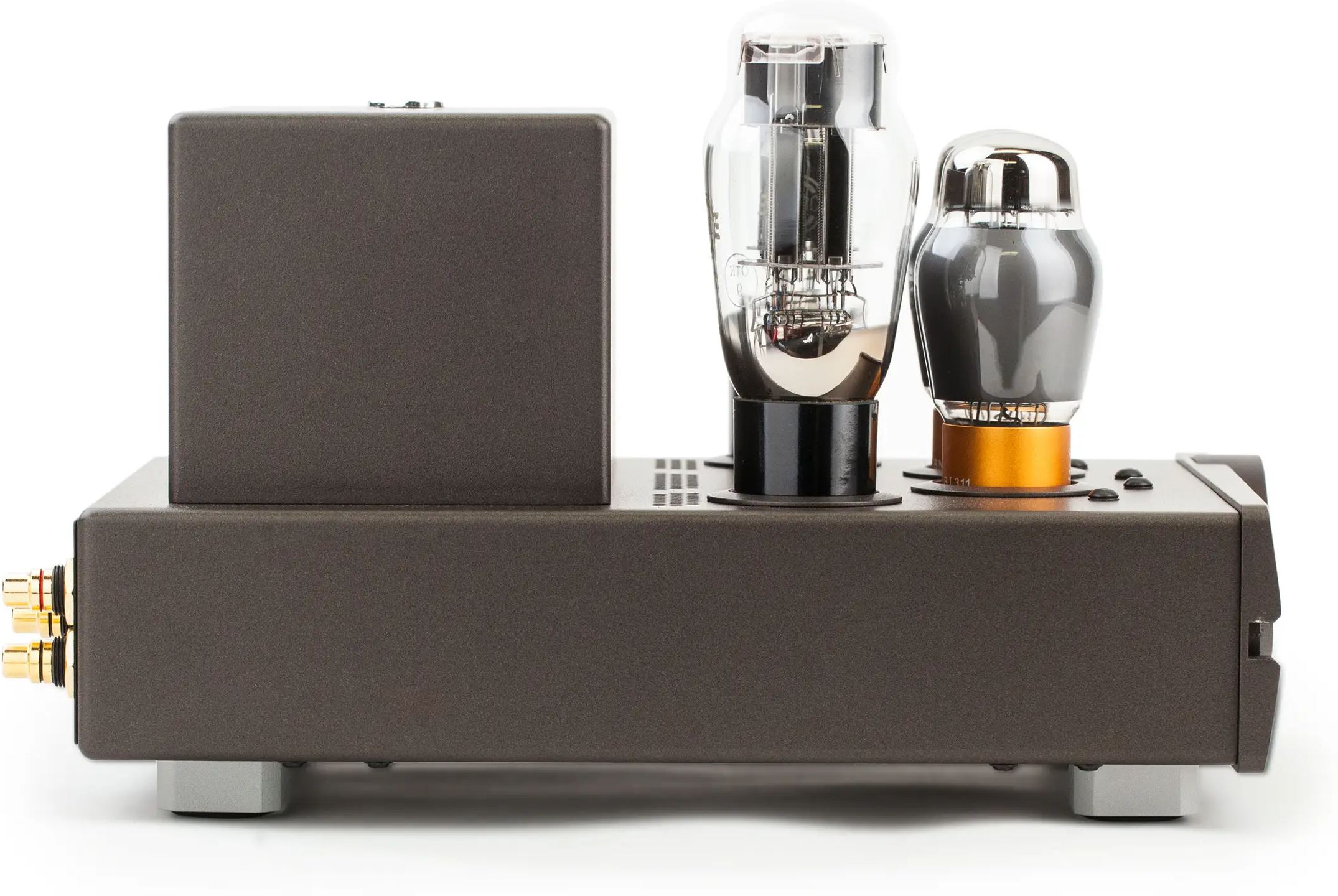
Euforia Evo: tube headphone amplifier by Feliks Audio
Launched in 2017, the Euforia series is Feliks Audio’s flagship in headphone amplification. The Evo version is its third iteration: it incorporates the internal developments of the 20th Anniversary edition and adds an XLR output alongside the 6.35 mm output. A pure OTL amplifier (without an output transformer), hand-wired point-to-point, capable of driving both dynamic headphones and most planar magnetic headphones.
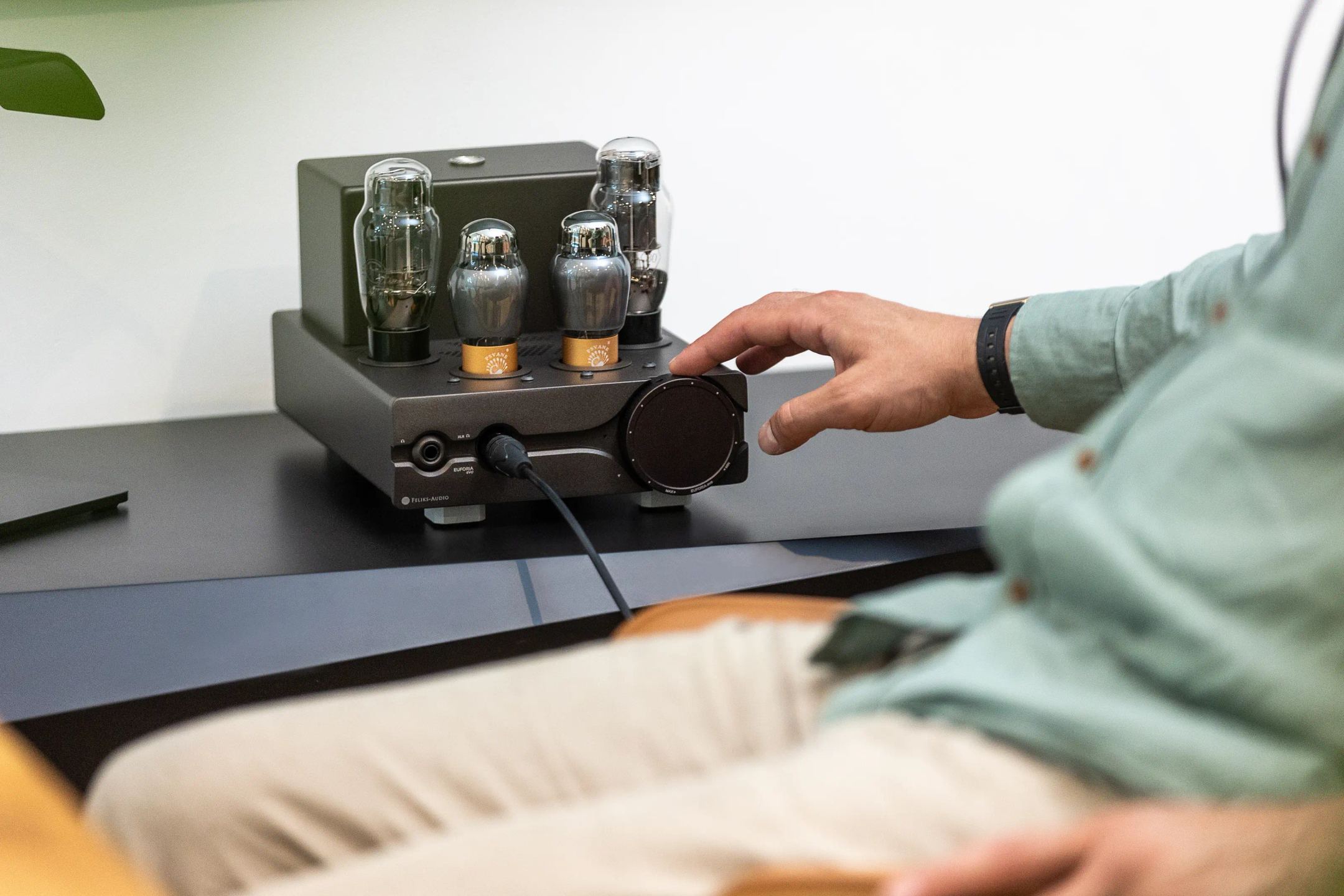
An Euforia lineage taken further
The first Euforia, released in 2017, laid the foundations of the concept: pure OTL, point-to-point wiring, hand soldering. The 20th Anniversary edition evolved the circuit internally, with a new cathode module, more stable current-source regulation, and redesigned shielding against mains interference. The Evo is based on this same circuit and adds a second headphone output in 4-pin XLR format. A useful clarification: the design remains single-ended at every stage, and the XLR socket is intended for directly connecting headphones equipped with an XLR cable rather than for balanced operation.
A pure OTL without an output transformer
OTL stands for Output Transformerless: the signal amplified by the tubes drives the headphones directly, without passing through an output transformer. This topology has historically been associated with a more direct, more transparent character. The trade-off lies in impedance matching: an OTL is better suited to medium- and high-impedance headphones, where matching occurs naturally. To make the formula usable with lower-impedance loads, Feliks Audio cites an optimal impedance range of 32 to 600 ohms, which covers most current planar magnetic headphones.
Handcrafted construction in Lubliniec
Feliks Audio assembles the Evo in its workshop in Lubliniec, Poland. The wiring is done in free air, point-to-point, using UPOCC (Ultra Pure Ohno Continuous Cast) single-crystal copper wire in the signal path. The power supply uses a stabilized toroidal transformer with electronic ripple suppression and automatic bias, sparing the user from any manual adjustment when changing tubes. The RCA inputs are gold-plated. The chassis measures 31.3 × 20.3 × 19.3 cm and weighs 7 kg without the tubes.
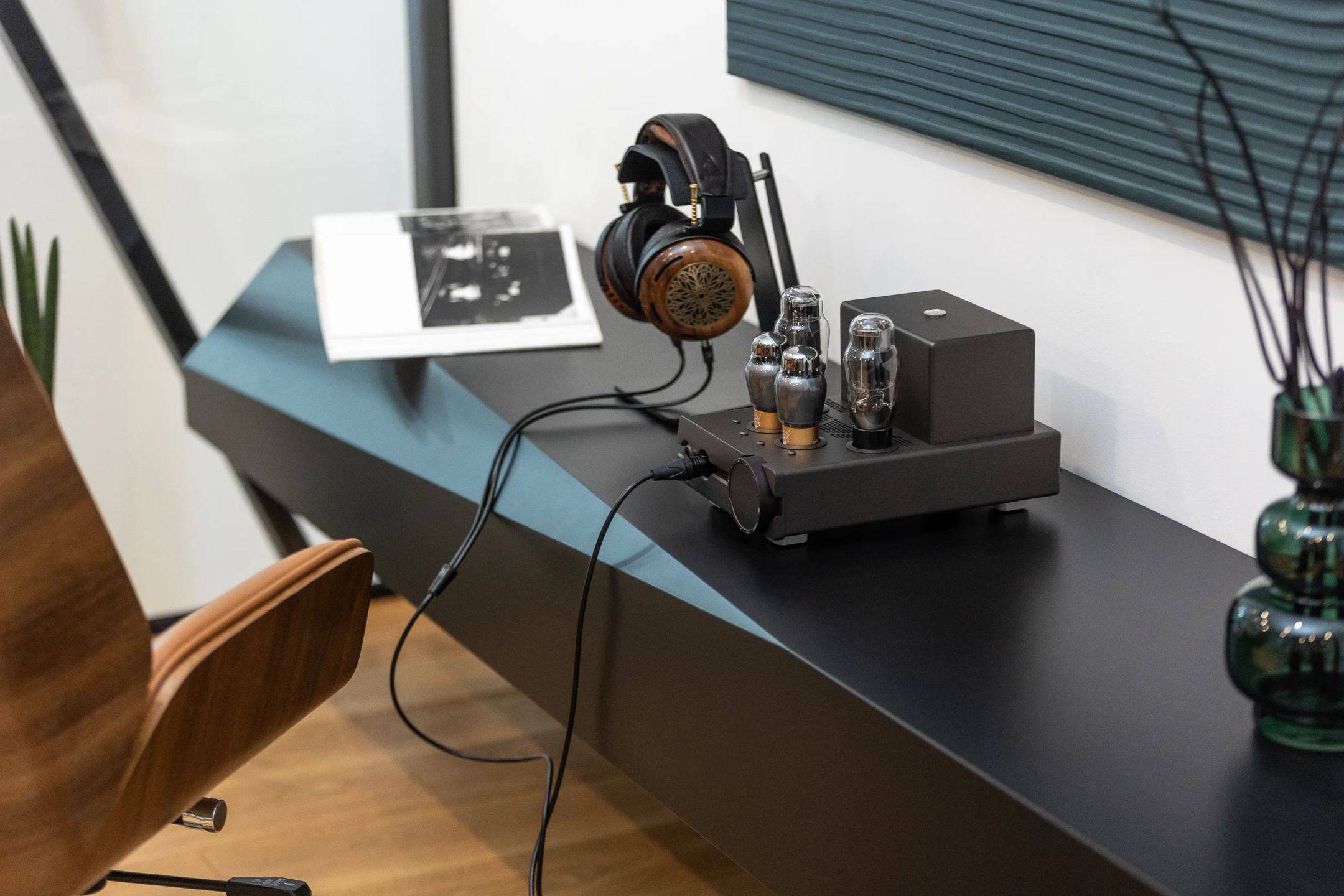
Matched tubes and tube rolling
The Evo comes with two matched sets of tubes: in the driver stage, a pair of PsVane CV-181 Mk2 “Gold” tubes (equivalent to the 6SN7); in the output stage, a pair of NOS (New Old Stock) 6N13S tubes. The 6N13S also accepts the 6080 equivalent. The tubes remain accessible from the top of the chassis, and replacement is performed when cold. The manufacturer lists several compatible alternatives for each position, opening the door to tube rolling: 6N8S, CV-181, ECC32, 5692, or 6F8G in the driver stage; 5998, 6N5P, 6N5S, ECC230, 7236, or CV2523 in the power stage. A protective tube cage is offered separately as an option.
Headphone compatibility and dual output
On the front panel, two headphone outputs coexist: a standard 6.35 mm jack and a 4-pin XLR socket. Both deliver the same stereo signal, with the internal circuit remaining single-ended. Output power reaches 280 mW into 300 ohms, with a gain of 20 dB and a harmonic distortion rate of 0.4% measured at 20 mW into 300 ohms. The recommended impedance range extends from 32 to 600 ohms, covering traditional high-impedance dynamic headphones and most planar magnetic headphones on the market. Very insensitive or highly current-hungry models may, however, reveal the limitations of an OTL topology: Feliks Audio remains above all a specialist in high-impedance dynamic headphones, and the Evo excels in this area while accepting the majority of planars.
The Cross-Feed switch
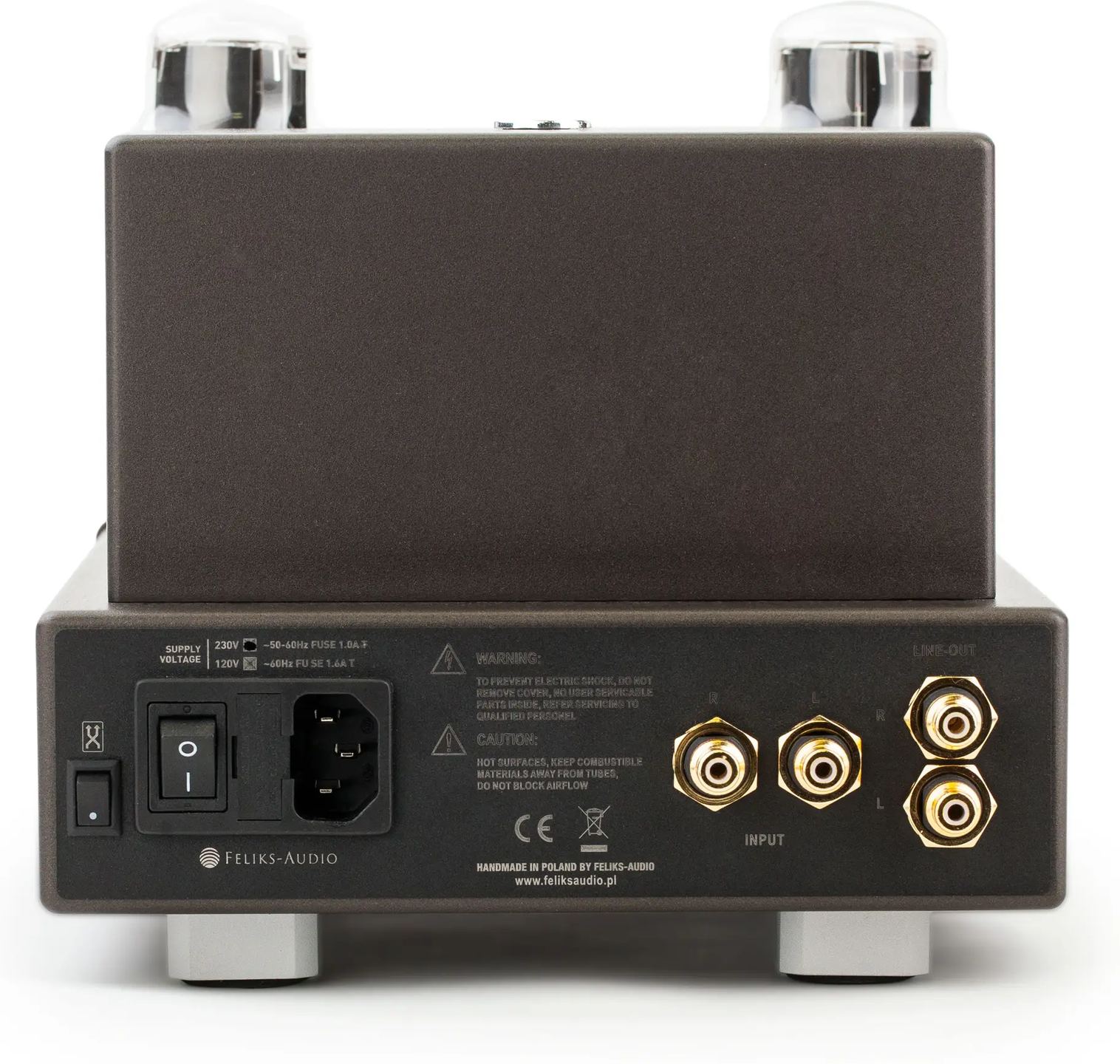
On the rear panel, a switch activates the Cross-Feed function. The principle: transfer part of the low-frequency signal from one channel to the other in order to reduce the impression of overly separated stereo that characterizes headphone listening. The headphones’ perfect channel separation places instruments strictly to the left and right, which can generate listening fatigue on certain recordings and create the sensation of an orchestra located “inside the head” rather than in front of the listener. Activating Cross-Feed more faithfully reproduces speaker listening conditions. The switch allows a return to standard operation at any time.
Line output and use as a preamplifier
An RCA line output on the rear of the chassis allows the Evo to be used as a tube preamplifier feeding a power amplifier or an active speaker system. The pair of PsVane CV-181 tubes and the volume potentiometer remain in the signal path, transferring the Evo’s signature to the speaker chain. In terms of use, break-in requires 30 to 50 hours of operation before reaching the stated acoustic parameters; in everyday use, warm-up takes about 15 minutes. The warranty is 3 years, reduced to 12 months for the tubes.
Documentation
Technical specifications
Design and construction
- Type: tube headphone amplifier
- Topology: pure OTL (Output Transformerless), single-ended
- Wiring: point-to-point, hand soldering, UPOCC wire (Ultra Pure Ohno Continuous Cast)
- Internal power supply: stabilized toroidal transformer, electronic ripple suppression, automatic bias
- Handcrafted in the Feliks Audio workshop (Lubliniec, Poland)
Tubes
- Driver tubes: 2 × matched PsVane CV-181 Mk2 “Gold” tubes (6SN7 equivalent)
- Compatible equivalents: 6N8S, CV-181, ECC32, 5692, 6F8G
- Power tubes: 2 × matched NOS 6N13S tubes (also accepts 6080)
- Compatible equivalents: 5998, 6N5P, 6N5S, ECC230, 7236, CV2523
Electrical performance
- Output power: 280 mW
- Gain: 20 dB
- Frequency response: 7 Hz to 80 kHz, +/- 3 dB (under 300 ohms)
- Harmonic distortion (THD): 0.4% (at 20 mW under 300 ohms)
- Input impedance: 100 kohms
- Recommended headphone impedance: 32 to 600 ohms, including magnetic planars
Connectivity
- Line input: 1 × RCA, gold-plated contacts
- Headphone outputs:
- 1 × 6.35 mm jack
- 1 × 4-pin XLR (same signals as the jack, single-ended operation)
- Line output (preamplifier mode): 1 × RCA
- Cross-Feed: on / off switch on the rear panel
Power supply and mains
- Mains voltage: 230 V (Europe) or 120 V, to be specified when ordering
- Mains inlet: IEC, fuse and main power switch on the rear panel
Dimensions and weight
- Dimensions (W × D × H): 31.3 × 20.3 × 19.3 cm
- Weight: 7 kg
Box contents
- 1 Euforia Evo amplifier
- 1 pair of matched PsVane CV-181 Mk2 “Gold” driver tubes
- 1 pair of matched NOS 6N13S power tubes
- 1 power cord
- 1 user manual
- 1 warranty card
- Protective tube cage (optional)
Frequently Asked Questions
How does the Euforia Evo perform with planar magnetic headphones?
The optimal impedance range goes as low as 32 ohms at the bottom end, which covers most planars on the market. Synergy may nevertheless vary depending on headphone sensitivity: low-sensitivity planars require a higher setting on the potentiometer to reach usual listening levels. The automatic bias function avoids any adjustment on the amplifier side. Tube rolling also makes it possible to adjust the signature to a given headphone, for example toward a more neutral presentation with certain compatible alternative pairs.
Does the 4-pin XLR socket mean the Evo operates in balanced mode?
No. The Evo remains single-ended in design at every stage of the circuit. The 4-pin XLR socket accepts headphones equipped with an XLR cable without an adapter, but it does not imply differential signal processing. The choice between the 6.35 mm jack and XLR is a matter of connection convenience rather than an electrical difference. Both outputs share the same stereo signal and the same available power.
How long should the Evo warm up before listening?
At each startup, the brand recommends a warm-up of about 15 minutes so the tubes reach their operating temperature and the acoustic parameters stabilize. Beyond that, an initial break-in period of 30 to 50 hours is stated for the full sonic signature to reveal itself. The amplifier is not intended for continuous operation of more than 8 hours, after which it is better to observe a break of at least one hour before starting another session.
Can the tubes be replaced by the user?
Yes. The Evo incorporates an automatic bias function that eliminates any manual adjustment after a tube change. The operation is carried out when cold, after waiting fifteen minutes once the device has been unplugged from the mains. The tubes are accessible from the top of the chassis. Feliks Audio lists several accepted equivalents: 6N8S, CV-181, ECC32, 5692, or 6F8G for the driver position; 5998, 6N5P, 6N5S, ECC230, 7236, or CV2523 for the power position.
Is the Cross-Feed circuit active by default?
No, it is a separate switch located on the rear panel, which the user can activate or deactivate as desired. The brand offers this function as an option to try rather than an imposed signature: some orchestral works or binaural recordings gain spatial coherence from it, while other recordings remain more faithful with conventional operation. The switch allows a quick test from one mode to the other on the same track.
Can the Evo be used solely as a preamplifier?
Yes. The RCA line output on the rear allows it to be used as a tube preamplifier feeding a power amplifier or an active speaker system, without headphones being connected at the same time. The volume potentiometer and the two tube stages remain in the signal path of this output, which imprints the Feliks Audio signature on the speaker chain. This occasional use does not alter break-in or tube wear differently from use in headphone amplification.
- Eco-contribution included in the sale price.
- Manufacturer reference: FELIKS-EUFORIA-EVO