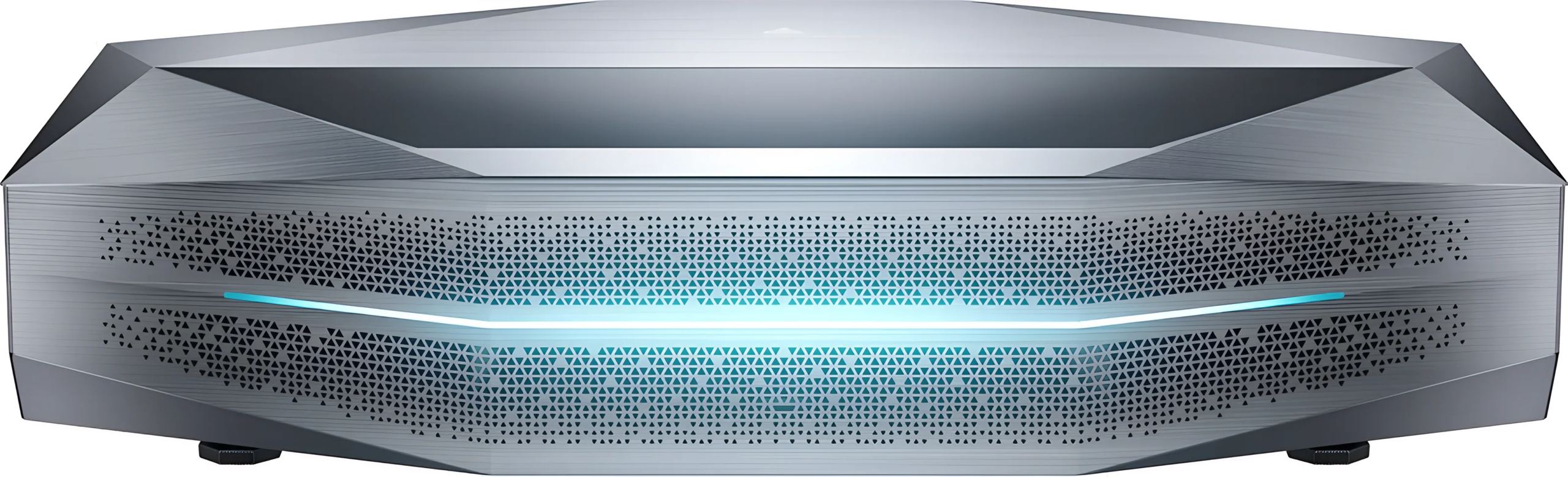
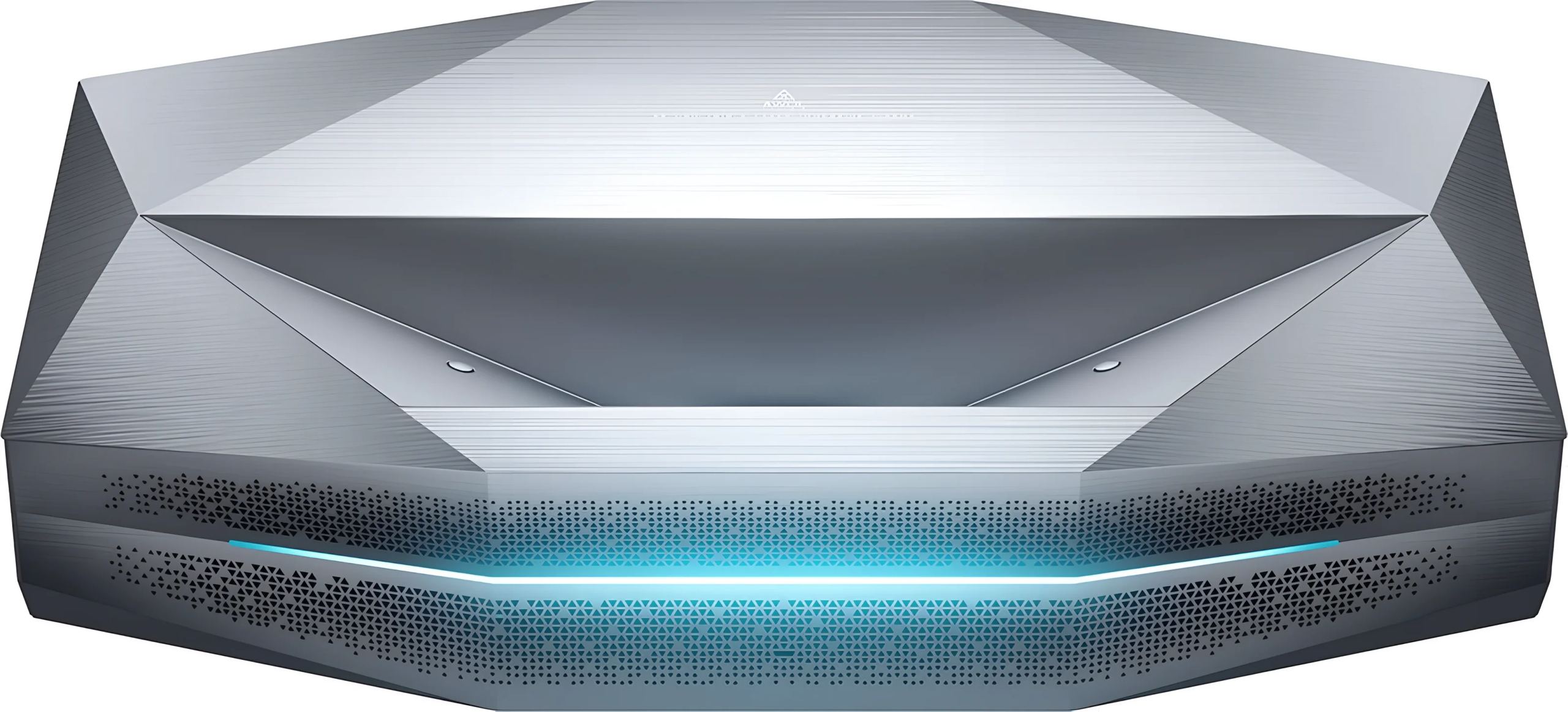
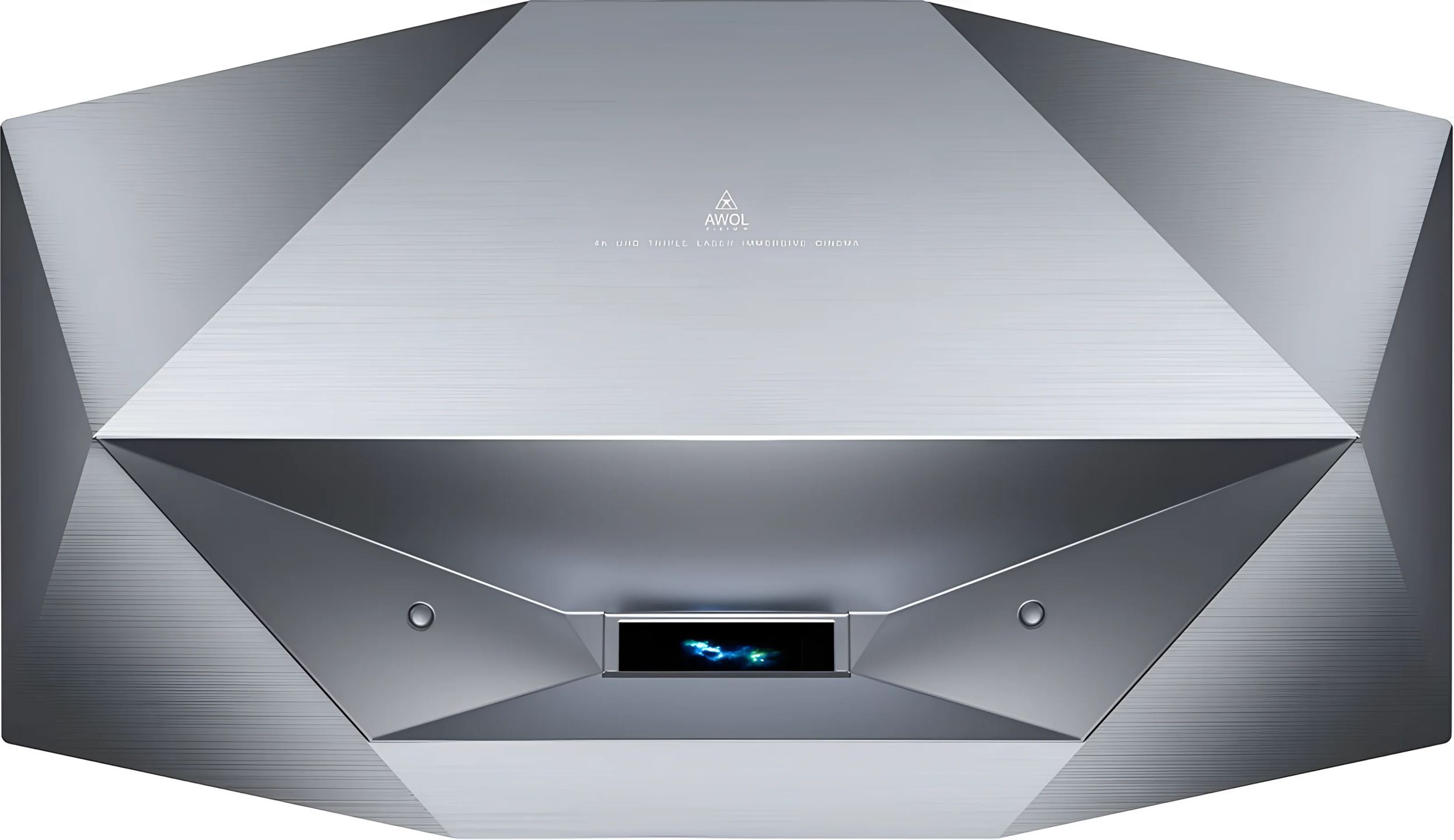
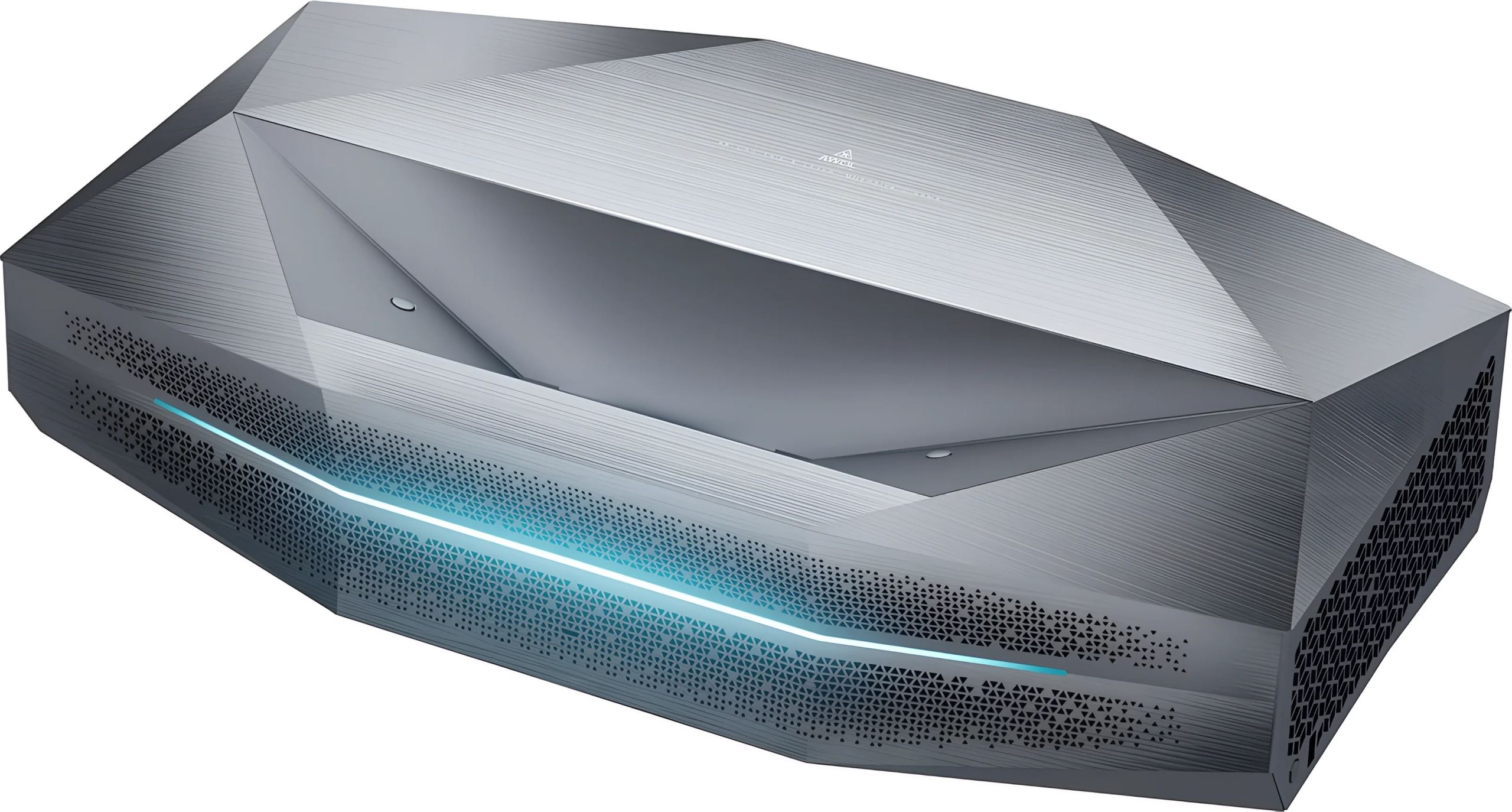
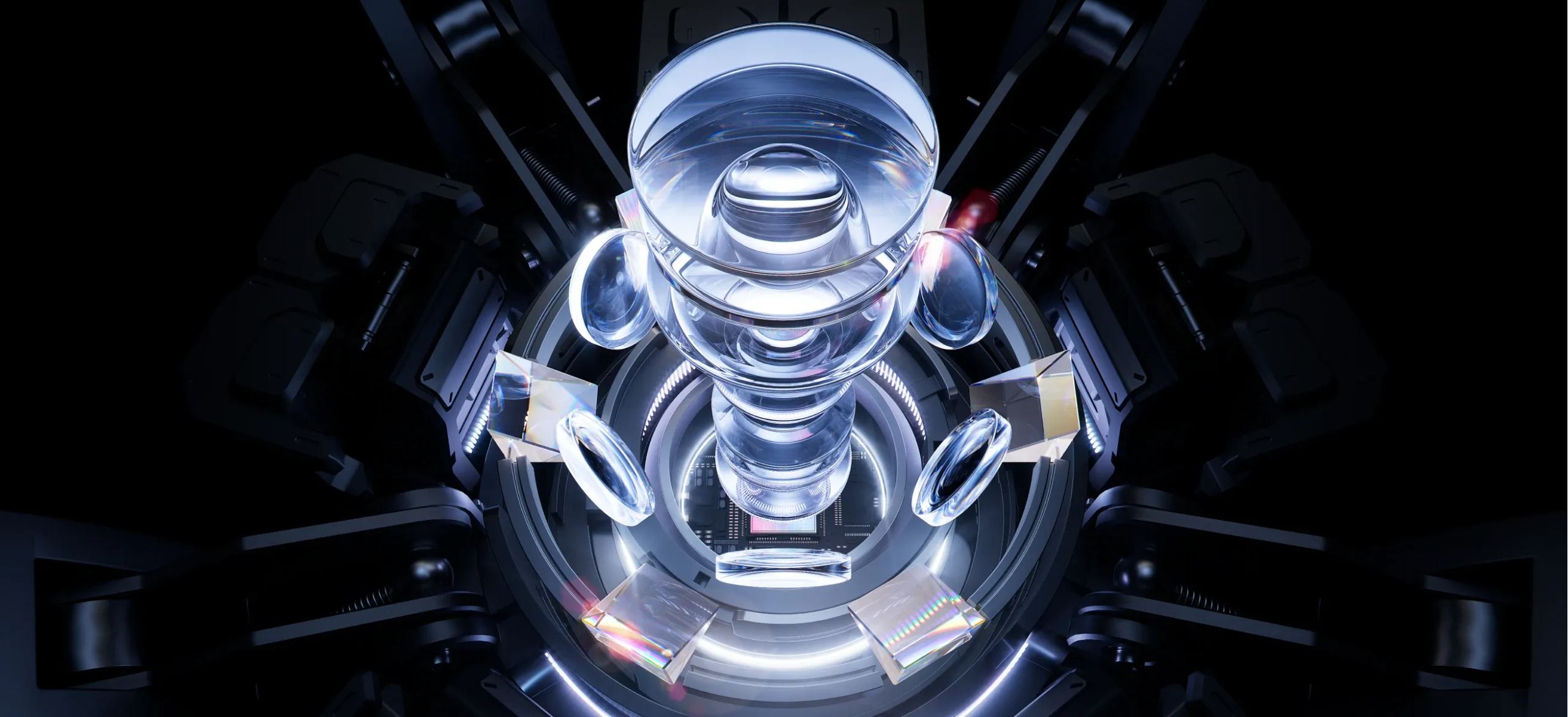
Projecting a 200-inch image from a cabinet placed just a few centimeters from the wall is an optical tour de force, and that is precisely the territory AWOL Vision has chosen for its new ultra-short-throw model. Successor to the LTV-3500 Pro, the Aetherion Max targets very large screen sizes without letting sharpness fall apart at the edges, with a triple RGB laser and 3300 ISO lumens of brightness sufficient for bright rooms.
Sharpness maintained up to 200 inches
Ultra-short-throw projectors share a well-known weakness: the image remains impeccable around 100 or 120 inches, then degrades when pushed further, edges lose sharpness and uniformity declines. AWOL Vision responds with PixelLock, a technology that combines optical alignment, mechanical adjustment, and digital correction to keep pixels in place across the entire surface.
The 0.2:1 throw ratio allows image sizes from 80 to 200 inches (203 to 508 cm) from a position very close to the wall. The sapphire glass lens, treated against chromatic aberrations and reinforced by a titanium lattice, limits focus drift linked to temperature variations.
Triple RGB laser and black level management
The light source is based on three separate lasers—red, green, and blue—which broadens the covered spectrum to 110% of the Rec.2020 space. In practical terms, deep reds and saturated greens that most panels struggle to reproduce come through effortlessly. The 0.47-inch DLP chip from Texas Instruments generates 4K resolution through rapid pixel shifting (XPR), supported by the new DLPC8445 controller.
The historical weak point of UST projectors remains black level. AWOL Vision announces a native contrast ratio of 6000:1, high for a DLP platform of this size, which a mechanical iris and the EBL (Enhanced Black Level) algorithm push up to 60,000:1 in viewing contrast. EBL adjusts laser power and gamma frame by frame, while the iris modulates stray light. The result matters most in dark scenes, where a UST projector often reveals its limits.
That leaves the rainbow effect, the colored flicker perceptible to some viewers on DLP projectors. Anti-RBE processing reduces it by up to 99.99%, in both 2D and 3D.
HDR formats and cinema rendering
On the HDR side, compatibility covers HDR10, HDR10+, HLG, and Dolby Vision, with a Dolby Vision Gaming variant. Dynamic Tone Mapping adapts the brightness curve scene by scene, useful on a projector whose maximum brightness remains, by nature, lower than that of a television. The 3300 ISO lumens provide headroom for HDR highlights and allow comfortable viewing with the curtains partly open.
Filmmaker mode disables image processing to respect the director’s intent, and IMAX Enhanced certification opens access to masters in the corresponding format. Support for 24 and 48 frames per second serves cinema content, while TÜV low blue light certification targets comfort during long viewing sessions.
Responsiveness for video games
The gaming side is seriously equipped. The three HDMI 2.1 inputs support VRR (Variable Refresh Rate) and ALLM (Auto Low Latency Mode), with display latency (input lag) dropping to 1 ms under the best conditions. The projector supports 4K at 120 Hz input as well as 1080p at 240 Hz, enough to keep up with the fastest games on a very large screen. Dolby Vision Gaming also adds dynamic HDR rendering for compatible consoles.
An angular anthracite gray chassis
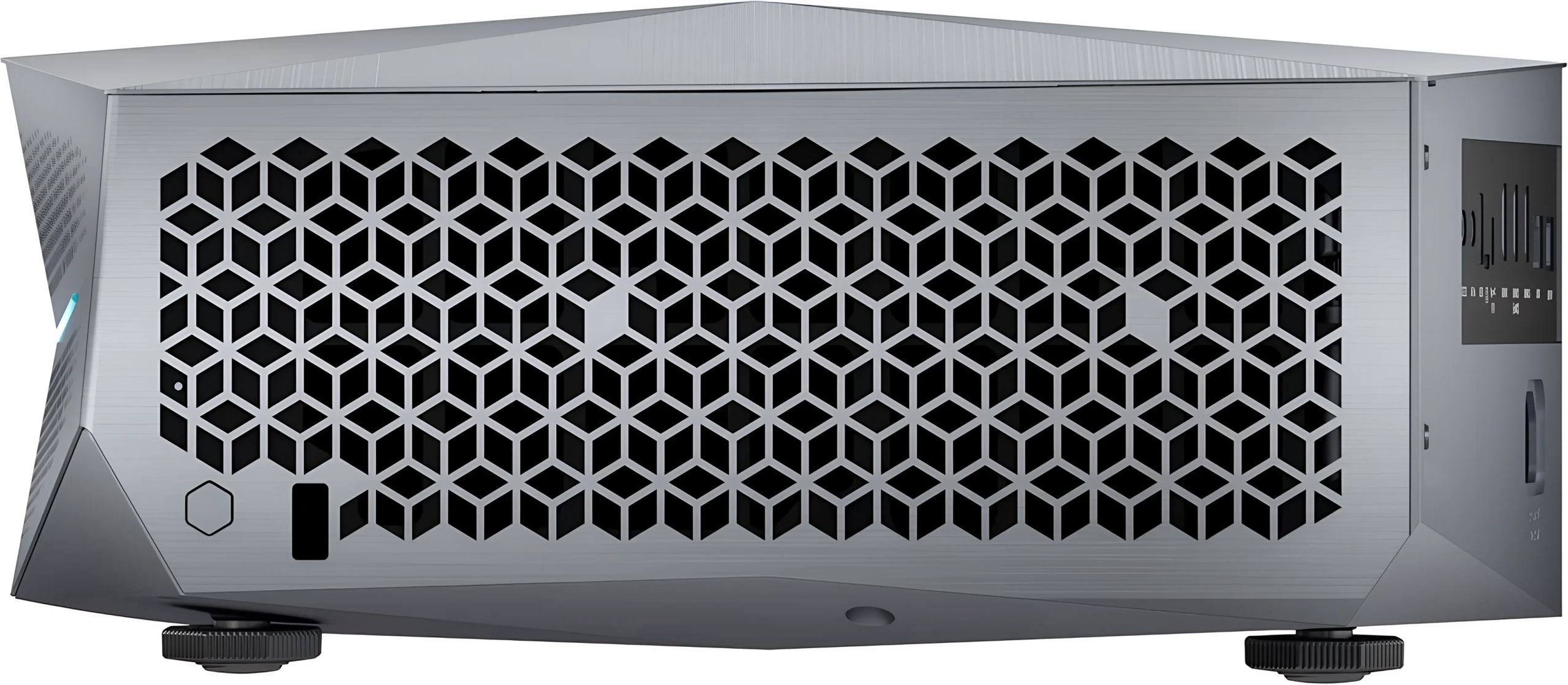
The Aetherion Max breaks away from the usual square UST enclosures. Its almost octagonal silhouette, with sharp edges and an anthracite gray finish, makes it look more like a piece of furniture than a technical block. An RGB Music LED light strip runs along the front and reacts to the ambiance or sound; it can be turned off if considered distracting. A motorized lens cover protects the optics when powered off.
For dimensions, count 562 x 323 x 139.5 mm for 8.75 kg, a footprint that requires a stable low cabinet placed flush against the projection wall. Ventilation remains controlled, around 30 dBA at peak according to AWOL Vision.
Google TV and complete connectivity
The system runs on Google TV, powered by a MediaTek MT9655 SoC supported by 8 GB of RAM and 128 GB of eMMC storage, enough to navigate apps and launch streams smoothly. Google Assistant is integrated, and the projector fits into Google Home, Apple HomeKit, and Amazon Alexa ecosystems.
Wireless connectivity relies on Wi-Fi 7, Bluetooth 5.4, AirPlay 2, Chromecast, and Miracast. For wired connections, there are three HDMI 2.1 inputs, a DisplayPort in USB-C format, one USB 3.0 port, one USB 2.0 port, and a Gigabit Ethernet jack for a stable network connection.
Built-in sound and the center channel
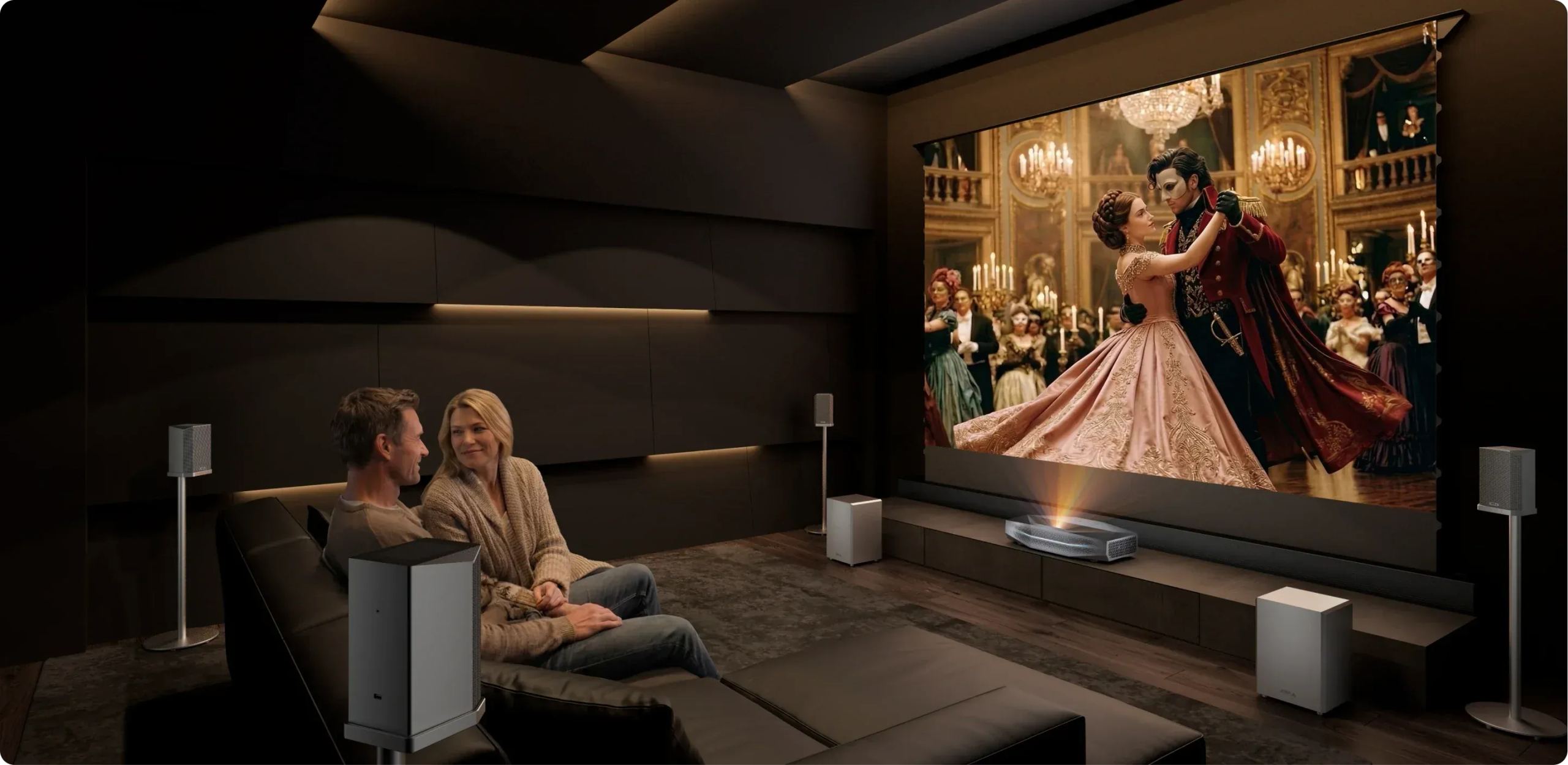
The built-in sound is clearly superior to that of a standard television: voices well centered, multiple listening modes (cinema, sports, music, dialogue, night, game), and decoding up to Dolby Atmos and DTS:X. Its special feature lies in its possible role as a center channel: paired with a compatible audio system such as AWOL Vision’s ThunderBeat, the projector handles voices and central information, exactly where a UST cabinet occupies the position of the center speaker in a home theater setup.
For everyday viewing, the internal speakers do the job. For a film demanding in effects, a dedicated speaker system remains preferable, which the center-channel design anticipates precisely.
What the press says
The AWOL Vision Aetherion Max is a very good projector for a home theater. Most scenes have great depth, especially darker ones, though it doesn't do as well with bright scenes. [...] Colors look very rich, though the image is notably warm out-of-the-box, so it does benefit from a calibration. [...] For gamers, it has very low input lag for a snappy gaming experience, and it also provides the ability to game at a higher 240Hz refresh rate at a lower 1080p resolution.
The Aetherion Max's picture quality isn't just a big improvement over the already more than decent LTV-3500 that marks our only previous interaction with an AWOL Vision projector; it's actually arguably the best picture quality we've ever seen from any UST projector. [...] Colours look even more vibrant, and brightness for both full-screen and peak highlight image elements looks fantastically intense. [...] While the AWOL Vision Aetherion Max isn't cheap by today's UST projector standards, it delivers a combination of specification and performance that ultimately makes it look like a bargain.
PixelLock technology for ultra-precise pixel alignment and consistent sharpness on very large images
Reduced rainbow effect (RBE) in 2D and 3D modes, up to 99.99%
Advanced black management with EBL (Enhanced Black Level) technology
Mechanical lens iris
TÜV certification for blue light reduction
Projection
Ultra short throw projector (UST)
Throw ratio: 0.2:1
Image size: from 80” to 200” (203 to 508 cm)
Automatic motorized lens cover
Zero light leakage optics
Film and gaming
Compatible with 24 fps and 48 fps
3D compatible
Filmmaker Mode
VRR (Variable Refresh Rate)
ALLM (Auto Low Latency Mode)
Input lag as low as 1 ms
Image optimized for cinema, sports, and gaming content
Platform and performance
Processor: MediaTek MT9655 Flagship 4K UHD SoC
Memory: 8 GB RAM
Internal storage: 128 GB eMMC
Ethernet speed: 1000 Mbps (Gigabit)
Audio system with integrated center channel
Wireless connectivity
Wi-Fi 7
Bluetooth 5.4
AirPlay 2
Chromecast
Miracast
Wired connectivity
3 x HDMI 2.1
1 x DisplayPort (USB-C)
1 x USB 3.0
1 x USB 2.0
1 x Gigabit Ethernet port
Operating system and compatibility
Google TV OS
Built-in Google voice assistant
Google Home compatible
Apple HomeKit compatible
Amazon Alexa compatible
Additional features
RGB Music LED Atmosphere ambient light
General specifications
Dimensions (W x D x H): 562 x 323 x 139.5 mm
Weight: 8.75 kg
Frequently asked questions
Which screen should you choose for the Aetherion Max?
+
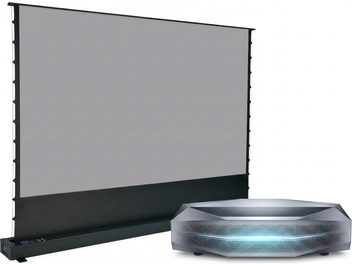
An ambient light rejecting screen (ALR), ideally a CLR type designed for ultra-short-throw projectors, gets the best out of the projector. This screen preserves contrast in a lit room and reduces the graininess (speckle) inherent to RGB laser sources. On a simple white screen, the image remains decent but loses depth as ambient light increases.
How far from the wall should it be placed?
+
With a 0.2:1 throw ratio, the cabinet is placed very close to the wall. An image of around 100 inches forms from only a few tens of centimeters away, and the maximum 200-inch diagonal remains achievable within less than 50 centimeters. The exact distance depends on the cabinet height and adjustment: plan for precise placement, because the optics are fixed, with no zoom or motorized shift.
Is it suitable for daytime use?
+
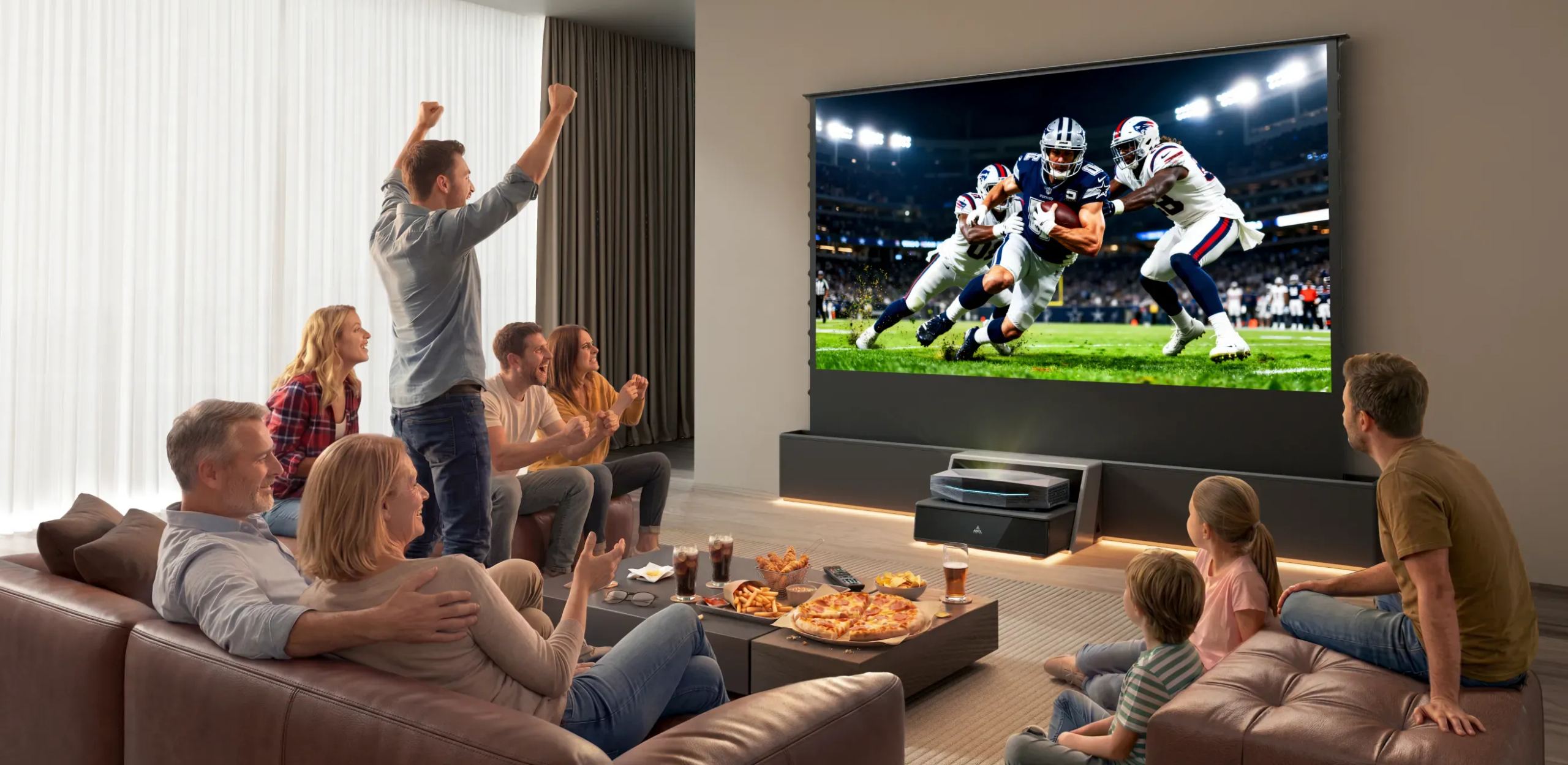
Yes, to a large extent. The 3300 ISO lumens and black level processing allow viewing with the curtains partly open, provided an ALR screen is used. In direct sunlight on the screen, no projector can cope; but for watching a match or the news during the day in a normally lit living room, the available brightness is more than sufficient.
How does it differ from the Aetherion Pro?
+
The two models share the essentials: 4K DLP chip, triple RGB laser, PixelLock, Google TV platform, and gaming features. The difference lies in brightness. The Aetherion Max reaches 3300 ISO lumens, versus 2600 ISO lumens for the Aetherion Pro. In a very bright room or for very large screen sizes, this brightness reserve makes the Max stand out in terms of image readability.
User reviews
Alessio
Well, I would say that the AWOL AETHERION MAX is a real gem among short-throw projectors. I am blown away by the color quality; the image is simply superb. BT 2020 is remarkably effective. I was afraid of rainbow effects because I am sensitive to them, but there are none at all—a good point for that already. What else can I say? HDR and 4K are upscaled and not native, which is a shame and a small negative point in my opinion, but for that you would currently need a minimum budget of €13,000. To finish, I would say that I am very happy with my purchase, nothing to complain about. The gaming aspect is great, latency is there, filmmaker mode is simply top-level. The settings mode is average; I would have preferred more adjustment options, but overall I give it a score of 8/10, which is very good. It comes close to the Valerion Max, but the Aetherion Max is still much more high-end in terms of options. The fan noise is slightly noticeable, like with any video projector, but once the sound is on, you no longer hear it. E.ARC is simply stunning with the soundbar; all the Dolby Atmos, DTS X and optical sound effects are almost as powerful as in a movie theater, and the sound quality is incredible. Thank you to AWOLL for making high-end products like this available at reasonable prices. Thank you again ⭐️⭐️⭐️⭐️⭐️
Comment from August 05, 2026 — Experience from July 23, 2026
Automatically translated — Show original (French)
Eh bien, je dirais que le AWOL AETHERION MAX est une petite pépite en courte focal je suis bluffé de la qualité colorimétrique l'image est tout simplement superbe le BT 2020 et redoutable d'efficacité moi qui avait peur des effets arc en ciel car j’y suis sensible et bien il n'y en a pas du tout un bon point pour cela deja que dire d'autre le HDR LA 4K et bien en ovulation et non natif dommage pour ce petit point je dirais négatif mais pour cela faudrais un budget minimum a ce jour de 13.000€
Pour finir je dirais que je suis très content de mon achat rien a redire la parti jeux est super la latence est au rdv le filmmaker est tout simplement top niveau le mode réglage est moyen j'aurais préféré plus d'option de réglage mais dàs l'ensemble je lui donne une note de 8/10 ce qui est très bien il ce rapproche du valerion max mais il aertherion max est quand même beaucoup plus haut de gamme en matière d'options la soufflerie et légèrement perceptible comme tout video projecteur mes des que le son est lancer on l'entend plus le E.ARC est tout simplement époustouflant avec là barre son tout les effets dolby atmos DTS X OPTIQUE son presque aussi puissant qu'une salle de cinéma et la qualité sonore est hallucinante merci a AWOLL de faire a des prix raisonnable des produit de haut de gamme comme ca merci encore ⭐️⭐️⭐️⭐️⭐️
Eco-contribution of €0.75 included in the sale price.
To better understand our visitors, measure marketing effectiveness and personalise ads, we and our partners use cookies and mobile advertising identifiers on your device. This data makes it possible to display personalised and non-personalised ads and measure their performance. Some cookies, which are technically necessary, are exempt from consent. You can accept those that require your consent, refuse them by clicking “Reject”, or customise your choices via “More options”.
To find out how Google uses the data collected once you have given your consent, see Google’s Business Data Responsibility site (opens in a new window).
You can change or withdraw your consent at any time via the “Cookies” link. Your choices will apply on our site for 12 months.