Astell&Kern PD10 black
Specifications and features


Overview
Not quite a pocket music player, yet not a home audio component either: the PD10 occupies an unusual place in the Astell&Kern lineup. With its 6-inch screen, 435 grams, and chassis carved from stainless steel, it claims a full-hand format that embraces its stature. The Korean manufacturer equips it with high-end electronics and battery life that lasts through long listening sessions.
A Contrast Cube chassis and a full-hand format
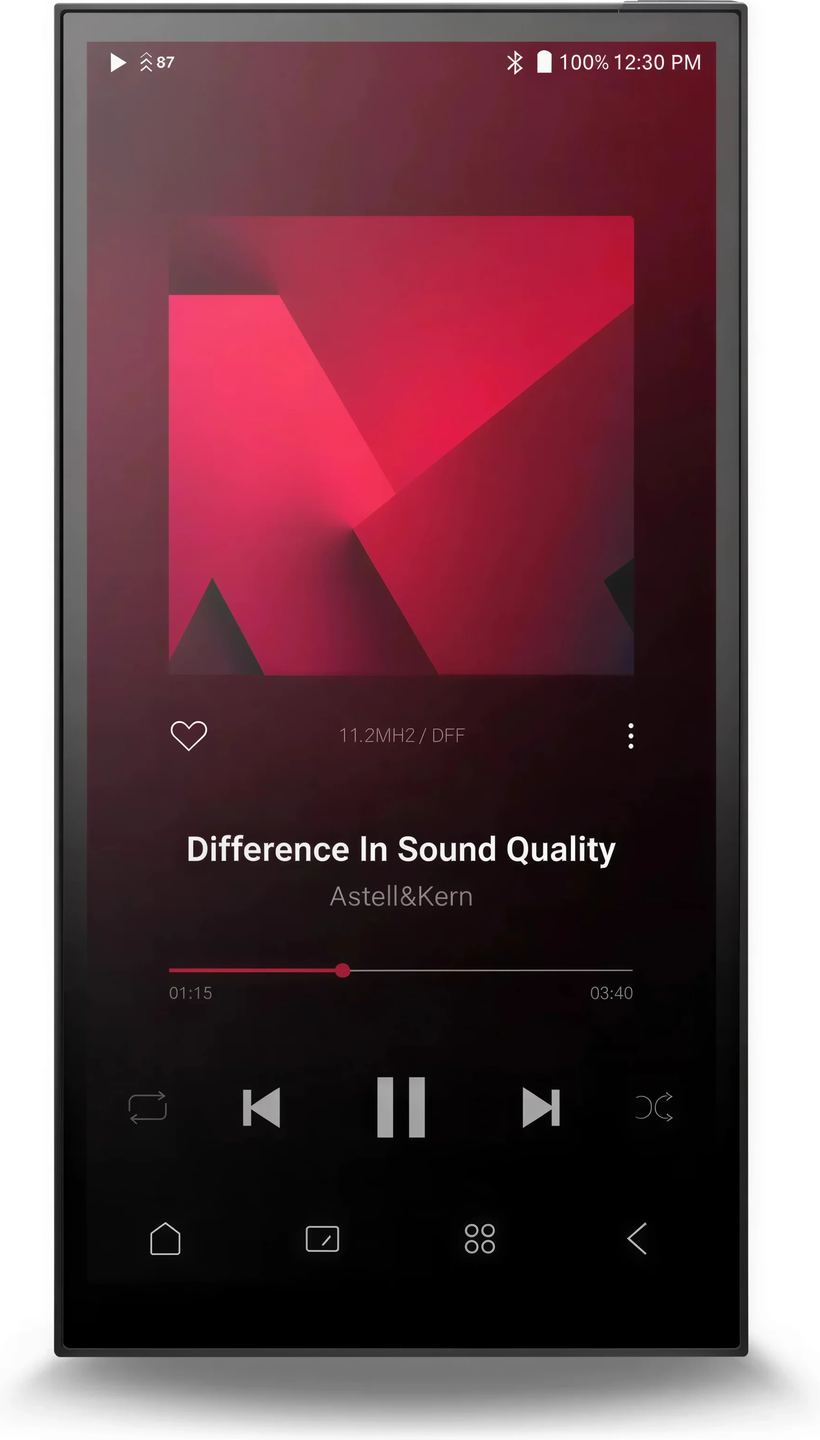
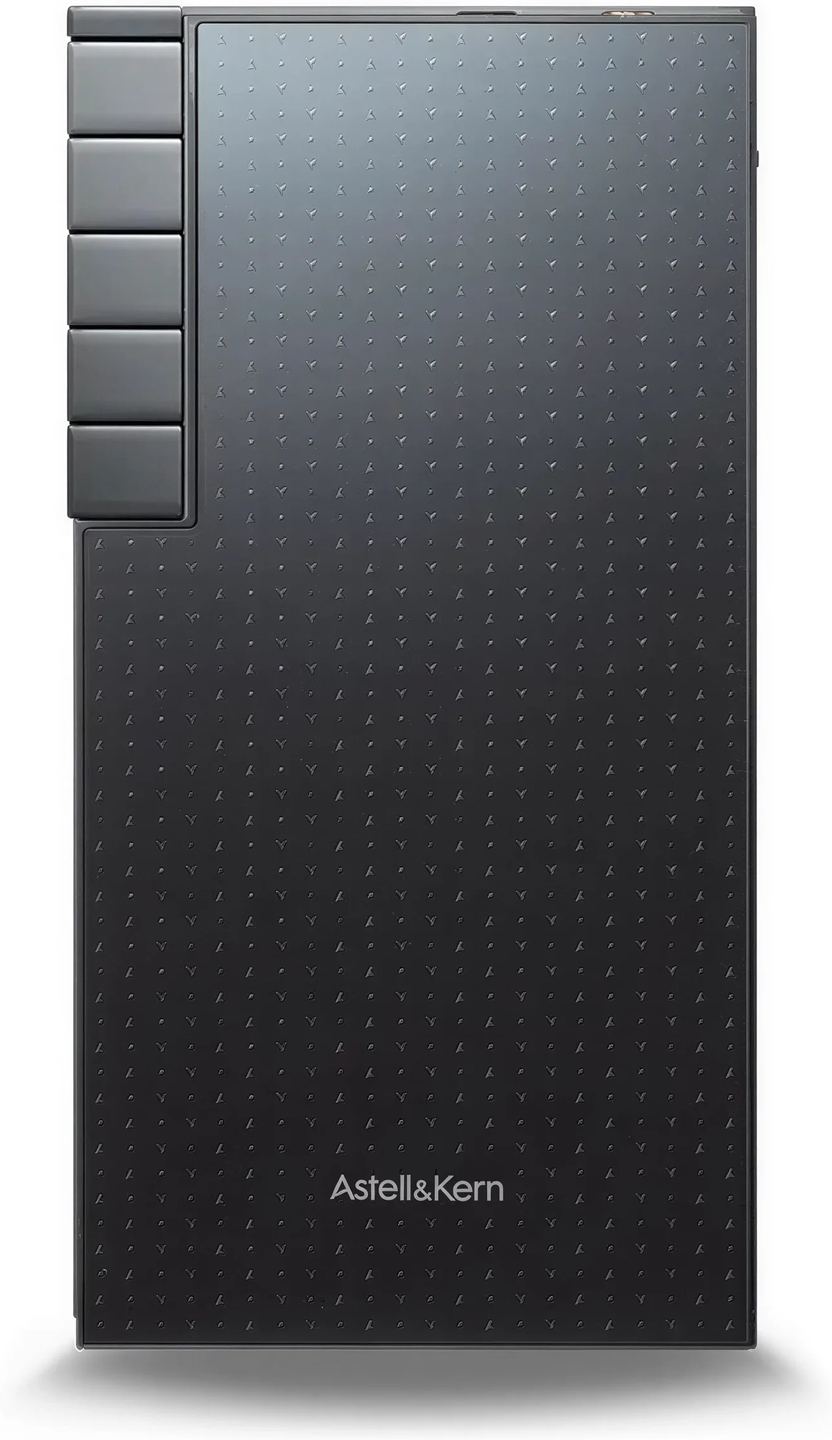
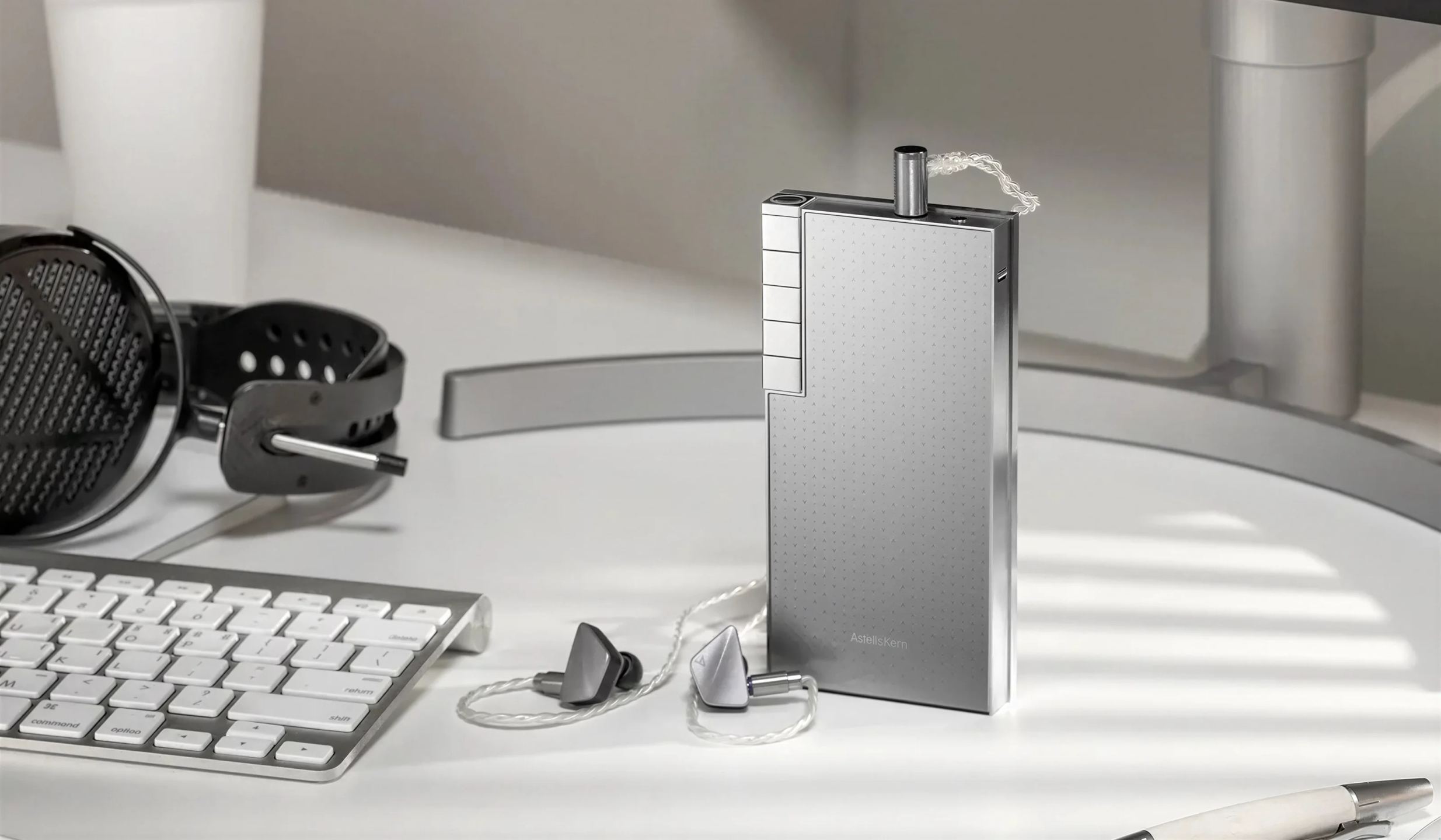
The chassis combines stainless steel and glass in a geometry the brand calls “Contrast Cube.” At 14.95 cm tall and weighing 435 grams, the PD10 sits in a category of its own: too bulky for a pants pocket, yet perfectly at home in the hand for sedentary use or travel. Two finishes are available, black or silver. The 6-inch touchscreen has a resolution of 2160 × 1080 pixels, a format that brings the device closer to a smartphone and makes navigation easier within a large music library. On the side, the traditional volume wheel gives way to dedicated buttons, a choice that simplifies one-handed use and limits accidental handling. An information LED changes color depending on the bit depth of the file currently playing, indicating 16, 24, or 32 bits as well as DSD streams without needing to look at the screen.
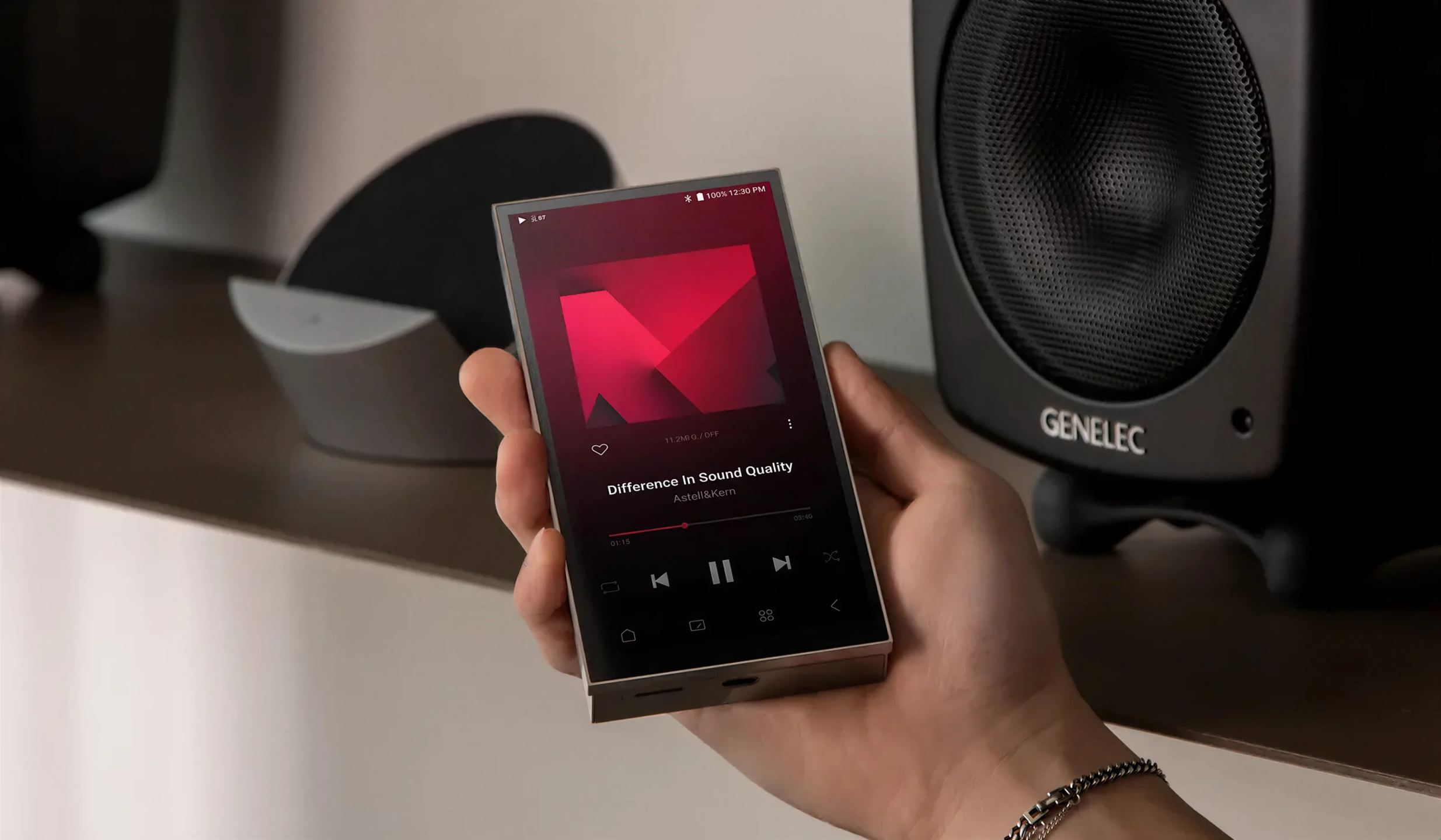
HEXA design and quad AKM AK4498EX DAC
The PD10 adopts the HEXA Audio approach developed by Astell&Kern: the digital and analog circuits are physically separated into six distinct blocks, each with its own power and ground lines. The goal is to limit interference between stages and reduce overall background noise. Digital processing relies on four AK4498EX converters and two AK4191EQ modulators, a recent combination from AKM laboratories that separates delta-sigma decoding and analog output across two different chips. The in-house TERATON ALPHA technology handles signal optimization upstream of the outputs. Native decoding goes up to 32-bit / 768 kHz in PCM and DSD512, without internal resampling thanks to ADP (Astell&Kern Direct Path) mode, which bypasses the Android system’s SRC conversion.
Measurements, distortion, and sound reproduction
The figures announced for the balanced output place the PD10 at the very top of the segment. Total harmonic distortion drops to 0.0006%, crosstalk reaches -138 dB, and the signal-to-noise ratio rises to 128 dB. Frequency response remains within ±0.066 dB between 20 Hz and 20 kHz, and deviates by only ±0.62 dB up to 70 kHz. The 250-femtosecond reference clock and jitter measured at 25 picoseconds reflect particular care given to the digital signal’s timing stability. Six selectable DAC filters slightly alter the tonal signature, and the Crossfeed function partially blends the channels to soften the sometimes pronounced separation of headphone listening. The second-generation Advanced DAR (Digital Audio Remaster) mode offers software upsampling for lower-resolution files, to be enabled or disabled according to preference.
Adaptive amplification depending on the connected headphones
Two amplification stages operate in parallel, one for the 3.5 mm single-ended output, the other for the 4.4 mm balanced output. The PD10 delivers up to 4 Vrms on the 3.5 mm output and 8.3 Vrms on the 4.4 mm output in high amplification mode (5.5 Vrms at normal gain), a sufficient level to drive headphones that demand high voltage. Output impedance remains low, 1 Ω on the 3.5 mm jack and 1.6 Ω on the 4.4 mm, which preserves the frequency response of in-ear monitors sensitive to impedance variations. The Smart Gain function detects the impedance of the connected headphones and automatically adjusts the amplification level, a convenience that avoids manual changes between IEMs and open-back headphones. The 3.5 mm output also serves as a digital optical output, an option for connecting the music player to an external DAC or a hi-fi system equipped with an optical input.
Custom Android and bit-perfect playback
The operating system is a version of Android adapted by Astell&Kern, separated from the audio engine to preserve the integrity of the digital stream. The in-house interface is now at generation 4.5, with animated display and revised navigation to take advantage of the 6-inch diagonal. The 256 GB internal memory can be expanded by up to 1.5 TB via a microSD card, enough for music libraries heavy with high-resolution files. The octa-core processor handles the interface and streaming applications installed from the integrated Android store without any apparent difficulty. Firmware updates are delivered OTA, without a wired connection.
Wi-Fi, Bluetooth, and network services connectivity
Dual-band Wi-Fi supporting 802.11 a / b / g / n / ac standards ensures connection with local servers and streaming platforms. Bluetooth 5.3 supports Qualcomm aptX HD, LDAC, and LHDC codecs in addition to SBC and AAC, both for transmission to wireless headphones and for reception via the BT Sink function, which turns the PD10 into a Bluetooth receiver for a smartphone. The PD10 is among the devices certified Roon Ready, recognized as listening endpoints by a Roon server installed on a computer or NAS. Qobuz Connect compatibility allows direct playback from the Qobuz app, without an intermediary. The AK File Drop utility simplifies wireless file transfer from a PC, smartphone, or FTP server on the local network. The USB-C port handles charging and wired transfer with a PC or Mac.
5770 mAh battery and 15 hours of battery life
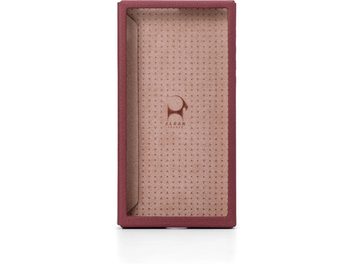
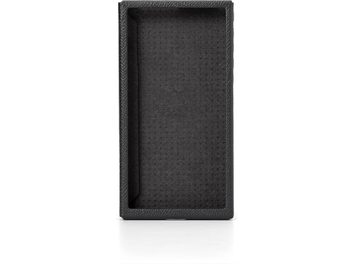
The 5770 mAh Li-Polymer battery far exceeds the usual capacities of an audiophile music player, for a stated battery life of 15 hours of continuous playback. The trade-off is on the scale: at 435 grams, the PD10 is not a device you slip into an outer pocket. Fast charging via USB Power Delivery 3.0 restores the battery to full capacity in about four hours. The included protective case, covered in RCS 2.0-certified Synt3 material, accompanies the device without concealing its controls or outputs.
Technical specifications
Audio architecture
- HEXA Audio architecture with complete physical separation of digital and analog processing
- Quad DAC AKM AK4498EX paired with two AK4191EQ digital modulators
- Proprietary TERATON ALPHA technology for audio signal optimization
- Dual independent audio circuit for balanced and unbalanced outputs
- ADP (Astell&Kern Direct Path) technology for bit-perfect playback without SRC conversion
Audio performance
- Native decoding up to 32-bit / 768 kHz
- Native DSD512 support (DSD64, DSD128, DSD256, DSD512)
- Frequency response:
- ±0.066 dB (20 Hz – 20 kHz)
- ±0.62 dB (20 Hz – 70 kHz)
- Signal-to-noise ratio:
- 125 dB (unbalanced)
- 128 dB (balanced)
- Crosstalk:
- -137 dB (unbalanced)
- -138 dB (balanced)
- Total harmonic distortion (THD+N):
- 0.0007% (unbalanced)
- 0.0006% (balanced)
- IMD SMPTE: 0.0004%
- Clock jitter: 25 ps
- Reference clock: 250 femtoseconds
Amplification and outputs
- Dual adaptive amplification according to headphone impedance
- Smart Gain function with automatic impedance detection
- 3.5 mm unbalanced output: up to 4 Vrms
- 4.4 mm balanced output: up to 8.3 Vrms
- Balanced output up to 5.5 Vrms in Normal Gain mode
- Integrated optical output via 3.5 mm connector
- Output impedance:
- 1 Ω (3.5 mm)
- 1.6 Ω (4.4 mm)
Sound processing and customization
- Second-generation Advanced DAR (Digital Audio Remaster) technology
- Adjustable Crossfeed function for more natural headphone listening
- 6 selectable DAC filters to customize the sound signature
- ReplayGain for automatic volume level matching
Supported audio formats
- WAV, FLAC, WMA, MP3, OGG, APE, AAC, ALAC, AIFF, DFF, DSF
System and interface
- Android operating system optimized for bit-perfect playback
- Astell&Kern user interface generation 4.5
- Immersive animated display with optimized navigation
- Octa-Core processor
- Internal memory: 256 GB
- Expansion via microSD card up to 1.5 TB
- OTA (Over-The-Air) firmware update
Connectivity
- Dual-band Wi-Fi 2.4 GHz / 5 GHz (802.11 a / b / g / n / ac)
- Bluetooth 5.3
- Qualcomm aptX HD support
- LDAC support
- LHDC support
- SBC and AAC support
- BT Sink function
- USB-C port for charging and PC and Mac data transfer
- Roon Ready support
- Qobuz Connect support
- Wireless file transfer via AK File Drop
- Transfer management via PC, smartphone, or FTP server on a local network
Battery and power
- High-capacity 5770 mAh Li-Polymer battery
- Battery life up to 15 hours of continuous playback
- USB Power Delivery 3.0 fast charging support
- Charging time: approximately 4 hours
Design and construction
- Chassis combining high-quality stainless steel and glass
- “Contrast Cube” design
- Available finishes: Black or Silver
- 6-inch Full HD touchscreen
- Resolution: 2160 x 1080 pixels
- Dimensions: 7.54 x 14.95 x 1.73 cm
- Weight: 435 g
- Physical controls optimized for one-handed use
- Volume wheel replaced by dedicated buttons
- LED information lighting according to the bit depth of the file being played: 16-bit, 24-bit, 32-bit, or DSD
Operating conditions
- Operating temperature: 0 °C to +40 °C
Included accessories
- Premium protective case
- Covering in eco-friendly Synt3 material certified RCS 2.0
- Custom design ensuring optimal protection and ergonomics
Frequently asked questions
What headphone and earphone outputs does the PD10 have?
Three outputs coexist on the edge: an unbalanced 3.5 mm jack, a balanced 4.4 mm socket, and a digital optical output shared with the 3.5 mm socket. The output impedances remain low (1 Ω and 1.6 Ω), a favorable point for in-ear monitors sensitive to impedance variations.
Can the PD10 drive hard-to-drive headphones?
The 4.4 mm balanced output delivers up to 8.3 Vrms in high-gain mode, a level that covers the majority of voltage-hungry hi-fi headphones. The Smart Gain function detects the connected impedance and automatically adjusts the gain between normal and high-gain modes, which avoids having to switch manually between a sensitive IEM and a more demanding open-back headphone.
Which streaming services are compatible?
Roon Ready and Qobuz Connect work natively, without a third-party app. Other services such as Tidal, Spotify, or Apple Music can be installed via the built-in Android store, just like on a phone, provided the app is available for this format.
How much music can be stored on board?
The 256 GB internal storage can be expanded with a microSD card of up to 1.5 TB, bringing the total capacity to around 1.75 TB. Enough to house a substantial high-resolution library, including DSD512 and 32-bit / 768 kHz PCM files, whose individual size is considerable.
Does the PD10 work as a Bluetooth receiver?
Yes, the BT Sink function allows reception of the Bluetooth audio stream transmitted by a smartphone or a computer. The PD10 then serves as a DAC and headphone amplifier for the remote source, useful for taking advantage of its analog outputs with an application that is not installed on the device.
What does the case supplied with the PD10 contain?
The protective case is covered in Synt3 material certified RCS 2.0 (Recycled Claim Standard), a reference to an environmental specification governing the use of recycled materials. Its custom-cut design preserves access to buttons and ports without hindering one-handed use.
- Eco-contribution included in the sale price.
- GTIN / EAN: 8800309909118