

Questyle QLINK
Specifications and features


Questyle QLINK: a high-resolution converter at the end of a USB-C cable
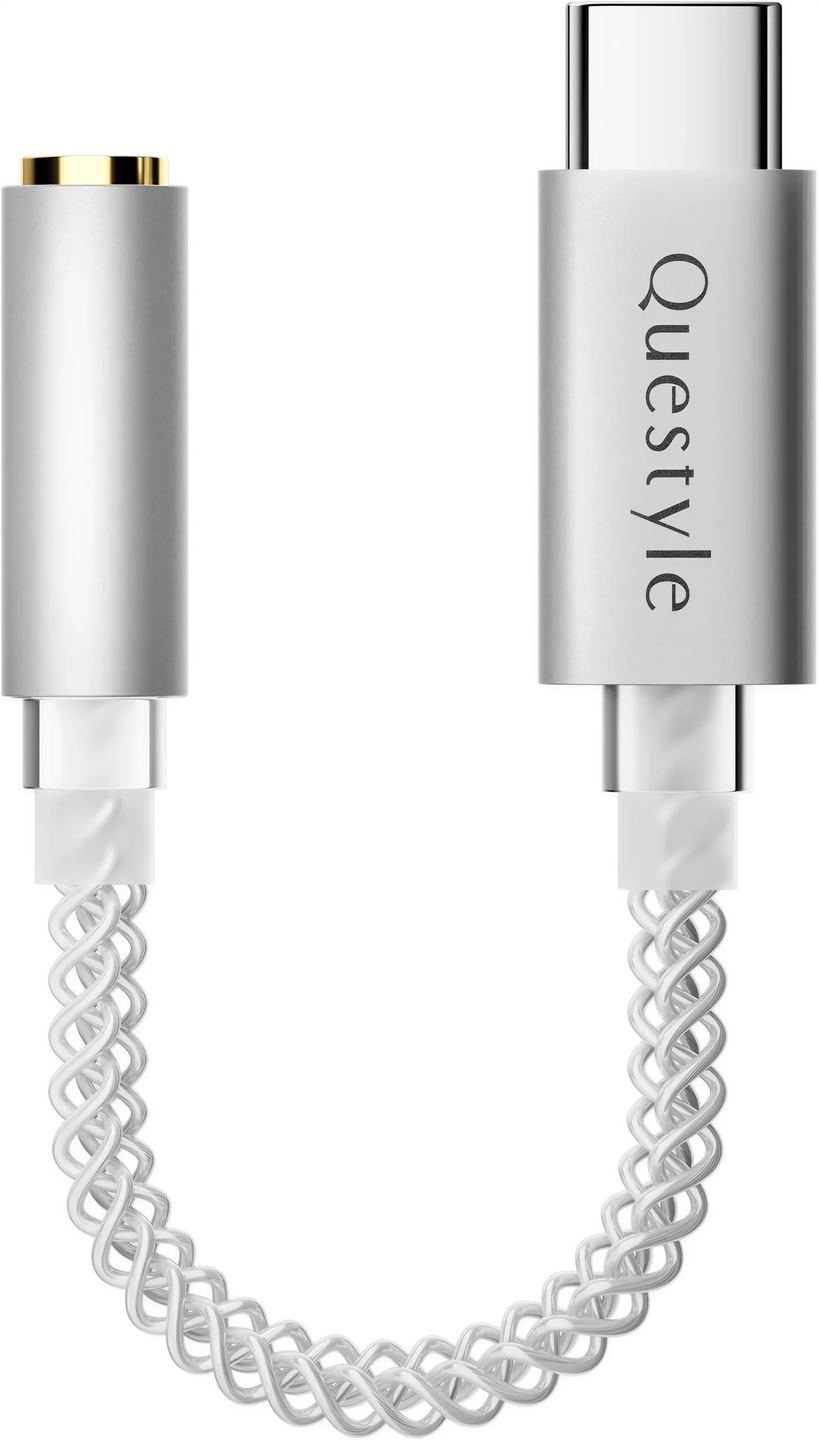
Smartphones have dropped the headphone jack, and the adapters supplied instead often make do with minimal audio circuitry. Questyle, a Chinese manufacturer specializing in portable converters and headphone amplifiers, houses a complete digital-to-analog converter in a small USB-C to 3.5 mm jack cable. The whole unit weighs less than five grams and connects to a phone, tablet or computer without any setup, with any wired headphones.
Sound conversion moved outside the phone
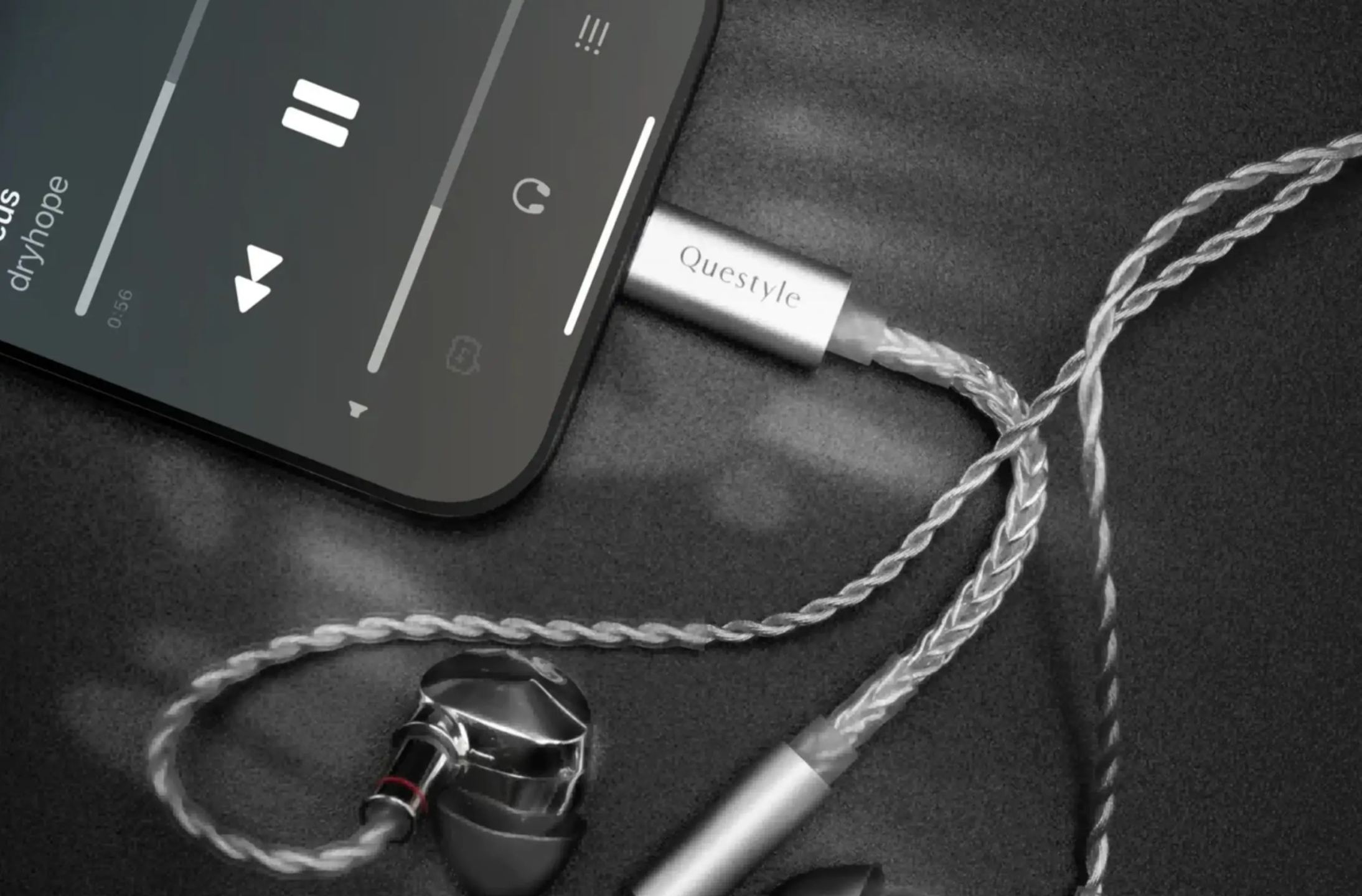
A music file stored locally or streamed online is simply a sequence of digital values, whereas headphones need a continuous electrical signal to move their diaphragms. A converter is therefore needed between the two, and in a phone without a headphone jack, this task is handled by the small circuit housed in the adapter. The QLINK receives the digital stream through the USB-C port and performs the conversion in its own connector, away from the phone’s electronics and their interference (processor, modem, power supply). Questyle uses a CX31993 chip, which accepts PCM files up to 32-bit and 384 kHz: bit depth determines how precisely each sample is described, while frequency determines the number of samples per second. These values comfortably cover the high-resolution catalogs of streaming services and downloaded files, the vast majority of which top out at 24-bit and 192 kHz. On Android, the system often resamples the stream to a fixed frequency; players capable of directly controlling a USB audio device transmit the original resolution.
Clean measurements for a five-gram device
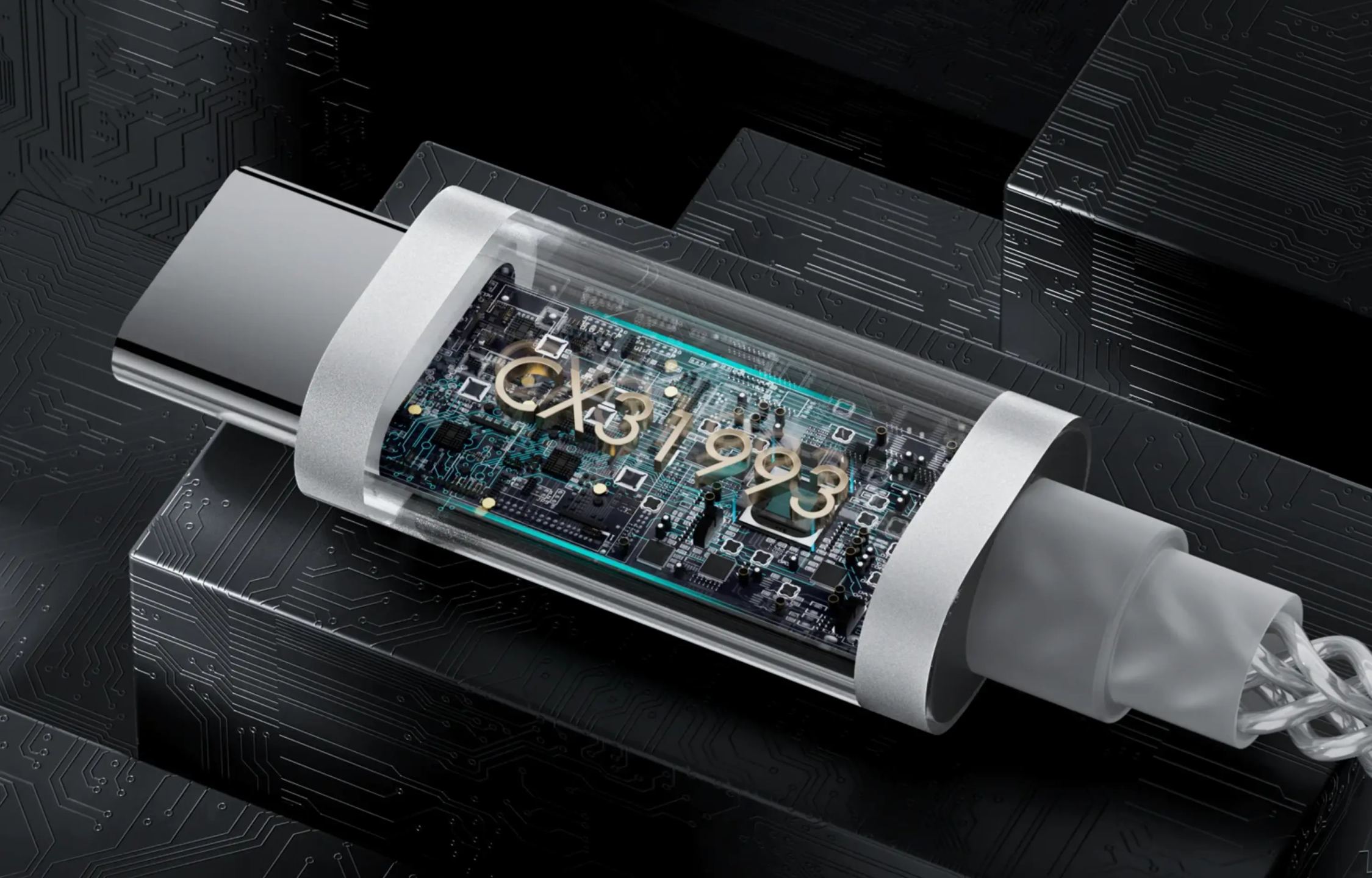
The signal-to-noise ratio reaches around 100 dB, which means that background hiss remains one hundred decibels below the level of the music signal: during quiet passages or between tracks, the ear perceives no background noise, even with sensitive in-ear earphones. Total harmonic distortion is around −95 dB (0.0017% with noise included), meaning that unwanted harmonics added by the electronics are far below the threshold of audibility. These figures place the QLINK squarely in the respectable middle range of converters in this format. Its output suits earphones and portable headphones, whose sensitivity allows them to reach a comfortable listening level with little voltage. High-impedance headphones or a low-sensitivity planar model require more headroom: this is the territory of Questyle’s M series converter-amplifiers, from the M12i to the M18i MAX, whose current-mode amplification delivers significantly more power.
Braided cable and aluminum connectors
An adapter of this type lives in a pocket, bends and twists with every use, and its weak point is almost always the junction between the cable and the plugs. Questyle has chosen a braided cable with eight silver-plated oxygen-free copper conductors (OFC copper is refined to reduce impurities, while silver plating covers the surface of the strands), claimed to withstand more than 15,000 bending cycles. Both ends are covered by aluminum alloy housings, which are more rigid than the molded plastic of ordinary adapters. At 118 mm long and around 4.5 g, the QLINK places almost no strain on the device’s USB-C port, even when the phone stays in a pocket with the cable plugged in.
Driver-free connection to any USB-C device
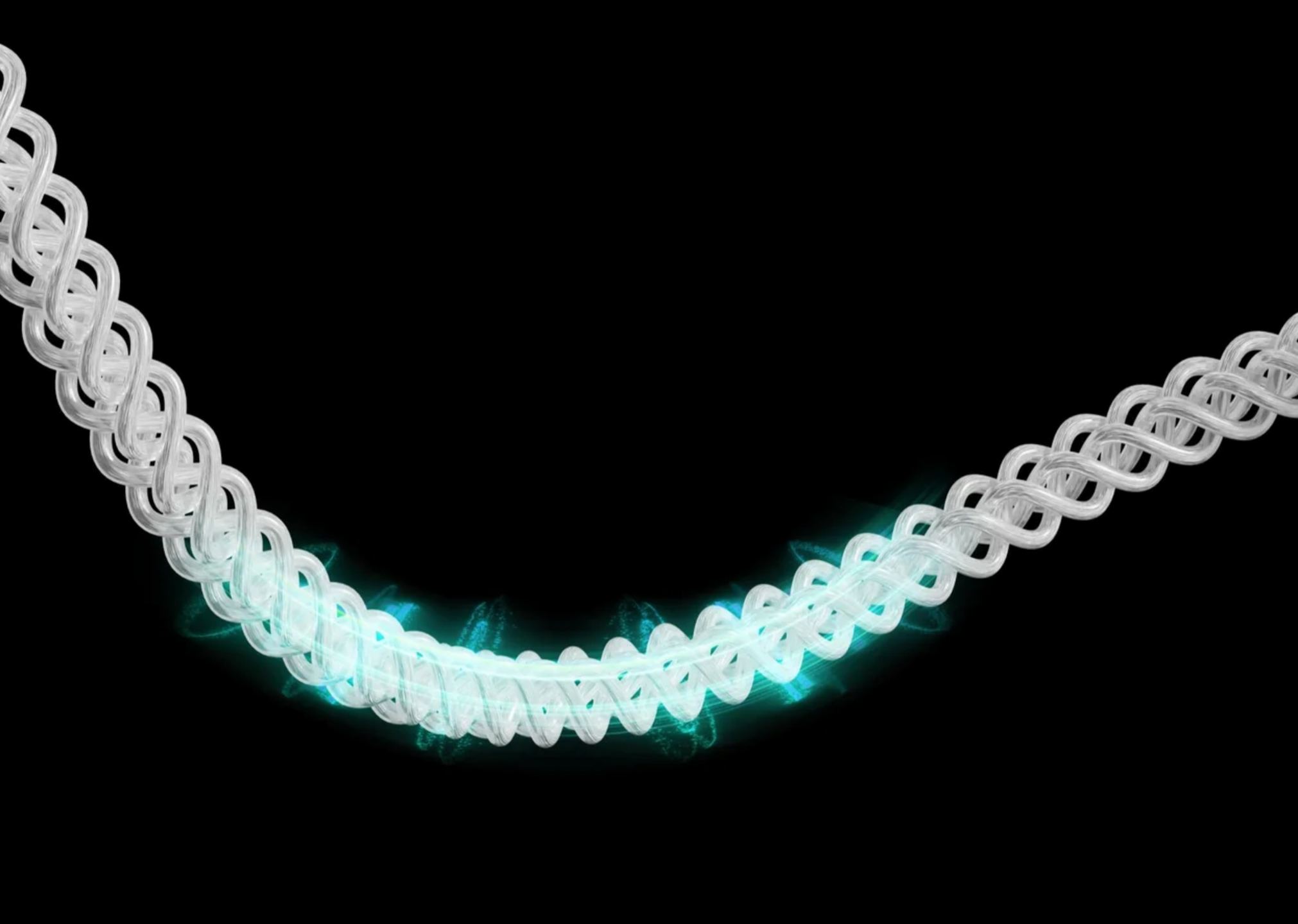
The QLINK plugs directly into the USB-C port and is recognized as an external sound card, with no application or driver to install. It works with Android smartphones, iPhones equipped with a USB-C port, tablets, laptops, PCs and Macs; simply connect the headphones to the 3.5 mm jack and launch your usual player. The jack also supports earphones with an integrated remote and microphone: the volume, play and pause buttons remain active, and the microphone works for calls. The 3.5 mm output can also feed a powered speaker or an amplifier’s auxiliary input using a suitable jack cable, allowing you to benefit from the QLINK’s conversion beyond headphones.
Technical specifications
Overview and use
- Product type: portable USB-C digital-to-analog converter (DAC)
- Affordable and accessible solution designed to improve sound reproduction from USB-C devices lacking a quality audio output and overcome the limitations of their built-in audio circuitry.
- Conversion of the digital audio signal into richer, more detailed and dynamic analog sound, for natural and faithful listening.
- Intended for music lovers wishing to listen to high-resolution audio files without bulky equipment and use their standard wired headphones without compromising on quality.
Conversion and audio performance
- Supported audio formats: PCM up to 32 bits / 384 kHz
- Purer and more faithful reproduction of high-resolution audio files.
- Signal-to-noise ratio (SNR): approximately 100 dB
- Clean sound reproduction, without unwanted noise.
- Total harmonic distortion (THD): approximately −95 dB
- Reduced distortion thanks to clean and efficient digital-to-analog conversion.
Connectivity and compatibility
- Input: USB-C connector, direct connection to the device’s port
- Analog output: standard 3.5 mm jack
- Compatible with most wired headphones and earphones.
- Compatible devices: USB-C Android smartphones, USB-C tablets, USB-C computers, USB-C laptops, PC, Mac
Operation and use
- Immediate operation through direct connection: no app or driver required
- Typical use:
- Plug the QLINK into the device’s USB-C port.
- Connect headphones or earphones to the analog output.
- Launch the audio player of your choice.
- Enjoy richer and more detailed sound than with the device’s standard audio output.
Construction and durability
- Braided silver-plated oxygen-free copper (OFC) cable
- Withstands more than 15000 bending cycles without damage.
- Aluminum alloy connectors for increased durability
Form factor, dimensions and weight
- Design: ultra-compact, easy to carry and unobtrusive in use
- Dimensions: 118 mm
- Weight: approximately 4.54 g
Frequently asked questions
Do QLINK and Qlink-C refer to the same product?
Yes. Questyle markets this converter as Qlink-C on its website, with the suffix referring to the USB-C connection. It is the same device, with the same specifications.
Does the QLINK play DSD files?
No, its chip only supports PCM, up to 32-bit and 384 kHz. DSD files can still be played with a player that converts them to PCM before sending them, as most high-resolution playback apps do.
Can it be used with an iPhone with a Lightning connector?
Not directly: the QLINK has a male USB-C connector and is designed for iPhones with a USB-C port, starting with the iPhone 15 range. Older models with a Lightning port require an adapter compatible with USB audio devices.
Can the phone be charged while listening?
No, the QLINK occupies the device’s USB-C port and does not have a pass-through charging port. For a long listening session, it’s best to start with a well-charged battery or use a tablet or computer with multiple ports.
Does the QLINK drain the smartphone battery quickly?
It is powered by the device’s USB-C port, but its conversion chip consumes little power. The impact on battery life remains modest, nowhere near that of a more powerful DAC/amplifier.
Is it compatible with headphones with a 4.4 mm balanced plug?
No, the output is an unbalanced 3.5 mm jack, the standard for most headphones and earphones. For a balanced 4.4 mm cable, the Questyle M15i and M18i MAX models feature this output, with much more powerful amplification.
Is the volume adjusted on the QLINK or on the device?
The QLINK has no controls: the volume is adjusted from the phone, tablet or computer, or from the inline remote on the earphone cable if one is fitted.
- Eco-contribution included in the sale price.
- Manufacturer reference: QY-QLINK
- GTIN / EAN: 69722007018866








