SVS Auto EQ: automatic calibration arrives on R|Evolution subwoofers
June 07, 2026
Contents
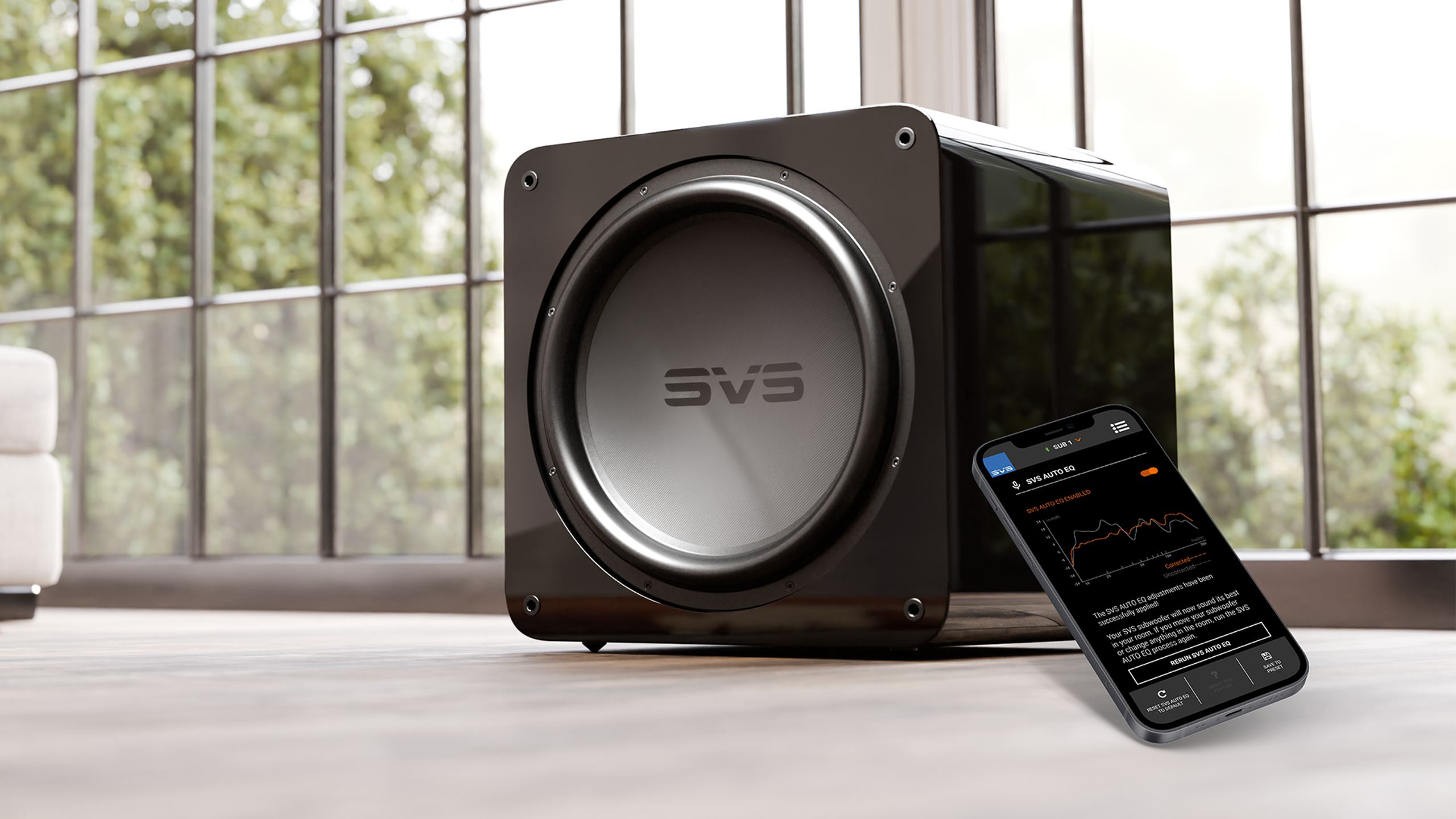
Promised during the presentation of the 17-Ultra in late 2024, the built-in automatic calibration took nearly two years to arrive at SVS. The American manufacturer has just delivered it under the name Auto EQ, through a simple firmware update and its control app. The function already covers three subwoofer families and corrects the room’s acoustic flaws in the bass, where placement and room dimensions matter more than the electronics themselves.
A function awaited since the launch of the 17-Ultra
When SVS unveiled the SB17-Ultra and PB17-Ultra R|Evolution, integrated acoustic calibration was part of the specifications, but was still to come. The first units therefore shipped without it, with the promise of a later update. That has now been done. Gary Yacoubian, president of SVS, publicly acknowledged that the complexity of development had been underestimated and thanked owners for their patience. The function is free and retroactive: all R|Evolution subwoofers already sold receive it, as do those that will leave the factory afterward.
Three ranges are currently supported: the 3000 R|Evolution, the 5000 R|Evolution, and the 17-Ultra R|Evolution. The recent 3000 Micro R|Evolution will join the list later, in June or July 2026. Earlier SVS subwoofers remain excluded: their processor does not have the computing power needed to run the measurement and apply the filters.
The processor that makes it possible
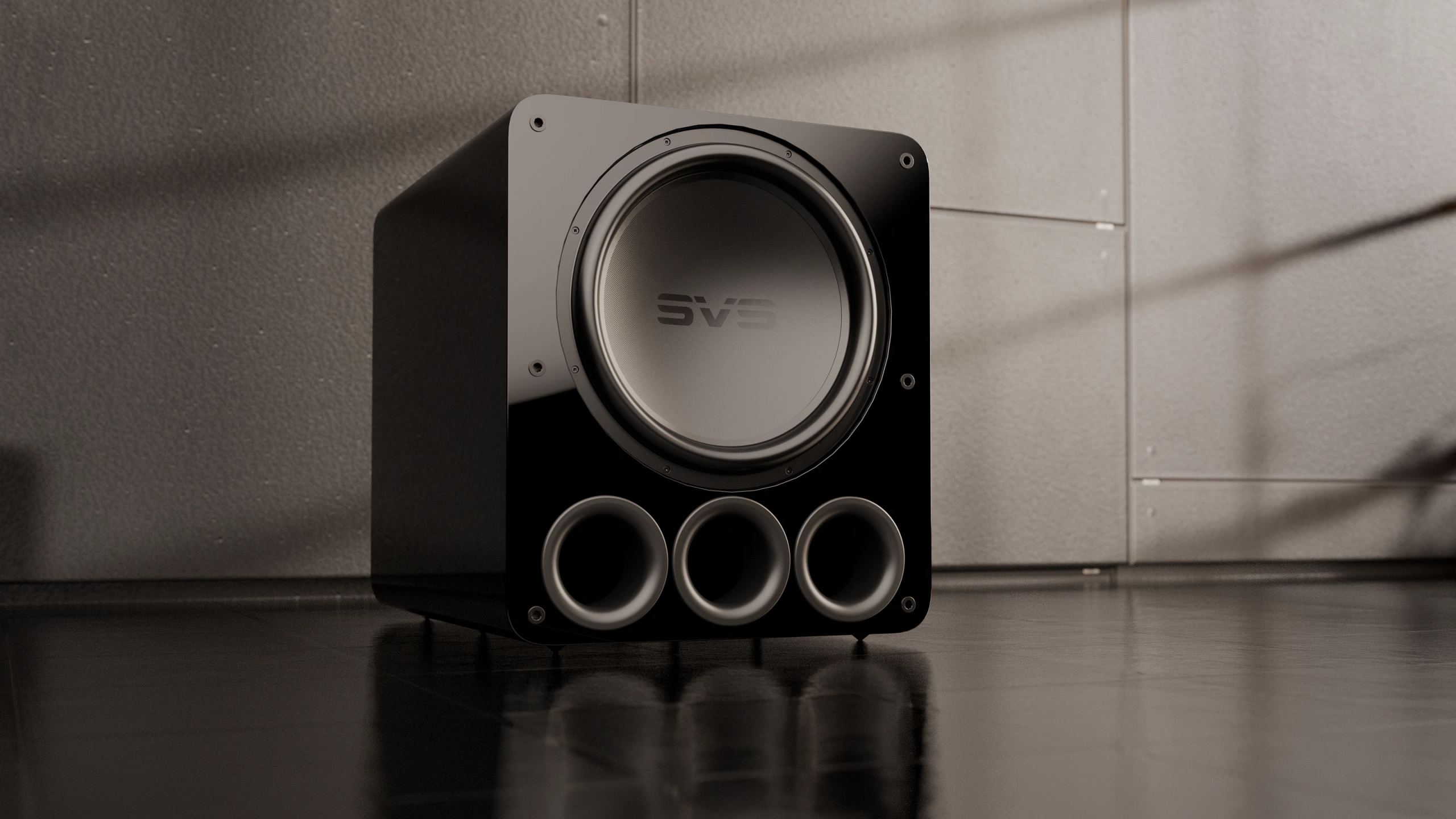
At the heart of the R|Evolution is an Analog Devices DSP clocked at 295 MHz, which SVS presents as the most powerful ever fitted in one of its consumer subwoofers. This chip handles far more than calibration: amplifier control, thermal management, and control of the current sent to the speaker driver. It is paired with digital-to-analog converters whose signal-to-noise ratio exceeds 120 dB. It is this processing headroom that enables Auto EQ without additional hardware, where older models had to rely on an external device.
How the measurement works
Everything goes through the SVS Subwoofer Control app, on iOS, Android, and Amazon. The user follows a guided procedure lasting a few minutes: the app captures the subwoofer’s response in the room, analyzes the result, then applies equalization filters calculated inside the subwoofer itself. A before-and-after comparison is displayed at the end of calibration.
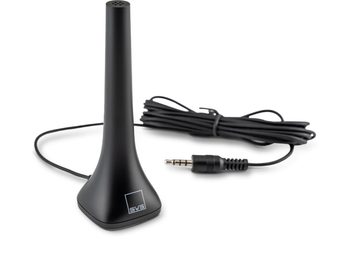
The measurement is carried out with the smartphone’s microphone or with the optional SVS Auto EQ microphone, sold for around €57 and supplied with its USB-C and MFi-certified Lightning adapters. The external microphone improves correction accuracy and makes measurement smoother, but it is not essential: the core of the function remains accessible without any additional purchase. An important point for multi-subwoofer setups: calibration is launched separately on each device.
Rather than optimizing a single seat, Auto EQ aims to smooth the response across several seating positions. It works equally well for a home theater setup and a two-channel system dedicated to music, two uses where the room’s resonant modes create the same peaks and dips in the bass.
→ Discover the calibration microphone
The order of operations with the AV amplifier
This is probably the most useful advice SVS provides with this update. The acoustic correction of an AV amplifier or processor (Audyssey, Dirac) treats the whole system, but does not always properly tame the subwoofer on its own. SVS therefore recommends running its Auto EQ first, then rerunning the amplifier’s calibration afterward, so that the latter works from bass that has already been cleaned up. If the amplifier’s calibration has already been done, it is better to start over in this order.
This logic has a concrete benefit for those who do not have room correction in their electronics, typically in two-channel hi-fi: they finally have a bass calibration tool without having to use a dedicated processor or a paid bass management license.
Deep nulls are still a matter of placement
The function targets room-induced peaks, those that make the bass muddy or bloated. On that front, it is effective. Deep nulls, however, are a matter of the room’s physics: a pronounced cancellation at a given frequency cannot be fixed by boosting the level, at the risk of overdriving the subwoofer without gaining anything. SVS states this clearly: such nulls call for a change in placement or the addition of a second subwoofer. Auto EQ therefore replaces neither good positioning nor careful installation. Its value lies above all in repeatability: the measurement can be rerun when the subwoofer changes position, when the room evolves, or when the system is set up again, without cost or particular expertise.
Availability and pricing
The update is being rolled out right now for all compatible R|Evolution subwoofers, via the SVS Subwoofer Control app. The optional microphone is still offered at around €57. To place the models concerned in the French market, the sealed SB17-Ultra R|Evolution is listed at around €3,549 and the bass-reflex PB17-Ultra R|Evolution at around €4,159, with the 3000 and 5000 ranges occupying the lower segments.

You may also like to read
 SVS R|Evolution Soundbar: when a subwoofer specialist takes on the soundbarHi-fi and home cinema news
 Sonos speakers for home theater: is it a good idea?Comparisons and buying guides
 MartinLogan Grotto 12 & 15: the triumphant return of a bass legendHi-fi and home cinema news
 Monitor Audio Vestra: three subwoofers for every spaceHi-fi and home cinema news
 Winter Promotions 2025: Our Best Deals on Subwoofers!Offers & promotions
 Paris Audio Video Show 2024: Our Review of an Exceptional ExhibitionHi-fi and home cinema news