

Replacement Tubes and Lamps for Hi-Fi Amplifiers
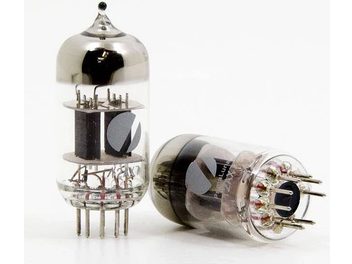
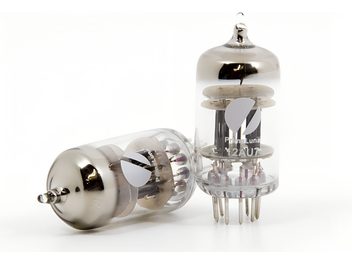
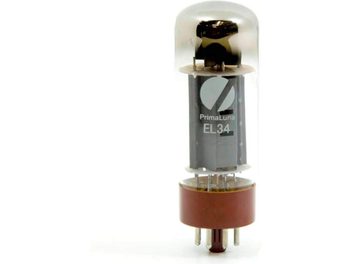
Replacement tubes and valves maintain your tube hi‑fi amplifier at peak performance. Our selection covers common references: 12AX7 (ECC83), 12AU7 (ECC82), EL34, EL84, 6L6, 6V6, KT88, KT77, and 6550. Preamplifier, power, or rectifier tubes, matched and selected to ensure optimal sound reproduction. Regular valve replacement preserves the warm signature of tube amplifiers and extends their lifespan. Learn more
Why replace your amplifier’s tubes
Electron tubes are the heart of valve amplification. They operate by emitting electrons from a heated cathode, creating that unique sonic signature sought by audiophiles: a warm sound, rich in harmonics, with a palpable sense of body and presence. Unlike solid‑state amplifiers, tubes wear out gradually over time and use.
Average lifespan is around 10,000 hours for preamp tubes and 4,000 hours for power tubes. These figures vary according to build quality, the amplifier in use, and operating conditions. Intensive use at high volume accelerates wear, while moderate use extends longevity. The cathode’s electron emission capacity gradually diminishes, reducing performance until replacement is required.
Signs of worn tubes
Several symptoms indicate that replacement is becoming necessary. The progressive loss of dynamics is the first sign: the amplifier lacks punch, the soundstage narrows, details fade. Bandwidth shrinks with the disappearance of the lowest bass and highest treble. Volume may fluctuate inexplicably or drop overall.
Unwanted noises multiply: increased hiss in the speakers, microphonics (the tube amplifies mechanical vibrations), crackling, hum. A simple test is to gently tap each preamp tube with a plastic pen while the amplifier is on: if the noise is strongly reproduced in the speakers, the tube should be replaced.
Visual clues also raise flags. A pronounced deposit on the inner glass indicates a heavily used tube. A getter (the silvery or black mirror inside the tube) turning white signals a loss of vacuum, making the tube unusable. A purple halo at power‑on reveals a gassy tube that must be changed immediately. Visible red‑plating of the power tube plates (KT88, EL34) in a dim room indicates excessive and dangerous dissipation.
The different types of tubes
Preamplifier tubes amplify the low‑level signals at the front of the chain. Triodes dominate this category. The 12AX7 (or ECC83 in European nomenclature) is the universal reference with its high gain of 100. It equips the majority of input stages. The 12AU7 (ECC82) offers a medium gain of 17 but higher current capability, ideal for driver stages or SRPP circuits. The 12AT7 (ECC81) sits between the two with a gain of 60. These tubes can be replaced individually with no particular adjustment.
Power tubes deliver the power needed to drive loudspeakers. Pentodes dominate this segment. The EL34 is a British legend, offering a rounded, musical tonality cherished by purists. The EL84 equips medium‑power amplifiers with a lively character. The 6L6 and 6V6 bring the American signature: tight bass, crystalline highs.
The KT88 and 6550 deliver substantial power with authority and control. The KT77 can be seen as an evolution of the EL34 with greater robustness. The KT66 offers an appealing compromise. These power tubes must be replaced in matched pairs (or matched quads in push‑pull), with a bias adjustment essential in most cases.
Rectifier tubes convert AC to DC. The 5U4, 5Y3, EZ80, and EZ81 are common models. They are replaced individually without matching or specific adjustment. Their lifespan generally exceeds that of power tubes.
Compatibility and substitution
Not all tubes can be swapped freely. Compatibility depends on pinout (electrical connections), electrical characteristics, and the amplifier’s design. Some units accept several tube families thanks to bias switches. A Line Magnetic LM-34IA can thus take EL34, KT77, KT88, KT66, KT90, or 6550 depending on the selected setting.
Replacing an EL34 with a KT88 radically changes the sound: more body in the bass, greater sparkle in the treble, a wider soundstage, better low‑level control. Conversely, moving from KT88 to EL34 softens the presentation. These swaps let you tailor the sonic signature to your preferences without changing the amplifier.
Substitution, however, demands caution. An amplifier designed for EL34s may accept 6CA7, 6L6GC, 5881, or KT66 with an appropriate bias setting. But using unsuitable tubes without adjustment risks severe damage to the amplifier, notably the output transformer, whose replacement is extremely costly. Consult the manual or a qualified technician before any substitution to avoid unpleasant surprises.
Tube matching
Power tubes require rigorous matching in push‑pull configurations (two or four tubes working in balance). Matching ensures that the tubes in a pair have identical electrical characteristics: same transconductance, same plate current, same operating point across the full range of use.
Poor matching unbalances the output transformer, generates unwanted mechanical vibration, reduces available power, and degrades sound quality. Matched tubes are usually labeled with a color code or “matched pair” / “matched quad.” Investing in properly matched tubes is fully justified by the amplifier’s longevity and the musical quality obtained.
Preamplifier tubes generally do not require matching, except in very specific circuits. They can be chosen individually for their characteristics: low noise, low microphonics, precise gain.
Bias adjustment
Bias (polarization) sets the idle current of power tubes. Proper bias optimizes the trade‑off between power, linearity, distortion, and lifespan. Too little bias reduces power and increases crossover distortion. Too much bias causes plate red‑plating, drastically shortens lifespan, and risks damaging the amplifier.
Some amplifiers use fixed bias, others provide an adjustable bias via a potentiometer. High‑end models sometimes integrate automatic bias that adapts to the installed tubes. Setting bias requires technical skills and appropriate measuring equipment. Voltages inside a tube amplifier exceed 400 to 500 volts and are potentially lethal.
Unless you have proven high‑voltage electronics experience, entrusting bias adjustment to a qualified technician is the wise choice. The service cost is modest compared with the risks. When replacing power tubes with the exact same model, the setting can sometimes be kept, but verification is still recommended.
Brands and quality
The market offers modern‑production tubes and NOS models (New Old Stock, old inventory never used). NOS come from the great historic manufacturers: Telefunken, Mullard, RCA, Sylvania, Western Electric. Their reputation rests on decades of know‑how and closely guarded manufacturing recipes. Prices can be sky‑high, particularly for mythical references like Mullard EL34 or Western Electric 300B.
Modern manufacturers offer quality tubes at accessible prices. Electro‑Harmonix, JJ Electronic, Tung‑Sol, Sovtek, TAD (Tube Amp Doctor), Shuguang, and Golden Dragon produce reliable, musical tubes. Some references benefit from specific selections: low noise for sensitive input positions, precise matching for power stages.
Brand choice influences sonics. JJ Tesla offers strong value for money. Electro‑Harmonix is versatile and robust. Tung‑Sol revisits classic designs with a vintage sound. Budget Chinese brands are suitable for troubleshooting but rarely for the pursuit of ultimate performance. Mixing brands by position (for example, NOS in the input stage and modern tubes in the power stage) can optimize budget and sonic results.