

High-Fidelity Power Amplifiers
The power amplifier is a component dedicated to amplifying the audio signal in a hi-fi system with separate components. Unlike an integrated amplifier, it has no preamplification stage and focuses solely on delivering power to the speakers. Available in stereo or mono configurations, a power amp pairs with a preamplifier to form a modular high-fidelity system offering enhanced performance and scalability. Learn more
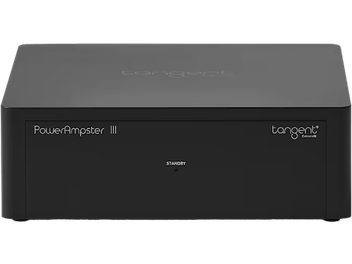
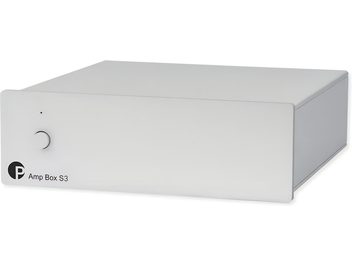
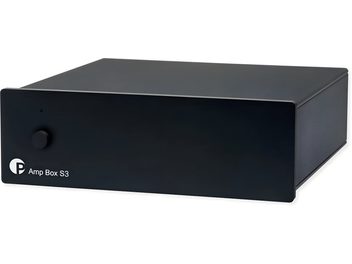
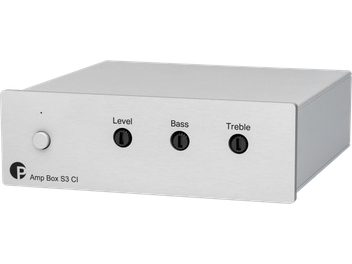
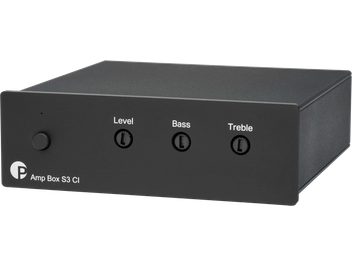
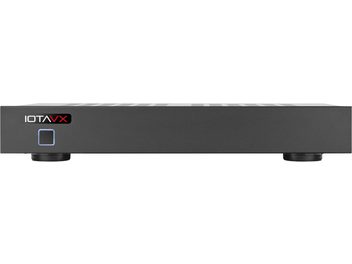
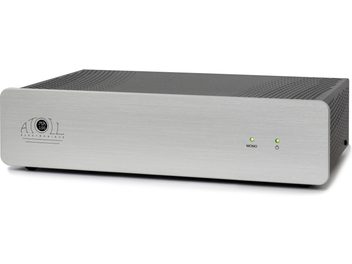
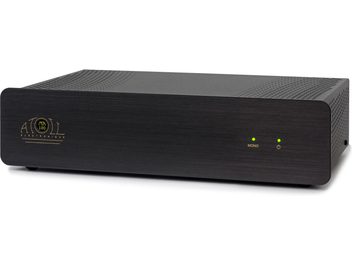
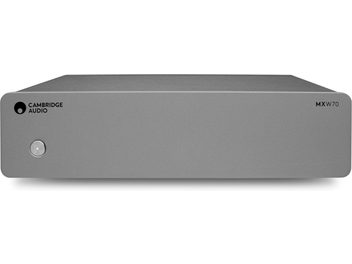
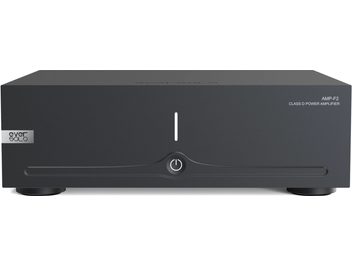
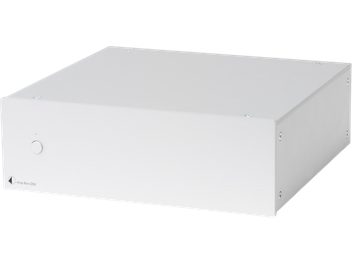
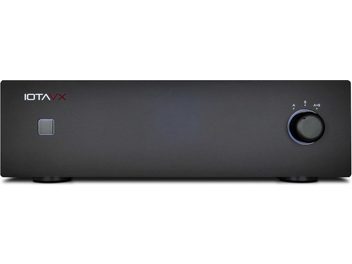
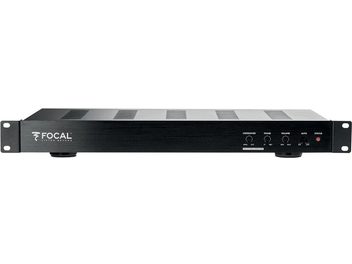
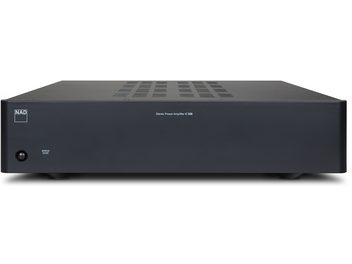
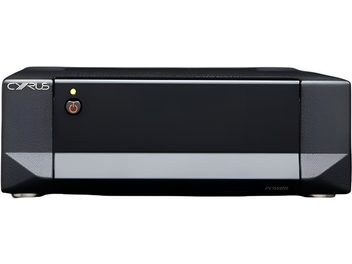
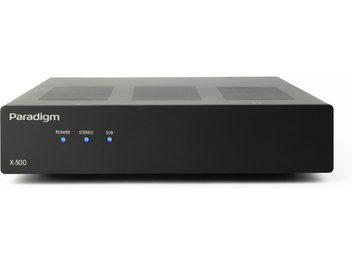
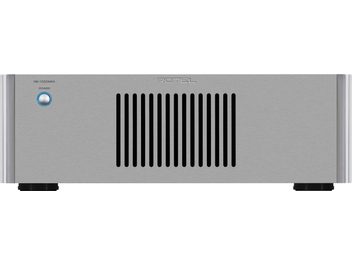
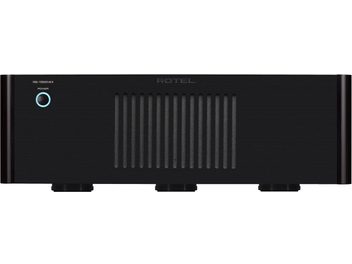
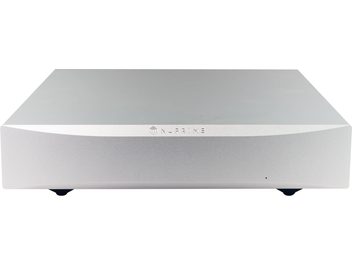
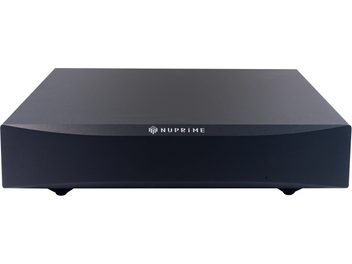
Role and operating principle
The power amplifier receives an audio signal already processed by the preamplifier and applies a fixed gain to bring it to the level required to drive the loudspeakers. Its internal architecture is built around a generously dimensioned power supply, capable of meeting the speakers’ current demands. This power supply is a determining factor: a high-powered toroidal transformer, large-capacity filter capacitors (often between 10,000 and 100,000 microfarads), and regulation circuits provide the necessary energy with dynamics and precision.
The power amp generally has no volume control or source selector, as these functions are handled upstream by the preamplifier. Its connectivity is therefore simple: one or more audio inputs (unbalanced RCA or balanced XLR) and binding posts to connect the speakers. This apparent simplicity conceals a design often more refined than that of an integrated amplifier, with selected power components and a circuit optimized for the sole purpose of amplification.
Separate system versus integrated amplifier
Choosing a preamplifier + power amplifier combo rather than an integrated amplifier (which combines both functions in a single chassis) represents a higher investment. This setup is aimed at audiophiles seeking exceptional performance and greater scalability. The physical separation of the two functions offers several advantages: optimal isolation between the sensitive preamplification stage and the power stage that generates heat and significant current demands, a dedicated and oversized power supply for the output stage, and the ability to freely match components according to personal preferences.
This approach also allows the system to evolve gradually: start with an integrated amplifier, add an external power amp via the pre-out outputs, then replace the integrated unit with a dedicated preamplifier. Bi-amping also becomes an option, dedicating one amp to the lows and another to the highs for even more precise control of the speakers.
Stereo and mono configurations
Stereo power amplifiers integrate two amplification channels in a single chassis, sharing a common power supply. This compact configuration is perfectly suited to powering a pair of speakers in a hi-fi setup. Some models offer a double set of binding posts (A and B) to connect two pairs of speakers or to facilitate bi-wiring. A switch then selects which pair to power. Some stereo amps also offer a bridge mode to combine both channels and obtain a mono amplifier with doubled power.
Mono power amplifiers (or mono blocks) are devices dedicated to a single channel, in their own chassis. For a stereo setup, two mono blocks are required. This configuration offers perfect channel separation (no possible interference between left and right), can achieve very high power levels, and allows optimized placement with shorter speaker cables. Mono blocks are the reference for the most demanding installations, at the cost of greater bulk and higher expense.
Dual-mono amplifiers combine two complete and independent mono blocks in a single chassis, sharing only the power cord and the power switch. Each channel has its own power supply, separate output stages, and dedicated input stage. This architecture combines the advantages of mono blocks (total separation, no interference) with the relative compactness of a single enclosure.
Amplifier classes
An amplifier’s class indicates its electronic operating mode and directly influences its sonic character, efficiency, and power consumption. Class A runs the output transistors permanently at their maximum bias. This ensures maximum linearity and a very short reaction time, resulting in a sound often described as warm and natural. The downside: low efficiency (typically 20–30%), high power consumption, and significant heat generation, even at idle.
Class B uses two transistors, each handling one half of the waveform. Efficiency rises to 50–60%, but this configuration creates crossover distortion at the zero crossing, detrimental to sound quality. It is virtually absent from domestic hi-fi. Class AB, very widespread, combines the two approaches: the transistors operate in Class A at low levels, then progressively switch to Class B for higher levels. This compromise offers good efficiency (50–70%) while limiting crossover distortion.
Class D (switching amplification) is a more recent technology in which the audio signal modulates a high-frequency carrier, allowing efficiencies of 85–90% or more. These amplifiers generate little heat, are compact, and deliver substantial power. Long criticized for lacking musicality, modern Class D amps—particularly those using Hypex NCore or Purifi modules—now rival the best Class AB designs in terms of sound quality.
Power and impedance
An amplifier’s power is expressed in RMS watts per channel and varies according to the impedance of the connected speakers. The lower the impedance (4 ohms versus 8 ohms), the more current the amplifier must supply, and the more its available power increases. An amp capable of doubling its power when going from 8 to 4 ohms demonstrates a robust power supply and strong ability to drive demanding loads. Example: 100 W into 8 ohms should deliver 200 W into 4 ohms for a “muscular” amp.
Regarding amplifier power versus speaker power handling, it’s common to think that an overly powerful amp risks damaging the drivers. In reality, the opposite is true: an undersized amplifier, pushed to its limits, generates distortion (signal clipping) that can damage tweeters. An amp with ample headroom controls the cones better, even at low volume, thanks to oversized components and a substantial current reserve. The result is better dynamics, deeper bass, and improved transient control.
Key technical specifications
Beyond rated power, several parameters determine a power amplifier’s performance. The filtering capacity (expressed in microfarads) indicates the instantaneous current reserve available for demand peaks. The higher this value (from 10,000 μF for entry-level models to 100,000 μF and more for high-end references), the better the ability to handle dynamic passages and demanding speakers.
The total harmonic distortion (THD) should remain as low as possible (typically below 0.1%, or even 0.01% for the best models) to ensure a clean signal. A high signal-to-noise ratio (generally above 100 dB) ensures a quiet background without audible hiss. Bandwidth and frequency response that are extended (ideally from a few Hz to several tens of kHz) allow faithful reproduction of the entire audible spectrum.
The damping factor measures the amplifier’s ability to control loudspeaker cone movement. A high value (above 100) indicates good control, especially at low frequencies. Available connections (RCA, XLR) and additional features (trigger, bridge mode, multiple binding posts) round out the list of characteristics to consider.
Choosing your power amplifier
Choosing a power amp depends on several factors: the sensitivity and impedance of the speakers to be driven, the desired listening volume, room size, and sonic preferences. Sensitive speakers (90 dB/W/m and above) require only moderate power, while less sensitive models (84–86 dB) demand more watts. The nominal impedance (4, 6, or 8 ohms) and its variations across frequency also influence the choice: some speakers drop to 3 ohms in certain ranges, requiring an amp capable of handling low impedances.
Budget naturally guides the choice of amplification class: Class AB for a value/performance balance, Class A for maximum musicality (with the associated thermal constraints), or Class D to combine compactness, power, and energy efficiency. Synergy with the preamplifier also matters: pairing a high-end power amp with an entry-level preamp (or vice versa) creates an imbalance. The goal is to build a harmonious system in which each element contributes without limiting the others.