

Phono Cables
Phono cables are audio cables specially designed to connect a turntable to a phono preamplifier or to the phono input of an amplifier. Unlike standard RCA cables, they include a ground wire essential for eliminating unwanted noise and ensuring optimal transmission of the analog signal. Since the signal produced by the phono cartridge is very weak (below 0.5 mV), the phono cable must have effective shielding to preserve sound integrity. Learn more
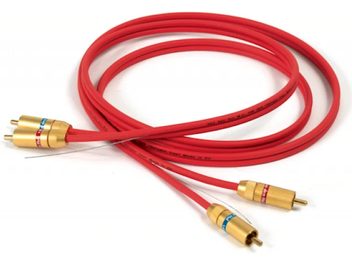
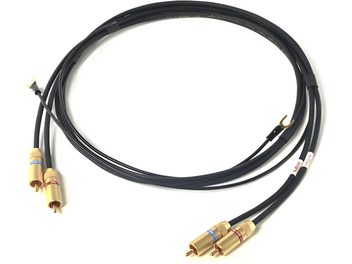
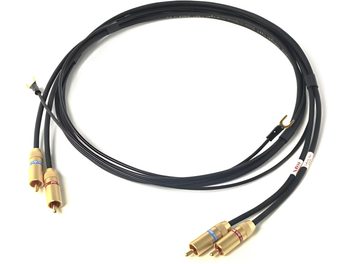
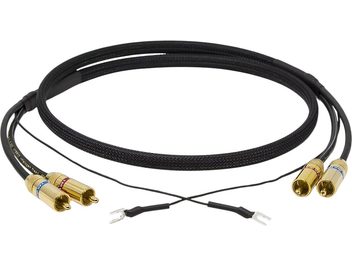



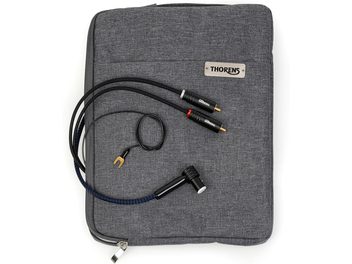
Why use a phono cable?
A phono cable is a technical component that cannot be replaced by a simple RCA cable. The fundamental difference lies in the level of the signal being carried. An MM phono cartridge produces around 3 to 5 mV, while an MC cartridge generates only about 0.5 mV. These voltages are far from the 200 mV of a CD player or a DAC, which explains why phono cables require specific characteristics: low capacitance (below 80 pF per meter), minimal resistance, and reinforced shielding against electromagnetic interference.
The ground connection: a crucial detail
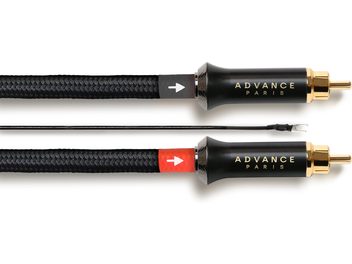
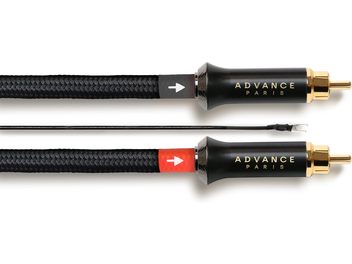
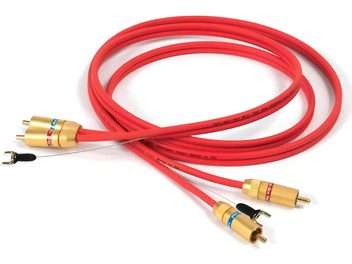
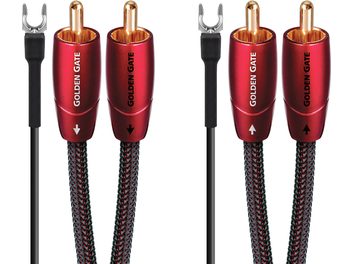
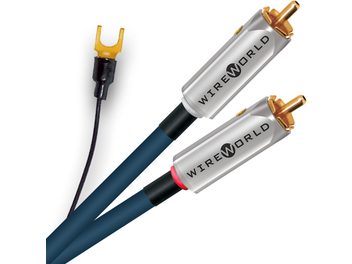
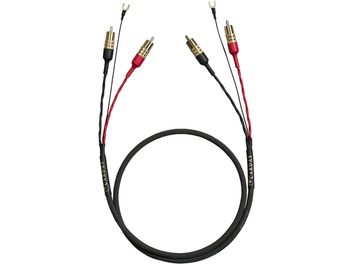
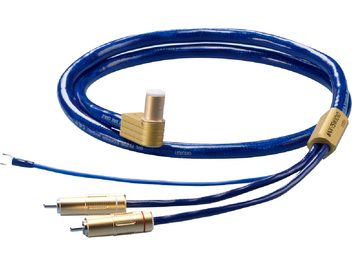
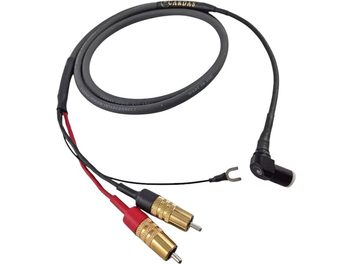
What sets the phono cable apart is its ground (or earth) wire, which connects to the GND (ground) terminals of the turntable and the preamplifier. Without this connection, a parasitic hum makes listening impossible. This grounding eliminates unwanted noise and RFI interference, ensuring a silent background even with the most sensitive moving-coil cartridges.
The different connector formats
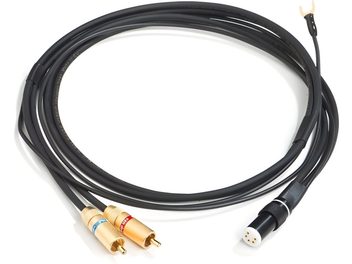
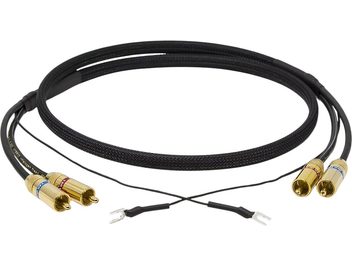
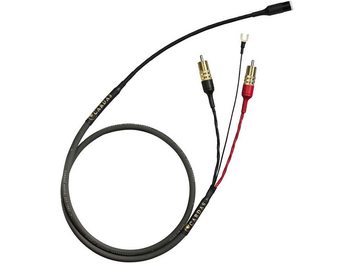
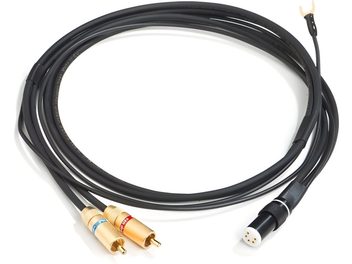
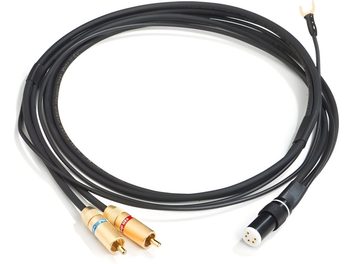
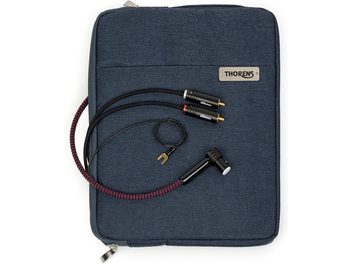
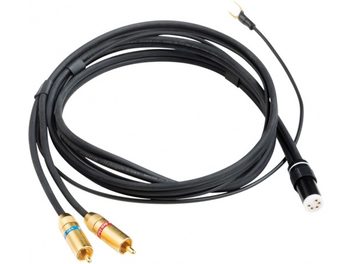
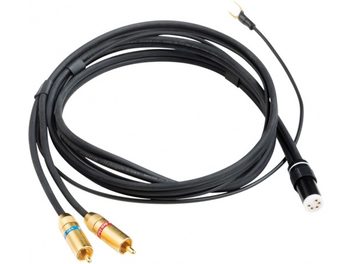
The RCA format remains the most widespread on phono cables. Each end has two RCA plugs (one for each stereo channel) plus the ground connector, generally in the form of a fork or lug. Some turntables have an audio output directly on the tonearm in DIN format, requiring a cable with a DIN plug on one side and RCA connectors on the other. This DIN format, rarer, is found in particular on older European turntables.
Length and positioning
The length of the phono cable directly affects transmission quality. A cable that is too long generates parasitic inductance and increases the risk of interference. Conversely, a cable that is too short puts excessive strain on the connectors and can damage them. The ideal length is between 1 m and 1.5 m, never exceeding 2 meters. Avoid coiling a cable on itself to make it more discreet: it’s better to choose a length that matches the actual distance between the turntable and the preamplifier.
Choosing according to your setup
The choice of a phono cable depends on the overall coherence of the system. Pairing a standard turntable with a very high-end cable brings no audible benefit. Conversely, a high-performance turntable equipped with a quality cartridge deserves a cable capable of conveying every nuance of the signal. High-end cables stand out through the use of OFC (Oxygen Free Copper), balanced multi-conductors, multilayer shielding, and gold-plated connectors. These materials optimize frequency transfer and reduce losses.
Phono cable vs interconnect cable
Do not confuse a phono cable with an interconnect cable. The phono cable connects the turntable to the phono preamplifier and carries a very low-level signal. The interconnect cable connects the phono preamplifier to the amplifier and carries a line-level signal (over 1V RMS). If your turntable has a built-in RIAA preamplifier, you will only need an interconnect cable to connect it directly to the amplifier. In that case, there’s no need for a phono cable or a ground connection.
Installation and compatibility
Phono cables are compatible with all turntable brands: Technics, Thorens, Pro-Ject, Rega, Dual, Denon, Lenco, and many others. Some models come with pre-installed, soldered RCA connectors, ready to use. Others require soldering at the base of the tonearm— a delicate operation but manageable with a minimum of dexterity. Since tonearm wires are thin and fragile, this procedure calls for patience and a precision soldering iron.
Shielding and material quality make all the difference in sound reproduction. A well-chosen phono cable preserves dynamics, improves instrument definition, and significantly reduces background noise, for uncompromising vinyl listening.