A mains power cable shouldn’t make any difference. Yet this is precisely the assumption that British engineers at Naim Audio set out to challenge. The result of several hundred hours of development in the lab and listening room, the Power-Line applies to mains power the mechanical engineering principles that made the Hi-Line interconnect cable so successful. The approach: treat the mains cable as a full-fledged component, not just a simple wire.
A three-stage system
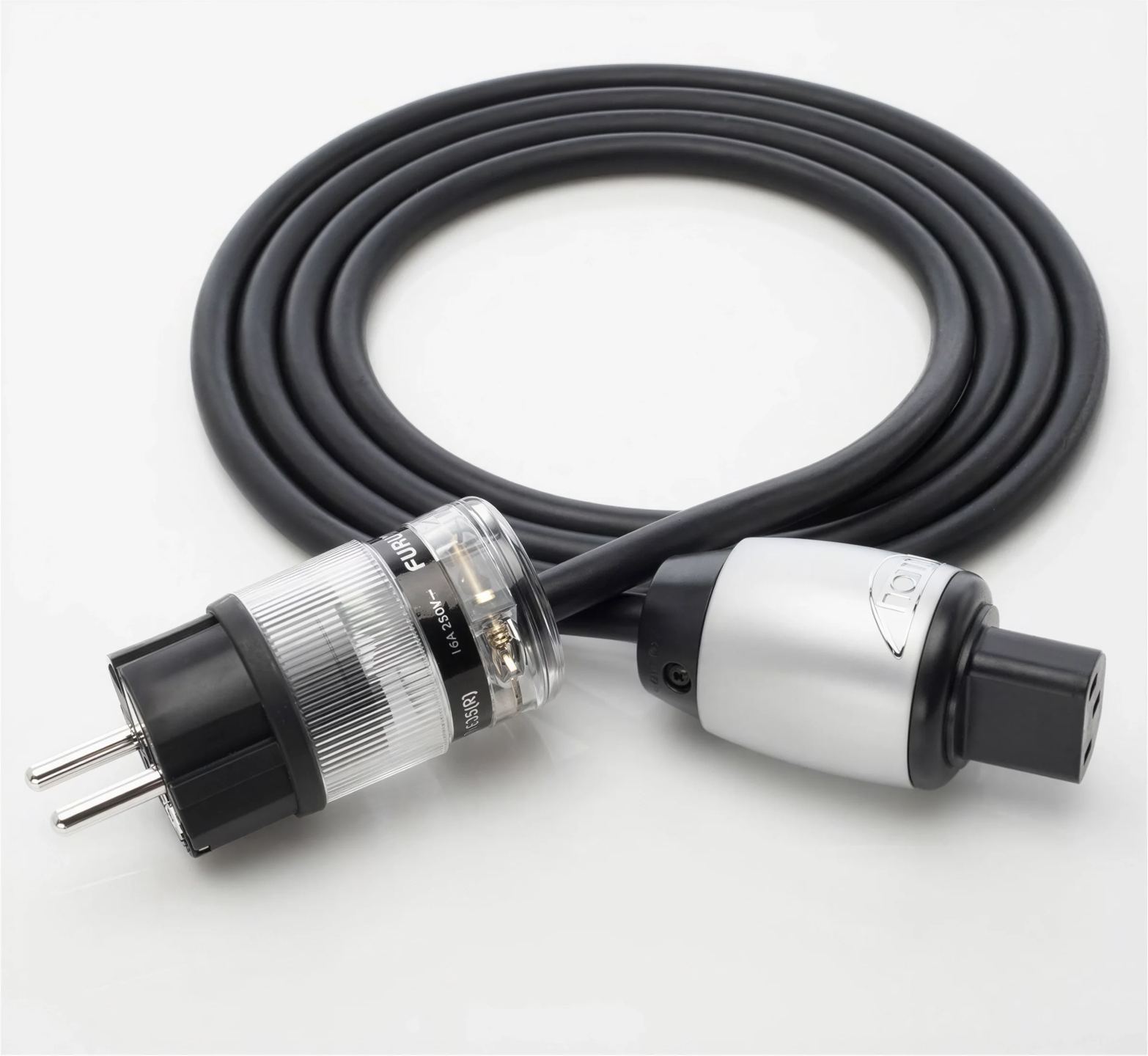
The Power-Line is made up of three distinct elements, each designed according to criteria usually found in signal cables. The wall-side mains plug uses a thermoset resin housing containing so‑called “floating” pins. This mechanical suspension system allows the contacts to align naturally with wall sockets and optimizes the surface area of electrical contact. In the European version, this plug is a Furutech with rhodium-plated contacts.
The cable itself is custom-made with copper conductors of 4 mm² cross-section, each with its own dielectric insulation. The outer rubber jacket offers a carefully calculated balance between flexibility for positioning and stiffness to limit unwanted movement once the cable is installed. Its 8.8 mm diameter remains reasonable for routing behind furniture.
Floating pins and mechanical decoupling
The principle of mechanical decoupling is the central technical theme of the Power-Line. Naim engineers identified three sources of disturbance in a mains cable: the transmission of mechanical energy (vibrations), the propagation of eddy currents in metal housings, and imperfections in electrical contact.
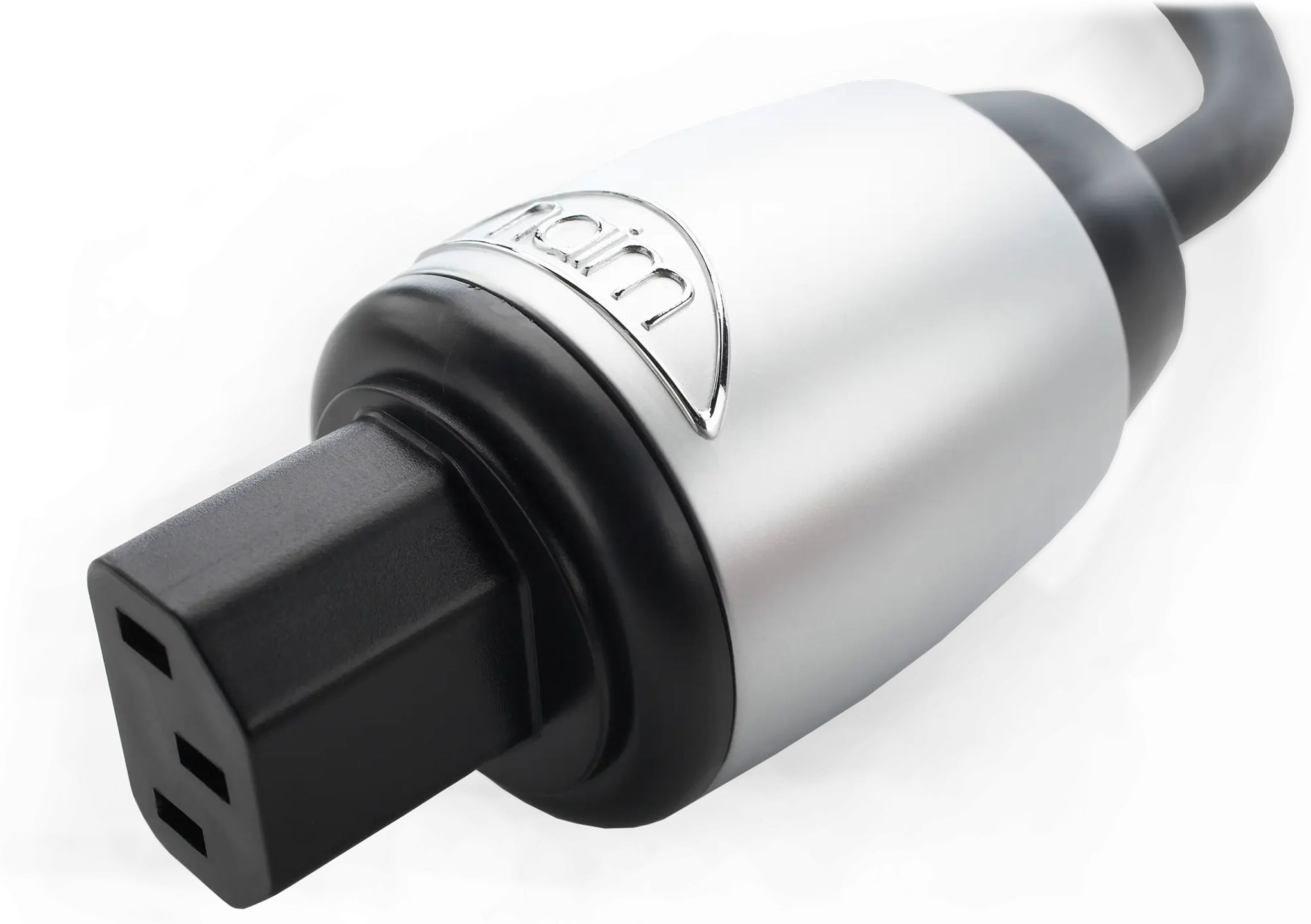
The IEC plug on the equipment side follows the same principles. Its floating contacts provide a so‑called “double-scrape” contact on the equipment pins, while a forged component simultaneously ensures vibration decoupling and a firm grip on the cable. Specific measures have been implemented to eliminate eddy currents that may form in the plug housing.
The stripped ends of the cable are held in place by specially profiled clamping screws. This system avoids soldered connections, which can sometimes alter signal quality over time.
Installation and practical constraints
With its two-meter length, the Power-Line offers comfortable reach to wall sockets without pulling the cable taut. The rubber jacket makes positioning easier, although it does retain some memory of shape that needs to be taken into account during installation.
The IEC connector is of the standard type. Its compatibility extends beyond Naim devices: it can power equipment from other manufacturers, provided the IEC inlet on the latter physically accommodates the connector.
For Naim systems made up of two elements (source plus external power supply), the Power-Line is preferably connected to the power supply rather than the main unit. Products in the 500 and Statement ranges are in fact supplied with this cable as standard.
Burn-in and setup
Naim recommends a burn-in period of around 100 hours before the cable reaches its full potential. This recommendation, common for audio cables, calls for a bit of patience. During this phase, the sound can evolve in a clearly perceptible way.
The effect of the Power-Line tends to accumulate when several cables are used within the same system. This observation, reported by Naim, suggests that the approach can be implemented step by step, starting with the component considered most critical in the audio chain.