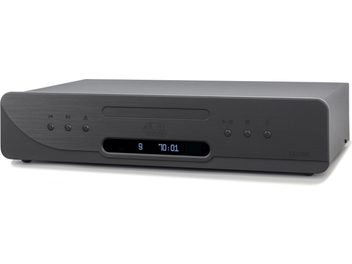
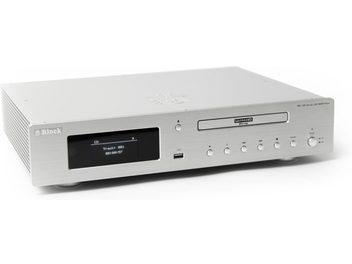
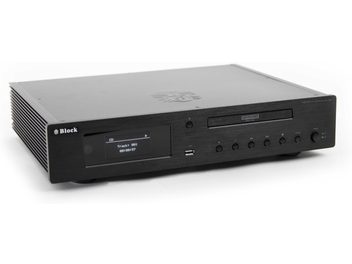
The CDP-9 heralds the strong comeback of the CD format in the modern hi-fi world. This versatile machine combines compact disc playback, next-generation digital-to-analog conversion, and top-tier preamplification, all within a compact 235 mm-wide chassis. Beyond its primary role as a CD player, this device stands out as a true digital hub capable of decoding streams up to 32-bit/768 kHz in PCM and native DSD512.
Refined mechanical design and ergonomics
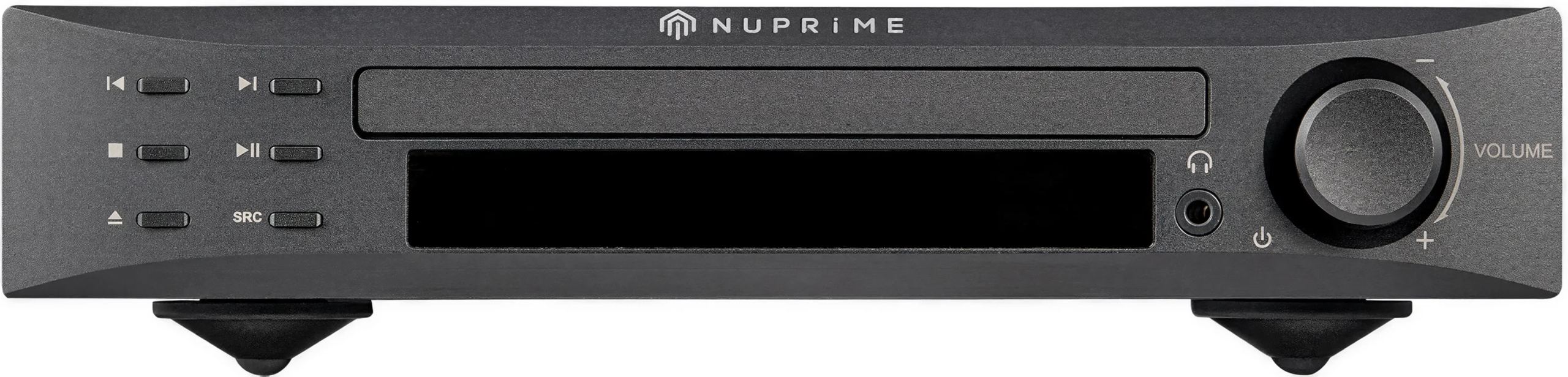
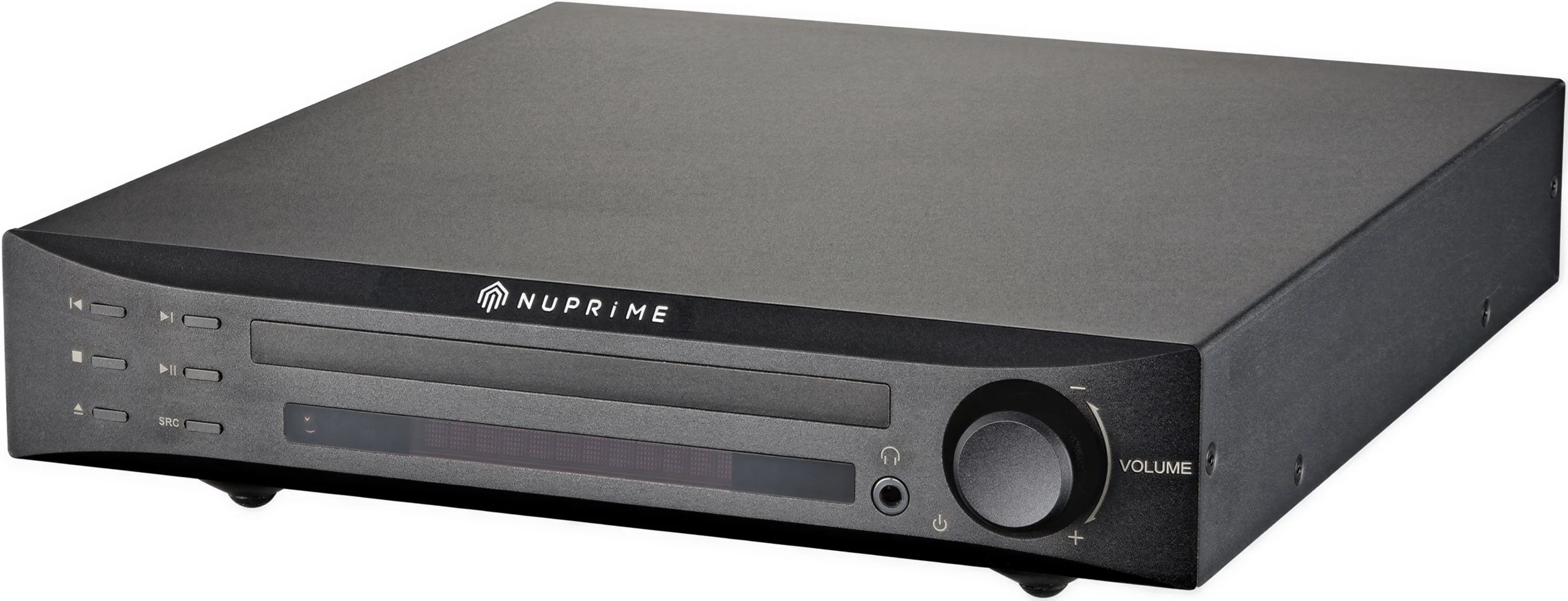
The CDP-9 adopts the aesthetic codes of NuPrime’s Series 9 with an anodized aluminum front panel featuring gentle curves and a decisively horizontal profile at just 55 mm tall. The clean front panel offers a few discreet, clearly labeled control buttons on the left, while the right side houses the volume knob combined with the power switch. A 12-segment alphanumeric LCD replaces the simple LEDs found on the DAC-9 and DAC-10 models, enabling clear reading of playback information, volume level, and the current decoding format.
The tray-loading system, made of aluminum and reinforced plastic, contrasts with slot-loading or top-loading mechanisms. This deliberate choice prioritizes long-term robustness and reliability. Four specially designed damping feet combine soft and rigid materials to effectively isolate the mechanism from external vibrations—a crucial detail for any CD player, particularly when stacked with other Series 9 components.
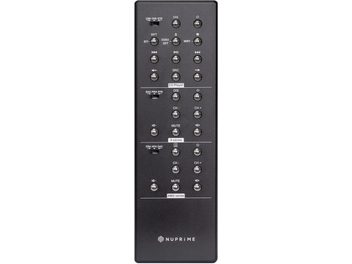
The machined aluminum remote offers a solid grip with spherical buttons providing a crisp tactile response. While some may lament the pronounced mechanical click of the keys and the inconvenient battery replacement requiring removal of four screws, it nonetheless grants access to all functions, including on-the-fly selection of the sampling rate.
Optimized transport and signal processing
NuPrime turned to StreamUnlimited, an Austrian company founded by former engineers from the Philips audio innovation center, to develop a dedicated CD mechanism. This collaboration resulted in a pure CD transport operating at a constant speed—an uncommon approach that differs from the traditional system where speed continually varies between 500 and 200 rpm depending on the reading position. This single speed minimizes vibrations and compensates for disc imbalances, contributing to more stable playback.
The optical system is built around a Philips SAA7824HL control chip handling the triple-beam laser, while an ARM LPC2103F microcontroller ensures error correction according to Red Book specifications. A powerful DSP oversees the entire decoding process with master clock control, drastically reducing jitter.
NuPrime’s approach to digital processing is noteworthy: instead of direct conversion, the signal first passes through an oversampling stage up into the megahertz range before being brought back down to the target rate via a sample rate converter (SRC) implemented in an FPGA. This dual conversion may seem counterintuitive but allows efficient digital low-pass filtering while minimizing the time-domain phase shifts typically introduced by post-conversion analog filtering.
State-of-the-art digital-to-analog conversion
At the heart of the conversion system lies the ESS Sabre ES9028PRO, a 32-bit, 8-channel DAC delivering a 129 dB dynamic range. Although not as recent as the ES9038PRO, this chip remains a compelling choice for this price range, offering remarkable resolution and exemplary channel separation. NuPrime has paid particular attention to implementation, with independent power supplies for left and right channels and the use of ultra-low-noise JFETs in the input stages.
The flexibility of the digital processing is impressive: any incoming signal, whether from the CD transport or the digital inputs, can be converted between PCM (44.1 kHz to 768 kHz) and DSD (DSD64 to DSD512). This conversion is performed in real time via the front-panel buttons or the remote control, allowing the output format to be tailored to the DAC’s optimal capabilities or the downstream device.
Extensive connectivity and integrated preamplification
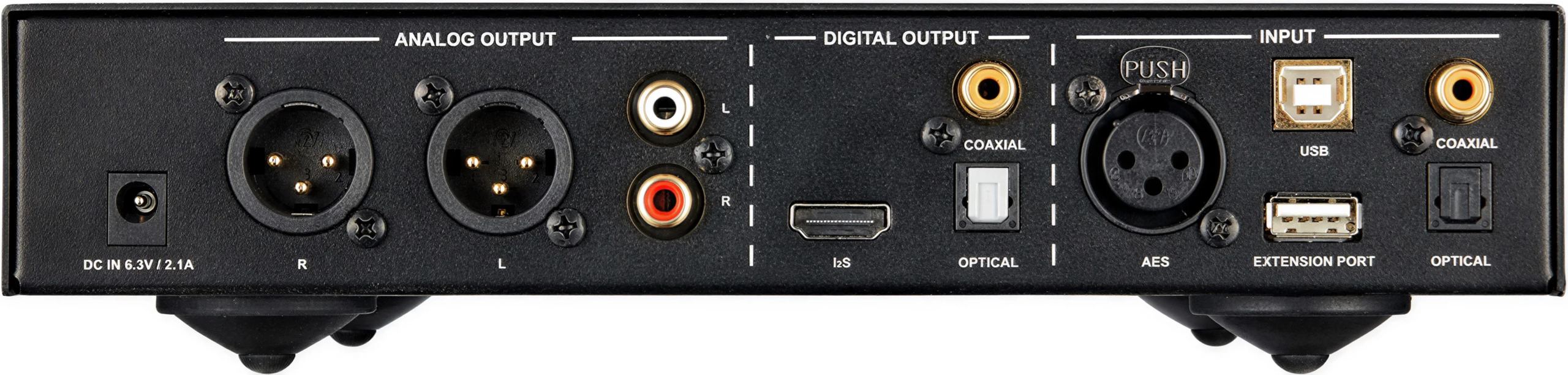
The rear panel connections underscore the CDP-9’s versatile mission. In addition to standard digital inputs (coaxial, optical), there is an AES/EBU input on XLR—rare at this price point—and an asynchronous USB-B port for computer connection. The proprietary USB-A port deserves special mention: designed to carry both the S/PDIF signal and 5V power simultaneously, it accommodates NuPrime wireless modules (Bluetooth BTR-HD, WiFi Stream Mini) via a simple standard USB cable.
Digital outputs include standard coaxial and optical, complemented by an I2S output over HDMI intended for connection with other NuPrime products. While proprietary, this interface enables optimal transmission to the brand’s DACs and amplifiers.
The preamplifier section is a major asset. Volume control is handled via an FPGA-driven switched-resistor network, keeping a single resistor in the signal path regardless of position. This hybrid analog/digital approach ensures perfect channel balance and exceptionally low noise. The 99 steps in 0.5 dB increments offer surgical precision, with the ability to individually adjust the gain of each input for perfect source matching.
The analog outputs deliver up to 4 Vrms on RCA and 8 Vrms on balanced XLR—high levels that allow direct drive of a power amplifier without an additional preamp. The 3.5 mm headphone output, powered by an op-amp circuit, delivers 150 mW into 33 ohms, sufficient for most in-ear monitors and high-sensitivity headphones.
Upgradable external power supply
The compact chassis necessitates an external power supply—a solution with unexpected advantages. The included power adapter (15V/1.2A) meets industrial standards but is the weak link in the chain. Savvy owners will advantageously replace this switching supply with a quality linear power supply—an upgrade that many users report as literally transforming sonic performance. This modularity allows you to scale your investment according to your budget and consider progressive upgrades.