Christophe
Very good cable. I recommend this product.
Comment from March 11, 2024 — Experience from February 29, 2024
Automatically translated — Show original (French)
Très bon cable. Je recommande ce matériel.
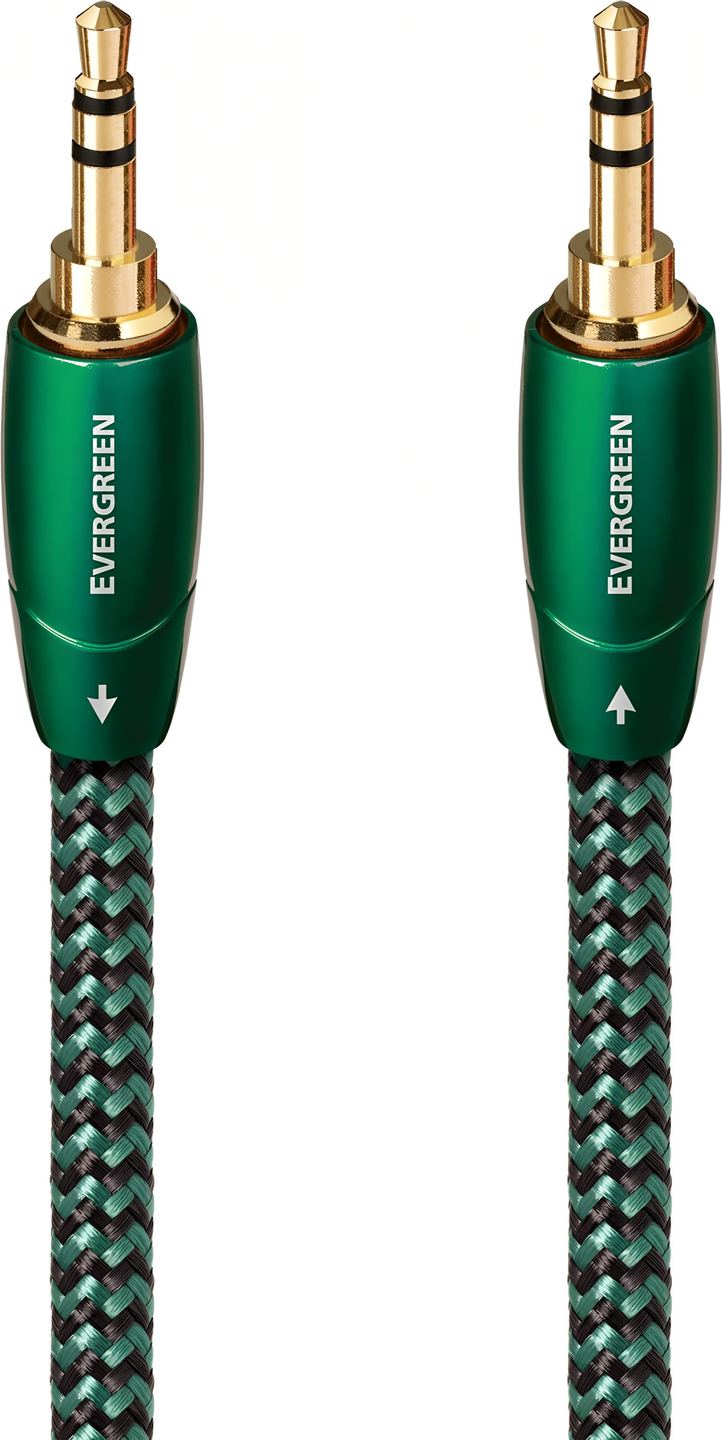
The Audioquest Evergreen Jack/Jack cable is the entry-level model in the brand’s high-performance analog interconnect range. This cable uses long-grain copper (LGC) conductors, foamed polyethylene insulation, and a dedicated metal layer to reduce electromagnetic interference. These features are designed to minimize distortion during the transmission of analog audio signals.
The Evergreen’s design is based on solid long-grain copper (LGC) conductors, a fundamental feature that sets it apart from conventional cables using OFHC (Oxygen-Free High-Conductivity) copper. LGC technology contains fewer oxides in the conductive material, fewer impurities, and, most importantly, fewer boundaries between the metal’s crystalline grains. These boundaries act as barriers to the electrical signal, creating micro-distortions that affect sound clarity. The choice of solid conductors rather than stranded ones eliminates strand interaction, a major source of dynamic distortion in traditional audio cables.
Insulation plays an equally crucial role in the cable’s performance. Audioquest uses foamed polyethylene, a material with a high air content. This approach is based on the fact that air absorbs virtually no electromagnetic energy, unlike dense insulating materials that store and then release this energy with a time lag, creating a blurring effect in the sound. Foamed polyethylene thus maintains dynamic contrasts and preserves the micro-details of the original recording.
The noise dissipation system using a metal layer is the third pillar of this architecture. Rather than simply shielding the cable, Audioquest has developed a sophisticated approach where the metal layer absorbs and reflects radio frequency interference before it reaches the equipment’s ground plane. This technique prevents signal modulation by RF noise, which is omnipresent in our modern environments saturated with electromagnetic waves.
The geometry of the Evergreen cable deserves special attention. Audioquest uses a double-balanced asymmetrical configuration, specifically optimized for single-ended analog connections. This geometry offers a relatively lower impedance on the ground, creating a richer and more dynamic listening experience. Unlike many cables that use a single path for both ground and shielding, the double-balanced design separates these two functions for cleaner and quieter performance.
The gold-plated 3.5 mm mini-jack connectors benefit from Audioquest’s patented cold-welding technique. This method eliminates the traditional solder layer, a known source of distortion in signal transmission. The process uses high pressure at the contact point with a silver-impregnated paste, creating a direct molecular connection between the conductor and the connector. The connector shells are stamped rather than machined, allowing the choice of metal for its acoustic properties rather than for ease of machining.
Users consistently report a noticeable improvement in sound clarity when switching from a generic cable to the Evergreen. The reduction in interference results in a blacker background, from which musical details emerge with greater precision. Micro-dynamics—those subtle volume variations that bring a performance to life—are faithfully preserved. The soundstage gains spatial definition, making it easier to pinpoint each instrument in the stereo field.
The Evergreen fits into a multitude of setups: connecting a smartphone or tablet to a hi-fi system, linking a portable DAC to a headphone amplifier, integrating a computer into a traditional audio chain, or connecting portable audio devices to powered speakers. Its universal compatibility with any device equipped with a 3.5 mm mini-jack port makes it a versatile tool for the modern audiophile navigating between digital and analog sources.
Some practical considerations should be noted. The cable is somewhat stiff due to its solid conductors and sophisticated insulation. While this benefits sound quality, it requires careful handling to avoid bending the cable at sharp angles that could damage the jacket’s integrity. The connectors, though robust, are positioned relatively close together on the RCA versions, which may be an issue with some equipment where the inputs are widely spaced.
Audioquest’s long-grain copper (LGC) has a more uniform crystalline structure with fewer grain boundaries. These boundaries act as barriers to the electrical signal, creating micro-distortions. LGC also contains fewer oxides and impurities than conventional OFHC copper, providing a more direct and less disrupted path for the audio signal.
Stranded conductors create magnetic interactions between the individual strands, generating what Audioquest calls “strand interaction distortion.” Each strand acts as a small antenna, picking up and re-emitting the magnetic fields of neighboring strands. Solid conductors completely eliminate this phenomenon, preserving the temporal and dynamic integrity of the signal.
Our modern environments are saturated with radio frequency interference: Wi-Fi, mobile phones, Bluetooth devices, switching power supplies, and more. The Evergreen’s noise dissipation system absorbs and reflects these interferences before they reach your equipment’s ground plane, thus preserving the purity of the audio signal even in electromagnetically polluted environments.
The Evergreen is specifically designed for analog audio signals. For digital connections (such as coaxial SPDIF), Audioquest offers dedicated cables with a characteristic impedance of 75 ohms optimized for digital transmission. Using the Evergreen for digital would work but would not be optimal.
Audioquest controls the directionality of its conductors based on the orientation of the copper grains. While the Evergreen works in both directions, the manufacturer usually indicates the optimal direction with arrows on the jacket to minimize RF noise picked up by the cable.
Christophe
Very good cable. I recommend this product.
Comment from March 11, 2024 — Experience from February 29, 2024