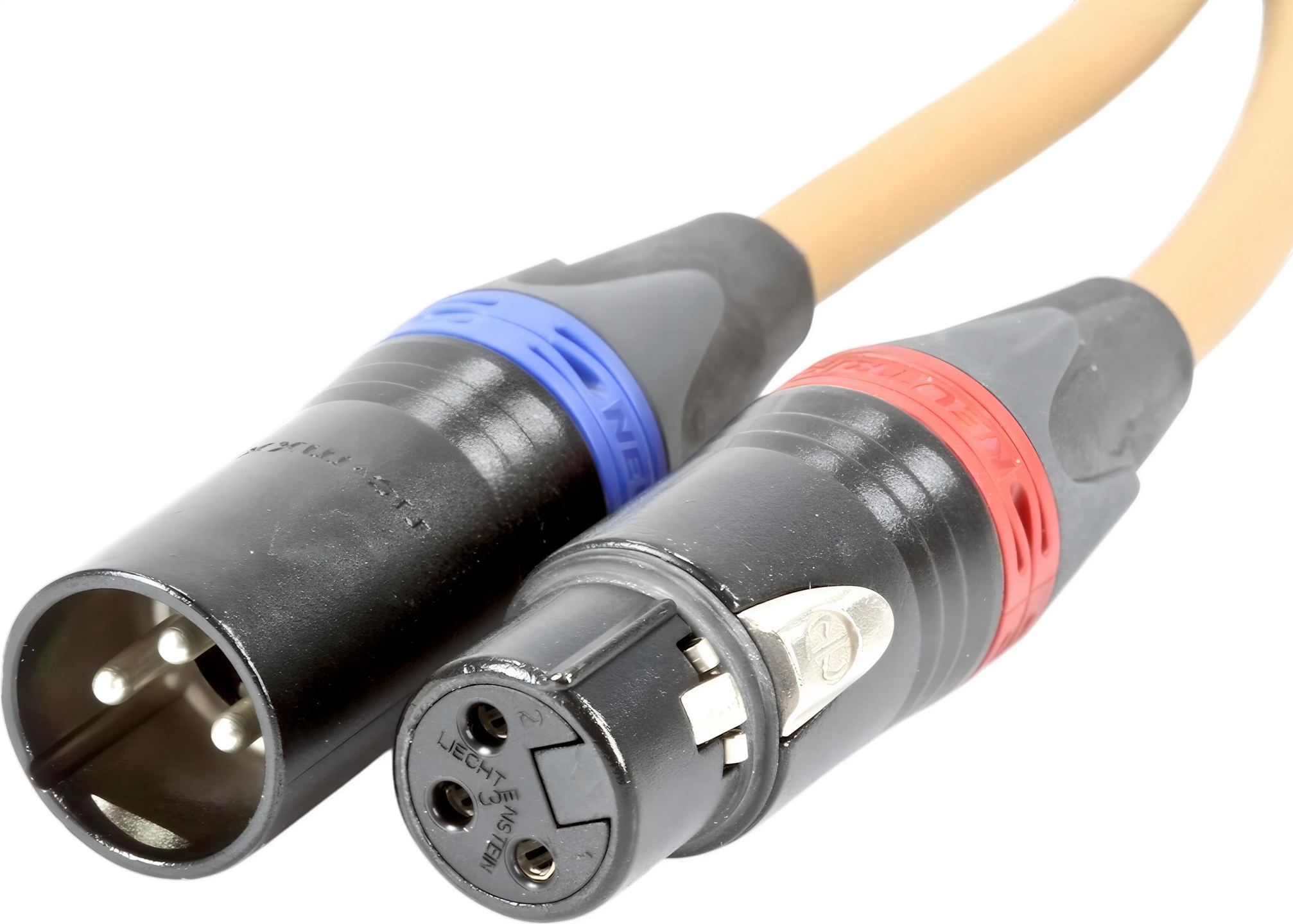
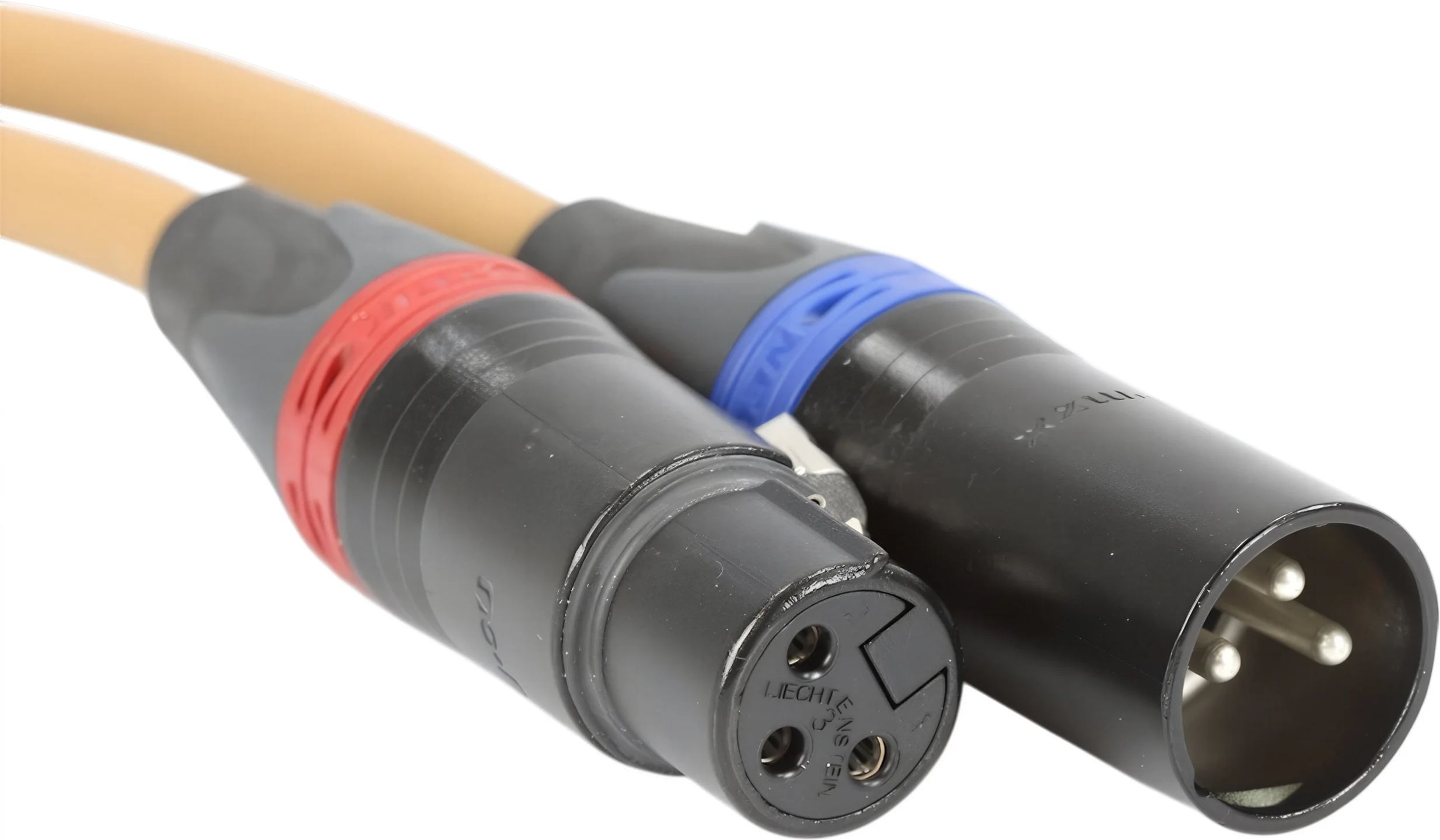
In 1993, Van den Hul decided to adapt its Linear Structured Carbon (LSC) technology into a balanced version. Following the success of The First as an unbalanced coaxial cable, the Dutch manufacturer offered its symmetrical counterpart, logically named The Second. Three decades later, this cable remains one of the brand’s benchmarks, characterized by the complete absence of metal in its conductors and manufacturing that favors individually insulated carbon fibers.
A conductor with no copper or silver
The Second adopts an uncommon approach: its two central conductors contain no metal whatsoever. Van den Hul uses exclusively carbon fibers assembled according to its patented LSC technology. Each conductor consists of 12,000 carbon strands measuring 7 microns in diameter, and each of these strands is individually insulated.
This fiber-by-fiber insulation is not a cosmetic detail. It prevents parasitic electrical interactions between adjacent conductors and channels the flow of electrons in a single direction. The two conductors are then wrapped in polyethylene foam, one white and the other brown, to visually distinguish them during wiring.
Protection against humidity and quadruple shielding
Van den Hul has integrated treated filler fibers between the conductors and the shielding. These artificial fibers form a barrier against ambient humidity, which helps maintain stable electrical capacitance over time (68 pF/m). The low capacitance and resistance of 3.6 Ω/m help preserve signal integrity over long distances.
The shielding deserves special attention. It consists of four distinct layers: two groups of silver-plated OFC (oxygen-free) copper strands, wound in a helix at different angles, and two intermediate layers saturated with LSC. This hybrid construction combines the conductivity of metal for shielding with the properties of carbon for attenuating external interference.
The outer jacket is made of Hulliflex, a material developed by Van den Hul that contains no halogens. In the event of combustion, it does not release hydrochloric acid or dioxins, a choice the manufacturer has promoted since 1990 for environmental reasons.
Professional and home use
Van den Hul uses The Second for its own recording sessions, under the Carbon Recordings series. The manufacturer has produced lengths reaching 25 meters for studio microphone cabling applications. This ability to perform over long distances without notable signal degradation illustrates the low capacitance and shielding effectiveness.
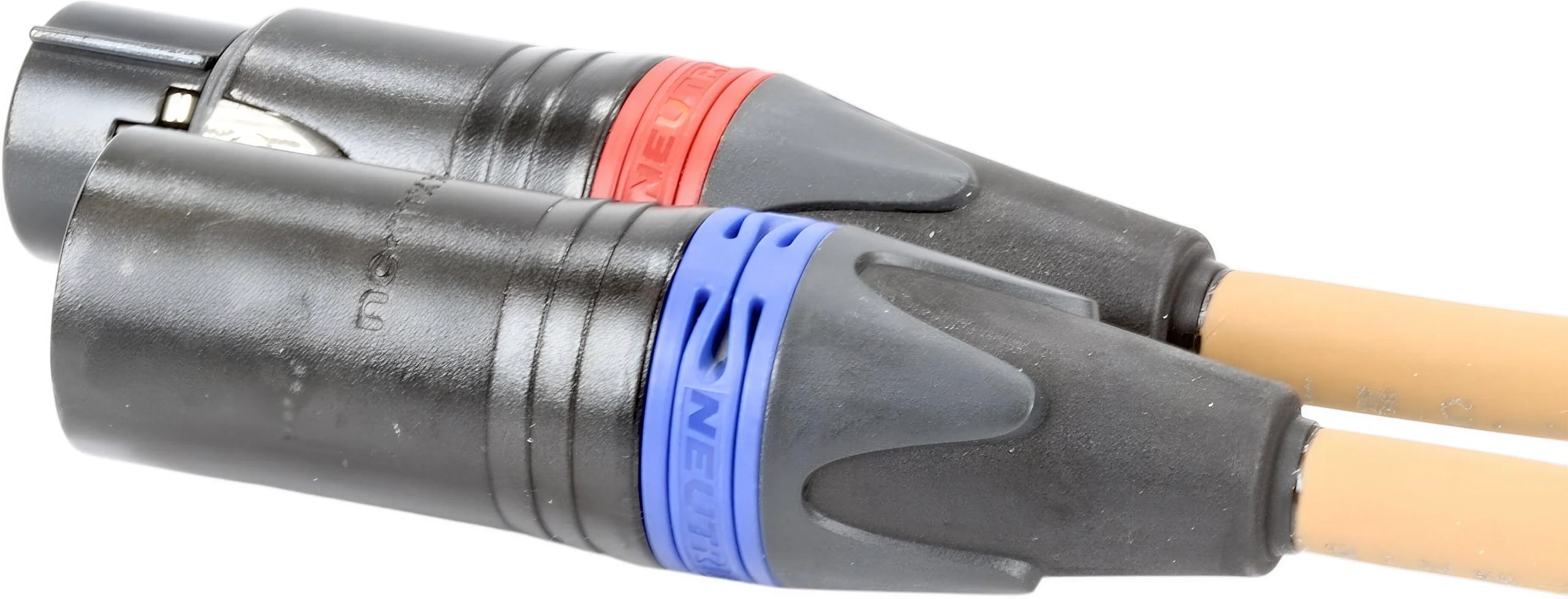
In a home setup, the XLR version terminates the cable with gold-plated Neutrik connectors. The 75 Ω impedance also allows use in AES-EBU digital connections, although Van den Hul advises against long lengths in this specific context.
Assembly reserved for the manufacturer
The Second is not sold by the meter for DIY cabling. The reason is technical: properly connecting 24,000 individual fibers (12,000 per conductor) to XLR connectors requires specific expertise and tooling. Van den Hul therefore assembles each cable at the factory, which explains why it is available only in predefined lengths.
The 7.3 mm outer diameter offers good handling without excessive stiffness. The light brown Hulliflex jacket remains flexible even after several years of use.
A cable that does not age like copper
The absence of metal in the conductors has one often overlooked consequence: no signal oxidation. Copper or silver conductors are subject to gradual surface degradation, even when protected. LSC carbon fibers do not exhibit this phenomenon, which gives the cable long-term performance stability that Van den Hul has highlighted since the product’s inception.