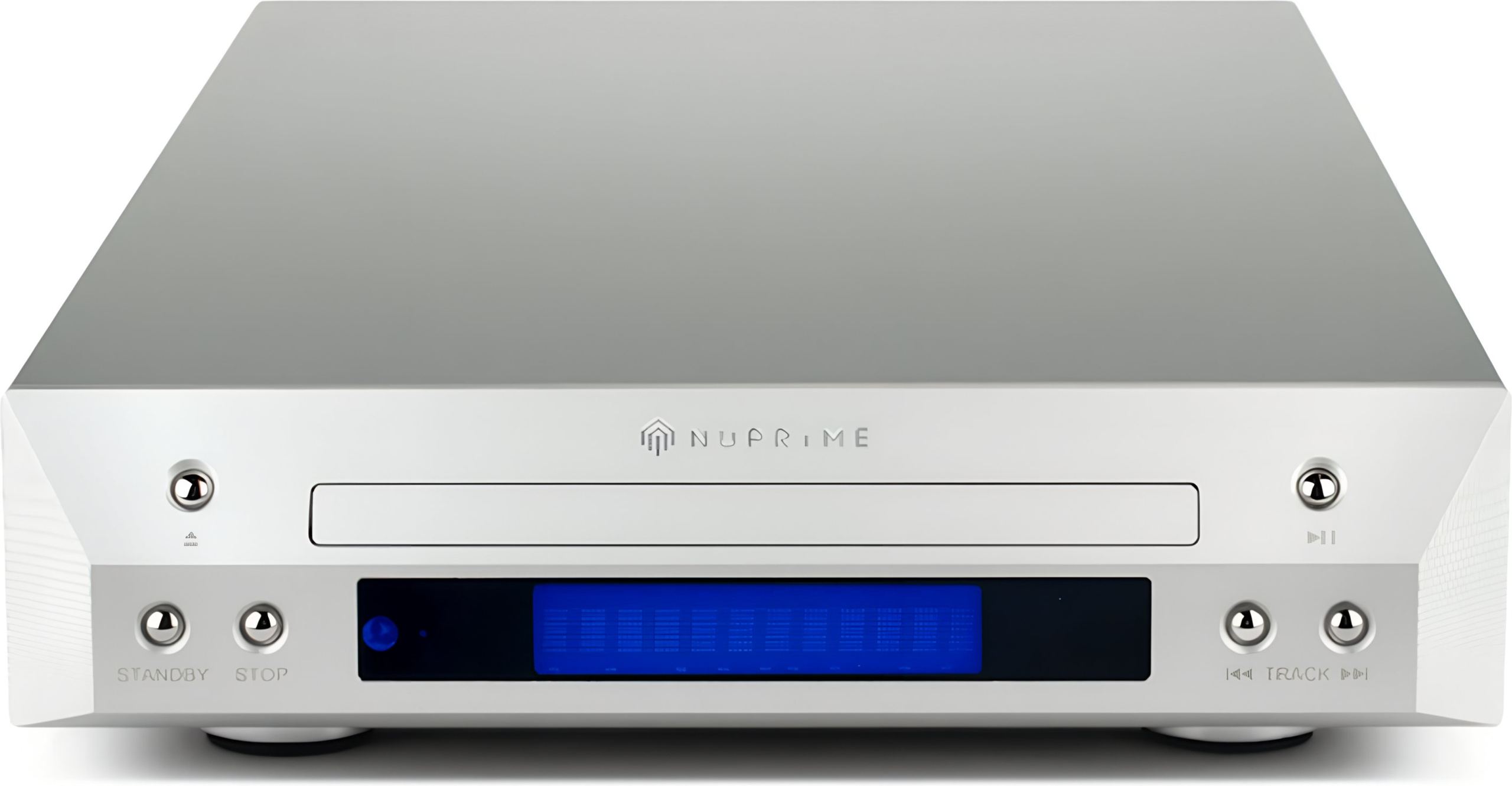
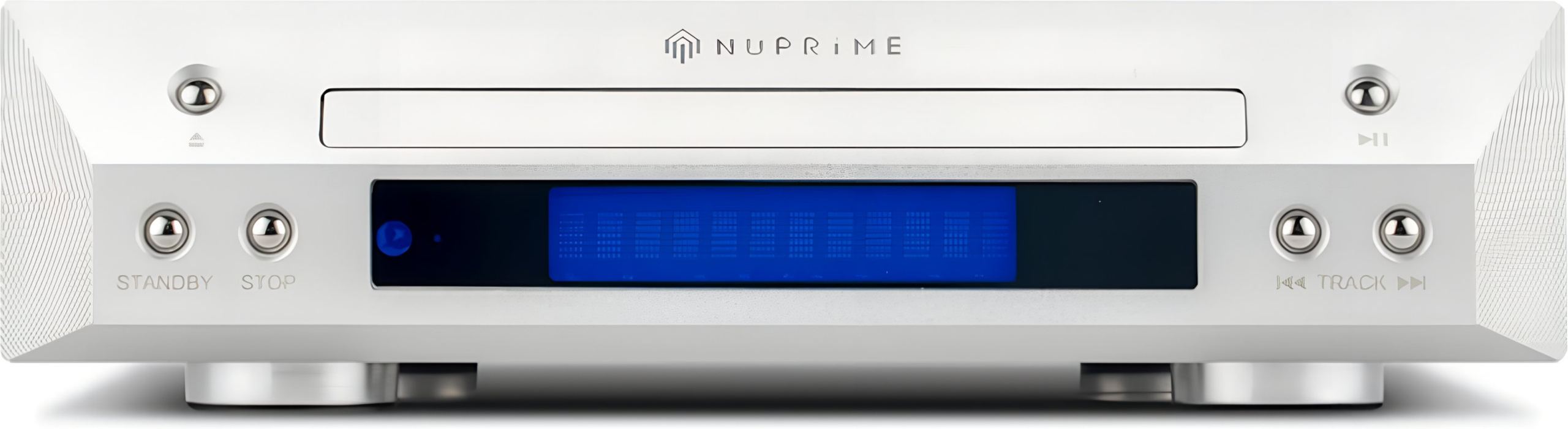
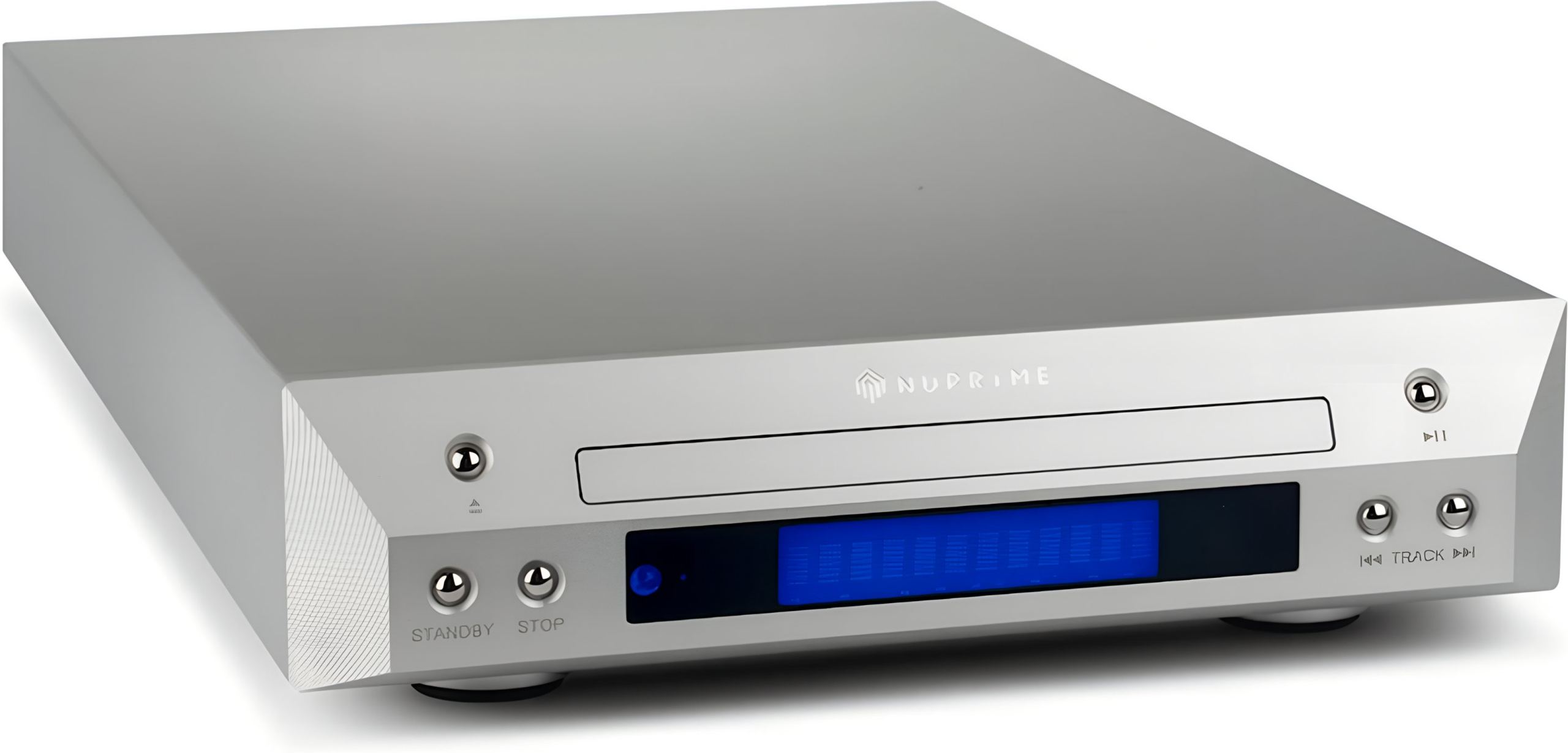
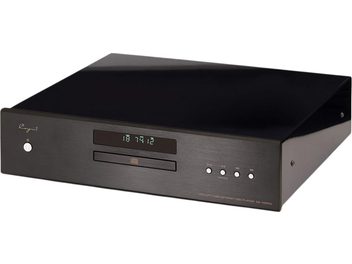
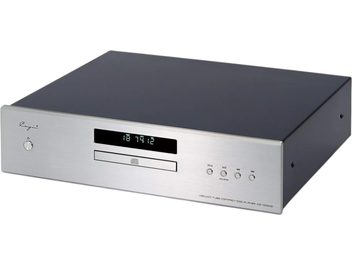
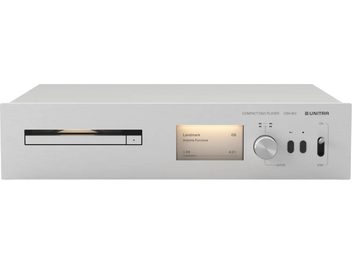
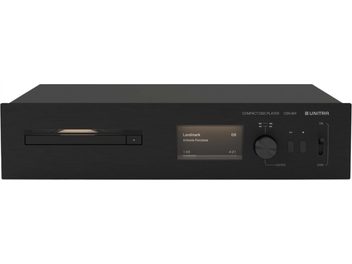
With streaming now everywhere, CDs could easily have faded into oblivion. Yet those who own physical collections know that a well‑engineered transport changes everything. The CDT-10 is the culmination of NuPrime’s work on CD playback, building on the achievements of the CDT-8 Pro while adopting the chassis and power supply of the Series 10. The result: a compact transport that extracts the best from the 16-bit/44.1 kHz format.
A silent mechanism, a rigid chassis
The CDT-10’s design philosophy is based on a simple principle: CD playback quality depends as much on mechanical stability as on the decoding electronics. NuPrime has designed a tubular-structure chassis with vertical and longitudinal reinforcements that distribute vibrations evenly. The drive mechanism is sandwiched between aluminum plates, further isolating the transport from the rest of the unit.
The transport spins at a constant speed, regardless of the reading position on the disc. This approach, less common than one might think, reduces vibrations caused by speed changes and improves sampling accuracy. The tray, slim yet smooth, accepts pressed CDs, CD-Rs, and CD-RWs.
Digital processing and error correction
Decoding is handled by an ARM LPC2103F chip that manages reading, writing, and error correction according to Red Book specifications. The Philips SAA7824HL laser head, a component proven in the audio industry, ensures precise tracking of the disc’s pits. A proprietary algorithm reduces digital interference to keep jitter particularly low.
The master clock drives the entire decoding system, synchronizing every stage of processing. This centralized approach limits timing discrepancies that can degrade digital signal quality before it even reaches the external converter.
Selectable oversampling: PCM or DSD
The sample rate converter (SRC) is one of the CDT-10’s distinctive features. After reading, the audio signal is first oversampled at a very high frequency (in the megahertz range), then down-converted to the rate selected by the user. This double conversion is designed to reduce quantization artefacts and distortion.
The available rates vary depending on the output used. The coaxial, HDMI I2S, and AES/EBU outputs can reach up to 768 kHz in PCM or DSD256 (DoP). The optical output, limited by the Toslink protocol’s bandwidth, tops out at 192 kHz or DSD64. This function is entirely optional: simply disable the SRC from the remote control to keep the native 44.1 kHz signal. Some users actually prefer playback without oversampling, which they find more natural, while others enjoy the increased density and precision at higher frequencies.
Four outputs to suit any system
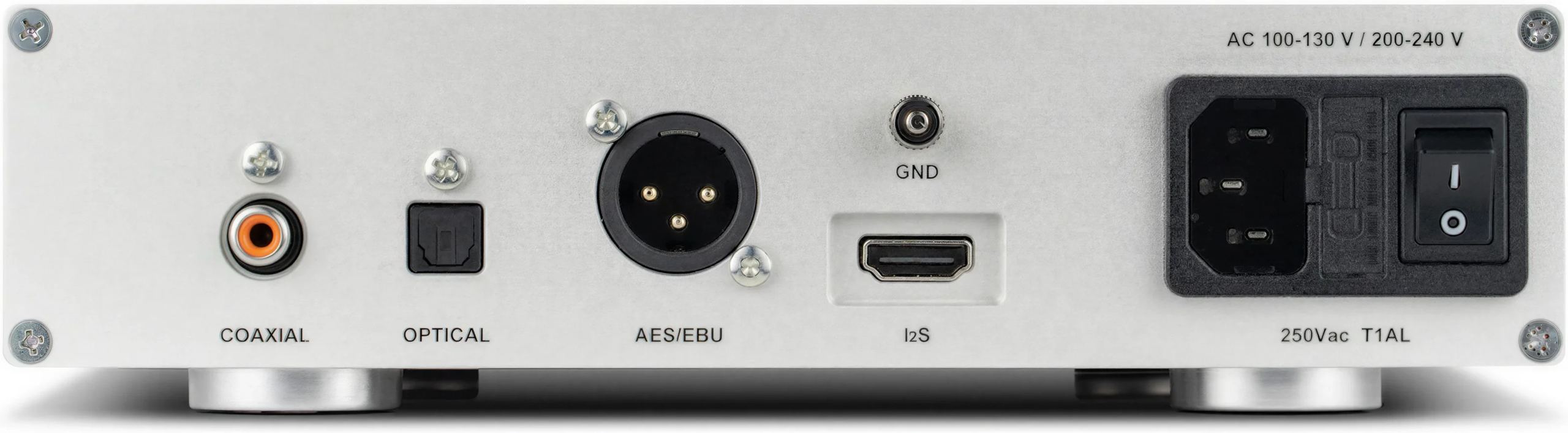
The rear panel offers a full range of digital connections. The RCA coaxial output features a dedicated isolation transformer to eliminate ground loops and electrical noise. The Toslink optical output is ideal for setups where galvanic isolation is a priority, with the bandwidth limitation mentioned above.
The AES/EBU output on XLR connector meets the requirements of professional environments or high-end systems equipped with this interface. As for the HDMI I2S output, it transmits the clock signal and audio data separately, reducing jitter compared with standard S/PDIF protocols. This output works with NuPrime converters (Evolution DAC, DAC-9SE, Alita) and is compatible with certain PS Audio models. Compatibility with other brands using the I2S-over-HDMI format is not guaranteed, however, as each manufacturer can define the pin assignment differently.
Filtered, shielded power supply
The power stage benefits from the expertise developed for the Evolution DAC. An R‑core toroidal transformer, enclosed in a metal shield, powers all the electronics. This type of transformer has lower electromagnetic radiation than conventional models. An integrated mains filter attenuates high-frequency noise from the power grid.
The power supply block is physically separated from the transport section and digital electronics. This isolation, combined with the supplied anti-vibration feet, contributes to quiet operation. Standby power consumption remains moderate, and the power supply accepts voltages from 100 to 240 V with no manual selector.
In practice: integration and setup
The CDT-10 connects to any external converter with a digital input. For an all-NuPrime system, the I2S link via HDMI makes full use of the oversampling capabilities. With a DAC from another brand, the coaxial or AES/EBU outputs offer universal compatibility and excellent performance.
The SRC settings are worth experimenting with. Multiples of 44.1 kHz (88.2 kHz, 176.4 kHz, 352.8 kHz) maintain a harmonic relationship with the source signal and are generally preferred for CD playback. Rates in multiples of 48 kHz are more suitable for video sources or professional recordings. DSD (DoP) mode is only useful if the receiving DAC supports this format and if the listener appreciates its particular sonic character.