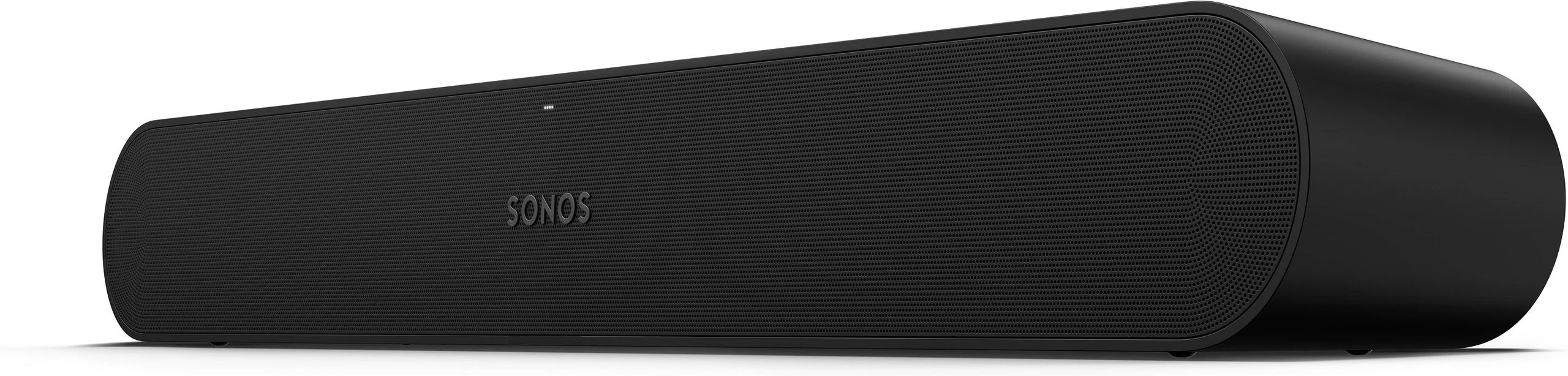
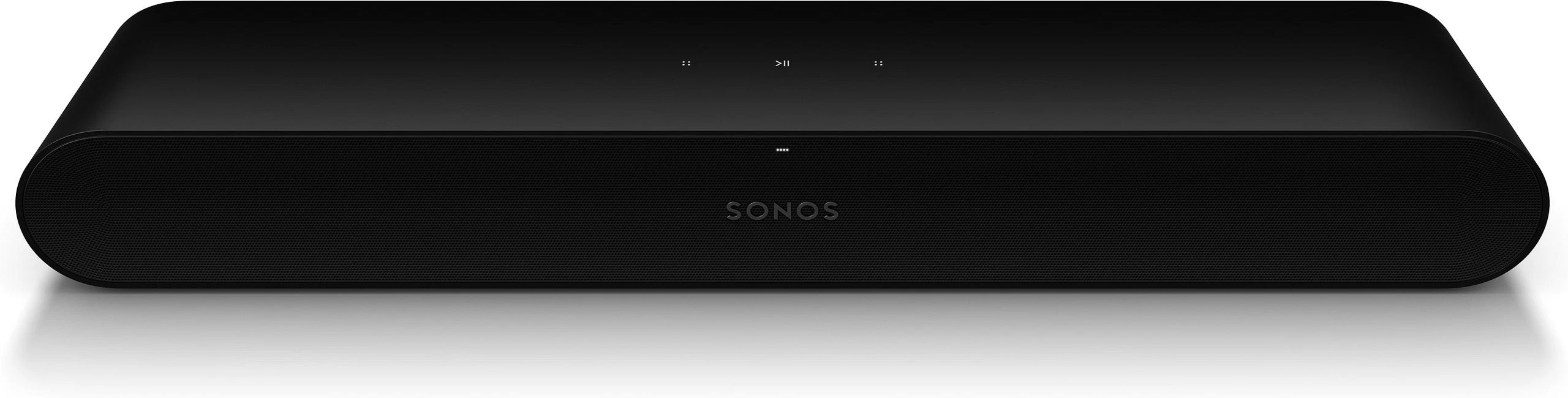
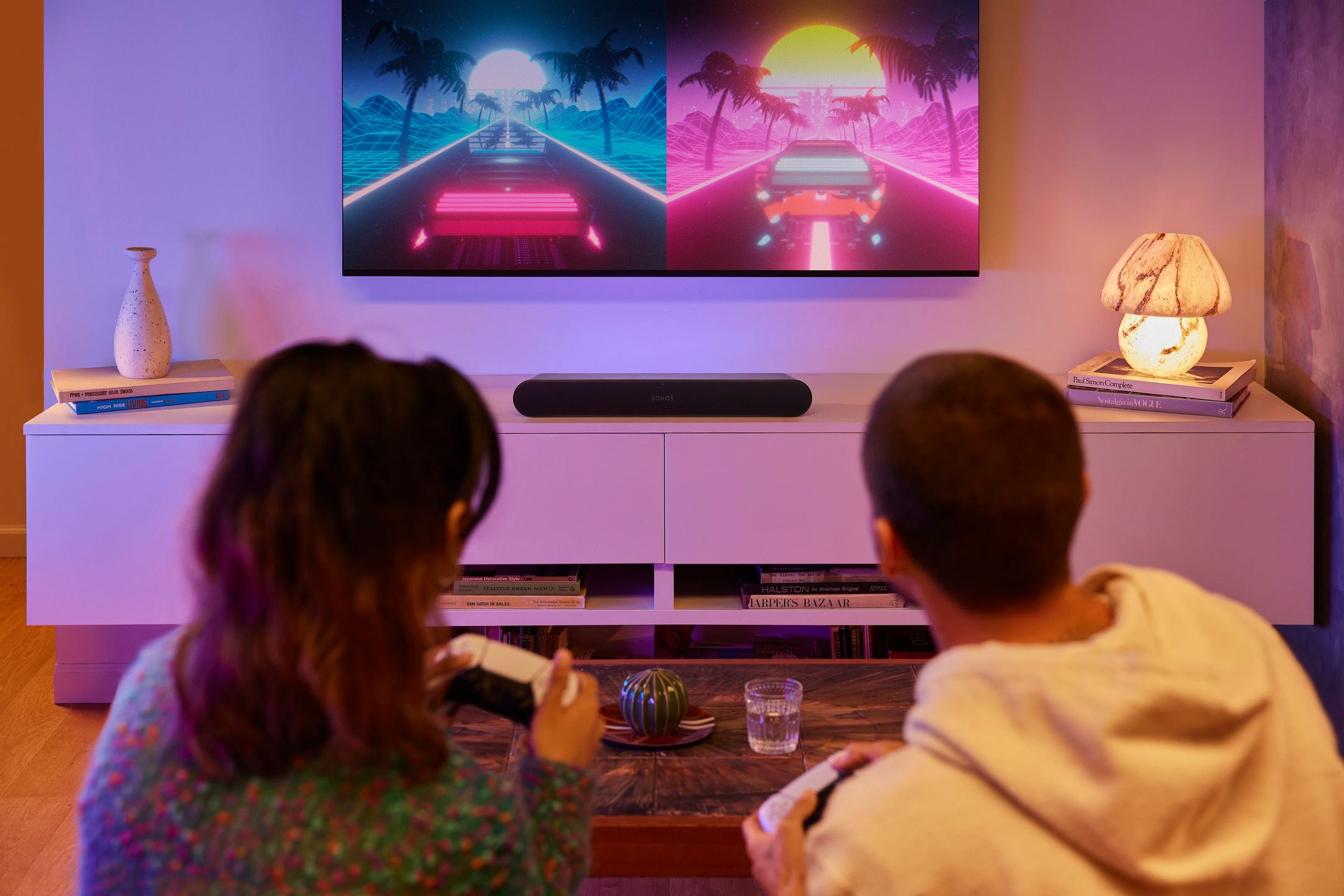
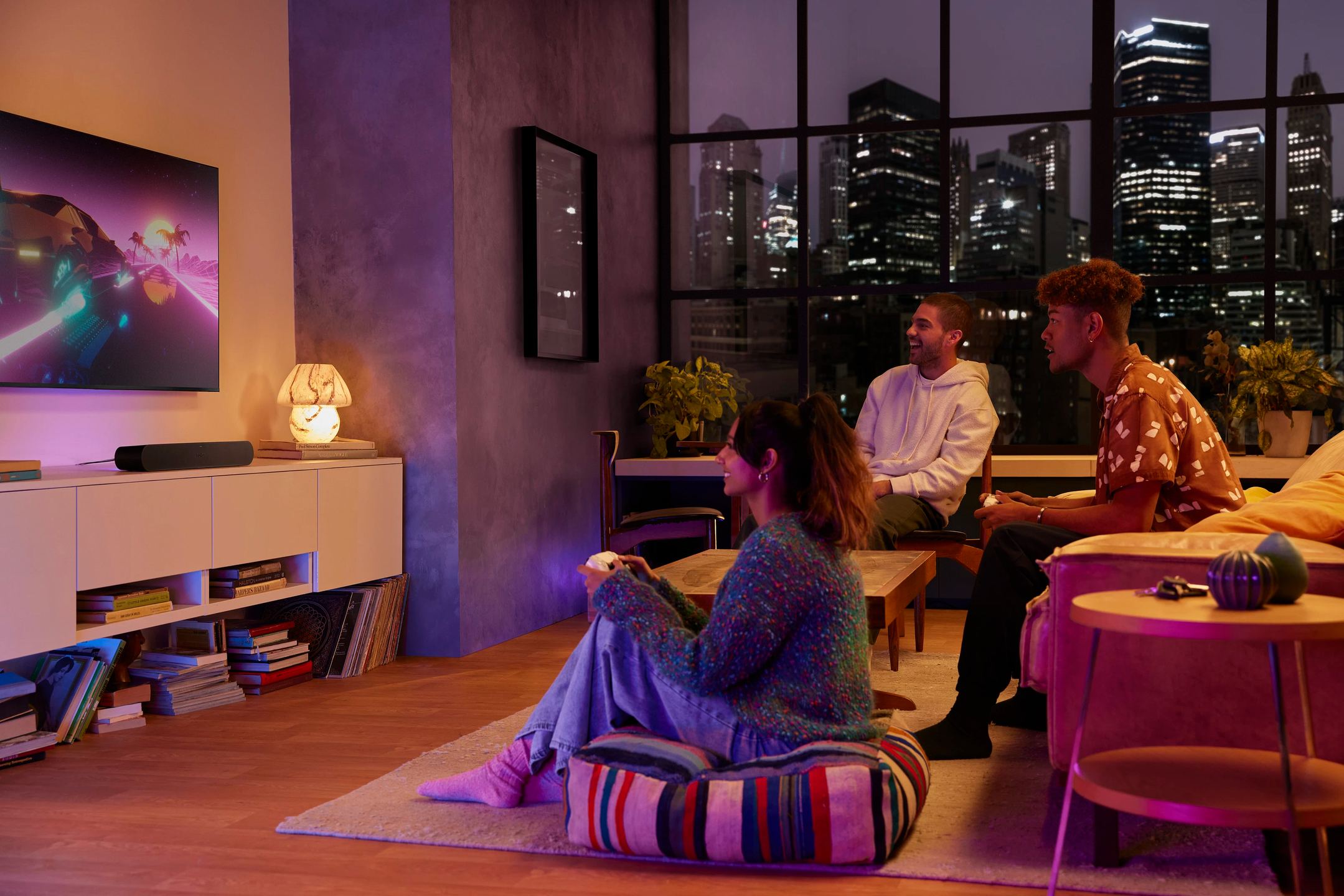
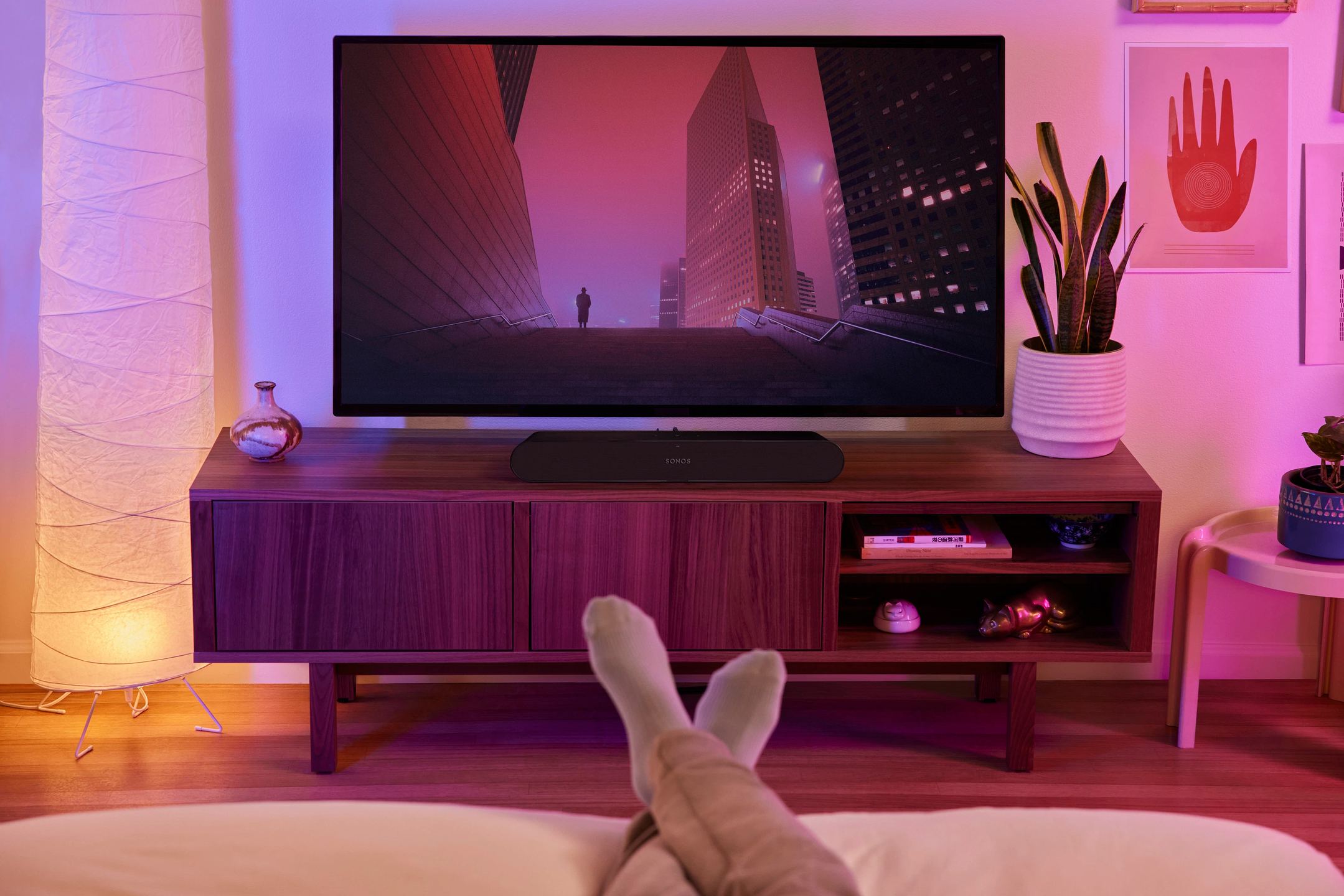
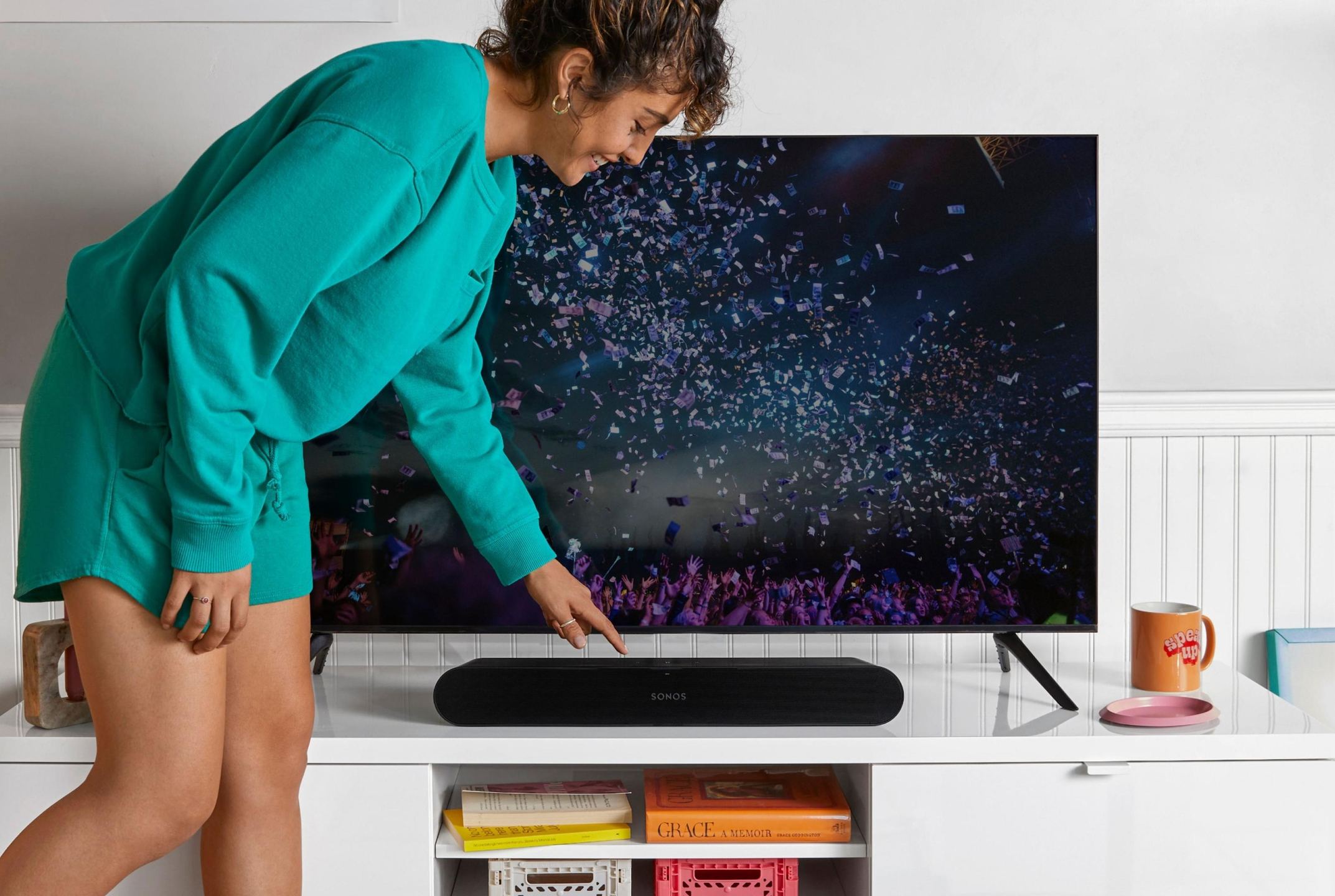
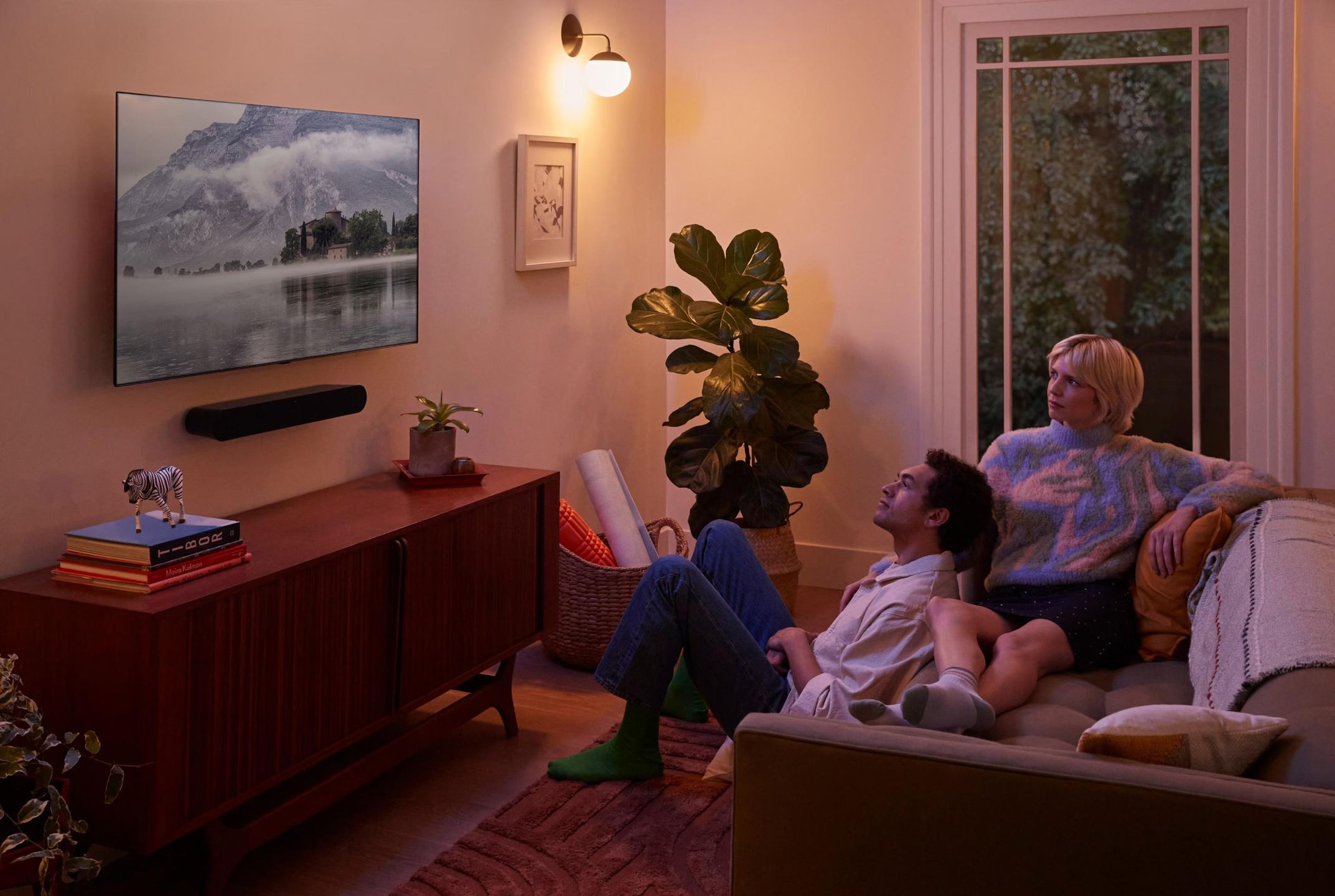
Launched in June 2022, the Sonos Ray marks a turning point in the Californian manufacturer’s strategy. This compact soundbar opens up the Sonos universe to a wider audience without compromising on build quality or the multiroom integration that built the brand’s reputation. With its four front-firing drivers and universal optical connection, it’s designed for small spaces and medium-sized TVs, while serving as a gateway to a scalable audio system.
A format that breaks free from constraints
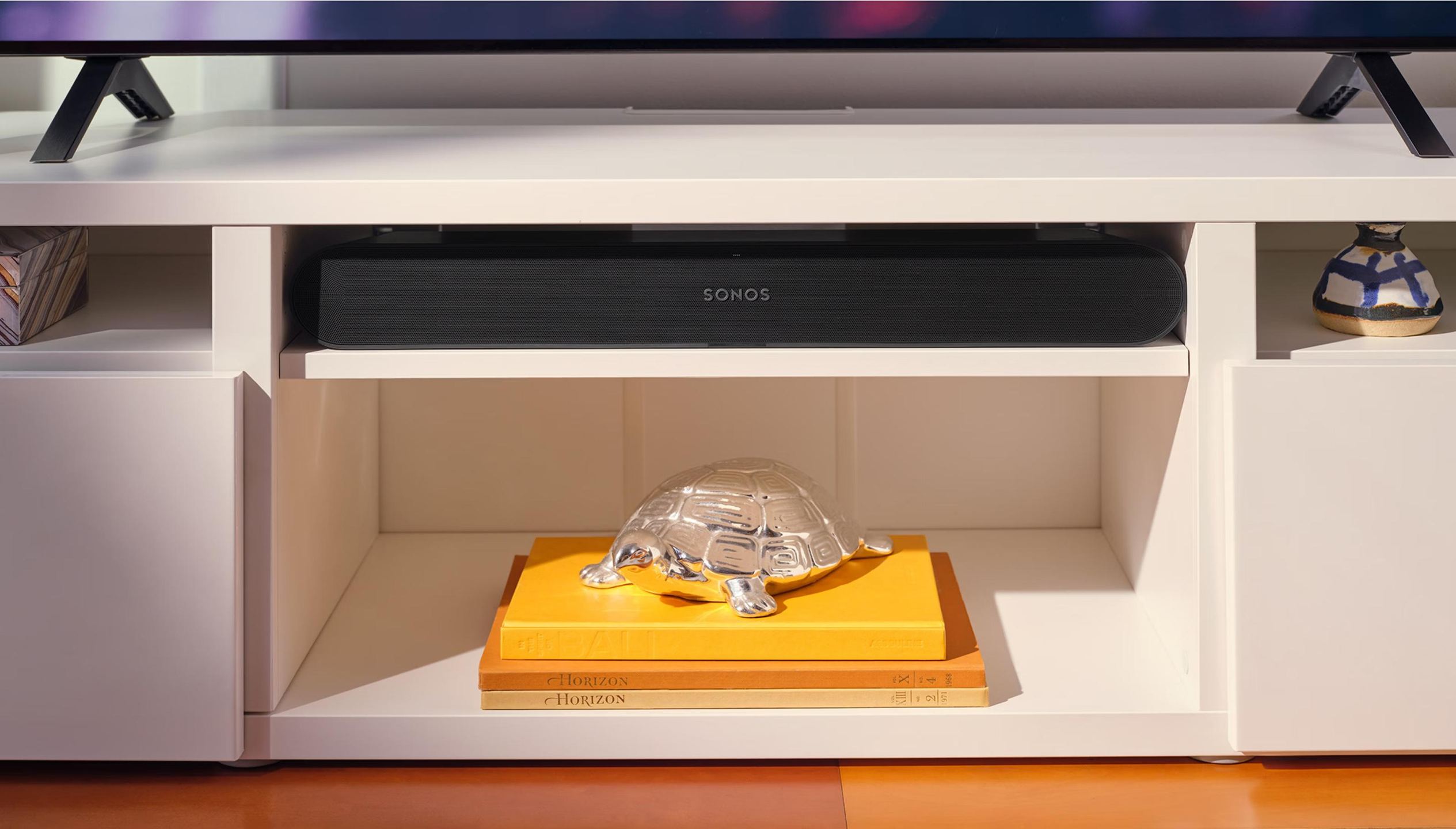
The Sonos Ray uses an entirely front-facing design: all drivers fire forward, allowing it to perform even inside a TV cabinet or tight space without acoustic issues.
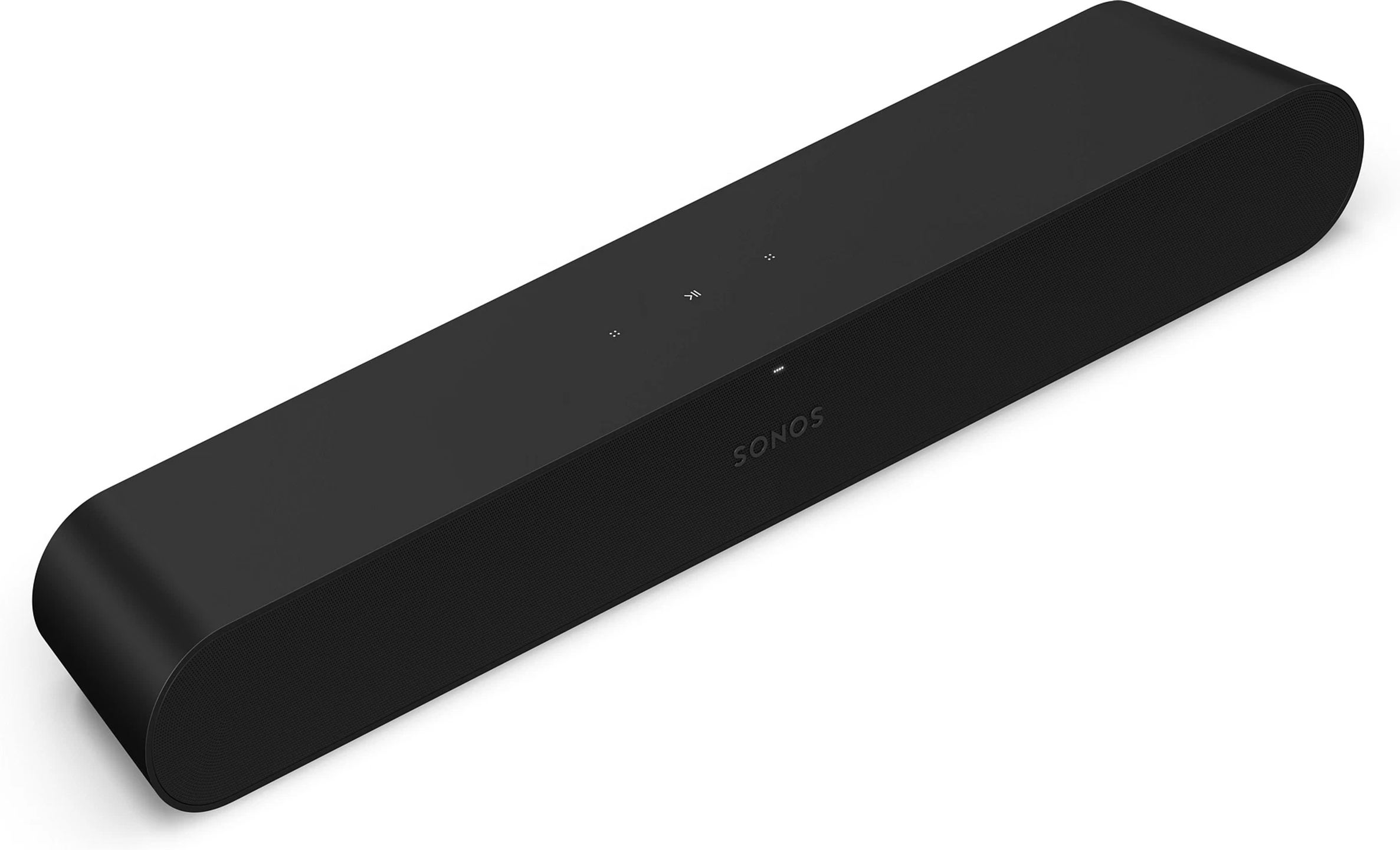
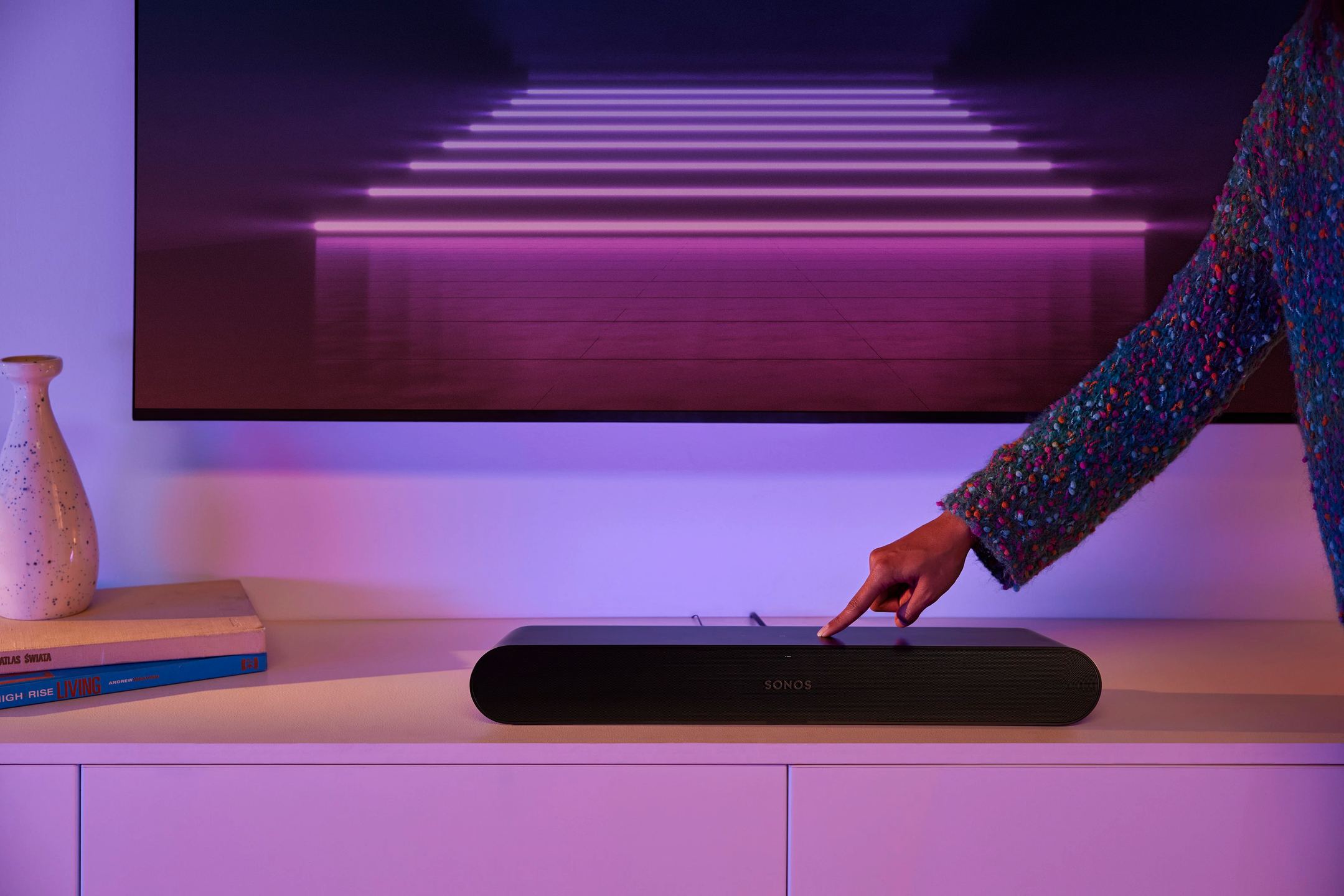
Compact (7.1 × 55.9 × 9.5 cm, 1.95 kg), it features a matte polycarbonate front, touch controls on top, and comes in black or white. Wall mounting is possible thanks to the rear M5 insert.
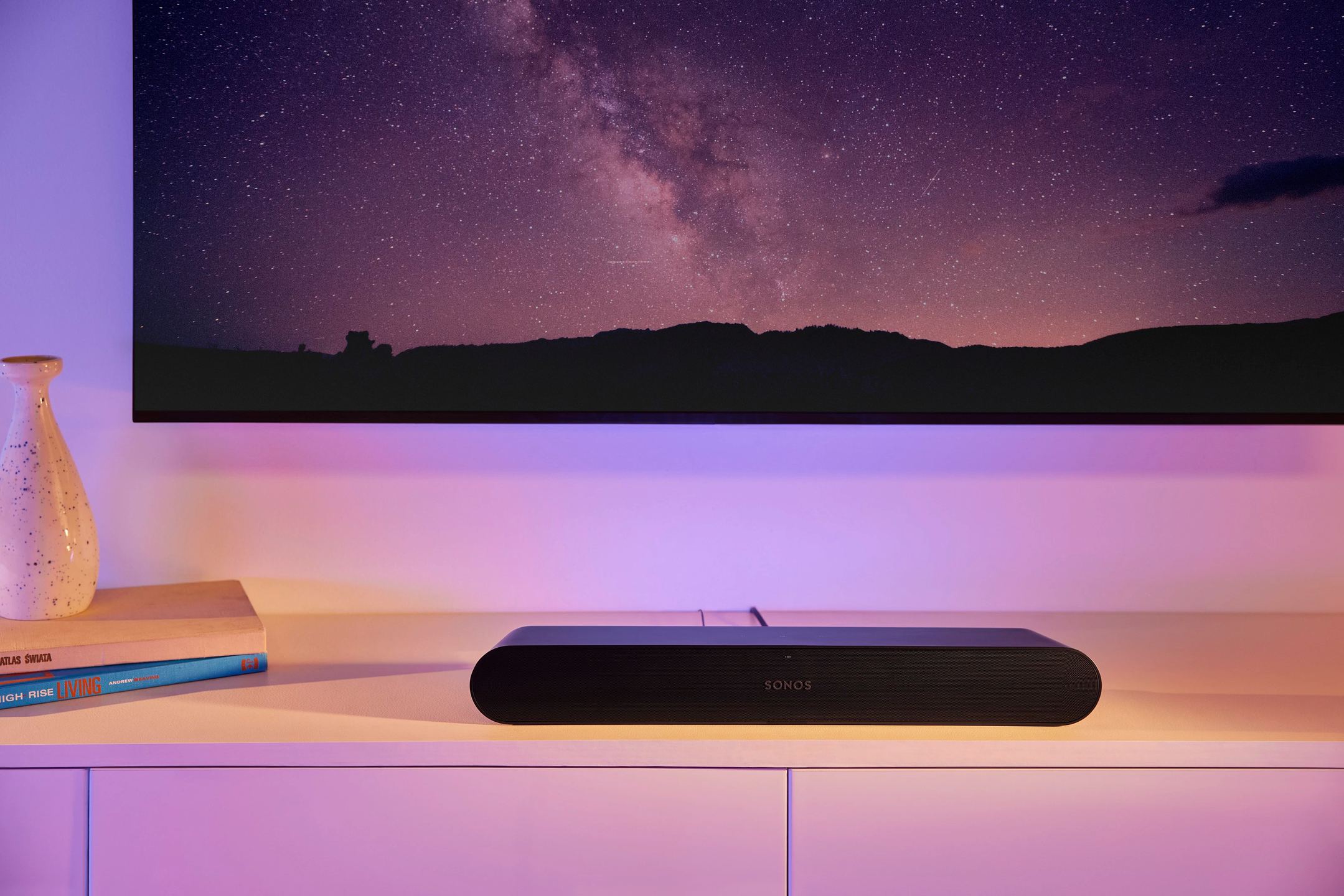
Designed for screens up to 55 inches and small to medium rooms, the Ray remains discreet and slips easily under the TV.
A precisely tuned acoustic architecture
The Sonos Ray houses four drivers, each powered by a Class-D digital amplifier: two central tweeters for vocal clarity and two mid-woofers for soundstage and bass.
Its bass-reflex system, coupled with anti-distortion technology, delivers clean low end even at high volume. Acoustic processing ensures wide dispersion, creating a larger-than-expected soundstage for such a compact bar.
Targeted connectivity and an open ecosystem
The Sonos Ray uses an optical input (1.5 m cable included) instead of HDMI. A surprising choice, but one that ensures maximum compatibility with all TVs, even those without ARC. There’s an RJ45 Ethernet port for wired connection; Wi‑Fi 802.11 b/g/n 2.4 GHz is, of course, available. The built-in IR receiver lets you control volume directly with your TV remote.
The Sonos S2 app on iOS/Android handles setup, provides access to over 100 streaming services, and manages multiroom. The speaker supports AirPlay 2 for audio streaming from Apple devices.
Trueplay calibration (iOS only) automatically adjusts EQ based on room characteristics after a quick environmental analysis, significantly improving the final result.
Listening modes tailored to your usage
The Ray’s built-in digital signal processing (DSP) offers several modes to adapt playback to the content. The voice enhancement mode boosts dialogue intelligibility, especially useful when characters whisper or the soundtrack swells. A customizable equalizer lets you adjust bass and treble to taste.
Night mode flattens dynamic range by reducing loud peaks while boosting quieter passages. Explosions become less harsh, whispers more audible, without constant volume adjustments—a boon for late-night sessions.
The Ray supports stereo PCM, Dolby Digital 5.1, and DTS Digital Surround. It does not decode Dolby Atmos, which clearly sets it apart from the Beam Gen 2 and the Arc. This limitation stems directly from the choice of optical connection, which lacks the bandwidth for advanced audio formats.
A system built to grow
The Sonos philosophy is all about scalability. The Ray works on its own, but it truly shines as part of a larger setup. You can pair Sonos speakers (One, One SL, Era 100) in a surround configuration to create an immersive sound bubble. The subwooferSub or Sub Mini can be wirelessly linked to bolster the low end and add depth to soundtracks.
Pairing is done entirely through the app, with no extra cabling. The mesh network created between Sonos devices ensures perfect synchronization. This modular approach lets you start with a single bar and gradually expand the system according to your needs and budget.
The Ray can also join an existing multiroom setup. It can stream music to multiple rooms simultaneously or play a distinct role in each zone. This versatility makes it not just a TV soundbar, but also a connected speaker ready for music listening when the screen is off.
A distinct position within the lineup
The Ray sits at the entry level of the Sonos catalog, below the Beam Gen 2 and the Arc. A few markers help position these three models. The Beam Gen 2, launched a few months before the Ray, measures 65.1 cm wide and weighs 2.8 kg. It has an HDMI eARC connection, decodes Dolby Atmos via psychoacoustic processing, and includes microphones for voice assistants (Alexa, Google Assistant, Sonos Voice Control). Its side-firing drivers project sound outward to widen the soundstage.
The Arc, the brand’s flagship, goes further with upward- and side-firing transducers to create vertical spatialization and fully leverage Dolby Atmos. It’s aimed at large rooms and 65-inch-and-up screens.
The Ray focuses on the essentials: significantly improving TV sound in small spaces while granting access to the Sonos ecosystem and its expansion options. It doesn’t compete with the Beam or Arc in terms of spatialization or advanced features, but it fully delivers as a gateway into the Californian brand’s universe.
Frequently asked questions
Does the Sonos Ray work with all TVs?
The Ray connects via an optical input, making it compatible with most TVs equipped with an optical output. Older models without HDMI ARC can use it without issue. However, you should check your TV for this optical output, as some very recent sets sometimes omit this connector.
Can you control the Ray with the TV remote?
Yes, the built-in infrared receiver allows the bar to sync with your TV remote. The Sonos app guides you through the initial setup to establish this link. Most infrared remotes on the market are compatible, though a few newer models using other protocols may pose problems.
Is Trueplay essential?
Trueplay noticeably improves sound by tailoring playback to the room’s acoustic characteristics. This feature requires an iOS device (iPhone or iPad) to perform measurements. Android users can’t access it, but the Ray already offers a balanced sound without this calibration. Trueplay is a welcome bonus, not an absolute necessity.
Can you add a subwoofer and surround speakers to the Ray?
Absolutely. The Ray integrates into the Sonos ecosystem and can be complemented with a Sub or Sub Mini to reinforce the bass, as well as Sonos speakers (One, One SL, Era 100) placed at the rear to create a surround setup. These additions are made wirelessly through the app, which greatly simplifies installation.
What the press says
The Sonos Ray is primarily designed to replace the often very mediocre speakers of a television, with a simple connection (optical port), in an ultra-compact and discreet format.
Automatically translated — Show original (French)
La Sonos Ray vise d’abord à remplacer les haut-parleurs souvent très médiocres d’une télévision, avec une liaison simple (port optique), dans un format ultra-compact et discret.
For such a small soundbar, the Sonos Ray packs a punch and impresses with its balance at high volume. Its smooth sound signature, identical to that of other Sonos speakers, makes it suitable for music listening. Additionally, its voice reproduction deserves praise, an essential feature for a soundbar. It's a pity that it is so directional and unable to create a surround sound atmosphere.
Automatically translated — Show original (French)
Pour une si petite barre de son, la Sonos Ray a un sacré coffre et surprend par son équilibre à fort volume. Sa signature sonore douce et identique à celle des autres enceintes Sonos, la qualifie pour l’écoute musicale. Par ailleurs, il faut saluer sa restitution des voix, un point essentiel pour une barre de son. Dommage qu’elle soit si directive et incapable de créer une ambiance surround.
Home theater audio formats: PCM stereo, Dolby Digital 5.1, DTS Digital Surround
AirPlay 2 compatible
Touch controls
Acoustic System
4 built-in speakers:
2 central tweeters for precise highs
2 mid-woofers for rich midrange and deep bass
Bass-reflex port system
Audio Features
Voice enhancement mode
Customizable equalization
Night mode
Trueplay: room acoustic calibration (iOS only)
Connectivity
1 digital optical input
1 RJ45 port
Wi-Fi 802.11 b / g / n
Infrared (IR) receiver for TV remote synchronization
Physical Characteristics
Power supply: 100-240 V, 50-60 Hz, auto-switching
M5 threaded mounting support
Matte finish
Dimensions (H × W × D): 71 × 559 × 95 mm
Weight: 1.95 kg
Box Contents
Sonos Ray
Power cable (2 m)
Optical cable (1.5 m)
Quick start guide, legal information, and warranty
User reviews
Gilbert
Not suitable for all Amazon remotes, otherwise good for sound.
Comment from February 18, 2026 — Experience from February 05, 2026
Automatically translated — Show original (French)
Ne convient pas à routes les télécommandes Amazon sinon bien pour le son.
Jacques
Recommended by a music-loving friend, he told me it was a good basic but quality soundbar. I don’t regret my purchase, the sound is very good and the dialogues much more audible, the settings are quite simple, and the setup is easy.
Comment from January 27, 2025 — Experience from January 16, 2025
Automatically translated — Show original (French)
Préconiser par un ami mélomane, il m’avait dit que c’était une bonne barre son basique mais de qualité. Je ne regrette pas mon achat, le son est très bon et les dialogues beaucoup plus audible, les réglages sont assez simple et l’application facile.
Michel
Extremely simple installation and configuration. Superb sound quality.
Comment from May 10, 2024 — Experience from April 29, 2024
Automatically translated — Show original (French)
Installation et configuration simplissime. Super qualité du son.
Showroom near Paris 430 products available for demo 6 auditoriums + 8 demo areas
Thank you for choosing us
To better understand our visitors, measure marketing effectiveness and personalise ads, we and our partners use cookies and mobile advertising identifiers on your device. This data makes it possible to display personalised and non-personalised ads and measure their performance. Some cookies, which are technically necessary, are exempt from consent. You can accept those that require your consent, refuse them by clicking "Refuse", or customise your choices via the settings screen.
To find out how Google uses the data collected once you have given your consent, see Google’s Business Data Responsibility site.
You can change or withdraw your consent at any time via the "Consent and cookies" link. Your choices will apply on our site for 12 months.