

Marie veronique
Excellent! Thank you so much!
Comment from June 15, 2026 — Experience from June 01, 2026
Automatically translated — Show original (French)
Excellent ! Merci infiniment !



Each year, dozens of European journalists gather to select the best electronic products of the year. Awarded by a diverse and impartial jury, the EISA (Expert Imaging and Sound Association) awards recognize exceptional products for their performance, design, or ergonomics.
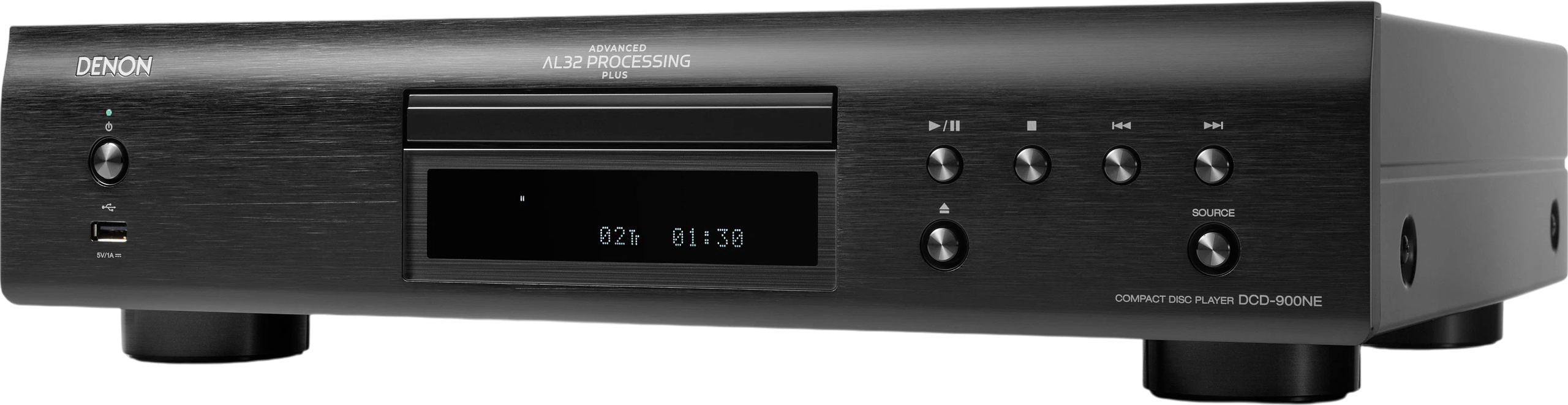
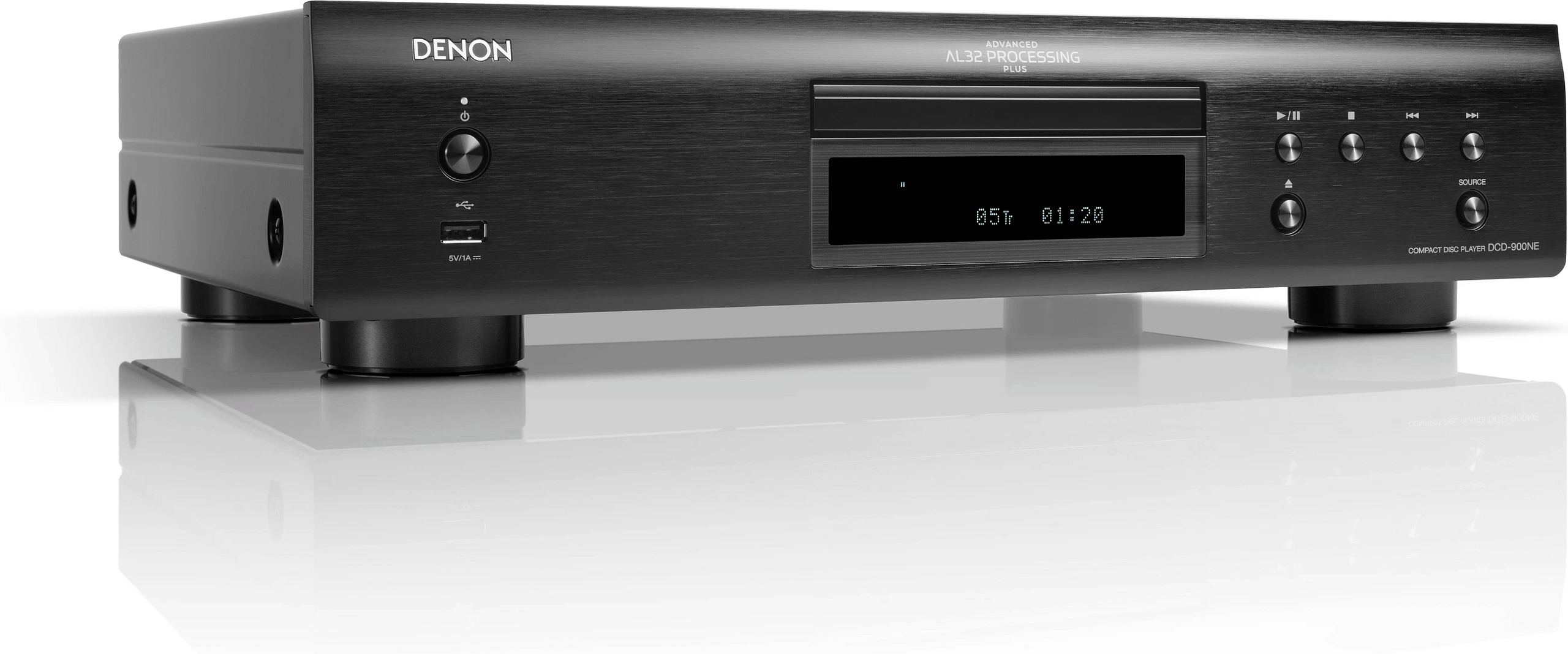
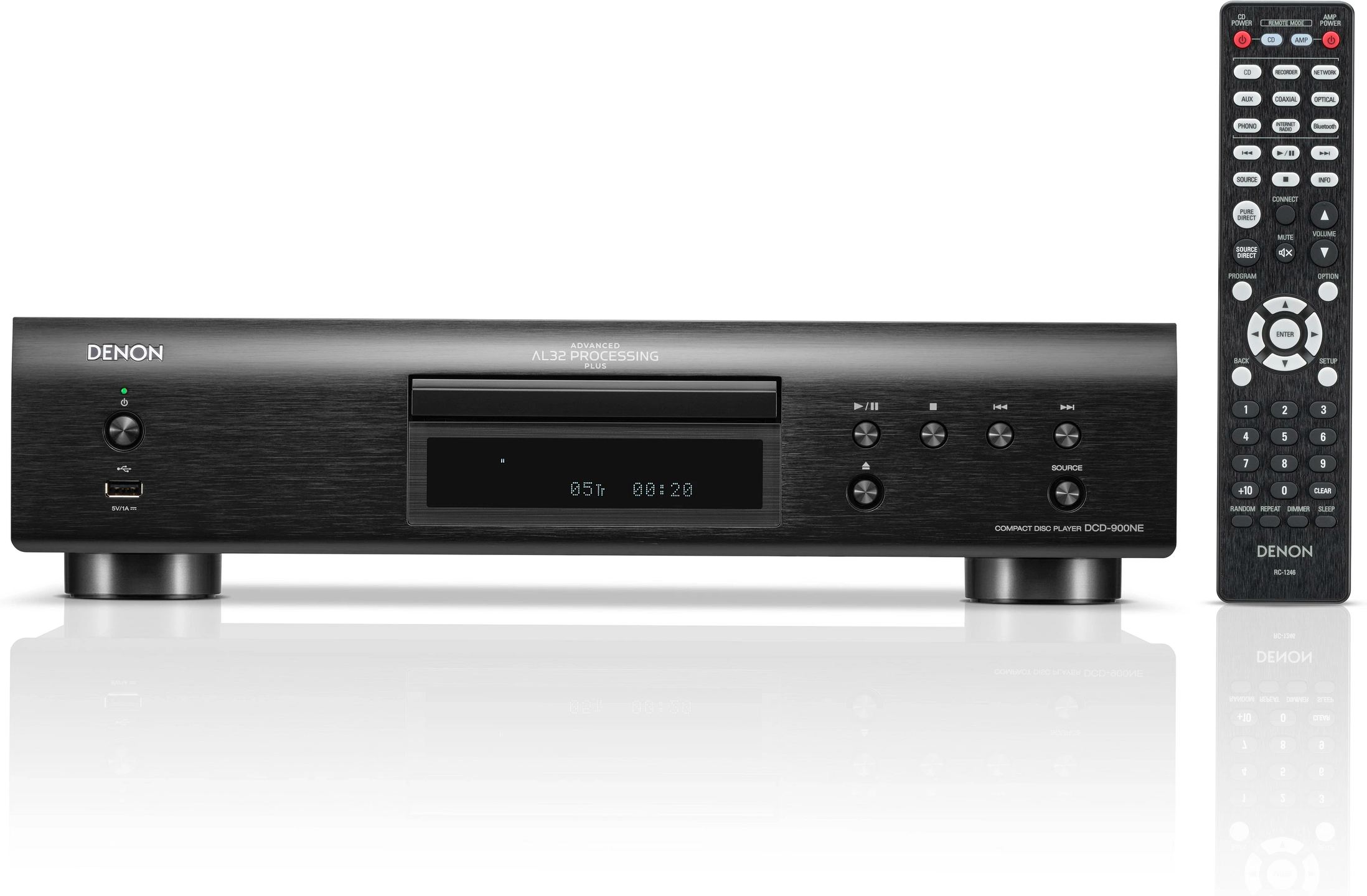
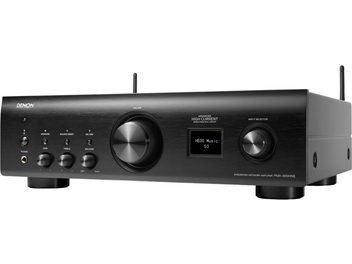
The Denon DCD-900NE is a CD player featuring a metal chassis, a built-in digital-to-analog converter, and circuits designed to limit interference. It plays CDs as well as audio files via USB, delivering accurate reproduction of recordings.
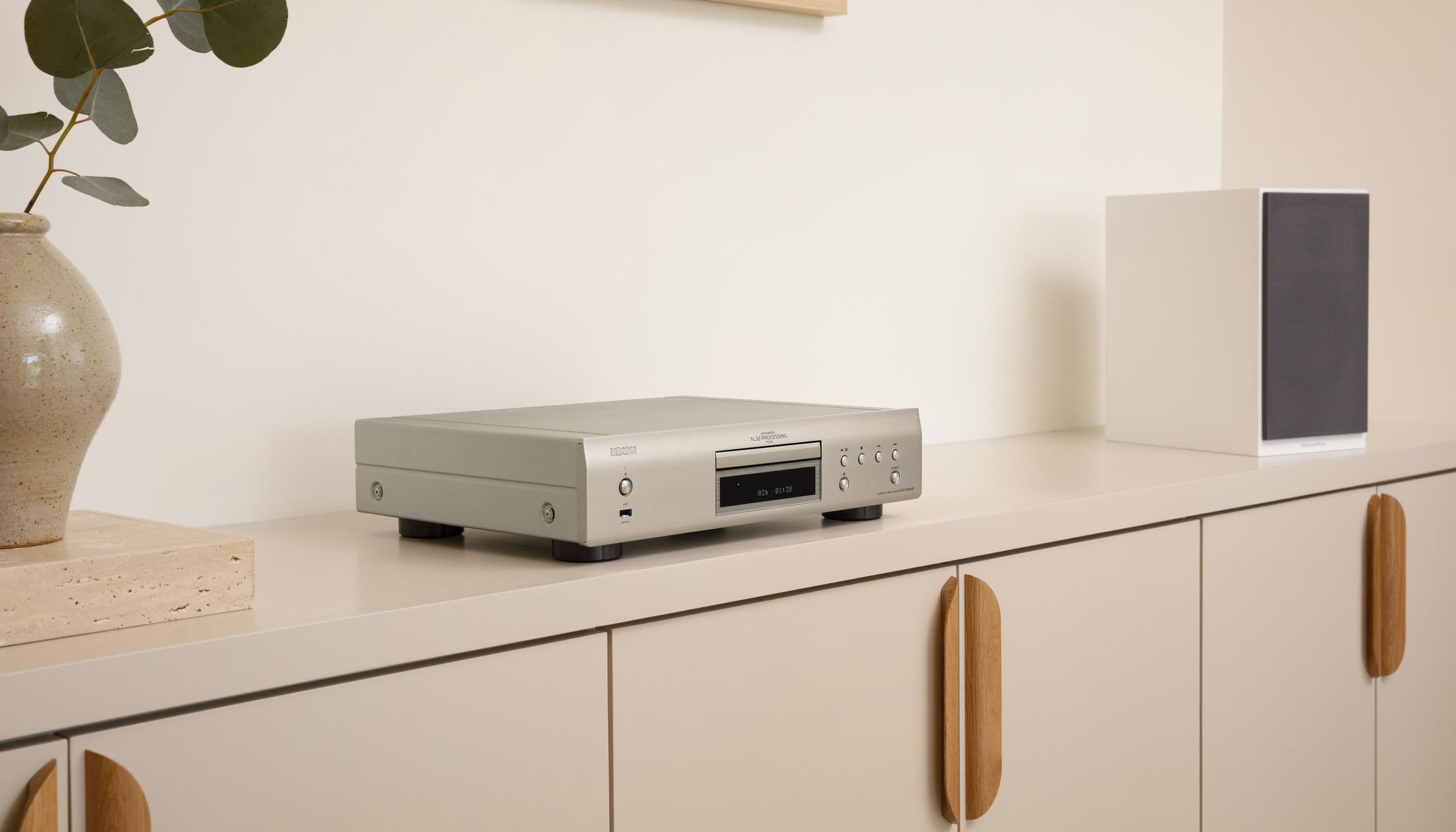
The DCD-900NE’s chassis demonstrates particular attention to mechanical stability. Its metal construction combined with a 434 mm-wide brushed aluminum front panel gives the player a reassuring physical presence. The unit’s 4.9 kg are not just about aesthetics: this mass actively helps reduce parasitic vibrations.
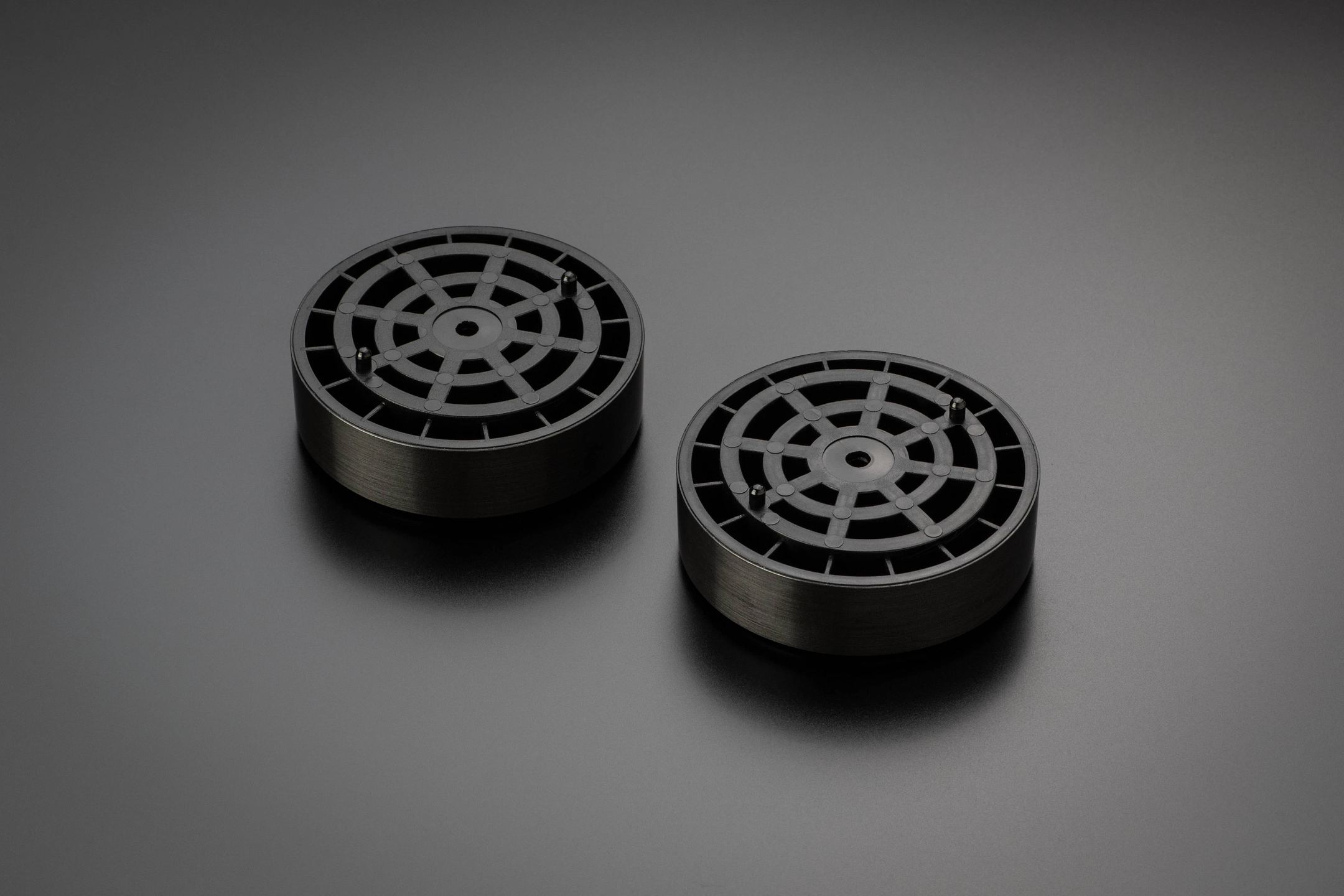
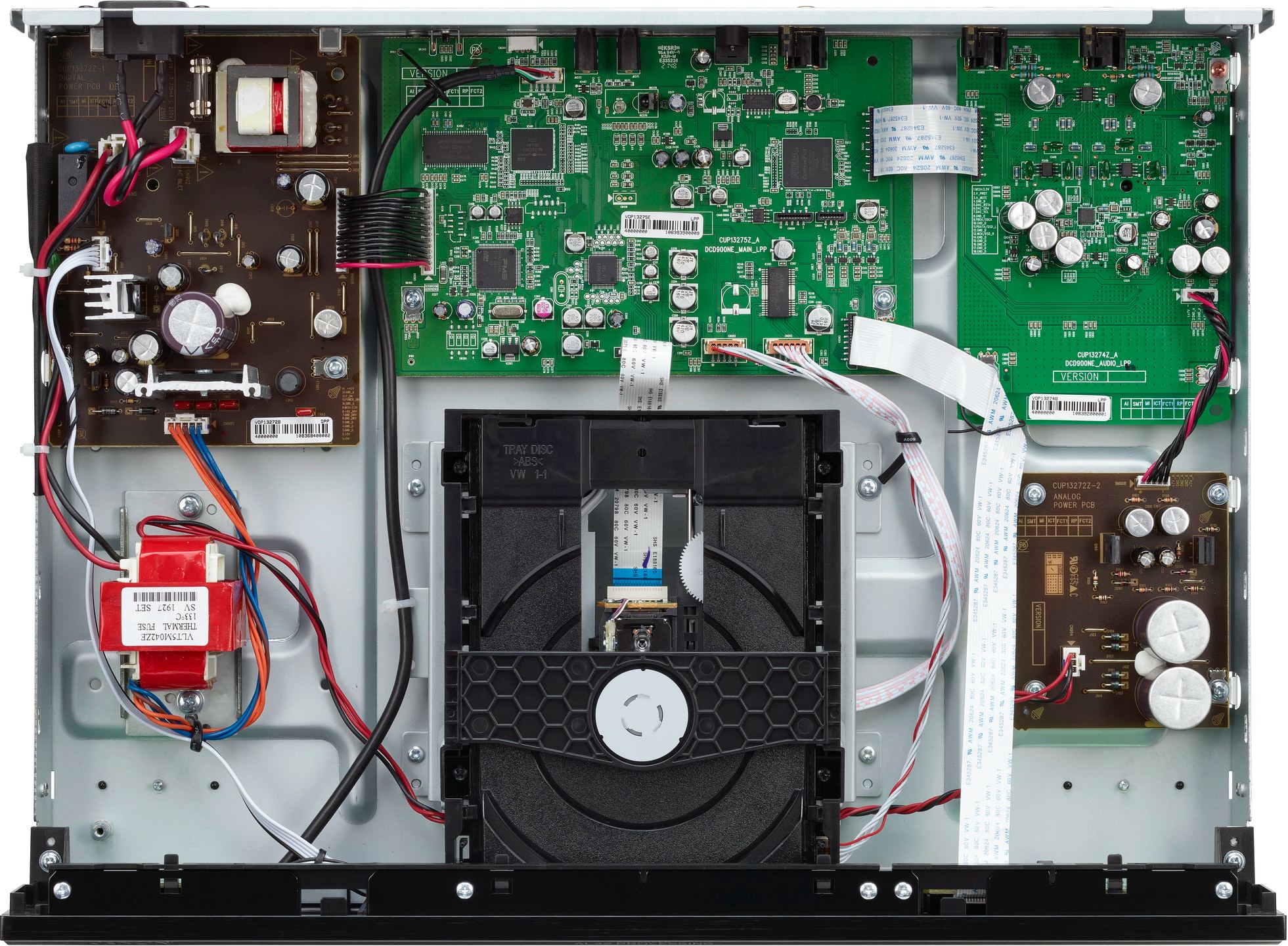
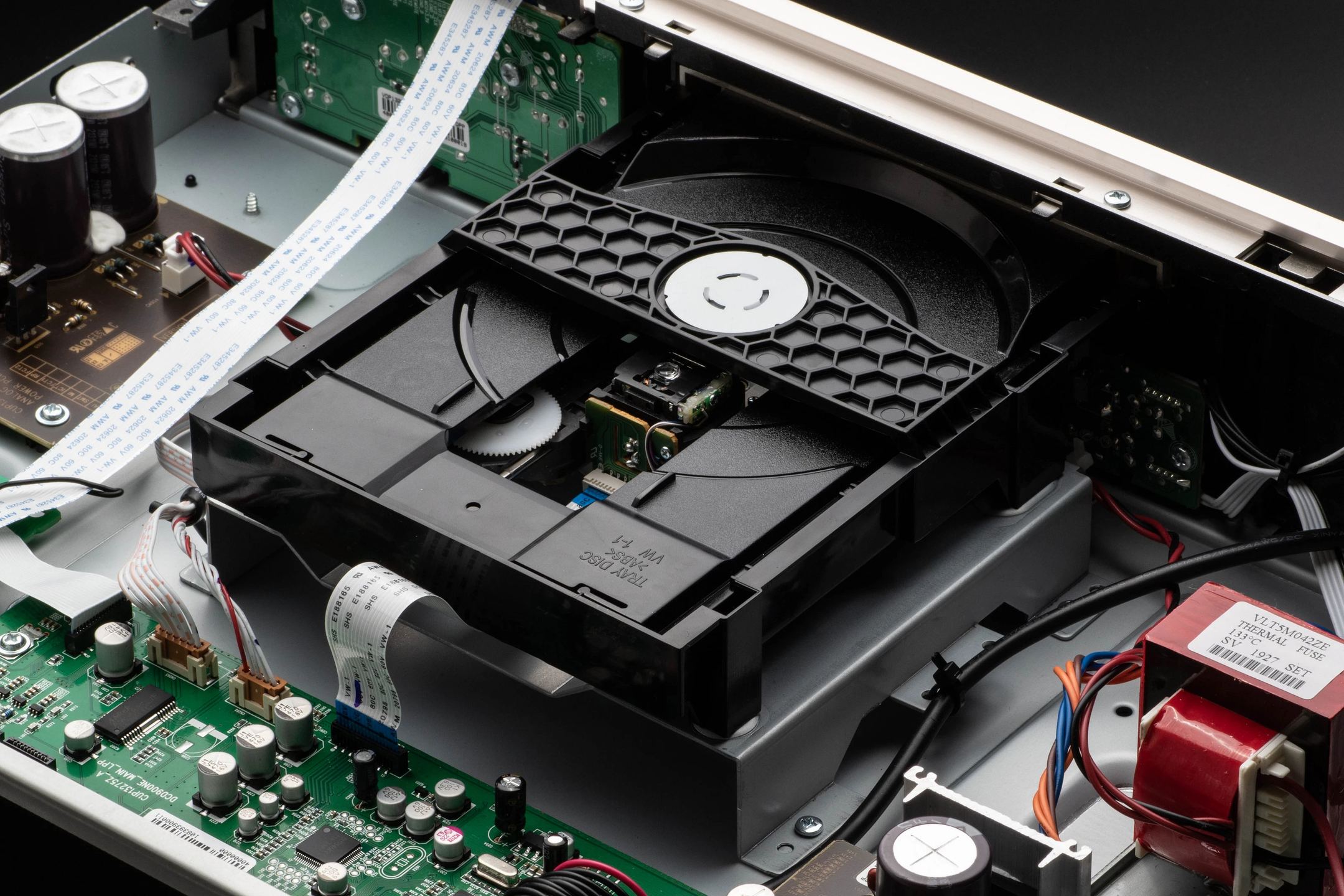
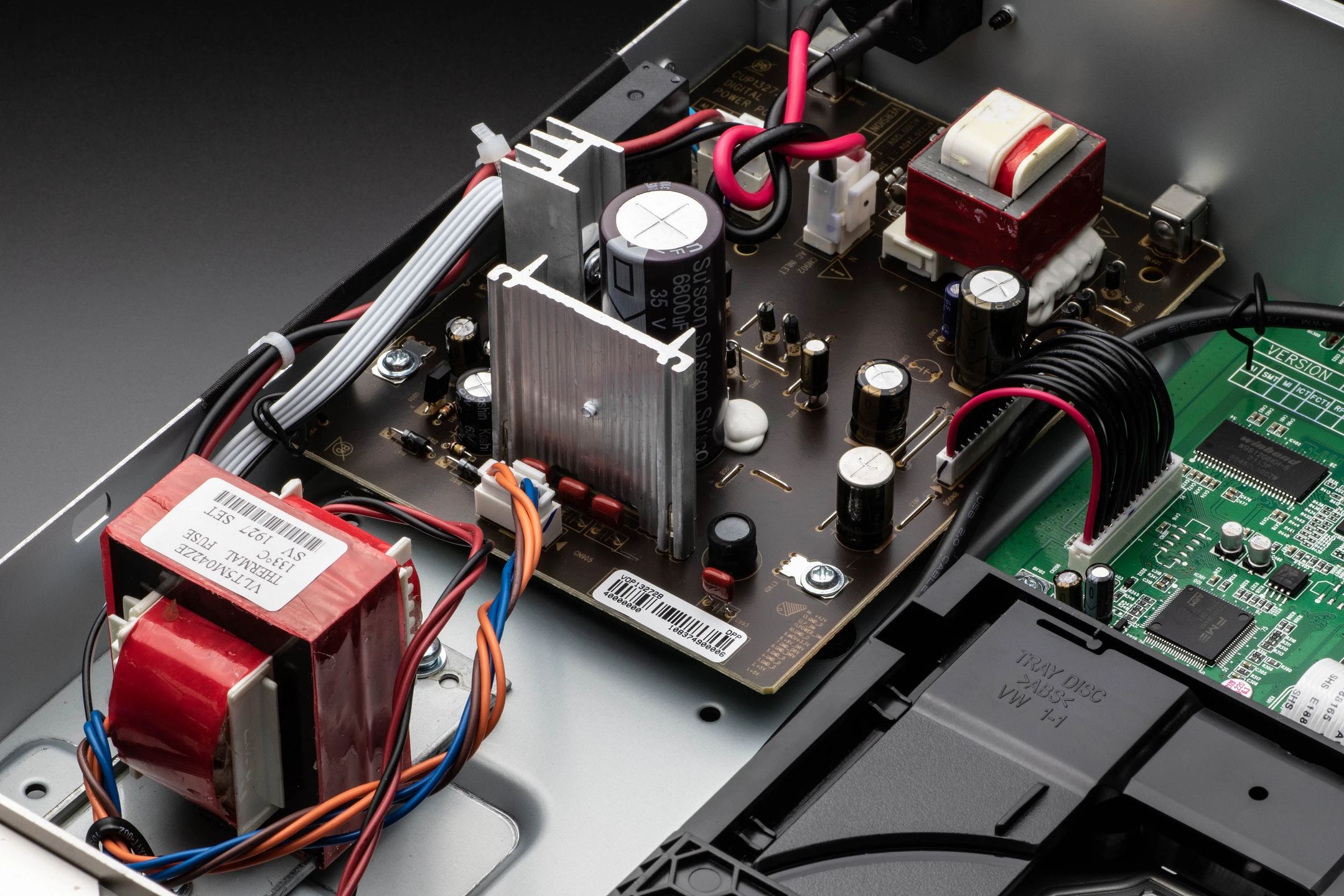
Direct Mechanical Ground technology lies at the heart of this anti-vibration approach. By concentrating mass at the center of the unit, this architecture minimizes unwanted resonances that could impair optical reading. Power transformers, potential sources of vibration, are strategically positioned near the base of the chassis, directly above the isolating feet. This layout channels vibrations into the support rather than allowing them to propagate into sensitive circuits.
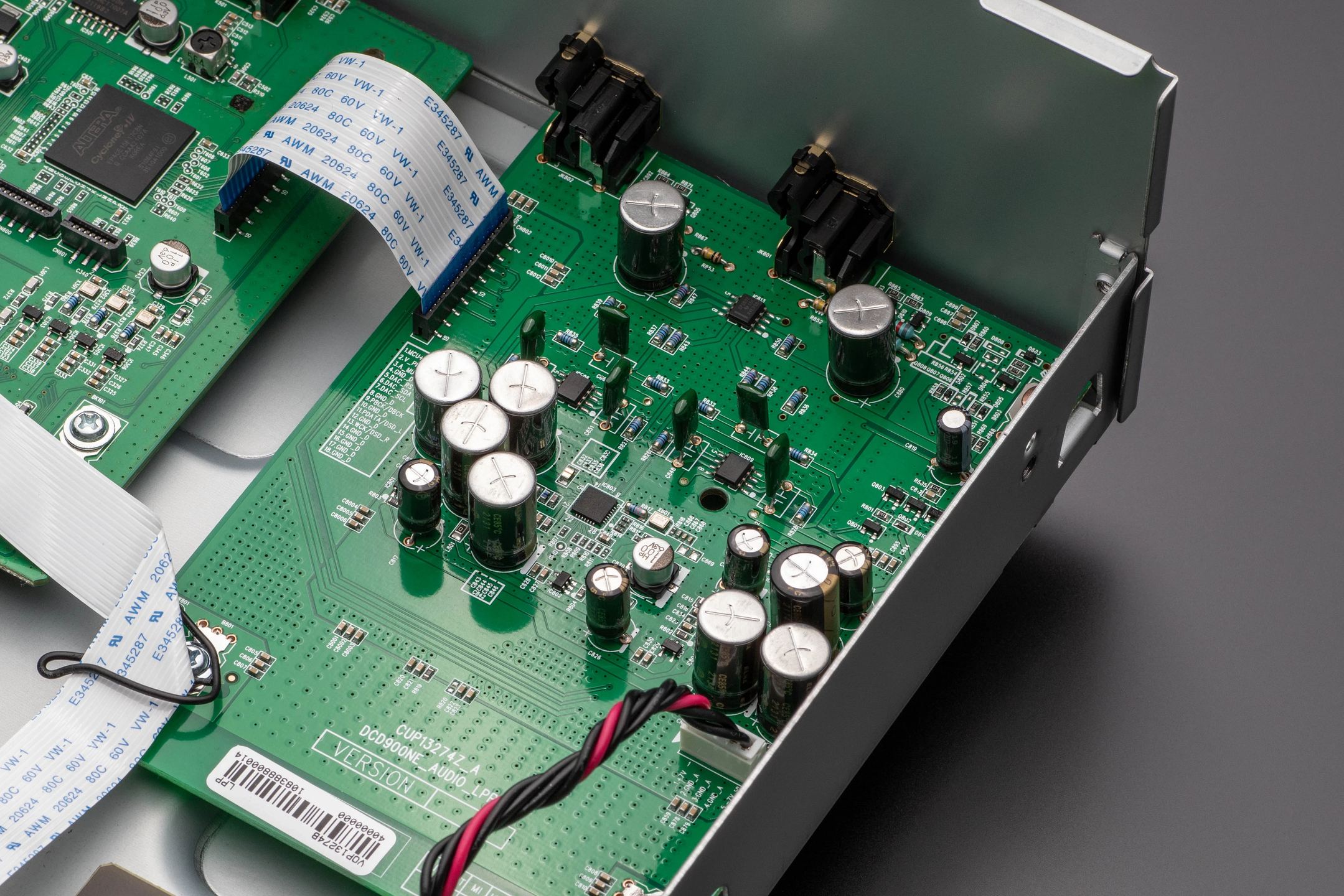
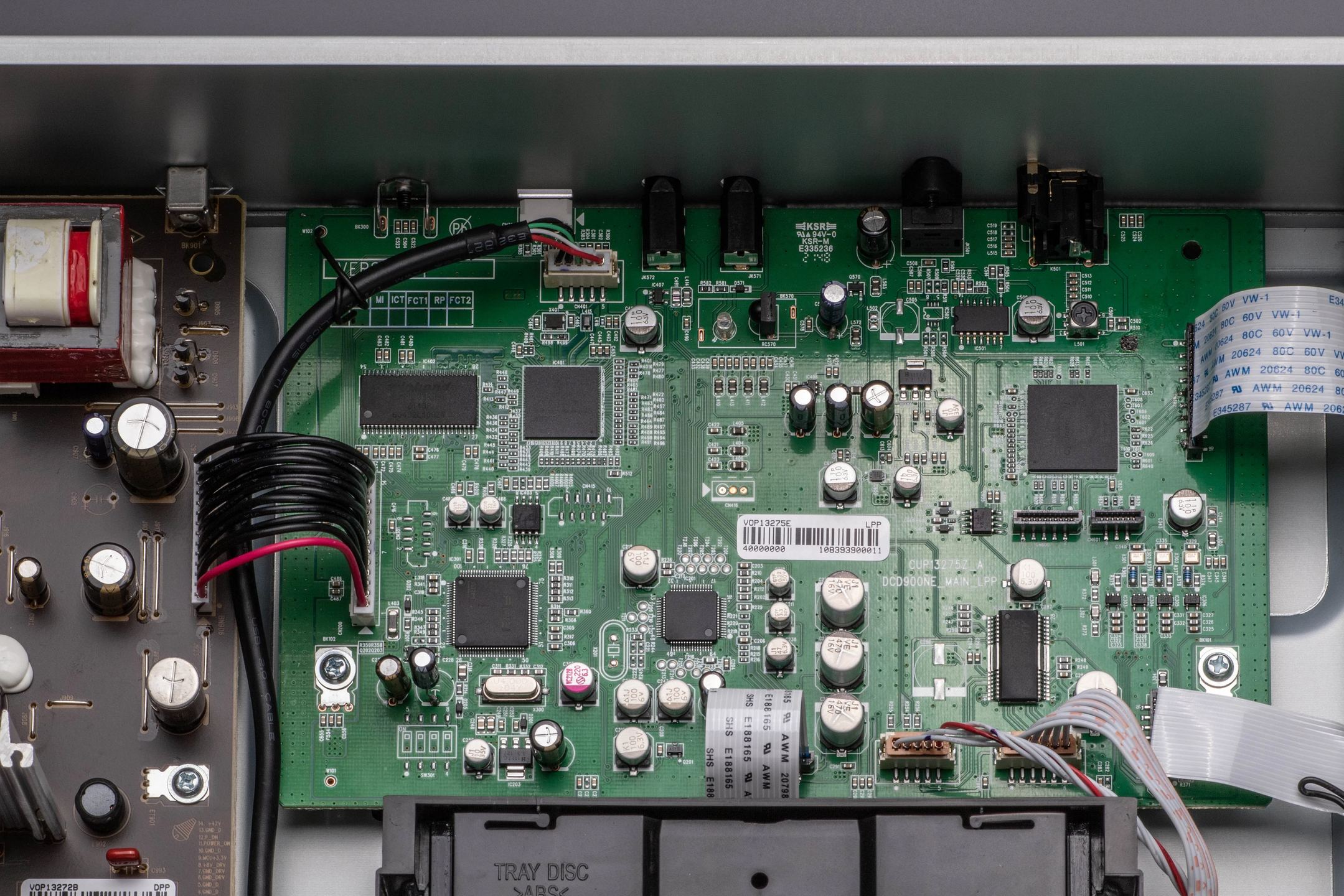
Physical separation between the analog and digital boards is another crucial aspect of this design. By distancing these sections, Denon significantly reduces electromagnetic interference that could degrade the audio signal. Signal paths have been shortened as much as possible, thereby limiting opportunities for signal contamination between the left and right channels.
Advanced AL32 Processing Plus is the culmination of decades of Denon research in digital conversion. This proprietary technology does more than convert digital data into an analog signal: it actively reconstructs the original waveform.
The system uses sophisticated interpolation algorithms that analyze existing data to calculate and insert missing points in the audio stream. This oversampling and bit-expansion process turns the 16-bit data of standard CDs into 32-bit streams, greatly increasing resolution and reproduction accuracy. Micro-details that might have been lost during the original digital recording are thus restored, delivering a richer, more natural sonic texture.
This technology applies not only to traditional CDs but also to high-resolution files played via the USB port. FLAC files up to 192 kHz/24-bit and DSD files up to 5.6 MHz all benefit from this advanced processing, ensuring remarkable sonic consistency regardless of source.
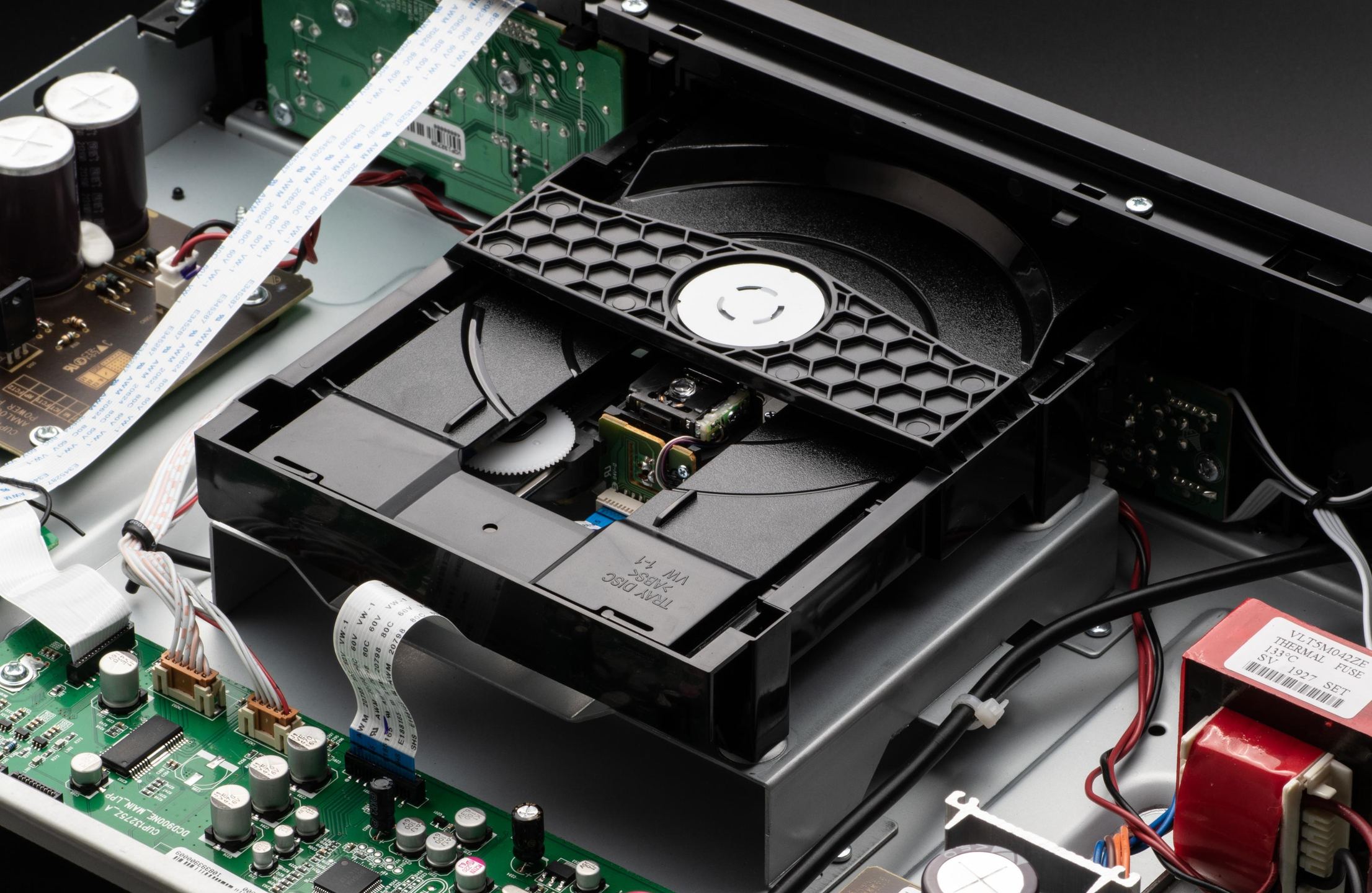
At the heart of conversion is the ES9018K2M DAC, a chip renowned for its exceptional performance. This 32-bit/192 kHz converter offers an extended dynamic range and extremely low noise. The measurements speak for themselves: a signal-to-noise ratio of 115 dB and total harmonic distortion of just 0.0015% when playing USB DSD.
The master clock located directly adjacent to the DAC is key to timing accuracy. This physical proximity minimizes jitter, those microscopic timing variations that can blur sonic clarity. By treating the DAC as the master when providing clock signals, the system ensures perfect synchronization of digital circuits. This architecture guarantees that every audio sample is converted at the exact intended moment, preserving the music’s temporal integrity.
The front-panel USB Type-A port turns the DCD-900NE into a true digital playback hub. Beyond classic compressed formats (MP3, WMA, AAC), the player excels with high-resolution files. WAV and FLAC are supported up to 192 kHz/24-bit, while ALAC goes up to 96 kHz/24-bit. AIFF up to 192 kHz/24-bit rounds out this generous offering.
DSD compatibility deserves special mention. Support for 2.8 MHz and 5.6 MHz DSD files (DIFF and DSF formats) places the DCD-900NE among players capable of reproducing the format favored by SACD recordings, even though it does not read physical SACD discs. This capability opens access to a growing catalog of high-resolution downloads.
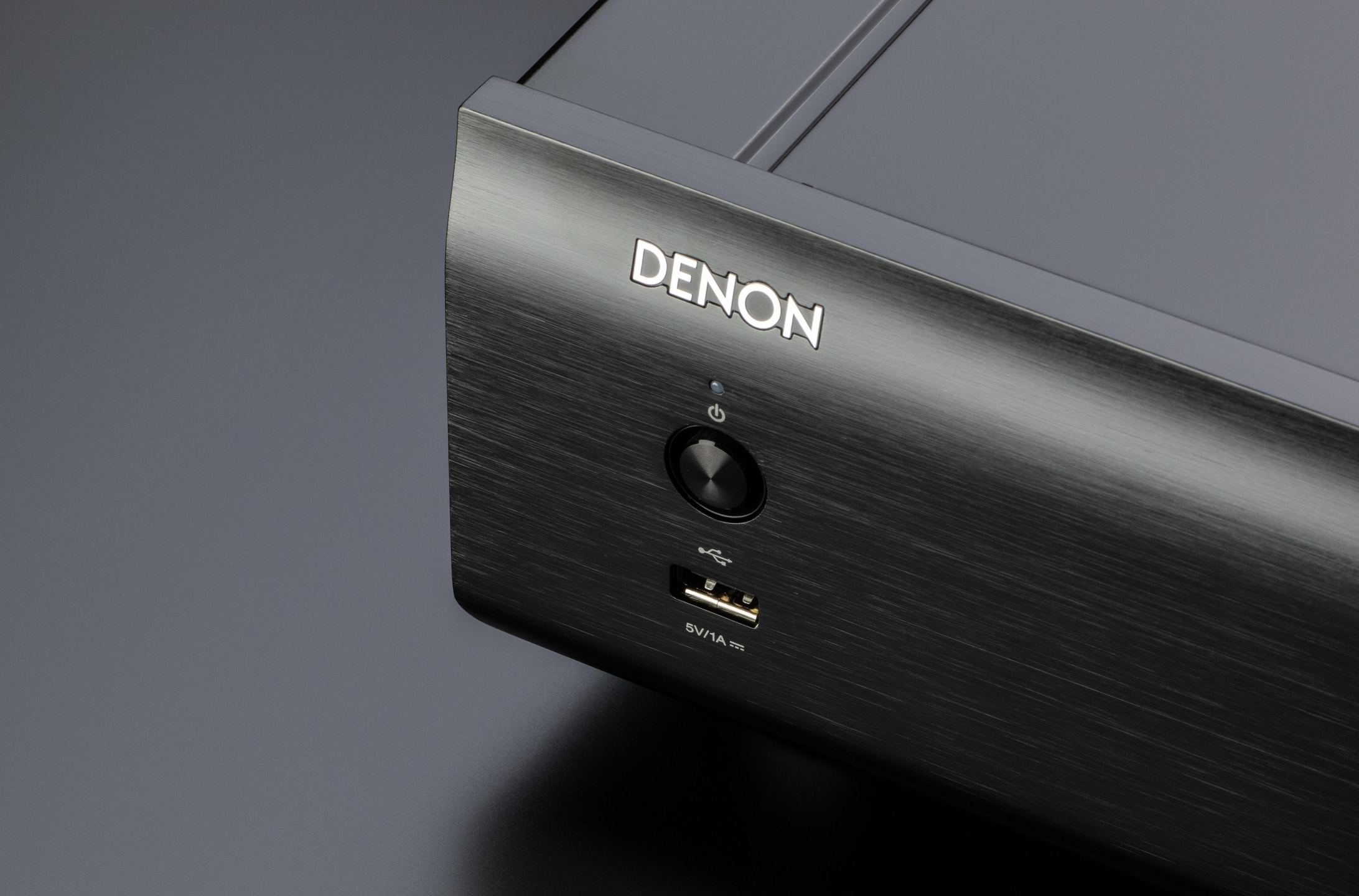
Pure Direct mode embodies Denon’s purist philosophy at its peak. By disabling the display and digital outputs, this mode eliminates any potential sources of electromagnetic interference that could color the audio signal. The result is a more open soundstage, enhanced instrument separation, and preserved dynamics.
This feature is particularly beneficial during critical listening sessions where every nuance counts. Turning off the display may seem anecdotal, but in a high-fidelity system where every detail is audible, eliminating this source of electromagnetic radiation contributes to the purity of the final analog signal.
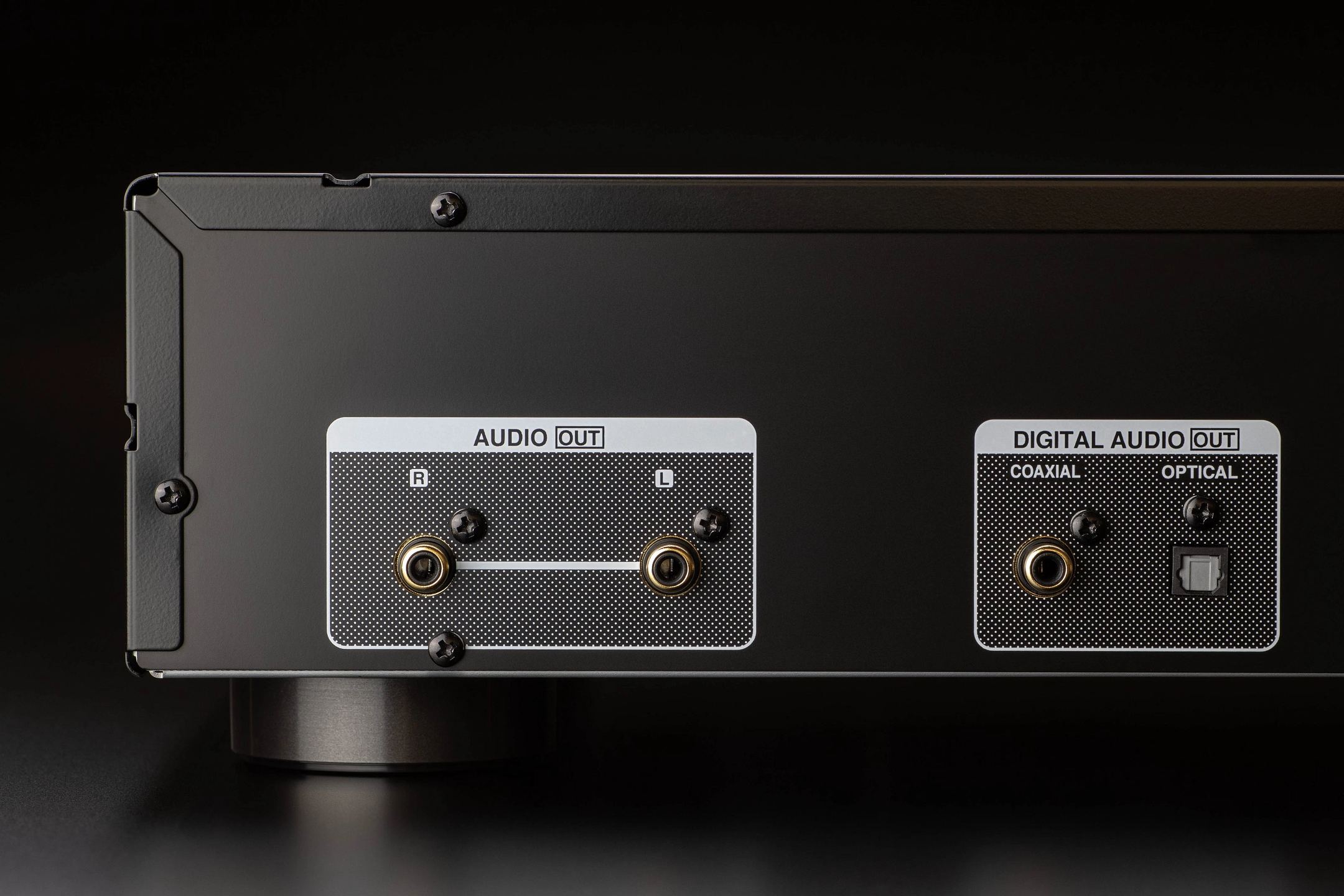
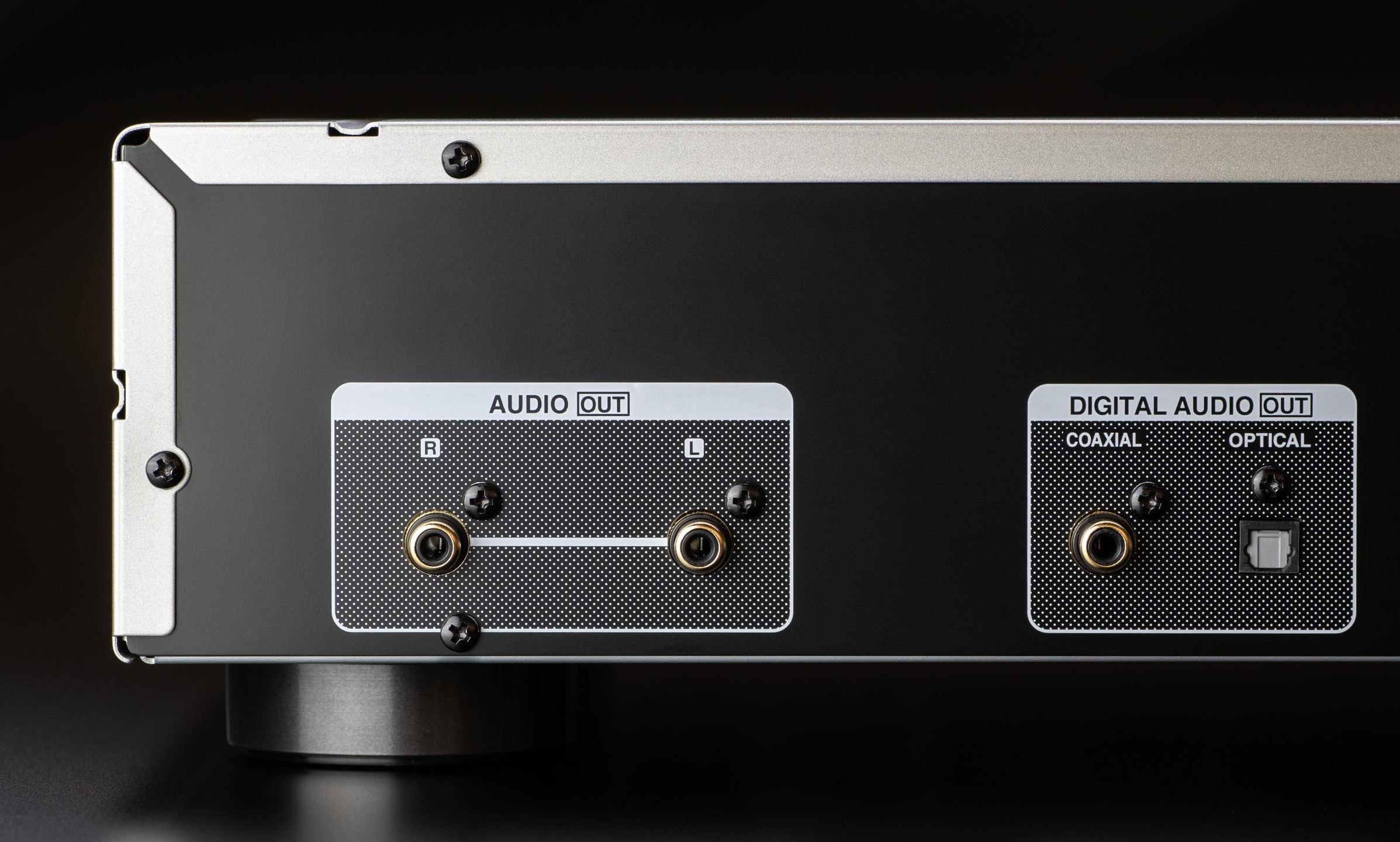
The DCD-900NE’s connections reflect its intention to fit into a variety of systems. Gold-plated RCA analog outputs ensure optimal signal transmission to the amplifier. The 2.2 V RMS output level ensures compatibility with most amplifiers on the market.
Digital outputs, both optical and coaxial, offer the flexibility to use an external DAC if desired. This option allows audiophiles to experiment with different converters while keeping the DCD-900NE as a quality CD transport. Remote Control In/Out bus connectors allow integration into home automation systems or pairing with other Denon components for centralized control.
The increased spacing between the left and right RCA outputs, compared with previous models, reflects attention to the smallest details. This layout reduces the risk of inter-channel interference, particularly with large-gauge cables used in high-fidelity setups.
The DCD-900NE stands out mainly thanks to Advanced AL32 Processing Plus (versus standard AL32 Processing on the 600NE), the addition of a front USB port for high-resolution file playback, a coaxial output in addition to optical, and a more sophisticated internal design with better circuit separation and wider RCA output spacing. These improvements justify the roughly 80-euro price difference between the two models.
No, the DCD-900NE does not play physical SACD discs. However, it can play DSD files (the SACD audio format) up to 5.6 MHz via its USB port, thus providing access to SACD-quality sound through dematerialized files. For physical SACD playback, consider the higher-end DCD-1700NE, recently discontinued.
Pure Direct mode disables the player’s display as well as the digital outputs to minimize any electromagnetic interference that could affect the analog audio signal. This function is especially appreciated during critical listening sessions where absolute signal purity is sought. Activation is simple via the remote control or the front panel.
The USB port supports USB flash drives and external hard drives (formatted FAT16 or FAT32) containing MP3, WMA, AAC, WAV (up to 192 kHz/24-bit), FLAC (up to 192 kHz/24-bit), ALAC (up to 96 kHz/24-bit), AIFF (up to 192 kHz/24-bit), and DSD (2.8 MHz and 5.6 MHz). The port does not support iOS or Android devices, USB hubs, or card readers.
No, the DCD-900NE includes an excellent ES9018K2M DAC which, combined with Advanced AL32 Processing Plus, delivers outstanding performance. The digital outputs nonetheless allow the use of an external DAC if you want to experiment with different sonic signatures or already own a high-end converter.
While a Blu-ray player can technically play CDs, the DCD-900NE delivers superior sound quality thanks to dedicated audio circuits, an optimized power supply, anti-vibration design, and Advanced AL32 Processing Plus. A dedicated player like the DCD-900NE prioritizes audio quality, whereas a Blu-ray player makes compromises to handle multiple video formats.
Based on reviews from customers who purchased this product, summarised by AI
Marie veronique
Excellent! Thank you so much!
Comment from June 15, 2026 — Experience from June 01, 2026
Thierry
For now, I’m being cautious.
Comment from January 29, 2026 — Experience from January 18, 2026
Eric
I am delighted with my purchase to enhance my CDs.
This player, combined with a good amplifier and quality speakers, is all you need to rediscover your CDs.
Comment from May 26, 2025 — Experience from May 10, 2025