Victor
Very good value for money. A very clean sound.
Comment from 2 June 2026 — Experience from 21 May 2026
Automatically translated — Show original (Spanish)
Muy buena relación calidad precio. Un sonido muy limpio.
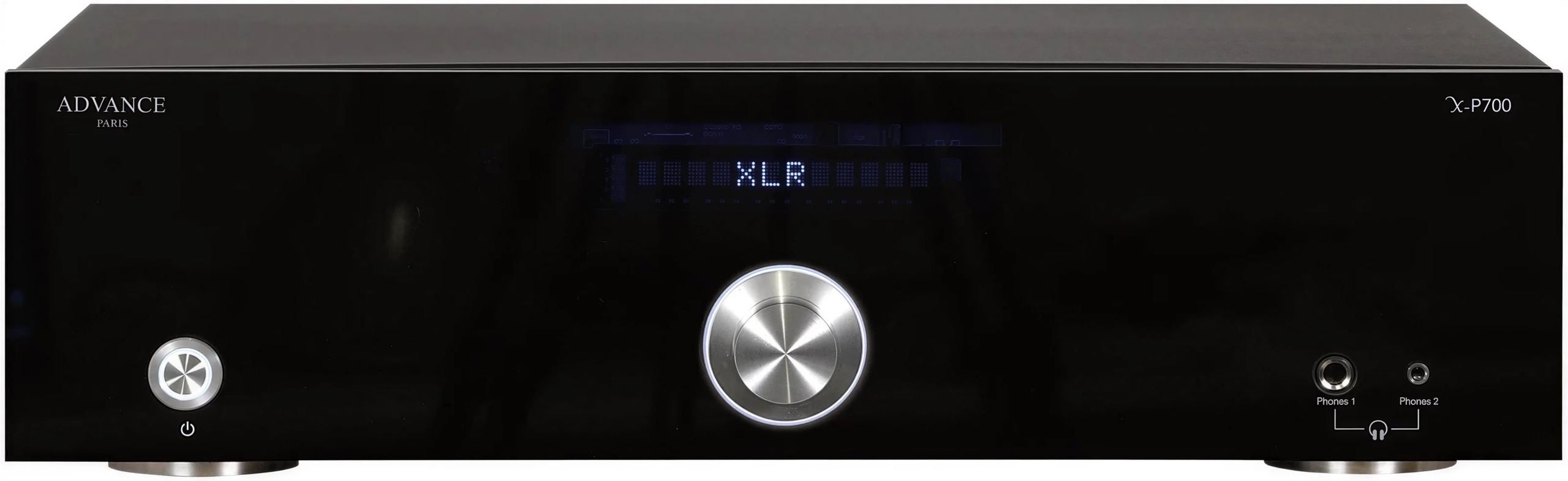
A discreet chassis that hides a carefully designed architecture: the X-P700 picks up where the X-P500 left off, taking the audiophile logic even further. The dual-mono construction, which processes each channel independently via two separate toroidal transformers, is designed to minimize crosstalk and preserve stereo separation. The French manufacturer, active since 1995, has also integrated a Burr-Brown PCM 1796DB DAC to replace the Wolfson used in the previous model.
The distinctive feature of the X-P700 lies in its ability to switch between two output topologies. Class A mode uses bipolar transistors in a double-cascade configuration, which produces harmonic distortion similar to that of tube amplifiers, with a smooth, even coloration. Discrete mode is based on a JFET differential stage combined with a bipolar current mirror, biased in class AB. This second option delivers a more analytical rendering, sometimes perceived as more precise on transients. Selection is made from the menu, via the multifunction rotary knob on the front panel.
Signal processing follows the “Direct Path” principle, which aims to keep the electrical path between input and output as short as possible. The power supply, also built in dual mono, uses two high-current-capacity toroidal transformers feeding filtered and regulated circuits. The stated overall signal-to-noise ratio reaches 130 dB.
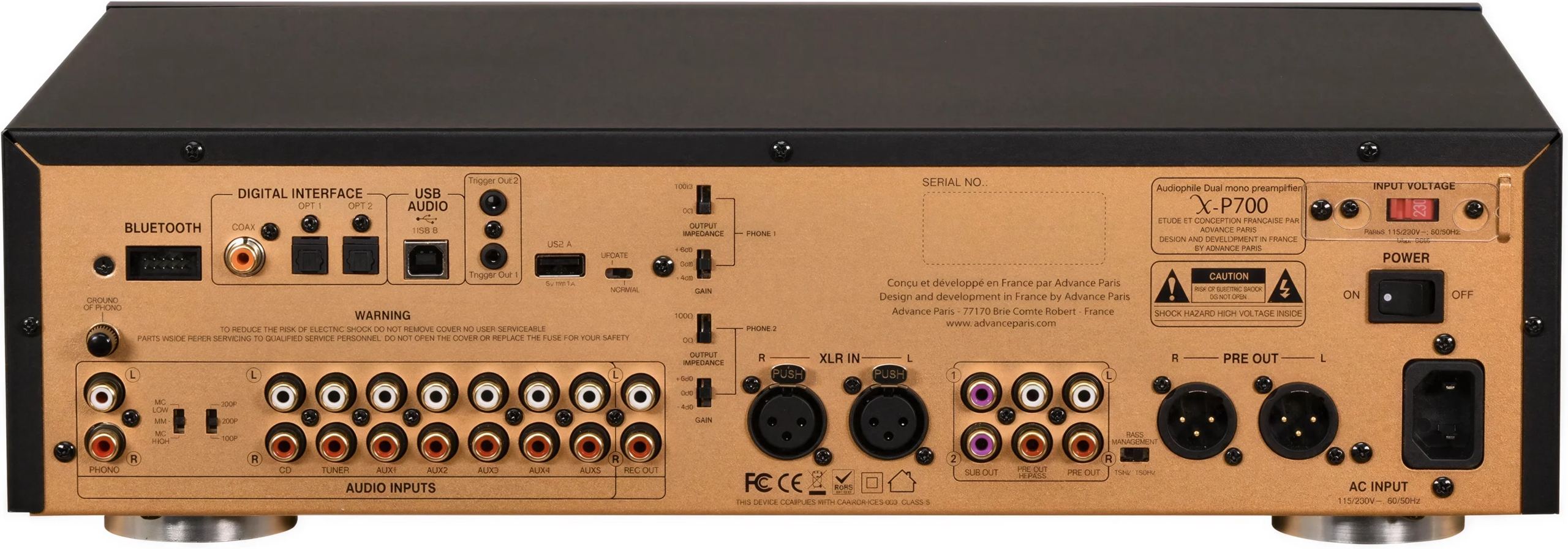
The rear panel offers seven RCA line inputs plus a balanced XLR input. The phono stage accepts both moving magnet (MM) and moving coil (MC) cartridges, with two gain levels available for the latter (48 dB or 64 dB). Capacitance is also adjustable, allowing the preamp to be tailored to different cartridges without resorting to an external phono preamp.
On the digital side, there are two optical S/PDIF inputs, one coaxial, and two USB ports. The USB-B, equipped with an XMOS XU208 controller, provides asynchronous transmission from a computer. The USB-A allows playback of files stored on a USB stick or external drive. The Burr-Brown converter accepts PCM streams up to 24-bit/192 kHz.
Outputs include a full-band RCA pair, a balanced XLR output, a dedicated recording output, and a high-pass pre-out. Two subwoofer outputs make it possible to integrate one or two subwoofers, with a selectable crossover frequency at 75 Hz or 150 Hz.
The front panel features two headphone jacks, one 6.35 mm and the other 3.5 mm. Each output has independent settings accessible via the menu: three gain levels (+6, 0, or -4 dB) and two output impedance values (0 or 100 ohms). This flexibility lets you adapt the headphone amplifier’s behavior to very different models, from sensitive in-ears to more demanding planar headphones.
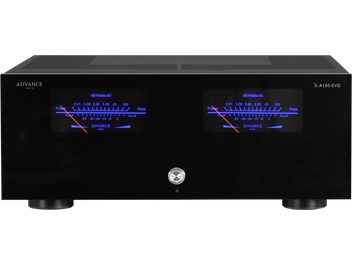
The X-P700 is designed to work with the power amplifiers in the Advance Paris range: X-A160 EVO, X-A220 EVO, BX2, or X-A600. The balanced XLR output comes into its own with power amps that accept this type of connection, reducing susceptibility to interference over long cable runs.
The dual subwoofer output and high-pass output also allow bi-amped configurations, where a dedicated amplifier handles low frequencies while another takes care of the mids and highs.
Yes, it features a Burr-Brown PCM 1796DB converter capable of handling PCM files up to 24-bit/192 kHz. This DAC receives signals from the digital inputs (optical, coaxial, USB-B, and USB-A). DSD is not natively supported.
Class A mode uses bipolar transistors in a double-cascade configuration, generating even-order harmonic distortion similar to tube sound. Discrete mode uses a JFET differential stage in class AB, delivering a sound perceived as more neutral and analytical. Both modes are available at any time via the menu.
Technically yes, since the headphone outputs operate independently of the pre-outs. The gain and impedance settings allow you to optimize the sound according to the headphones used. The quality of the headphone stage benefits from the dual-mono power supply.
No, this module simply connects to an analog RCA input. It does not interfere with the circuit for other sources. When it is not selected, it remains inactive.
The phono stage accepts MM (moving magnet) and MC (moving coil) cartridges. For MC cartridges, two gain levels are available: 48 dB for high-output cartridges and 64 dB for low-output cartridges. Capacitance is adjustable for MM cartridges.
Bass and treble adjustments can be bypassed via the bypass function, which removes them completely from the circuit. In bypass mode, the signal follows the most direct path possible.
This output is only activated when a subwoofer is connected to one of the subwoofer outputs. It then filters low frequencies upstream of the main amplifier, according to the chosen crossover frequency (75 or 150 Hz). Without a subwoofer, you should use the full-band output.
Victor
Very good value for money. A very clean sound.
Comment from 2 June 2026 — Experience from 21 May 2026
Alain
Sober and very complete. Beautiful quality of finish. With a matching power amp you can get the most out of it. The sound is rather well balanced.
Small downside: without the remote control, it’s not as easy to select the different functions.
Comment from 8 December 2025 — Experience from 27 July 2025
Guillaume
Very satisfied and very easy to use.
The treble and bass settings are great.
The black color is beautiful, but be careful with scratches.
👍👍👍
Comment from 8 May 2025 — Experience from 27 April 2025