Cyrus Classic AMP
Overview
The Cyrus Classic Amp represents the culmination of nearly four decades of British expertise in designing compact high-fidelity amplifiers. This latest iteration of a model that has been in the Cyrus catalogue for over a decade benefits from a complete overhaul of its internal circuitry, directly inheriting the technical developments of the high-end XR series while retaining the brand’s signature half-width chassis. With 91 watts per channel into 6 ohms, an integrated phono stage, and a digital-to-analog converter, this amplifier packs into 215 mm of width features that are typically spread across several separate components.
Construction and design: the permanence of a visual signature
The Classic Amp continues the die-cast aluminum enclosure introduced in the early 1990s with the Cyrus 3. This construction, often compared to professional camera bodies due to the use of a magnesium alloy, offers several technical benefits beyond its role as a simple shell. The structure acts as a heatsink for the output transistors, eliminating the need for bulky internal heatsinks. The rigidity of the chassis minimizes mechanical vibrations that could affect sensitive components, while its non-ferromagnetic properties reduce electromagnetic interference.
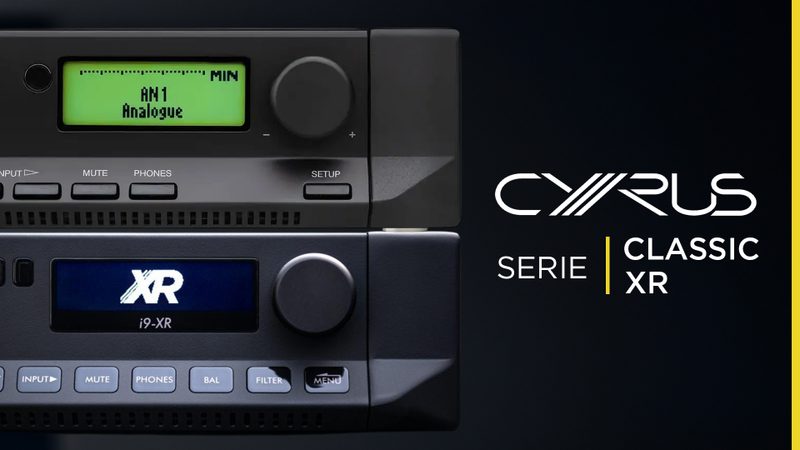
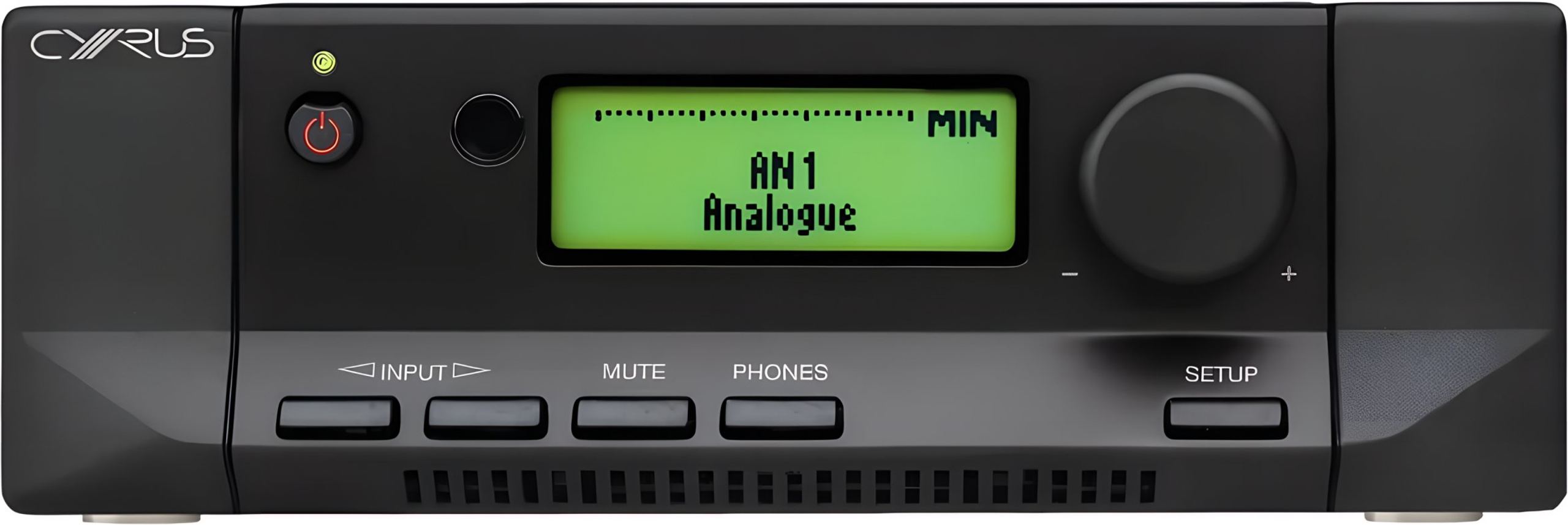
The dimensions of 75 x 215 x 365 mm may seem atypical in a hi-fi world where devices generally adopt a standard width of 430 mm. This narrow, deep format—sometimes affectionately dubbed “shoebox” by aficionados—poses certain integration challenges in traditional furniture but allows a complete Cyrus system to fit into half the usual space. The green dot-matrix display, modest in size, fits within a deliberate aesthetic that prioritizes function over ornamentation. The four front-panel buttons and the rotary-encoder volume knob provide a precise tactile interface, with a satisfying click at each increment.
The chassis’s matte black finish resists the passage of time remarkably well, though some observers note that the XR series’ “phantom” hue offers a slightly deeper black. The 6.7 kg weight may seem modest compared to the heavyweights of high-fidelity amplification, but the unit’s density and build quality convey a reassuring impression of solidity. This minimalist approach to physical presentation reflects a philosophy in which resources are primarily allocated to internal circuits rather than cosmetic flourishes.

Internal technologies: the technical legacy of the XR series
The complete overhaul of the Classic Amp draws on developments made for the XR series, translating technical solutions devised without budget constraints into a more accessible price bracket. The 304 VA toroidal transformer forms the heart of the power supply—a generous figure for a device of this size that even exceeds the 340 VA mentioned in some technical documentation. This power supply features separate windings for the preamplification and power amplification sections, an architecture that limits parasitic interactions between the different stages.
Engineers have paid particular attention to circuit topology, opting for a low-impedance design that minimizes thermal losses. Oversized coupling capacitors and buffer op-amps selected for their performance help preserve signal integrity throughout the amplification chain. Input selection is handled by relays rather than semiconductor switches—a more costly solution that ensures minimal signal degradation and better isolation between sources.
The output stage employs a new generation of transistors, faster than their predecessors, enabling an extended frequency response from DC up to over 50 kHz (-3 dB). This bandwidth, deliberately narrower than that of the XR series which reaches 100 kHz, makes it easier, according to Cyrus, to pair with entry-level speakers that can be less well-behaved in the ultrasonic domain. The absence of a DC servo at the output, made possible by precise component matching, preserves signal processing speed.
The digital section benefits from its own isolated switching power supply, eliminating any potential contamination of sensitive analog circuits. The converter, capable of handling signals up to 24-bit/192 kHz, draws on developments from Cyrus’s QXR DAC. The use of Schottky diodes in current rectification improves power-supply stability under impulsive current demands, particularly during demanding dynamic passages.
Connectivity: assured versatility in a compact format
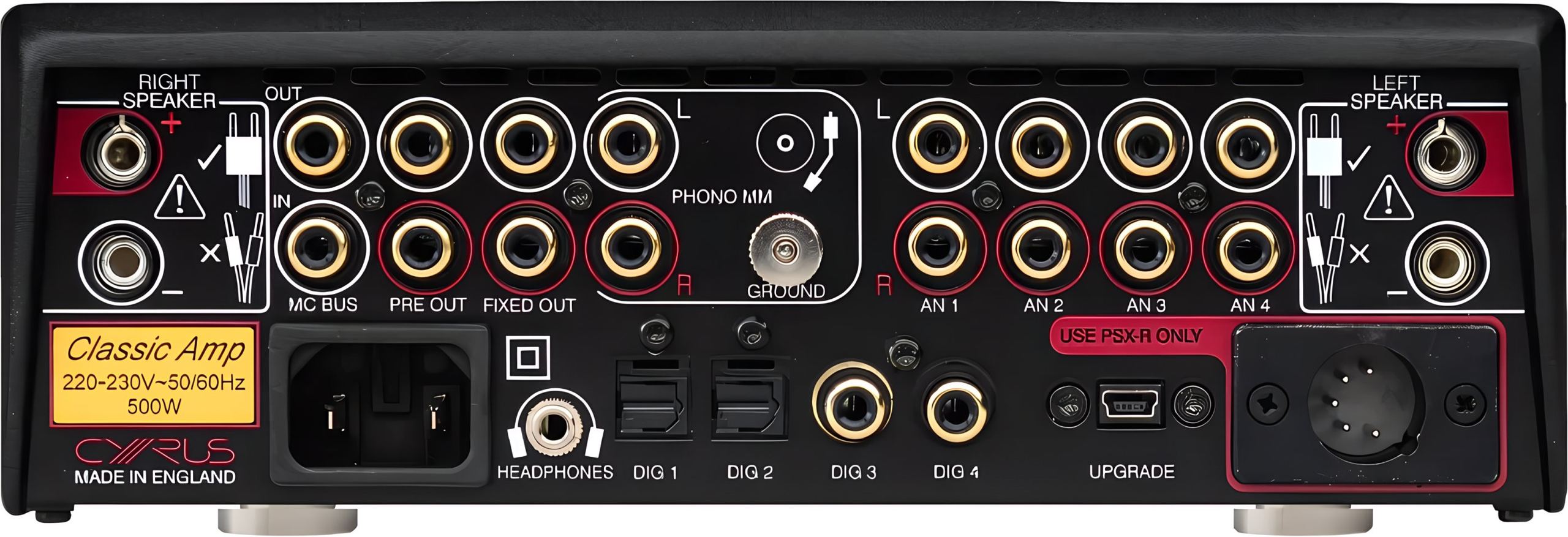
The back of the Classic Amp reveals a remarkable density of connections for a chassis of this size. Four RCA line inputs accommodate traditional analog sources, whether a network player, tuner, or tape deck. The phono input dedicated to moving magnet cartridges attests to vinyl’s continued presence in contemporary high-fidelity systems. Far from a token addition, this phono stage implements a dual active stage with passive RIAA equalization, offering a sensitivity of 2.3 mV perfectly suited to modern MM cartridges.
The digital section provides two coaxial and two Toslink optical inputs, allowing direct connection of various digital sources: CD players, game consoles, TV set-top boxes, or Blu-ray players. The absence of a USB input—present on the pricier i7-XR and i9-XR models—is a deliberate cost-saving measure that maintains the Classic Amp’s price positioning. This limitation does not materially hinder everyday use, as most modern streamers offer compatible S/PDIF outputs.
RCA preamplifier outputs allow the addition of an external power amplifier or the feeding of an active subwoofer, turning the Classic Amp into a preamplifier should power requirements evolve. The 3.5 mm mini-jack headphone output, controversially placed at the rear of the unit, complicates access but is explained by the transformer’s position at the front of the chassis. The PSX-R port enables connection of the external PSX-R2 power supply, opening a path to substantial upgrades without replacing the main unit.
The loudspeaker binding posts now accept banana plugs via adapters—a welcome evolution from previous generations limited to spade or bare-wire connections. The MC-Bus control bus maintains compatibility with the Cyrus ecosystem, allowing multiple brand components to power up simultaneously at the press of a single remote button.
Sound characteristics: British precision and controlled musicality
The Classic Amp’s sonic signature follows Cyrus’s tradition of fast, detailed, and rhythmically engaging reproduction, while incorporating refinements introduced by the XR series. The presentation is distinguished by clarity and precision, with a remarkable ability to unravel complex instrumental textures without ever tipping into emotionless surgical analysis. This transparency does not come with the hardness sometimes attributed to older Cyrus 6 or 8 generations; the Classic Amp exhibits a newfound sophistication in handling recordings of variable quality.
The soundstage extends well beyond the physical limits suggested by the unit’s compact dimensions. The width and depth of the stereo image rival those of substantially bulkier amplifiers, even if absolute low-end authority remains proportional to the physical limitations imposed by the power supply and format. Fast transients are rendered with agility that does justice to the brand’s tradition, with subtle dynamic shifts preserved faithfully to reveal performers’ expressive intent.
The low-frequency range, without reaching the visceral impact of high-power amplifiers, offers exemplary articulation and definition. Complex bass lines remain intelligible even in dense passages, while the texture of low-frequency instruments remains identifiable. This control of the bass spectrum extends down to sub-bass frequencies, where the Classic Amp maintains its grip without flinching, even if absolute sound pressure levels remain naturally limited.
The midrange—critical for vocal and instrumental reproduction—benefits from timbral neutrality that avoids favoring any particular coloration. Voices retain their natural character, whether the grain of a male voice or the delicacy of a soprano. Acoustic instruments, particularly demanding in terms of tonal accuracy, are reproduced with realism that allows identification of each instrument’s distinctive traits: the bite of a violin, the warmth of a cello, or the brilliance of a trumpet.
Upgradability: the PSX-R2 as a performance catalyst
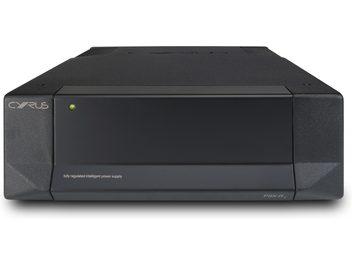
The PSX-R2 external power supply, priced at 1,195 euros, is far more than a simple optional accessory. This unit, based on a design that has been in the Cyrus catalogue for over three decades, incorporates the filtering improvements developed for the brand’s 30th Anniversary commemorative system. The 300 VA toroidal transformer and 30,000 microfarad reservoir capacitors with low series resistance ensure a substantial instant current reserve.
Connection is made via an audiophile-grade XLR cable, with onboard intelligence in both devices automatically adjusting output and input parameters without manual intervention. The PSX-R2 handles power delivery to the preamplifier’s analog stages and the DAC’s post-conversion circuits, freeing the Classic Amp’s internal supply to focus exclusively on the power stage. This separation of power supplies eliminates parasitic interactions between sections, particularly beneficial during high current demands.
The improvements brought by the PSX-R2 manifest as a notable expansion of the soundstage, increased micro-detail definition, and more assertive dynamics. Bass gains depth and impact, drums acquire a more physical presence, and rhythmic subtleties become more evident. The reduced noise floor reveals previously masked details—particularly in acoustic recordings where the room’s ambience becomes palpable. This transformation fully justifies the investment for users seeking the last percentages of performance, even though the Classic Amp alone already delivers a remarkable level of capability.
Technical Specifications
Audio Performance
- Output power (2 channels in operation):
- 112 W at 4 Ω
- 91 W at 6 Ω
- 70 W at 8 Ω
- Total harmonic distortion + noise (THD+N) (1 kHz, 2/3 power) 6 Ω: < 0.002%
- Input sensitivity (91 W / 6 Ω): 225 mV
- Input impedance: 28 kΩ
- Maximum input signal: 2.5 V
- Frequency response (-3 dB): < 0.5 Hz, > 50 kHz
- Signal-to-noise ratio (unweighted): > 100 dB
Phono Stage
- Input sensitivity (91 W / 6 Ω): 2.3 mV
- Input impedance: 47 kΩ
- Maximum input voltage (1 kHz): 25 mV
- Phono stage gain (1 kHz): 80 dB
- RIAA tolerance: < 0.5 dB
Connectivity
- 4 analog line inputs
- 1 moving magnet (MM) phono input for turntable
- 2 coaxial digital inputs (RCA)
- 2 optical digital inputs (Toslink)
- Unbalanced preamplifier outputs
- Headphone output (3.5 mm mini-jack)
- Connection for PSX-R power supply
- Firmware update port
Physical Characteristics
- Cast aluminum chassis
- Power consumption:
- Standby: < 0.5 W
- Maximum: 500 W
- Dimensions (H × W × D): 75 × 215 × 365 mm
- Weight: 6.7 kg
Frequently Asked Questions
Is the Classic Amp compatible with speakers that are hard to drive?
With 112 watts into 4 ohms and 70 watts into 8 ohms, the Classic Amp has ample resources for the majority of home speakers. Its class AB design and instant current capability allow it to handle reactive loads with ease. Nevertheless, speakers that are particularly current-hungry or have a sensitivity below 85 dB may benefit from a more powerful amplifier to reach high listening levels.
What’s the difference between the Classic Amp and the older Cyrus 6 and 8?
The Classic Amp effectively replaces the 6 and 8 series, unifying these two ranges into a single model. Beyond the slightly higher power output (91 W versus 40 W for the 6 and 70 W for the 8), the Classic features fully redesigned circuits inspired by the XR series. Component quality, circuit topology, and measured performance significantly surpass previous generations, notably with a signal-to-noise ratio above 100 dB and harmonic distortion below 0.002%.
Can a computer be connected directly to the Classic Amp?
The absence of a USB input prevents a direct connection by that means. However, several solutions exist: use the computer’s optical output if available, employ an external USB-to-S/PDIF converter, or use a network streamer as an interface between the computer and the amplifier. Cyrus’s i7-XR and i9-XR models include a native USB input for those who prioritize this connectivity.
Is the built-in DAC on par with a dedicated external converter?
The Classic Amp’s 24-bit/192 kHz converter, derived from the QXR developments, offers respectable performance that will satisfy most users. Its main limitations are the lack of DSD compatibility and MQA decoding. A high-end external DAC will bring perceptible improvements, but the integrated converter is a perfectly viable starting point, particularly with streaming services limited to 16-bit/44.1 kHz.
- Eco-contribution of €1.67 included in the sale price.
- GTIN / EAN: 5060020434525