

Matrix Audio X-SPDIF3
This product is no longer available for sale!
Similar products from Matrix Audio
Specifications and features


Overview
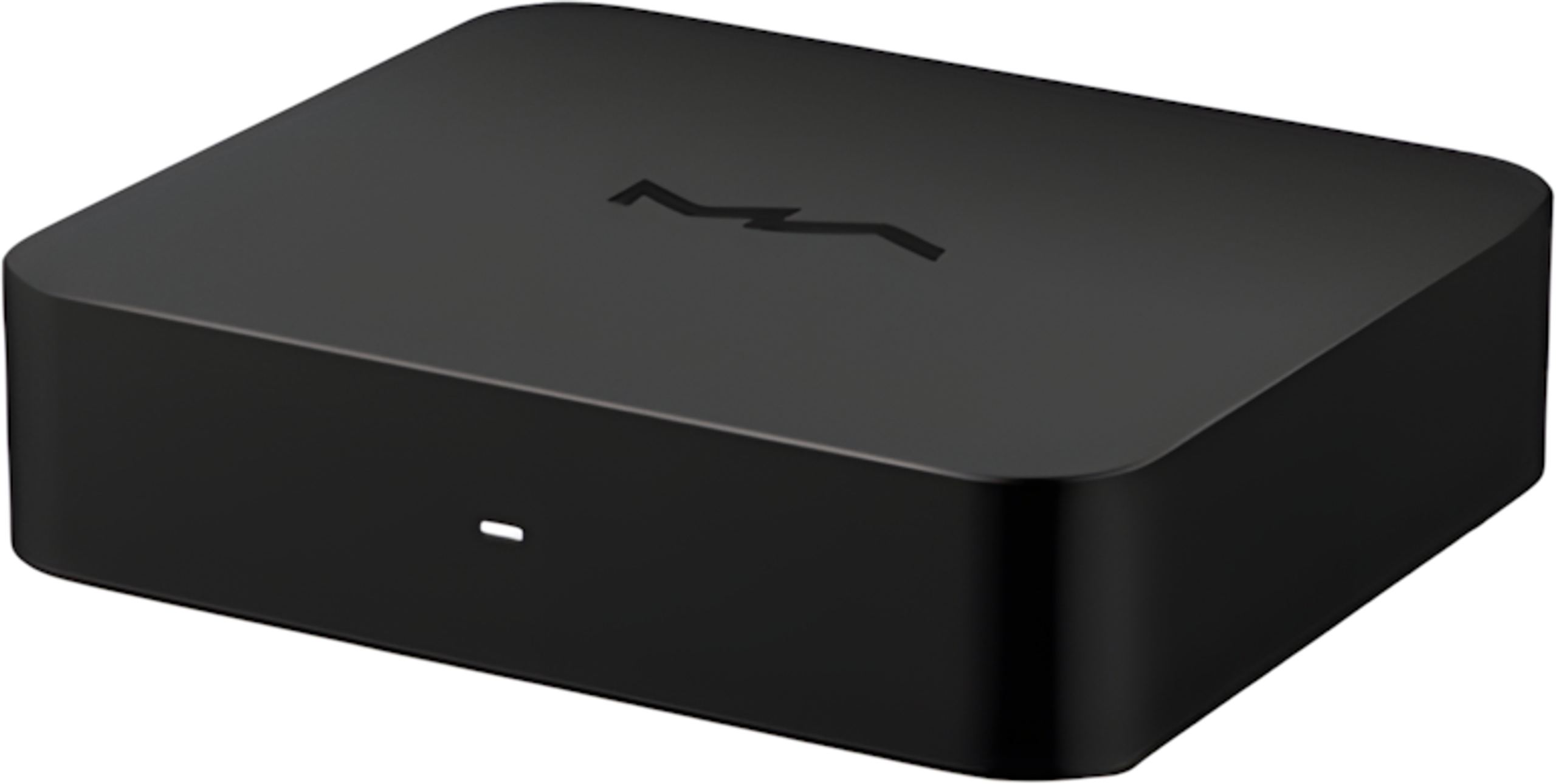
Matrix Audio X-SPDIF 3 represents the most advanced evolution of digital audio interfaces for high-fidelity enthusiasts. This compact USB audio converter radically transforms the way your computer, tablet, or smartphone connects to your audio system. Designed with meticulous attention to detail, it eliminates digital noise issues while preserving the absolute integrity of the audio signal. With support for high-resolution audio formats up to 32-bit/768 kHz in PCM and DSD512, the X-SPDIF 3 is the missing link for audiophiles seeking sonic perfection in their digital setup.
Versatile Connectivity for Universal Integration
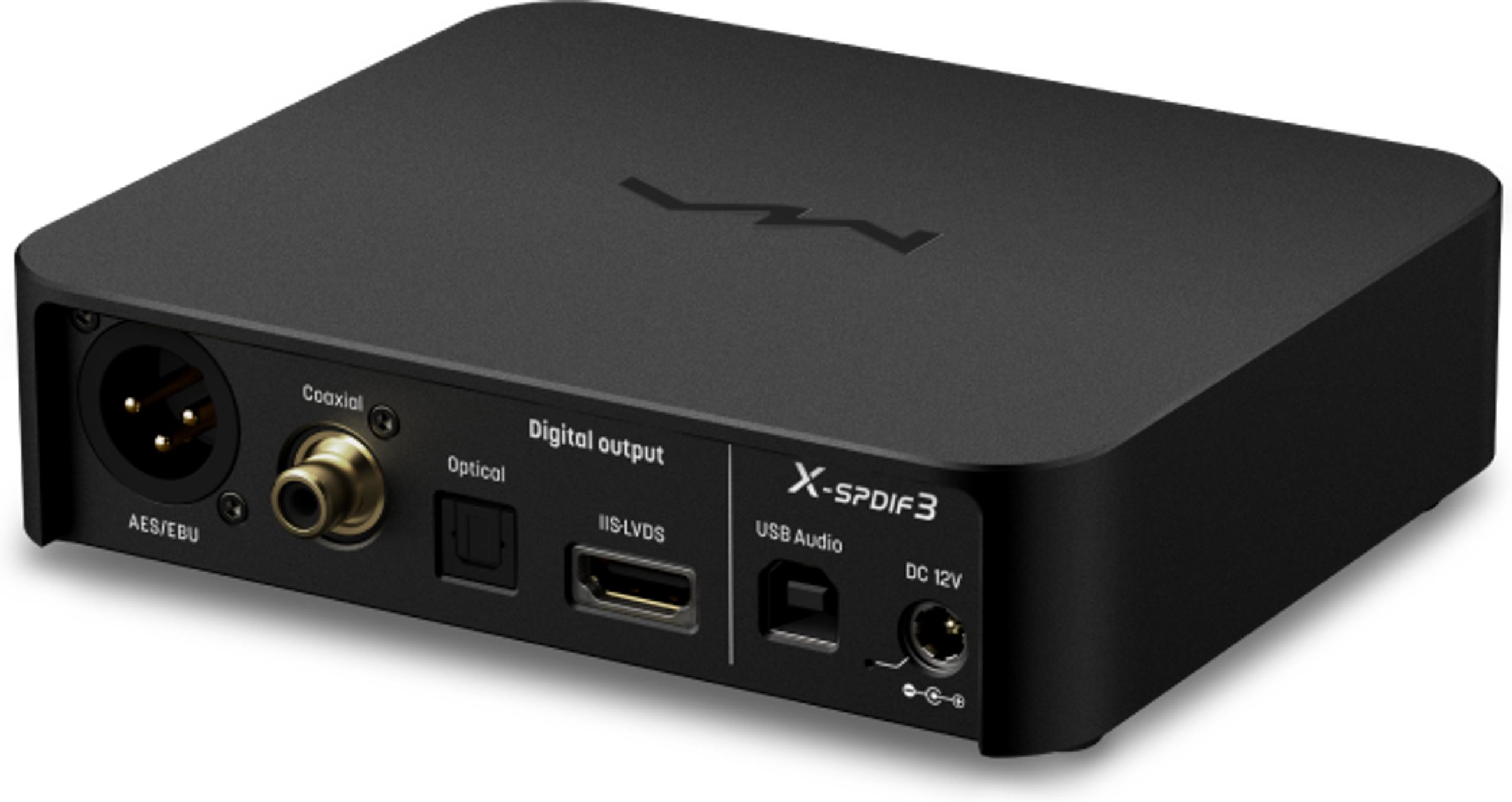
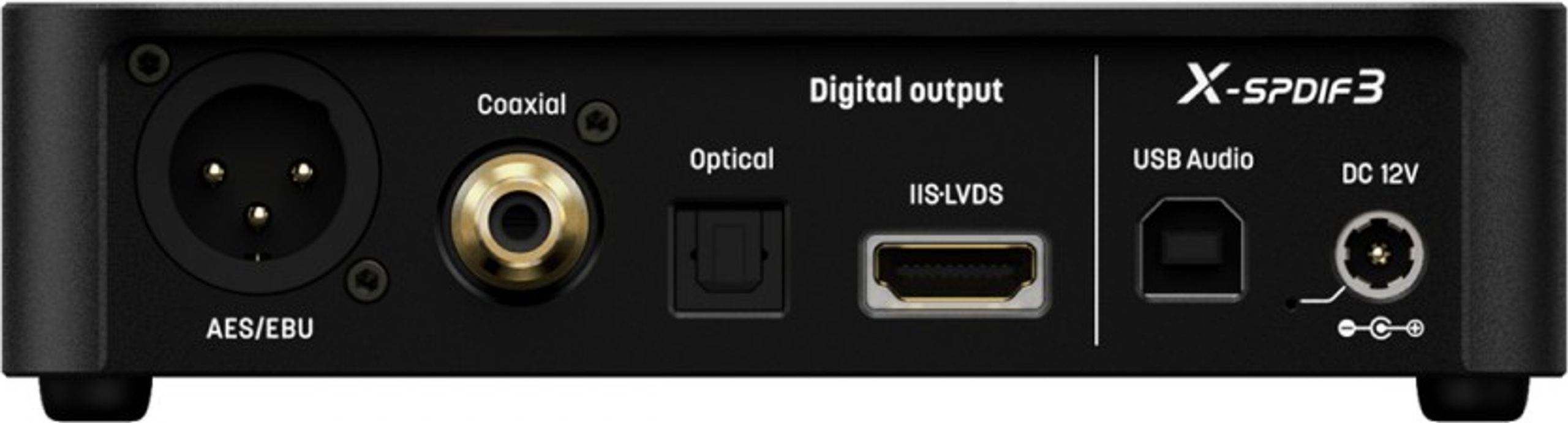
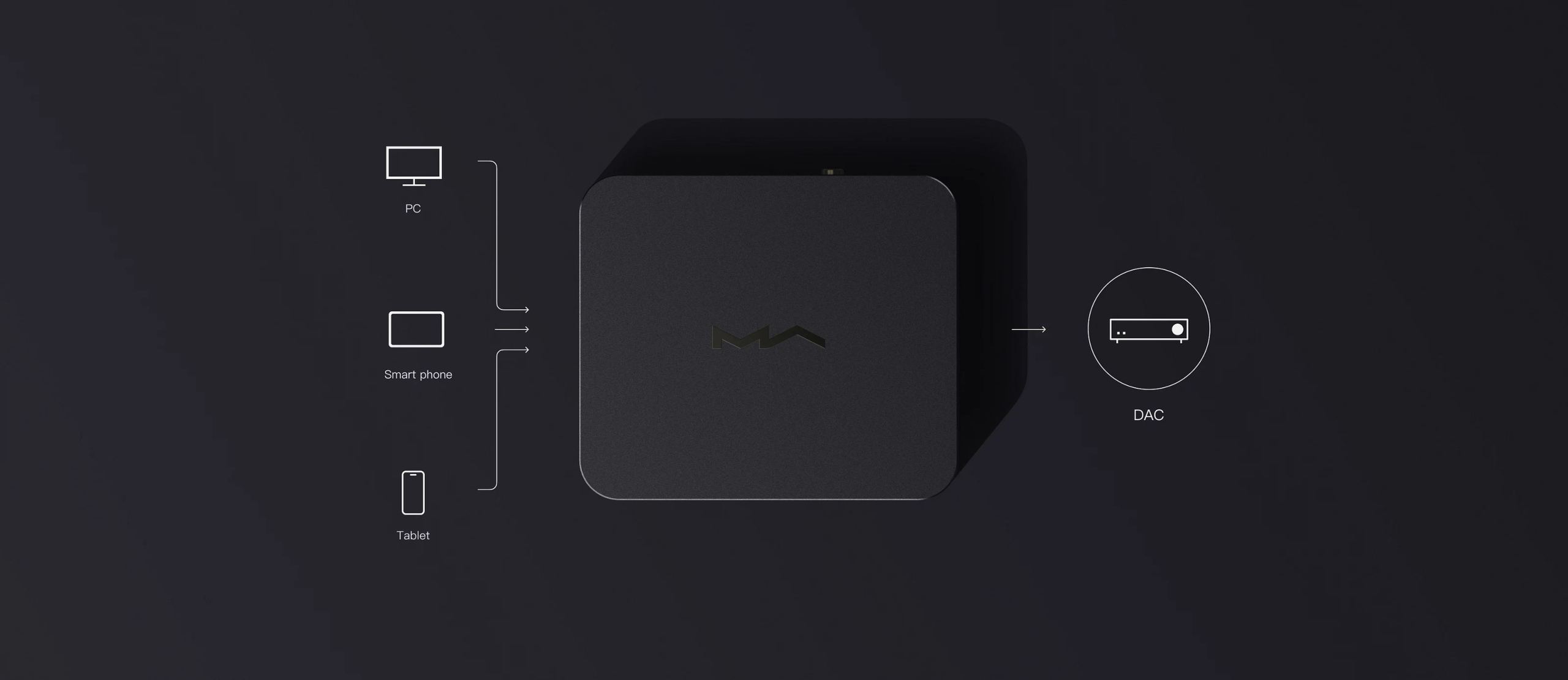
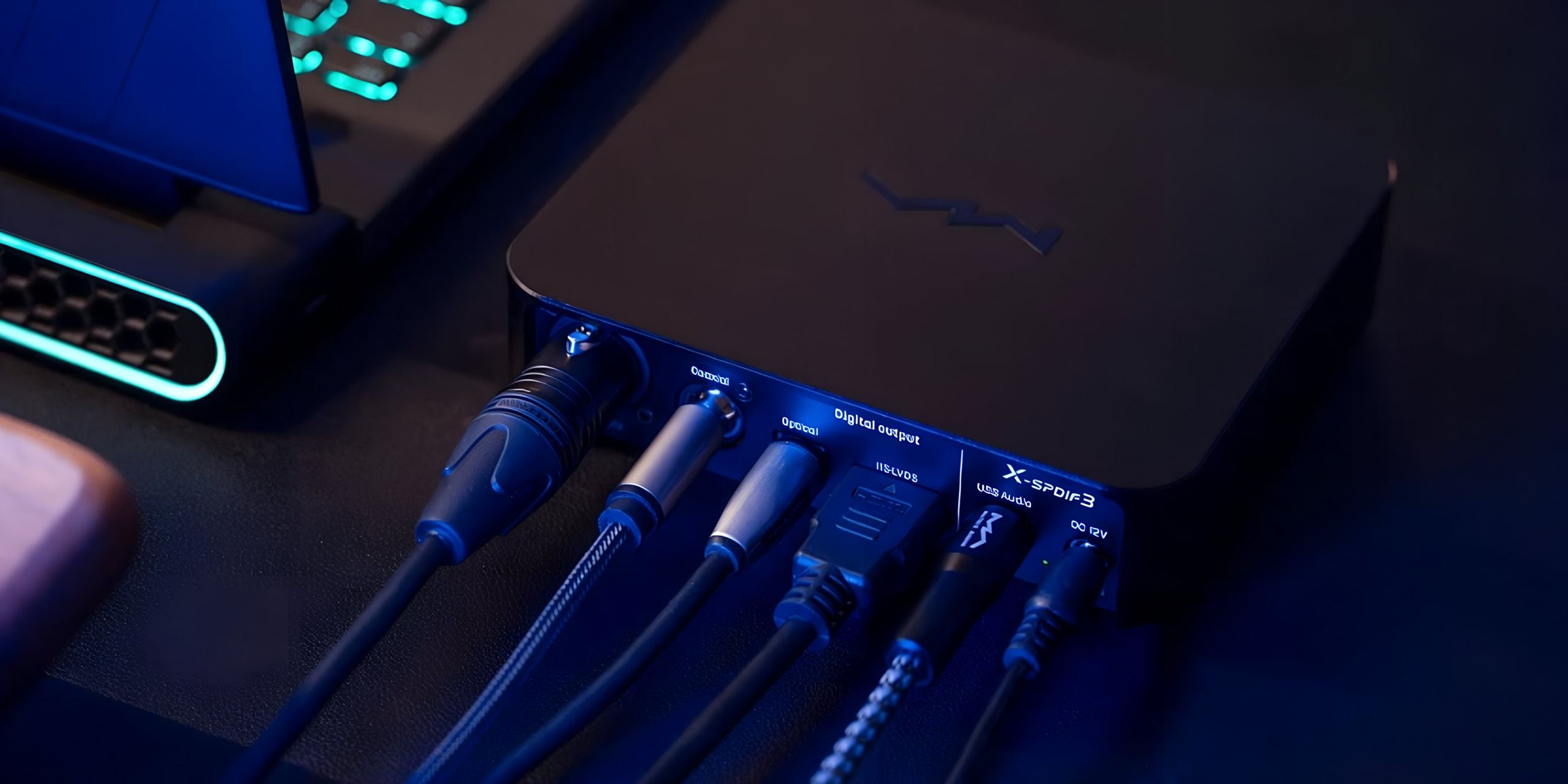
The X-SPDIF 3 stands out for its versatility in connectivity. It accepts an asynchronous USB input signal and converts it to several output formats: optical, coaxial, AES, and IIS-LVDS. This flexibility allows it to be integrated into virtually any existing audio system, regardless of configuration.
System compatibility is equally broad. For Windows users (versions 7 to 11), installation of the provided driver is required. Mac users (OS X 10.6.4 and later) benefit from automatic recognition with no additional installation needed. The X-SPDIF 3 is also compatible with most Android devices via an OTG cable, as well as iOS devices via a Lightning to USB connection kit.
This universality makes the X-SPDIF 3 an ideal solution for modernizing an existing audio system or creating a new high-fidelity setup centered on digital sources. It allows you to fully exploit the potential of high-resolution streaming services and digital music libraries.
Advanced Digital Isolation Technology
One of the major innovations of the X-SPDIF 3 compared to its predecessor is the addition of galvanic isolation on the IIS-LVDS output. This crucial technical improvement completely isolates the digital output from the USB ground, thus eliminating interference from the computer or mobile source device.
The X-SPDIF 3 acts as a true “problem eliminator” for digital signals. When your computer, smartphone, or tablet lacks native coaxial or optical interfaces, the X-SPDIF 3 steps in to convert the USB signal while optimizing it. During this process, the audio signal is reshaped and purified, with “impurities” from the source device isolated, ensuring a perfectly clean digital audio signal for your downstream equipment.
This digital isolation is not just a marketing claim—it produces audible results. Users report a significant reduction in background noise, better instrument definition, and a more precise soundstage. For high-end audio systems, this signal purification is a fundamental improvement.
Exceptional Timing Accuracy Thanks to Femtosecond Clocks
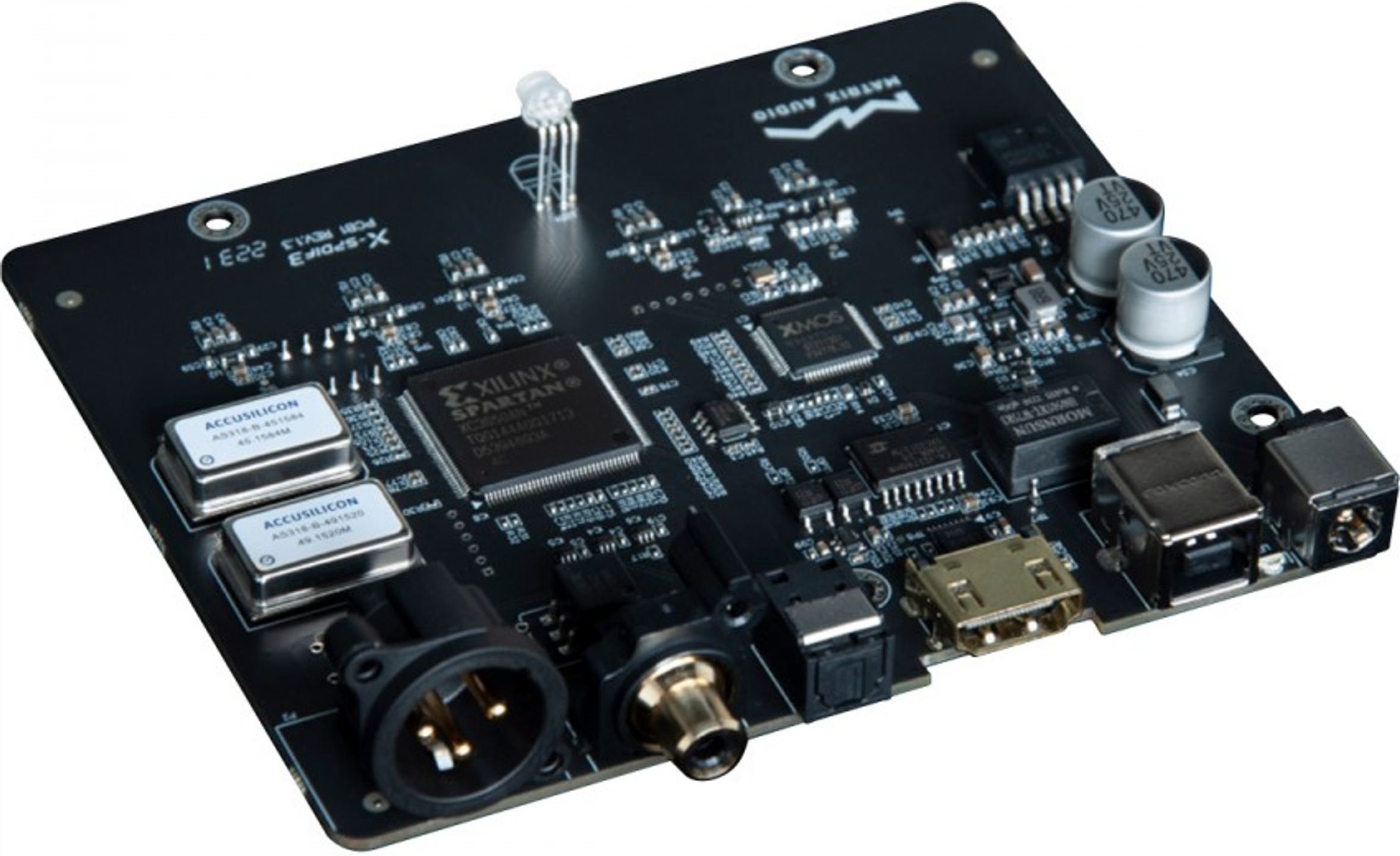
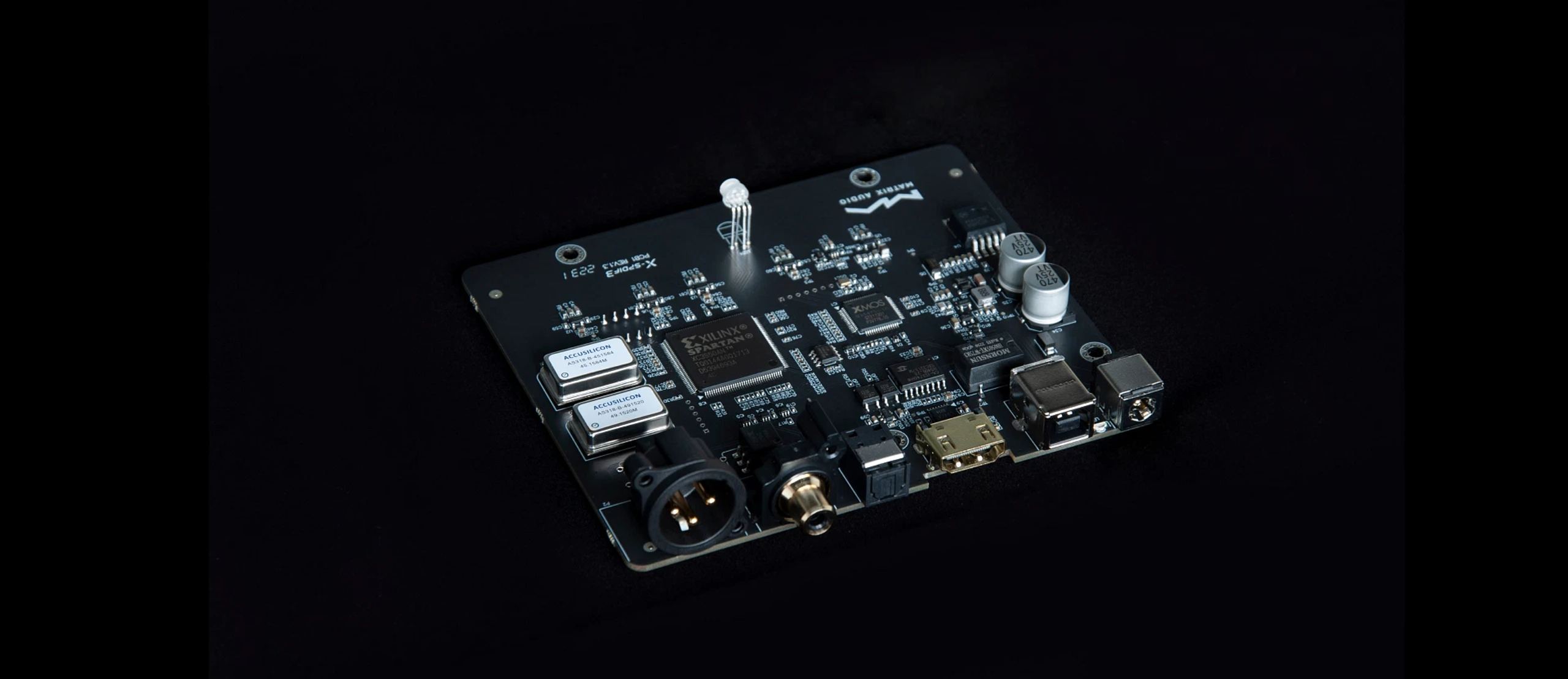
At the heart of the X-SPDIF 3 are two high-precision Accusilicon femtosecond clocks. These reference clocks are crucial for sound quality, as they determine the timing accuracy with which digital data is transmitted and converted.
The X-SPDIF 3 uses an ingenious system with two separate clocks: one dedicated to the 44.1 kHz sampling family (and its multiples: 88.2 kHz, 176.4 kHz, etc.) and the other to the 48 kHz family (96 kHz, 192 kHz, etc.). This approach ensures optimal accuracy regardless of the sampling rate of the audio file being played.
An integrated FPGA (Field-Programmable Gate Array) automatically manages frequency division and switching between these clocks, ensuring perfect synchronization without user intervention. These clocks are powered by an independent ultra-low-noise LDO (Low-Dropout) regulator, guaranteeing exemplary stability and immunity to power fluctuations.
This sophisticated clock architecture significantly reduces jitter (timing fluctuations) that can degrade sound quality by introducing subtle but perceptible distortions. The result is more accurate audio reproduction, with better transient definition and a more stable stereo image.
Flexible Power Supply for Adaptation to Any Environment
The X-SPDIF 3 offers remarkable flexibility in terms of power supply. It can operate either via USB bus power (5V/1A) or via an external 12V DC power supply (≥400mA). This dual option allows it to adapt to different usage scenarios.
For use with a standard computer, USB power is generally sufficient. However, when the X-SPDIF 3 is connected to devices with low power capacity such as smartphones or tablets, the external power option becomes essential to ensure stable operation.
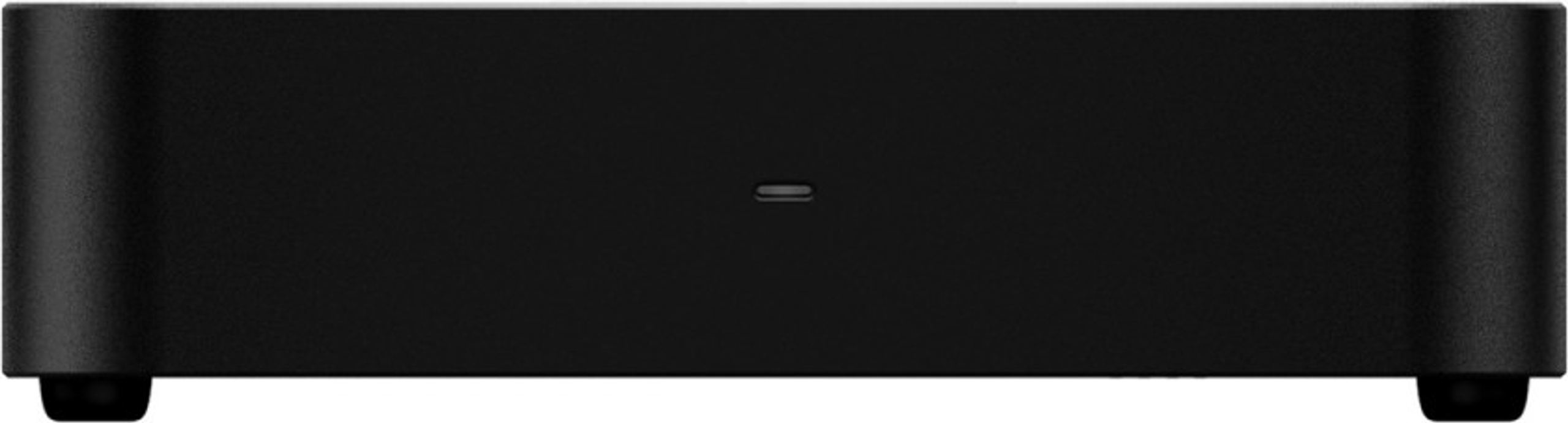
A dedicated LED indicator shows the power status, allowing you to check the active power mode at a glance. When an external power supply is connected, USB power is automatically disconnected, ensuring a single, stable power source.
It should be noted that the input power must never exceed 12V, or the device may be damaged. This precaution is important to observe when choosing an external power supply.
Customizable Configuration for Maximum Compatibility
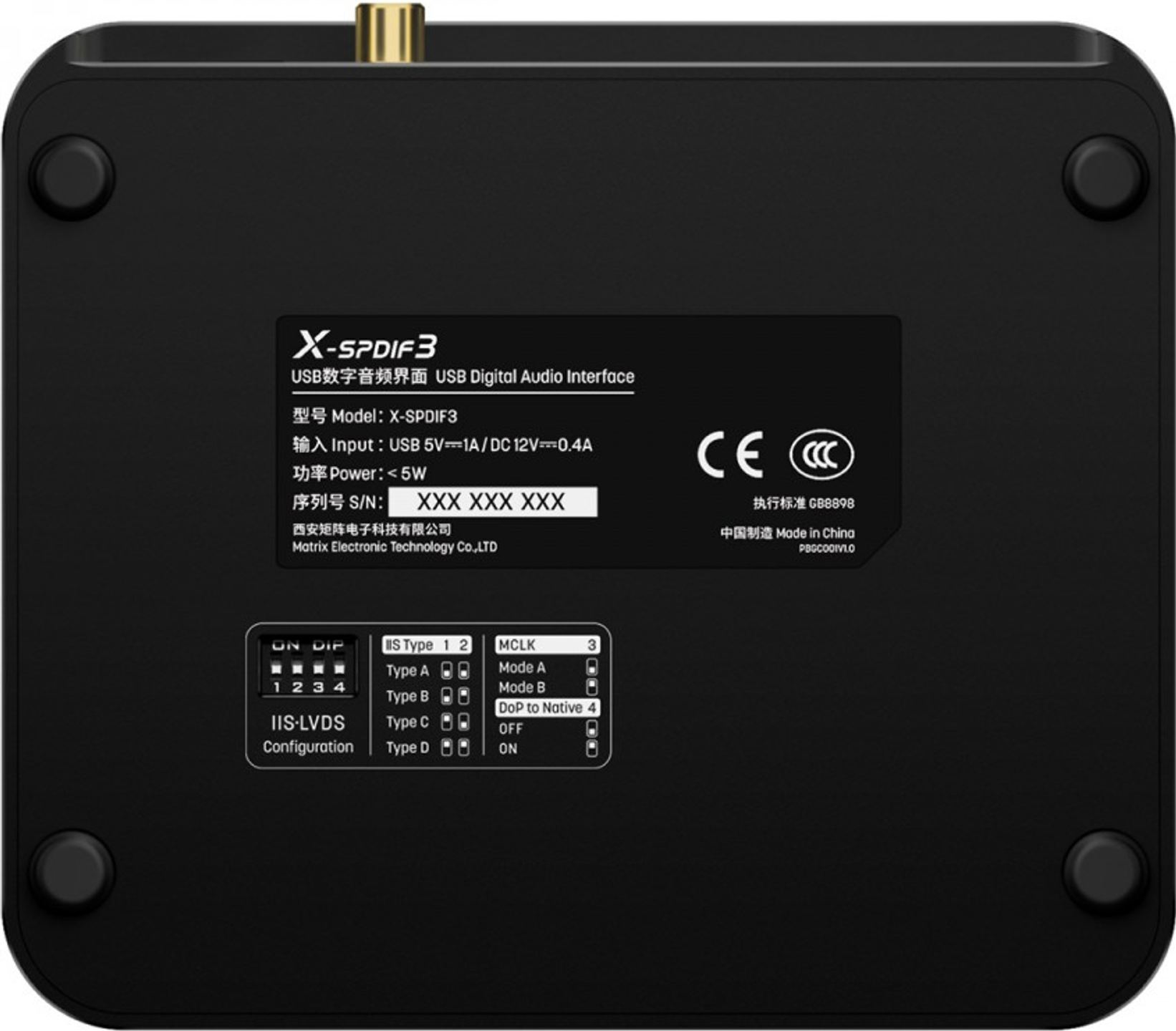
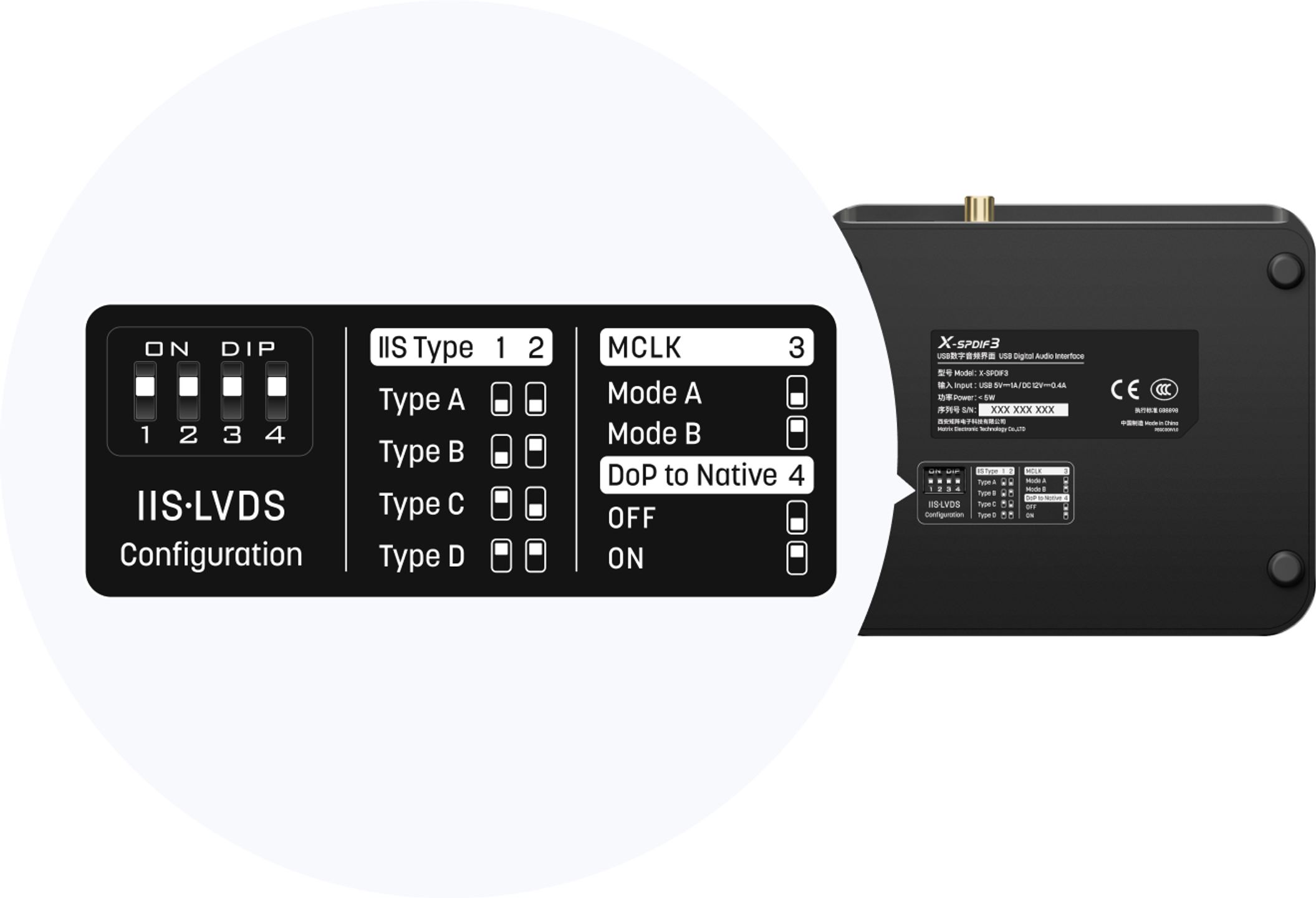
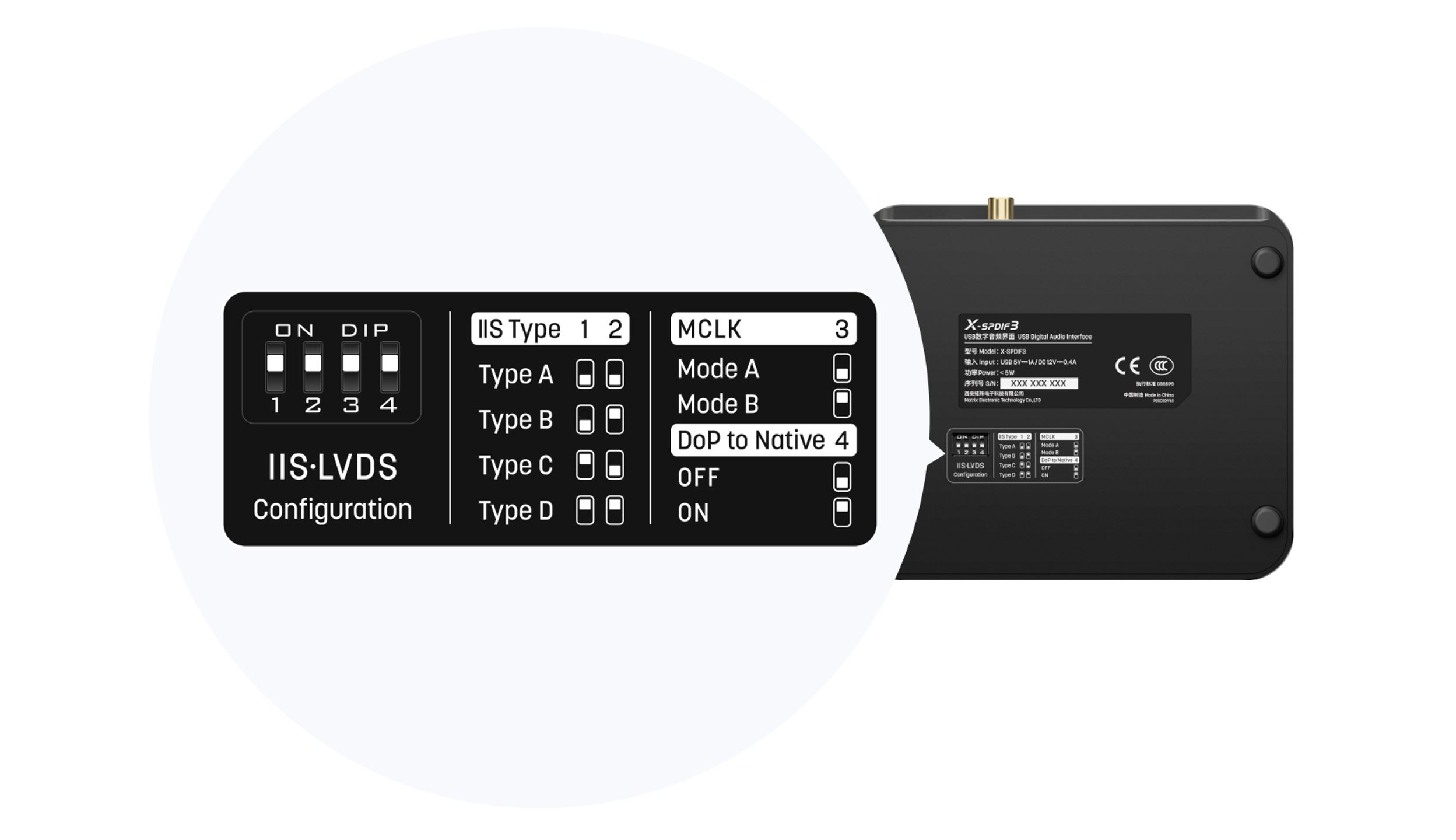
The X-SPDIF 3 stands out for its ability to adapt to different audio equipment thanks to its advanced configuration options. Switches located under the device allow you to customize its operation according to the specific needs of your setup.
For the IIS-LVDS output, four different interface definitions are available via these switches. This flexibility ensures optimal compatibility with a wide range of DACs and other digital audio equipment, greatly expanding the X-SPDIF 3’s field of application.
Similarly, two distinct clock modes can be selected to suit the preferences of downstream connected devices. This customization allows you to optimize synchronization according to the specific characteristics of your Hi-Fi system.
A particularly notable feature is DoP (DSD over PCM) to native DSD conversion. This capability allows the X-SPDIF 3 to convert DoP DSD codes to native DSD and transmit them directly via the IIS-LVDS port. This function is valuable for users of DACs that only support native DSD, thus expanding the compatibility of these devices with various sources.
Impact on Sound Quality: Beyond Technical Specifications
While the technical specifications of the X-SPDIF 3 are impressive, its real impact on sound quality is what truly interests audiophiles. User feedback suggests notable improvements in several aspects of audio reproduction.
Users generally report tighter, more distinct bass with more precise and temporally accurate impact. Some also note a reduction in harshness and sibilance in the highs, making listening more pleasant without sacrificing detail. The overall sound presentation tends to become more musical and less clinically technical.
Interestingly, the X-SPDIF 3 seems to pair particularly well with delta-sigma architecture DACs and high-end planar headphones like HiFiMAN. It adds body to the bass and lower mids, which perfectly complements this type of equipment. On the other hand, some users suggest it may not be the ideal choice for already warm-sounding R2R DACs or USB cables with a thick sonic signature, unless you are specifically seeking a soft and warm tone.
This subtle coloration of the sound may come as a surprise, given that the device was primarily designed to eliminate digital noise. However, it demonstrates the significant influence that digital signal quality can have on final sound reproduction.
Documentation
Technical Specifications
- USB to SPDIF format converter
Audio Specifications
- High-resolution audio
- PCM up to 32 bits / 768 kHz
- DSD up to DSD512 (1 bit)
- DoP to native DSD conversion via IIS-LVDS output for DACs supporting only native DSD
- Supported sampling rates for optical / coaxial / AES outputs
- PCM 16-24 bits: 44.1 kHz, 48 kHz, 88.2 kHz, 96 kHz, 176.4 kHz, 192 kHz
- DSD64 (DoP)
- Supported sampling rates for IIS-LVDS output
- PCM 16-32 bits: 44.1 kHz, 48 kHz, 88.2 kHz, 96 kHz, 176.4 kHz, 192 kHz, 352.8 kHz, 384 kHz, 705.6 kHz, 768 kHz
- DSD 64 / 128 / 256 (DoP), DSD 64 / 128 / 256 / 512 (native)
Technical Features
- Digital noise isolation
- Galvanic isolation on IIS-LVDS output
- Elimination of USB ground interference
- Optimization and reformation of the audio signal for maximum digital purity
- Ultra-precise femtosecond clock
- Two Accusilicon femtosecond clocks for 44.1 kHz and 48 kHz sampling families
- Integrated FPGA for automatic frequency management and switching
- Dedicated ultra-low noise LDO power supply for stable performance
- Flexible IIS-LVDS configuration
- Four configurable IIS-LVDS definitions via switch located under the device
- Extended compatibility with various DACs and playback equipment
Dual Clock Mode
- Two clock modes selectable by switch to suit the preferences of connected devices
- Customizable synchronization according to Hi-Fi system requirements
Flexible & Stable Power Supply
- Operates via USB bus power or external power supply.
- Automatic switch to external power when connected.
- LED indicator for power status.
- Ideal for sources with limited power supply (smartphones/tablets)
System Compatibility
- Windows 7 / 8 / 8.1 / 10 / 11 systems: supplied driver installation required
- Mac OS X 10.6.4 or higher: no driver installation required
- Most Android devices: compatible via OTG cable
- iOS devices: compatible via Lightning to USB connection kit
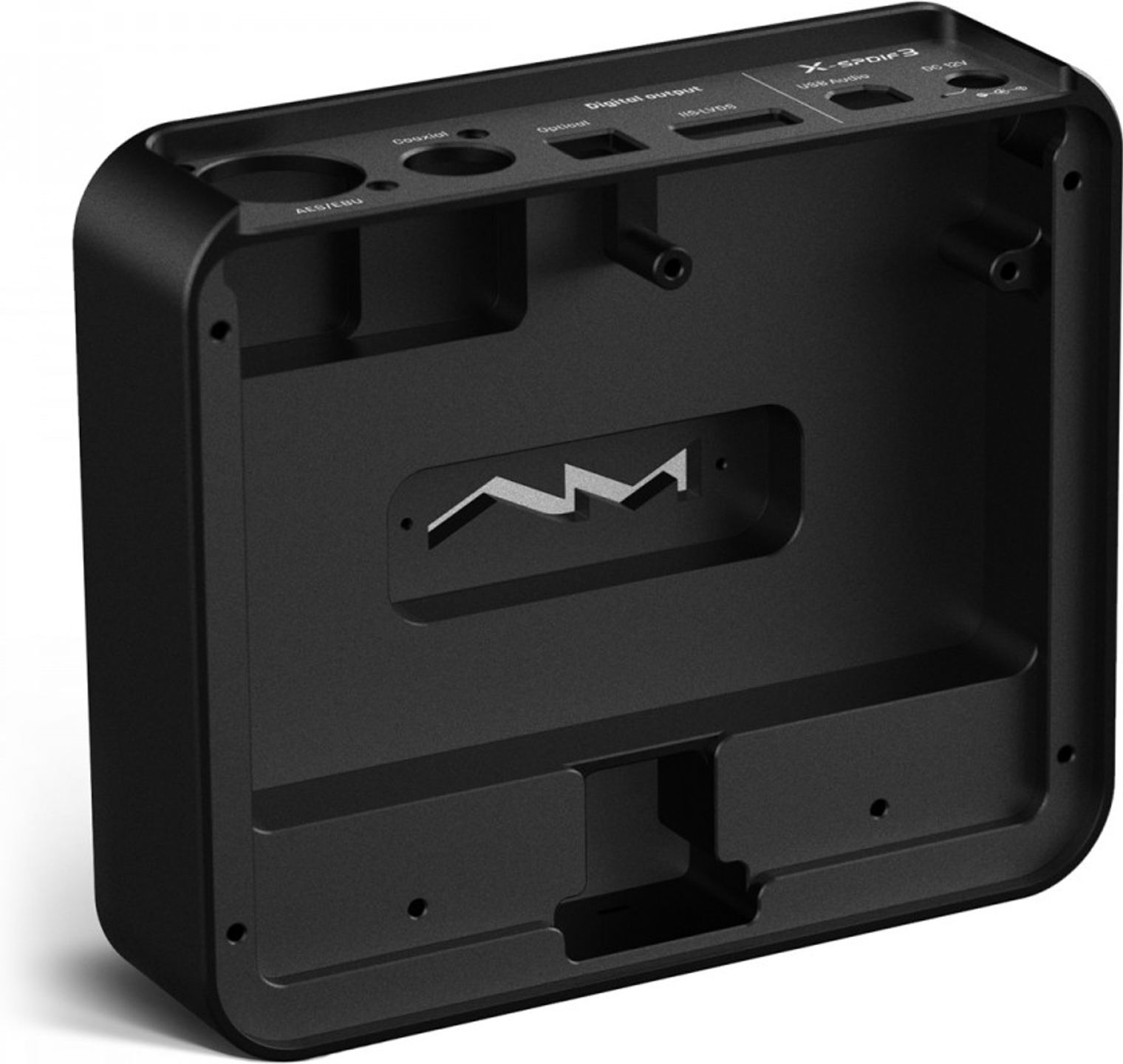
High-Quality CNC Aluminum Chassis
- Monoblock CNC aluminum design, Matrix Audio’s signature aesthetic.
- Excellent protection against electromagnetic interference and mechanical vibrations.
- Combines elegant industrial design with professional audio performance.
General Information
- Dimensions
- Width: 142 mm
- Depth: 124 mm
- Height: 38 mm
- Weight: 1 kg
Package Contents
- USB cable: 1 unit
- Quick start guide: 1 unit
- Warranty card: 1 unit
Important Notes
- Input power must not exceed 12 V, otherwise the product may be damaged
- USB bus power will be disconnected when external power is connected
- An external power supply is required when using devices with low USB output current, such as mobile phones or tablets
Frequently Asked Questions
What is the difference between the X-SPDIF 3 and previous Matrix Audio models?
The main improvement of the X-SPDIF 3 over its predecessor is the addition of galvanic isolation on the IIS-LVDS output. This technical innovation completely isolates the digital output from the USB ground, thus eliminating interference from the computer or mobile source device. The X-SPDIF 3 also supports higher resolutions, up to 32-bit/768 kHz in PCM and DSD512, offering compatibility with the most demanding audio formats currently available.
Can I use the X-SPDIF 3 with my smartphone or tablet?
Yes, the X-SPDIF 3 is compatible with most smartphones and tablets. However, these devices generally provide limited USB current, insufficient to properly power the X-SPDIF 3. In this case, an external 12V DC power supply (≥400mA) is required to ensure stable operation. When the external power supply is connected, USB power is automatically disconnected.
What is the difference between the optical/coaxial/AES outputs and the IIS-LVDS output?
The optical, coaxial, and AES outputs follow the S/PDIF standard and are limited to 24-bit/192 kHz for PCM and DSD64 (via DoP). The IIS-LVDS output, on the other hand, allows transmission of much higher resolution audio signals: up to 32-bit/768 kHz in PCM and DSD512 natively. If your DAC has an I²S input, using this connection will allow you to fully exploit the potential of high-resolution audio files.
How do I configure the switches for different DACs?
The X-SPDIF 3 has switches located under the device that allow you to configure four different IIS-LVDS interface definitions and two distinct clock modes. The optimal configuration depends on the specific DAC you are connecting the X-SPDIF 3 to. Consult your DAC’s documentation to determine which IIS-LVDS definition it uses, then set the X-SPDIF 3’s switches accordingly. The X-SPDIF 3 user manual contains detailed information on the various possible configurations.
Why use two separate femtosecond clocks?
The X-SPDIF 3 uses two separate clocks to independently handle the two families of sampling frequencies commonly used in digital audio: the 44.1 kHz family (including 88.2 kHz, 176.4 kHz, etc.) and the 48 kHz family (including 96 kHz, 192 kHz, etc.). This approach avoids conversion errors that could occur when switching from one family to another. For example, converting 44.1 kHz to 48 kHz (or vice versa) would introduce interpolation errors. With two dedicated clocks, each frequency family is managed by its own ultra-precise time reference, ensuring maximum signal integrity.
- Eco-contribution included in the sale price.
- GTIN / EAN: 6971844970221