

Matrix Audio MP-1
This product is no longer available for sale!

Other stereo preamplifiers
Specifications and features

Overview
Matrix Audio MP-1 is a Class A stereo preamplifier that is part of Matrix Audio’s new M series, a range designed to redefine high-fidelity standards. With its fully balanced architecture, ultra-precise volume control system, and meticulous construction, the MP-1 positions itself as the nerve center of a high-end audio system. Featuring a sound signature that is both warm and detailed, it processes audio signals with surgical precision while preserving tonal richness and musical emotion.
Industrial Design Combining Aesthetics and Functionality
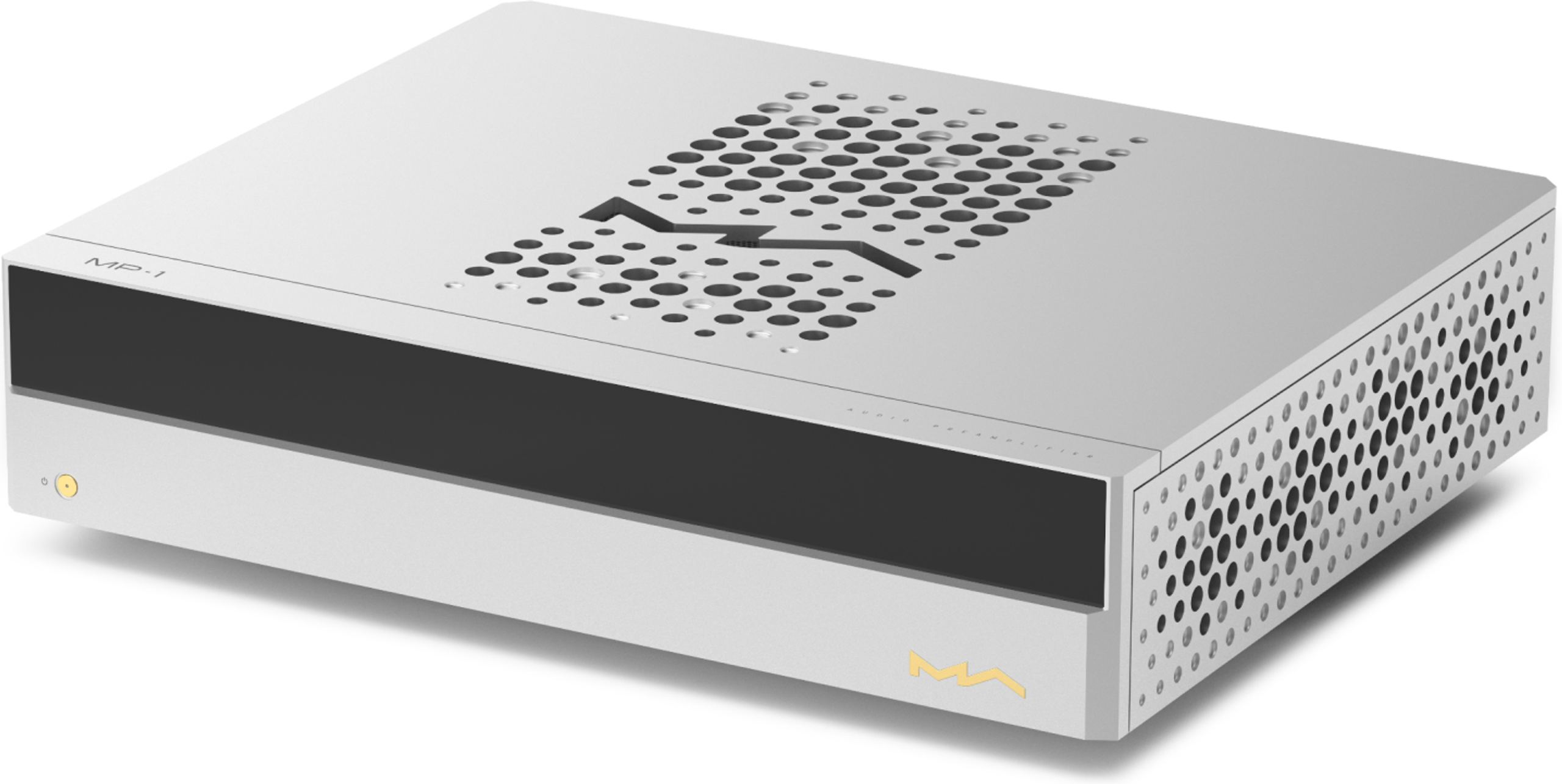
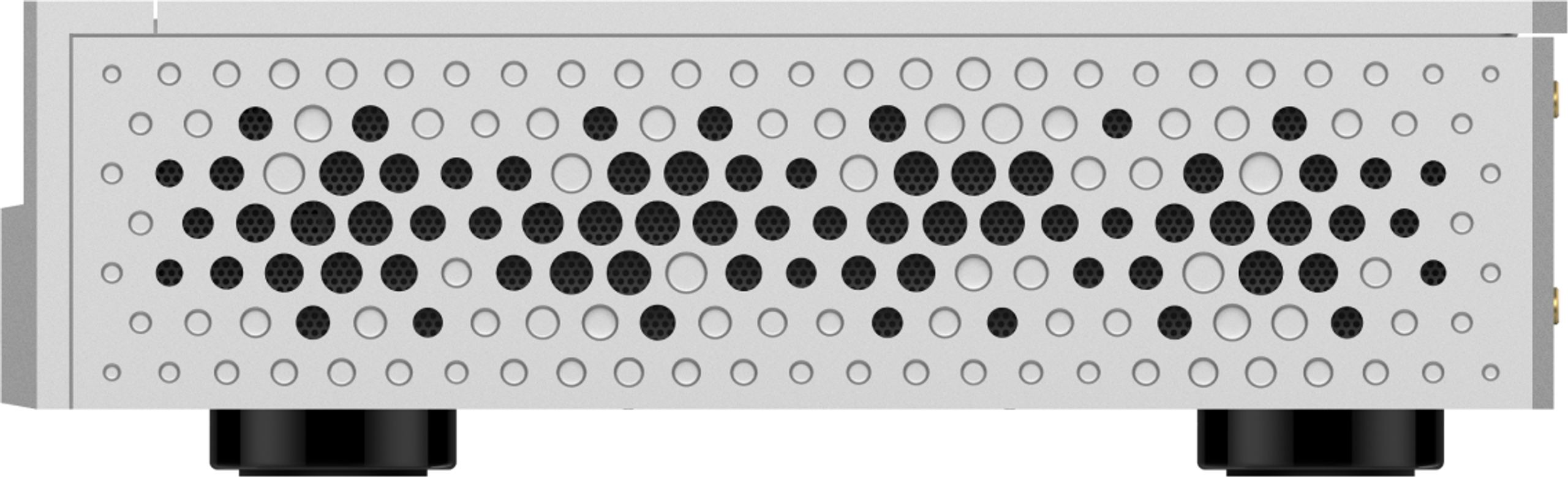
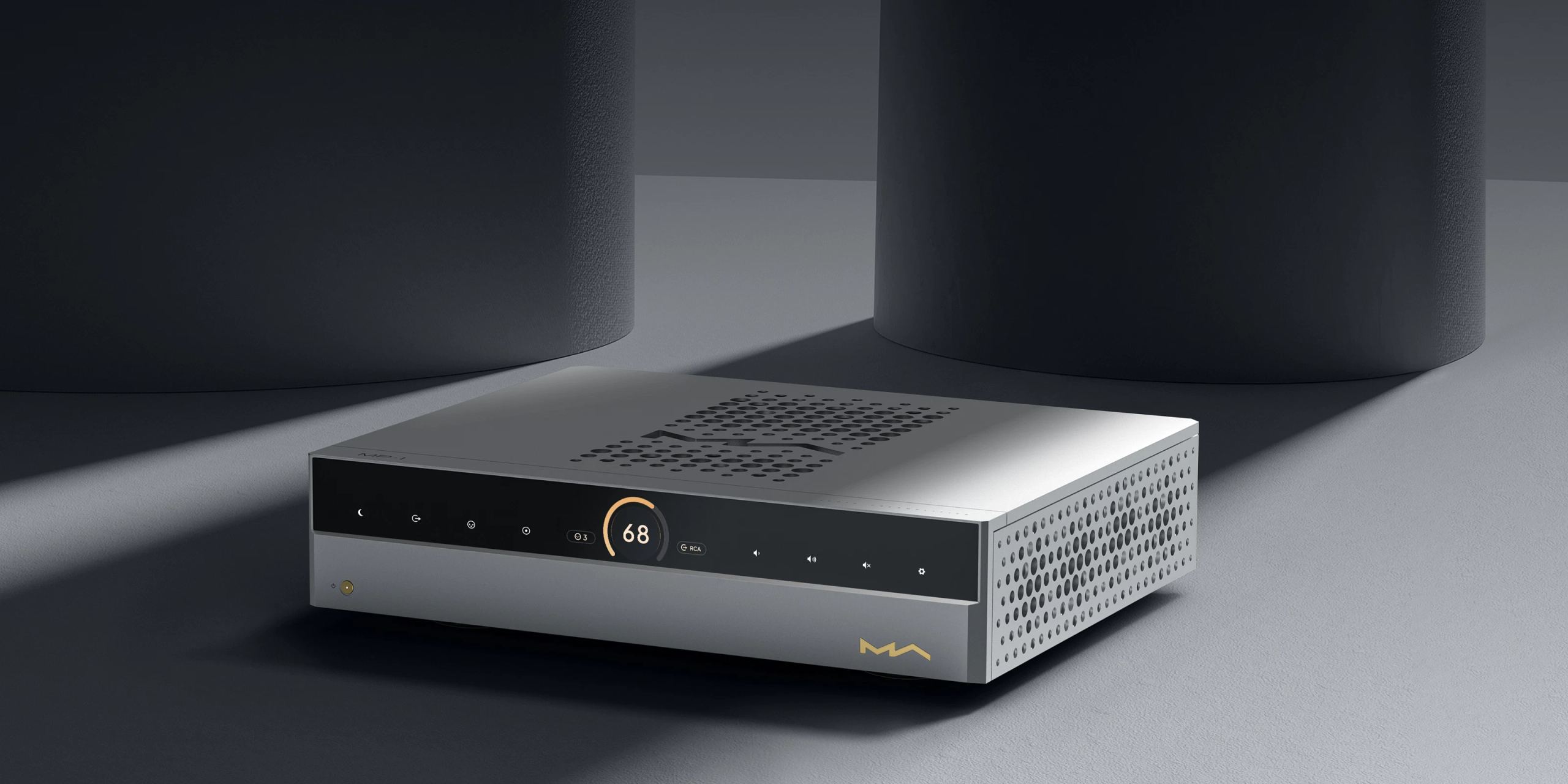
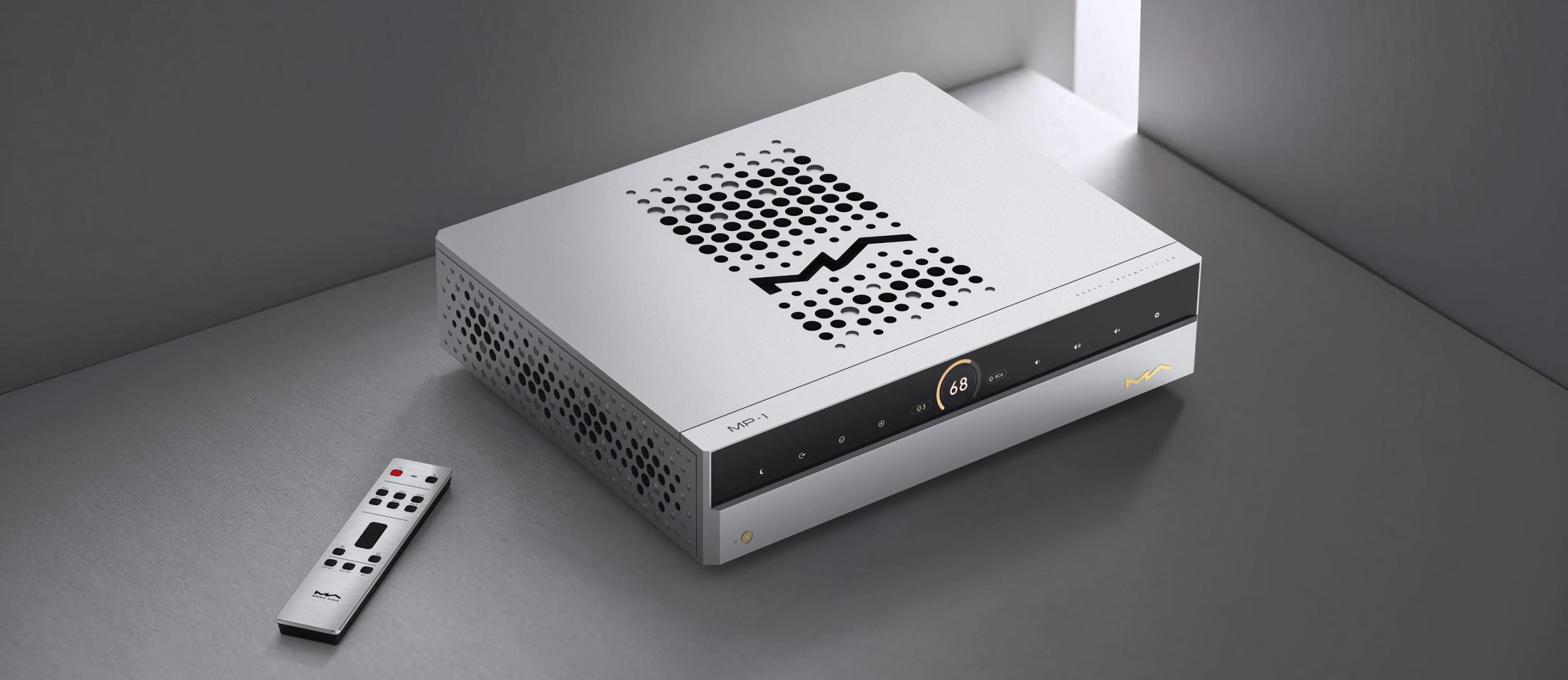
The MP-1 sports a distinctive design that reflects Matrix Audio’s philosophy: the pursuit of simplicity and beauty. Its minimalist front panel is adorned with hundreds of circular perforations of varying sizes and depths, creating a pattern evocative of musical rhythms. This aesthetic is not merely decorative; it also contributes to the device’s heat dissipation.
The MP-1’s construction is based on an exclusive H-frame structure, the result of two years of research and development. Made from 20 mm CNC-machined aluminum plates, the chassis offers exceptional rigidity and stability, essential for eliminating unwanted vibrations. The finishes are refined down to the smallest detail, with a matte texture that gives the preamplifier a discreet yet undeniable elegance.
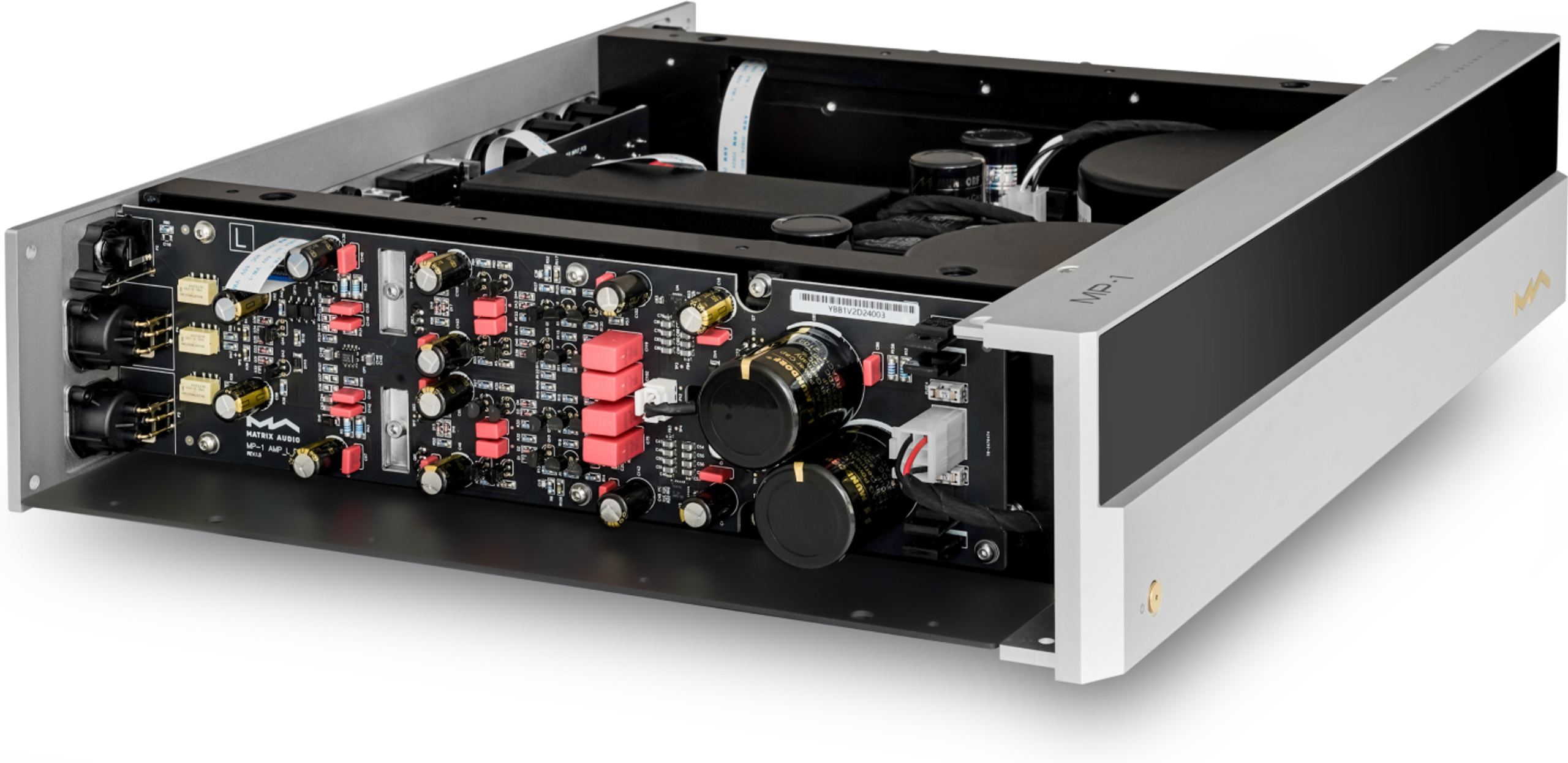
The internal layout of the MP-1 has been designed with the same rigor as its exterior. The circuit modules are arranged symmetrically to minimize interference and optimize audio performance. This attention to detail demonstrates Matrix Audio’s commitment to technical and aesthetic excellence.
Symmetrical Architecture for Absolute Sound Purity
At the heart of the MP-1 is a fully balanced architecture that defines its technical signature. The preamplifier uses a differential transistor input stage offering extremely low noise and remarkable linearity. This design ensures that the musical signal is processed with the highest possible fidelity.
The main amplification is handled by four fully independent, balanced units. Each stereo channel has two units working in tandem, responsible for amplifying the in-phase and inverted signals, respectively. This approach allows for effective common-mode noise rejection and significantly improves dynamic performance.
A particularly ingenious aspect of this design is the handling of RCA inputs. Even when using these traditional unbalanced connections, the MP-1 automatically converts the signal to bipolar format to benefit from the advantages of balanced amplification. This intelligent conversion ensures optimal sound quality regardless of the source used.
The output stage operates in pure Class A with a high bias current, completely eliminating crossover distortion. While this approach is more demanding in terms of energy consumption, it guarantees exceptionally pure sound reproduction. The DC output servo circuit keeps the output midpoint compensated to less than 1 mV, and the absence of coupling capacitors ensures a perfectly linear frequency response.
Volume Control with Surgical Precision
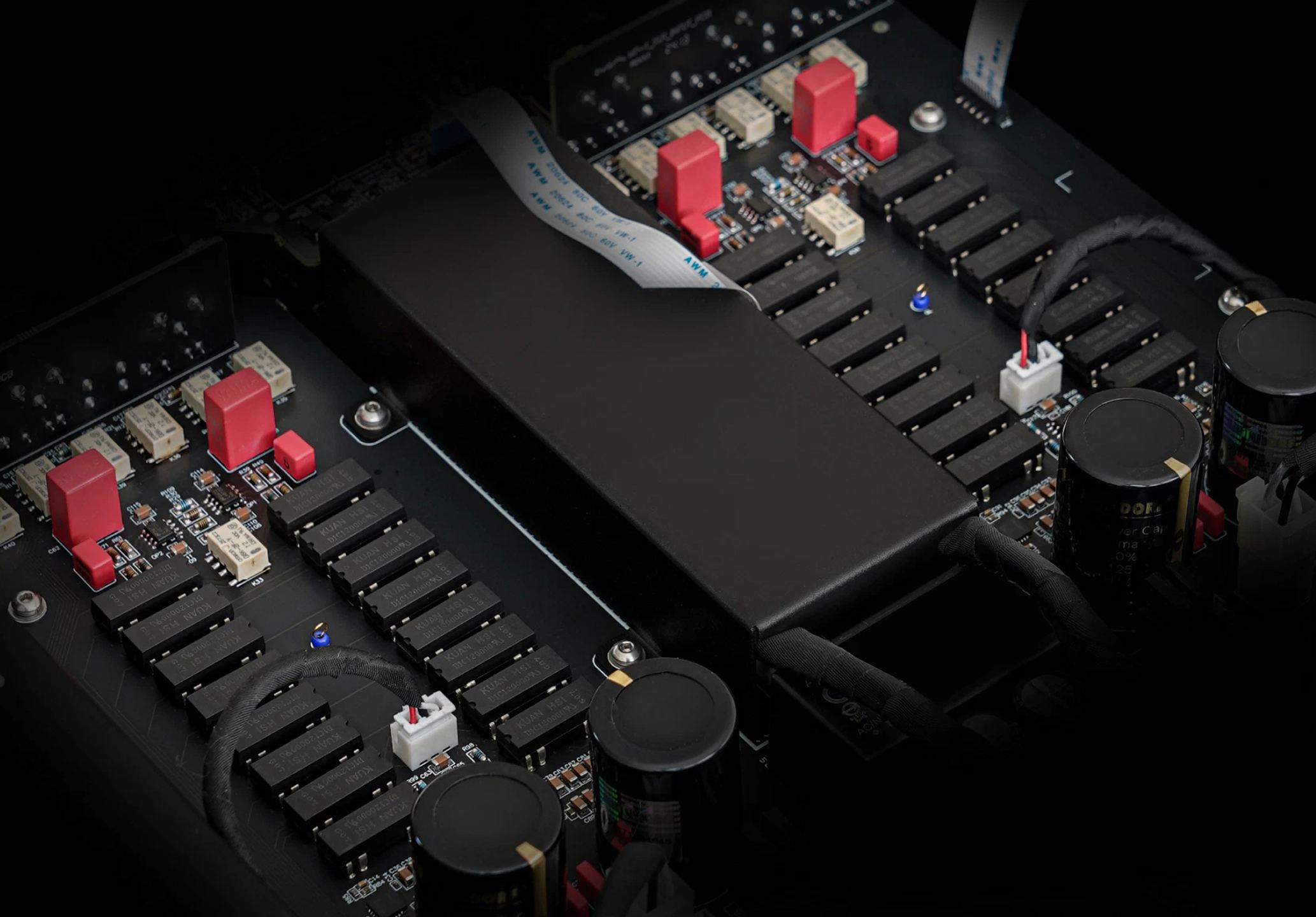
The MP-1’s volume control system reflects an uncompromising approach. Instead of using a conventional potentiometer, Matrix Audio has opted for a resistor network voltage divider. This sophisticated system includes four high-quality volume control units, each composed of 64 precision resistors with a 0.001 tolerance and 32 fully sealed Reed relays.
These components are switched rapidly by a microcontroller, providing exceptionally precise volume adjustment while minimizing impact on sound quality. The system also ensures perfect consistency between the left and right channels, thus preserving the stereo image. An additional advantage of this design is that the operating noise of the Reed relays is virtually inaudible, even during continuous volume adjustments.
This meticulous approach to volume control illustrates Matrix Audio’s philosophy: no detail is too small to be optimized when it comes to preserving the integrity of the musical signal.
Rich Connectivity for Flexible System Integration
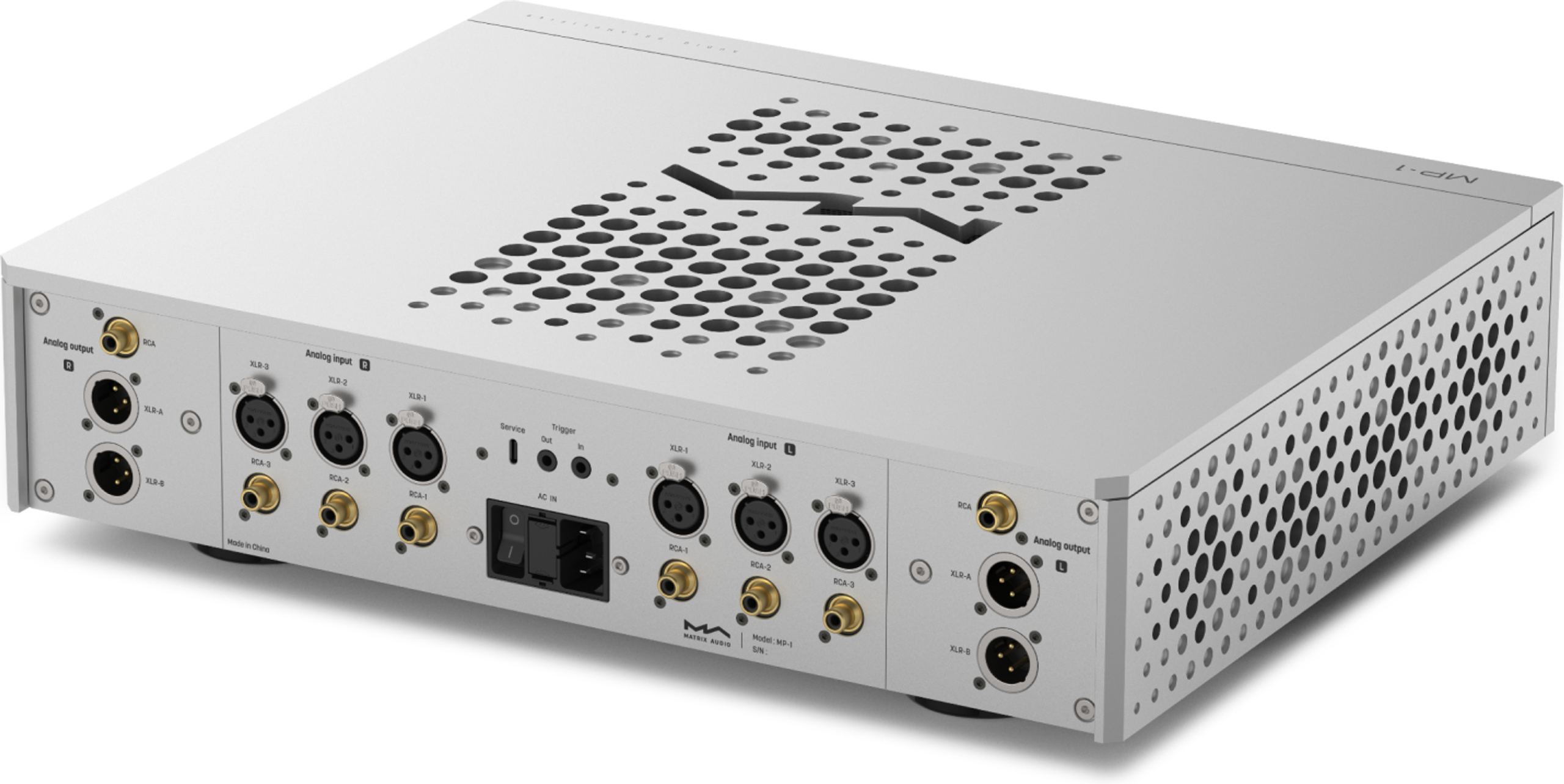
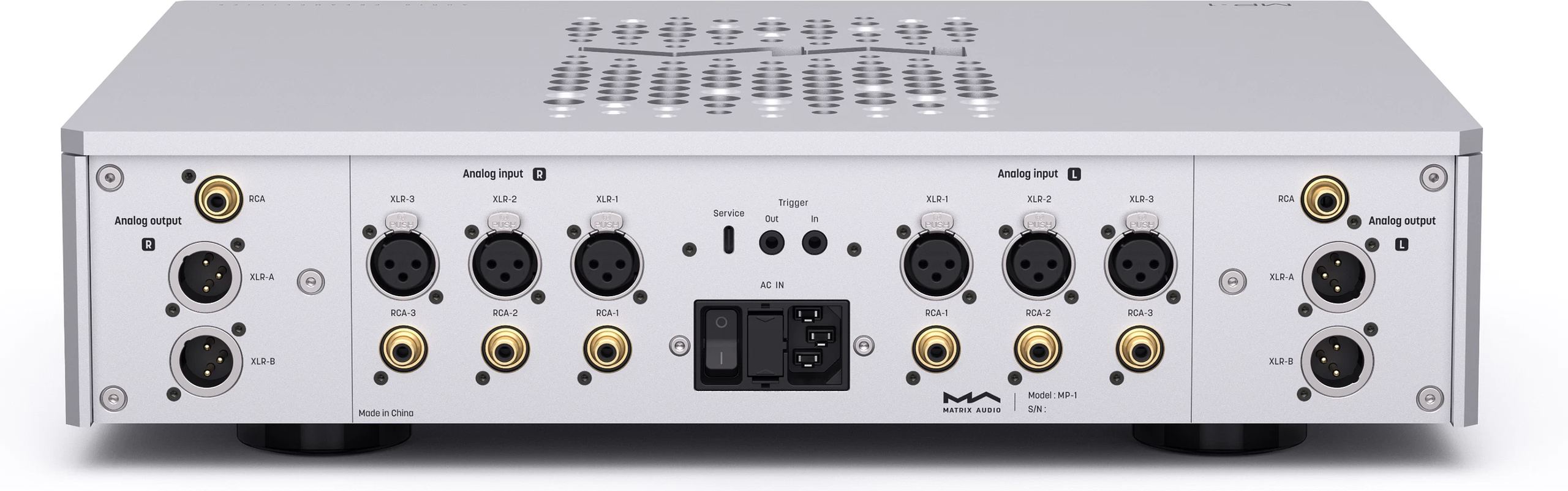
The MP-1 offers exceptionally rich connectivity to meet the needs of the most demanding audio setups. On the input side, it features three pairs of RCA connectors and three pairs of balanced XLR connectors. Each input can be individually configured with attenuation and level compensation settings, allowing you to equalize the amplitude of different sources and eliminate volume variations during switching.
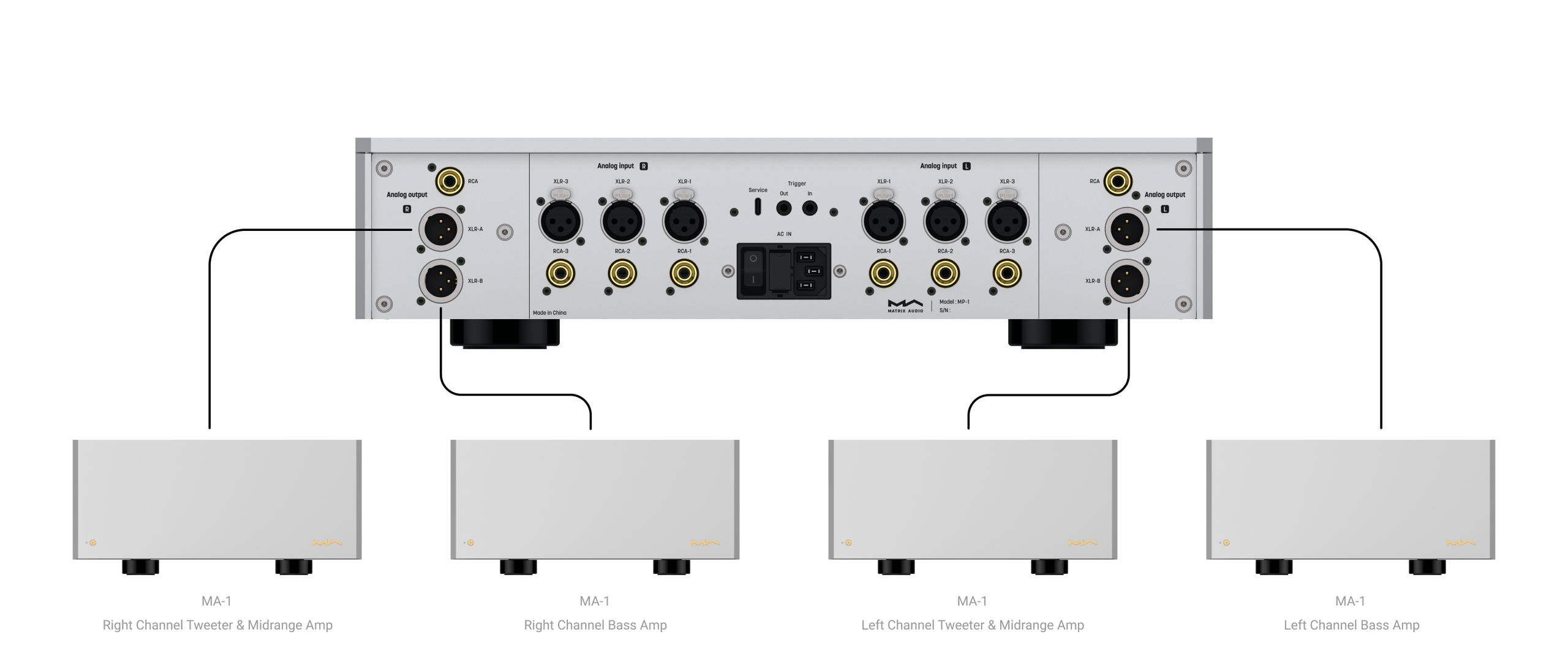
For outputs, the preamplifier provides one pair of RCA connectors and two pairs of XLR connectors. These outputs can operate simultaneously or separately according to your needs. When used separately, the volume of each output can be adjusted individually, offering maximum flexibility for multi-amplifier configurations.
This wealth of connections allows you to use the MP-1 in a bi-amplification setup. By using both XLR outputs simultaneously, you can connect up to four power amplifiers to drive the mid-high and low speakers of your loudspeakers separately. This built-in bi-amplification capability is a significant asset for audiophiles seeking to optimize their system’s performance.
Robust Power Supply for Uncompromising Performance
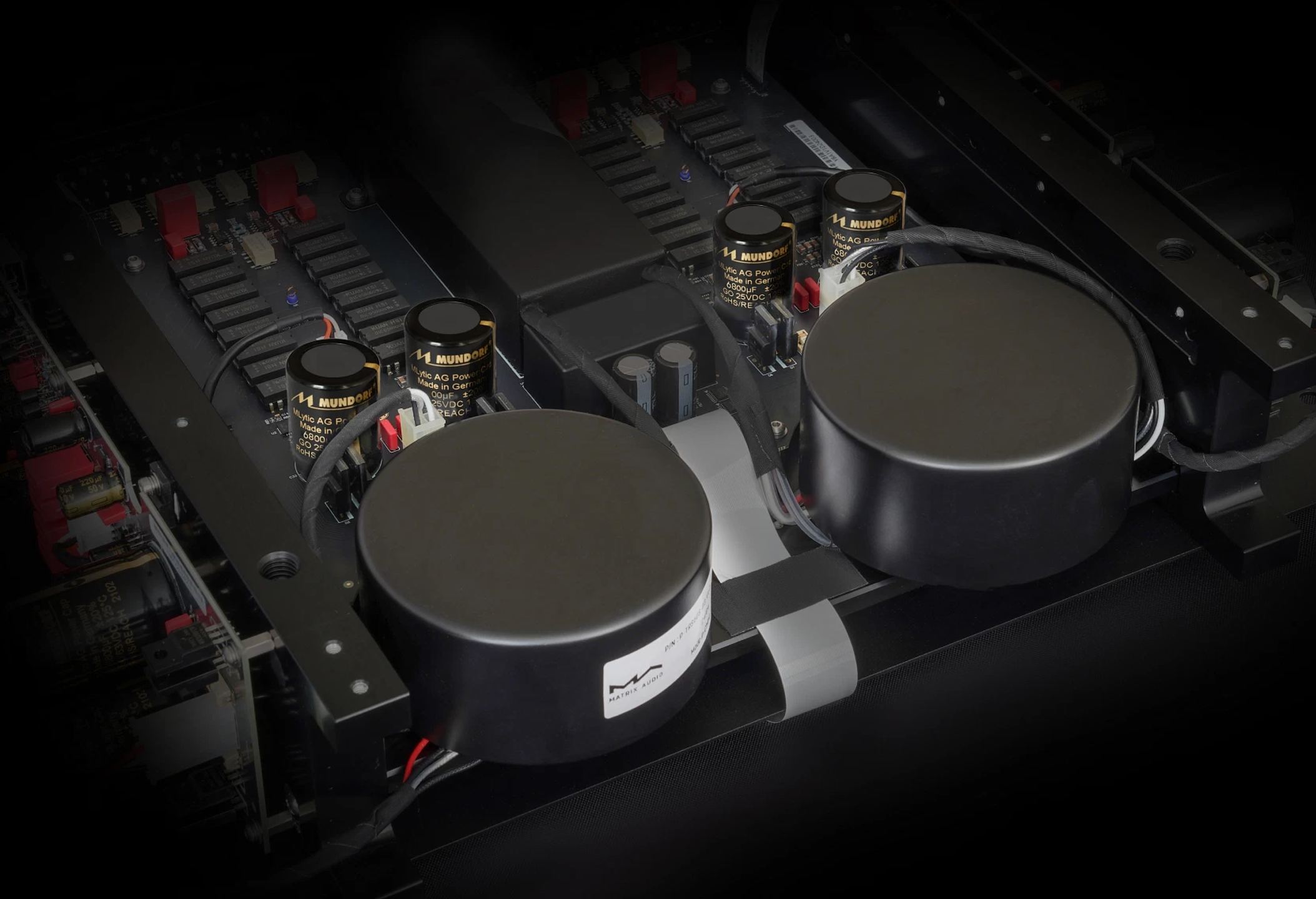
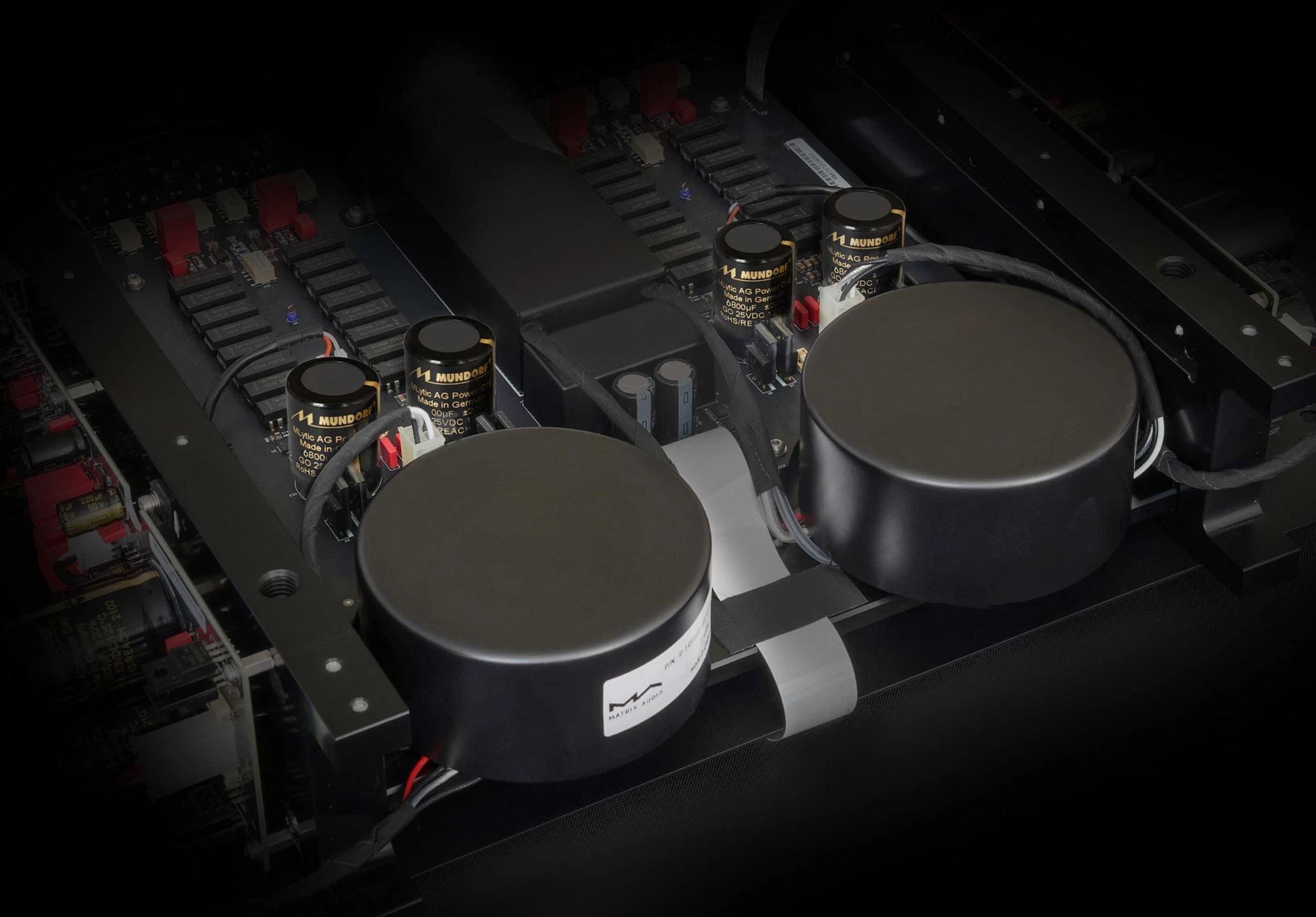
The power supply is the foundation of any audio device, and Matrix Audio has made no compromises in this area. The MP-1 is equipped with two 60W toroidal transformers with square copper wire, which independently power the left and right channel volume control units as well as the main amplification unit.
The choice of square copper wire transformers is deliberate. Compared to traditional toroidal transformers with round wire, they offer a larger conductive surface, higher current capacity, and lower resistance. These characteristics result in better transient response and richer, deeper bass.
The power supply is complemented by MUNDORF M-Lytic AG series filter capacitors, renowned for their audiophile quality. This combination of a powerful transformer and high-end filtering components ensures a stable and silent power supply, essential for preserving the purity of the audio signal.
A Sound Signature Combining Warmth and Precision
The MP-1’s sound signature is characterized by a remarkable balance between warmth and precision. Thanks to its pure Class A output stage and symmetrical architecture, it delivers sound that is both warm and delicate, with powerful bass frequencies without sacrificing detail in the highs.
Whether you’re listening to chamber music or a symphony orchestra, every nuance is faithfully reproduced under the MP-1’s control. The soundstage is wide and precise, allowing you to pinpoint each instrument with remarkable accuracy. Timbres are rendered naturally, preserving the unique character of each instrument and voice.
This ability to combine tonal richness and analytical precision makes the MP-1 a versatile preamplifier, capable of enhancing all musical genres. It doesn’t just reproduce music—it reveals its soul and emotion, allowing for a deeper connection with the performances.
Perfect Integration into the Matrix Audio Ecosystem
The MP-1 has been designed to integrate seamlessly into the Matrix Audio ecosystem, especially with other components from the M series. Paired with the MS-1 streamer and the MA-1 power amplifier, it forms a complete system that embodies Matrix Audio’s vision for modern high-fidelity.
This consistency in design and technical philosophy ensures optimal synergy between the different links in the audio chain. The integrated trigger interfaces also allow for synchronized power on and off of the entire system, providing a smooth and intuitive user experience.
While the MP-1 reaches its full potential within a complete Matrix Audio system, its intrinsic quality and flexibility allow it to integrate successfully into any high-end setup. Its ability to adapt to different sources and amplifiers makes it a wise choice for audiophiles looking to gradually upgrade their system.
Documentation
Technical Specifications
Audio Performance
- Differential input circuit
- Fully differential transistors for low noise and linearity
- Low-frequency power supply at 60 V for a wide dynamic range
- No coupling capacitors, ensuring a flat frequency response
- Symmetrical amplification
- Four independent and symmetrical amplification units
- Bipolar amplification of RCA signals, eliminating common-mode noise
- Enhanced dynamic performance, even with RCA input
Structure and Manufacturing
- Optimized H-frame structure
- Exclusive H-shaped design, the result of two years of research
- 20 mm CNC aluminum plate ensuring strength and stability
- Symmetrical layout of circuit modules to reduce interference
- Refined industrial design
- Precise CNC machining and delicate surface treatments
- Exquisite matte texture expressing Matrix’s elegance and craftsmanship
Connectivity
- Analog inputs
- Three pairs of RCA inputs and three pairs of XLR inputs
- Independent attenuation and level compensation adjustment for each input
- Flexible outputs
- RCA and XLR outputs (two pairs) for simultaneous or separate output
- Adjustable volume for each output, ideal for bi-amplification
- Bi-amplification function with XLR outputs for mid-high and low speakers
Trigger Interface
- Trigger input
- DC 6-12 V < 10 mA
- Trigger output
- DC 12 V / 50 mA maximum
Power Supply
- Standby consumption: < 1 W
- Maximum consumption: < 70 W
Physical Characteristics
- Weight: 15.7 kg
- Dimensions
- Width: 430 mm
- Depth: 349 mm
- Height: 106 mm
Package Contents
- RM4C remote control × 1
- Power cable × 1
- Trigger cable × 1
- User manual × 1
- Warranty card × 1
Frequently Asked Questions
What are the concrete advantages of a fully balanced architecture like that of the MP-1?
The MP-1’s balanced architecture offers several significant advantages. First, it drastically reduces common-mode noise—interference that affects both conductors of a differential signal identically. By amplifying the in-phase and inverted signals separately and then recombining them, the circuit naturally eliminates this noise. This design also improves dynamics and channel separation, contributing to a more precise stereo image and a wider soundstage.
How do I configure the MP-1 for bi-amplification of my speakers?
To configure the MP-1 in bi-amplification mode, use both XLR outputs simultaneously. Connect one pair to an amplifier dedicated to the mid-high speakers and the other pair to an amplifier for the lows. In the MP-1 menu, ensure that the XLR outputs are set to simultaneous mode rather than separate mode. This configuration optimizes sound reproduction by dedicating an amplifier to each section of your speakers, thus improving dynamics and reducing intermodulation distortion.
Does the Reed relay volume control system offer advantages over a traditional potentiometer?
Absolutely. Unlike traditional potentiometers, which can introduce channel imbalances and degrade over time, the MP-1’s Reed relay system maintains perfect precision and consistency throughout its lifespan. The 64 precision resistors per channel allow for much finer and more balanced volume adjustment. Additionally, this system eliminates issues of friction noise and mechanical wear associated with potentiometers. The hermetically sealed Reed relays also ensure exceptional longevity.
How does the MP-1 handle level differences between various audio sources?
The MP-1 allows you to independently adjust attenuation and level compensation for each input. This sophisticated feature lets you equalize the amplitude of all your sources, eliminating unpleasant volume variations when switching from one source to another. For example, if your turntable delivers a weaker signal than your CD player, you can adjust the compensation for the corresponding input, ensuring consistent volume when switching.
Is it better to use XLR or RCA connections with the MP-1?
Balanced XLR connections theoretically offer the best performance, fully leveraging the MP-1’s differential architecture. They provide better immunity to electromagnetic interference and superior dynamics, especially over long cable runs. However, Matrix Audio has carefully designed the RCA inputs to convert the signal to bipolar format, thus offering remarkable quality even in unbalanced mode. The choice will therefore mainly depend on the equipment you wish to connect, without any significant compromise on sound quality.
- Eco-contribution included in the sale price.




