

Audiolab D9 black


Specifications and features


Overview
The Audiolab D9 represents the culmination of several decades of British expertise in digital-to-analog conversion. This high-end DAC features the prestigious ESS Sabre32 ES9038PRO chip, delivering remarkable conversion accuracy with ultra-low distortion and an exceptional signal-to-noise ratio. Designed to satisfy the most demanding audiophiles, it supports all current high-resolution audio formats, from 32-bit/768 kHz PCM to DSD512, while offering full MQA decoding. Its extensive connectivity and versatile headphone amplification make it a central audio hub capable of enhancing any digital source.
Technical Architecture and Reference Conversion
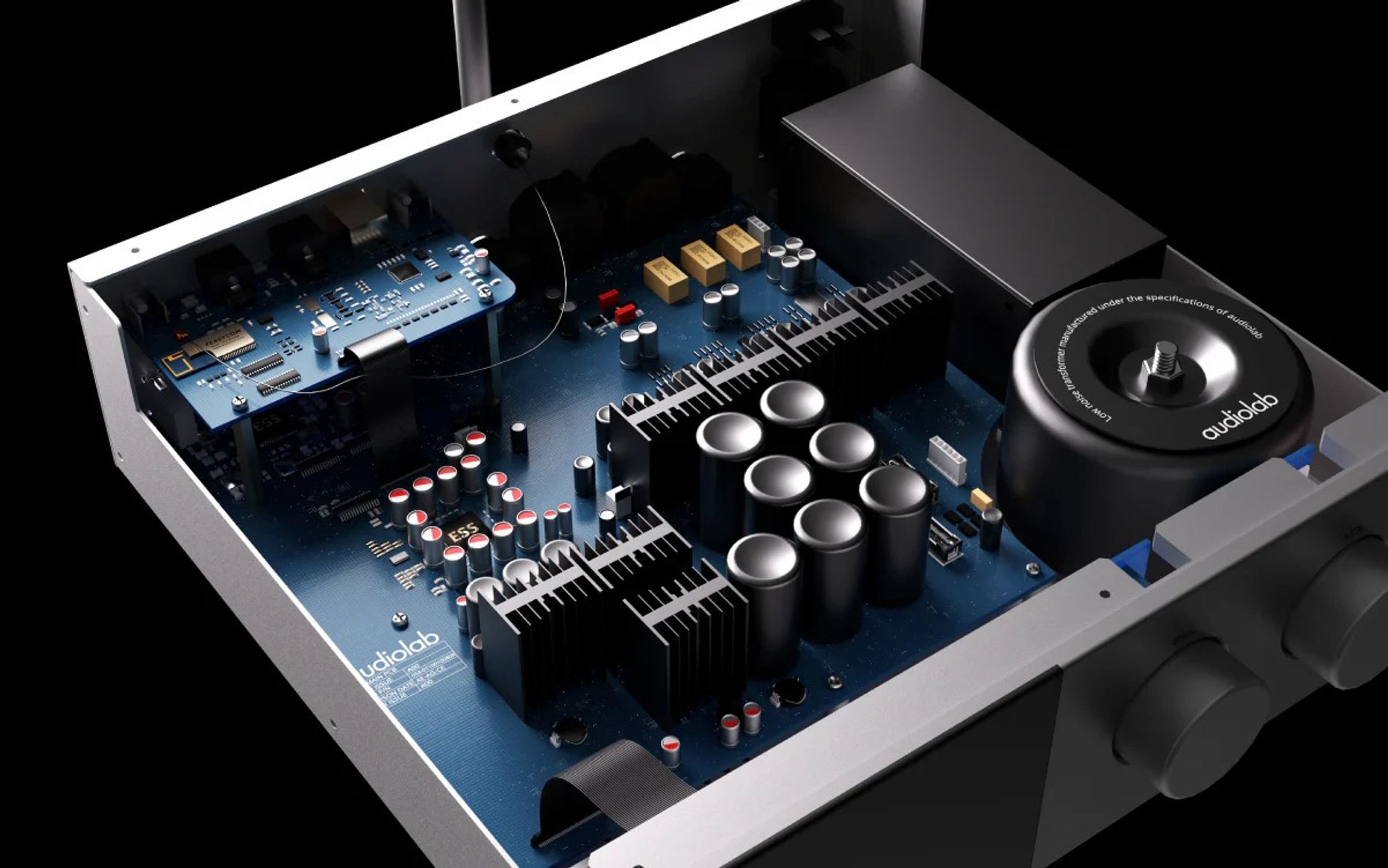
At the heart of the D9 lies the HyperStream II architecture paired with an advanced jitter eliminator. This combination ensures clock synchronization with surgical precision, eliminating temporal artifacts that can degrade soundstage coherence. The ESS Sabre32 ES9038PRO chip, a true industry benchmark, leverages its 32-bit processing power to reproduce every musical nuance with striking fidelity.
One of the D9’s most remarkable features is its five customizable digital filters. This functionality, rare in this price range, allows users to tailor the sound character to their preferences or to the specifics of a recording. The upsampling function up to 384 kHz completes this arsenal of customization, offering rare flexibility to fine-tune the audio rendering.
Universal Compatibility and MQA Decoding
The D9 embraces the entire contemporary digital audio ecosystem. It effortlessly handles PCM files up to the staggering resolution of 32-bit/768 kHz, as well as DSD formats up to DSD512. This technical versatility allows it to enhance both the most sophisticated studio recordings and high-definition remasters of classic albums.
Full MQA decoding is a major asset for subscribers to high-resolution streaming platforms. Unlike partial decoders, the D9 performs the entire MQA process, restoring the original temporal and frequency resolution of certified recordings. This compatibility extends to USB, coaxial, and optical inputs, ensuring maximum flexibility depending on the source used.
Modern Connectivity and Dedicated Headphone Amplification
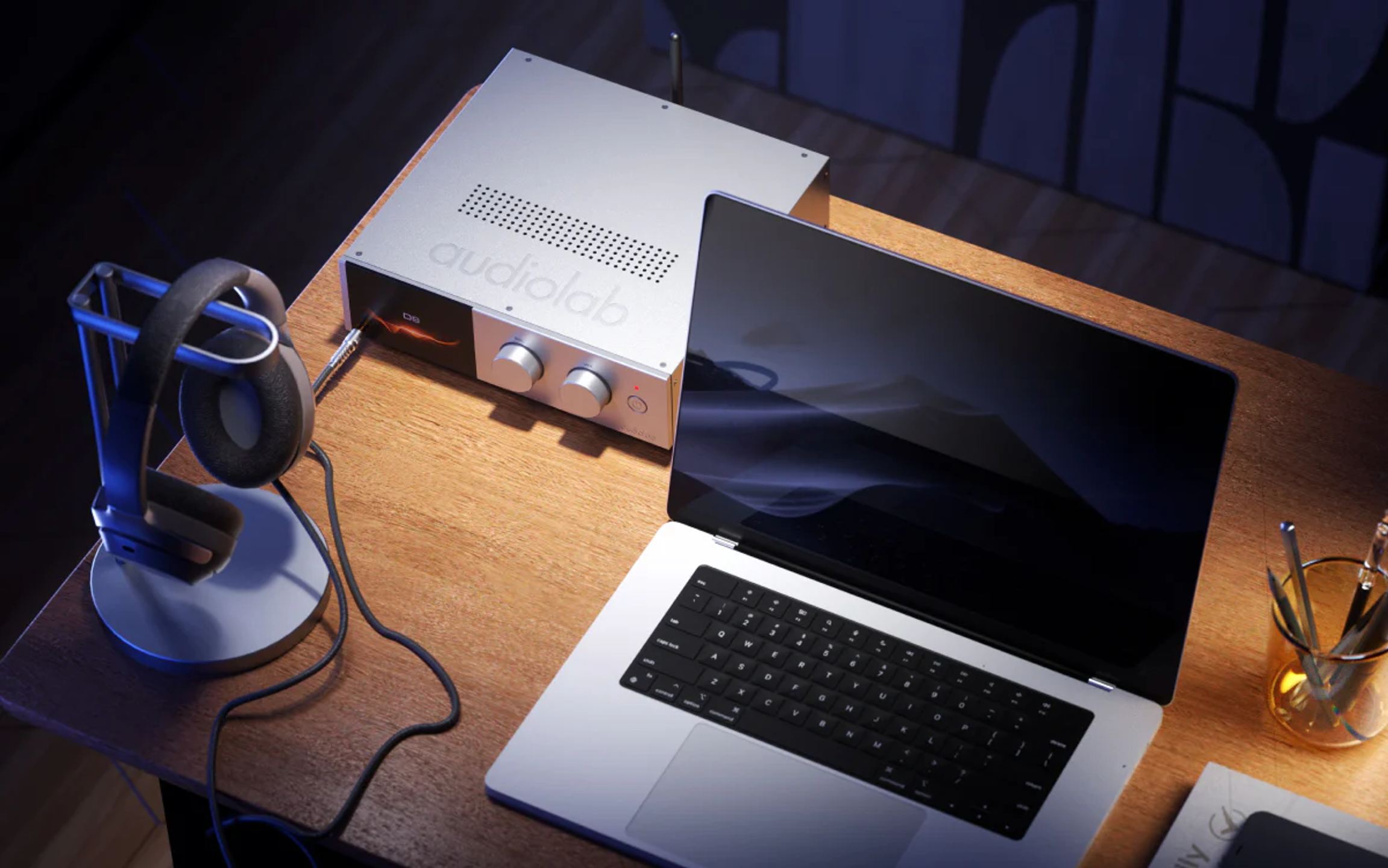
The rear panel of the D9 reveals an array of connections to satisfy even the most complex setups. Two coaxial and optical S/PDIF inputs sit alongside a professional AES/EBU input and two distinct USB ports: one for computer connection, the other for direct playback from storage devices. Bluetooth 5.1 with aptX HD and LDAC support adds a high-quality wireless dimension, allowing high-resolution audio streaming from compatible smartphones and tablets.
The headphone amplification circuit deserves special attention. Based on a current-feedback architecture, it delivers generous power while maintaining distortion below 0.01%. Its compatibility with headphones from 20 to 600 ohms makes it a universal partner, capable of driving both sensitive models and high-impedance references that demand more power.
User Interface and Everyday Ergonomics
The 7.1 cm color IPS screen transforms daily use of the D9. Its 480 × 640 pixel resolution clearly displays file metadata: title, album, file format, and active source. This exemplary readability is complemented by an intuitive multilingual interface, allowing smooth navigation through menus and settings.
The supplied remote control centralizes essential functions, avoiding repeated handling of the device. The selectable digital/analog VU display adds a pleasing visual dimension during extended listening sessions, while providing useful technical information for advanced users.
Evolution Compared to the Previous Model
The D9 marks a significant evolution over the D7 it replaces. The adoption of the ESS Sabre32 ES9038PRO chip, successor to the ES9018, brings measurable performance improvements, particularly in terms of signal-to-noise ratio and linearity. Optimized jitter management further enhances soundstage coherence, while the modernized user interface with color screen greatly facilitates daily use.
Documentation
Technical Specifications
Digital-to-Analog Conversion
- ESS Sabre32 ES9038PRO DAC chip
- Reference 32-bit architecture
- Exceptional signal-to-noise ratio over 123 dB on XLR output
- Ultra-low distortion below 0.001%
- Wide dynamic range for extremely precise conversion
- HyperStream II architecture with jitter eliminator
- Advanced clock synchronization
- Precise and natural soundstage
- Rigorous jitter management
High-Resolution Audio Compatibility
- PCM formats: up to 32-bit / 768 kHz
- DSD formats: up to DSD512 (22.5 MHz)
- Full MQA decoding on USB, coaxial, and optical inputs
- Customizable digital filters
- 5 selectable DAC filters
- Upsampling function up to 384 kHz
- Audio rendering adjustable to your preferences and system
Digital Connectivity
- Digital inputs
- 2 coaxial S/PDIF inputs
- 2 optical S/PDIF inputs
- 1 USB-B input for PC / Mac
- 1 USB-A input for USB drive / hard disk
- 1 AES/EBU input
- Bluetooth 5.1 with aptX HD and LDAC
- Outputs
- 1 stereo RCA output
- 1 balanced XLR output
- 1 6.35 mm headphone output
- 1 optical S/PDIF output
- 1 coaxial S/PDIF output
- 2 x 12V trigger outputs
High-Performance Headphone Amplification
- Current feedback circuit
- Compatible with headphones from 20 to 600 ohms
- Optimal power and clarity
- Total harmonic distortion below 0.01% at 50 mW
- Output impedance: 2.35 ohms
User Interface
- Robust and elegant brushed aluminum chassis
- 7.1 cm (2.8-inch) color IPS display
- 480 × 640 pixel resolution
- Metadata display: title, album, format, source
- Intuitive multilingual interface
- Remote control included
- Selectable digital/analog VU meter display
Measurement Specifications
- Line output at 1 kHz, 0 dBFS
- RCA: 2.05 Vrms
- XLR: 4.1 Vrms
- Frequency response: 20 Hz – 20 kHz (± 0.1 dB)
- A-weighted signal-to-noise ratio
- RCA: over 118 dB
- XLR: over 123 dB
- Standby power consumption: less than 0.5 W
Additional Features
- Local playback from hard drive or USB drive
- Supported formats: MP3, WMA, AAC, WAV, FLAC, APE
- Firmware update via USB
General Information
- Net weight: 4.2 kg
- Gross weight: 5.8 kg
- Dimensions (W x H x D): 315 × 88.3 × 277 mm
- Power supply: 100–120 V / 220–240 V ~ 50 / 60 Hz
Frequently Asked Questions
Can the D9 completely replace my computer’s sound card?
Absolutely. The USB connection allows direct linking to your computer, completely bypassing the internal sound card. The D9’s conversion quality will far surpass that of most integrated sound cards, revealing musical details previously hidden.
What’s the difference between RCA and XLR outputs?
The balanced XLR output offers double the output level and better immunity to interference over long cables. It is particularly suitable for high-end hi-fi systems equipped with balanced inputs. The RCA output remains perfectly suited for standard home setups.
Does MQA decoding work with all streaming services?
MQA decoding is activated only with MQA-certified content, mainly available on Tidal Masters and certain other compatible services. Downloaded MQA files also benefit from this specialized processing.
Can I connect multiple sources simultaneously?
Yes, the D9 accepts multiple sources connected in parallel. Selection is made via the front panel buttons or the remote control. This flexibility allows you to instantly switch between computer, CD player, network streamer, or Bluetooth source.
Can the D9 be used as a preamplifier?
The analog outputs deliver a standard line level, allowing direct connection to a power amplifier. However, the absence of volume control on the line outputs limits this use to systems where volume is managed upstream or downstream.
- Eco-contribution of €2.58 included in the sale price.
- Manufacturer reference: D9 NOIR
- GTIN / EAN: 6976522464481