
Jean Luc
A very good quality product.
Comment from April 06, 2026 — Experience from March 26, 2026
Automatically translated — Show original (French)
Un produit de très bonne qualité.
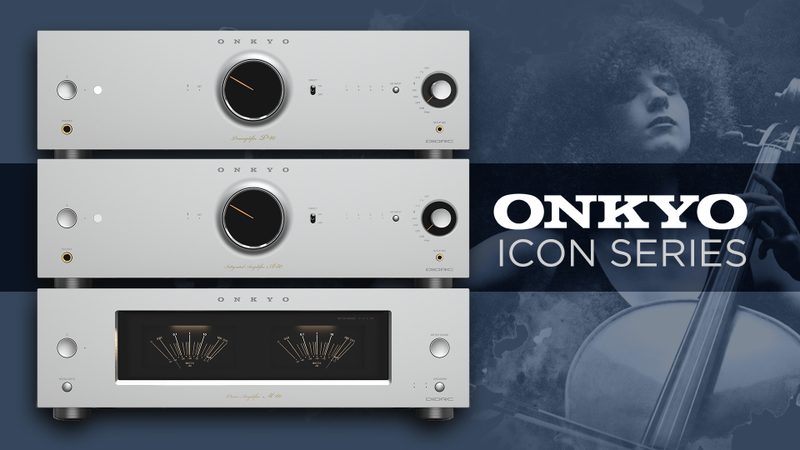
The ICON M-80 power amplifier marks Onkyo’s return to the high-fidelity segment with an ambitious technical proposition. This stereo power amp is part of the new Icon series, designed to reconnect with the brand’s foundations while integrating modern technologies aimed at optimizing sound reproduction.
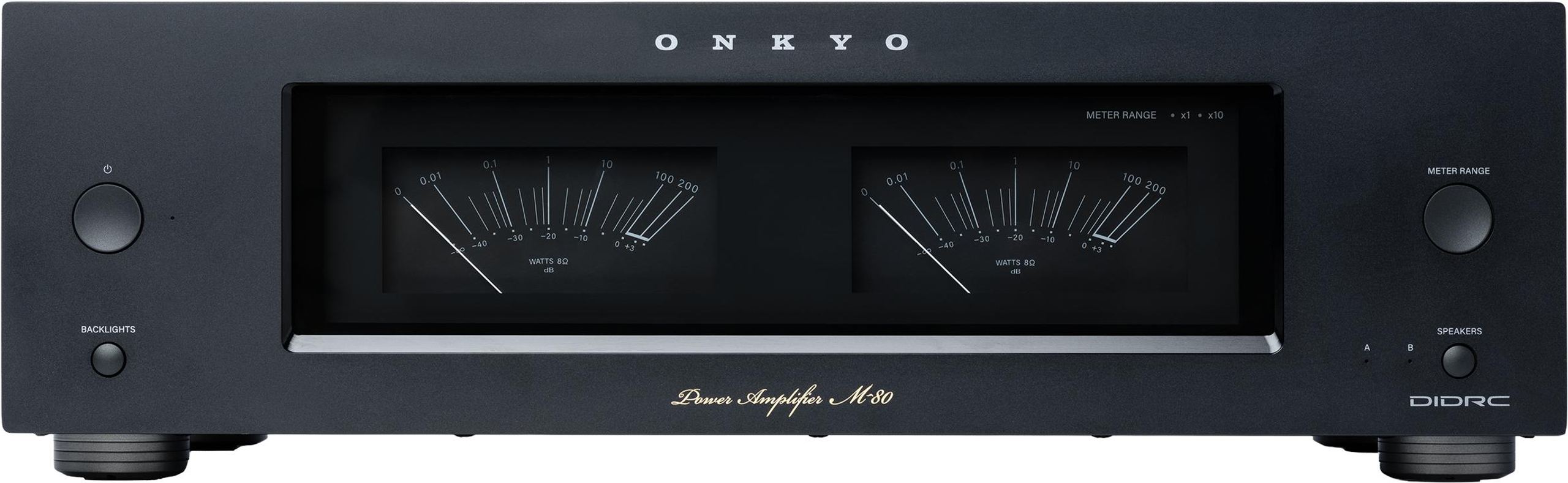
This 13.5 kg unit combines a proven amplification topology with proprietary innovations, delivering 130 watts per channel into 8 ohms and 200 watts into 4 ohms. The M-80 adopts a minimalist approach to design, prioritizing function over ornamentation, with a three-part chassis and a 5 mm-thick extruded aluminum front panel. The device integrates into a modular system comprising the P-80 network preamplifier and the A-50 integrated amplifier, together forming a coherent high-fidelity chain.
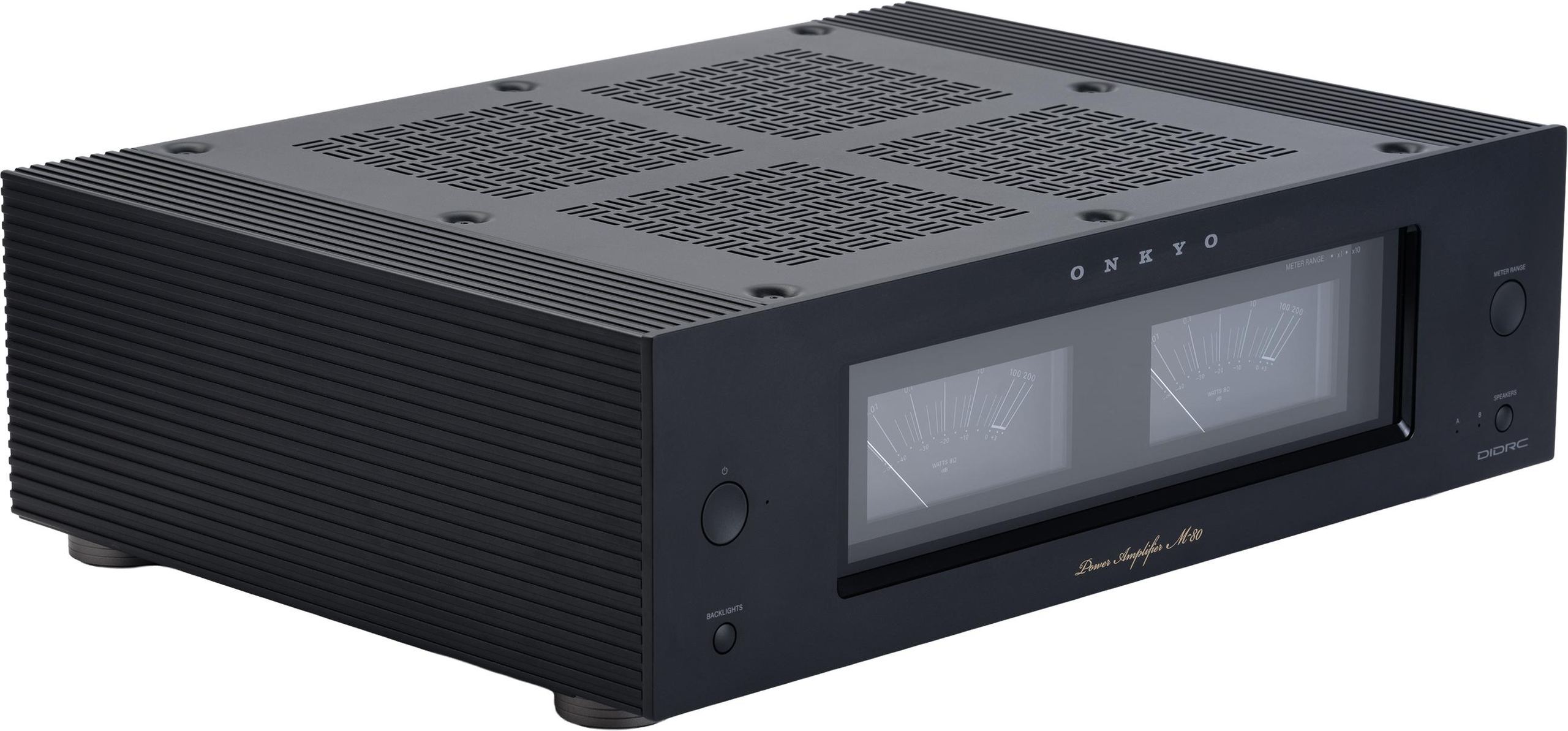
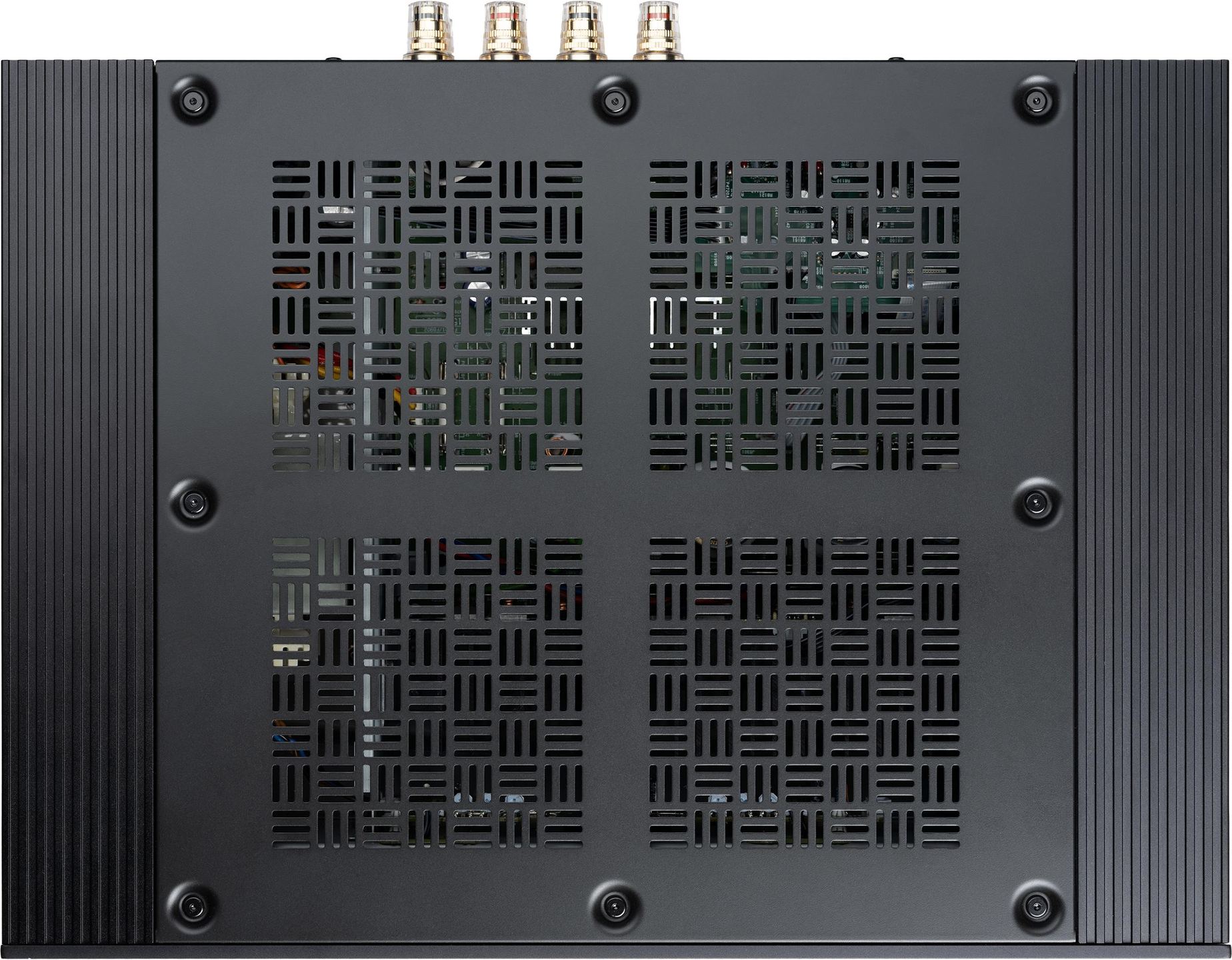
The M-80 chassis is based on a construction of three distinct elements: two aluminum side panels frame a steel top panel. This asymmetrical choice of materials is no accident. Aluminum, used for the sides, offers excellent passive thermal dissipation while keeping weight in check. The steel top panel provides superior structural rigidity, creating a stable platform for the internal components.
This tri-material approach aims to minimize parasitic resonances. Each material has its own resonance frequencies, and combining them helps disperse vibrational energy rather than amplifying it at a given frequency. The 5 mm-thick extruded aluminum front panel reinforces this anti-vibration strategy while providing a solid anchoring surface for the connectors.
The absence of a fan is a significant technical choice. The M-80 relies entirely on extruded aluminum heatsinks to dissipate the heat generated by the output stage. This silent design eliminates any mechanical noise but imposes significant thermal constraints, particularly during prolonged high-power use. The heatsink fins are sized to keep the output transistors within their optimal temperature range, even in bi-wiring configurations or with complex loads.
At the heart of the M-80 is a three-stage Inverted Darlington configuration, a topology dating back to the 1960s that remains relevant for its intrinsic qualities. This architecture consists of a pre-driver stage, a driver stage, and an output stage, each successively amplifying current while maintaining particularly low output impedance.
In a classic Darlington configuration, the total current gain equals the product of the gains of each stage. The “inverted” architecture used here has the advantage of significantly reducing output impedance, thereby improving loudspeaker control, particularly in the low frequencies where transducer impedance varies considerably. The output transistors are mounted in parallel, increasing the ability to deliver instantaneous current.
This topology allows for a relatively low negative feedback (NFB) rate. Reduced NFB limits parasitic interactions with the complex load that a real loudspeaker represents, thus preserving the micro-details of the musical signal. The trade-off is a total harmonic distortion slightly higher than some ultra-linear designs, but Onkyo here prioritizes natural rendering over pure measurement performance.
The driver stage incorporates the DIDRC (Dynamic Intermodulation Distortion Reduction Circuitry), a patented Onkyo technology that deserves particular attention.
The DIDRC circuit represents a significant advancement in handling ultra-high-frequency distortions. Initially developed for the brand’s high-end products, this circuit addresses an often overlooked phenomenon: beating generated in the ultra-high-frequency band during digital signal reproduction.
When a digital-to-analog converter processes a signal, the oversampling process (8x, 16x or more) generates numerous harmonics at frequencies well beyond the audible spectrum. These signals, typically in the 100 kHz to 1 MHz range, can create intermodulation products that fold back into the audible band as distortion. While subtle, this phenomenon affects the clarity and spatial precision of the reproduction.
DIDRC operates by maintaining exceptional linearity up to frequencies of several megahertz, with a slew rate capable of delivering 1000 volts in one microsecond. This extraordinary response speed ensures that the fastest rising edges of the musical signal are reproduced without temporal deformation. Measurements conducted by Onkyo show intermodulation noise reduced to below -140 dB, which is 20 dB under the threshold generally considered audible.
Integrating DIDRC into the driver stage rather than the output stage is no accident. This placement allows the circuit to act before the final current amplification, where the signal is still relatively weak and therefore easier to process with precision. Since the DIDRC module is designed as a standalone functional block, it maintains its characteristics regardless of load or temperature variations.
The M-80’s power supply revolves around a custom toroidal transformer, optimized to deliver high current with minimal residual ripple. Two 10,000 µF filter capacitors, manufactured exclusively for Onkyo, ensure the energy storage needed for musical transients. These capacitors are connected to the output transistors via solid copper bus bars, thereby minimizing the series resistance and parasitic inductance of the power supply circuit.
The amplifier’s ability to maintain its power into difficult loads is reflected in its specifications: 130 watts into 8 ohms, and 200 watts into 4 ohms. This 54% increase in available power when the load impedance is halved demonstrates a robust power supply and an output stage capable of delivering the required current. The accepted impedance range, from 4 to 16 ohms, covers almost all speakers on the market.
The frequency response, extending from 5 Hz to 100 kHz (+1/-3 dB), goes far beyond the audible spectrum in both directions. This extended bandwidth is not just a technical feat: it ensures linear phase across the entire audio band, preserving the temporal relationships between the different components of the musical signal.
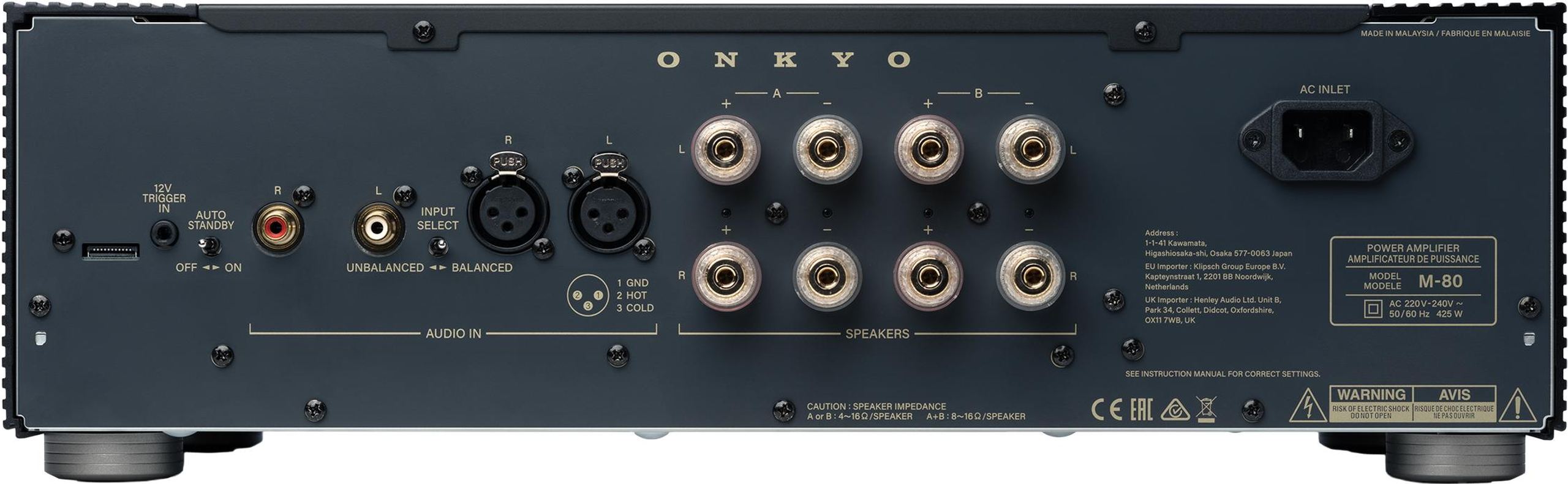
The M-80’s rear panel offers dual input connectivity: unbalanced RCA and balanced XLR. The presence of XLR connections on an amplifier in this category enables integration into professional or semi-professional systems, while providing better immunity to interference over long cable runs.
The gold-plated speaker terminals accept bare wire, spades, or banana plugs. The quality of these terminals, often overlooked, plays a significant role in transmitting the amplified signal. Gold plating prevents long-term oxidation, maintaining minimal contact resistance even after years of use.
The 12V trigger input on a 3.5 mm jack allows the M-80 to be integrated into a home automation system or paired with the P-80 preamplifier. This auto power-on function synchronizes the power-up of the entire chain, simplifying daily use.
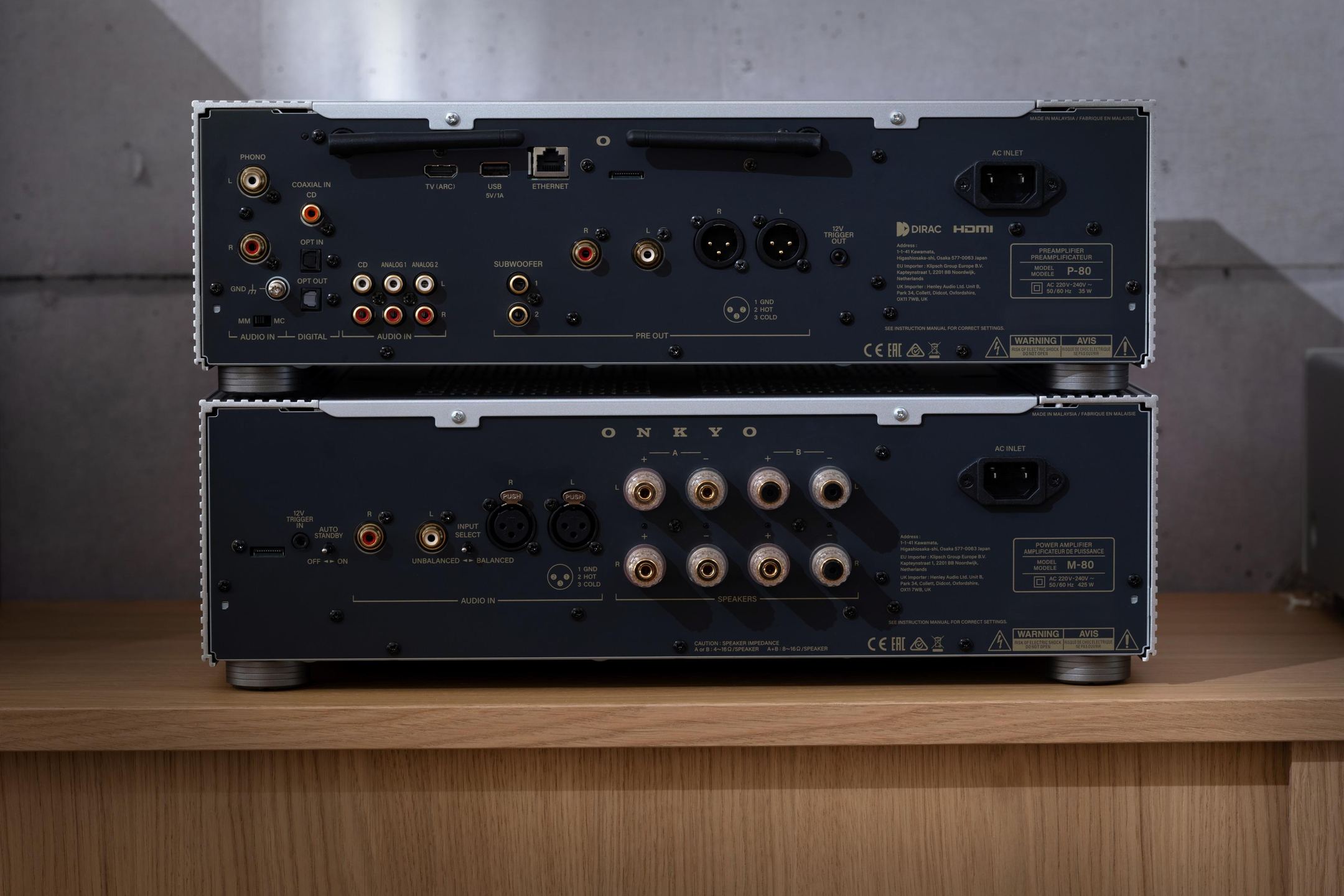
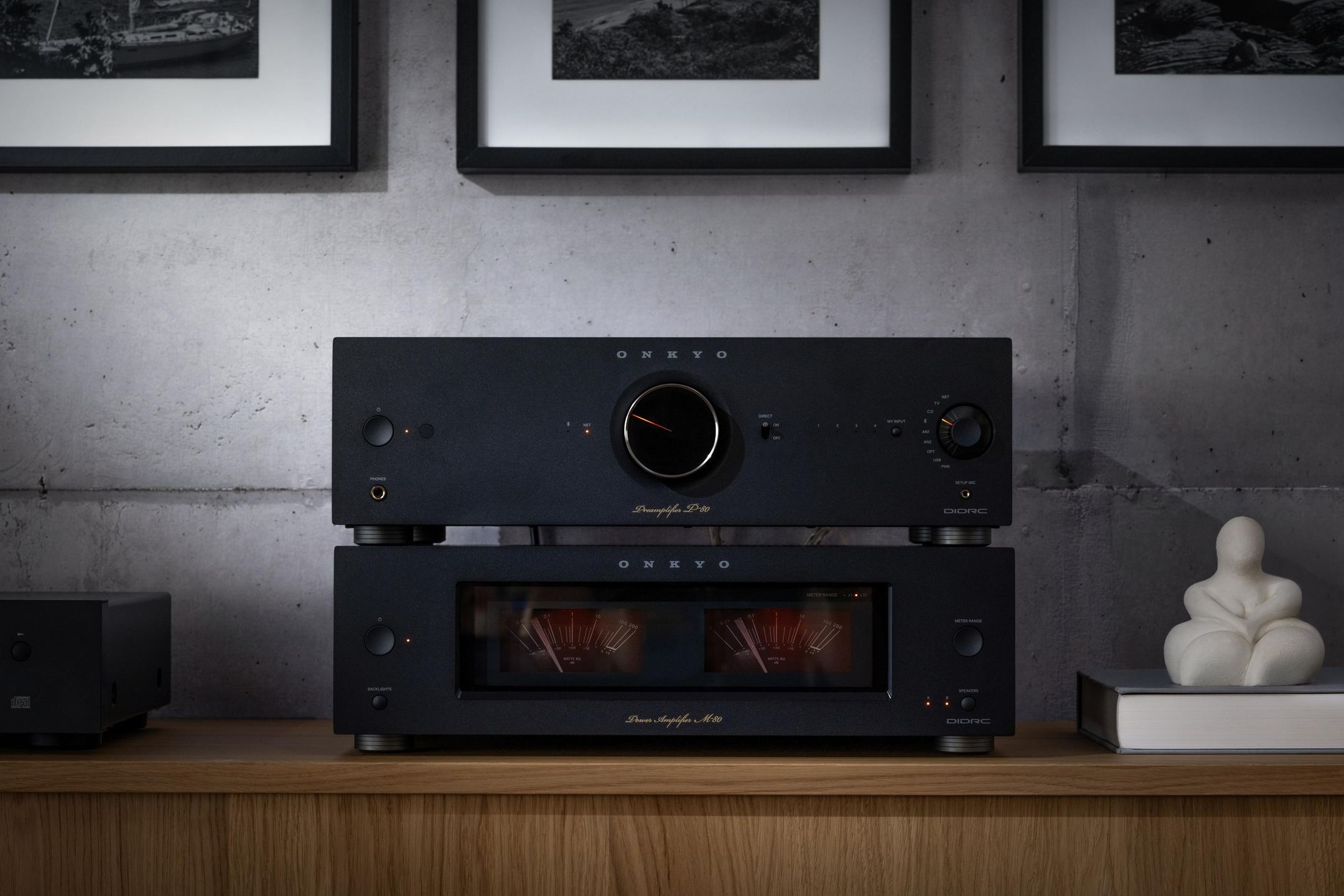
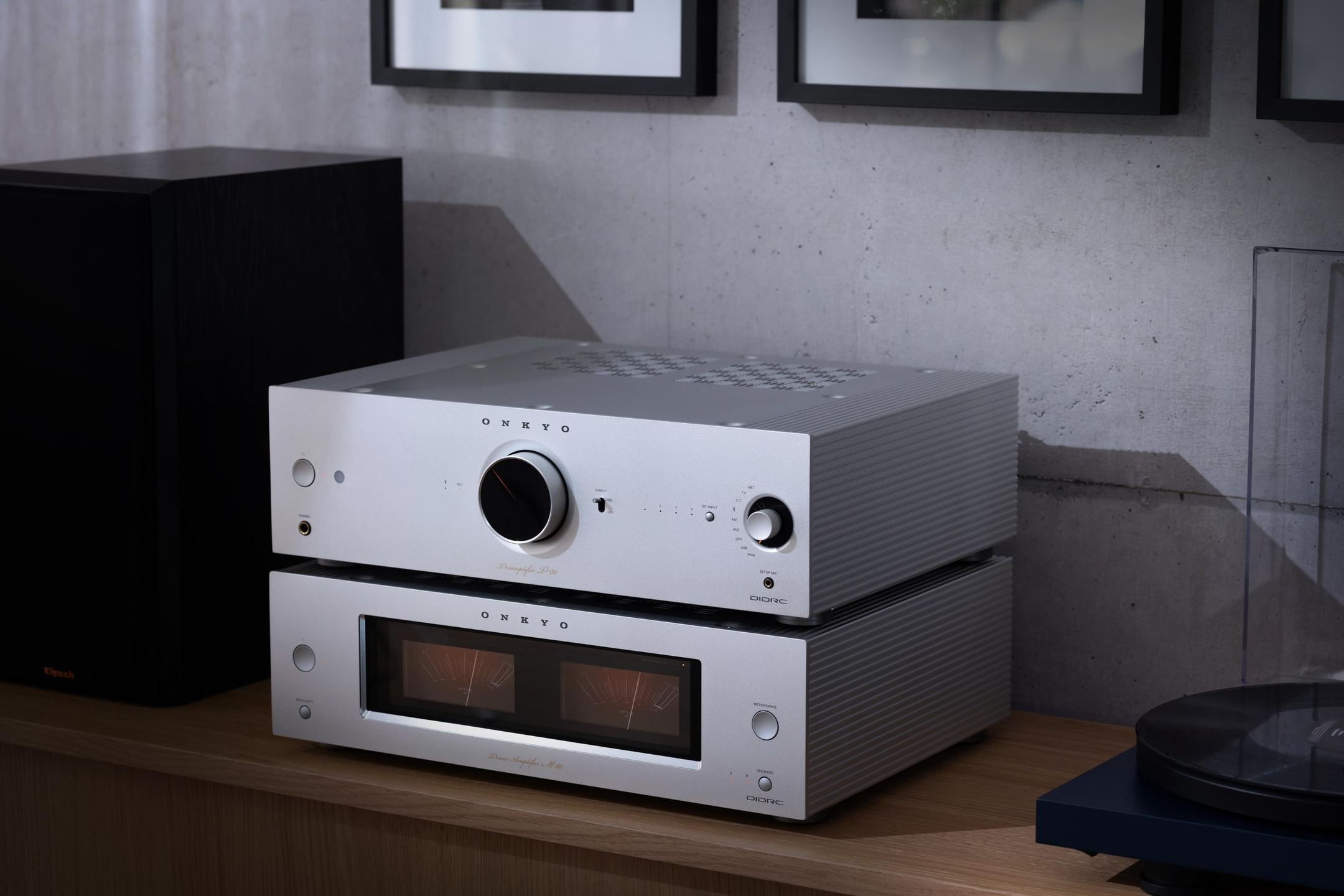
The M-80 is a pure power amplifier, with no preamplification and no volume or tone controls. It requires a separate preamplifier such as the P-80 to operate. This physical separation eliminates interference between signal-processing circuits and power amplification, enabling more transparent reproduction. The A-50, on the other hand, integrates all functions in a single chassis, offering convenience and space savings at the cost of a slight theoretical compromise on circuit separation.
Although initially designed to address artifacts from digital sources, DIDRC also improves the reproduction of analog sources. Vinyl records contain information up to 50 kHz and beyond, particularly with moving-coil (MC) cartridges. DIDRC preserves these ultrasonic details and maintains amplifier stability in the presence of high-frequency energy, resulting in a more stable soundstage and more natural timbres, even with purely analog sources.
The M-80 is perfectly suited to active or passive bi-amplification. In an active configuration with an external electronic crossover, two M-80s can be used—one for the lows/mids and the other for the highs. In passive bi-amping, a single M-80 can drive either the lows or the highs of bi-wireable speakers, with the other section powered by a second amplifier. The M-80’s low output impedance and current reserve make it particularly well suited to the bass section in this type of setup.
Jean Luc
A very good quality product.
Comment from April 06, 2026 — Experience from March 26, 2026
Ulf
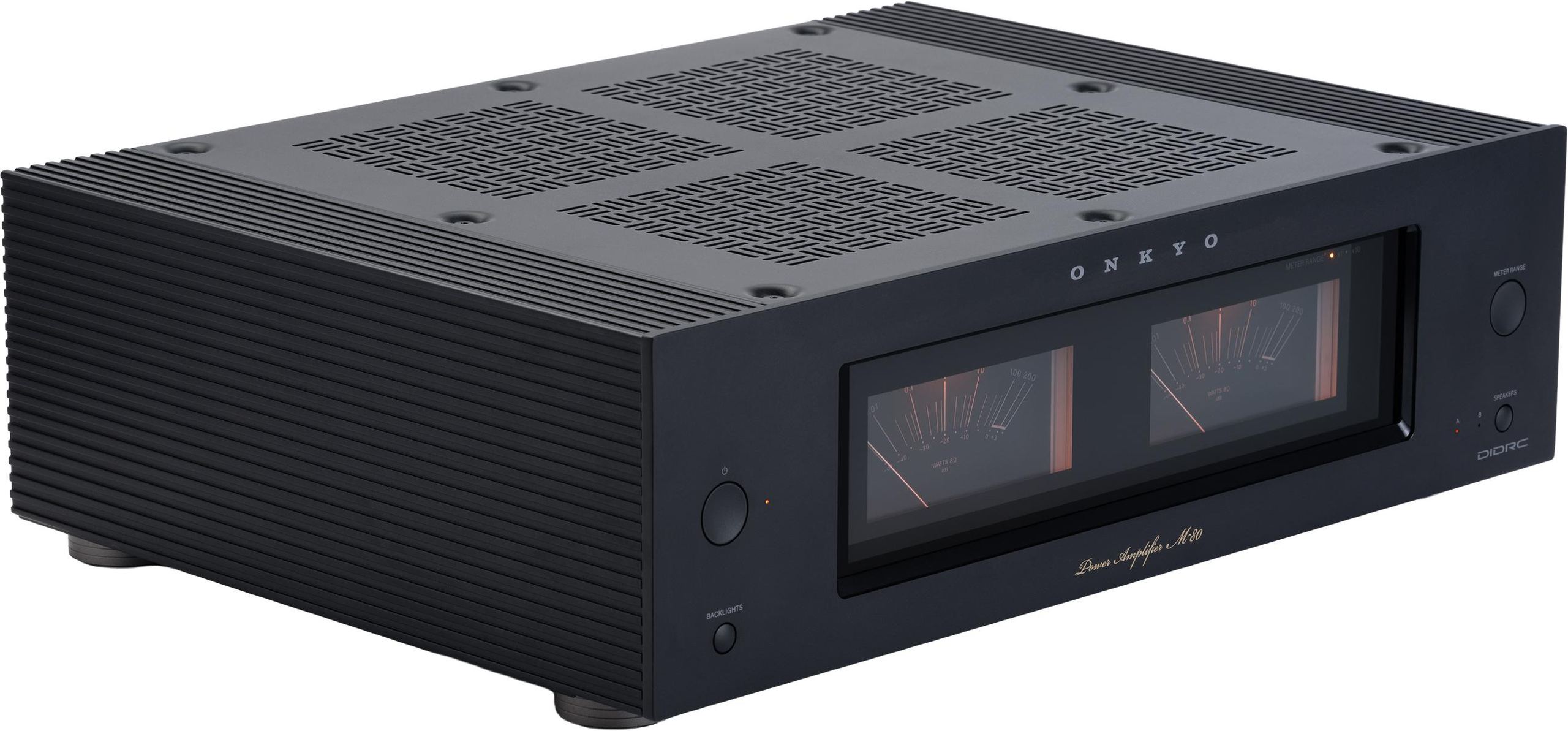
very good amp . the only thing is that you can not changs color and brightnes on the vu meters
Comment from February 11, 2026 — Experience from January 05, 2026