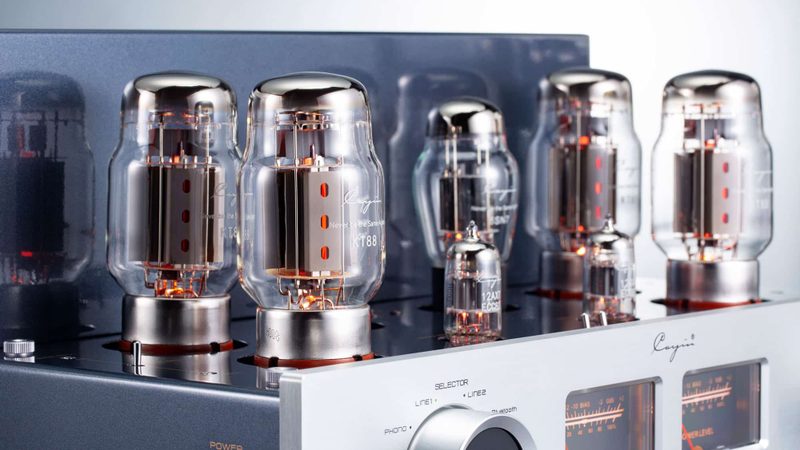
Cayin Jazz 90 KT88 silver



Specifications and features


Overview
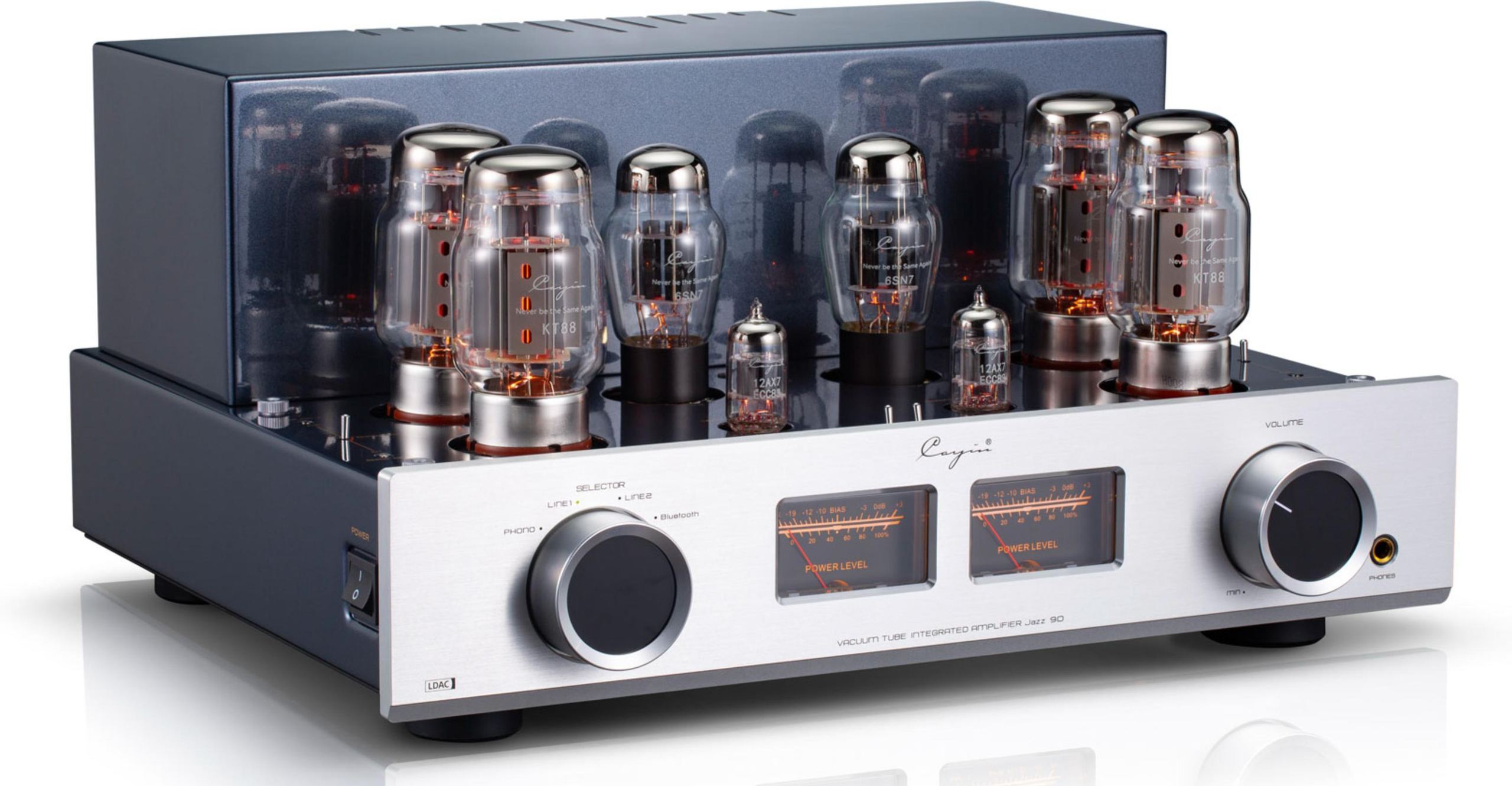
The Cayin Jazz 90 KT88 is a stereo tube integrated amplifier, positioned between the Jazz 80 and Jazz 100 models. It delivers 50 W per channel in ultralinear mode and features an intelligent BMI protection system. Its connectivity includes high-resolution Bluetooth, enabling versatile use while retaining the warm sonic signature of KT88 tubes.
Handcrafted construction and toroidal transformer: the essence of Cayin quality
The Cayin Jazz 90 proudly tips the scales at 27.5 kilograms, a weight that attests to the robustness of its construction and the quality of the components used. At the heart of this substantial mass is a toroidal transformer developed in-house by the brand’s engineers, a key component that ensures stable, quiet power to the amplifier circuits. This approach differs from the conventional EI transformers used in many competing models: the toroidal shape minimizes magnetic leakage and drastically reduces mechanical noise, while optimizing energy efficiency.
The point-to-point wiring, done entirely by hand, is another notable feature of the Jazz 90. This time-honored technique, which consists of directly connecting components to each other without a printed circuit board, shortens the signal path and preserves its integrity. Each connection is individually soldered by skilled artisans, a long and meticulous process that guarantees exemplary reliability and consistent performance over time. The generously sized output transformers, designed to handle the 50 watts of rated power, benefit from a particularly wide bandwidth that allows them to reproduce both infrabass and the highest harmonics.
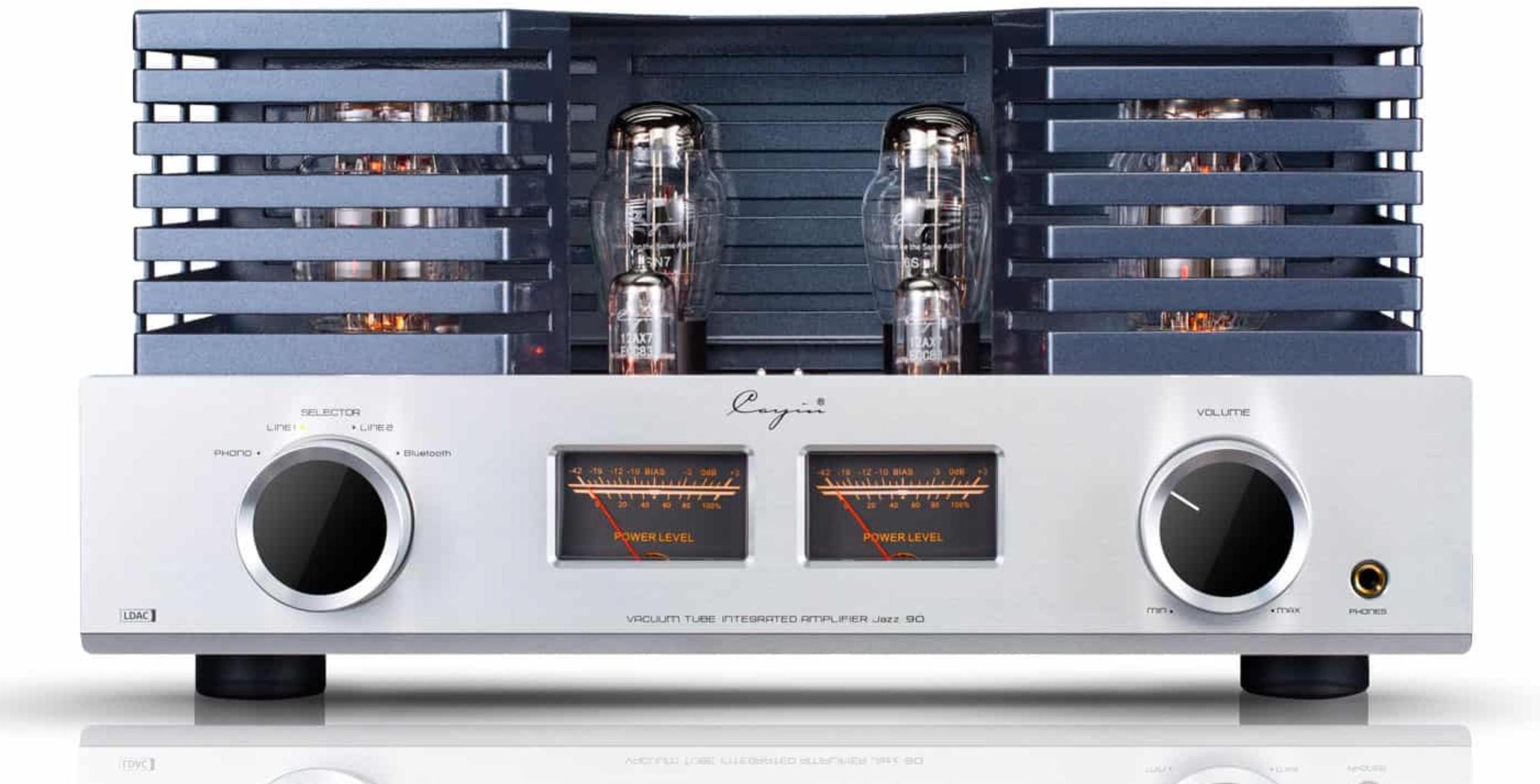
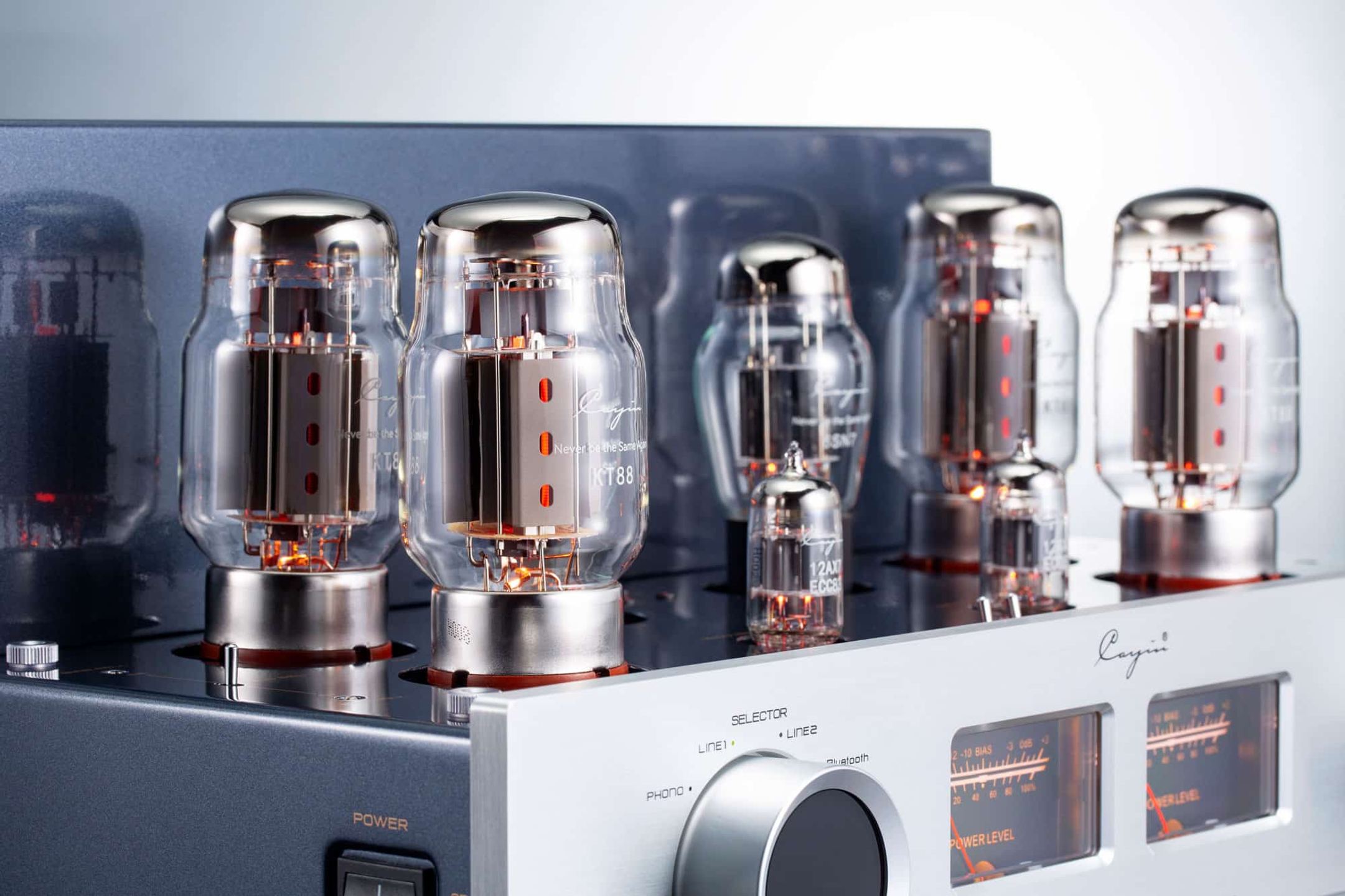
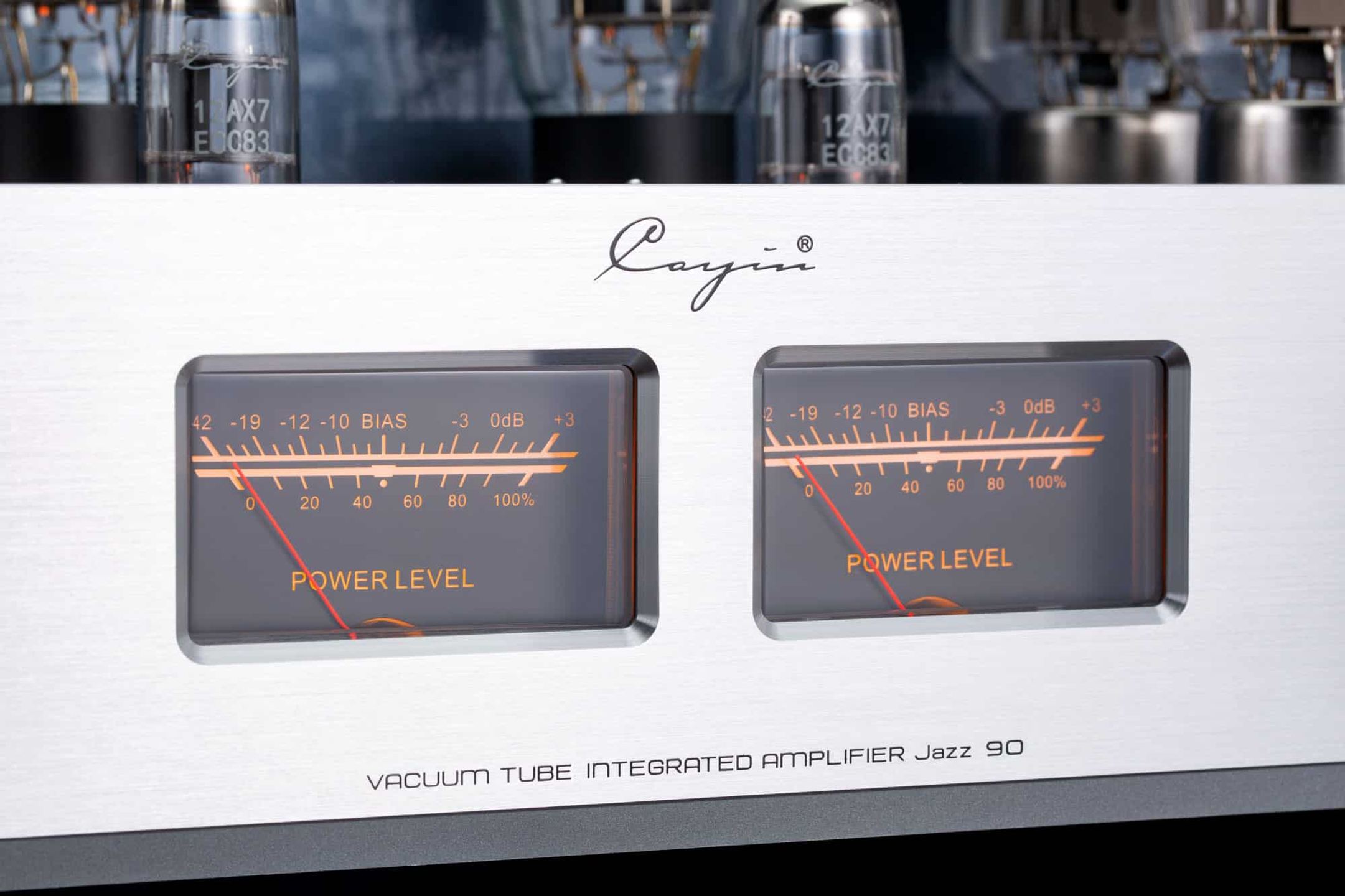
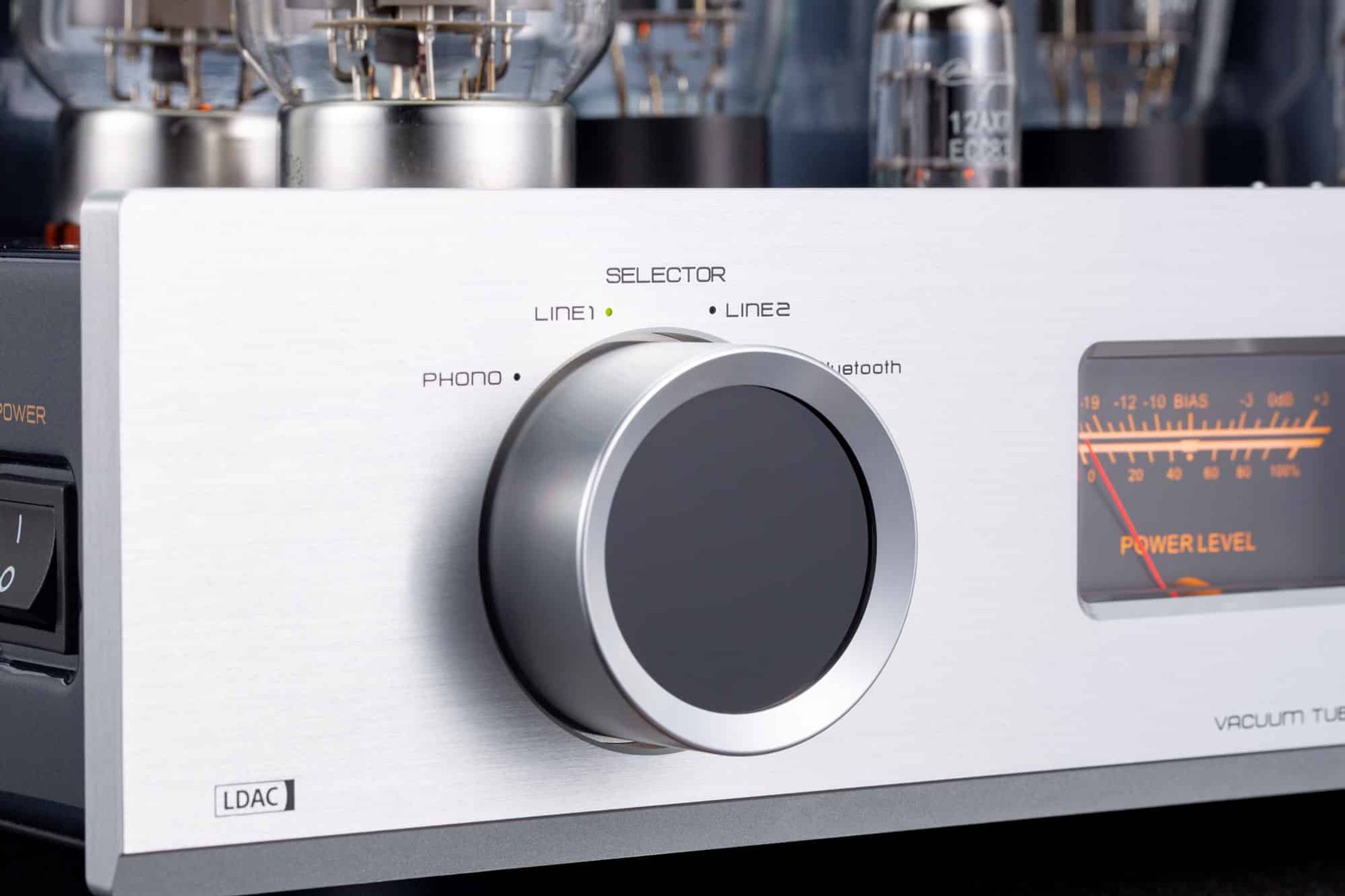
The analog VU meters adorning the front panel are not mere decorative elements. These needle instruments, backlit with a soft amber glow, serve a dual function: they display in real time the power delivered during music playback, creating a visual animation that follows the rhythm, and they also act as indicators when adjusting tube bias. This versatility makes it easy to monitor tube health without resorting to external measuring instruments, a user comfort especially appreciated by both newcomers and experienced users.
KT88 tube architecture and tube rolling flexibility
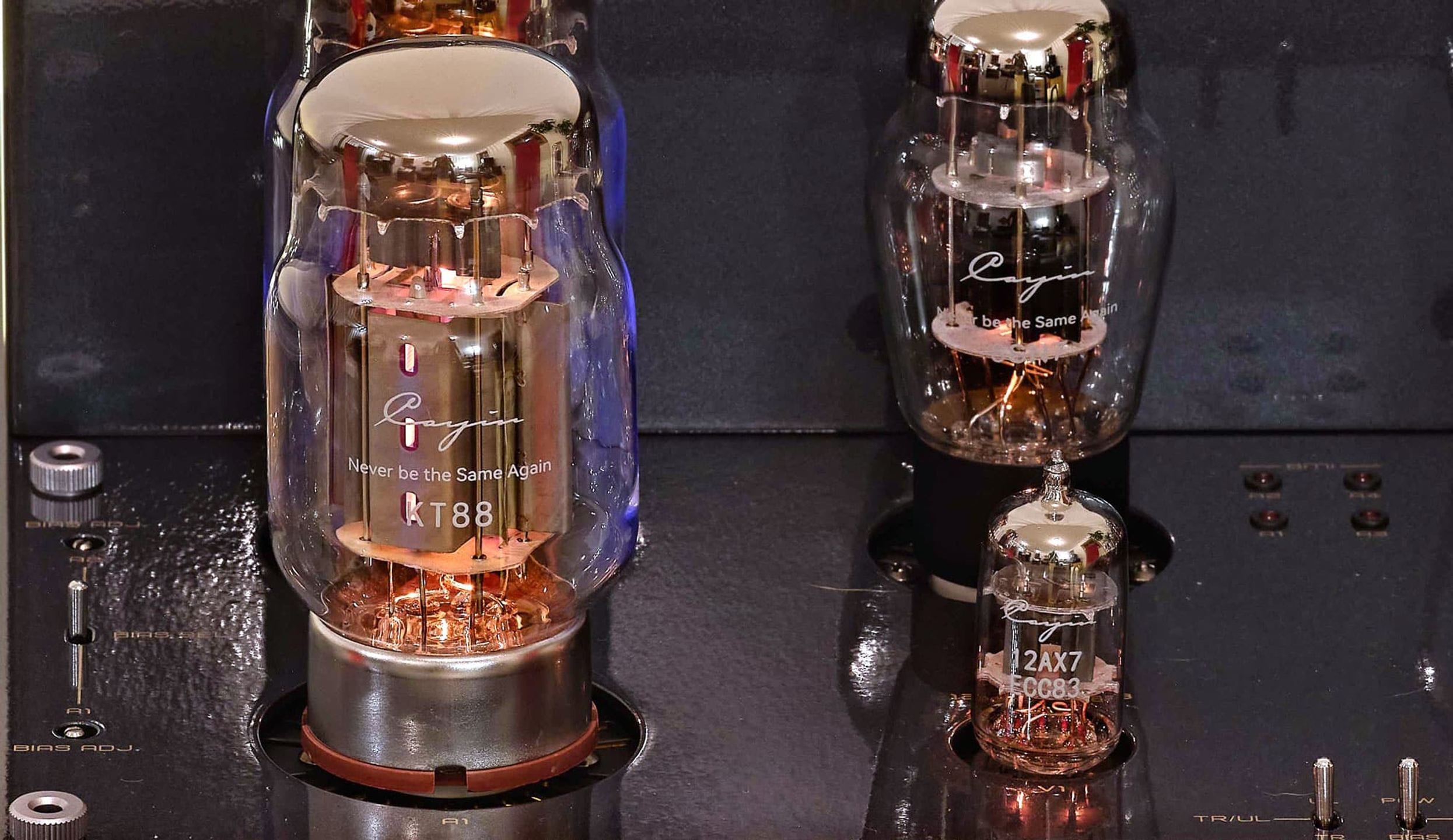
The architecture of the Jazz 90 revolves around eight carefully selected tubes assigned to their specific roles. The input stage entrusts signal amplification to two 12AX7 (ECC83) dual triodes, renowned for their linearity and low noise floor. These input tubes largely determine the amplifier’s transparency and finesse. Next come two 6SN7 tubes in the driver position, medium-power dual triodes that prepare the signal before final amplification. These driver tubes play a crucial role in dynamics and transient attack.
The four KT88 power tubes, configured in push-pull class AB, form the beating heart of the amplifier. These beam tetrodes, developed specifically for audio applications in the 1950s, are known for delivering substantial power while maintaining controlled harmonic distortion. The push-pull configuration allows each pair of tubes to alternately handle the positive and negative half-waves of the signal, naturally canceling even-order harmonics and reducing distortion while increasing efficiency.
One of the Jazz 90’s standout features is its compatibility with EL34 tubes, offering tube-rolling enthusiasts the ability to tailor the amplifier’s sonic character to their preferences. KT88s prioritize power, extended low-end, and a certain tonal neutrality, while EL34s bring more warmth in the mids, a creamier texture, and particularly appealing musicality for vocals and acoustic instruments. This flexibility lets you optimize the pairing between the amplifier and speakers, or simply explore different sonic signatures depending on the music genres you listen to.
BMI system and automatic protection: technology in the service of longevity
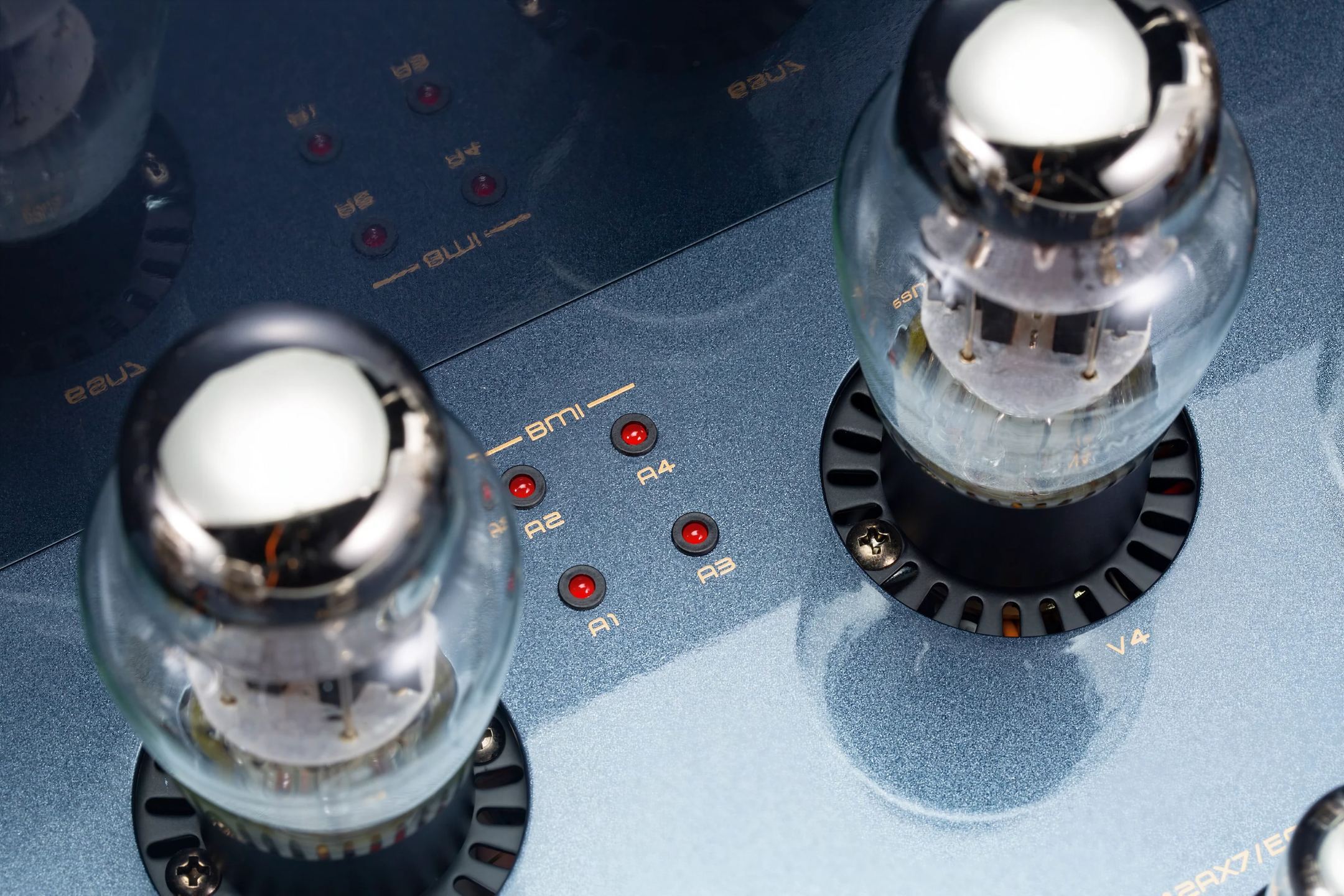
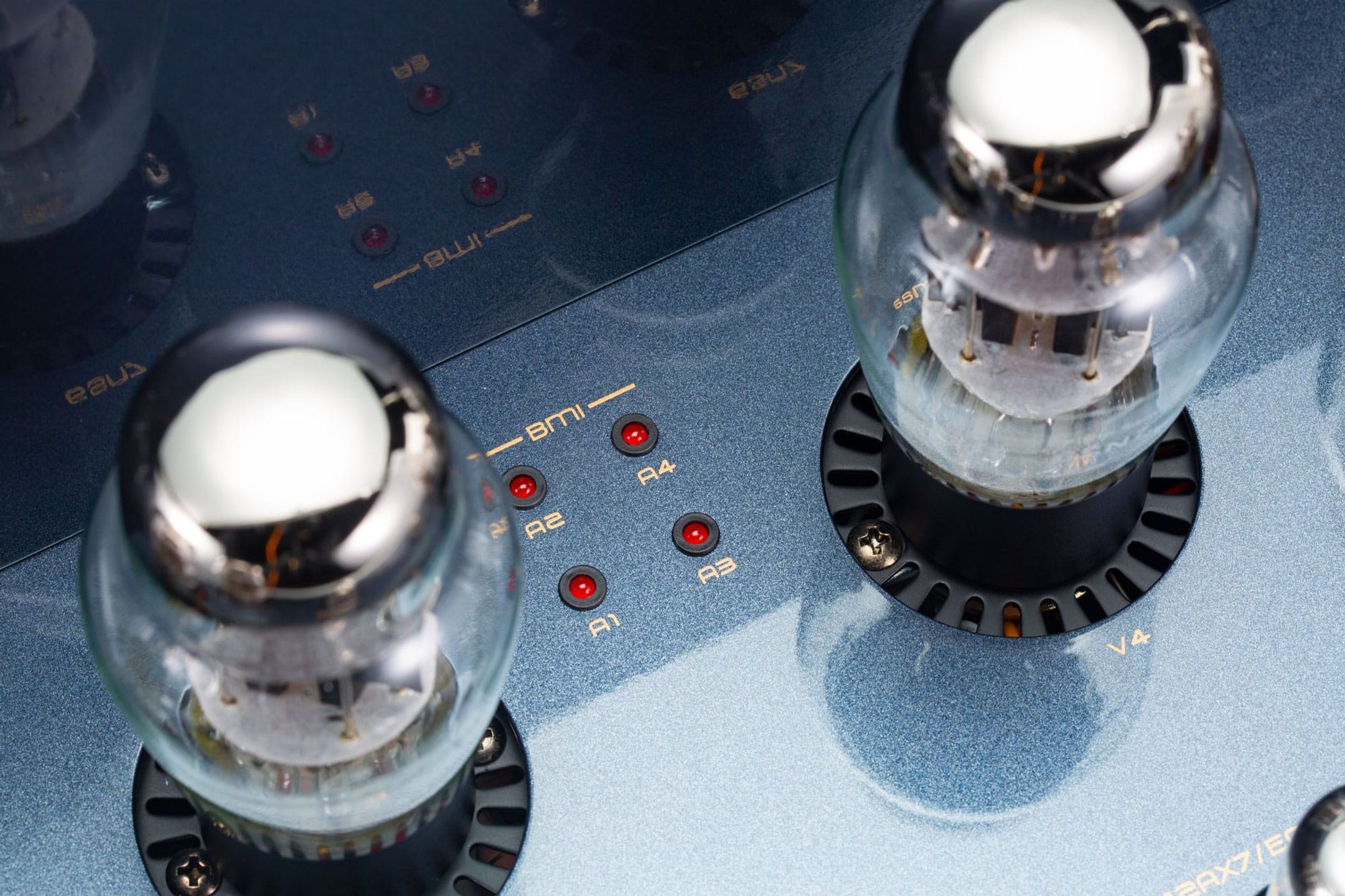
The BMI (Bias Monitoring Indicator) system represents a major innovation in managing and protecting power tubes. This intelligent monitoring circuit continuously tracks the quiescent current of each tube and instantly detects any drift from reference values. In the event of an anomaly—whether a faulty tube, premature aging, or a bias issue—the system automatically shuts down the amplifier to protect the circuits and prevent collateral damage.
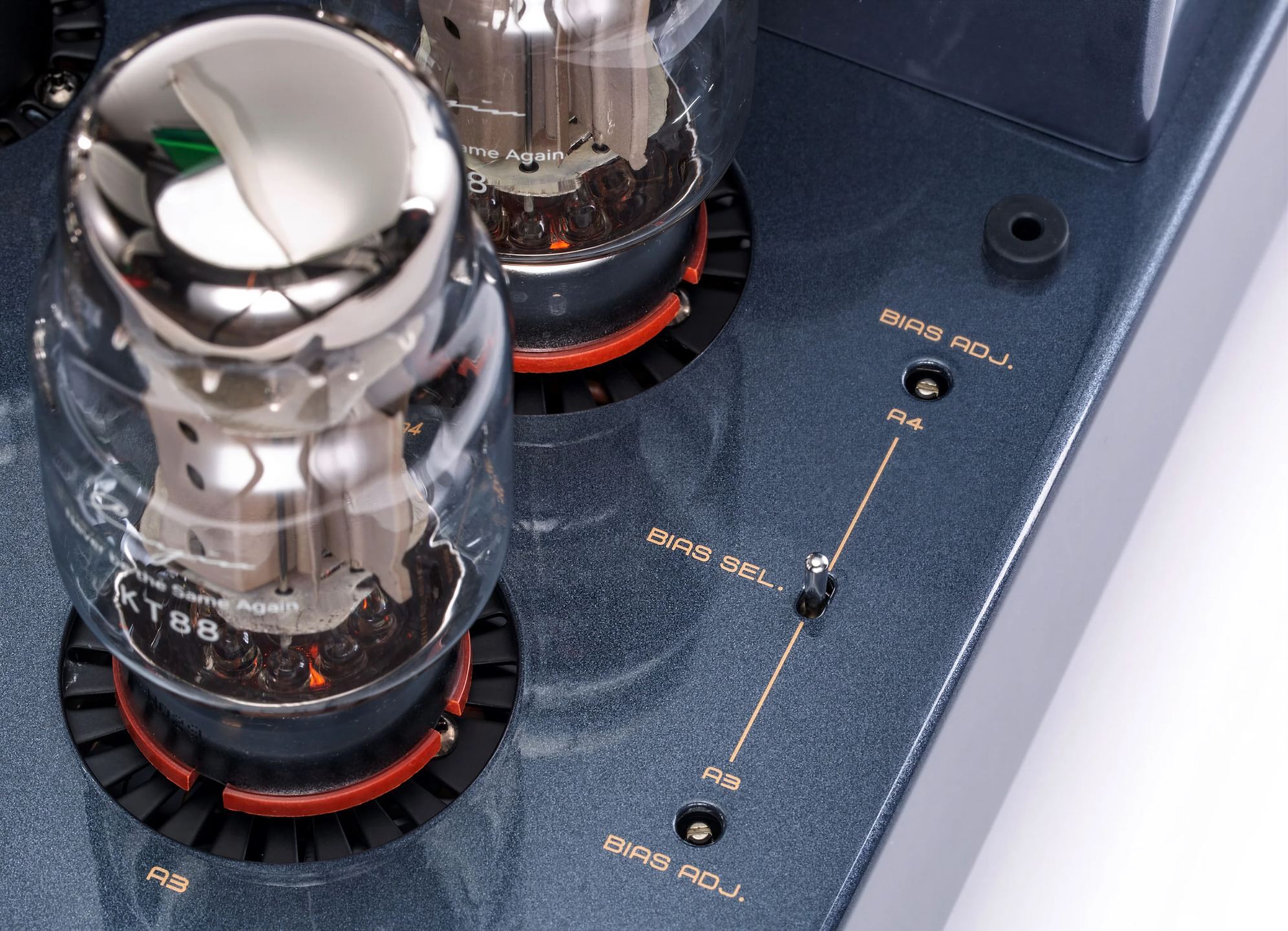
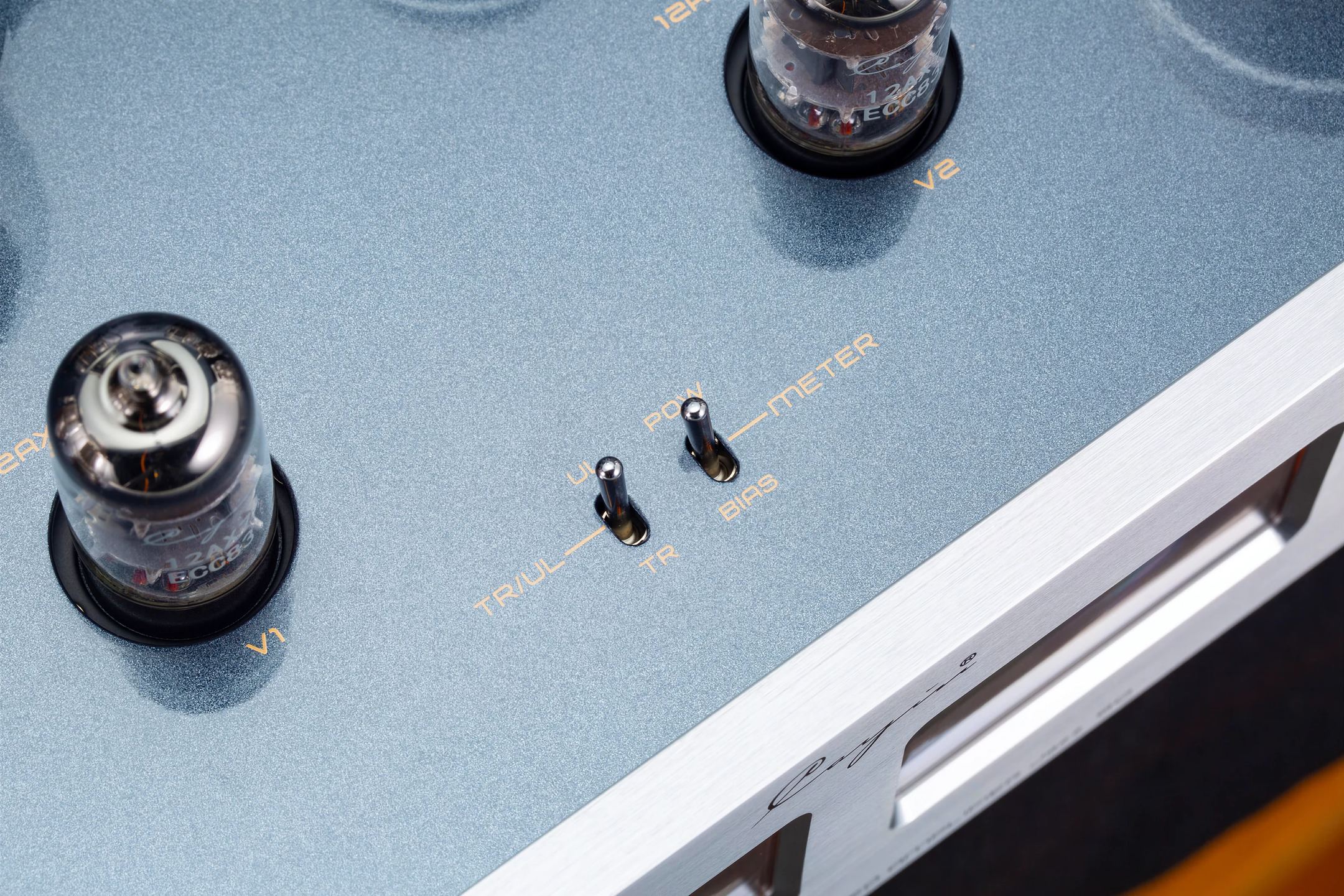
Bias adjustment, traditionally a delicate operation on tube amplifiers, becomes strikingly simple here. The adjustment potentiometers, accessible from the top of the chassis, allow you to individually set the quiescent current of each tube. The left VU meter, switched to bias mode via a dedicated selector, serves as a visual indicator to achieve the optimal setting. This procedure, requiring only a simple screwdriver, can be carried out in a few minutes without particular technical skills. Cayin recommends checking the bias every 100 to 200 hours of use, a preventive maintenance step that ensures optimal performance and prolongs tube life.
The automatic protection integrated into the BMI system goes beyond simple bias monitoring. It also detects short circuits, overloads, and potential overheating. This preventive approach is particularly reassuring when using demanding speakers or during extended listening sessions at high volume. The protection system only intervenes when necessary, without affecting sound quality or introducing additional components into the signal path.
Modern connectivity: MM phono and high-resolution Bluetooth
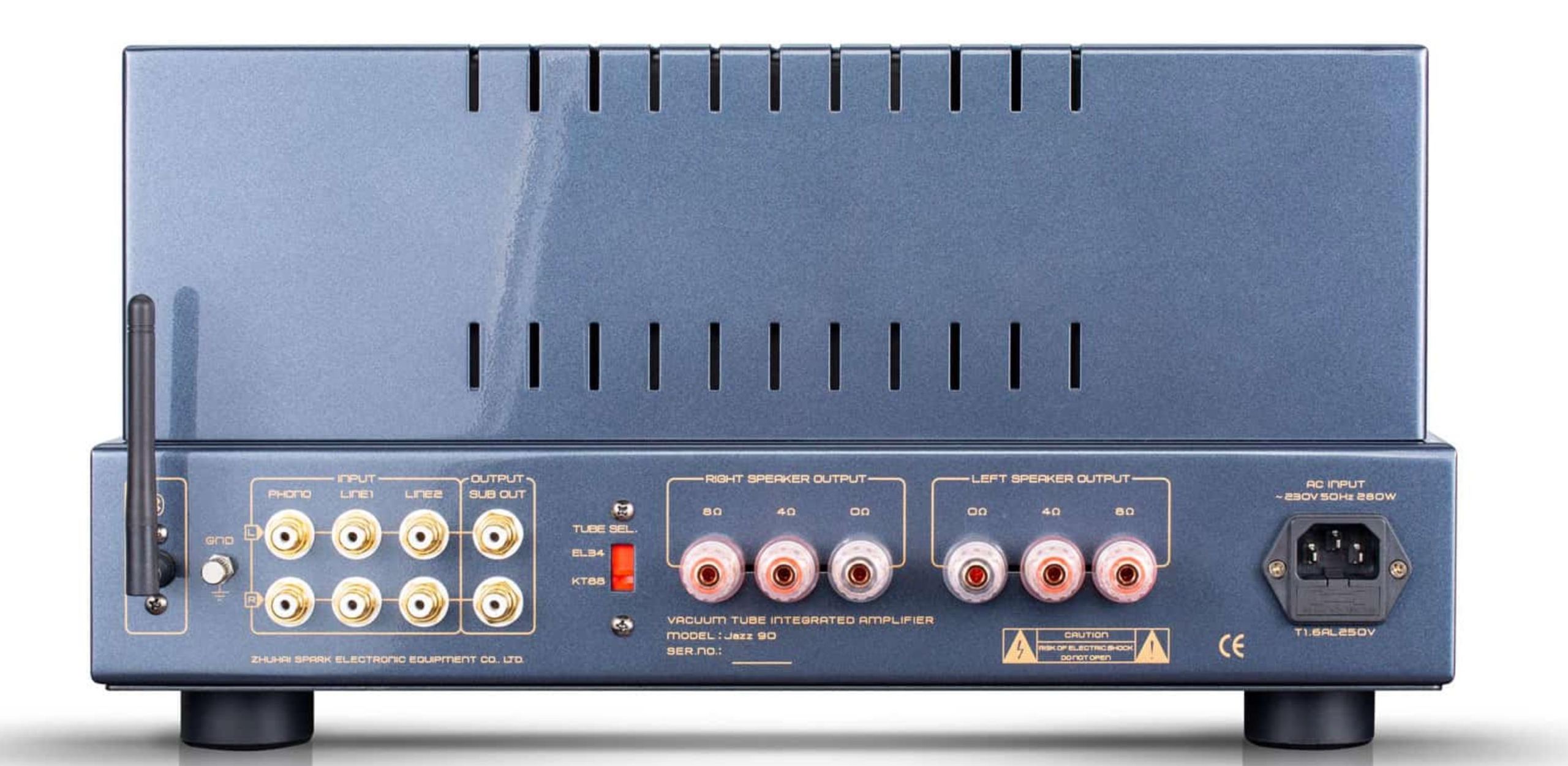
The Jazz 90 is more than a traditional tube amplifier. Its built-in MM phono input lets you directly connect a turntable equipped with a moving-magnet cartridge, with no need for an external phono preamp. The RIAA circuit, built with precision components, ensures a correction curve compliant with standards with a maximum error of ±0.25 dB. The 3 mV sensitivity and 47 kΩ input impedance perfectly match the characteristics of most MM cartridges on the market. The 68 dB signal-to-noise ratio, while slightly behind the line inputs, remains entirely respectable for a built-in phono stage.
The integration of Bluetooth 5.1 is a genuine departure from traditional tube amplifier conventions. The Qualcomm QCC5125 module selected by Cayin supports all current high-definition codecs: LDAC for near-lossless transmission up to 990 kbps, aptX HD for CD-quality at 24-bit/48 kHz, aptX Low Latency to minimize A/V lip-sync delay, as well as the standard AAC and SBC codecs for universal compatibility. The ESS ES9018K2M digital-to-analog converter, part of the Sabre32 family, handles digital signal conversion with remarkable resolution and musicality.
Two RCA line inputs complete the connectivity, allowing you to connect a CD player, network player, or any other analog source. The subwoofer output, which delivers a full-range, unfiltered signal, makes it easy to integrate a subwoofer to create a 2.1 system. The front-panel headphone output, in 6.35 mm jack format, delivers 85 mW into 32 ohms, enough power to drive most headphones on the market with authority and musicality. The speaker binding posts, offered in 4 and 8 ohm versions, accept banana plugs, spades, and large-gauge bare wire.
Triode and ultralinear modes: two sonic philosophies
Switching between triode and ultralinear modes fundamentally changes the electrical and sonic behavior of the power tubes. In ultralinear mode, the screen grids of the KT88s are connected to tap points on the output transformers, creating local feedback that linearizes the transfer curve. This mode delivers the maximum power of 50 watts per channel with a bandwidth extending from 9 Hz to 45 kHz (±3 dB). Total harmonic distortion is kept to 0.2% at 1 watt, attesting to the quality of the circuit and transformers.
Triode mode reconnects the screen grids directly to the anodes, electrically transforming the KT88 tetrodes into triodes. This configuration reduces available power to 28 watts per channel but profoundly alters the harmonic spectrum. Even-order harmonics, naturally euphonic, become more prominent, creating that velvety texture and fluidity characteristic of triode sound. Triode mode is particularly well suited to late-night listening at moderate volume, small jazz ensembles, chamber music, and vocal recordings where timbral richness takes precedence over brute power.
Switching between modes is accomplished simply via a toggle on the top of the chassis, beneath the protective cage. This flexibility lets you instantly tailor the amplifier’s character to the musical program or your mood. Classical music lovers will appreciate ultralinear mode’s ability to reproduce orchestral tuttis with breadth and control, while jazz enthusiasts will often favor triode mode for its ability to reveal the subtleties of a saxophone or the texture of a double bass.
Technical specifications
Amplification and tube stages
- Output power: 2 × 50 W RMS in ultralinear mode, 2 × 28 W RMS in triode mode
- Tube configuration
- Input stage: 2 × 12AX7 / ECC83
- Driver stage: 2 × 6SN7
- Power stage: 4 × KT88 (EL34 compatible)
- Class AB push-pull with triode / ultralinear switching
- Triode mode: rich, fluid, and natural rendering, ideal for vocals and small ensembles
- Ultralinear mode: more power and control, perfect for large ensembles, energetic jazz, or electronic music
Connectivity
- Inputs
- 1 × Phono MM (moving magnet)
- 2 × Line (RCA)
- 1 × Bluetooth 5.1 (Qualcomm QCC5125 + ESS ES9018K2M DAC)
- Outputs
- Speaker terminals: 4 Ω and 8 Ω
- 1 × Subwoofer out (full-range)
- 1 × Headphone (6.35 mm jack)
- Bluetooth support: LDAC, aptX HD, AAC
Measured performance
- Output power: 28 W + 28 W (triode), 50 W + 50 W (ultralinear)
- Total harmonic distortion (THD): 0.2% (1 W, 1 kHz)
- Frequency response: 9 Hz – 45 kHz (±3 dB, ultralinear mode)
- Signal-to-noise ratio: 100 dB (line), 68 dB (MM phono)
- Input sensitivity: 300 mV (line), 3 mV (MM phono)
- Input impedance: 100 kΩ (line), 47 kΩ (phono)
- RIAA error: ≤ ±0.25 dB
- Headphone output: 85 mW into 32 Ω
Advanced features
- Bias Monitoring Indicator (BMI): real-time monitoring system for tube idle current, with automatic cutoff in case of anomaly
- External bias adjustment: simple tuning via top selectors and front-panel indicators
- Simplified tube replacement: easily switch from KT88 tubes to EL34 to suit the desired sound
- Optimal impedance matching: 4 Ω and 8 Ω speaker outputs for different types of loudspeakers
Build and design
- Fully hand-crafted point-to-point wiring
- In-house developed toroidal transformer
- Multifunction analog VU meters (monitoring and bias adjustment)
- Elegant chassis with timeless design
- Removable tube cage
- High-quality finish, inspired by classics yet built to last
Physical characteristics
- Dimensions (W × D × H): 420 × 379 × 215 mm
- Net weight: 27.5 kg
- Maximum power consumption: 310 W
Accessories and equipment
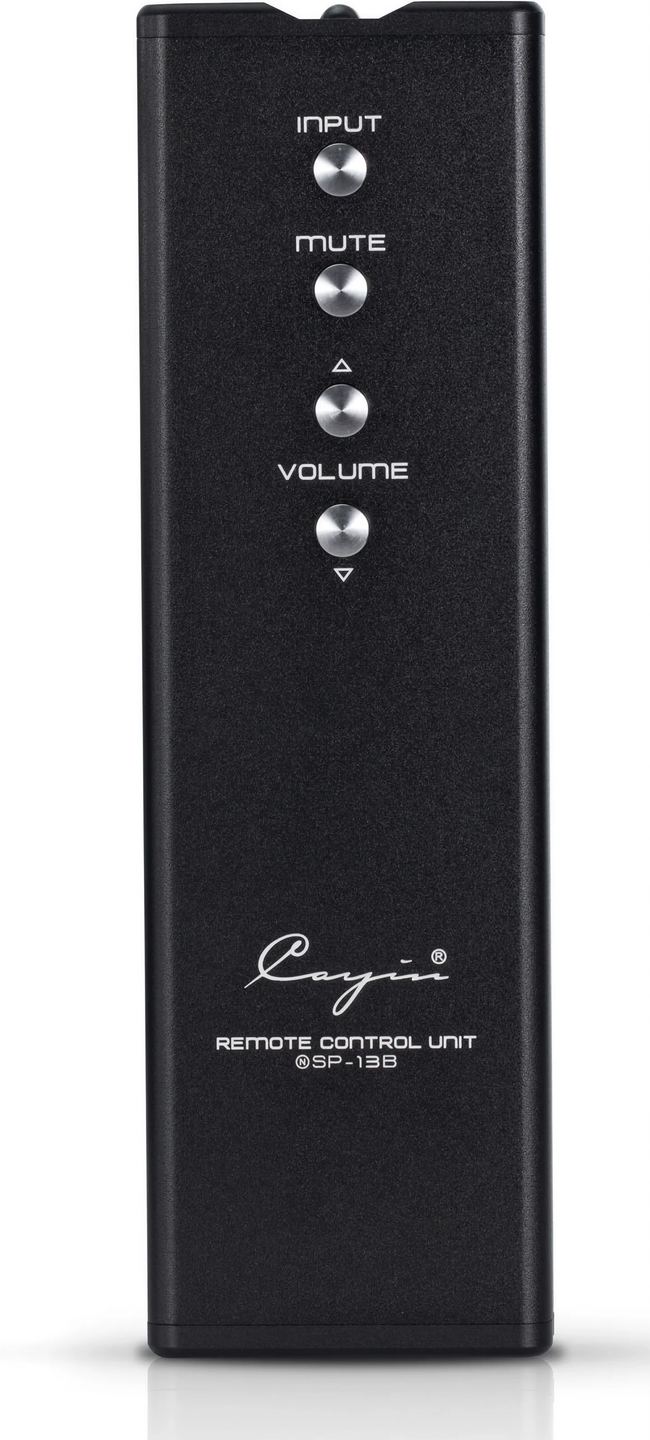
- Full infrared remote control
- Removable protective cage for tubes
Frequently asked questions
What is the sonic difference between KT88 and EL34 tubes?
KT88s offer more power (50 W versus about 35 W with EL34s), better extension in the bass and treble, and a more neutral, controlled character. EL34s bring more warmth in the mids, a creamier texture, and particularly appealing musicality for vocals. The change requires readjusting the bias and flipping an internal switch.
Does the BMI system completely replace manual bias adjustment?
No, BMI monitors and protects but does not automatically set the bias. You must still manually adjust the quiescent current via the potentiometers accessible on the top, using the left VU meter as an indicator. This simple operation takes a few minutes every 100–200 hours of use.
Can you connect a turntable directly without a phono preamp?
Only if your turntable has an MM (moving magnet) cartridge. The Jazz 90’s built-in phono stage provides the necessary amplification and RIAA correction. For an MC (moving coil) cartridge, an external phono preamp or a step-up transformer is still required due to the lower output level of these cartridges.
Are 50 watts enough for low-sensitivity speakers?
The Jazz 90’s 50 watts in ultralinear mode are “real” tube watts, subjectively equivalent to 80–100 solid-state watts. The amplifier comfortably drives speakers with 88 dB sensitivity and higher. For less sensitive models (85 dB and below), ultralinear mode remains preferable, and extended listening at very high volume should be avoided.
Is Bluetooth quality really satisfactory on an amp of this level?
The Qualcomm QCC5125 module and ESS ES9018K2M DAC deliver remarkable quality, especially with the LDAC codec, which transmits an almost lossless stream. For critical listening, the analog inputs remain preferable, but HD Bluetooth lets you enjoy dematerialized playlists comfortably without major compromises in quality.
- Eco-contribution included in the sale price.
- Manufacturer reference: CAYJAZ90SR
- GTIN / EAN: 6957914912247