FiiO K13 R2R black




Overview
The K13 R2R marks the evolution of the K11 R2R in FiiO’s lineup. This desktop DAC and headphone amplifier is built around a proprietary 192-resistor R2R converter, balanced amplification of 2400 mW per channel, and extensive connectivity including LDAC Bluetooth, balanced XLR outputs, and a 10-band parametric EQ. Designed to drive both sensitive IEMs and demanding planar headphones, it positions itself as a complete desktop solution with two distinct conversion modes (NOS and OS) and dual DC/AC power supplies.
The beating heart: a proprietary 192-resistor R2R DAC
At the core of the K13 R2R is a converter developed by FiiO, built around a fully differential, four-channel R2R (resistor-to-resistor) topology. This approach differs from the delta-sigma circuits that dominate the market. While a delta-sigma DAC oversamples the signal at very high frequencies before decoding, R2R directly converts each PCM sample into analog voltage using a network of calibrated resistors.
The circuit integrates 48 thin-film resistors per channel, totaling 192 components. Each resistor offers ±0.1% precision and a thermal drift limited to 30 ppm. FiiO’s proprietary error-correction algorithm compensates for inevitable imperfections to deliver performance compatible with 32-bit/384 kHz high definition.
The differential configuration means each channel uses two resistor networks in opposite phase. This symmetry reduces spurious harmonics and improves common-mode noise rejection, resulting in a lower noise floor and minimal crosstalk between channels. Native DSD decoding up to DSD256 is performed in direct 1-bit mode, with no intermediate conversion to PCM. For PCM streams, the K13 R2R supports up to 384 kHz at 32-bit via USB, and up to 192 kHz on coaxial and optical inputs.
Two sonic philosophies: NOS and OS modes
The K13 R2R offers two operating modes. NOS (Non-Oversampling) mode keeps the signal at its original sampling rate. A CD at 44.1 kHz remains at 44.1 kHz, preserving the original waveform without interpolation. OS (Oversampling) mode upsamples all signals to 384 kHz prior to conversion, enabling steeper digital filtering with generally superior technical metrics.
Switching between NOS and OS is done via the menu, accessible from the volume knob. This flexibility allows you to tailor the presentation to the source, the headphones used, and personal preferences. DSD files are always decoded natively, regardless of the selected mode.
Amplification power you can rely on
The amplification stage delivers 2400 mW + 2400 mW at 32 Ω on the 4.4 mm balanced output, and 600 mW on the 6.35 mm single-ended output. This power can drive high-impedance headphones such as magnetic planars, while retaining the finesse required for ultra-sensitive IEMs thanks to three independent gain levels.
Each gain level has its own volume curve, adapting the potentiometer’s progression to the sensitivity of the connected transducer. The fully balanced amplification chain, from DAC to headphone output, ensures better rejection of electromagnetic interference and a larger dynamic headroom. Built-in protections against thermal overload and switching noise preserve driver integrity.
The 10-band parametric EQ powered by XMOS XU316
The K13 R2R includes a 10-band parametric EQ, an uncommon feature for a desktop DAC at this price point. Processing is handled by the XMOS XU316 platform, a multicore controller offering 16 logical cores and up to 2400 MIPS of deterministic computing power. The XU316 simultaneously manages the high-speed USB 2.0 interface, audio decoding, and real-time EQ calculations.
Equalization works up to 192 kHz / 24-bit and remains active regardless of the conversion mode or selected input. Access is via the FiiO Control app on smartphone, or through a web interface in USB mode. Each band offers three adjustable parameters: center frequency, gain, and bandwidth. The app provides presets and an Auto-EQ function capable of importing measurement profiles to automatically generate a compensation curve. Settings can be saved, exported, and imported, allowing shared configurations or quick switching between multiple headphones.
“Skylight” design and uncompromising build
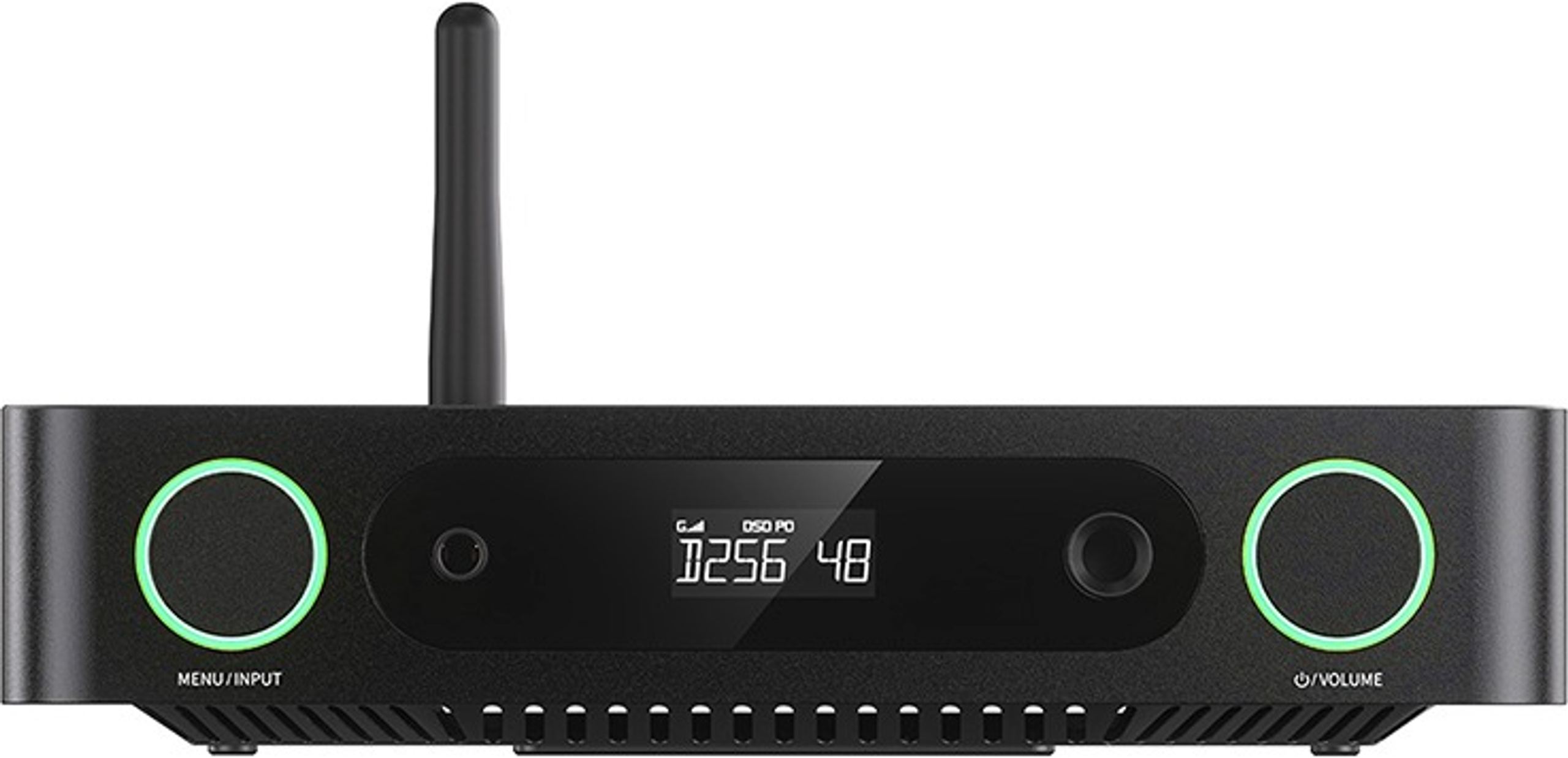
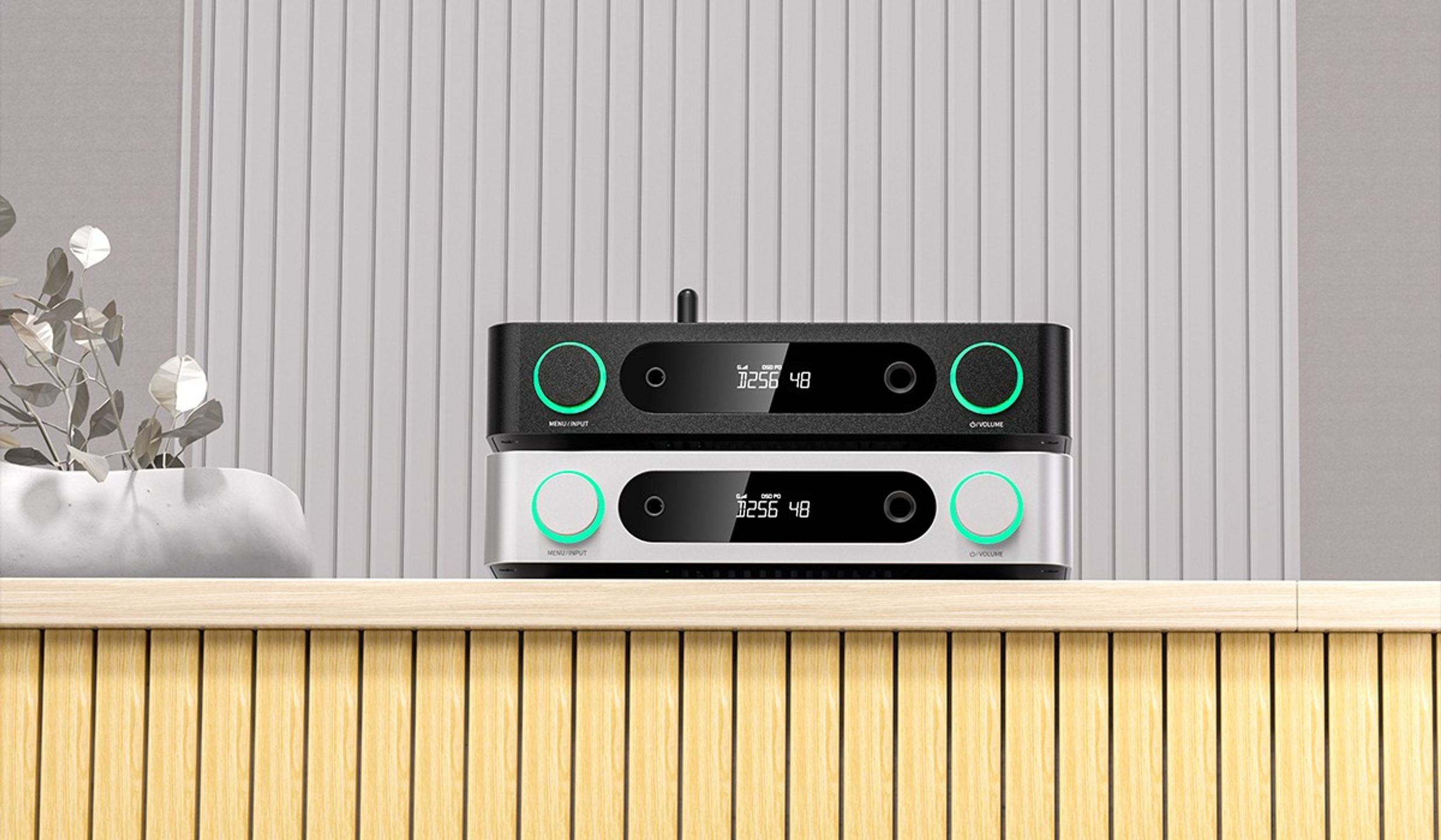
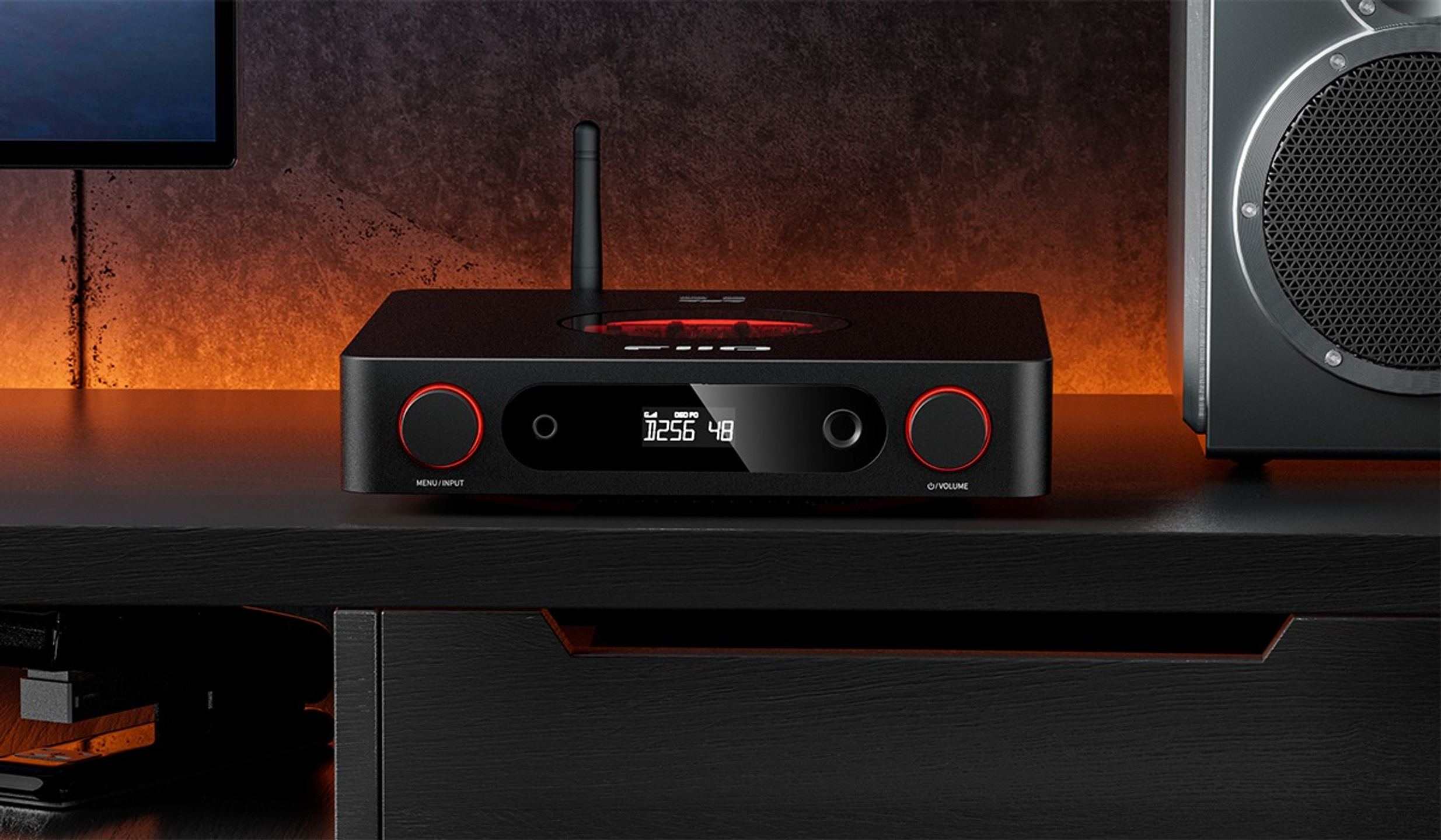
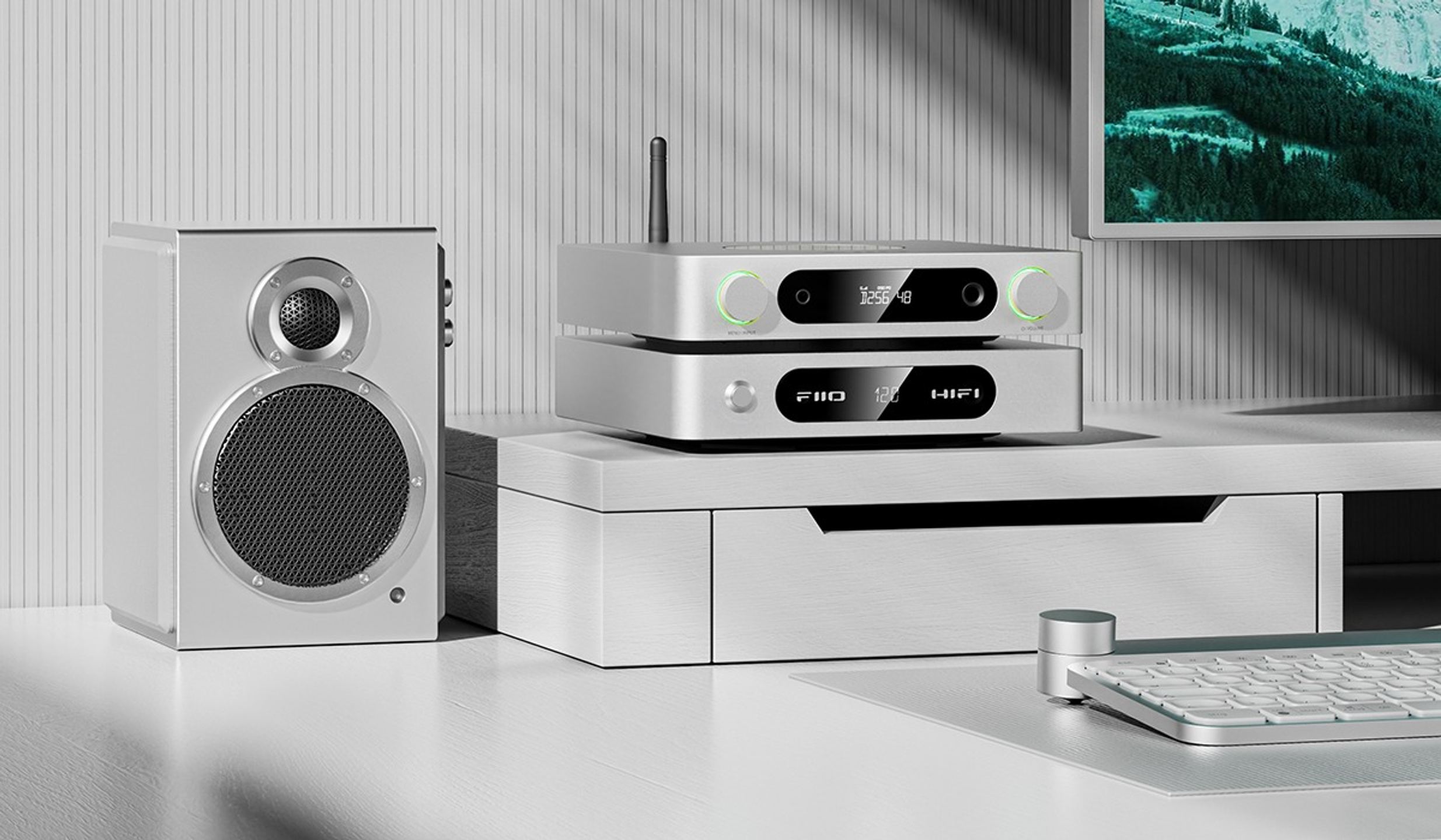
The CNC-machined unibody aluminum chassis reprises the minimalist language of the K11 series, with a notable new feature: a circular glass window on top revealing the R2R resistor arrays. A customizable RGB light surrounds this window, with static, dynamic, or sample-rate-synced modes. Brightness can be adjusted in several steps or turned off completely.
A high-definition, high-contrast LCD occupies the front panel. Unlike OLED displays prone to burn-in, this panel can remain on continuously without degradation. It simultaneously displays sampling rate, volume, gain level, output mode, and selected input.
Two knurled anodized aluminum dials control the device: the larger handles volume, the second navigates between inputs and settings. This approach avoids deep menus and complex operations. An infrared remote also allows for remote control. The non-slip feet have been redesigned with four grippy rubber pads that hold the device firmly in place, unlike the slippery pad on the K11 R2R.
Comprehensive connectivity: from wireless to balanced
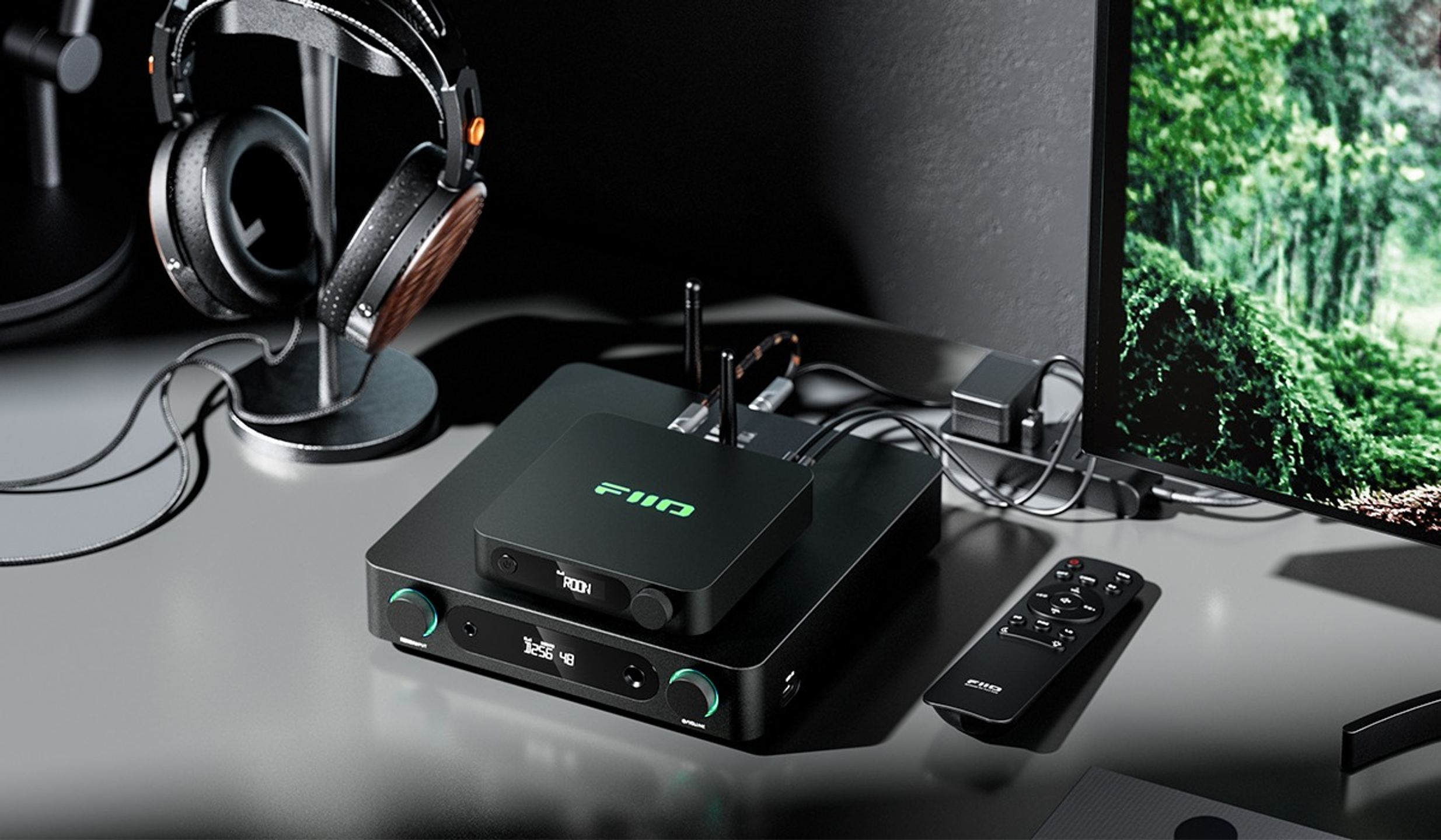
The rear panel brings together three wired digital inputs: USB-C (up to 384 kHz / 32-bit PCM and native DSD256), Toslink optical, and RCA coaxial (up to 192 kHz / 24-bit). USB uses asynchronous transmission to minimize jitter. Bluetooth 5.4 adds a wireless option with support for LDAC (up to 990 kbps), AAC and SBC codecs.
Audio outputs are divided into two categories. For headphones: 6.35 mm single-ended jack and 4.4 mm balanced Pentaconn on the front. For preamp use: single-ended RCA and balanced XLR on the back, operating at fixed or variable level. Volume memories remain independent between headphone and preamp outputs.
Dual DC/AC power supply and expansion capability
The K13 R2R features a 30 W switching power supply shielded by a nickel-plated alloy cover. Internally, 18 low-noise linear regulators and 5 DC-DC converters distribute power to the various circuit sections. This multi-rail architecture isolates each function to limit mutual interference. Filtering capacitors include ELNA RA3, a series intended for audio applications, and tantalum capacitors.
A 12 V DC input allows connection of an external linear power supply (minimum 2.5 A) for those who wish to explore how different power supplies influence the sound. When an external supply is connected, the K13 R2R automatically switches over and disables the internal supply.
Technical specifications
Digital-to-analog conversion
- DAC type: fully differential 4-channel 24-bit R2R resistive
- Internal architecture: 48 precision resistors per channel, 192 resistors in total
- Resistor accuracy: ± 0.1%, low thermal drift of 30 ppm
- Symmetrical conversion: reduced noise and harmonics for a silent background
- Available conversion modes:
- NOS (no oversampling): natural signal reproduction without processing
- OS (oversampling): processing up to 384 kHz for increased precision
- Audio format compatibility: PCM up to 384 kHz / 32-bit, native DSD256
Amplification and power
- Amplification architecture: fully balanced, from the DAC to the headphone output
- Output power: 2400 mW + 2400 mW at 32 Ω on the balanced output
- Gain control: 3 independent gain levels with custom volume curves
- Built-in protections: against overheating, overload, and power on/off switching noise
Audio processing and equalization
- Built-in 10-band parametric equalizer: precise adjustments up to 192 kHz / 24-bit
- Access and control: via the FiiO Control app or the web interface
- Advanced features: import/export of settings, sharing, and automatic headphone response correction
- Preamplifier/power amplifier mode: dedicated RCA and balanced outputs
- Independent memory: separate volumes for headphone-out and preamp modes
Connectivity and interfaces
- Digital inputs: USB, optical, coaxial
- Wireless connectivity: Bluetooth 5.4 with LDAC, AAC, SBC codecs
- Audio outputs:
- 4.4 mm balanced headphone
- 6.35 mm single-ended headphone
- RCA preamp
- Control methods: dual knob, infrared remote control, FiiO Control app
Power supply
- Internal power supply: 30 W shielded switching power supply with nickel-plated alloy
- External power supply compatibility: 12 V / 2.5 A minimum linear power supply, 5.5 × 2.1 mm connector
- Voltage regulation: 18 low-noise linear regulators and 5 DC-DC converters
- Capacitors: ELNA RA3 and high-quality audio tantalum capacitors
Construction and design
- Chassis: monoblock machined aluminum with anodized finish
- Screen: high-definition LCD with high contrast, no burn-in risk
- Customizable RGB lighting: sample rate indicator, brightness adjustment and breathing effect
- Auto power-off timer: adjustable from 1 to 99 minutes
Box contents
- FiiO K13 R2R
- Infrared remote control
- Power cable
- USB cable
- Headphone adapter
- Quick start guide
- Warranty card
Specification summary
- DAC: 4-channel 24-bit R2R
- Resistors: 192 in total, 48 per channel
- PCM format: up to 384 kHz / 32-bit
- DSD format: native DSD256
- Power on balanced output: 2400 mW + 2400 mW at 32 Ω
- External power supply: 12 V / 2.5 A minimum
- Wireless connectivity: Bluetooth 5.4 with LDAC, AAC, SBC codecs
Frequently Asked Questions
What’s the main difference between the K13 R2R and the K11 R2R?
The K13 R2R brings increased amplification power (2400 mW per channel balanced vs. 1300 mW), balanced XLR outputs for preamp use, Bluetooth 5.4 with LDAC, a 10-band parametric EQ, and a reinforced 30 W internal power supply. The chassis is slightly larger to accommodate these updates. The 192-resistor R2R DAC remains the same on both models, but amplification and connectivity improve significantly on the K13 R2R.
Does NOS or OS mode really change the sound?
NOS mode preserves the original sampling rate without oversampling, while OS mode converts everything to 384 kHz. The differences are audible but subjective: NOS leans toward a more direct presentation, while OS generally offers superior technical metrics and steeper filtering. The choice depends on associated hardware and personal preferences. FiiO lets users switch freely between the two to determine what suits each situation best.
Can the K13 R2R be used as a DAC only without amplification?
Yes, the K13 R2R works as a pure DAC via its RCA or XLR line outputs. In preamp mode with fixed level, it delivers a full-scale signal to an external amplifier. In variable mode, the volume dial controls output level, allowing it to serve as an active preamplifier for a power amp or powered speakers. Headphone and preamp volumes are stored separately.
Can the K13 R2R drive planar magnetic headphones?
With 2400 mW per channel at 32 Ω on the balanced output, the K13 R2R has the power needed to drive the majority of planar headphones on the market, including models known to be challenging. High gain control allows comfortable listening levels even with low-sensitivity transducers. Some very power-hungry or low-sensitivity planars may still benefit from beefier dedicated amplifiers, but the K13 R2R positions itself as a complete, standalone solution for the vast majority of today’s Hi-Fi headphones.
- Eco-contribution included in the sale price.
- Manufacturer reference: FIIK13R2RBK
- GTIN / EAN: 6953175710950