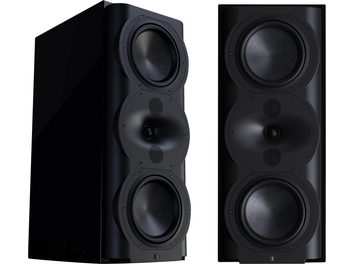
Perlisten R7c gloss black

Specifications and features

Overview
The R7c center speaker from Perlisten is designed to complement the brand’s R Series. It uses trickle-down technology from the S Series, including the DPC array and long-excursion woofers, to reduce distortion and control directivity up to 500 Hz. Intended for home theater, the R7c aims to reproduce dialogue with precision while handling complex soundtracks with dynamic coherence.
Acoustic design and DPC technology
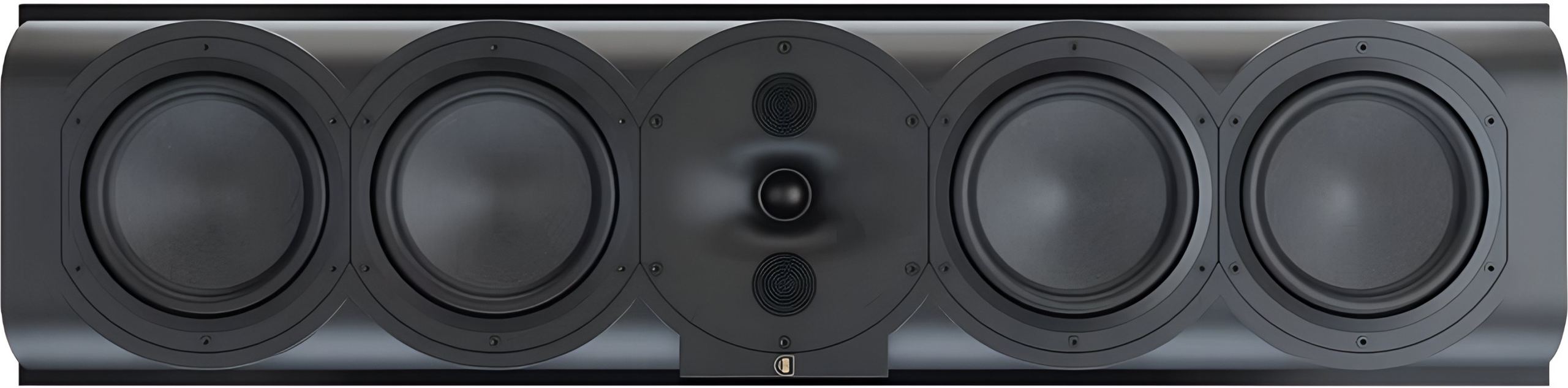
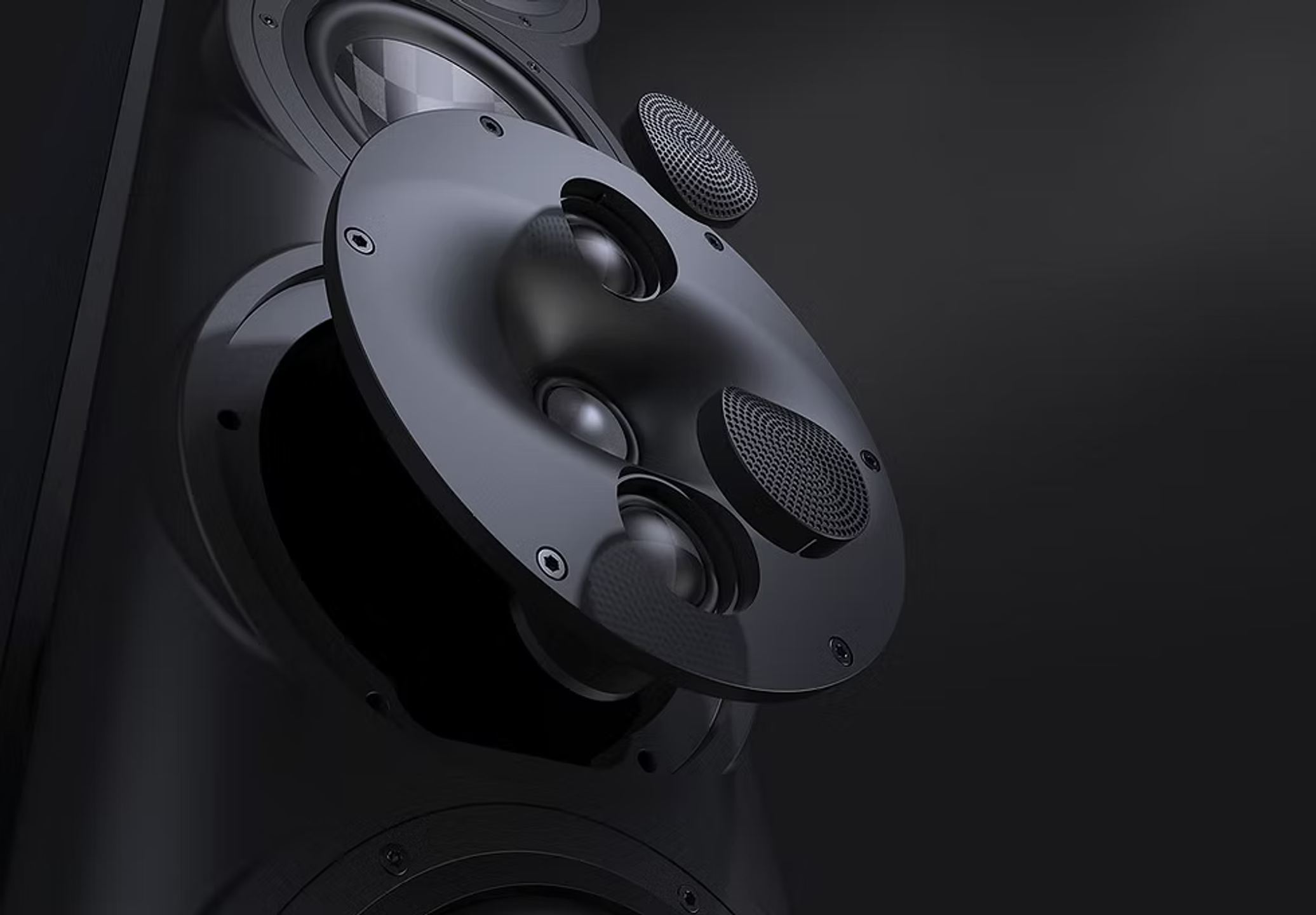
The R7c features the exclusive DPC array, which controls the mid to high frequencies using three 26 mm silk-dome tweeters, ensuring excellent directivity control and timbre matching with all speakers in the R Series. This technology is the beating heart of the speaker and represents far more than a mere assembly of transducers.
The DPC array is the result of 18 months of meticulous simulations, developed collaboratively with companies in the United States and Sweden to bring modern materials technology to hi-fi, using advanced Comsol acoustic modeling. The patented DPC (Directivity Pattern Control) waveguide technology ensures precise sound dispersion, creating a coherent and captivating listening experience.
The two flanking domes cover the midrange between approximately 1.1 kHz and 4.4 kHz, while the central tweeter extends its response well beyond the audible spectrum. This wide range is carefully dispersion-controlled by the DPC waveguide to deliver in-room response with wide dispersion, yet highly controlled vertically to focus sound more toward the listening position by limiting ceiling and floor reflections.
Proprietary construction and materials
The four 16.5 cm woofers form the dynamic foundation of the R7c. Each of the four 165 mm woofers is made from the company’s exclusive HPF (Hybrid Pulp Formulation) cone material, which breathes new life into one of the oldest materials used in loudspeaker design. Perlisten’s fiber cone is something they developed called “HPF,” meaning Hybrid Pulp Formulation, and is a blend of long-fiber hardwood, bamboo, and wool.
This unique formulation, the result of two years of intensive development, transforms a traditional material into a cutting-edge solution. These drivers don’t just deliver fundamental bass; they provide punchy, articulate low frequencies that lend weight and realism to everything from explosions to musical scores.
The tweeters made of silk developed from the ground up, on the other hand, handle the mids and highs with a truly captivating silky smoothness, without any harshness or fatigue. The silk diaphragms developed from scratch, chosen specifically for their smooth, effortless portrayal of the midrange and treble, ensure natural and transparent vocal reproduction.
Mastery of directivity and spatial control
In any home theater system, the center channel is the most crucial speaker, tasked with delivering clear, intelligible dialogue that anchors the entire performance. The R7c excels here thanks to its unique DPC array. This advanced driver configuration controls the speaker’s sound radiation pattern, focusing energy toward the listener and minimizing confusing reflections from the floor and ceiling.
The way it controls directivity is truly masterful, ensuring dialogue remains locked to the screen regardless of your seating position. This becomes particularly relevant in modern home theater setups where multiple listening positions should benefit from optimal sound quality.
This also reduces the need for potentially invasive digital room corrections. With the DPC array used across all models, it provides the same dispersion characteristics and performance throughout the range. This technical consistency translates into seamless integration with the entire audio system, creating a perfectly uniform soundstage.
THX certification and reference performance
The R7c is THX Ultra certified, a testament to its ability to bring a true professional cinema experience into your home with unwavering precision. This certification is not merely a marketing badge but represents a rigorous validation of the speaker’s acoustic capabilities.
THX Dominus is the newest and highest performance class within THX certification, intended to bridge the gap between large home theater speakers and those used in cinemas worldwide. The certification ensures the speaker can maintain high sound pressure levels while keeping distortion to a minimum, even in the most dynamic passages.
The R7c’s dual THX certification—Ultra for main use and Dominus in a surround configuration—speaks to its exceptional versatility. The 92 dB sensitivity requirement for THX Dominus-certified speakers is the most demanding of all THX speaker categories, and the R7c, with its 90.2 dB sensitivity, approaches these elite standards while maintaining a nominal 4-ohm impedance.
Integration and versatility
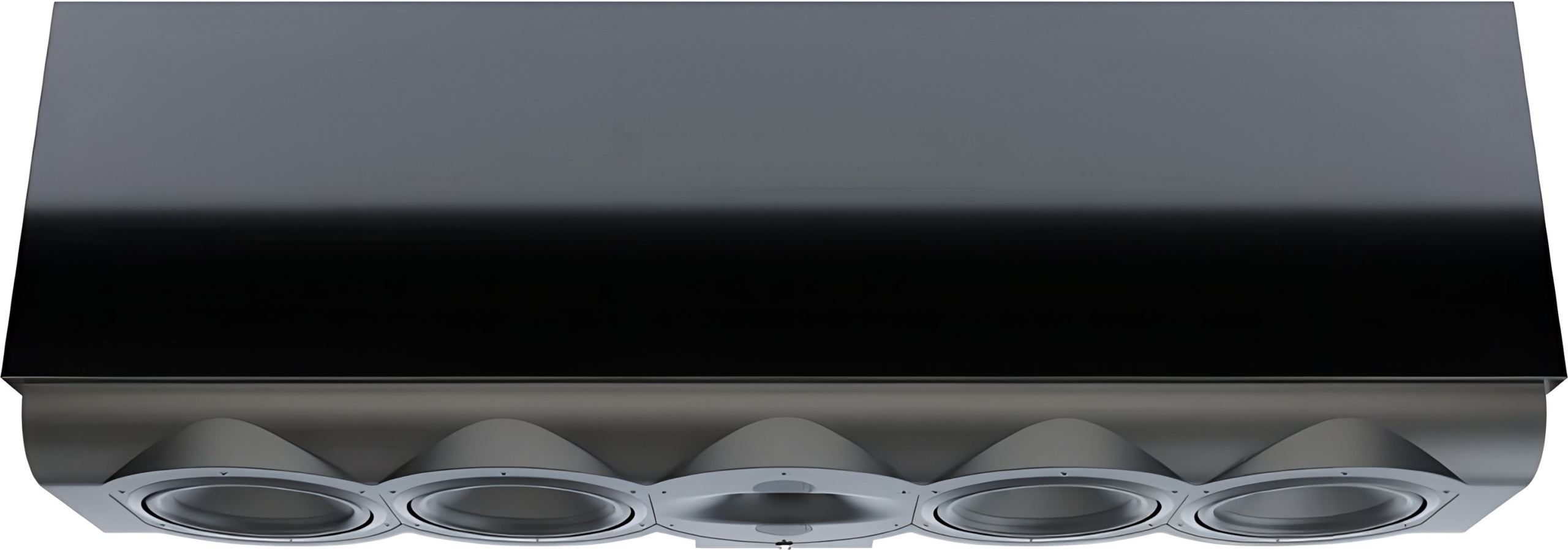
The R7c’s sealed acoustic-suspension design offers distinct acoustic benefits. These models are down-ported, which means their distance from a wall behind them is far less critical than conventional rear-ported speakers that need plenty of space to operate properly.
Typical bass extension when placed against a wall can reach down to 32 Hz (-10 dB), providing a solid foundation for special effects and music. This capability often eliminates the need for a dedicated subwoofer in medium-sized setups, although adding a complementary Perlisten subwoofer can create remarkable acoustic synergy for the most ambitious systems.
This also contributes significantly to the speaker’s ability to timbre-match seamlessly with other speakers in the R Series, creating a soundstage that feels incredibly coherent and engaging, ensuring sound effects move smoothly and credibly across the room.
Aesthetic refinement and finish
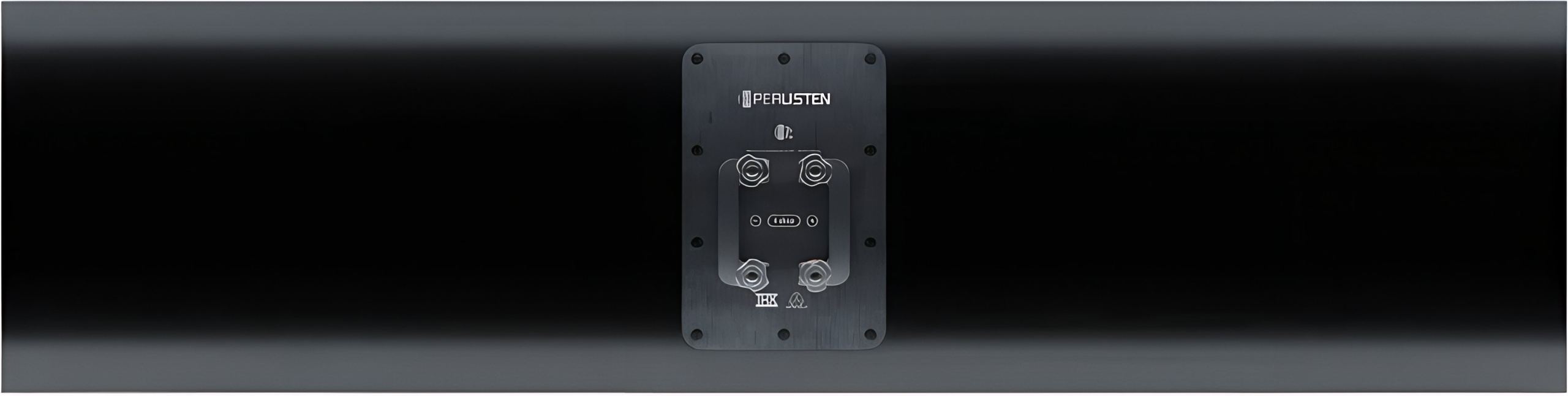
The R7c’s piano black lacquer finish reflects the meticulous attention to detail that characterizes Perlisten’s approach. The R7c is built like a tank, with meticulous attention to detail evident in its acoustic-suspension design and the gorgeous Piano Gloss Black finish.
With dimensions of 23 × 92 × 30 cm, the speaker fits elegantly beneath most screens while retaining a confident visual presence that reflects its acoustic capabilities. The horizontal format optimizes dispersion for home theater applications, while the robust HDF (high-density fiberboard) construction minimizes unwanted resonances.
Technical Specifications
Acoustic Design
- Exclusive DPC-Array technology
- Three 26 mm silk-dome tweeters
- Precise directivity control
- Perfect tonal consistency with other speakers in the R series
- 4-way configuration
- Bass drivers
- Four 165 mm HPF composite-cone woofers
- Linear response and minimal distortion
- Enclosure type: sealed (acoustic suspension)
- Tight, well-controlled bass
Acoustic Performance
- Frequency response: 36 Hz – 32 kHz (-10 dB)
- Response linearity: 80 Hz – 20 kHz (± 2 dB)
- In-room extension (typical): 29 Hz
- Sensitivity: 90.2 dB (2.83 V / 1 m)
- Maximum sound pressure level at 1 m (100 – 20 kHz)
- 116.2 dB peak
- 116 dB peak with THD below 3% (2nd and 3rd harmonics)
Electrical Characteristics
- Nominal impedance: 4 Ω (minimum 3 Ω)
- Recommended amplifier power: 100 – 400 W RMS
Dimensions and Weight
- Dimensions (H x W x D): 230 x 920 x 300 mm
- Weight: 36.8 kg
Finish and Accessories
- Standard finish: Piano Gloss Black
- Magnetic grille: optional
Frequently Asked Questions
What is the main difference between the R7c and Perlisten’s S Series center models?
The R7c uses 26 mm silk domes and proprietary HPF woofers, while the S Series employs more exotic materials like beryllium and Textreme carbon fiber. The DPC technology remains similar, offering the same exceptional directivity control. The main difference lies in slightly lower dynamic headroom and a substantially reduced cost, making Perlisten technology accessible to a wider audience while preserving the brand’s sonic essence.
Does the R7c require a particularly powerful amplifier?
With 90.2 dB sensitivity and a nominal 4-ohm impedance (minimum 3 ohms), the R7c calls for an amplifier capable of handling 4-ohm loads. The recommended power of 100 to 400 W RMS allows you to fully exploit the speaker’s dynamic potential. A quality amplifier of at least 150 W per channel is a good starting point for most home theater installations.
How does DPC technology concretely improve the listening experience?
The DPC array precisely controls vertical and horizontal dispersion, reducing early reflections from the floor and ceiling. This results in exceptional vocal clarity, precise sound localization, and an expanded listening area where multiple viewers enjoy optimal sound quality. Dialogue remains intelligible even during complex action scenes.
What is special about the HPF material used for the woofers?
HPF (Hybrid Pulp Formulation) combines long hardwood fibers, bamboo, and wool in a proprietary formulation developed over two years. This unique blend offers exceptional rigidity while remaining lightweight, enabling fast transient response and minimal distortion. This innovation modernizes the use of paper pulp, one of the oldest materials in acoustic design.
Does THX Ultra certification guarantee better performance than a non-certified speaker?
THX Ultra certification imposes strict standards for sound pressure level, distortion, and frequency response. It guarantees that the speaker can reproduce content exactly as intended by the creators, with consistent performance in rooms up to 85 cubic meters. It’s an objective validation of capabilities, though excellent non-certified speakers also exist.
How should I optimize the placement of the R7c in my setup?
Ideally, position the R7c as close to the screen as possible, centered horizontally and at ear height when seated, or slightly angled toward the listening area if placed higher or lower. The DPC array’s excellent controlled dispersion tolerates varied placements, but avoid enclosing it in furniture that could create resonances. Placement against the wall slightly reinforces bass extension without compromising clarity.
- Eco-contribution included in the sale price.