

Furutech FI-E11-N1 (R)
Complementary product
Overview
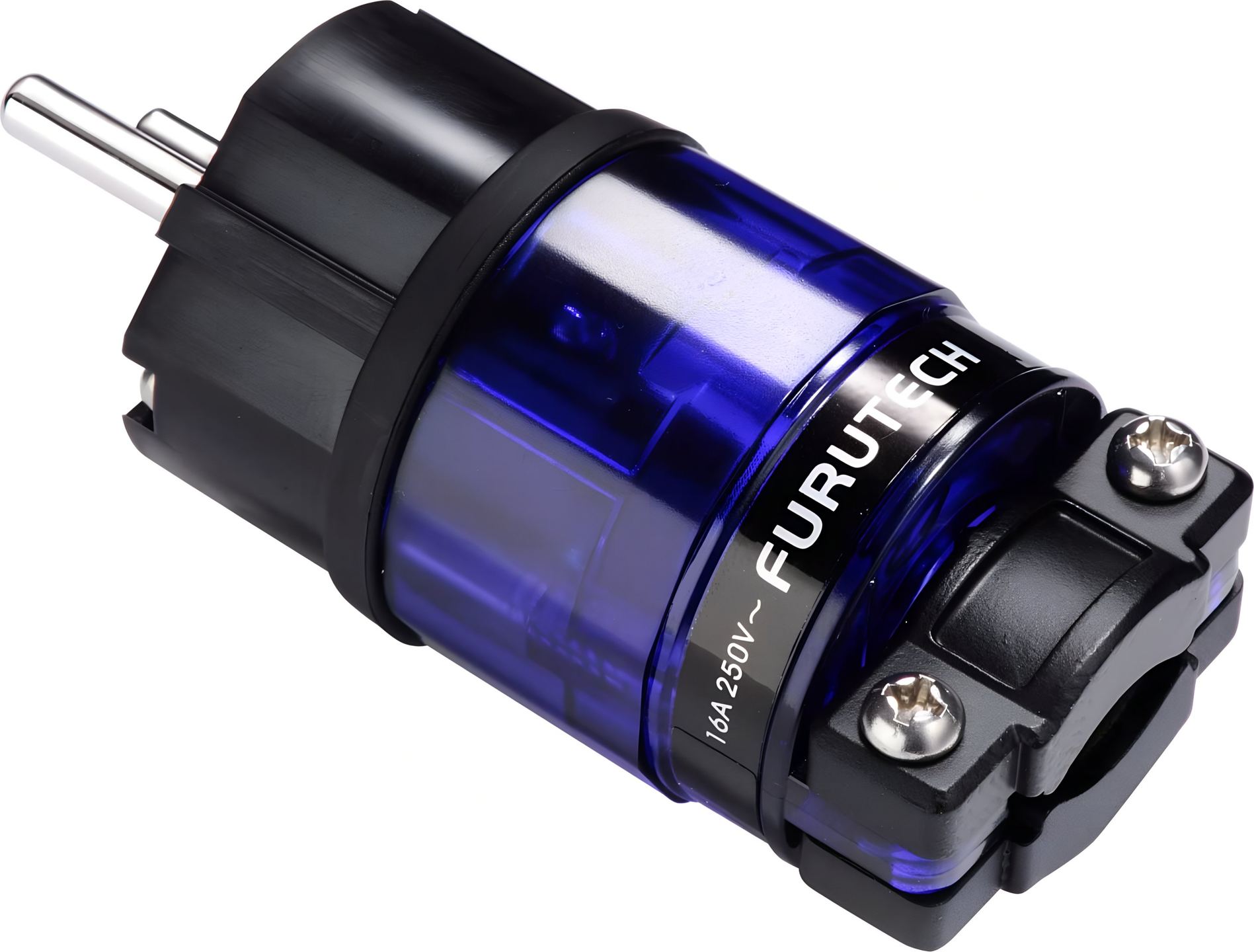
The Furutech FI-E11-N1(R) is a CEE7-VII Schuko connector designed for high-fidelity audio applications. It features rhodium plating and the Alpha Process applied to all its metal parts. This model is designed to accommodate large-gauge conductors and is optimized for precise, well-balanced sound reproduction.
The Alpha Process treatment: two-stage cryogenics and demagnetization
All metal parts of the FI-E11-N1(R) undergo Furutech’s two-stage Alpha Process during manufacturing. The first phase involves deep cryogenic cooling using liquid nitrogen or helium to reach temperatures between -196°C and -250°C. At these extreme temperatures, the metal’s molecular structure changes: molecules bond more tightly and the overall structure becomes more stable. This relieves internal stresses in the material and improves its electrical conductivity.
The second stage subjects these same parts to Furutech’s patented Ring Demagnetization treatment. Conventional high-power magnets used for this purpose tend to paradoxically increase magnetic effects, leaving some areas more magnetized than others. Furutech’s Ring Demagnetization process avoids this pitfall by demagnetizing more completely and uniformly.
This entire process keeps all connectors, conductors, and metal parts in a perfectly stable, stress-free, and highly conductive state. The result is an extremely low-noise, fast, and distortion-free transfer of signal and power.
Rhodium plating: transparency and precision
Rhodium is a precious metal in the platinum family, characterized by its hardness (800 to 1000 HV versus 200 HV for gold), resistance to acids, and high melting point of 1964°C. Although its electrical conductivity is about half that of gold, rhodium exhibits distinct sonic traits that make it a preferred choice for certain systems.
Japanese audio commentator Masamitsu Fukuda describes the qualities of the new Rhodium plating in the FI-11-N1 series: high resolution, transparent and precise sound. The high signal-to-noise ratio yields greater contrast across the entire frequency spectrum, along with tight, well-defined bass. Rhodium particularly excels in the high frequencies, which come through detailed and clear. Overall, rhodium delivers a highly responsive, delicate, expressive, and neutral sound.
Rhodium’s exceptional stability against oxidation is another major advantage. Unlike silver, which requires regular polishing, or bare copper, which tarnishes quickly, rhodium maintains its conductive properties over the long term with no special maintenance. This corrosion resistance ensures that connector performance remains consistent, even after years of use.
The FI-11-N1 series benefits from a new plating technique developed by Furutech, delivering sonic improvements and an even more durable finish than previous generations. The transparent blue polycarbonate shell also visually distinguishes the Rhodium version from the Gold version (which has a black shell).
Construction and materials: an uncompromising design
The FI-E11-N1(R) conductor is made of Alpha phosphor bronze, a copper alloy containing between 0.5% and 11% tin and 0.01% to 0.35% phosphorus. Phosphorus reduces the viscosity of the molten alloy, making casting easier and reducing grain boundaries between crystals. This alloy offers excellent corrosion resistance, good electrical conductivity, high mechanical strength, and above all non-magnetic properties. This last characteristic eliminates any magnetic interaction that could affect the audio signal.
The front body is made of glass fiber-reinforced nylon, chosen for its robustness and resonance-damping properties. The outer transparent blue polycarbonate shell protects the assembly while allowing visual inspection of the connection.
A significant innovation in the FI-11-N1 series lies in the metal cable clamps. Unlike previous versions, these non-magnetic stainless steel clamps ensure a firm grip on the cable and contribute to resonance control. The supplied M4 x 20 mm screws allow secure fastening of cables with diameters between 6.6 mm and 16.0 mm. For thicker cables up to 20 mm in diameter, longer screws can be used.
The connector’s dimensions reflect a carefully considered design: 56.2 mm body length, 39.3 mm diameter, and 89.3 mm total length. These proportions allow easy installation even in tight spaces, while providing a generous contact area for an optimal connection.
Use and installation
Installing the FI-E11-N1(R) requires a few precautions to fully leverage its qualities. The first step is to strip the mains cable to the appropriate length, generally between 8 and 10 mm for each conductor. The three conductors (live, neutral, and earth) must be carefully prepared, ensuring that the strands are not damaged.
The metal clamp should be firmly positioned on the cable’s outer jacket before making the electrical connections. This step ensures good mechanical support and helps control vibrations. The screw terminals easily accept both stranded and solid conductors, providing a secure, long-lasting connection.
The connector is rated for 16A at 250V AC, making it compatible with the vast majority of home hi-fi and home theater equipment. Its CEE7-VII certification guarantees compliance with European electrical safety standards.
Comparison with the Gold version
The FI-11-N1 range is also available in a 24-karat Gold-plated version, which offers a different sonic profile. Where rhodium emphasizes transparency and analytical precision, gold tends toward a smoother, slightly warmer, and gentler presentation. The gold plating is thicker than in earlier versions, which brings greater precision while preserving these smooth qualities. The sound gains in soundstage stability and tonal balance, with improved dynamic response and detailed, powerful bass.
The choice between rhodium and gold mainly depends on the system and listening preferences. Systems seeking absolute neutrality, maximum resolution, and analytical reproduction will pair better with rhodium. Conversely, systems that benefit from a touch of warmth or that prioritize a more enveloping musicality will find a valuable ally in the gold version.
Technical specifications
Electrical specifications
- Connector type: CEE7-VII (2 poles + ground, SCHUKO)
- Rated voltage: 250 V AC
- Rated current: 16 A
Construction and materials
- Conductor: Non-magnetic α (Alpha) phosphor bronze with rhodium plating
- Front body: Nylon / fiberglass
- Shell: Transparent blue polycarbonate
- Clamp: Non-magnetic stainless steel with M4 x 20 mm screw
Dimensions and compatibility
- Compatible cable diameter: 6.6 mm to 16.0 mm
- Can be extended up to 20 mm with a longer screw
- Body length: 56.2 mm
- Connector diameter: 39.3 mm
- Total length: 89.3 mm
Sound characteristics
- Detailed, precise, and neutral sound across the entire audio spectrum
- High signal-to-noise ratio ensuring clear, high-contrast reproduction
- Tight, precise bass
- Clear, detailed treble
- Ideal reproduction for systems seeking neutrality, transparency, and responsiveness
Key features
- Pure Transmission technology for ultra-pure, stable transmission
- Durable rhodium plating resistant to oxidation
- Anti-resonance, fully non-magnetic design
- Neutral, precise sound reproduction
- Exceptional sonic transparency and increased resolution
- Full optimization of the current path for lossless conduction
General information
The Furutech FI-E11-N1(R) is a high-performance SCHUKO connector designed for demanding audiophiles. Thanks to exclusive Pure Transmission technology, every element of the current path is optimized to ensure stable, precise, lossless conduction. The rhodium plating gives this connector exceptional sonic transparency, increased resolution, and neutral reproduction. Ideal for high-end audiophile cables.
Frequently Asked Questions
What is the main sonic difference between Rhodium and Gold plating on this connector?
Rhodium offers a more analytical and transparent signature, with increased resolution in the high frequencies and a higher signal-to-noise ratio. Gold produces a smoother, slightly warmer sound with a more enveloping musical presentation. Rhodium suits systems seeking neutrality and precision, while gold appeals to those preferring a gentler rendering.
Can you mix Rhodium- and Gold-plated connectors on the same cable?
Technically yes, but this configuration creates a bimetallic junction that can slightly increase contact resistance. For the best performance, it is recommended to use the same type of plating across the entire connection chain (plug and inlet). This consistency ensures optimal transmission without discontinuities in conductive properties.
What does the Alpha Process treatment concretely bring compared to an untreated connector?
The Alpha Process alters the molecular structure of metals in two stages: cryogenics stabilizes the material and improves conductivity by relieving internal stresses, while the Ring demagnetization removes residual magnetic fields that can affect the signal. Together, these treatments reduce background noise, speed up signal transfer, and minimize distortion, contributing to a wider, more stable soundstage.
Does the connector require burn-in before reaching optimal performance?
Like most high-fidelity connectors, the FI-E11-N1(R) benefits from a burn-in period. The first hours of use allow the contact surfaces to stabilize and the materials to adapt to electrical stresses. This period can extend over several dozen hours depending on the system. During this phase, the treble may sound slightly more incisive before relaxing and reaching its final balance.
What cable diameters are compatible with this connector?
The FI-E11-N1(R) accepts cables with diameters between 6.6 mm and 16.0 mm using the standard screws provided. For thicker cables up to 20 mm in diameter, longer clamping screws can be used. This flexibility accommodates most audiophile mains cables on the market, from the thinnest models to the most generous gauges.
Does Rhodium plating require special maintenance?
No, that is one of rhodium’s major advantages. Its exceptional resistance to oxidation and corrosion means it maintains its conductive properties without regular maintenance. Unlike silver connectors that require periodic polishing or bare copper that tarnishes quickly, rhodium maintains its performance over time. Occasional dusting is sufficient to keep it in good condition.
Can this connector be used with Gold-plated wall outlets without performance loss?
Using a rhodium connector with a gold-plated wall outlet is possible but may sometimes create slight sonic incompatibility. To fully exploit rhodium’s qualities, the ideal is to use wall outlets also plated with rhodium. This material consistency ensures homogeneous transmission and avoids the unpredictable effects of bimetallic junctions, especially in highly resolving systems.
Why use phosphor bronze instead of pure copper for the conductors?
Alpha phosphor bronze offers several advantages for this application: it is non-magnetic (eliminating parasitic magnetic interaction), exhibits excellent mechanical and wear resistance, and resists corrosion remarkably well. Although its conductivity is lower than pure copper, the rhodium surface plating ensures current flow, while phosphor bronze provides the robust mechanical structure required for a connector subjected to repeated stress.
- Eco-contribution included in the sale price.




