

Audio Technica AT-ART20
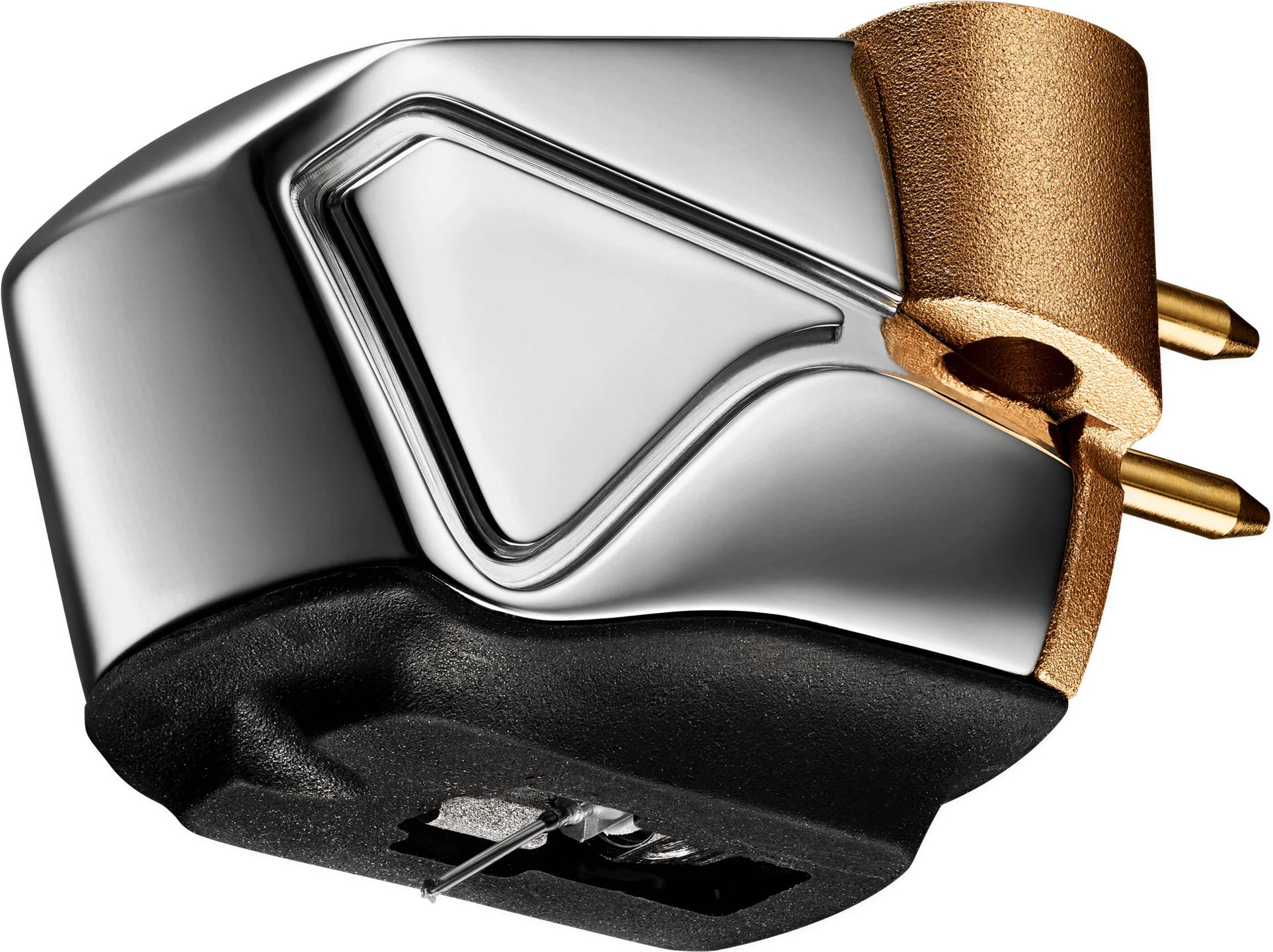
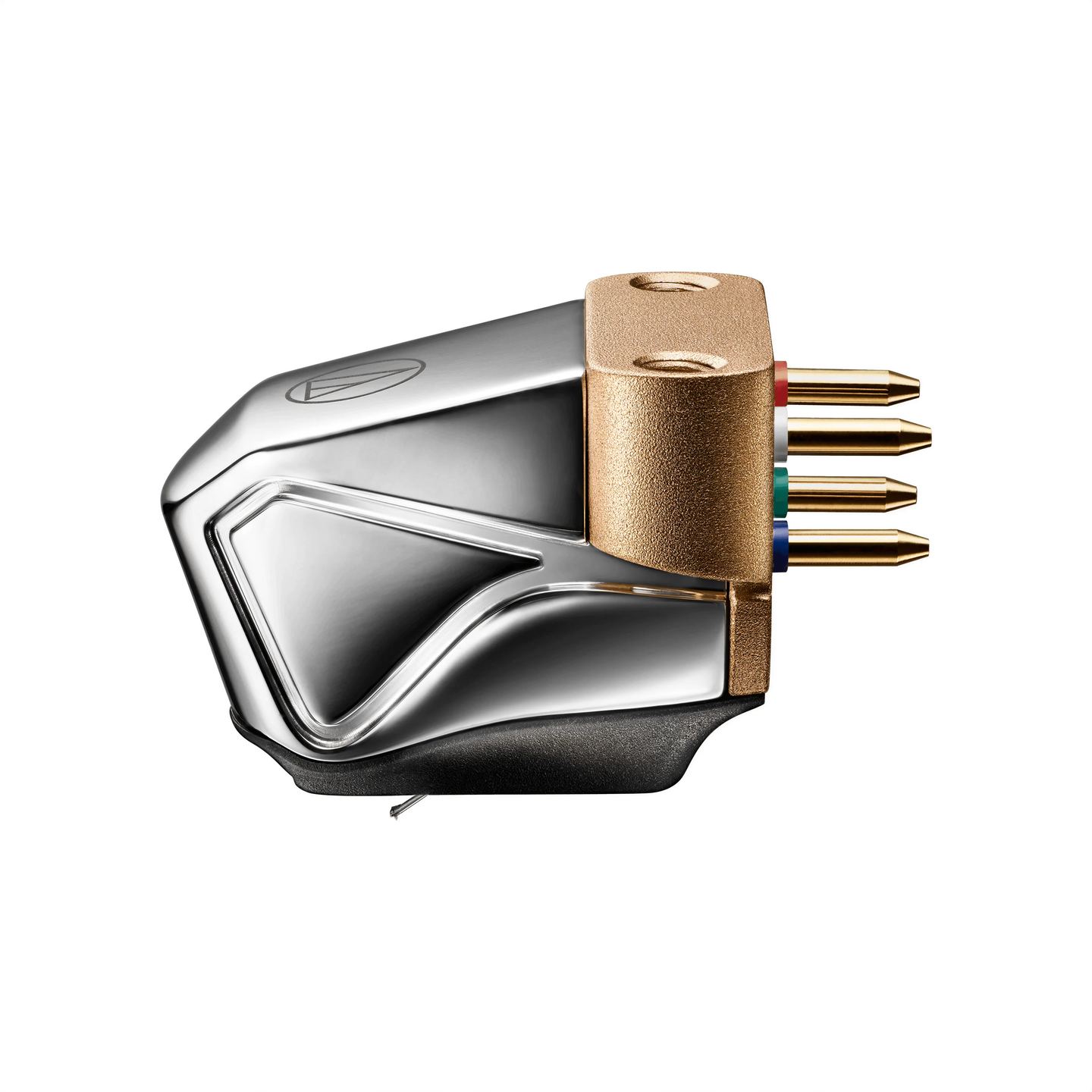
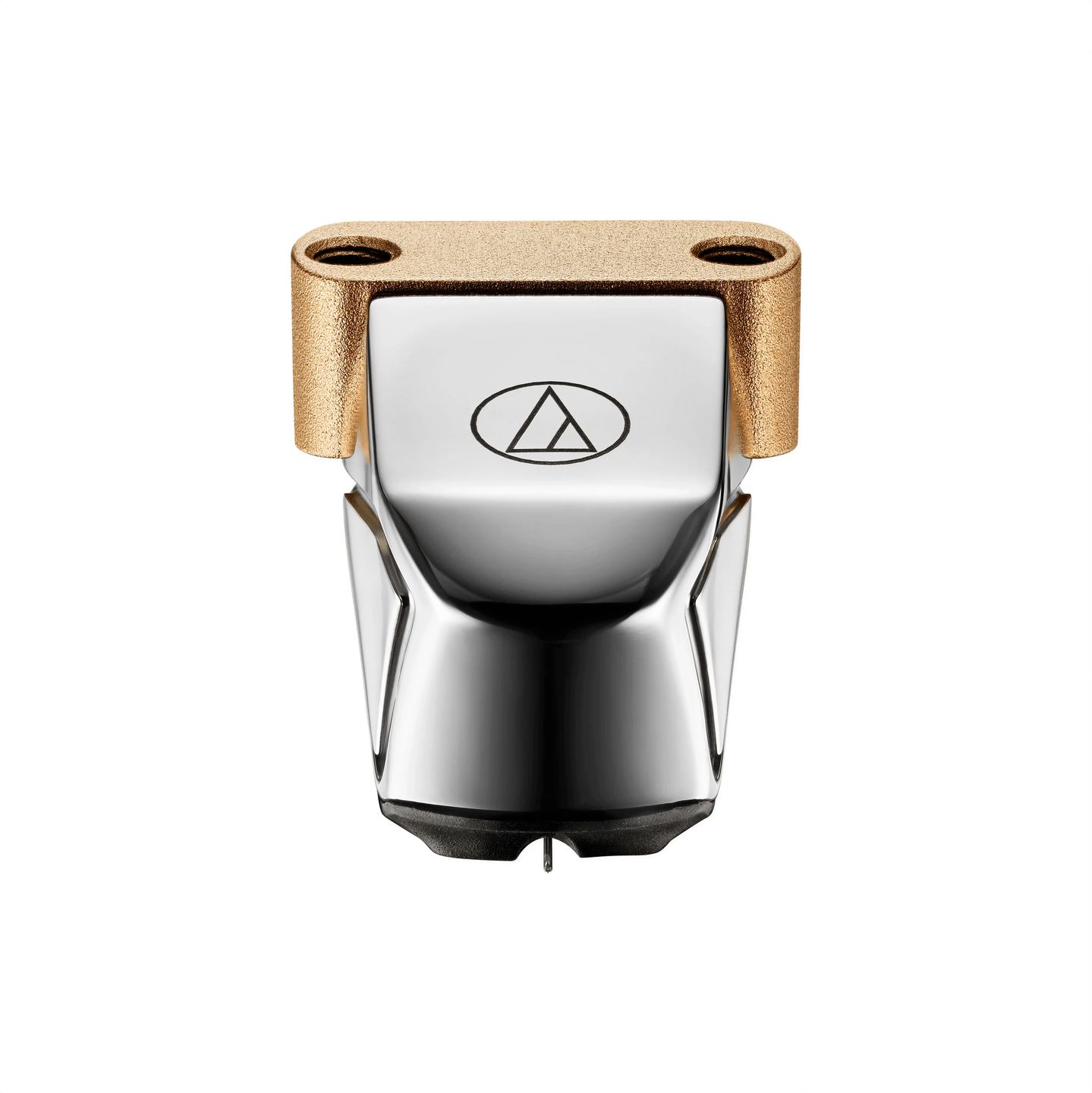
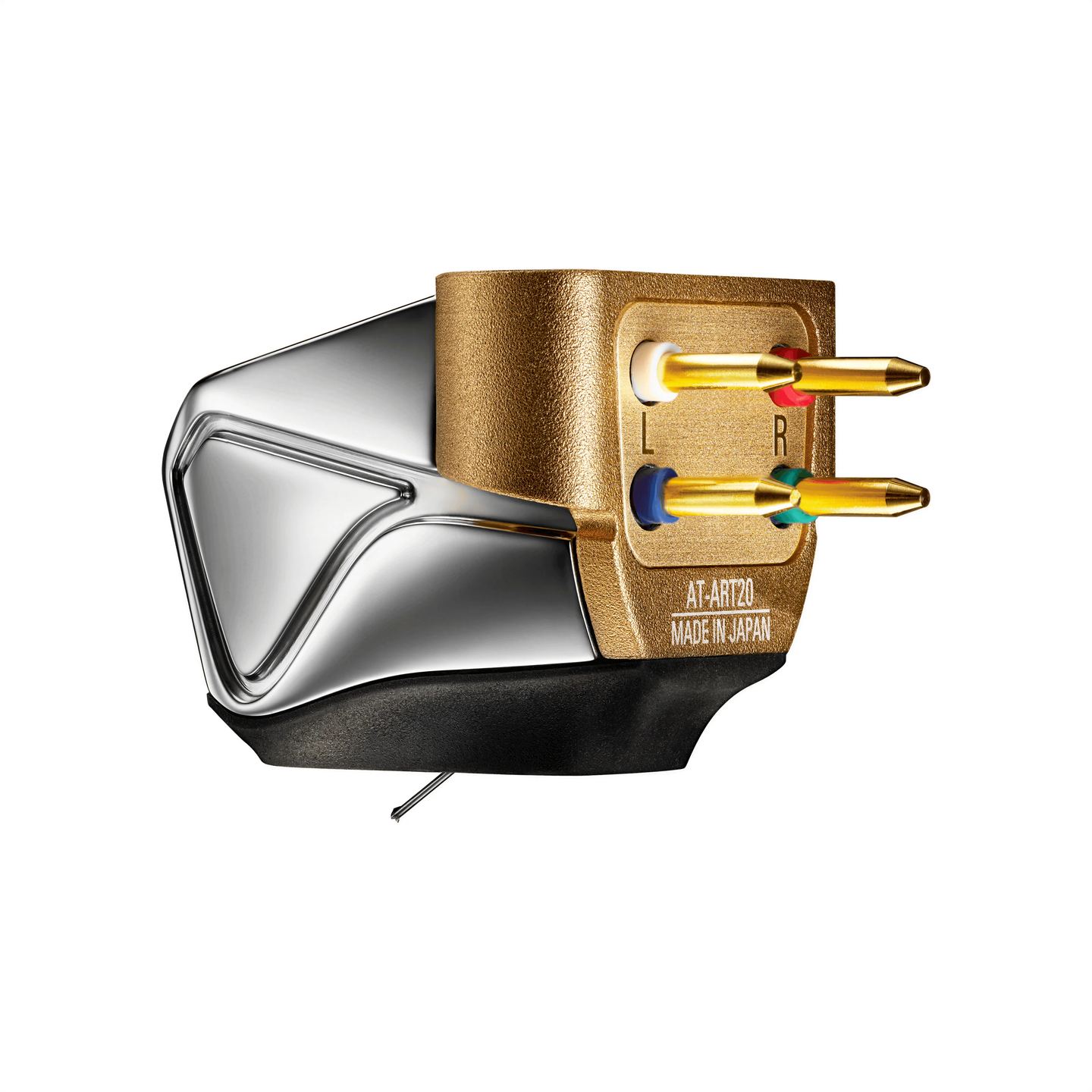


Audio Technica AT-ART20: high-end MC cartridge
The second most advanced model in the ART series, the AT-ART20 takes the magnetic circuit of the AT-ART9XI and introduces substantial improvements. Audio Technica has chosen here to combine the liveliness typical of iron-core cartridges with a transparency reminiscent of nude-coil models. For this model, the Japanese brand draws on the ultra-precise machining techniques developed by the eyewear industry in Sabae, in Fukui Prefecture, a region recognized for over a century for its expertise in working with titanium.

A body sculpted from Sabae titanium
The AT-ART20 immediately stands out with its organic curves, unusual in the world of MC cartridges where angular shapes have traditionally dominated. The titanium of the top body has been machined and then polished using processes derived from high-end Japanese eyewear, which makes it possible to achieve very thin walls while maintaining high rigidity. This thinness reduces the total mass to 9 grams, a weight that remains compatible with most tonearms on the market without requiring an additional counterweight.
The structure combines three materials with complementary properties: an aluminum base, a titanium body, and an elastomer sub-layer. This sandwich of materials with different damping coefficients is designed to dissipate stray vibrations rather than transmit them to the cantilever. Aluminum provides stability, titanium provides lightness and rigidity, and the elastomer absorbs micro-resonances.
Redesigned magnetic circuit for greater efficiency
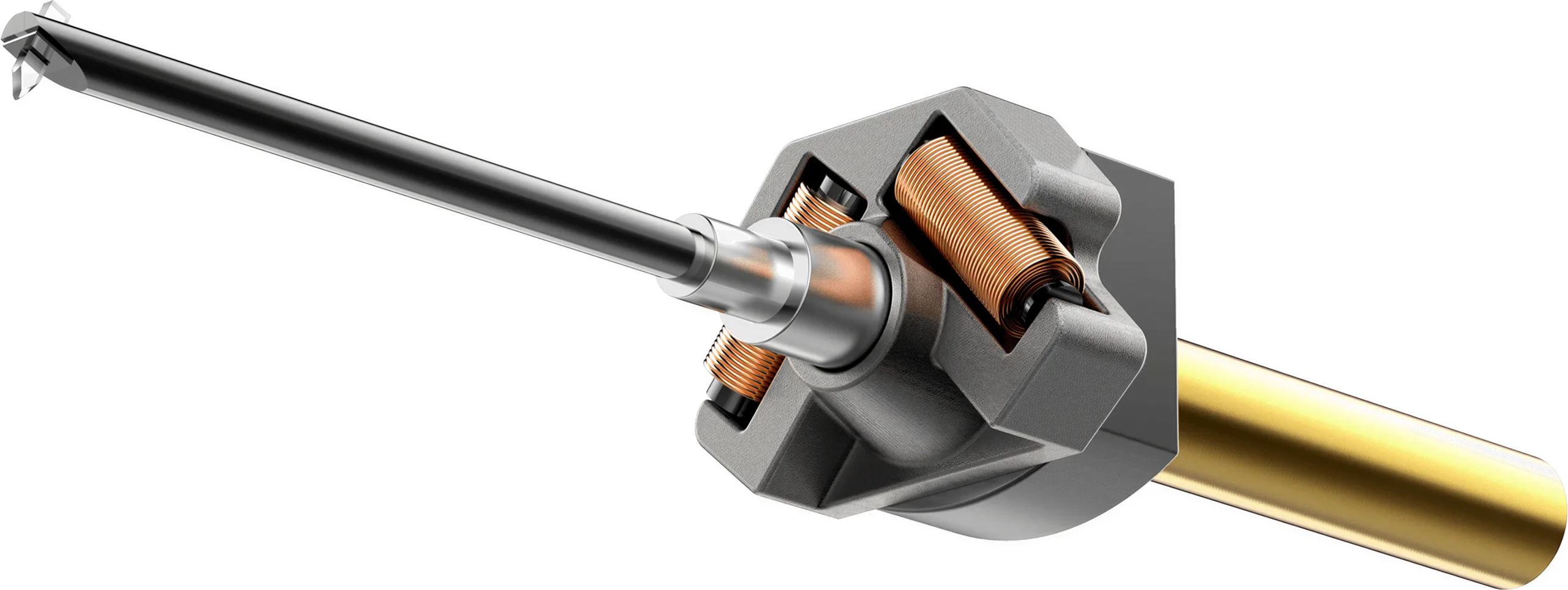
The generator of the AT-ART20 is based on a dual-coil architecture arranged in an inverted V, a configuration that Audio Technica has used for decades to optimize channel separation. The front yoke has been thickened by 0.6 mm compared with the AT-ART9XI, which increases the density of the magnetic flux in the gap. This modification yields an output voltage of 0.55 mV, around 15% higher than the model it is derived from, without adding extra turns to the coils. Yet each additional turn increases both the moving mass and the impedance: by gaining in efficiency rather than complexity, the AT-ART20 maintains an impedance of 12 ohms and an inductance of only 25 µH, figures that simplify matching with most MC phono preamplifiers.
The connector pins benefit from gold plating whose thickness is about thirty times that of the brand’s usual models. This extra thickness reduces contact resistance and improves long-term durability, particularly for users who regularly change headshells or cables.
Diamond and cantilever: the playback chain
The diamond features a Special Line Contact cut, a profile whose contact surface with the groove is elongated in the vertical direction. This geometry allows more of the information engraved on the groove walls to be read, including in the inner areas of the record where the relative speed decreases and distortion generally increases. The mounting is nude, meaning that the diamond is fixed directly to the cantilever without an intermediary, which reduces the moving mass.
The cantilever itself is made of solid boron, a material whose stiffness per unit mass exceeds that of most alternatives such as aluminum or even sapphire. Its diameter of 0.28 mm may seem slender, but the “stepped pipe” construction, where the tube thickens in stages towards the pivot, reinforces the structure without adding weight at the tip. This technique, inherited from the AT-ART1000, improves high-frequency handling: Audio Technica specifies a response extending up to 50 kHz. The reinforcement plate that holds the diamond is also made of titanium, further lightening the moving assembly and enhancing transient reproduction.
Installation and tonearm compatibility
The AT-ART20 features threaded mounting holes (M2.6), which greatly simplifies installation compared to cartridges that require nuts and through-bolts. The supplied kit includes screws of different lengths (5, 8, 10 and 12 mm) to suit a wide variety of headshells, as well as a non-magnetic screwdriver, a cleaning brush, and a stylus guard.
One point deserves attention during installation: the diamond tip is located quite far forward in the cartridge body. On some tonearms with limited longitudinal adjustment range, it may be difficult to achieve perfect alignment. Quality tonearms with precise adjustment of the sled or headshell position will pose no problem, but it is advisable to check this compatibility before purchasing if you use a built-in entry-level arm.
The recommended tracking force is between 1.6 and 2.0 grams, with a nominal value of 1.8 g. The dynamic compliance of 13 × 10⁻⁶ cm/dyne (at 100 Hz) indicates moderate flexibility, suitable for tonearms of medium to medium-high effective mass. For loading, Audio Technica recommends an impedance higher than 100 ohms. Depending on the phono stage and personal taste, values between 100 and 500 ohms will yield different results: lower loading tends to slightly soften the high frequencies, while higher loading preserves liveliness but can emphasize brightness.
Tonal balance and sound reproduction
The AT-ART20 follows in the tradition of Audio Technica cartridges: neutrality, absence of pronounced coloration, and clear articulation of transients. Its signature is slightly on the brighter side of the spectrum, with pronounced definition in the upper range that highlights ambient details and instrumental texture. This characteristic is flattering on quality recordings, but can also expose the flaws of poor pressings or worn records.
The bass extends with authority without overhang, the midrange remains open and natural, and vocals retain their grain and presence. The soundstage unfolds with precision in both width and depth, and the separation of layers allows each source to be located clearly. Dynamics, both macro and micro, are among this model’s strong points: percussion or piano attacks stand out with physical impact, while the finest nuances—a breath, the friction of a bow—remain audible even in dense passages.
Technical specifications
Audio performance
- Frequency response: 20 – 50,000 Hz
- Output voltage: 0.55 mV
- Channel separation: 30 dB at 1 kHz
- Exceptional sound quality
- Outstanding emotional rendering with a realistic, detailed soundstage
- Optimal transmission of micro-information thanks to high resolution
- Faithful reproduction of original dynamics and nuances
Construction and materials
- Premium anti-resonance architecture
- Aluminum base
- Titanium body
- Elastomer underlayer for optimal resonance absorption
- High-performance connectivity
- Thick gold-plated connection pins (around 30 times thicker than standard models)
- Minimal contact resistance
- Advanced manufacturing technologies
- Titanium machined and polished with precision inherited from the century-old Japanese optical industry in Fukui Prefecture
- Lightweight structure thanks to ultra-fine cutting and an exclusive organic design
Reading system
- Diamond: special line-contact with nude mount
- Ultra-precise groove tracking
- Cantilever: rigid boron, 0.28 mm in diameter
- Extremely low distortion
- New-generation magnetic circuit
- 15% increase in output voltage with no increase in mass or impedance
Mechanical specifications
- Recommended vertical tracking force: 1.6 – 2.0 g (standard value: 1.8 g)
- Dynamic compliance: 13 × 10⁻⁶ cm / dyne at 100 Hz
- Tracking angle: 20°
- Mounting: threaded mounting holes for simple, secure installation
Electrical characteristics
- Coil impedance: 12 ohms
- Inductance: 25 µH
Supplied accessories
- Non-magnetic screwdriver
- Cleaning brush
- Set of M2.6 screws in various lengths
- Washers (quantity: 2)
- Stylus guard
General information
- Cartridge type: moving coil (MC)
- Weight: 9 g
- Dimensions: 17.3 × 16.8 × 26.6 mm
Frequently Asked Questions
Can the AT-ART20 stylus be replaced by the user?
No, moving-coil (MC) cartridges do not allow field replacement of the stylus. Audio Technica offers a Moving Coil Exchange Program: you return your cartridge and receive a refurbished or new model for a cost representing around 80 to 90% of the original purchase price.
What is the estimated lifespan of the diamond?
With regular maintenance (cleaning with the supplied brush, clean records) and correct tracking force, a Special Line Contact diamond can provide between 800 and 1,000 hours of playback before wear perceptibly affects sound quality. This profile wears more slowly than elliptical or conical cuts.
Which phono preamplifier is suitable for the AT-ART20?
The 12-ohm impedance and 0.55 mV output voltage (relatively high for an MC) make it compatible with most MC phono stages. A gain of 60 to 65 dB is generally sufficient. A preamp with adjustable loading (100 to 500 ohms or more) will allow you to fine-tune the sound according to your preferences.
Is the AT-ART20 suitable for light tonearms?
The compliance of 13 × 10⁻⁶ cm/dyne and the 9-gram mass make it best suited to tonearms of medium effective mass (10 to 18 g). On a very light arm (less than 8 g), the arm/cartridge resonance may fall too high in the audible spectrum. On a heavy arm (more than 25 g), it could drop too low and pick up infrasonic vibrations.
Does the AT-ART20 require break-in?
Like most MC cartridges, it gains in smoothness and openness after a few dozen hours of playback. The suspension softens and the sound generally becomes more expansive. Around thirty hours is a reasonable estimate before making a definitive assessment of its performance.
Can the AT-ART20 be used with a step-up transformer (SUT)?
Yes. Its 12-ohm impedance works well with transformers with a 1:10 or 1:20 ratio. A quality SUT can bring extra body and smoothness compared with an active MC input, depending on individual taste.
- Eco-contribution included in the sale price.