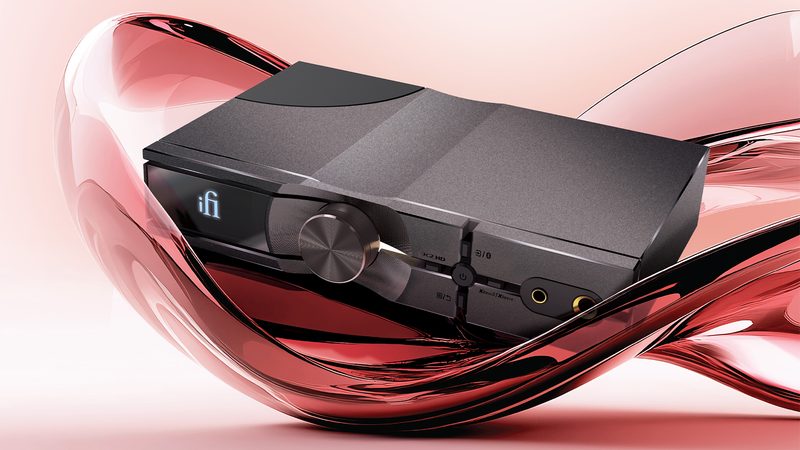

iFi Audio Neo iDSD 3


Specifications and features


Overview
Five times more powerful than its predecessor, equipped with a new amplification stage borrowed from the iDSD Diablo 2 and featuring K2HD technology developed with JVCKENWOOD, the Neo iDSD 3 represents the third generation of the Neo series launched by the British brand in 2020. This desktop DAC/amp retains the compact form factor that made the range successful, while pushing power and processing capabilities to a level close to iFi’s high-end references.
A game‑changing amplification stage
The first Neo iDSD suffered from a well-known flaw: its amplification section lacked power for demanding headphones. The second generation corrected this by integrating the Diablo circuit. The Neo iDSD 3 goes further with a peak power of 5,551 mW and 2,532 mW RMS on the 4.4 mm balanced output. These figures are five times the power of the first model and eighteen times that of the ZEN DAC 3.
The PureWave architecture, inherited from the Diablo 2, is based on a dual-mono symmetrical topology with short, direct signal paths. The complete separation of left and right channels reduces crosstalk and background noise. The 6.3 mm single-ended output delivers 2,244 mW into 32 ohms, enough for most dynamic or planar headphones on the market.
High-sensitivity headphones are not forgotten. The Auto iEMatch system automatically adjusts the output level to avoid audible hiss with IEMs or very sensitive headphones, an issue that had been reported on the first generation.
Dual‑path Burr‑Brown conversion
The Neo iDSD 3 uses a multibit Burr-Brown DAC with a special feature: PCM and DSD signals follow separate processing paths. This “True Native” architecture preserves signal integrity right up to the analog conversion stage, without transcoding DSD to PCM as some converters do.
For PCM, the six most significant bits are handled in multibit mode to preserve dynamics and impact, while the remaining bits pass through a delta-sigma stage for linearity at low levels. The device accepts PCM streams up to 768 kHz and DSD512, the highest resolutions currently available in digital music catalogs.
Four digital filters allow you to tailor the DAC’s behavior to your listening preferences: Bit-Perfect for unaltered processing, GTO (Gibbs Transient Optimised) to reduce pre-echo artifacts, and Standard and Minimum Phase for slightly different transient signatures.
K2HD, harmonic restoration technology
The partnership with JVCKENWOOD brings K2HD technology to the Neo iDSD 3, developed by JVC engineers for their own remastering of classic catalogs. The starting point: digital encoding, especially compression, removes part of the harmonic content present in the original recording.
K2HD analyzes the signal and attempts to restore these lost high-frequency harmonics, with optional upsampling to 192 kHz / 24-bit. The “K2” mode applies the same processing without changing the file’s native resolution. These functions are switchable on demand and do not affect the signal when disabled.
The result depends greatly on the source: highly compressed files or masters affected by the “loudness war” can regain some breathing room, while quality high-resolution recordings will not gain much from this treatment.
Analog processing to fine‑tune the sound
iFi has always offered sound customization tools in its devices. The Neo iDSD 3 includes the full suite: XBass II to reinforce bass or upper-bass, XSpace to widen the soundstage, and XPresence to bring out vocals and upper mids.
These processes operate in the analog domain, after conversion, without touching the digital signal. XBass II offers two modes: “Bass” for frequencies below 60 Hz, and “Presence” for the 1–3 kHz region. Both can be combined. XSpace applies a form of crossfeed that reduces the typical “in-the-head” sensation of headphone listening by simulating speaker playback.
Perceived effectiveness varies depending on the headphones. XBass works particularly well with open-back headphones that have a light bass response, while XSpace is better suited to older recordings with excessive stereo separation.
Bluetooth 5.4 and aptX Lossless
The Neo iDSD 2 was the first device to support aptX Lossless. The Neo iDSD 3 continues along this path with Bluetooth 5.4 and an exhaustive list of codecs: aptX Lossless, aptX Adaptive, aptX, LDAC, LHDC/HWA, AAC, and SBC.
aptX Lossless promises lossless transmission at 1,200 kbps for CD-quality files (44.1 kHz / 16-bit). The downside: few source devices support it. Compatible smartphones can still be counted on one hand. LDAC at 990 kbps remains the most widespread solution for near-lossless quality from an Android phone.
The Bluetooth antenna screws into the rear of the unit. Reception is reliable over several meters, and the device stores multiple devices for quick pairing.
Connectivity and system integration
The rear panel gathers most of the connections. On the digital input side: USB-B 3.0 for a computer or streamer, coaxial and optical S/PDIF for CD players, consoles, or TVs. A BNC clock input allows the device to be synchronized with an external 10 MHz clock, a rarity at this price level.
New compared with the Neo iDSD 2: the analog input moves from a 3.5 mm jack to stereo RCA, more practical for connecting a turntable equipped with a built-in phono preamp.
Line outputs are duplicated: balanced XLR and single-ended RCA, both configurable to fixed level (pure DAC mode) or variable level (preamp mode). Maximum voltage reaches 12.7 V in balanced mode, enough to drive power amplifiers without level issues.
Build and ergonomics
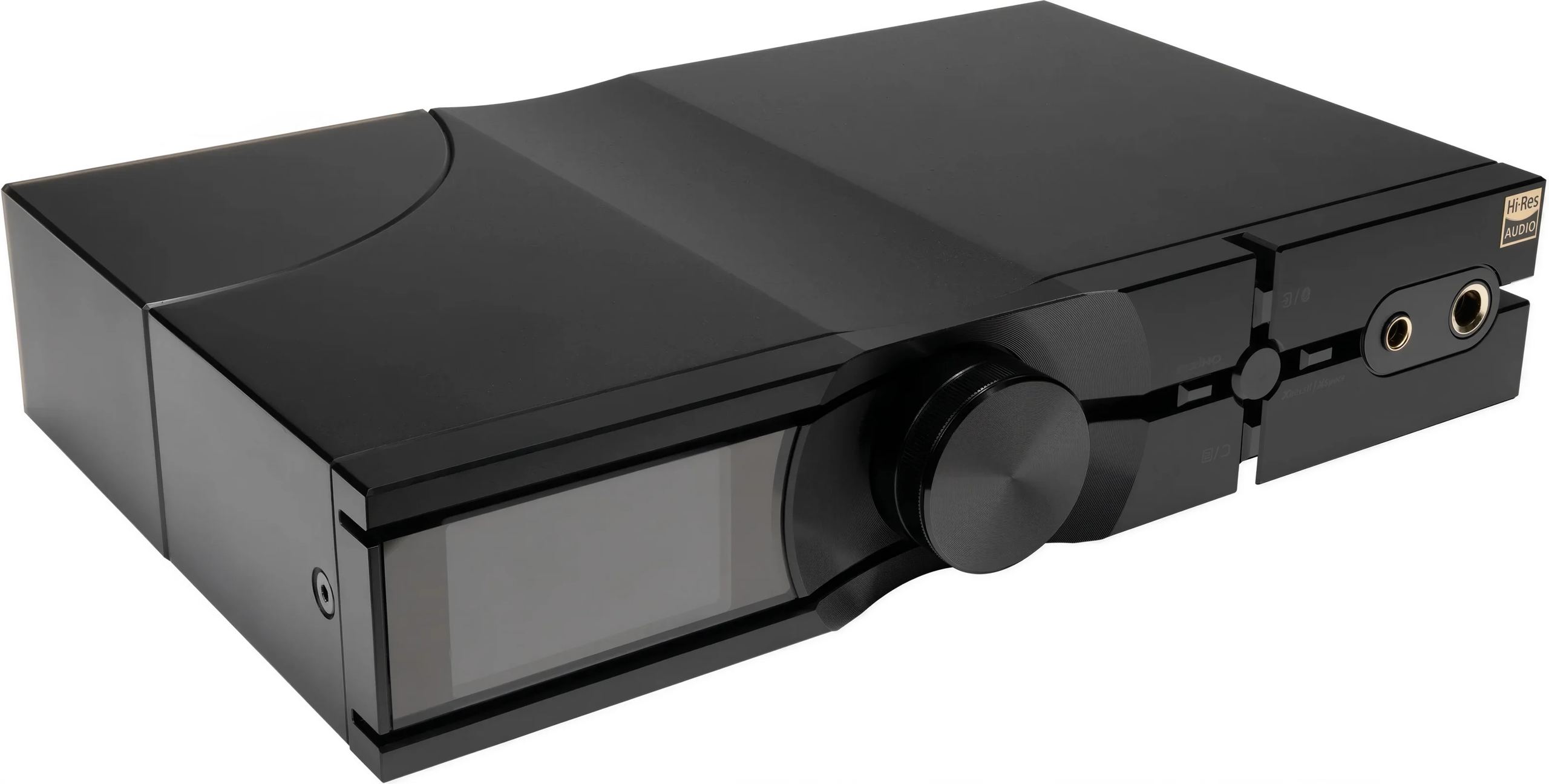
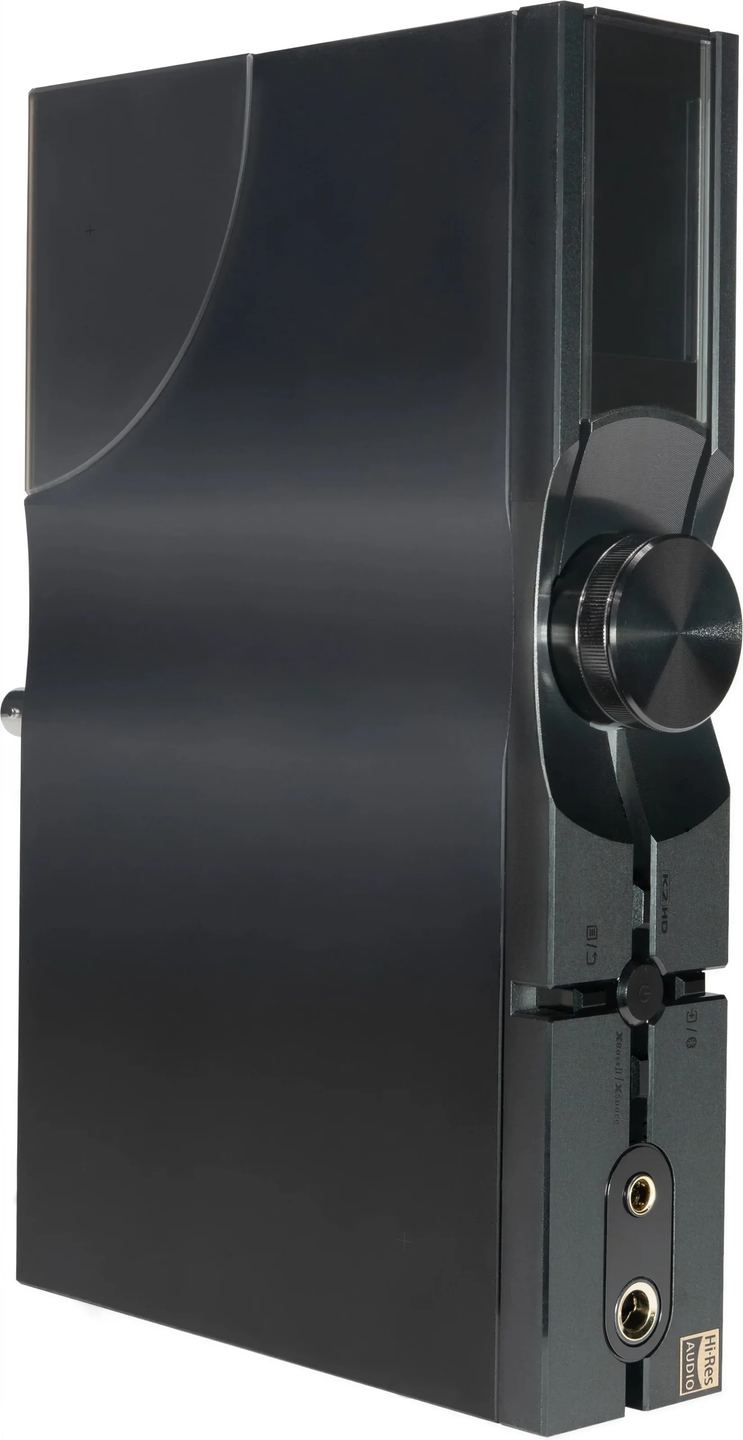
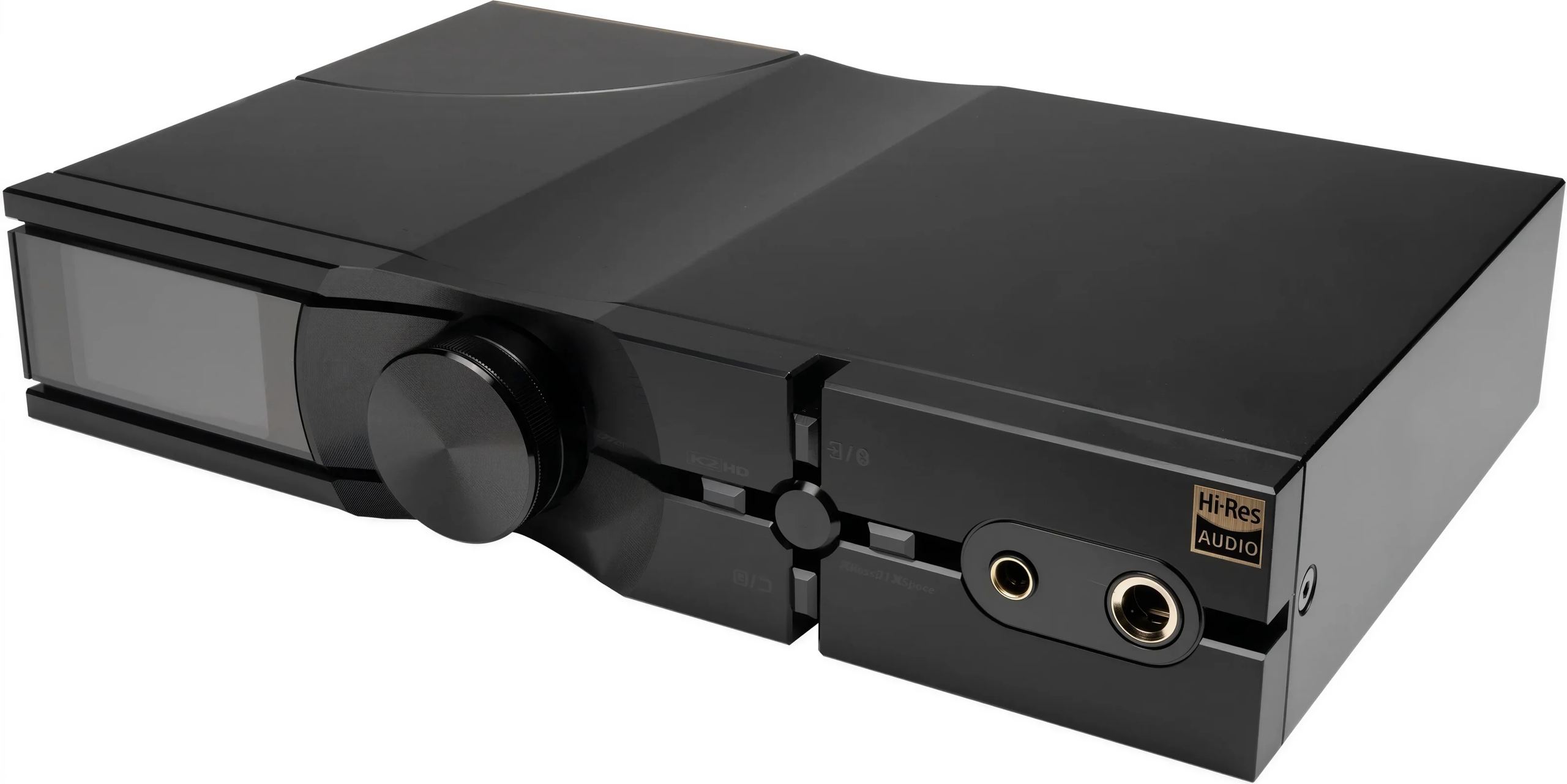
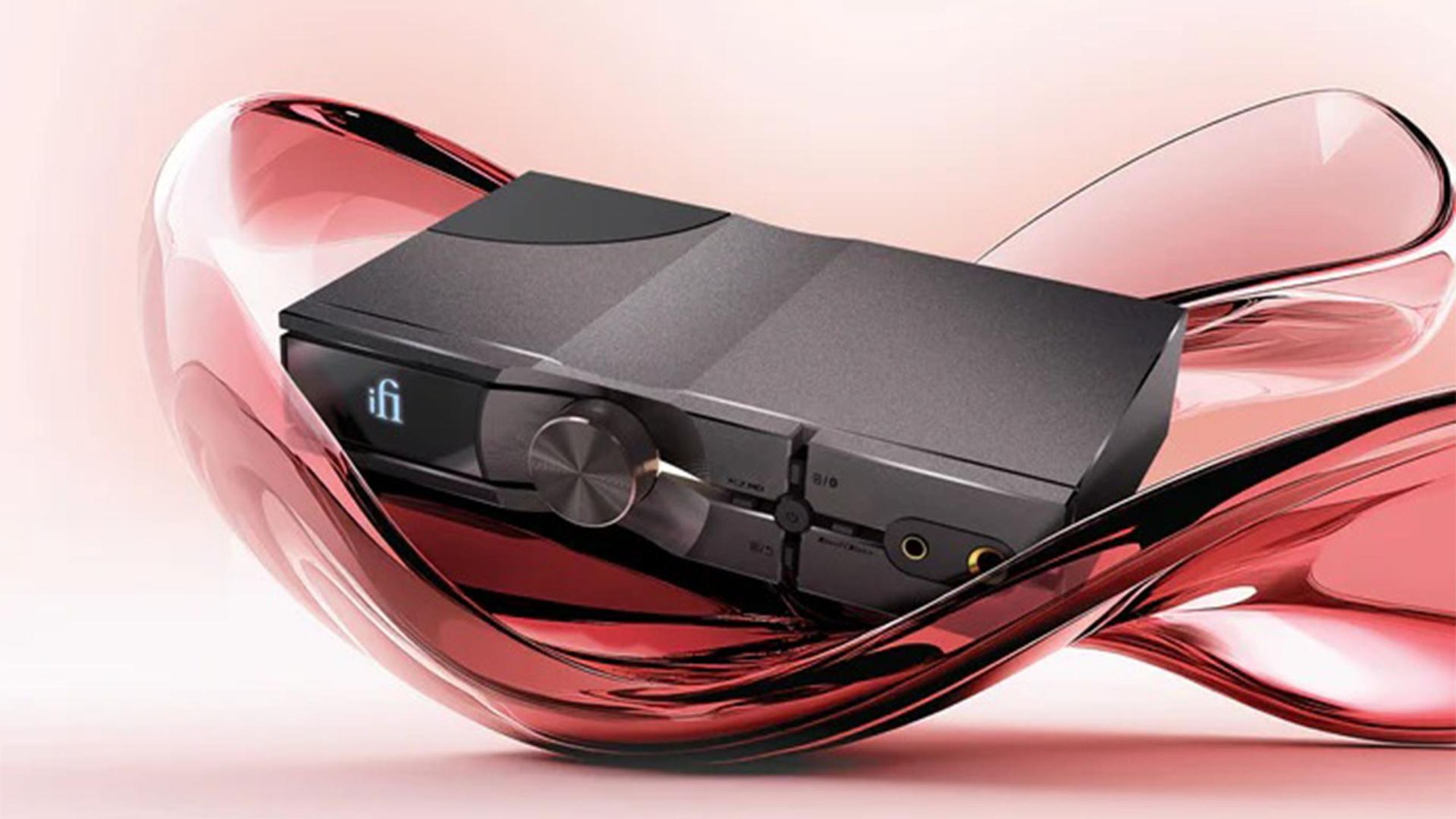
The aluminum chassis retains the compact Neo series format, with dimensions of 21.4 × 15.8 × 4.1 cm and a weight of 916 g. The “Obsidian Black” finish replaces the silver-grey of previous models, giving the unit a more discreet appearance on a desk.
The 2-inch color display shows file format, sampling rate, volume level, and active source. It automatically rotates depending on whether the device is placed horizontally or vertically on the supplied stand. The brightness of the front LED is now adjustable to suit dark environments.
The front buttons let you select the source, activate audio processing, and navigate the menus. An infrared remote control offers remote operation of the volume and main functions. The iFi Nexis app also allows control via Bluetooth or Wi‑Fi, as well as firmware updates.
Internal improvements in this third generation
iFi announces extensive work on the components. The operational amplifiers exhibit measured distortion reduced by half compared with the previous generation. Improved polymer capacitors cut power supply ripple by 50%. WIMA MKS2 capacitors contribute to more linear behavior in the treble.
The included power supply is the iPower 2, a mains adapter with active noise cancellation designed to eliminate electromagnetic interference from the power grid. This type of power supply is one of the accessories iFi sells separately to upgrade its entry-level products, and its inclusion in the package is a welcome advantage.
Documentation
French
Technical specifications
Audio architecture
- Type: desktop digital-to-analog converter and headphone amplifier
- Digital-to-analog conversion: multibit Burr-Brown DAC with separate processing of PCM and DSD signals
- Optimized architecture with reduced noise and distortion
- Proprietary audio technologies: K2HD (JVCKENWOOD), XBass II, XSpace, XPresence
- Digital filters: Bit-Perfect, GTO, Standard, Minimum Phase
Supported audio formats
- PCM: up to 768 kHz
- DSD: up to DSD512 (22.6 MHz)
- Native high-resolution decoding
Connectivity
- Digital inputs
- USB-B 3.0
- Coaxial S/PDIF
- Optical S/PDIF
- Bluetooth 5.4
- Compatible Bluetooth codecs: aptX Lossless, aptX Adaptive, aptX, LDAC, LHDC / HWA, AAC, SBC
- Analog input
- Unbalanced stereo RCA
- Line outputs
- Balanced stereo XLR
- Unbalanced stereo RCA
- Additional connections
- BNC clock input
- External DC power input
Headphone amplifier
- Balanced output (4.4 mm)
- Voltage: ≥ 12.7 V
- Power: ≥ 2532 mW RMS into 64 ohms
- Unbalanced output (6.3 mm)
- Voltage: ≥ 8.4 V
- Power: ≥ 2244 mW RMS into 32 ohms
Advanced audio features
- XBass II: enhanced low frequencies
- XSpace: widened soundstage
- XPresence: enhanced vocal presence
- K2HD processing for harmonic restoration
- Analog processing with no degradation of the digital signal
General information
- Reference: NEO-iDSD-3-FR
- Dimensions (W × D × H): 21.4 × 15.8 × 4.1 cm
- Weight: 916 g
- Format: compact desktop
- Chassis: aluminum, Obsidian Black finish
- High-fidelity Burr-Brown DAC
- High-power headphone amplifier compatible with demanding headphones
- Lossless Bluetooth with audiophile codecs
- Support for PCM 768 kHz and DSD512 formats
- Exclusive iFi Audio analog processing
- Comprehensive analog and digital connectivity
Frequently Asked Questions
Can the Neo iDSD 3 be used only as a DAC, without the amplifier section?
Yes. The XLR and RCA line outputs can be set to fixed level via the menu. In this configuration, the volume remains at its maximum and the device functions as a pure converter, leaving volume control to the external amplifier or preamplifier.
What is the difference between K2 mode and K2HD mode?
K2 mode applies harmonic restoration without changing the file’s resolution. K2HD mode adds upsampling to 192 kHz / 24-bit on top of harmonic restoration. Some prefer K2 to preserve the file as it is, while others find that K2HD brings greater smoothness.
Are hard‑to‑drive planar magnetic headphones properly supported?
With more than 2,500 mW available on the balanced output, the Neo iDSD 3 can drive the vast majority of planars on the market, including notoriously power-hungry models like the Audeze LCD or HiFiMAN Susvara, even though the latter will still benefit from an even more powerful dedicated amplifier.
- Eco-contribution included in the sale price.
- Manufacturer reference: IFI0048
- GTIN / EAN: 5061043052642