

Velodyne Deep blue 8 white



Overview
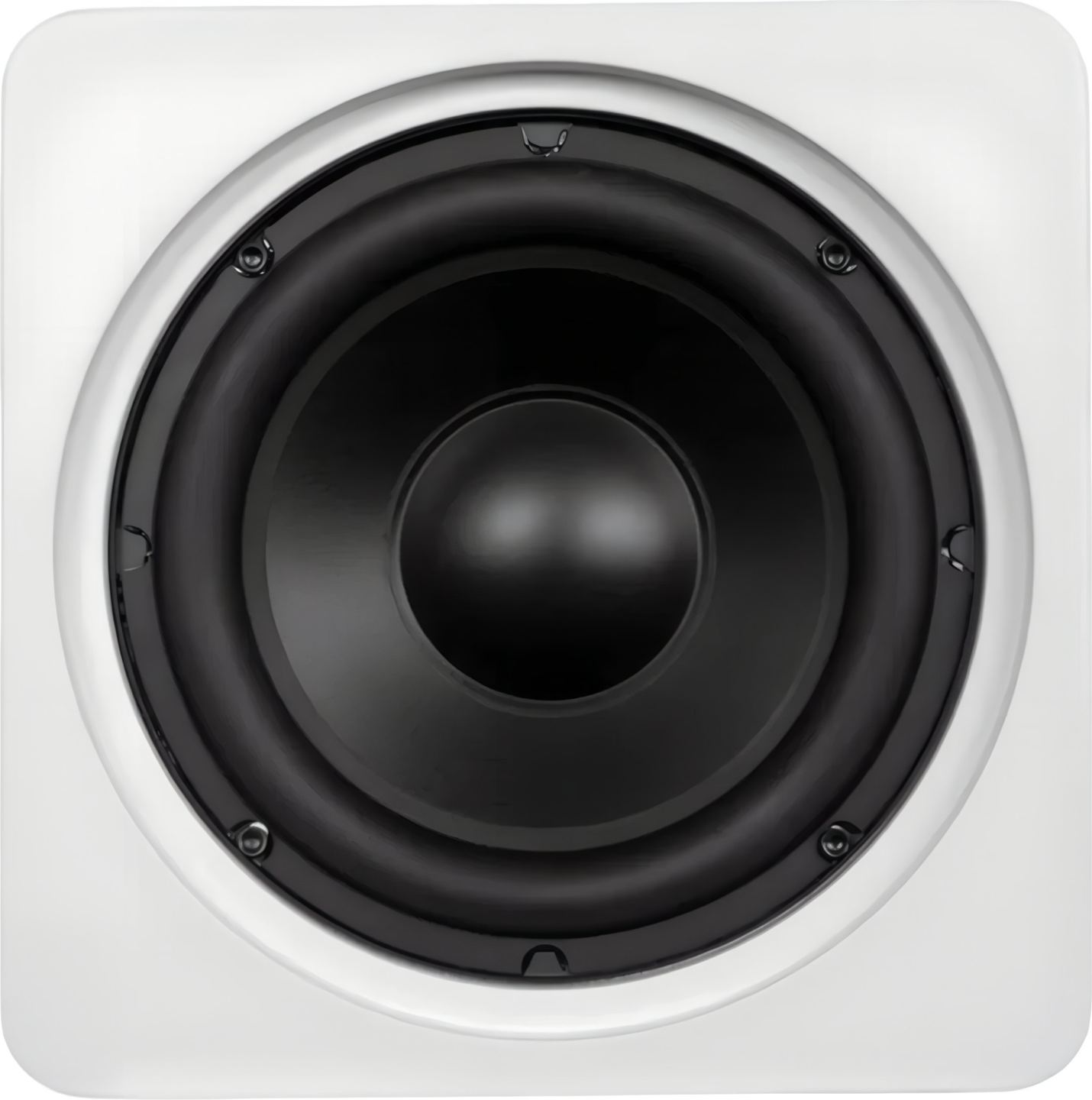
Velodyne Acoustics developed the Deep Blue series as an accessible entry-level range, available in four sizes (8, 10, 12, and 15 inches). The Deep Blue 8, the most compact model, almost fits inside a 28 cm cube. This white finish allows it to blend into bright interiors where a black subwoofer would look out of place. Despite its modest size, it inherits the technical choices that built the reputation of the California-based manufacturer.
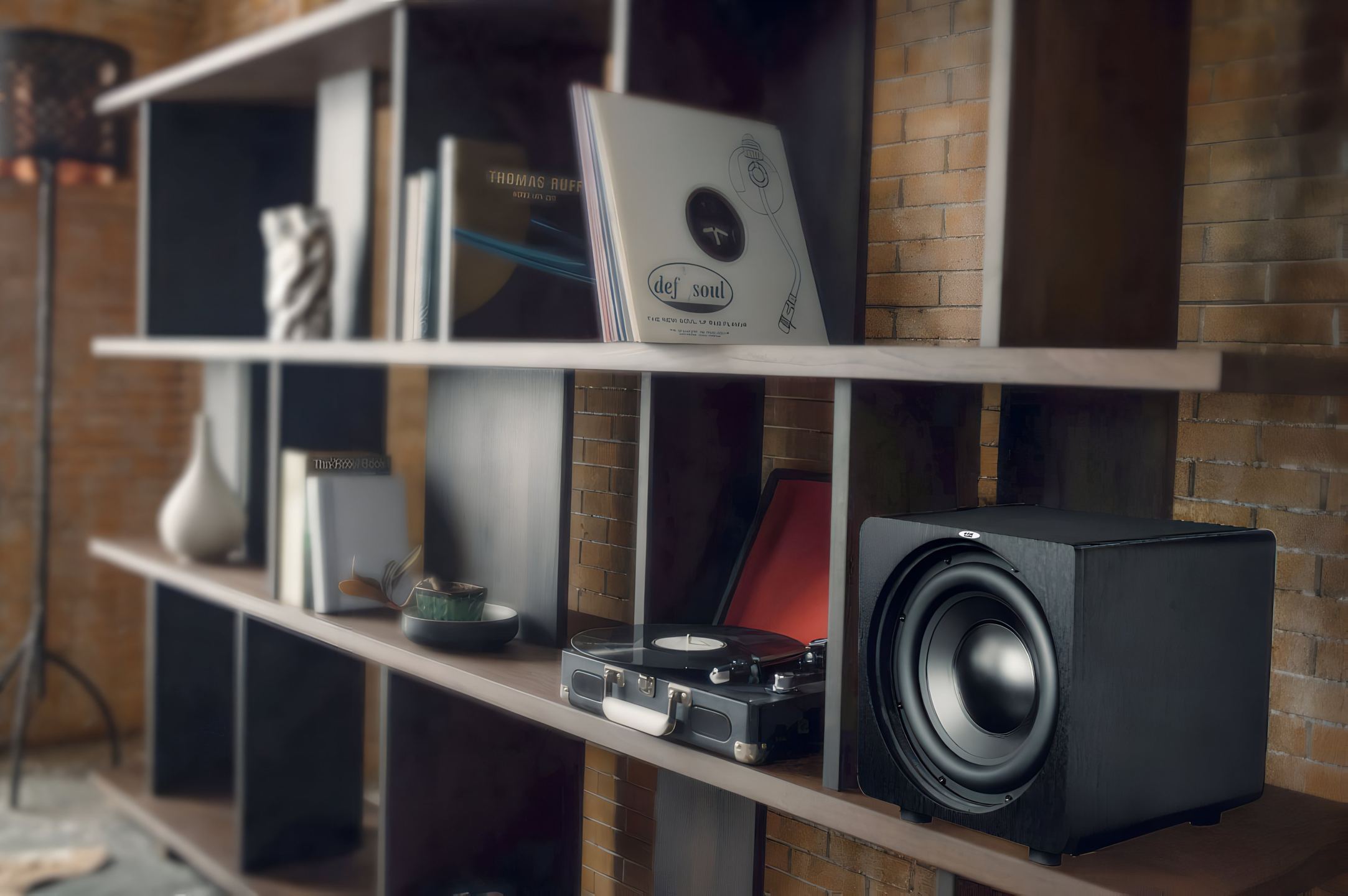
A sealed enclosure for precision
The Deep Blue 8 uses a sealed enclosure design, without a bass-reflex port. This technical choice has direct consequences on sound reproduction: bass extension is less spectacular than with a ported system, but transient control and definition gain clarity. The frequency response at ±3 dB extends from 32 Hz to 180 Hz. Those looking to reproduce infra-bass below 30 Hz will need to turn to the 12- or 15-inch models in the same range.
The MDF cabinet features internal bracing and a thick 52 mm front panel. This rigidity is intended to eliminate parasitic vibrations from the subwoofer itself, allowing the driver to operate without the enclosure coloring the sound. The absence of a port also makes placement easier: there is no minimum distance to maintain behind the unit, offering more freedom to integrate it under a piece of furniture or in a corner.
A high-excursion motor
The 20 cm driver uses a reinforced polypropylene cone, a lightweight and rigid material. The four-layer voice coil, combined with a dual ferrite magnet, allows significant excursion without any notable increase in distortion. This design enables the small cabinet to move a substantial volume of air despite its limited surface area.
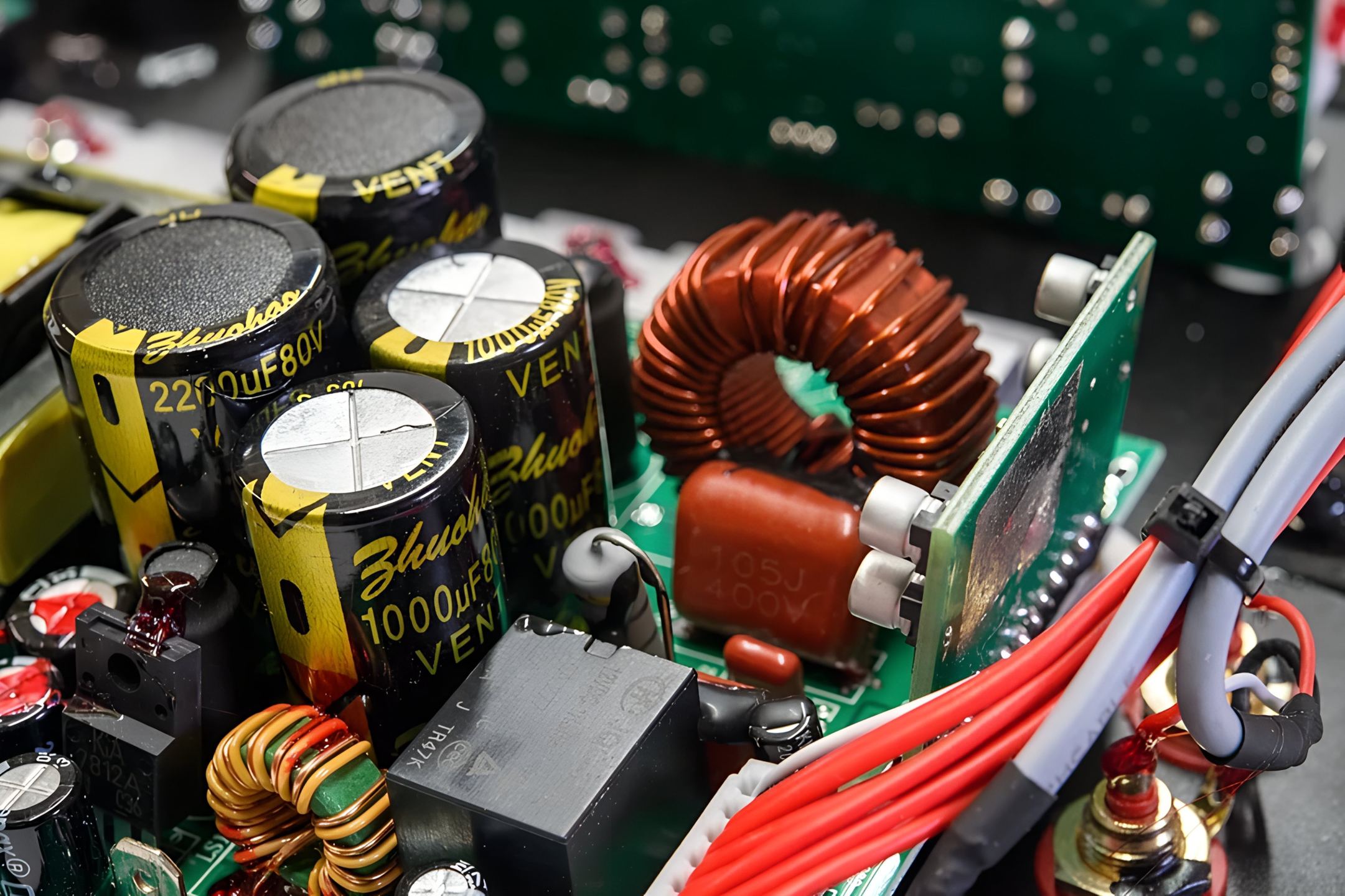
The built-in amplifier operates in class AB, with 300 W RMS power and 800 W peak power. Velodyne has chosen class AB here rather than the class D used in other ranges: a choice that favors warmer timbre reproduction, at the cost of lower energy efficiency.
Complete controls and connectivity
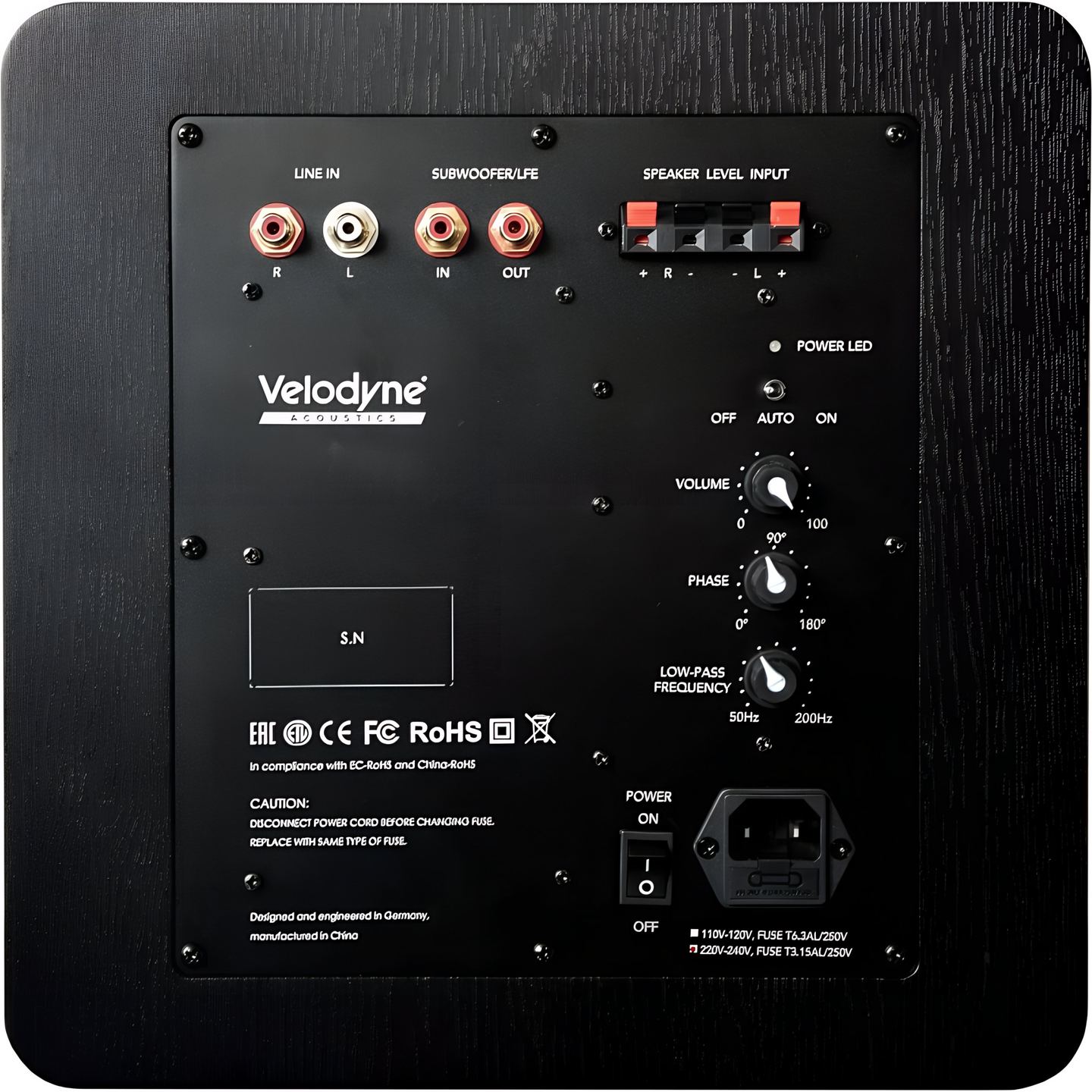
The rear panel groups together three knobs: level, crossover frequency (50 to 180 Hz), and phase. This last adjustment is continuous from 0° to 180°, a valuable feature since many subwoofers offer only a simple two-position switch. Fine phase adjustment helps integrate the subwoofer with the main speakers without frequency cancellation.
On the input side, the Deep Blue 8 accepts a stereo signal via RCA, a dedicated LFE input for home theater amplifiers, and spring terminals for a speaker-level connection. This last option, useful with a hi-fi amplifier lacking a subwoofer output, remains basic in its implementation. An LFE output allows a second subwoofer to be daisy-chained to smooth the room response or increase sound pressure.
The power selector offers three positions: always on, off, and automatic (the subwoofer turns on when a signal is detected and switches off after a few minutes of silence).
A format designed for small rooms
The dimensions of 260 × 280 × 290 mm and the weight of 9 kg make this subwoofer easy to position. In a medium-sized living room or an office, it adds body to compact speakers without taking over the floor space. Using several Deep Blue 8 units in the same room is conceivable to even out the low-frequency response, a configuration that is sometimes more effective than a single larger subwoofer.
The sound reproduction prioritizes speed and definition. Bass lines remain articulate, kick drum impacts do not linger. On the other hand, fans of intense physical sensations on action soundtracks will find the Deep Blue 8 a bit restrained: its effective low-end limit around 32 Hz does not allow it to reproduce the infra-sound of the most demanding blockbusters.
Documentation
Technical specifications
Construction
- Reinforced 20 cm polypropylene speaker
- Sealed enclosure
- Medium-density fiberboard (MDF) cabinet
- Dual ferrite magnet motor
Amplification
- Class AB amplifier
- 800 W dynamic
- 300 W continuous (RMS)
Acoustic performance
- Overall frequency response: 18 Hz to 300 Hz
- Frequency response at ± 3 dB: 32 Hz to 180 Hz
- Low-pass filter: 50 Hz to 180 Hz (12 dB / octave)
- Phase: 0° to 180°
- Crossover frequency: 50 Hz to 180 Hz
Connectivity
- Inputs: gold-plated stereo line, low-frequency effects input (LFE)
- Output: low-frequency effects / RCA connector (LFE/RCA), gold-plated
- Power selector: Off, Auto, On
Dimensions and weight
- Dimensions (W × H × D): 260 mm × 280 mm × 290 mm
- Weight: 9 kg
Frequently Asked Questions
How do you connect the subwoofer to a hi-fi amplifier without a subwoofer output?
The Deep Blue 8 features speaker-level inputs. You simply wire the terminals in parallel with the main speakers. The built-in low-pass filter will let only the low frequencies pass to the subwoofer.
Is the variable phase really useful?
It makes it possible to time-align the subwoofer with the main speakers. Incorrect phase causes frequency cancellations (certain notes seem to disappear). The continuous adjustment makes fine-tuning easier depending on the listening position and subwoofer placement.
What is the difference between class AB and class D for amplification?
Class AB tends to produce a sound slightly richer in harmonics, often described as more “musical.” Class D offers better energy efficiency and runs cooler. The choice of class AB on the Deep Blue 8 reflects a focus on music listening.
Is the Deep Blue 8 suitable for home theater?
For dialogue and film music, it provides convincing foundation. The infra-bass effects of blockbusters (explosions, rumbles below 30 Hz) will be reproduced in a more subdued way. In a small room, this is not a major drawback; in a large dedicated space, a 12- or 15-inch model will be more suitable.
- Eco-contribution included in the sale price.
- Manufacturer reference: V0014
- GTIN / EAN: 4260732440321