FiiO DM15 R2R Black




Specifications and features


Overview
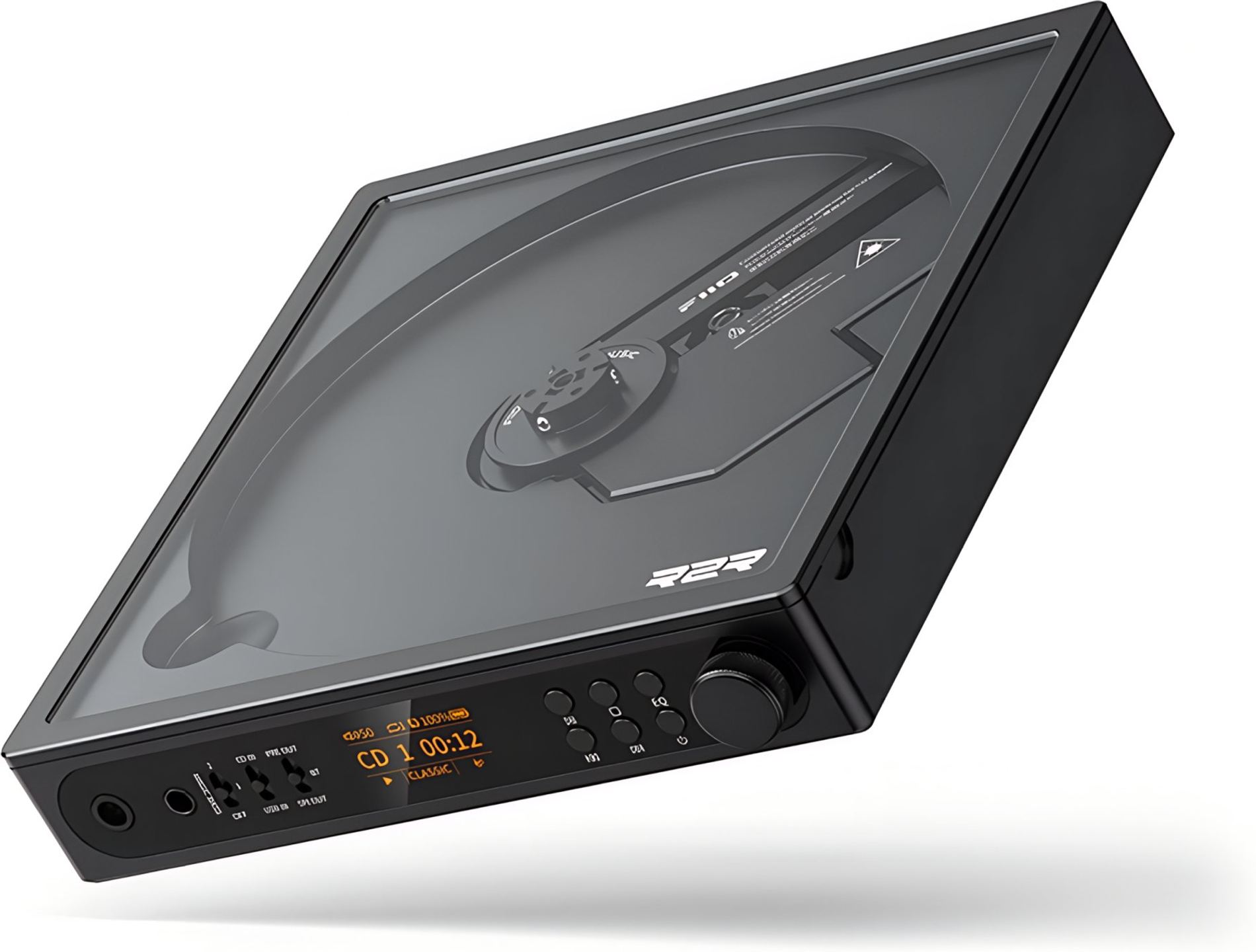
One year after the DM13, FiiO returns with a completely redesigned portable CD player. The DM15 R2R abandons delta-sigma conversion in favor of an in-house developed R2R digital-to-analog converter, gains a USB DAC mode, significantly more powerful headphone amplification, and an aluminum chassis topped with a tempered glass cover. The form factor remains compact and the unit runs on battery power: this is far from a simple nostalgic nod.
An R2R DAC with a discrete resistor ladder network
The DM13 used two Cirrus Logic CS43198 delta-sigma chips. The DM15 R2R takes the opposite approach with a proprietary R2R converter, derived from the one FiiO uses in its K11 R2R and K13 R2R desktop DACs.
The principle is simple in concept, demanding in execution: a resistor ladder network directly converts each digital value into an analog voltage, without resorting to the massive oversampling or complex digital filtering characteristic of delta-sigma DACs. The DM15 R2R features 192 thin-film resistors spread across four channels (48 per channel), selected for their 0.1% tolerance and low thermal drift (30 ppm). The topology is fully differential and operates at 24 bits.
The sonic result tends toward a denser, more organic rendering than the DM13, with a slight warmth in the midrange and a softened treble. This is a signature choice: those who favor analytical neutrality may prefer a delta-sigma DAC, but the R2R approach gives CDs a particular texture — fluid and natural — reminiscent of the best turntables of yesteryear.
Headphone amplification that means business
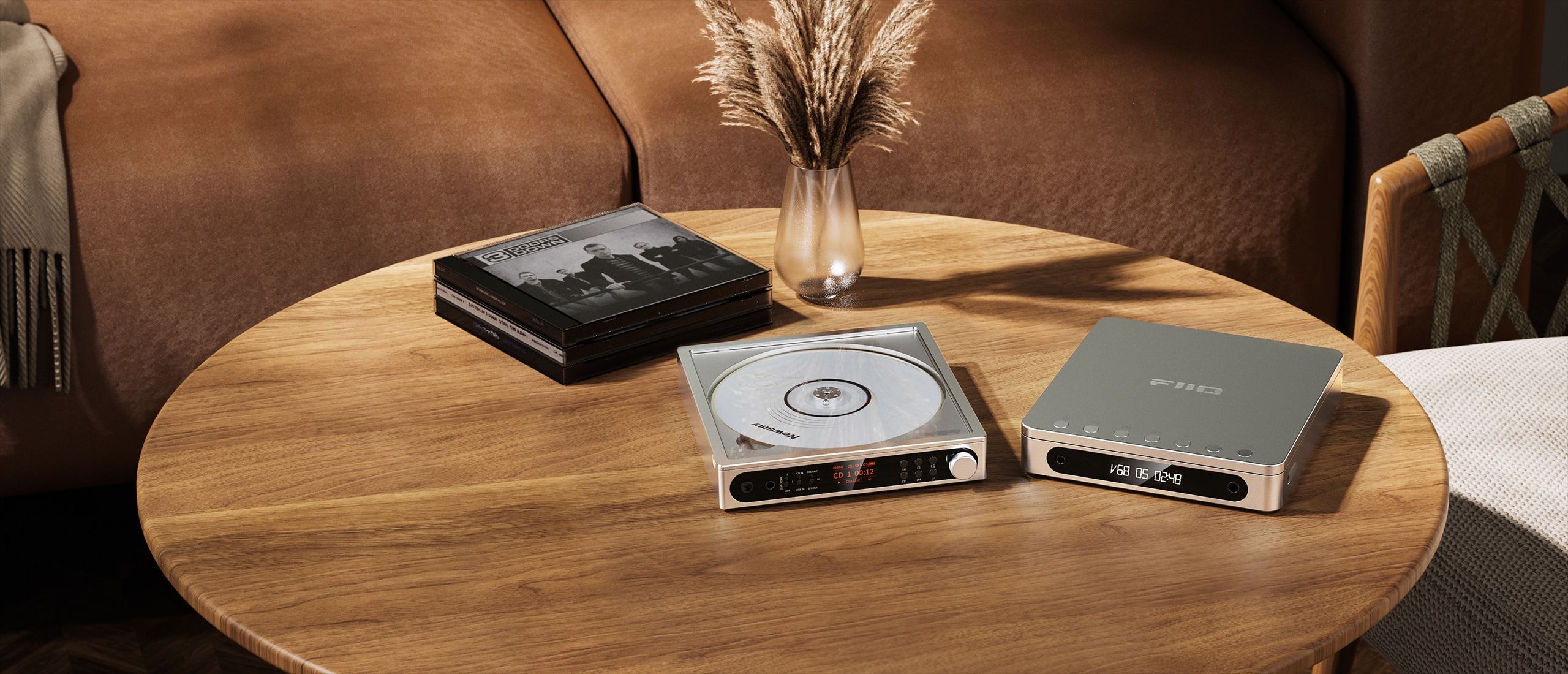
The amplification stage, built around two SGM8262 operational amplifiers, gains considerably in power compared to the DM13. The 4.4 mm balanced output delivers up to 1,150 mW per channel into 32 Ω (815 mW on battery), which is 74% more than its predecessor. The 3.5 mm unbalanced output reaches 315 mW into 32 Ω, up from 180 mW previously.
These figures are not purely theoretical. The DM15 R2R can effortlessly drive home headphones such as the Sennheiser HD 600, which is rare for a portable CD player. Output impedance remains below 1 Ω, crosstalk exceeds 100 dB in balanced mode, and the signal-to-noise ratio sits above 112 dB. The supported headphone impedance range runs from 8 to 350 Ω.
Volume control moves from a push-button (on the DM13) to a rotary potentiometer, a welcome change for fine-tuning the level. The volume steps have been recalibrated for a more gradual progression.
Four devices in a 471 g chassis
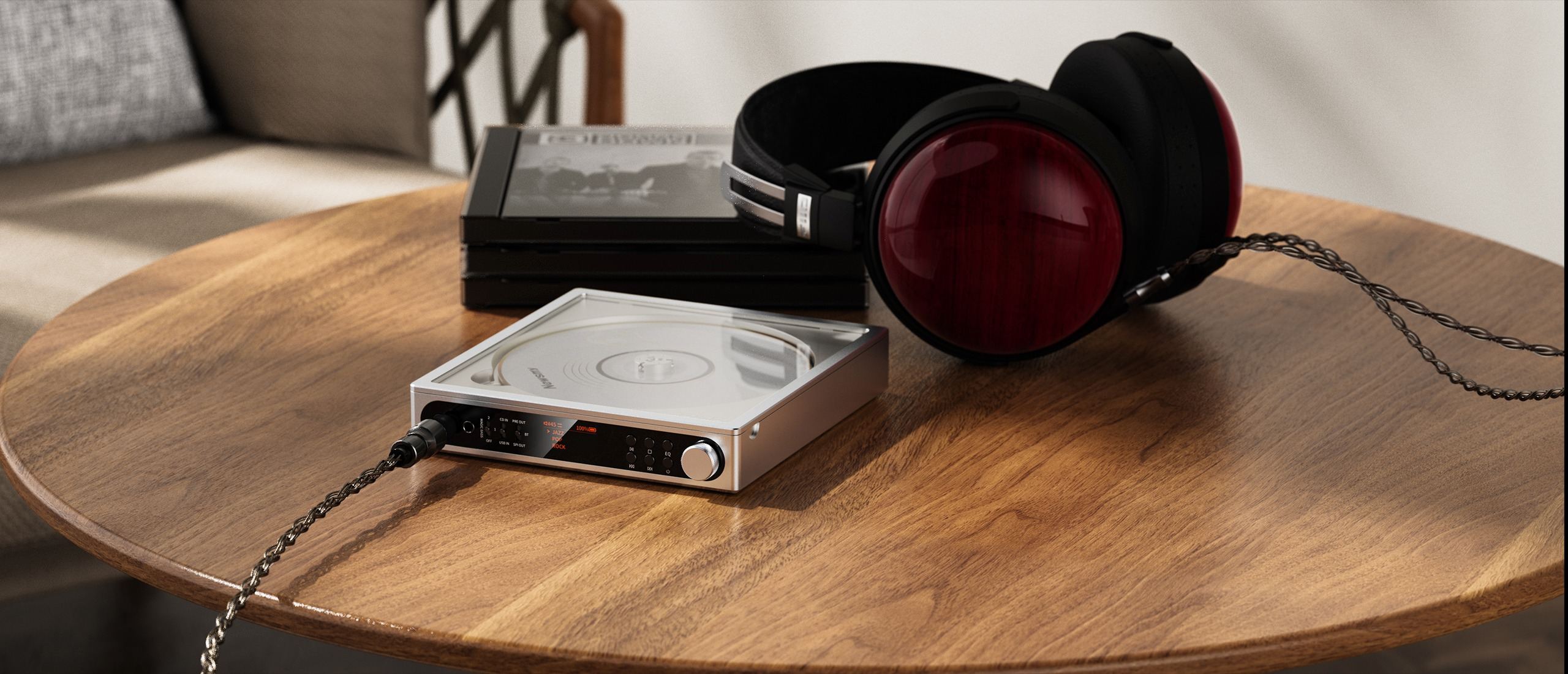
The DM15 R2R is not limited to CD playback. It combines several functions within the same chassis, each accessible via the front-panel switches.
In USB DAC mode, connected to a computer, smartphone, or tablet via USB-C, it supports PCM streams up to 32-bit / 384 kHz and native DSD256. It operates driverless (plug and play) and benefits from the same R2R converter as for CD playback, coloring the USB signal with the same sonic signature.
In Bluetooth transmitter mode, thanks to the Qualcomm QCC3095 chip and Bluetooth 5.4, it transmits the signal (CD or USB) to a wireless headphone or speaker. Supported codecs cover SBC, aptX, aptX HD, aptX Low Latency, and aptX Adaptive, the latter dynamically adjusting the bitrate to maintain a stable connection. Note: Bluetooth transmission goes through the Qualcomm chipset and not through the R2R DAC, so the signal is reprocessed.
As a digital transport, the coaxial and optical outputs (shared on a 3.5 mm jack with a supplied adapter) allow connection to an external DAC. The coaxial output supports up to 24-bit / 192 kHz, and the optical up to 24-bit / 96 kHz.
The DM15 R2R can also rip CDs to WAV files on a USB-C drive, even while listening to the disc. Only FAT32 media of 32 GB or less are supported, and only the WAV format is available for ripping.
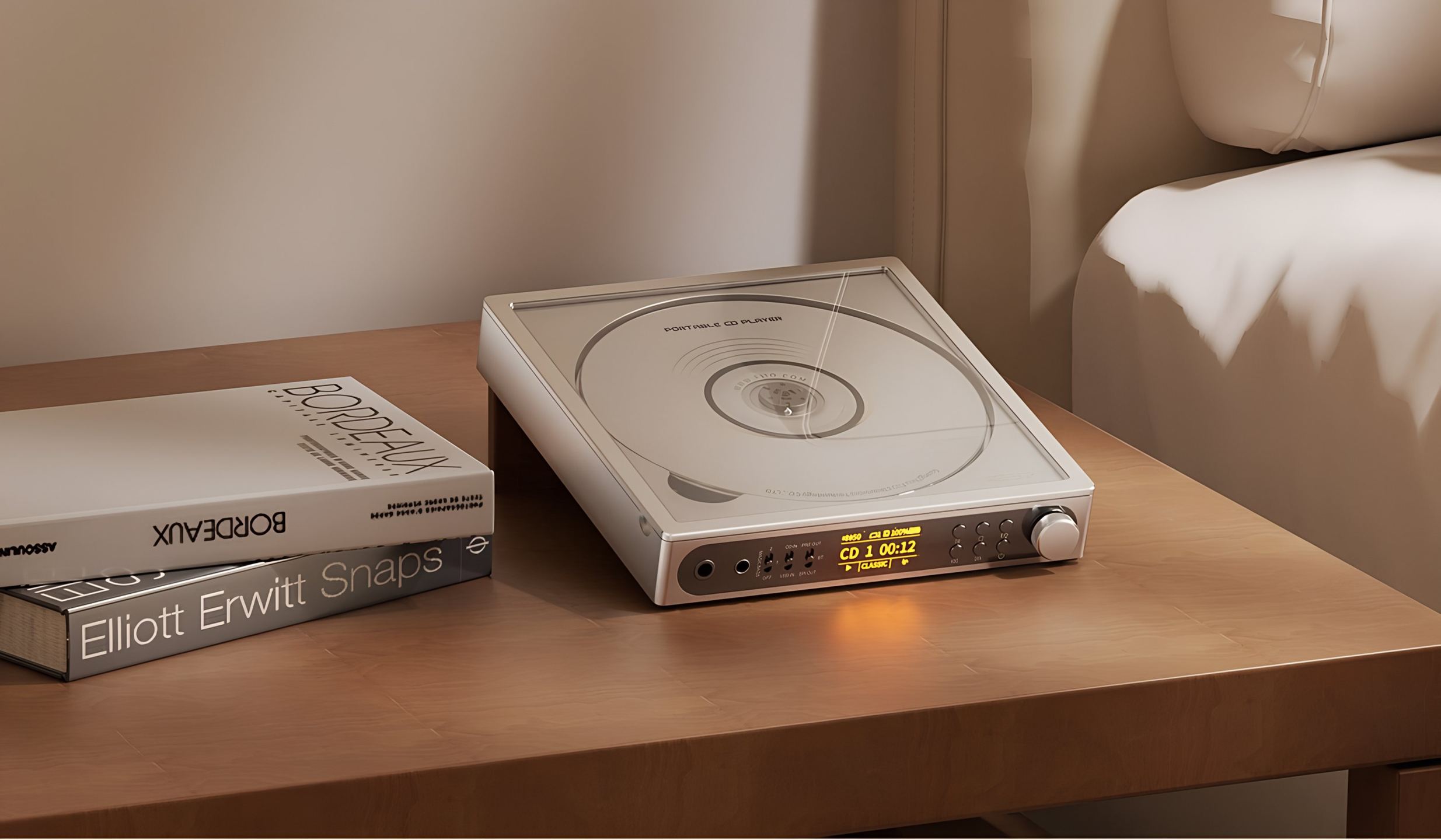
A chassis designed for two use cases
The aluminum enclosure measures 144 × 137 × 25.5 mm. It is thicker than a 1990s Discman, but 2 mm thinner than the DM13. The 471 g weight adds a sense of solidity without becoming cumbersome in a bag.
The tempered glass cover reveals the spinning disc, an appealing aesthetic detail that harks back to the transparent CD players of the 1990s. The centering mechanism uses spring-mounted steel balls to facilitate disc insertion and removal without scratching. FiiO claims near-silent rotation, a point that had been problematic on some DM13 units.
In terms of ergonomics, all control buttons have moved to the front panel: play, pause, next and previous track, stop, equalizer selection, and the volume potentiometer. A small 0.96-inch TFT LCD screen (80 × 160 pixels) displays playback information, the active mode, battery level, and equalization settings. It remains modest in size, but readable and functional. Physical switches handle input/output selection, bass level, and playback mode.
The supplied infrared remote control covers most functions (transport, volume, output mode) and makes stationary use more comfortable, particularly when the player is connected to an amplifier or speakers. The CR2025 battery for the remote is not included.
Desktop mode and battery management
The 4,700 mAh lithium cobalt battery (3.85 V) provides approximately 7 hours of continuous CD playback and up to 11 hours in USB DAC mode. Charging takes approximately 2 hours via USB-C with PD 2.0 / PD 3.0 fast charging.
Desktop mode (D.MODE), activated by a physical switch on the rear, bypasses the battery to power the player directly from the USB-C port. The battery is neither used nor charged in this mode, preserving its lifespan during extended use on a desk or in a hi-fi system. If the battery drops to 0%, the player automatically recharges it regardless of the desktop mode setting, to prevent damage. In desktop mode, the headphone amplification delivers its maximum power (1,150 mW balanced), compared to 815 mW on battery.

Anti-skip protection and on-the-go playback
The ESP (Electronic Skip Protection) switch activates a memory buffer that pre-reads the disc: 60 seconds ahead for audio CDs, 120 seconds for discs containing MP3 files. This system reduces playback skipping in the event of vibrations or movement. It is worth bearing in mind that ESP involves compression of the buffered signal. For stationary use, it can be disabled.
The player supports commercial audio CDs, CD-Rs, and CD-RWs, including burned discs containing FLAC, WAV, MP3, AAC, or WMA files. FiiO states that the DM15 R2R’s playback capabilities are comparable to those of the DM13 after a firmware update, and that some high-capacity CDs may cause minor skipping due to the constraints of a portable mechanism.
Equalization and sound profiles
The DM15 R2R offers three levels of bass boost (Magic Bass), selectable via a physical slide switch. The first level adds a subtle lift in the lower end of the spectrum; the second more noticeably reinforces everything below 300 Hz. The second level can veil the midrange and treble, making it most useful with headphones or earphones that are light on bass.
Eight preset equalization profiles round out the feature set: Jazz, Pop, Rock, Dance, Classical, Hip Hop, a standard profile, and a Retro mode that attempts to recreate the signature of CD players from before the high-resolution era. The combination of three bass levels and eight profiles yields up to 24 possible pairings. Equalization is active across all modes (CD, USB, Bluetooth).
Comprehensive connectivity on the front and rear
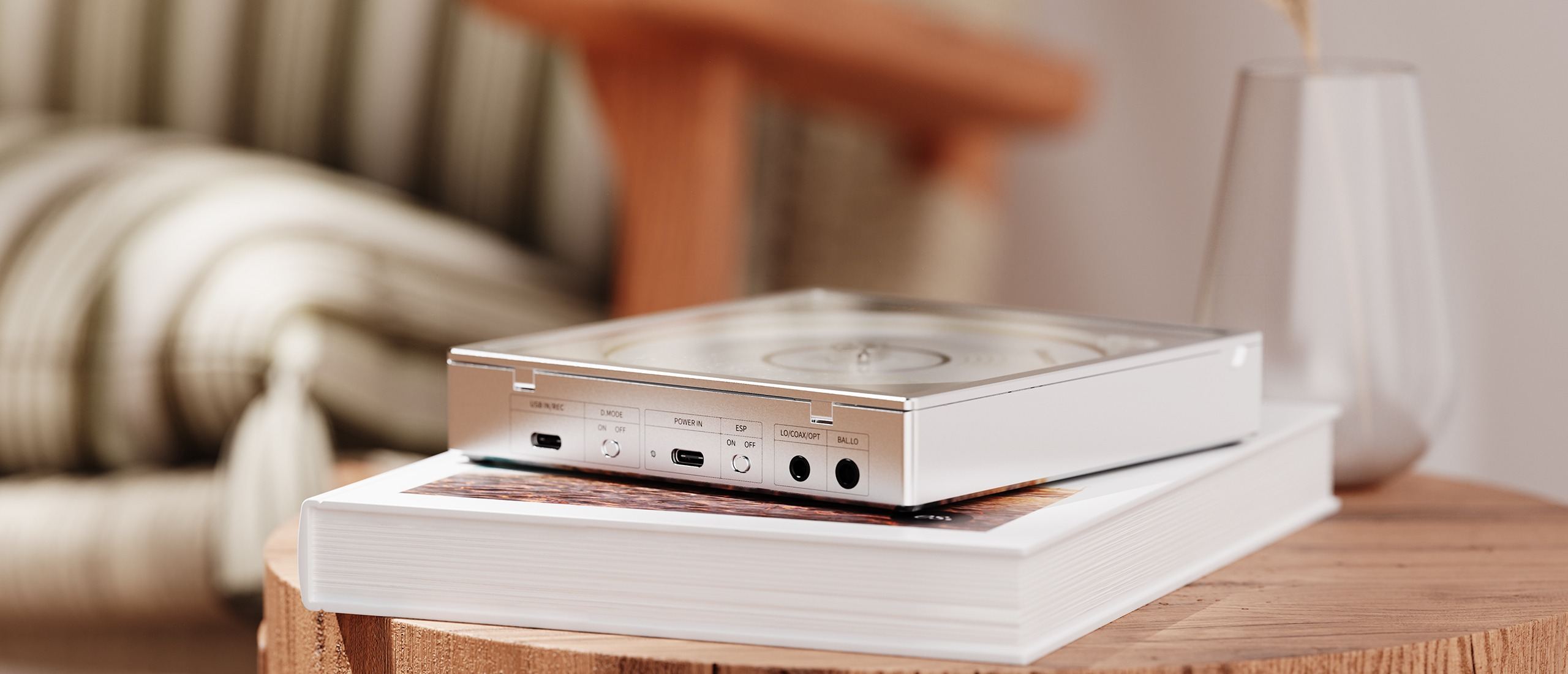
The front panel groups the two headphone outputs (3.5 mm unbalanced and 4.4 mm balanced) and the switches. The rear concentrates the ports and secondary switches: one USB-C for DAC input and CD ripping, one USB-C for power, a combined line/coaxial/optical output on a 3.5 mm jack (with the supplied coaxial adapter), a 4.4 mm balanced line output, the desktop mode switch, and the ESP switch.
The line outputs deliver 3.3 Vrms on the 3.5 mm and 6.5 Vrms on the 4.4 mm balanced, which is sufficient to drive most integrated amplifiers or active speakers.
What has changed compared to the DM13
The move from the DM13 to the DM15 R2R is not a mere cosmetic update. The converter changes technology (delta-sigma to R2R), headphone power increases by 66% unbalanced and 74% balanced, USB DAC mode makes its debut, volume control moves to a rotary potentiometer, the screen grows larger, the cover becomes transparent, a remote control is included, and the aptX Adaptive codec is added to Bluetooth. The aluminum chassis replaces a lighter enclosure, and the form factor has been slightly refined (2 mm thinner). The DM13 remains in the lineup for simpler use cases or tighter budgets.
What the press says
In a completely logic driven world, the FiiO makes precious little sense but spend some time with it and the little extra features that FiiO has included ensure that this isn’t quite as weird and fringe a device as you might think.[...] The general standard of build is pretty good for the asking price though.[...] Whether used as a CD player or a DAC, the FiiO is bigger and has a shorter battery life than devices that aren’t built around a CD mechanism
Technical Specifications
Design and Architecture
- Proprietary R2R resistor ladder DAC (192 resistors)
- Headphone amplification based on dual SGM8262 op-amp
- Main controller: GD32F305RET6
- Bluetooth receiver: Qualcomm QCC3095
- Custom CD mechanism and optical pickup
- Aluminum chassis
- 0.96-inch LCD display (80 × 160 px)
Key Features
- CD playback and USB DAC function
- Bluetooth transmitter mode
- Driverless mode (plug and play)
- CD ripping function
- Bass adjustment: 3 levels
- Equalizer: 8 built-in DSP profiles
- Programmable auto-off
- Firmware update via USB
Audio Compatibility
- USB DAC: up to 32-bit / 384 kHz
- DSD: DSD256 (native)
- Coaxial output: up to 24-bit / 192 kHz
- Optical output: up to 24-bit / 96 kHz
Bluetooth
- Version: Bluetooth 5.4
- Supported codecs: SBC, aptX, aptX HD, aptX Low Latency, aptX Adaptive
Headphone Amplification
- Unbalanced output (3.5 mm)
- Power: up to 315 mW / 32 Ω
- Signal-to-noise ratio: ≥ 111 dB
- THD+N: < 0.025%
- Crosstalk: ≥ 72 dB
- Frequency response: 20 Hz – 80 kHz (± 2.9 dB)
- Output impedance: < 1 Ω
- Balanced output (4.4 mm)
- Power: up to 1150 mW / 32 Ω
- Signal-to-noise ratio: ≥ 112 dB
- THD+N: < 0.025%
- Crosstalk: ≥ 100 dB
- Compatible headphone impedance: 8 to 350 Ω
Line Outputs
- Output level
- 3.5 mm: up to 3.3 Vrms
- 4.4 mm balanced: up to 6.5 Vrms
- Frequency response: 20 Hz – 80 kHz
- THD+N: < 0.025%
- Dynamic range: ≥ 106 dB
Power and Battery Life
- Built-in battery: 4700 mAh
- Battery life
- CD playback: up to 7 h
- USB DAC mode: up to 11 h
- Fast charging: PD 2.0 / PD 3.0
- Charging time: approximately 2 h
Connectivity
- 1 × USB-C (USB DAC)
- 1 × USB-C (power)
- 1 × 3.5 mm headphone output
- 1 × 4.4 mm balanced headphone output
- 1 × 3.5 mm line output (combined line / coaxial / optical)
- 1 × 4.4 mm balanced line output
Controls and Ergonomics
- Physical buttons: play / pause, next / previous track, stop, equalizer
- Volume wheel
- Dedicated switches: input / output, bass, ESP, playback mode
Included Accessories
- USB-A to USB-C cable
- 3.5 mm to coaxial jack adapter
- Infrared remote control
- Quick start guide
General Information
- Dimensions: 144 × 137 × 25.5 mm
- Weight: approximately 471 g
Frequently Asked Questions
Can the DM15 R2R play burned CDs and discs containing compressed files?
Yes. It supports CD-Rs and CD-RWs, with playback of WAV, FLAC, MP3, AAC, and WMA files burned to disc. Commercial audio CDs are played in standard Red Book format, and FiiO indicates HDCD compatibility as well as the CD layer of SACDs.
Can the DM15 R2R be used as a USB DAC with a smartphone?
Yes, provided the smartphone supports USB audio output (USB OTG). The player operates driverless. Simply connect it via USB-C and the audio signal will pass through the R2R converter.
Does desktop mode degrade sound quality?
No. Desktop mode powers the player directly via USB and even delivers the maximum headphone amplification power (1,150 mW balanced versus 815 mW on battery). It is recommended for extended use to preserve the battery.
What high-resolution formats are supported in USB DAC mode?
USB DAC mode accepts PCM up to 32-bit / 384 kHz and native DSD256. These resolutions apply only to the USB input; CD playback remains limited to the Red Book standard of 16-bit / 44.1 kHz (or the content of files burned to CD-R).
- Eco-contribution included in the sale price.