Taga Harmony LPS-100

Overview
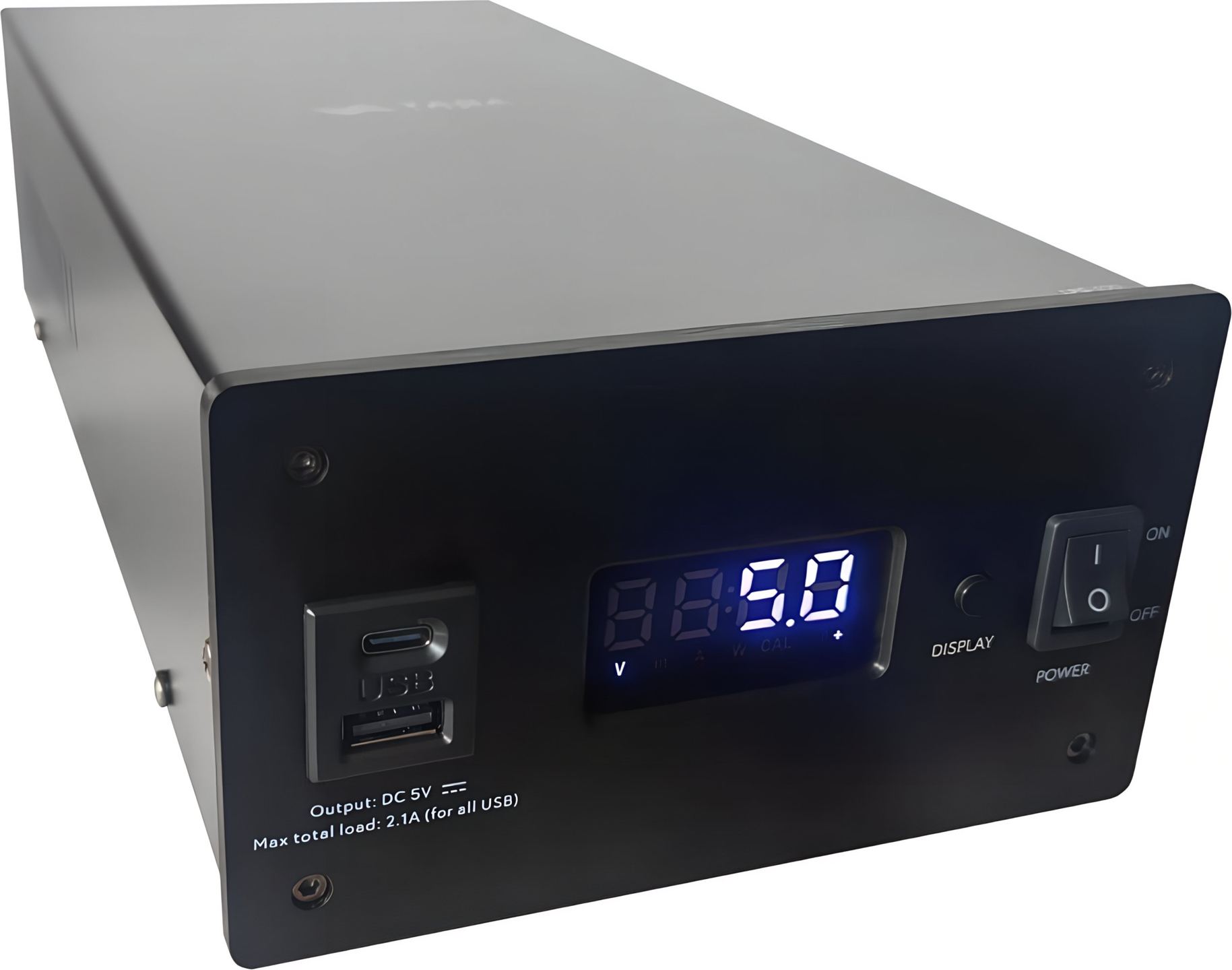
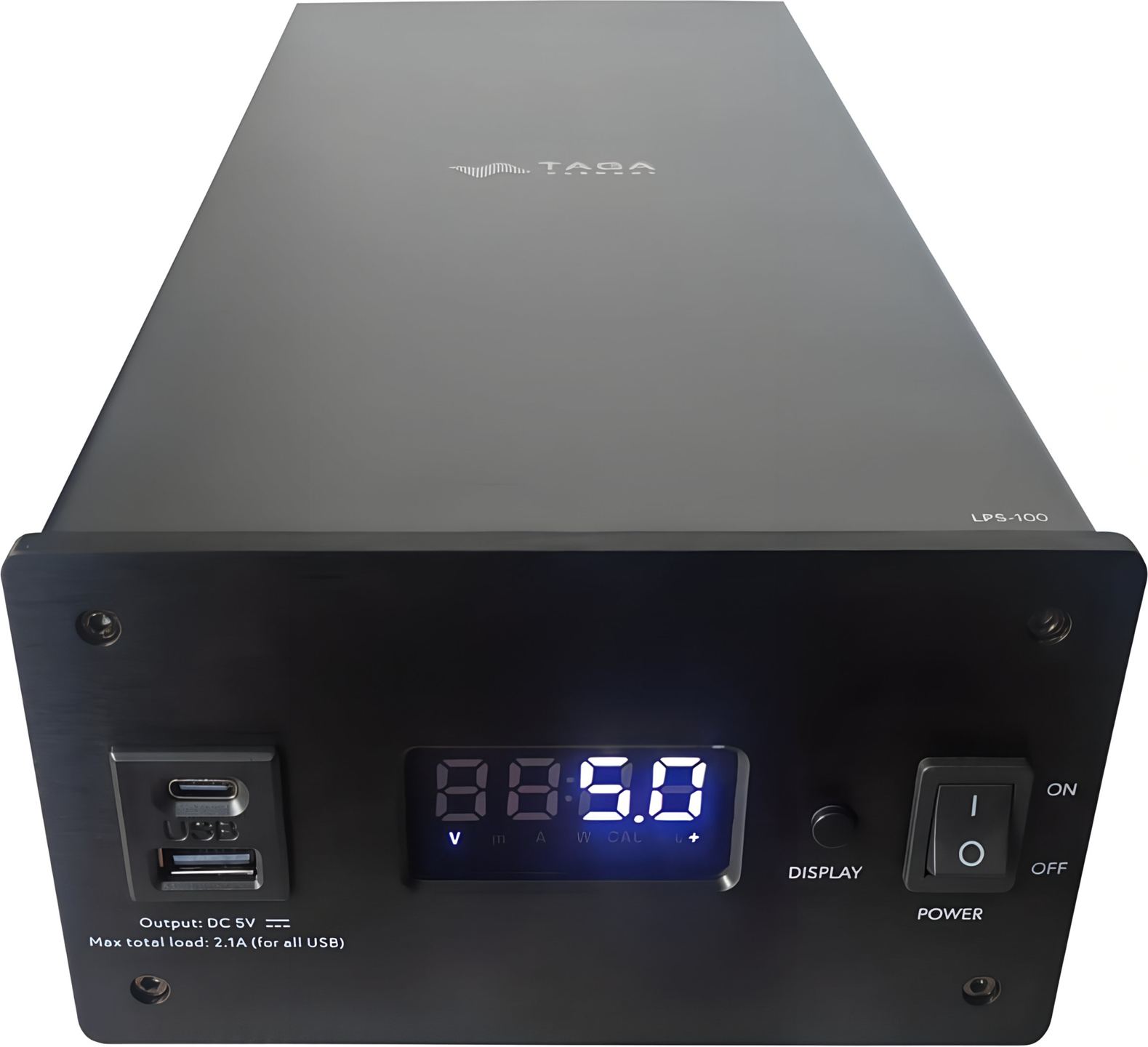
Many DACs, network players, music servers, or phono preamps come with a small switching power supply. These adapters switch at several tens of kilohertz and inject noise into both the powered device and the room’s electrical network. The LPS-100 replaces this component with a complete linear power supply: a 100 W isolating toroidal transformer, dedicated filtering, adjustable DC voltage, and an output monitored by a real-time display.
Why switch from switching to linear
A switching power supply produces direct current by chopping the voltage at high frequency. It’s compact and inexpensive, but it generates harmonics that appear both in the DC output and feed back into the mains. On a sensitive digital source (a DAC, a streamer, a clock), this noise degrades resolution and background silence.
The LPS-100 works differently. The mains supply passes through a 100 W isolating toroidal transformer, then through a step-down regulator stage that delivers the chosen DC voltage. The toroid provides up to 3 A at 24 V (72 W) on the DC output, plus a combined 2.1 A across the two USB ports. This is sufficient for the vast majority of domestic audio sources, which rarely draw more than 1 to 2 A.
Six voltages, switchable polarity, nine tips
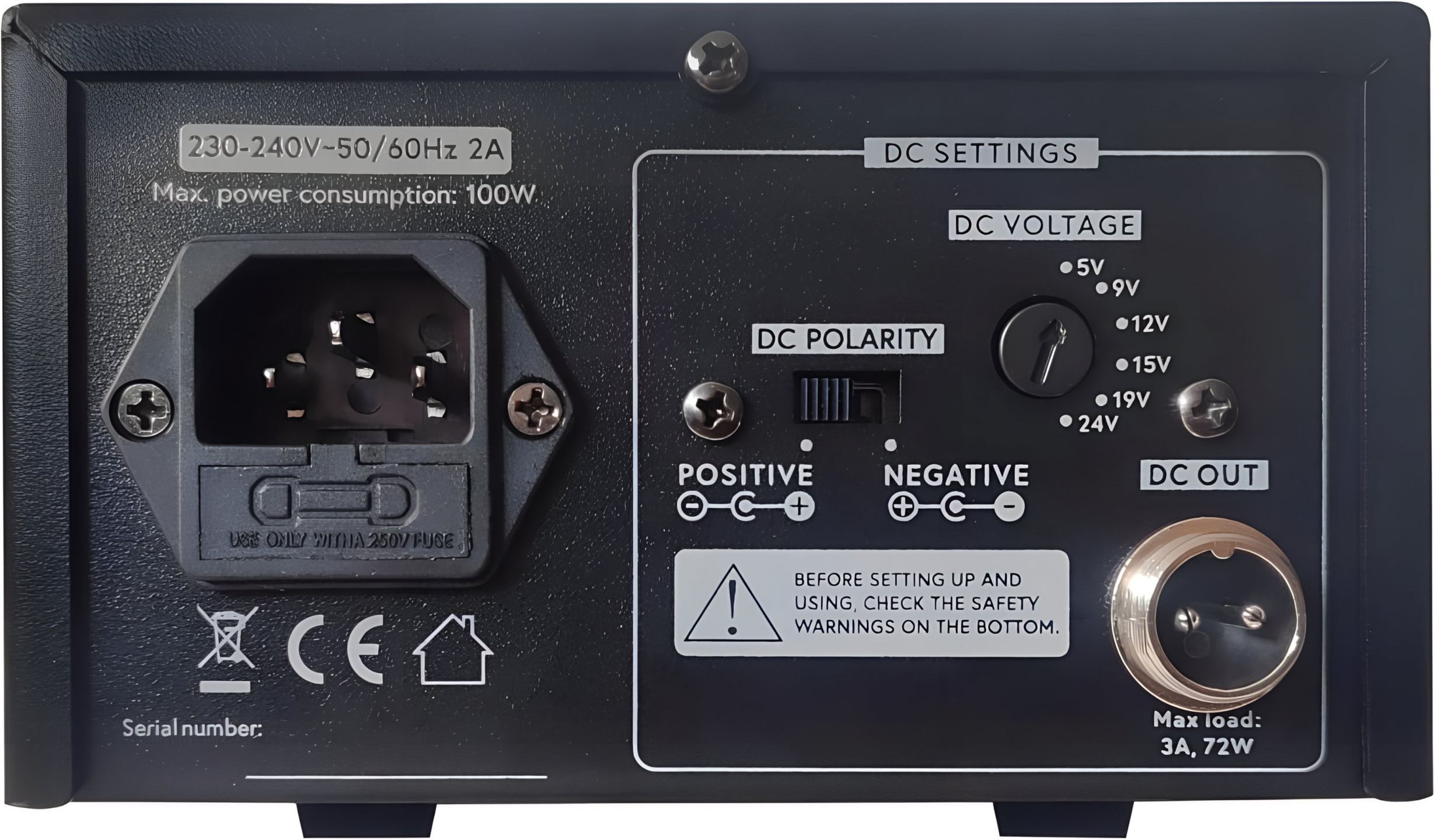
The DC output offers six selectable voltages: 5, 9, 12, 15, 19, and 24 V. Polarity can be reversed to suit the target device’s requirements (center positive or center negative). On the mechanical connector side, nine tips of different sizes are included, from 2.5 × 0.7 mm for certain small modules to 6.3 × 3.0 mm for more power-hungry devices. The two-pin GX16 cable measures 1.5 m.
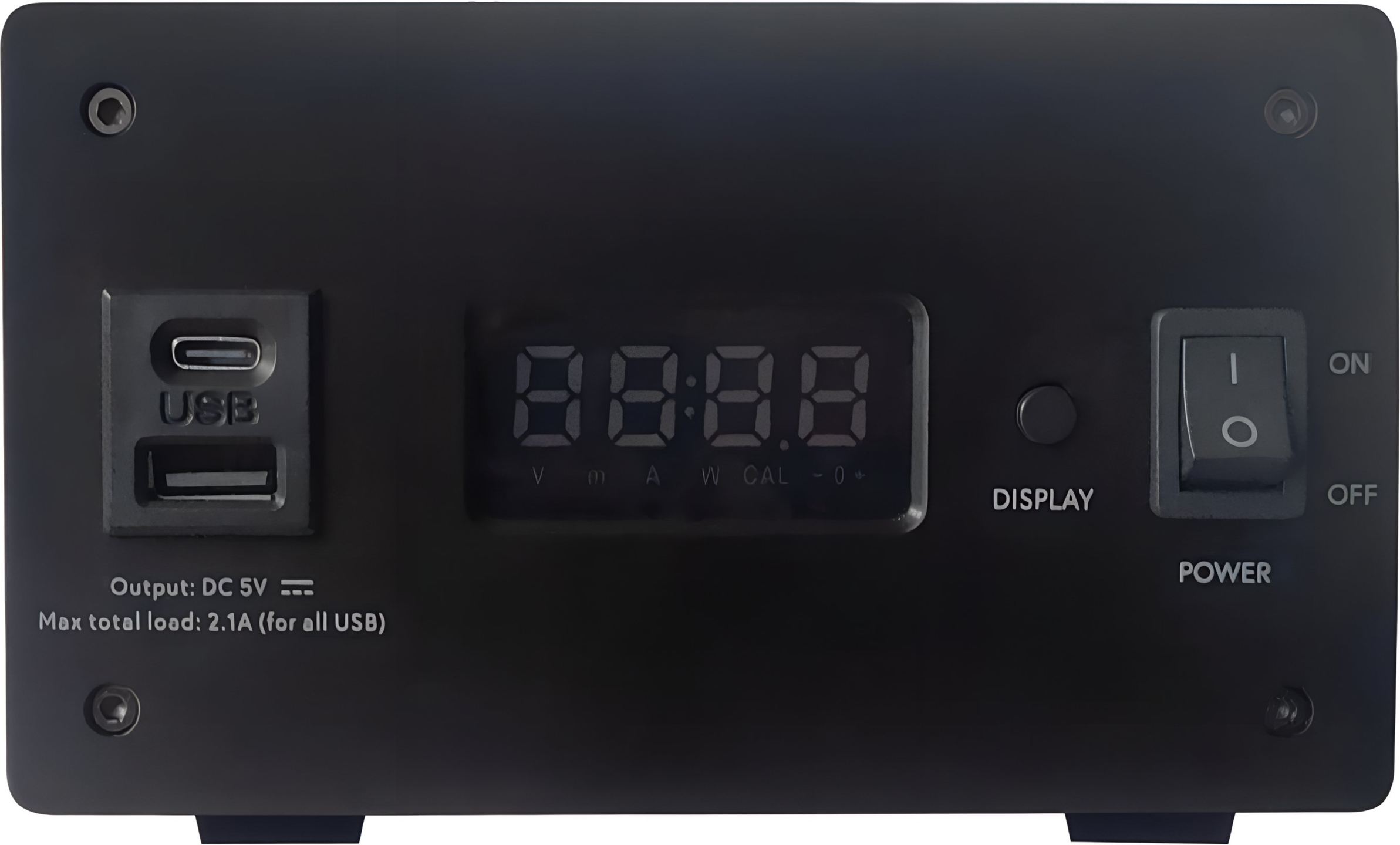
This flexibility covers most externally powered audio devices: compact DACs, low-voltage tube-based phono preamps, network players, Roon servers, audio Raspberry Pi units, portable headphone amplifiers, and even certain turntables driven by a DC motor. The two USB ports (one USB-C and one USB-A) output at 5 V and are powered by the same toroidal transformer. They can be used to charge a device or to power a USB audio stick, a DAC dongle, or a small player, with a cleaner source than a phone charger.
Two-stage filtering and layered protections
Filtering is deployed across two successive stages. The first relies on the isolating toroidal transformer itself, which blocks a large portion of conducted interference from the 230 V mains. The second stage operates downstream, after regulation, with dedicated filtering cells for the DC output on one side and the USB ports on the other. This separation prevents a sudden current draw from a USB device from polluting the DC line, and vice versa.
An external T2A fuse and an internal T5A fuse handle overloads and surges on the mains side. The toroid → step-down regulator → thermal and short-circuit protection circuit chain takes over on the DC output and USB ports. An additional protection isolates the LPS-100 from a failing external device: a short circuit at the output does not feed back into the power supply.
Digital display, dimensions, and installation
The front panel display shows the voltage, current, and power delivered on the DC output in real time, with a stated accuracy of ±3%. It also indicates the selected polarity. Useful for verifying that a new configuration matches what the device requires before connecting anything. The display can be turned off if its brightness is distracting during extended listening sessions.
The dimensions are worth planning for: 29.5 cm deep, 14 cm wide, 8.8 cm tall, and 3.6 kg on the scale. The weight comes from the toroidal transformer, which takes up most of the internal volume. On a standard hi-fi rack, the LPS-100 requires a dedicated shelf rather than a spare corner. The enclosure combines aluminum, metal, and plastic, in a black finish. The included Schuko-IEC C13 power cord measures 1.5 m and can be replaced with an audiophile-grade IEC cord. Idle consumption is around 3 W, which may justify switching the unit off when the system is not in use.
Documentation
Technical Specifications
Design
- Linear power supply
- 100 W isolating toroidal power transformer
Outputs and Connectivity
- DC output (linear power supply)
- 6 selectable DC output voltages: 5 V, 9 V, 12 V, 15 V, 19 V, 24 V
- Selectable DC output polarity
- 1 USB-C port and 1 USB-A port (linear power supply, 5 V)
Power and Consumption
- Total maximum power load
- DC output: 3 A, 72 W
- USB ports: 2.1 A (total)
- AC power consumption: 230 V~240 V, 50 / 60 Hz, 100 W max
- No-load consumption (no external device connected): ≈ 3 W
Filtering
- 230-240 V: 100 W isolating toroidal power transformer
- DC voltage: separate filtering for DC output and USB ports
Protection System
- 230-240 V overvoltage and overload protection
- External fuse T2A / 250 V
- Internal fuse T5A / 250 V
- DC output and USB port overvoltage and overload protection
- Isolation transformer → step-down regulator → short-circuit and thermal overload protection circuit
- DC output protection against external device malfunctions
Features and Accessories
- DC output with USB charging
- Digital voltage / current / power indicator (±3% accuracy)
- DC output cable: GX16 2-pin → DC tip, 1.5 m
- Schuko-IEC C13 power cord, 1.5 m
- DC output cable connectors
- DC tip 5.5 x 2.1 x 11 mm (fitted on the DC output cable)
- DC tip 3.5 x 1.35 x 9.5 mm
- DC tip 2.5 x 0.7 x 9 mm
- DC tip 4.0 x 1.7 x 10 mm
- DC tip 4.0 x 1.35 x 10 mm
- DC tip 4.8 x 1.7 x 10 mm
- DC tip 5.0 x 3.0 x 10 mm
- DC tip 5.5 x 2.5 x 11 mm
- DC tip 6.3 x 3.0 x 11 mm
Dimensions and Weight
- Dimensions (H x W x D): 8.80 x 14 x 29.5 cm
- Height: feet included
- Depth: excluding 1 cm for the DC output socket
- Weight: 3.6 kg / unit
Frequently Asked Questions
Can the LPS-100 power multiple devices simultaneously?
The DC output is single: only one DC device can be connected at a time. The two USB ports (USB-C and USB-A) operate in parallel with the DC output, provided the combined consumption of the USB ports does not exceed 2.1 A. To power two separate DACs via DC, two LPS-100 units are required.
How do I check the voltage and polarity required by my device?
They are printed on the original adapter or on the device’s label, near the DC input. A small pictogram indicates polarity: a center dot surrounded by an outer circle means center positive, the reverse means center negative. Setting the LPS-100 to the wrong polarity or too high a voltage can damage the device; it is best to verify the setting on the front panel display before connecting.
Should the LPS-100 be left powered on at all times?
A linear power supply operates as soon as it is switched on, with no stabilization time comparable to that of a tube amplifier. A few minutes of warm-up are sufficient to reach a stable operating state. The idle consumption of approximately 3 W makes it possible to leave it on without significant added cost, but switching it off after listening does not affect its performance.
- Eco-contribution included in the sale price.