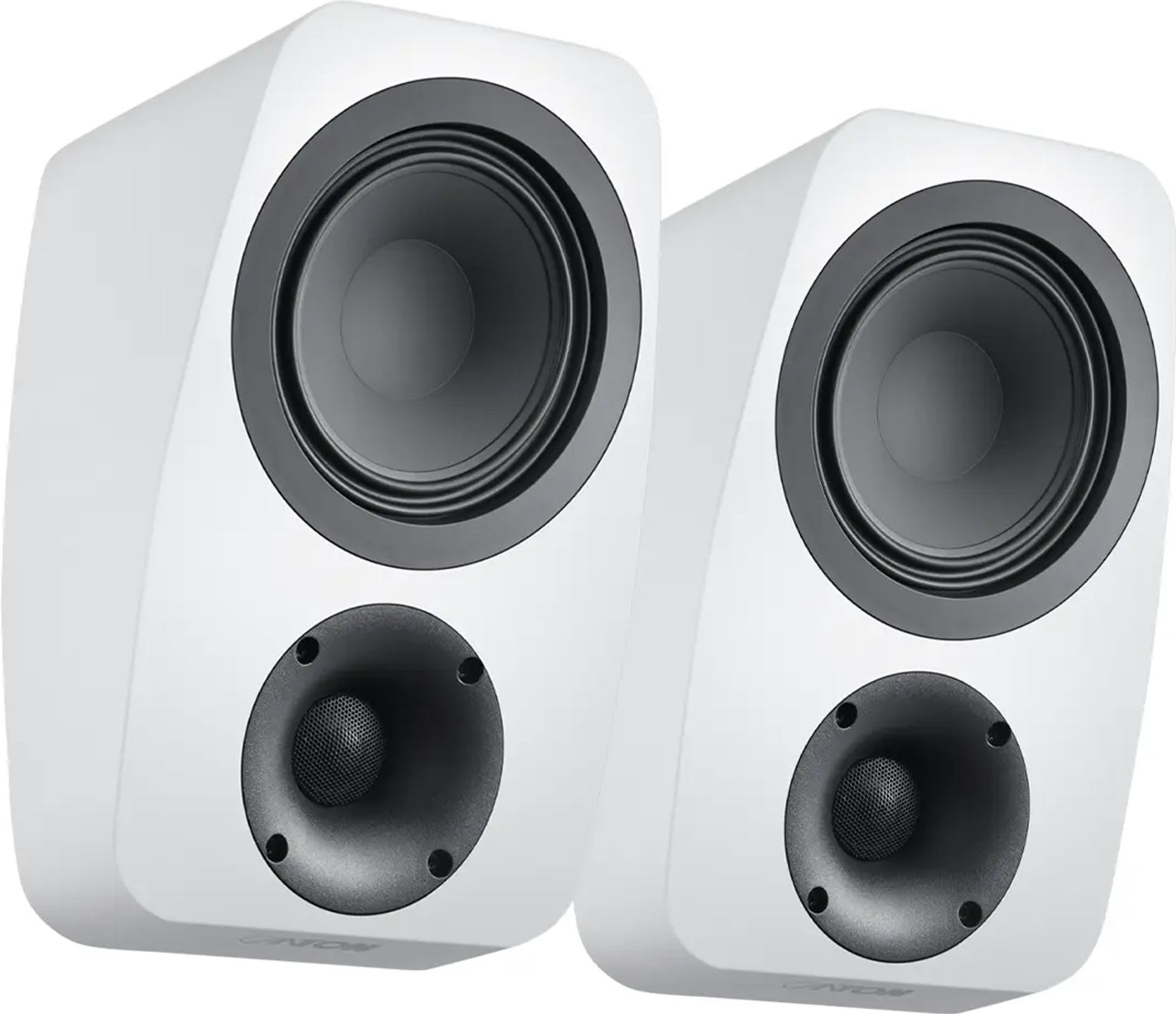
Canton Vento AR 1 white



Specifications and features

Overview
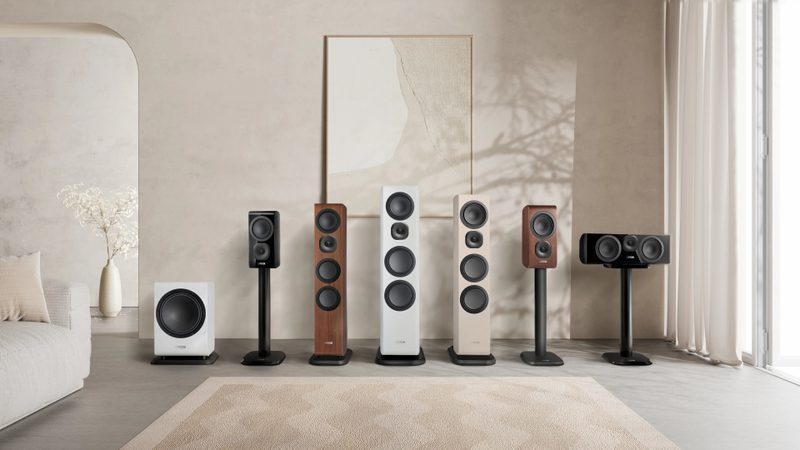
Seventh generation of the Vento line, launched on May 4, 2026, and nine models that share the same drivers, the same sound signature, and the same aesthetic vocabulary. The Vento AR 1 is the piece that adds the vertical dimension to this system: a compact sealed 2-way speaker, Dolby Atmos certified, compact (19 x 27 x 16 cm, 4 kg) and versatile enough to sit on top of a floorstanding speaker, be mounted on the wall, or on the ceiling.
A sealed enclosure in the service of precision
The choice of a sealed enclosure is no coincidence for a height speaker. A sealed cabinet does not rely on a port to reinforce the bass: it delivers a more gradual roll-off and a faster transient response than its bass-reflex equivalent. For an Atmos channel, where effects are often brief and highly localized (rain, a plane flying overhead, glass breaking above your head), this speed of attack and return to silence determines the credibility of the spatial placement.
The cabinet itself is built from curved multilayer MDF, using the same method as the floorstanding speakers in the series. The curved walls reduce internal standing waves and limit diffraction on the front baffle, two classic sources of coloration. Canton has retained the signature curved shape of the Vento line, allowing the Vento AR 1 to blend visually with the other models when placed on a Vento 91 or a Vento 81.
ATB drivers and BC ceramic tweeter
Canton has equipped the entire new Vento series with drivers derived from its Reference line. The Vento AR 1’s woofer-midrange driver uses an ATB (Aluminium Titanium Black) cone, a rigid and lightweight alloy developed in-house by Canton. The rigidity of the cone pushes breakup modes toward higher frequencies, reducing distortion within the driver’s useful frequency range.
The tweeter is a 25 mm black ceramic dome, BC (Black Ceramic) technology, paired with the new square waveguide Canton designed for this generation. This waveguide controls the tweeter’s dispersion more evenly than the previous circular format: in the lower part of its frequency range, the dome gains output level, and in the upper treble, the directivity remains intentionally wide instead of narrowing. On an Atmos speaker laid flat and aimed at the ceiling, this wider dispersion is an advantage: it increases the useful reflection surface and strengthens the consistency of the height effect.
The admissible music power is 100 W, leaving comfortable headroom for the dynamic peaks of Dolby Atmos or DTS:X soundtracks.
Three installation modes
The Vento AR 1 can be used in three ways. In “upfiring” mode, it sits on top of a front or surround speaker, with the tweeter aimed at the ceiling. The audio signal is reflected by the ceiling before reaching the listener, creating the illusion of a sound source above. This mode works optimally with a ceiling height of approximately 2.20 m to 3.70 m, and a smooth, reflective ceiling (plaster, painted concrete). A paneled ceiling, acoustic tiles, or exposed beams significantly degrade the effect.
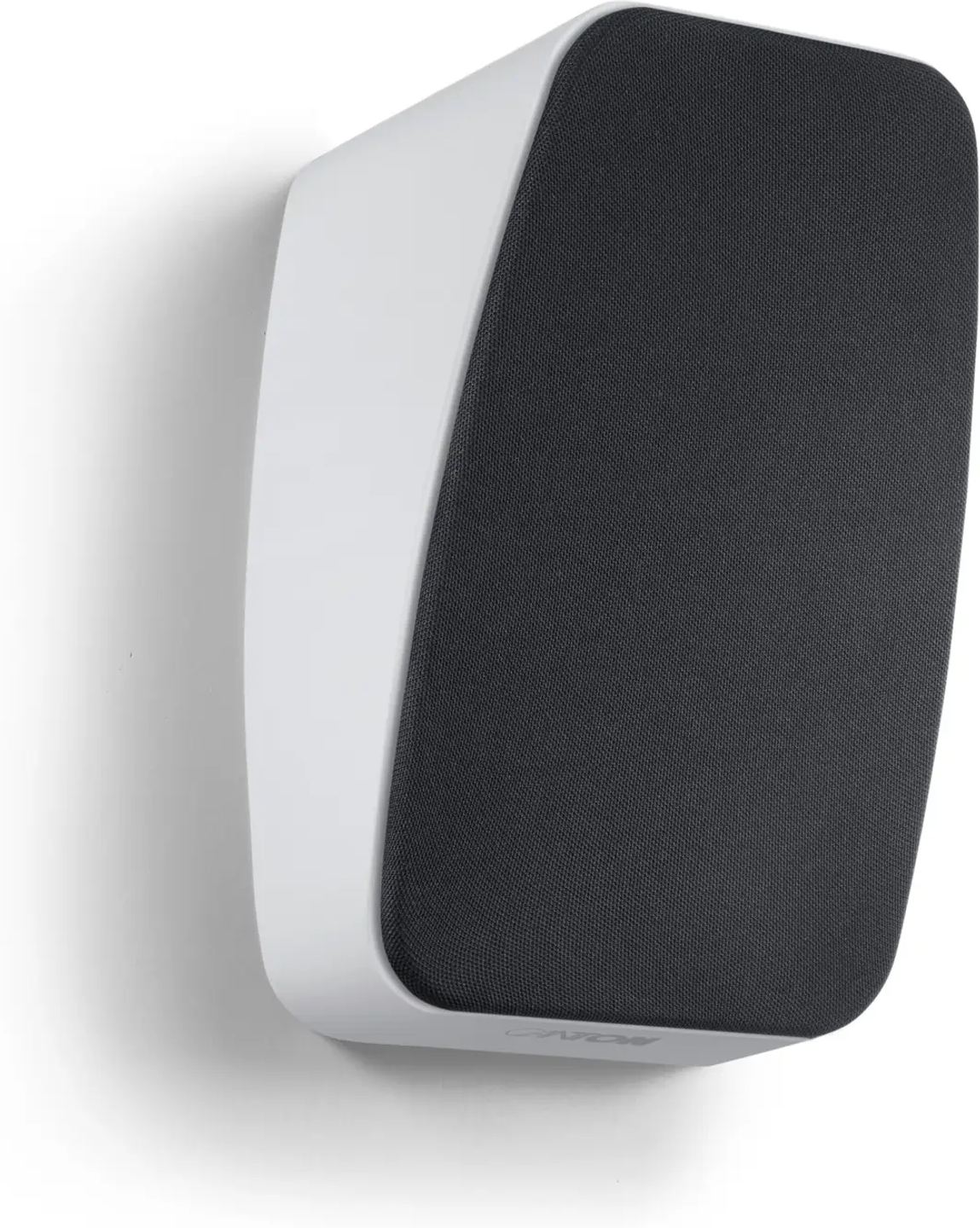
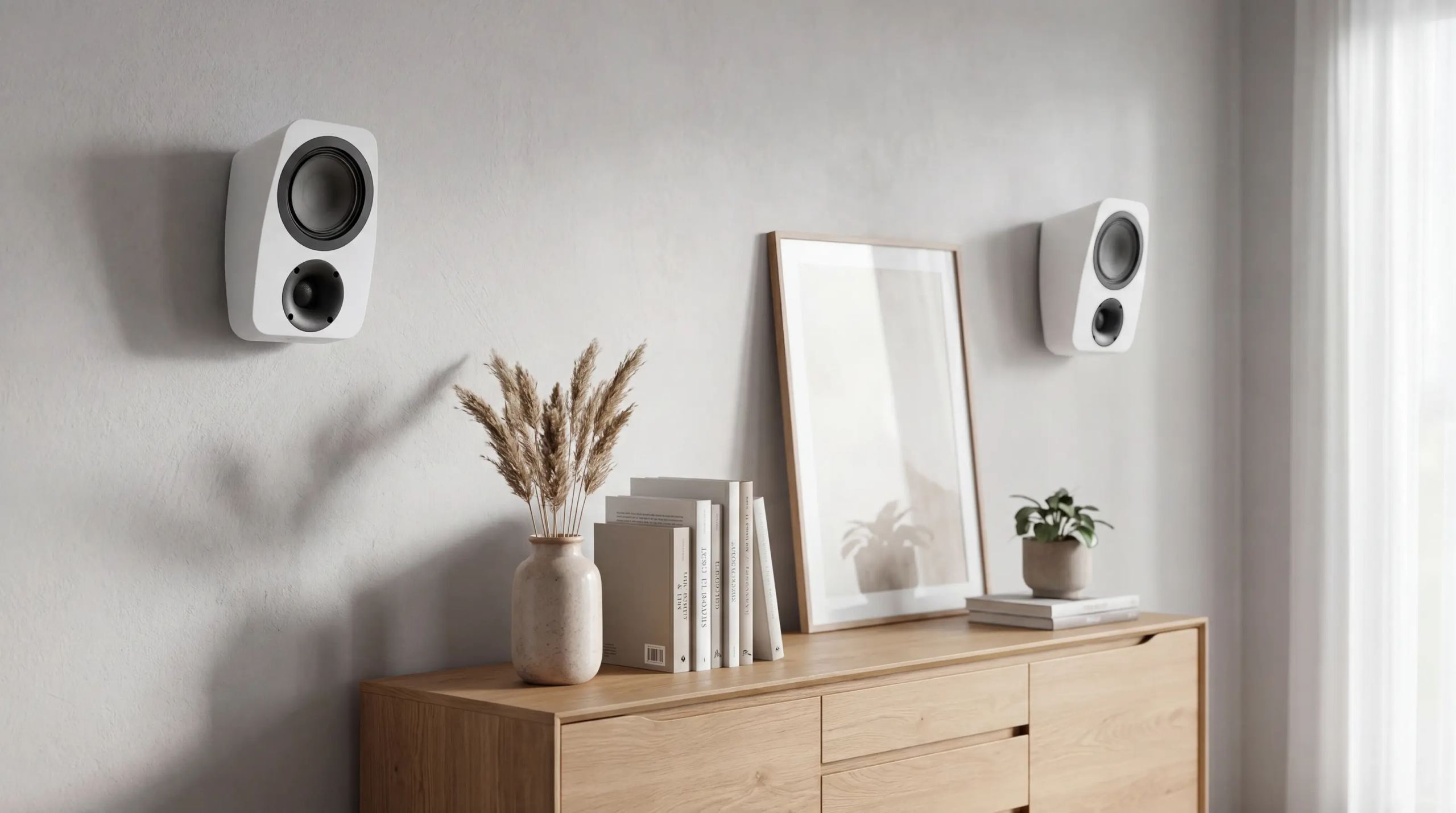
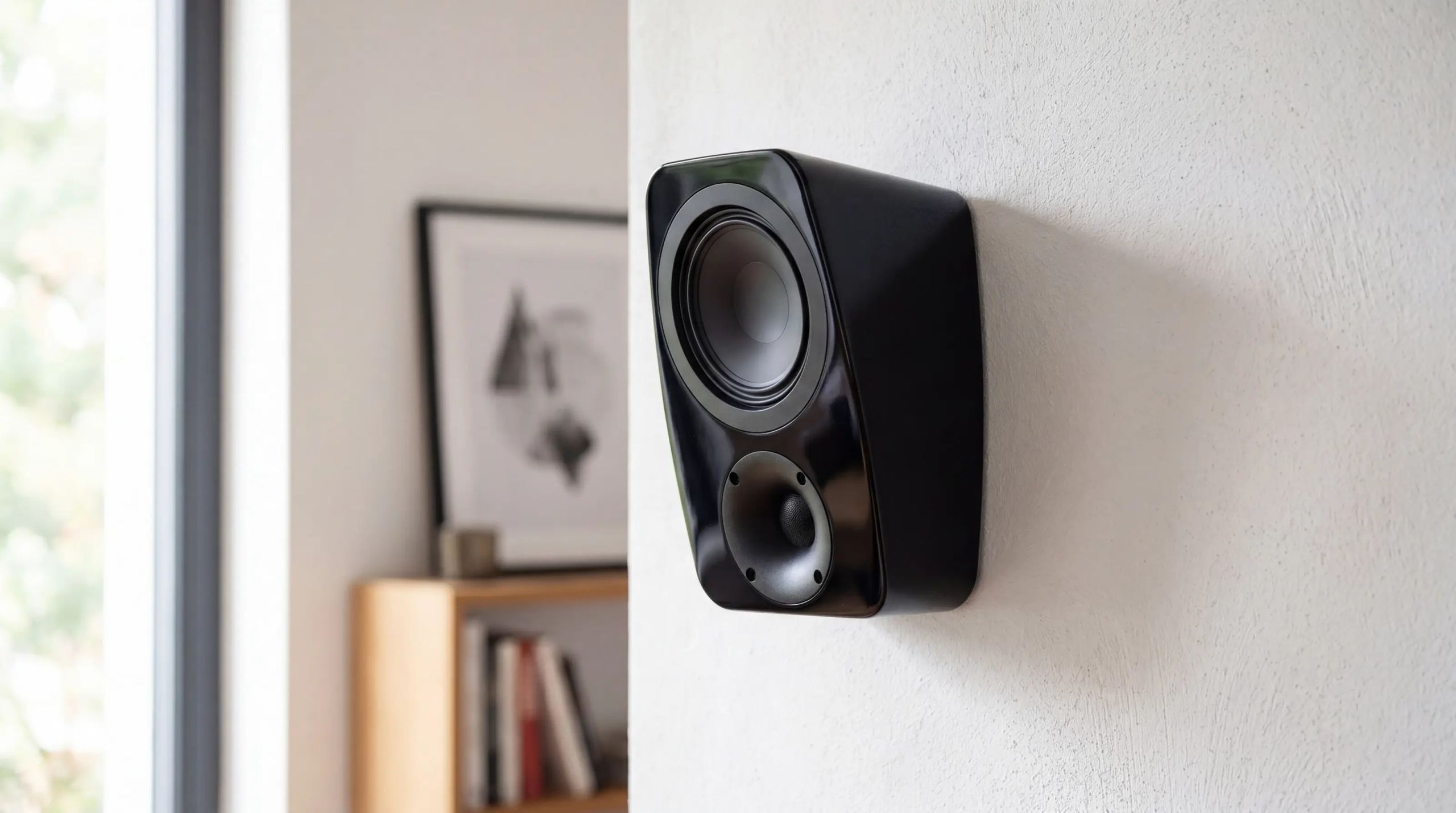
When wall-mounted, the speaker can serve as a front or rear height channel in a setup where the Atmos channels do not go through the ceiling. Canton supplies feet with the speaker for upfiring placement, and the cabinet includes a wall-mounting system.
Third option: ceiling mounting, which is the most acoustically direct solution for height channels. In this configuration, the Vento AR 1 radiates in a straight line toward the listener, with no intermediate reflection. Spatial rendering gains in precision and output level, but the installation involves more work.
Sound consistency within a system
One of the recurring problems with home Dolby Atmos installations is the use of mismatched speakers between the main channels and the height channels. When the timbre of the Atmos speakers differs too much from that of the front speakers, vertical movement effects sound artificial: you hear two distinct sources rather than a sound object moving through space. Canton designed the Vento AR 1 with the same drivers and the same crossover network as the rest of the series, reducing this timbre gap. Paired with Vento 81, Vento 91, or Vento 101 floorstanding speakers, the Vento 51 center, and the Vento Sub 1 subwoofer, it forms a homogeneous system from the bass to the highest treble, channel by channel.
Documentation
Technical specifications
General overview
- Design: compact Dolby Atmos speaker designed for immersive home theater setups
- Seamless integration with the other speakers in the Vento range
Acoustic configuration
- Configuration: 2-way sealed
- Dolby Atmos certification: yes
- Acoustic enclosure: sealed
- Sealed cabinet ensuring precise and controlled reproduction
- Transient response: fast and controlled
- Music power: 100 W
Drivers
- Technology: ATB (Aluminium Titan Black)
- Excellent clarity of effects and sound details
Sound dispersion
- Optimized for Dolby Atmos height effects
- Creation of a realistic 3D soundstage
Installation
- Use: upfiring Atmos speaker, wall-mounted or ceiling-mounted
- Flexible installation: on main speaker, wall mounting, or ceiling
- Feet included: yes
Construction and design
- Cabinet construction: high-rigidity multilayer MDF
- Effectively limits unwanted resonances
- Cabinet design: curved Vento shape
- Signature curved lines of the Vento series
- Protective grille: acoustically neutral fabric
- Grille mounting: magnetic
Connectivity
- Terminal: gold-plated connectors
- High-end connectivity
Dimensions and weight
- Dimensions (W x H x D): 19 x 27 x 16 cm
- Weight: 4 kg
Frequently Asked Questions
Which three-dimensional audio formats are supported?
The Vento AR 1 is Dolby Atmos certified, but it works with any format using height channels: DTS:X, Auro-3D, IMAX Enhanced, or Eclipsa Audio (formerly MPEG-H). The Dolby certification concerns the speaker’s acoustic characteristics, not an integrated decoder.
Do you need a specific AV amplifier to use it?
Yes. The AV amplifier or processor must handle Dolby Atmos height channels (or DTS:X). Most 7.1 AV amplifiers and newer models do. The Vento AR 1 is a passive speaker: it connects to a dedicated amplified output, like any other channel.
Does upfiring mode work with all types of ceilings?
No. A flat, reflective ceiling (plaster, smooth concrete, matte or satin paint) delivers the best results. Sloped ceilings, absorbent surfaces (acoustic tiles, wall-to-wall carpeting) or configurations with exposed beams reduce or cancel the reflection effect. In these cases, high wall mounting or ceiling mounting is preferable.
- Eco-contribution included in the sale price.
- Manufacturer reference: 04595
- GTIN / EAN: 4010243045955