

Samsung HW-LS50H


Specifications and features


Samsung HW-LS50H Music Studio 5: the speaker that wants to go unnoticed
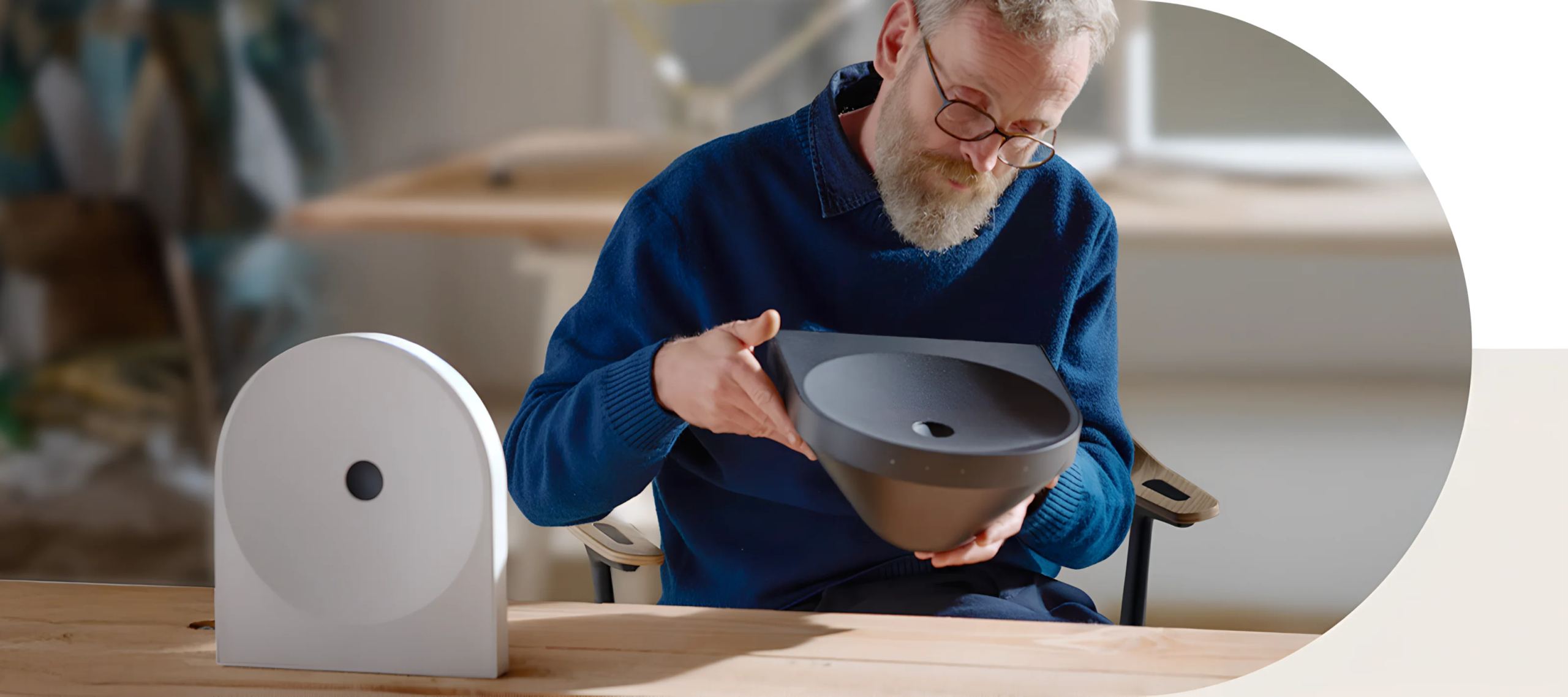
After the Music Frame in 2024, Samsung continues its exploration of the speaker as a decorative object. The Music Studio 5, unveiled at CES 2026 in Las Vegas, was born from a collaboration with French designer Erwan Bouroullec, who was already behind The Serif TV (winner of an iF Design Gold Award in 2016). The result is a compact Wi-Fi speaker in a 2.0-channel configuration, compatible with wireless Dolby Atmos, integrated into the Samsung ecosystem via Q-Symphony and controllable from the SmartThings app.
A silhouette signed by Erwan Bouroullec
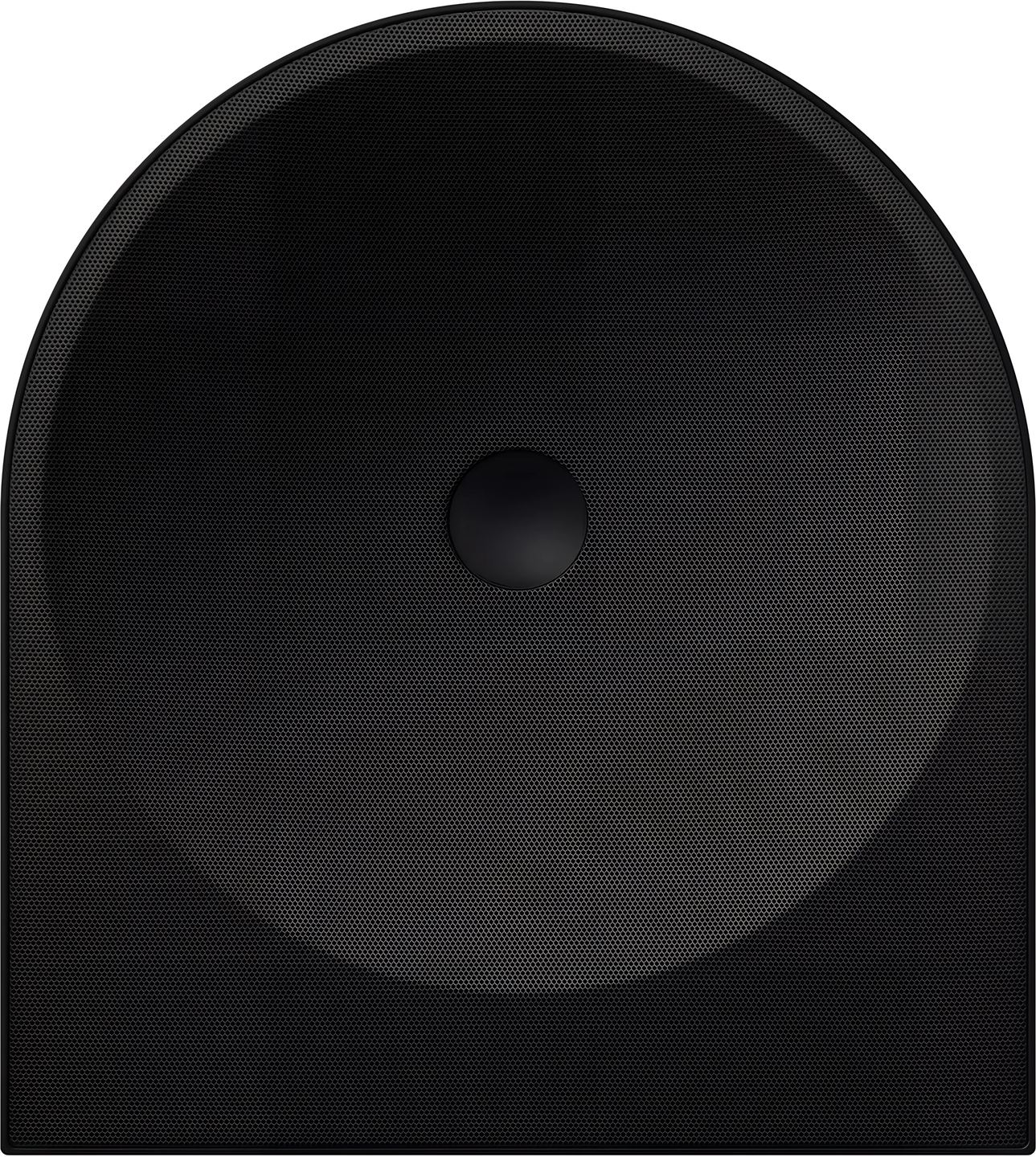
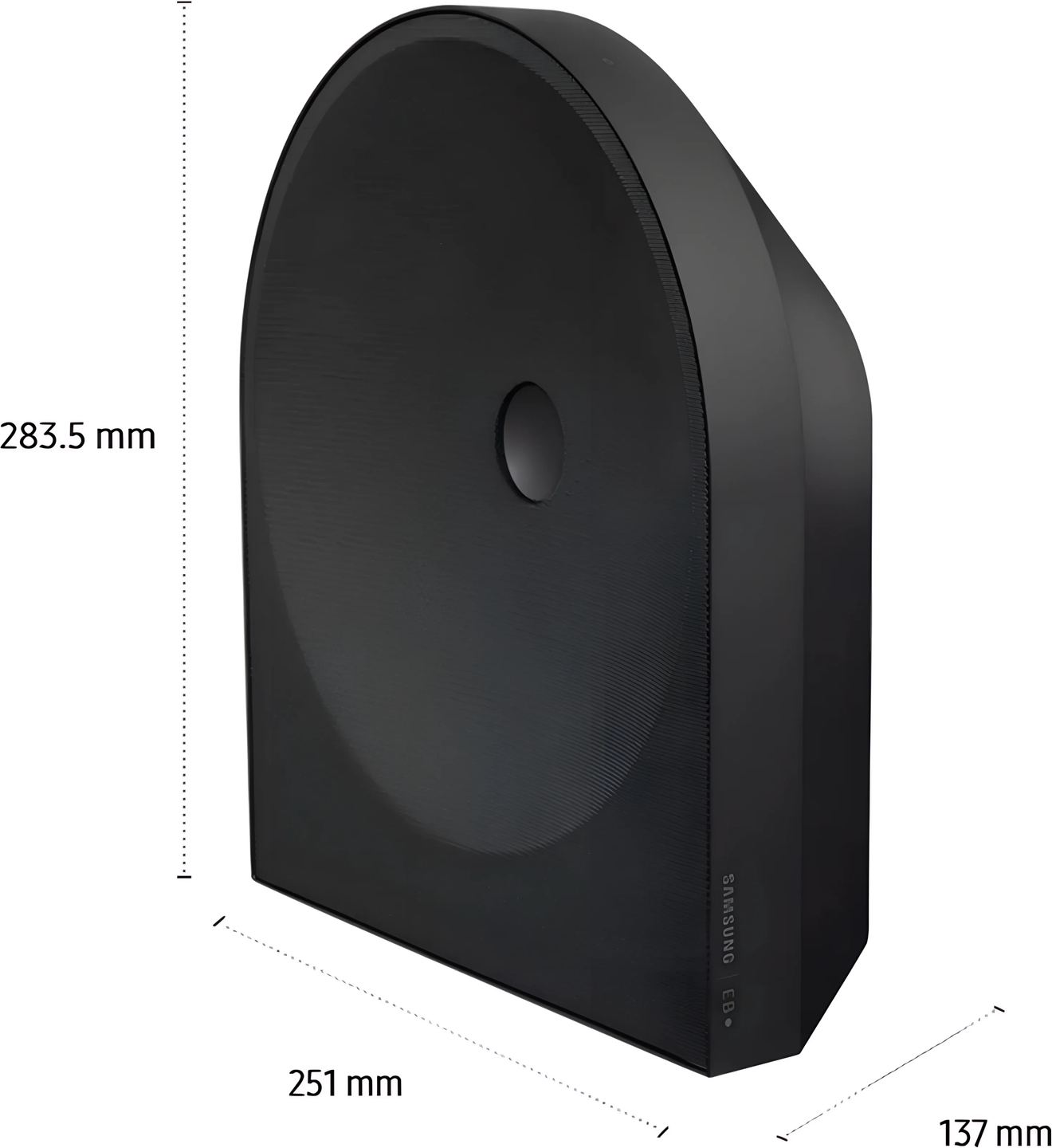
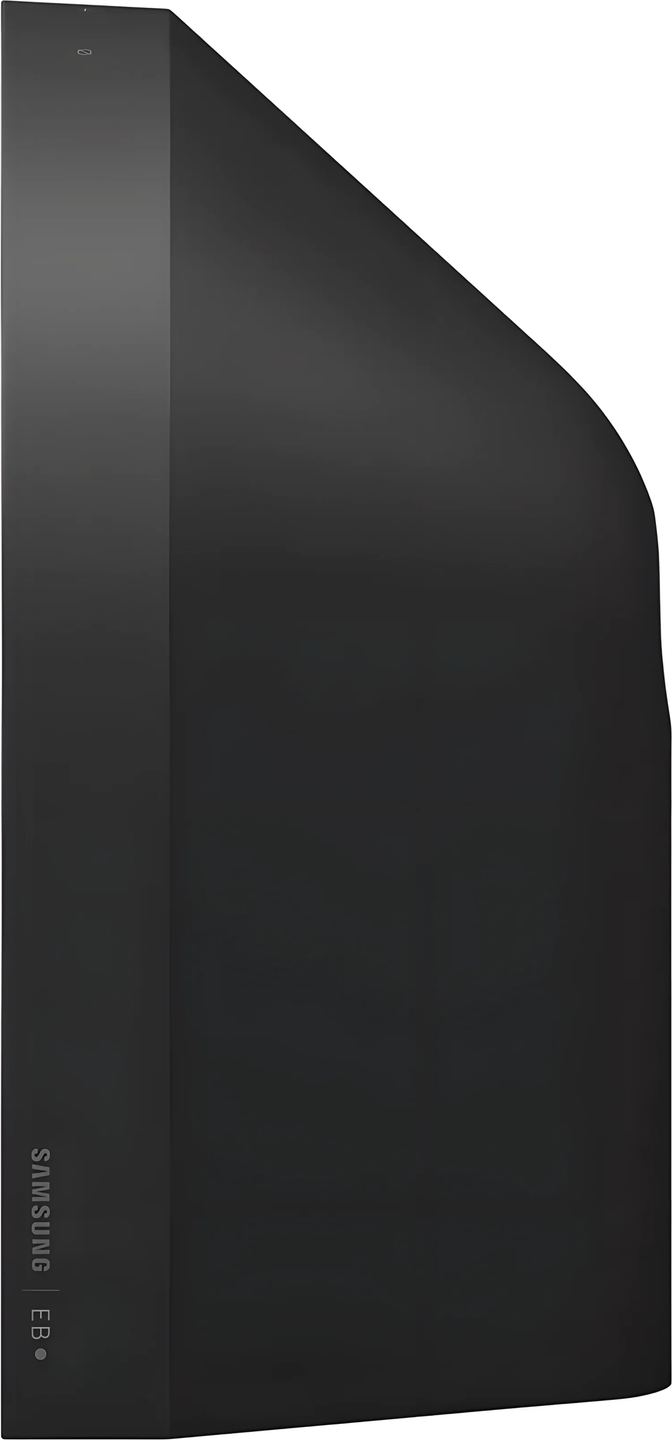
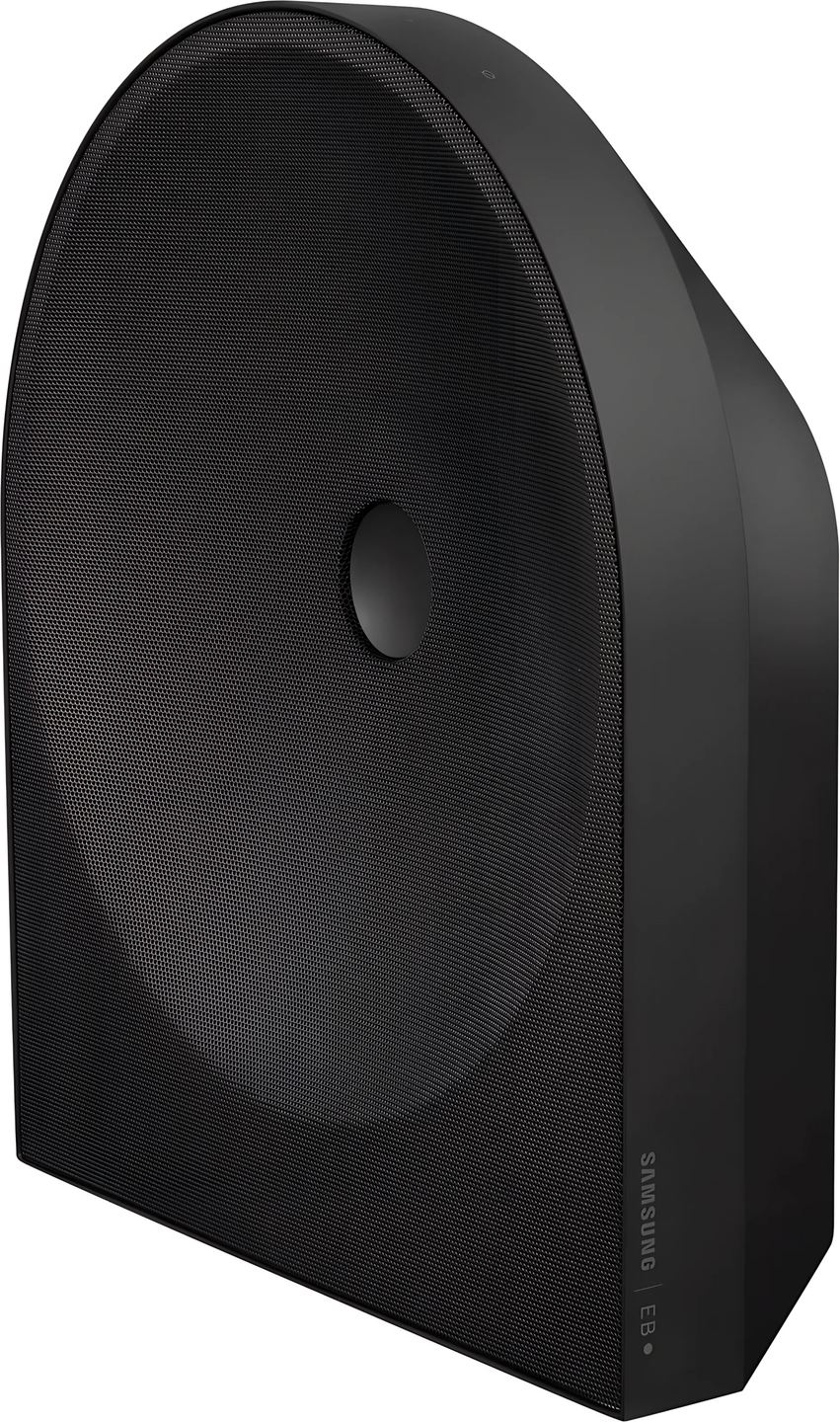
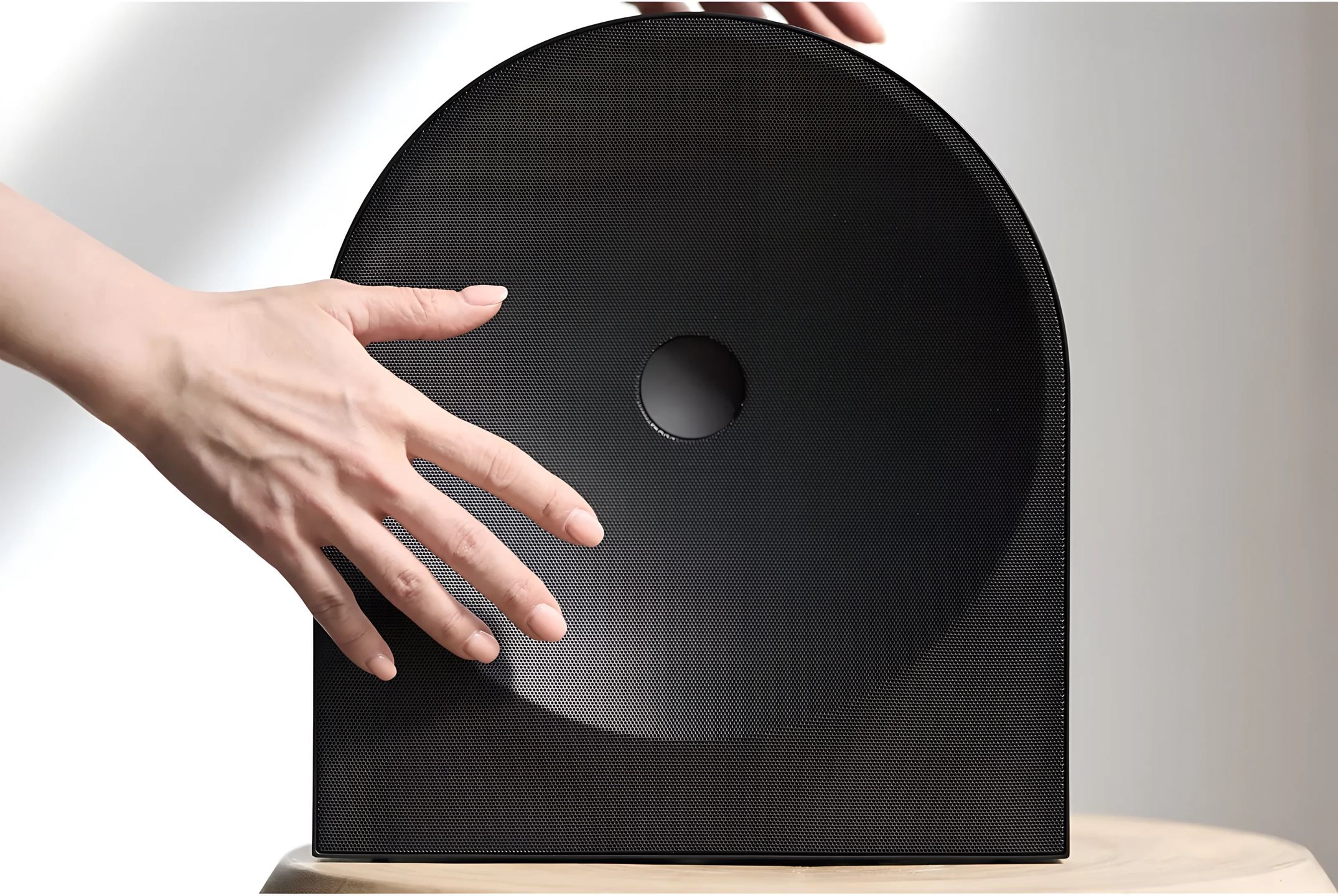
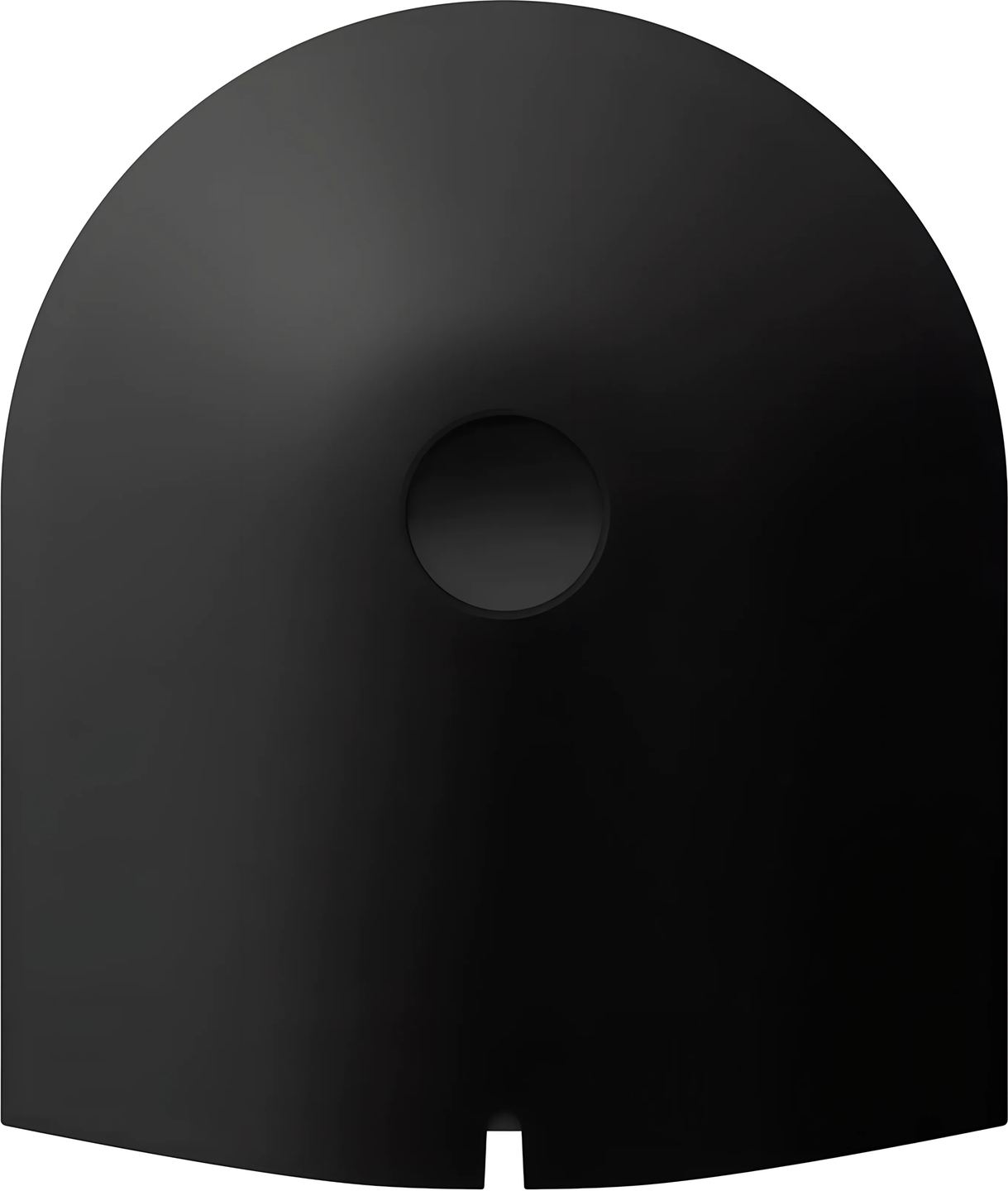
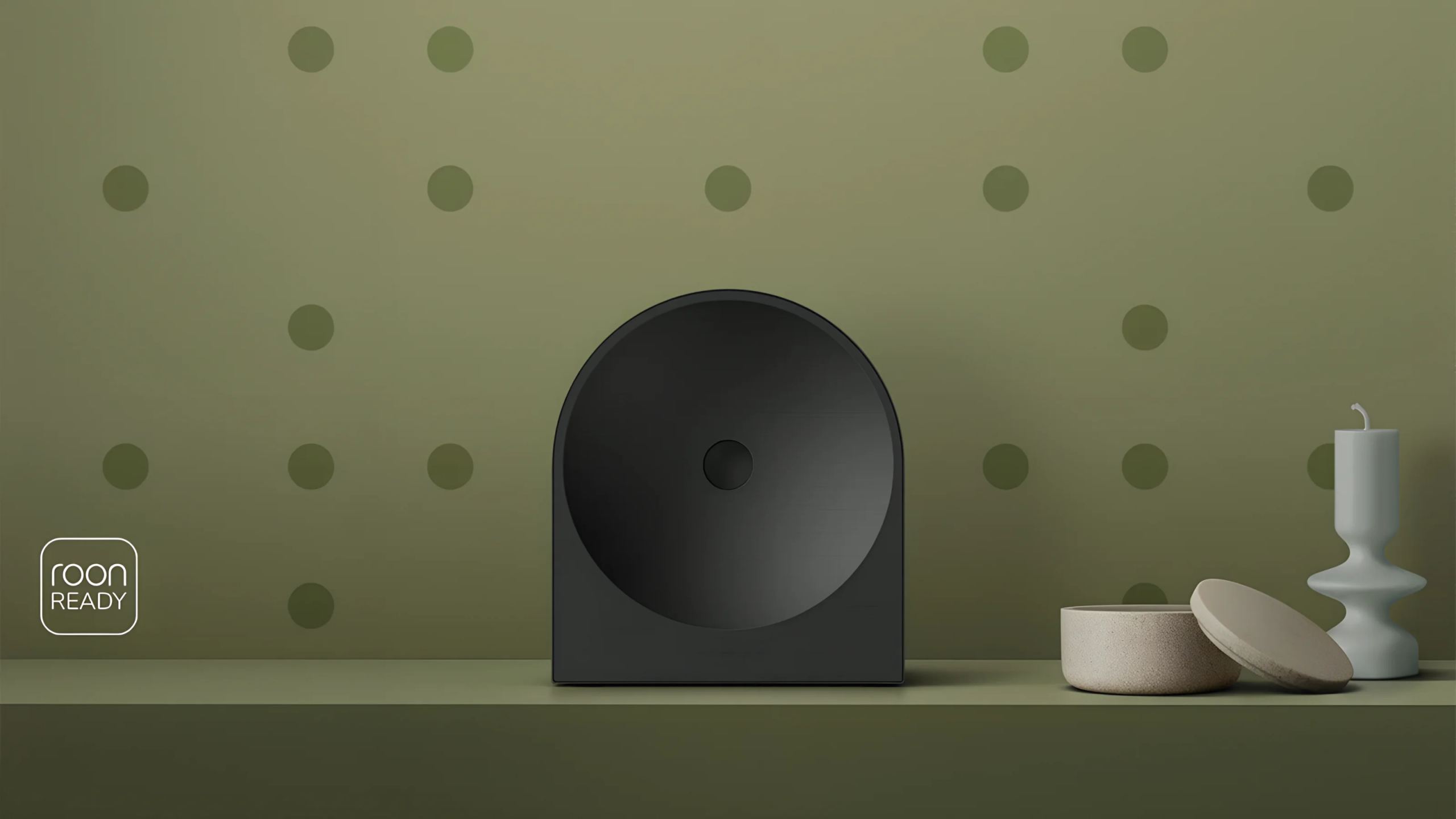
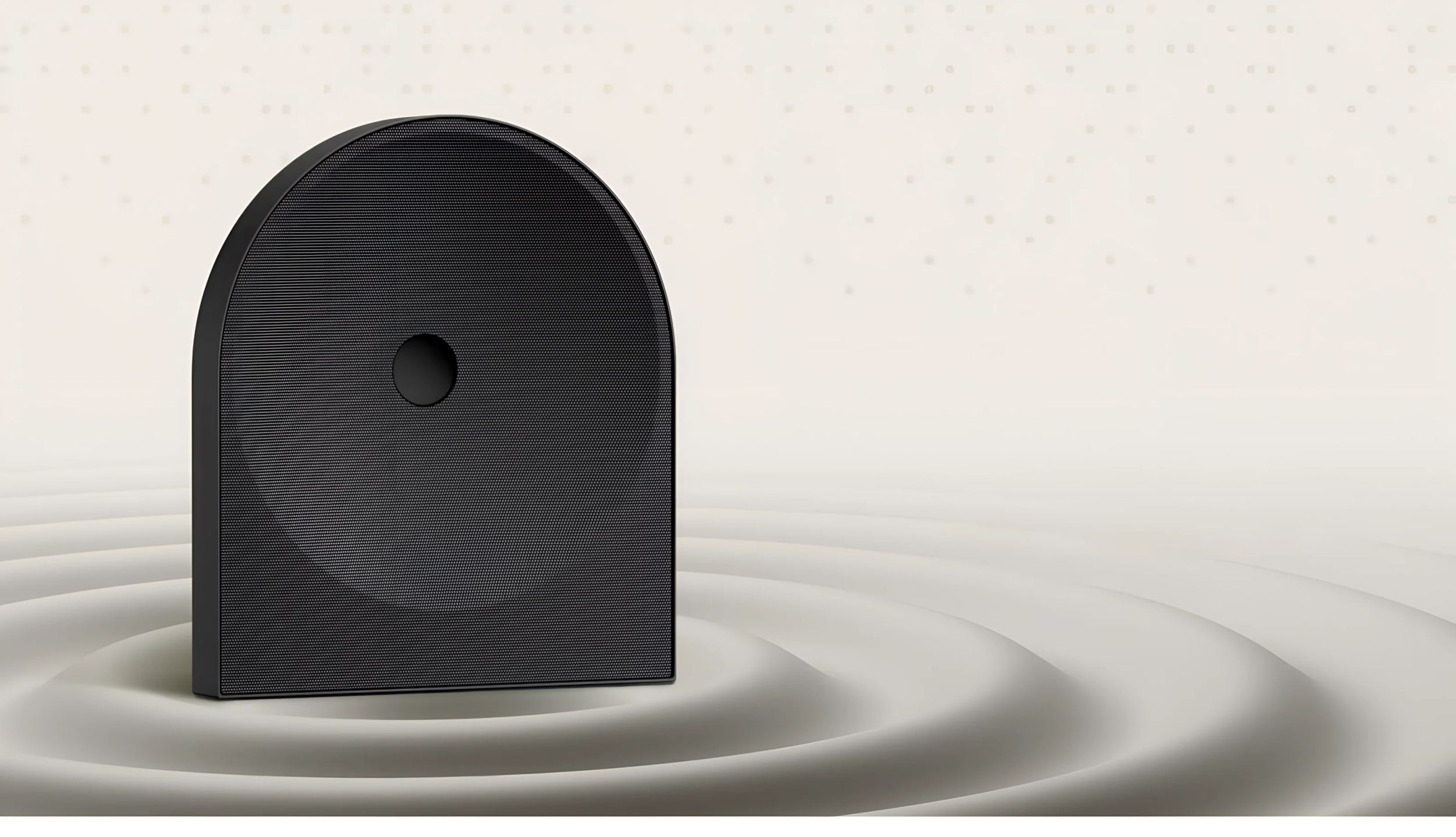
The Music Studio 5 looks nothing like anything Samsung has offered in audio until now. Its oblong shape topped with a circle, the “Dot,” forms the visual signature of the Music Studio series. Bouroullec sees it as a reference to the cone of traditional speakers and to musical notation: a point from which sound emanates. The front is a monolithic metal grille, the connectors are pushed to the rear, and the body remains slim, barely thicker than a picture frame (137 mm deep). With its 251 × 283.5 mm footprint and weight of 2.4 kg, the speaker can sit on a shelf, a table, or the floor without imposing its presence. Two finishes are offered: black or white.
The rear is deeper than on the first prototypes presented by Samsung. This extra volume, according to the manufacturer, was negotiated between the design and engineering teams to increase the internal capacity of the woofer without changing the front, and therefore the sound projection.
Three drivers, a waveguide, and AI
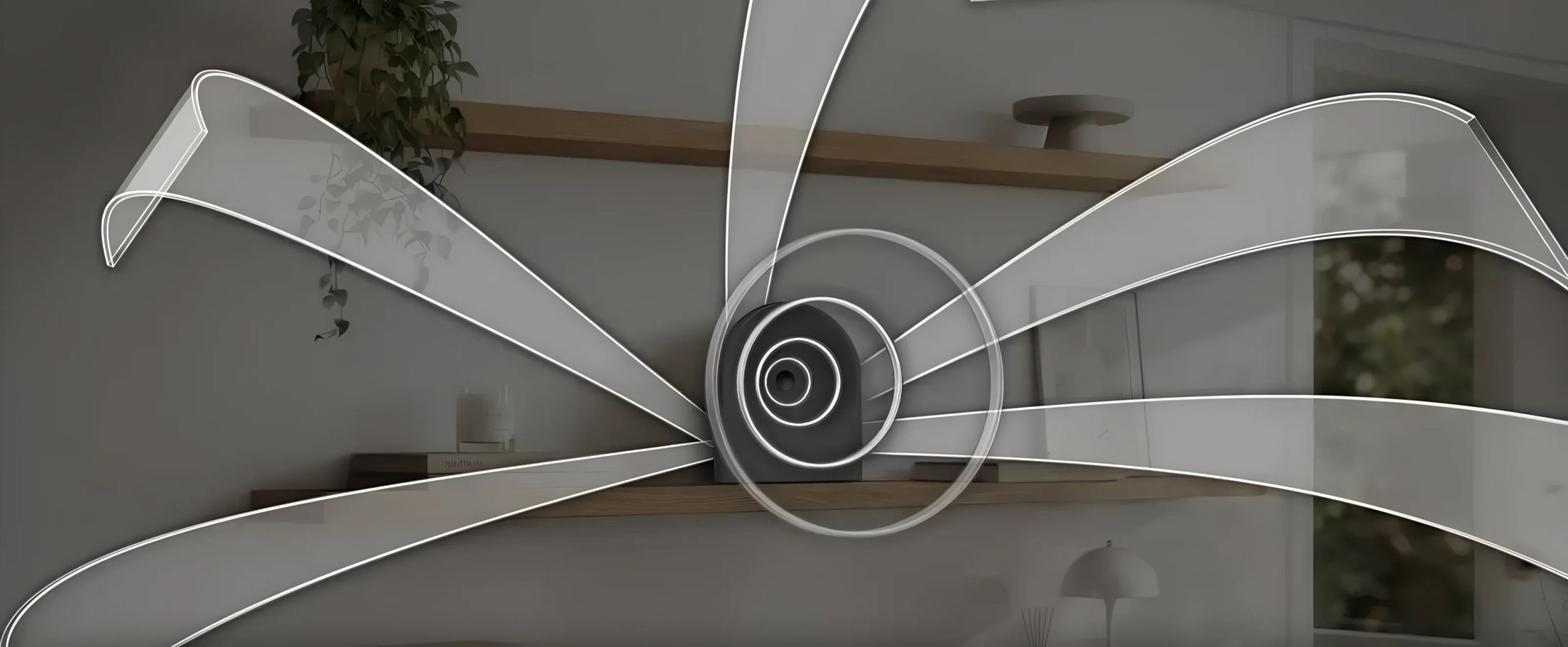
Inside: one 4-inch (10 cm) woofer and two tweeters. The latter are equipped with an integrated waveguide that directs and spreads the highs more evenly throughout the room, avoiding the effect of a concentrated beam on a single axis. The whole system is calibrated by the Samsung Audio Lab, located in Valencia, California.
On the software processing side, AI Dynamic Bass Control adjusts low frequencies in real time by monitoring woofer excursion. The system corrects the signal to limit distortion when the volume rises, without user intervention. AI Adaptive Sound analyzes the type of content currently playing (music, dialogue, movie) and automatically adapts the equalization. Active Voice Amplifier (AVA) Pro, for its part, detects ambient noise via the built-in microphone and boosts voices to maintain dialogue intelligibility. Auto Volume normalizes the sound level between sources and content to avoid volume jumps.
SpaceFit Sound Pro takes automation further: the built-in microphone analyzes the room’s acoustic reflections (walls, furniture, ceiling) and adjusts equalization and bass management according to speaker placement. It is an automatic calibration system comparable to what Samsung already offers on its soundbars.
Wireless Dolby Atmos and Eclipsa Audio
The Music Studio 5 supports Dolby Atmos over wireless reception, allowing a compatible Samsung TV to send it an Atmos stream via Wi-Fi, without an HDMI or optical cable. Support covers Dolby Digital Plus, Dolby Atmos Music, and Dolby 5.1. The speaker is also compatible with Eclipsa Audio, the spatial audio format developed by Samsung and Google, which follows a logic similar to Dolby Atmos but relies on a different technical chain.
On a strictly acoustic level, the Music Studio 5’s 2.0-channel configuration limits true spatialization compared with the Music Studio 7 (LS70H), which features a 3.1.1 configuration with side drivers and an upward-firing driver. The speaker does not project sound toward the ceiling; the three-dimensional rendering therefore relies on digital processing applied to the two existing channels.
Wireless connectivity and streaming services
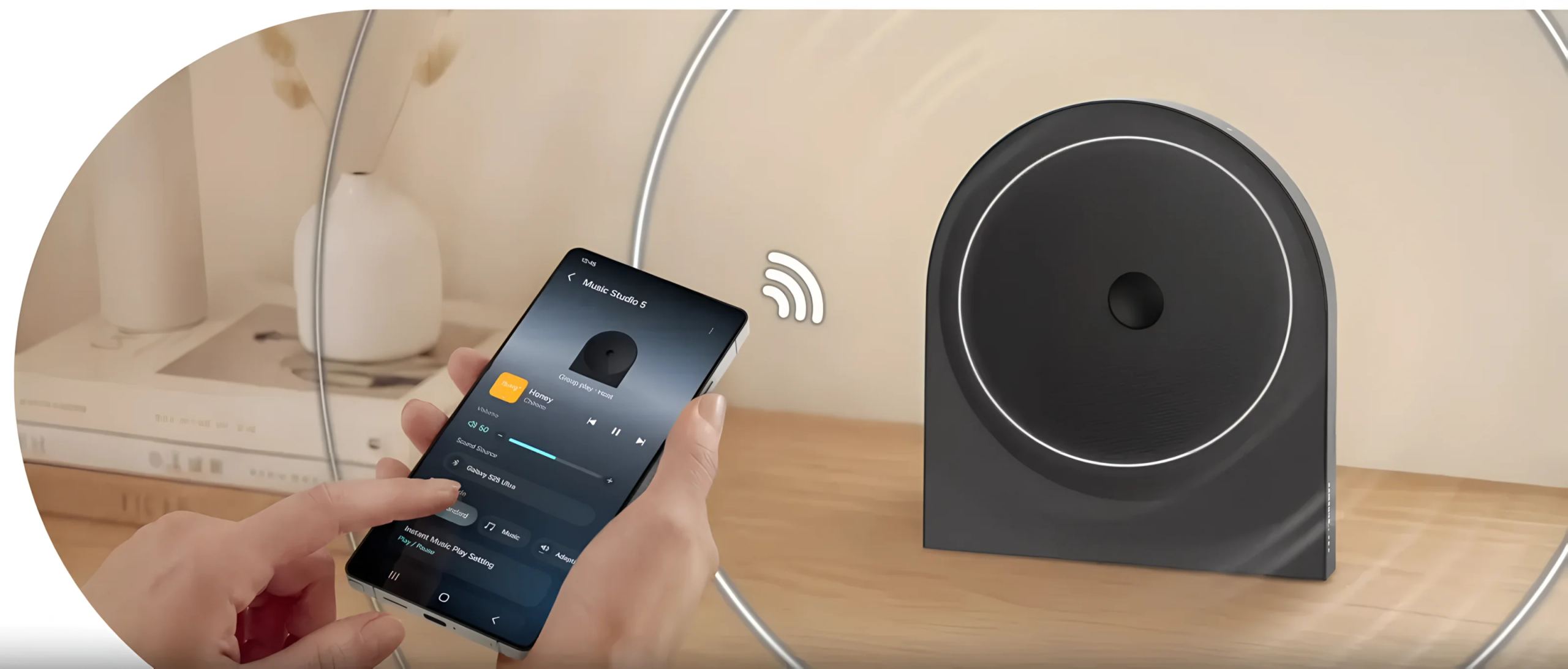
Wi-Fi 6 and Bluetooth 6.0 (with Auracast support) make up the two wireless connection options. Bluetooth uses the Samsung Seamless Codec, a proprietary codec that offers higher bitrate when paired with a Samsung Galaxy device. With a third-party device, the Bluetooth connection remains functional via standard codecs.
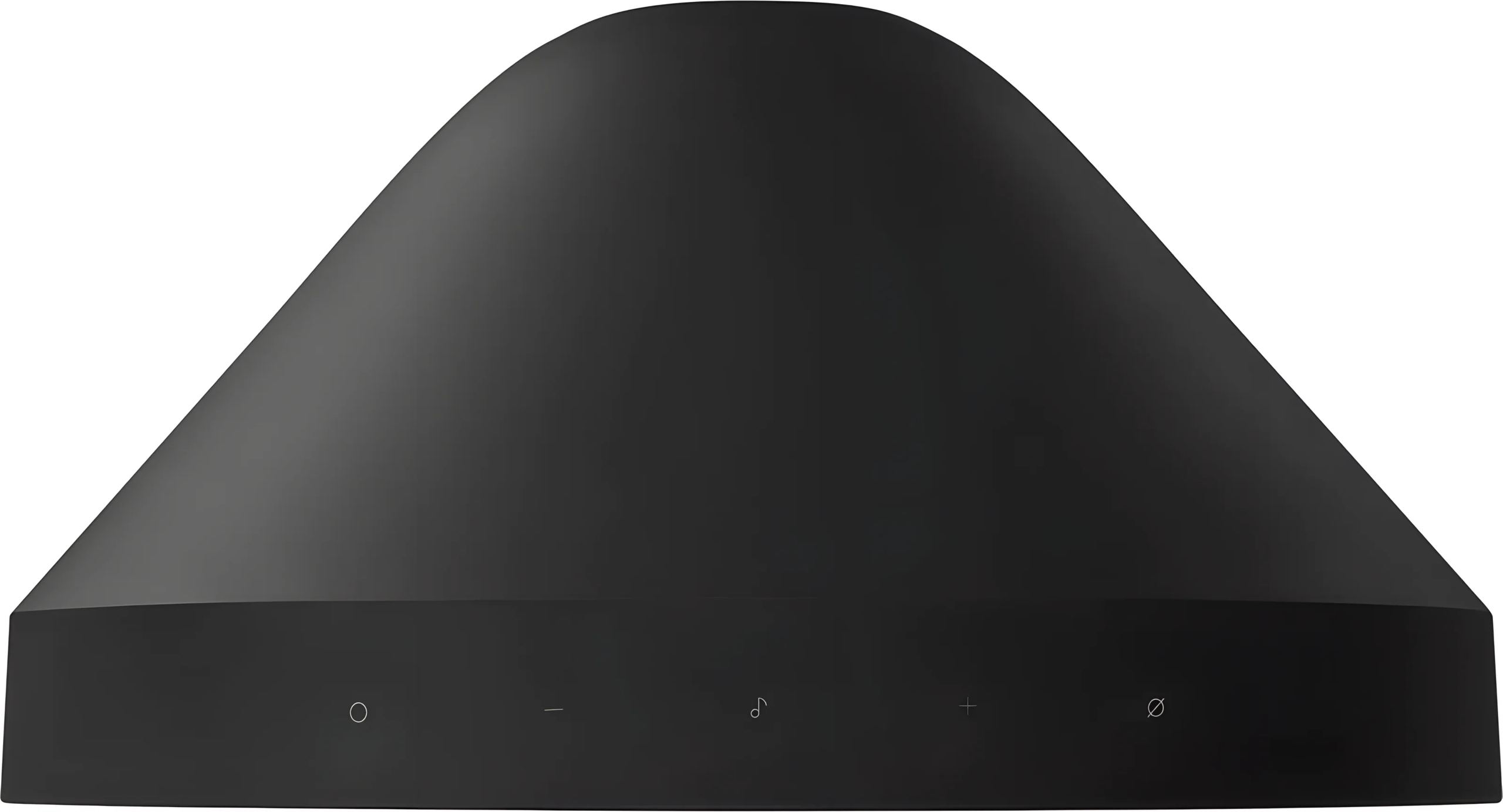
On the services side: AirPlay 2, Google Cast (Chromecast built-in), Spotify Connect with Spotify Tap (a physical button on top of the speaker that resumes Spotify playback with a single press), Tidal Connect, and Roon Ready. Alexa is built in natively for voice control. Control is handled via the SmartThings or Samsung Sound app.
Maximum audio quality over Wi-Fi reaches 24-bit / 96 kHz, which earns the speaker Hi-Res Audio certification. Supported formats include MP3, AAC, OGG, WAV, FLAC, AIFF, and ALAC.
Wired connectivity: the bare minimum
Only one physical input: optical digital (Toslink). No HDMI, no eARC, no analog input. The USB port on the back is reserved for maintenance (firmware updates). Samsung is clearly betting on wireless as the primary connection mode. Anyone wishing to connect a turntable, CD player, or any device with an analog output will need to use an external converter.
Neither an optical cable, nor an HDMI cable, nor a remote control is included. The speaker is controlled from a smartphone or by voice command.
Q-Symphony: the speaker as a building block in a system
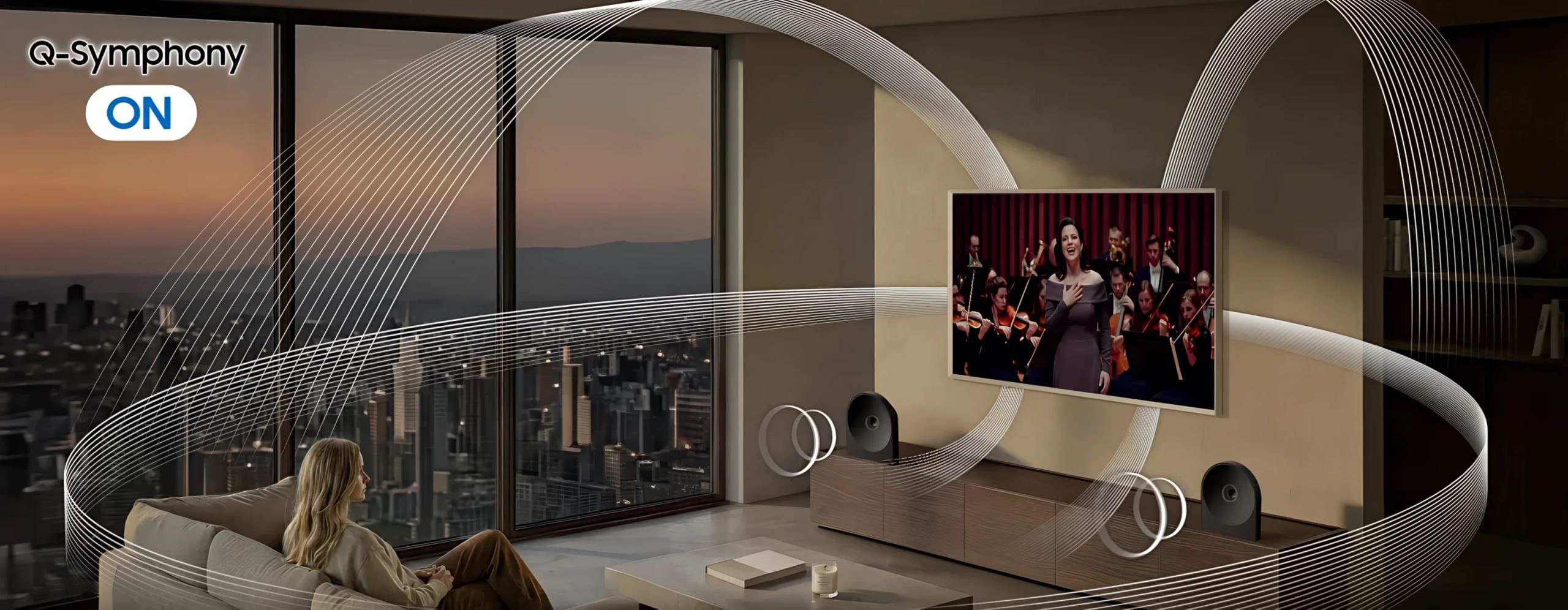
The real strength of the Music Studio 5 in the Samsung ecosystem is Q-Symphony. This protocol allows the speaker to work in tandem with a compatible Samsung TV: instead of disabling the TV’s speakers, Q-Symphony has them play simultaneously with the speaker, distributing the channels intelligently.
Q-Symphony compatibility covers Samsung TVs from 2021 onward (starting with the AU7000 series). With a 2026 TV, Samsung allows the connection of up to five wireless audio devices (Music Studio speakers, Music Frame, soundbars). AI Q-Symphony, available from the Q70C series (2023) and above, adds automatic analysis of speaker position in the room to optimize channel distribution.
Outside of Q-Symphony, the Stereo Play function allows two Music Studio 5 speakers to be paired as a left/right stereo pair, and Group Play can group up to ten compatible speakers on the same Wi-Fi network for multi-room playback.
Technical specifications
General overview
- Product type: wireless speaker
- Configuration: 2.0 channels
- Number of speakers: 3
- Design: Erwan Bouroullec
- Color: black
Audio performance
- Dolby Atmos: Dolby Atmos, Digital Plus, Atmos Music, Dolby 5.1ch
- Wireless Dolby Atmos
- AI Adaptive Sound: Music, Standard
- AI Dynamic Bass Control
- SpaceFit Sound Pro
- Q-Symphony
- AVA (Active Voice Amplifier) Pro
- Auto Volume
- Eclipsa Audio
- DTS Digital Surround: not disclosed
Wireless and network connectivity
- Wi-Fi 6
- Bluetooth 6.0
- AirPlay 2
- Google Cast
- Spotify Connect
- Spotify Tap (Wi-Fi)
- Roon Ready
- Built-in Alexa
- SmartThings
- Stereo Play: 2 speakers
- Group Play: up to 10 speakers
- Single remote control
Compatible audio formats
- Supported formats: MP3, AAC, OGG, WAV, FLAC, AIFF, ALAC
- Maximum quality over Wi-Fi: 24 bit / 96 kHz
Wired connectivity
- HDMI: 0 input, 0 output
- eARC: no
- HDMI-CEC: no
- USB: service only
- Optical digital audio input: 1
- Analog audio input: no
Dimensions and weight
- Speaker dimensions (W × H × D): 251 × 283.5 × 137 mm
- Speaker weight: 2.4 kg
Power consumption
- Power consumption in operation: 15 W
- Power consumption in standby: 0.5 W
Q-Symphony compatibility
- Q-Symphony
- TV 2021 from AU7000
- TV 2022 from BU8000
- TV 2023 from CU7000
- TV 2024 from DU7000
- TV 2025 from U8000F
- TV 2026 from U8005H
- The Frame 2022-2026
- AI Q-Symphony
- TV 2023 from Q70C
- TV 2024 from Q70D
- TV 2025 from QN70F
- TV 2026 from M80H
- The Frame / The Frame Pro 2024-2026
Included accessories
- Optical cable: not included
- HDMI cable: not included
- Remote control: not included
Frequently Asked Questions
Can the Music Studio 5 be used as a soundbar for a TV?
It can complement the speakers of a compatible Samsung TV via Q-Symphony, but it does not replace a soundbar as such. The connection to the TV is wireless (Wi-Fi), not via HDMI. With a TV from another brand, only the optical connection is available, without the Q-Symphony function.
Can two Music Studio 5 speakers be paired in stereo?
Yes. The Stereo Play function allows two units to be paired to create a left/right stereo pair. Setup is done in the SmartThings app.
What is the difference between the Music Studio 5 and the Music Studio 7?
The Music Studio 7 (LS70H) adopts a 3.1.1-channel configuration with side drivers and an upward-firing driver, a super tweeter reaching up to 35 kHz, and Pattern Control technology for better directivity. It is physically larger and heavier. The Music Studio 5 is a more compact format, in 2.0 channels, with stereo output.
Does Dolby Atmos work standalone or only with a TV?
Dolby Atmos support is active both in standalone mode (via compatible streaming services like Apple Music or Tidal) and in wireless reception from a compatible Samsung TV. Spatialization remains limited by the 2.0-channel configuration and the absence of an upward-firing driver.
Does the speaker support multiroom with speakers from other brands?
Group Play multiroom is limited to compatible Samsung speakers (Music Studio 5, Music Studio 7, Music Frame, Q600H soundbars and above). AirPlay 2 allows streaming to multiple AirPlay-compatible speakers, including other brands, but within the Apple ecosystem.
Is the built-in microphone used only for SpaceFit Sound Pro calibration?
The microphone is used both by SpaceFit Sound Pro (room acoustic calibration) and by Active Voice Amplifier Pro (ambient noise detection to boost voices). It is also used for Alexa voice commands.
- Eco-contribution of €0.75 included in the sale price.
- Manufacturer reference: HW-LS50HZF
- GTIN / EAN: 8806099031510




