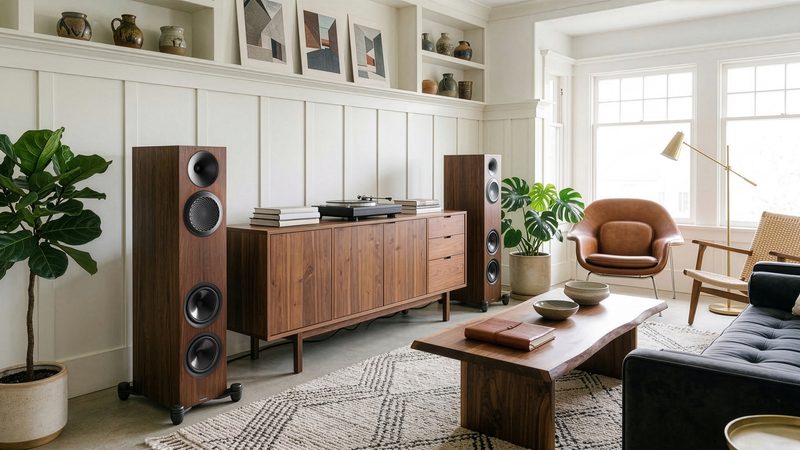
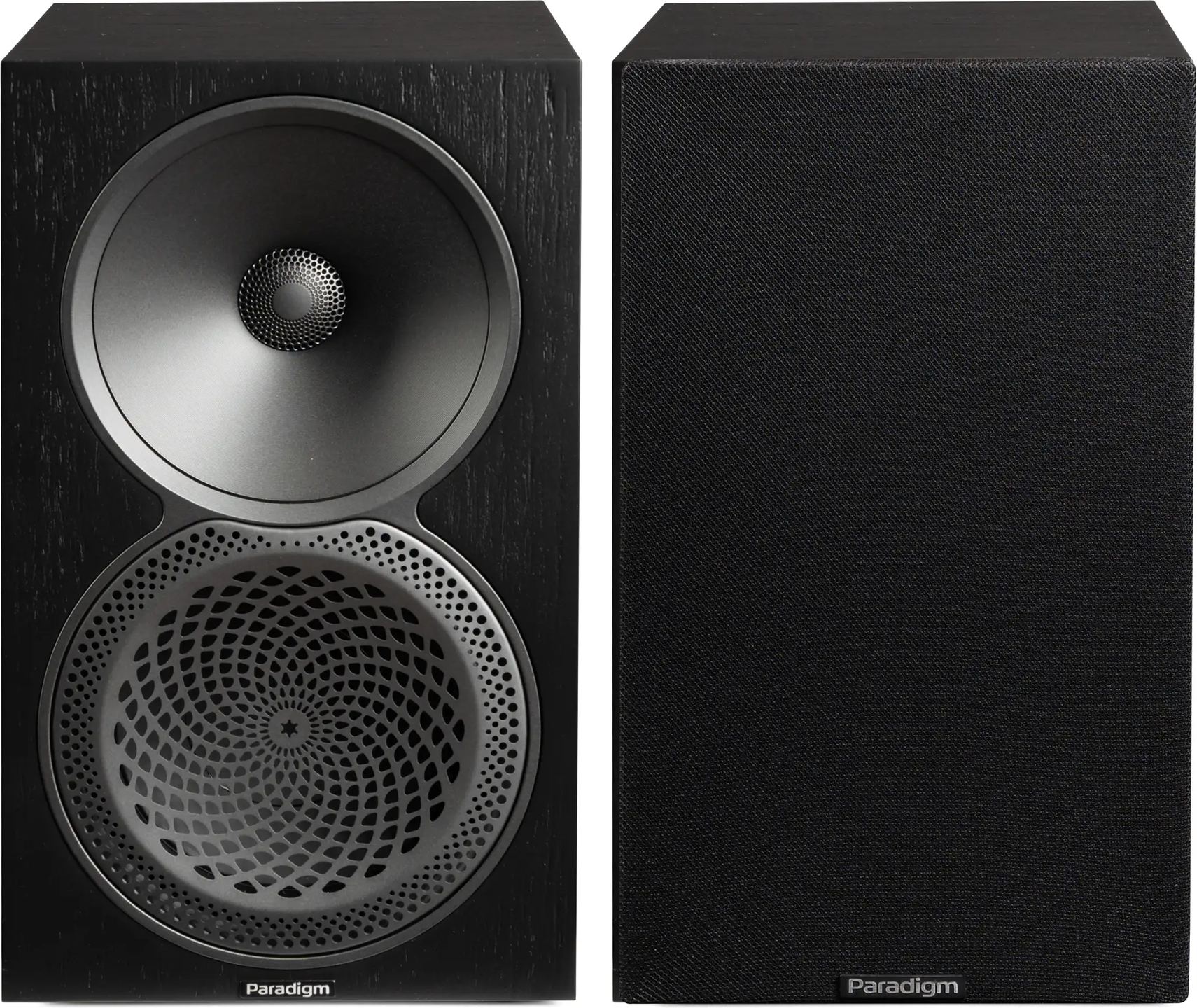
Paradigm Premier 120B v2 black wood (pack of 2)


Overview
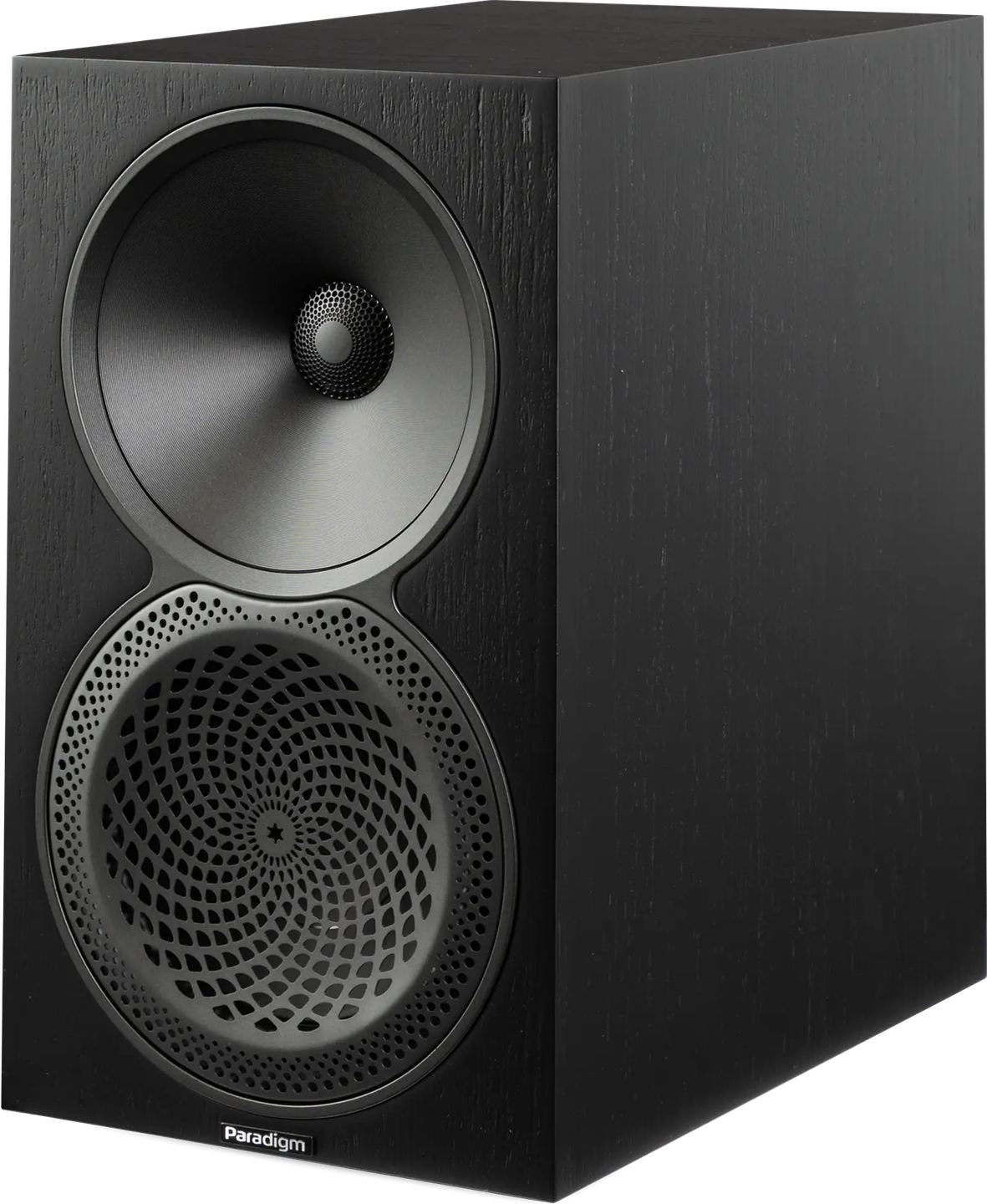
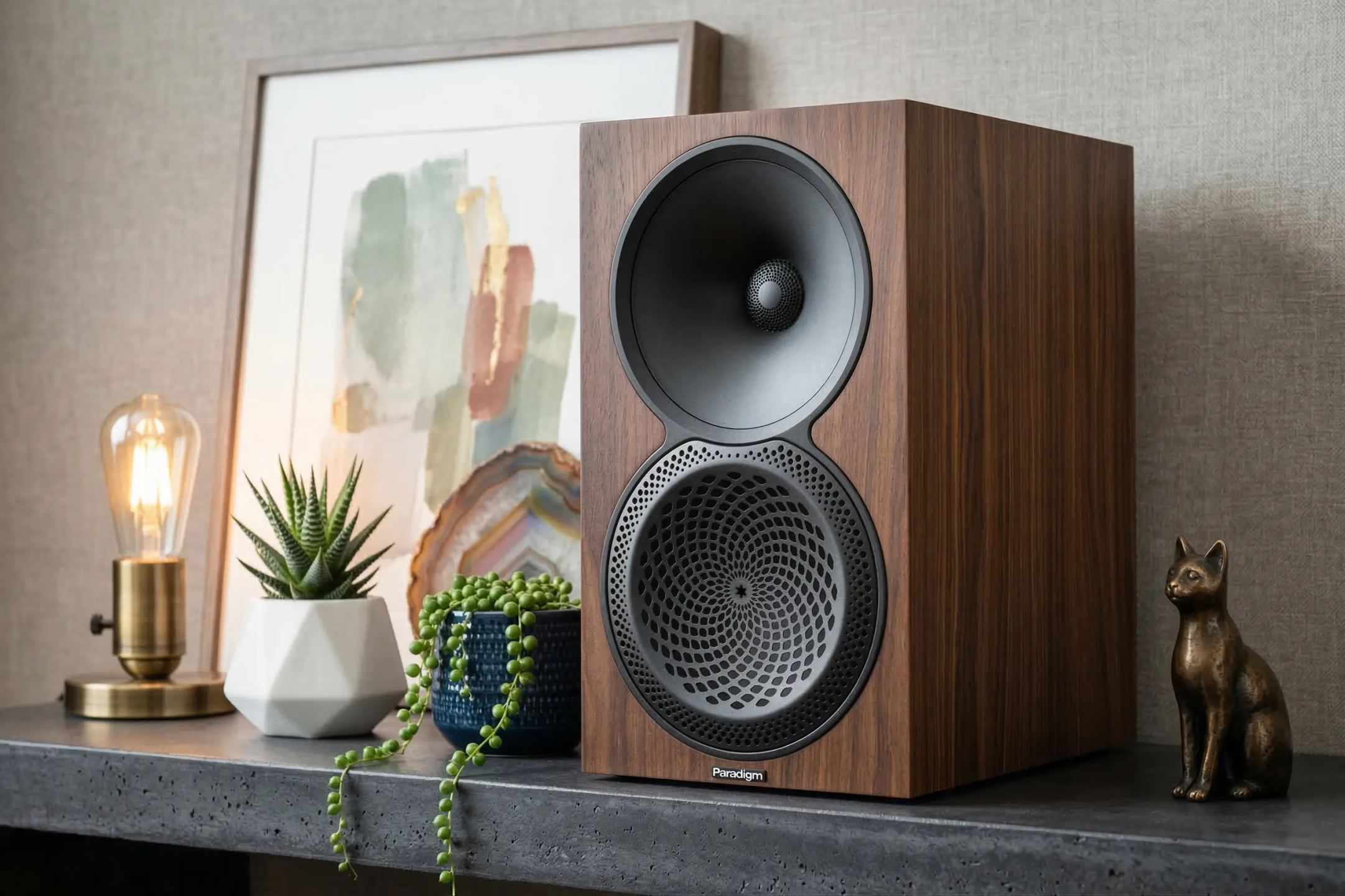
Entry-level model in the Premier v2 series, this two-way bookshelf speaker fits into a 30 cm tall format. Paradigm brings together the key components of the range: ceramic dome tweeter, very high-excursion woofer-midrange driver, perforated phase lens, and waveguide developed for the Canadian manufacturer’s higher-end series. All of it in a size that works with modest amplification and a medium-sized listening room.
A direct descendant of the higher-end series
Paradigm has been based in Mississauga, Ontario, for more than forty years. The Premier v2 series incorporates several components originally developed for the manufacturer’s Founder and Persona series: AL-MAC ceramic dome tweeter, perforated phase lens (PPA) in front of each driver, Oblate Spherical Waveguide (OSW), third-generation Active Ridge suspension on the woofer-midrange driver. The 120B v2 gets the most compact version of this package, with an AL-MAG woofer-midrange driver instead of the Carbon-X cone found on the 720F v2 and 820F v2 floorstanding speakers in the same series.
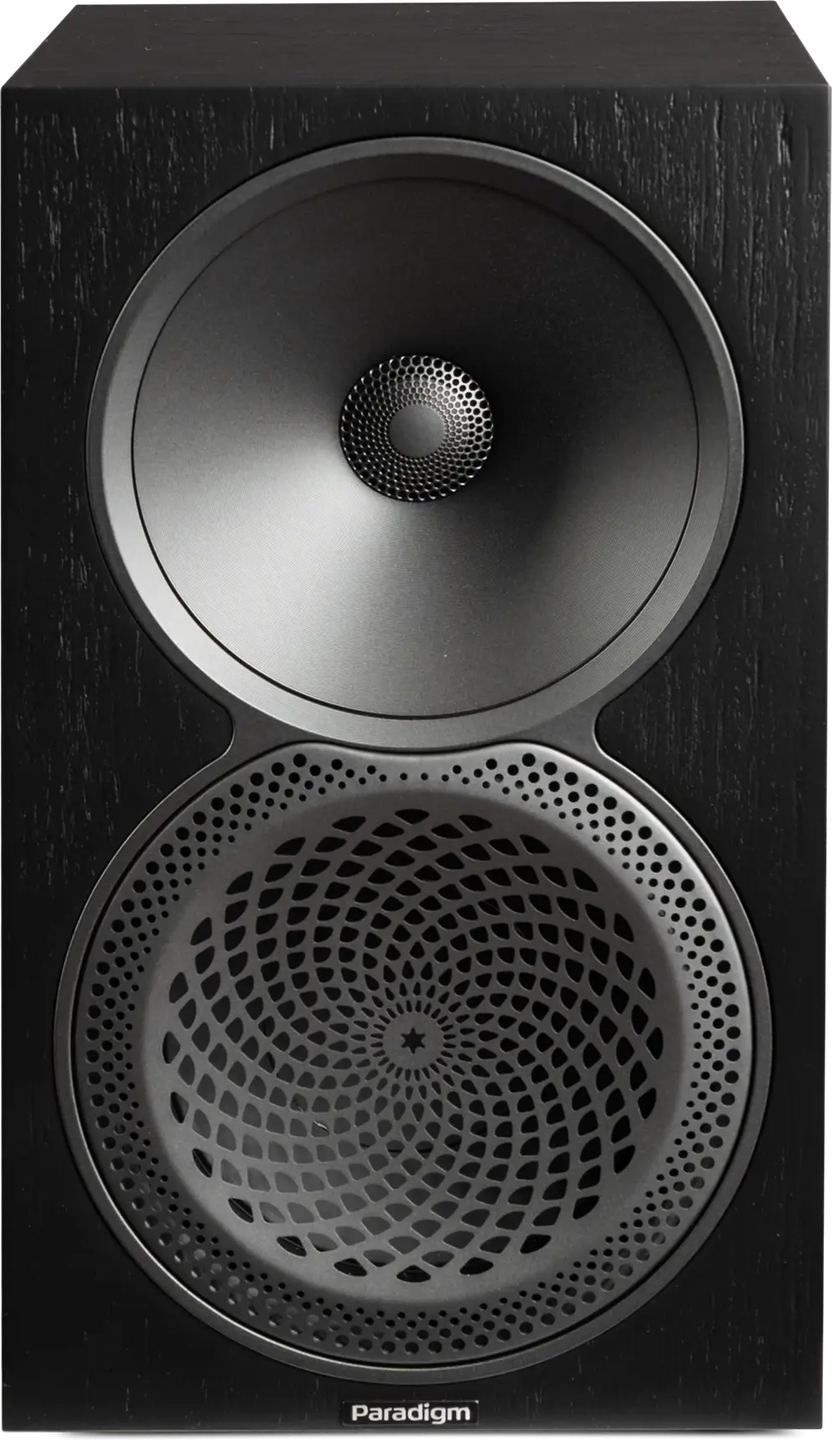
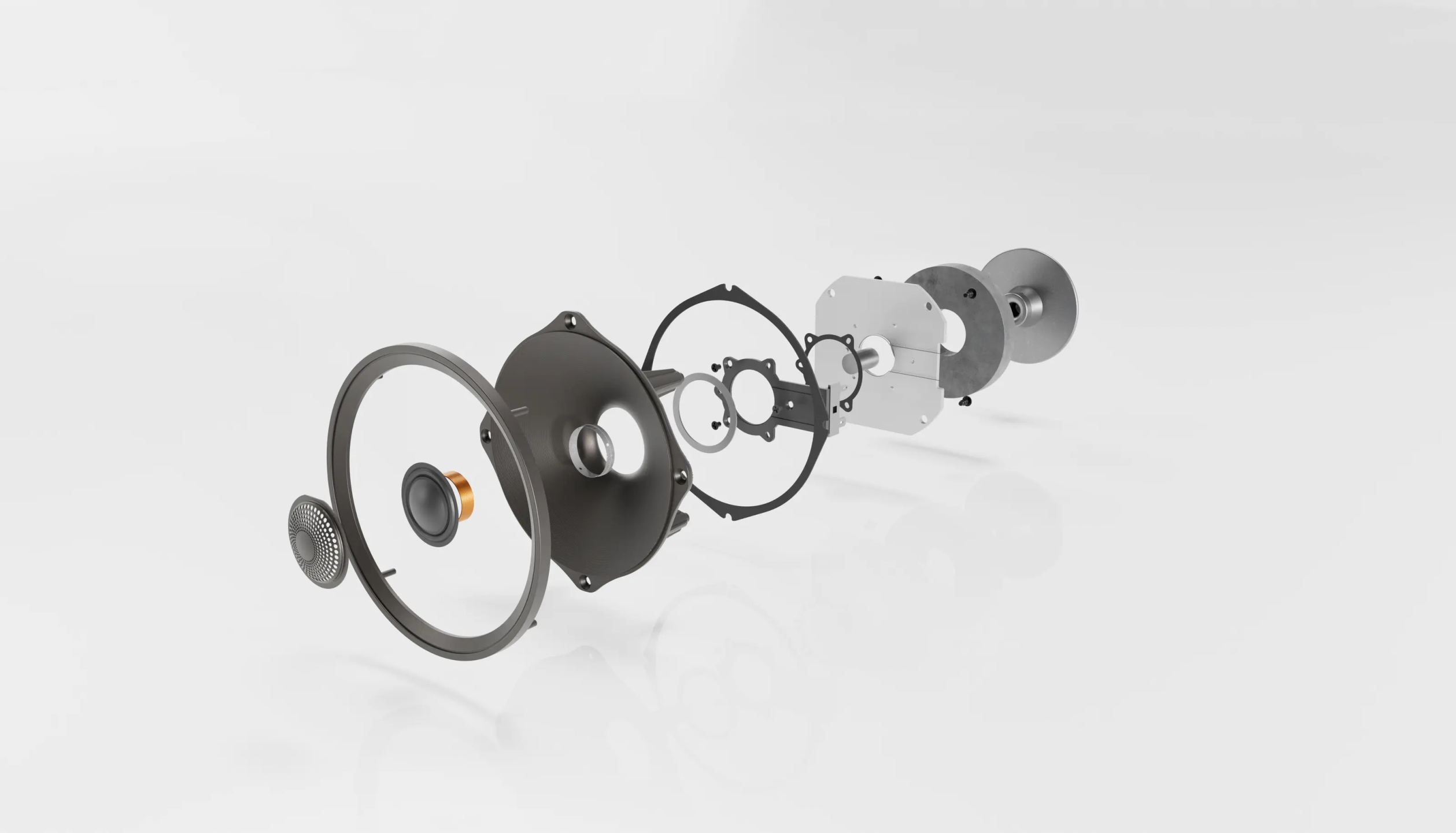
The AL-MAC tweeter and its waveguide
The 25 mm dome is molded from a composite of aluminum, magnesium, and ceramic. This combination aims for a balance between rigidity, to push breakup modes higher, and controlled mass, to preserve treble sensitivity. The motor is damped and cooled by ferrofluid, which helps dissipate heat during long listening sessions at high levels.
In front of the dome, two parts complete the assembly. The Oblate Spherical Waveguide (OSW) controls directivity in the upper part of the spectrum: it focuses energy on the listening area and limits early reflections from the ceiling and side walls. The perforated phase lens (PPA) adds passive acoustic filtering that suppresses out-of-phase components near the top of the dome. According to Paradigm, the combined effect results in a more stable soundstage and better spatial cues.
AL-MAG cone and low-frequency extension
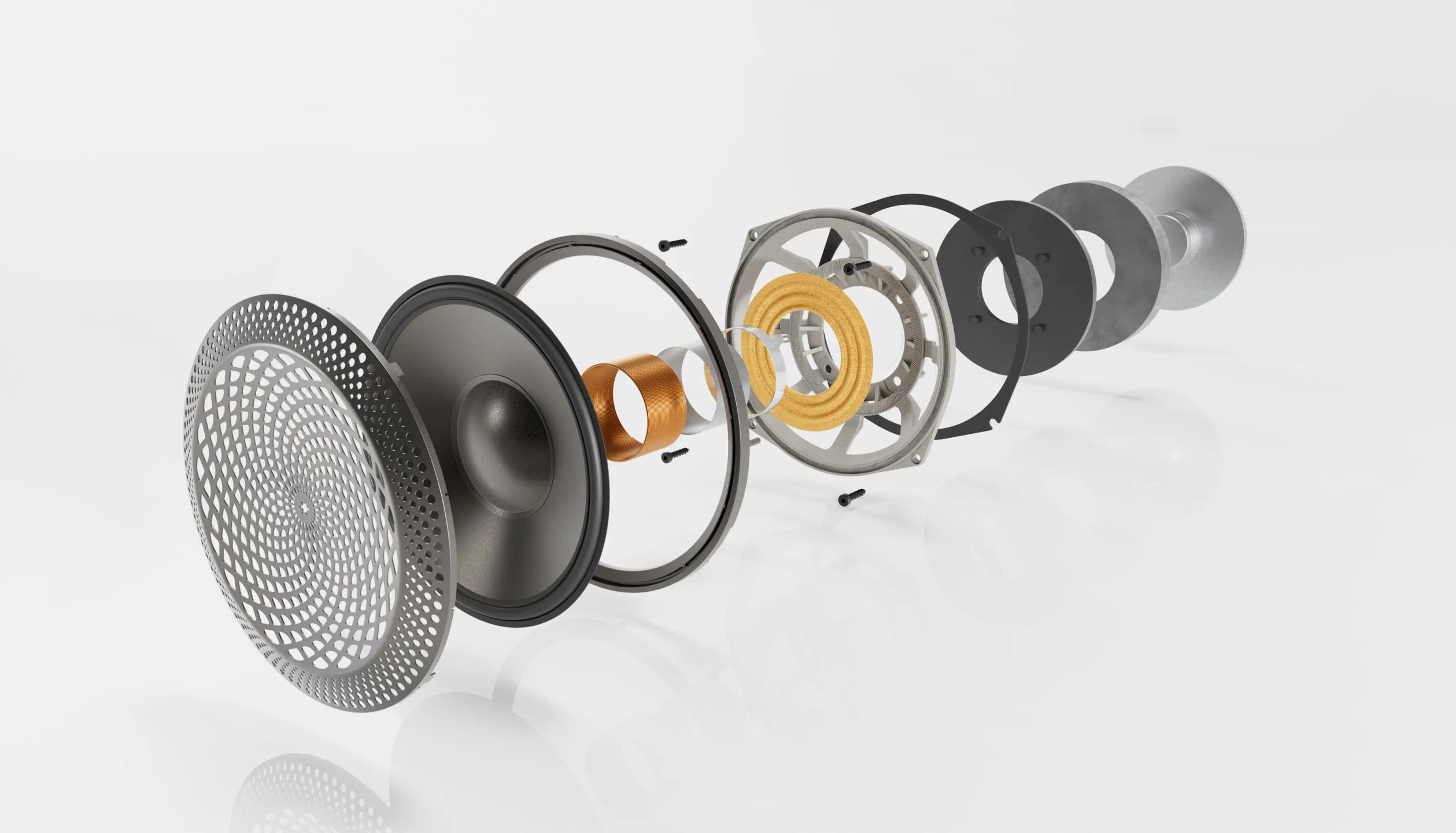
The 14 cm woofer-midrange driver is made of aluminum-magnesium. Its diaphragm is supported by a third-generation Active Ridge suspension (ART Gen3), a peripheral elastomer ring mounted vertically rather than glued flat to the edge of the cone. The 25 mm voice coil is high-temperature multilayer and wound on a ventilated Apical former. In front of the cone, a second PPA lens, identical in principle to the one on the tweeter, acts on the midrange.
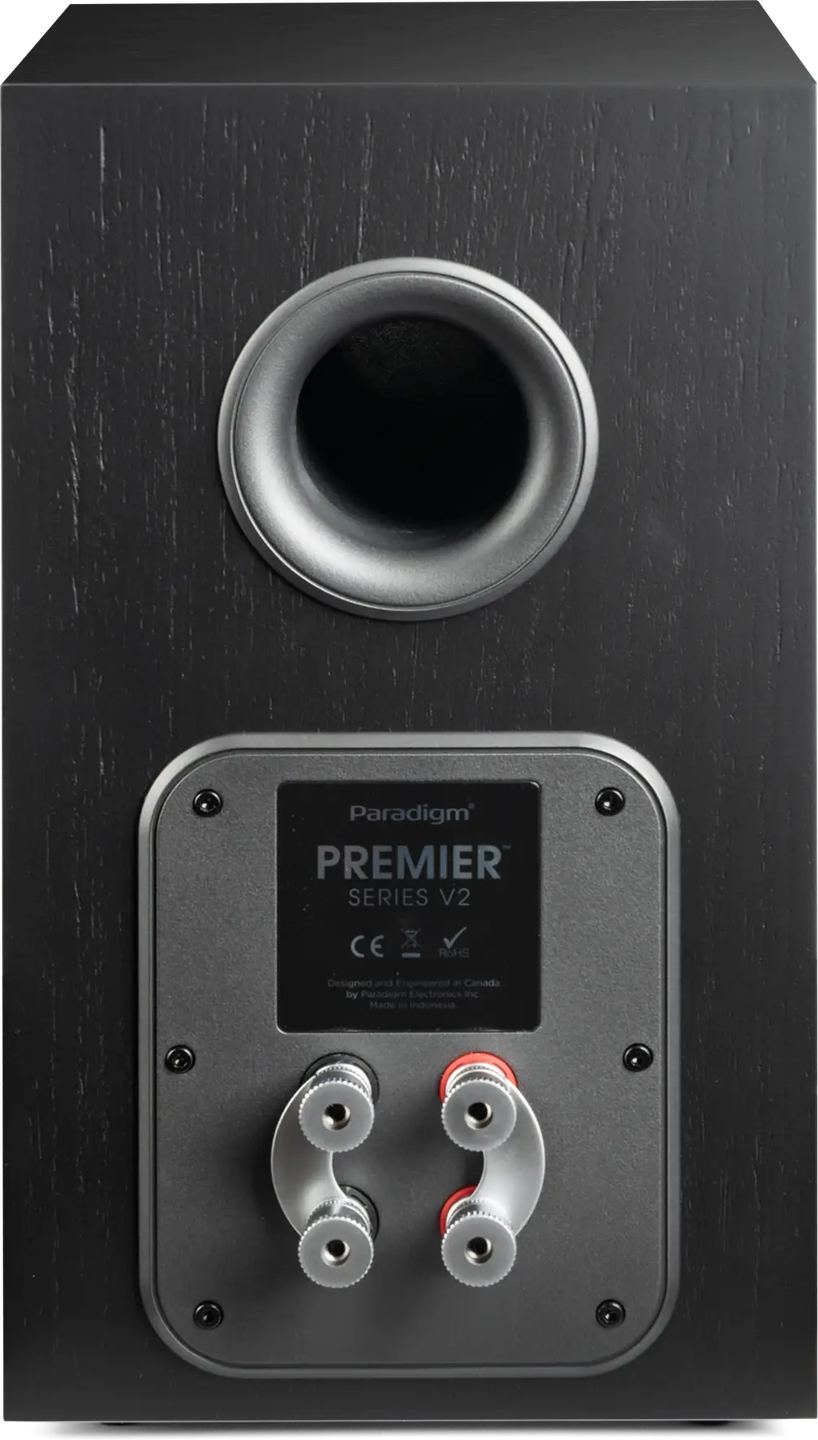
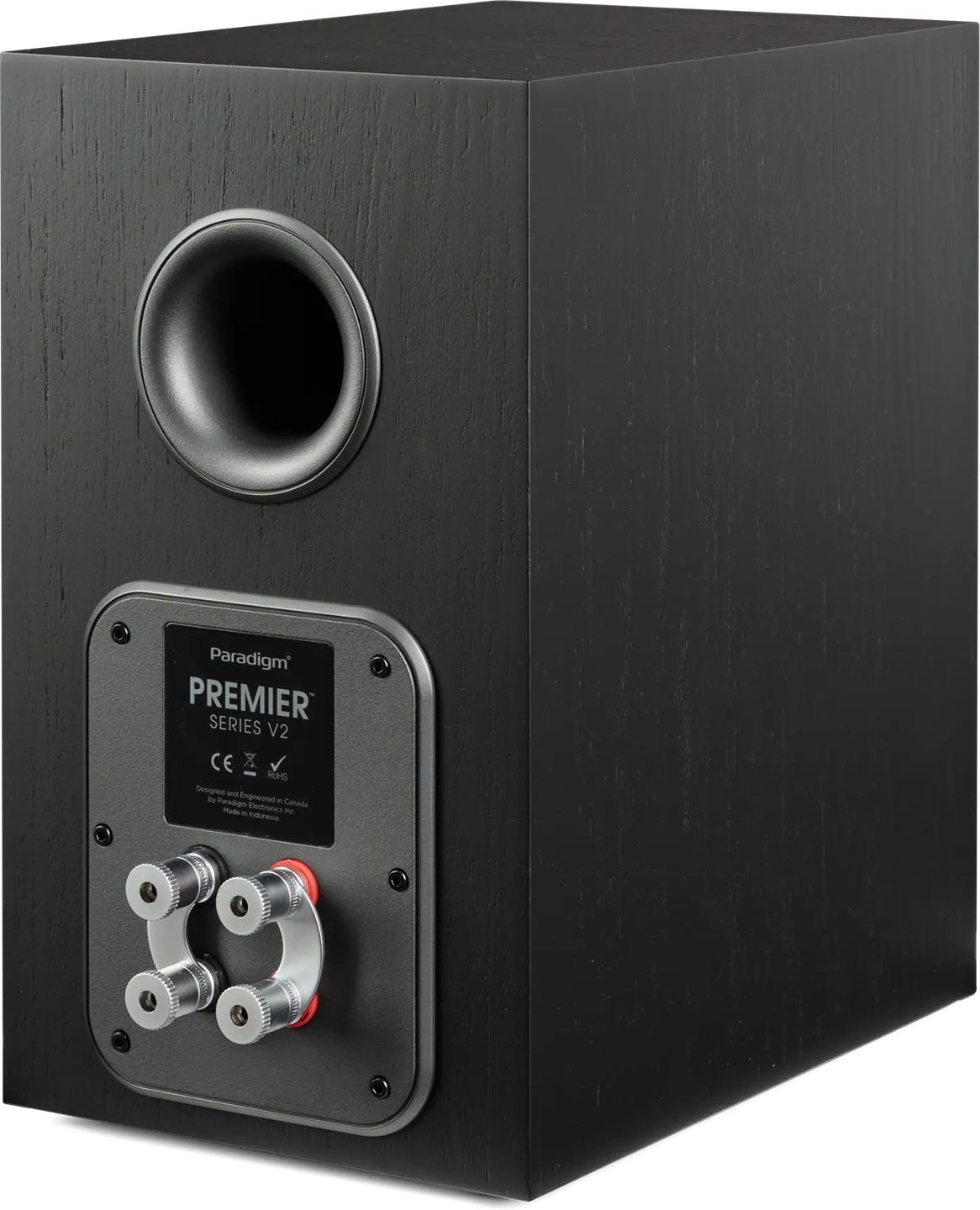
The enclosure uses a bass-reflex design. Low-frequency extension is rated at 39 Hz according to the DIN standard, which corresponds to a -3 dB reference point under typical home listening conditions. In absolute terms, expecting full infrabass from a speaker of this size remains unrealistic: the 120B v2 delivers enough substance above 50 Hz for acoustic music, jazz, rock, or pop. For very deep electronic music or serious home theater use, a subwoofer remains the most coherent solution.
Frequency response and sensitivity
On-axis response is specified at ±3 dB from 62 Hz to 23 kHz, and at ±3 dB from 62 Hz to 20 kHz at 30 degrees off-axis. The gap between the two curves indicates controlled directivity: tonal balance remains consistent even when the listener is not exactly at the optimal listening position. The crossover between the tweeter and woofer-midrange driver is set at 1.2 kHz with a second-order slope, a fairly low frequency for this type of configuration, placing part of the midrange in the tweeter’s operating zone.
As for sensitivity, Paradigm specifies 90 dB in-room and 87 dB in anechoic measurement, with an impedance compatible with eight ohms. Recommended amplifier power ranges from 15 to 130 watts, and maximum input power is set at 70 watts. Around ten watts per channel is therefore enough to reach comfortable levels in a room smaller than 25 m², provided the amplifier maintains its curve under a load slightly below eight ohms in the presence of complex signals.
Placement, amplification, and uses
The speaker measures 30.5 cm high, 17.8 cm wide, and 30.7 cm deep, and weighs 7.4 kg each. This size allows it to fit on low furniture and bookshelves, provided a few rules are respected: leave between 20 and 40 cm behind the cabinet so the bass-reflex port can breathe properly, and avoid placing both speakers right against a rear wall, otherwise the bass becomes overwhelming and masks the lower midrange. On dedicated stands, 60-90 cm from the wall, the 120B v2 regains a more open soundstage and better-articulated bass.
Downstream, an integrated amplifier or separate power amp in the 30-100 W per channel range suits the speaker well. With its above-average sensitivity for the segment, it works just as well with tube amplifiers as with a class AB transistor amp or a modern class D amp. In a 5.1 or 7.1 home theater system, two 120B v2 speakers work at the front or rear, complemented by a 520LCR v2 or 620C v2 center speaker from the same series and an external subwoofer.
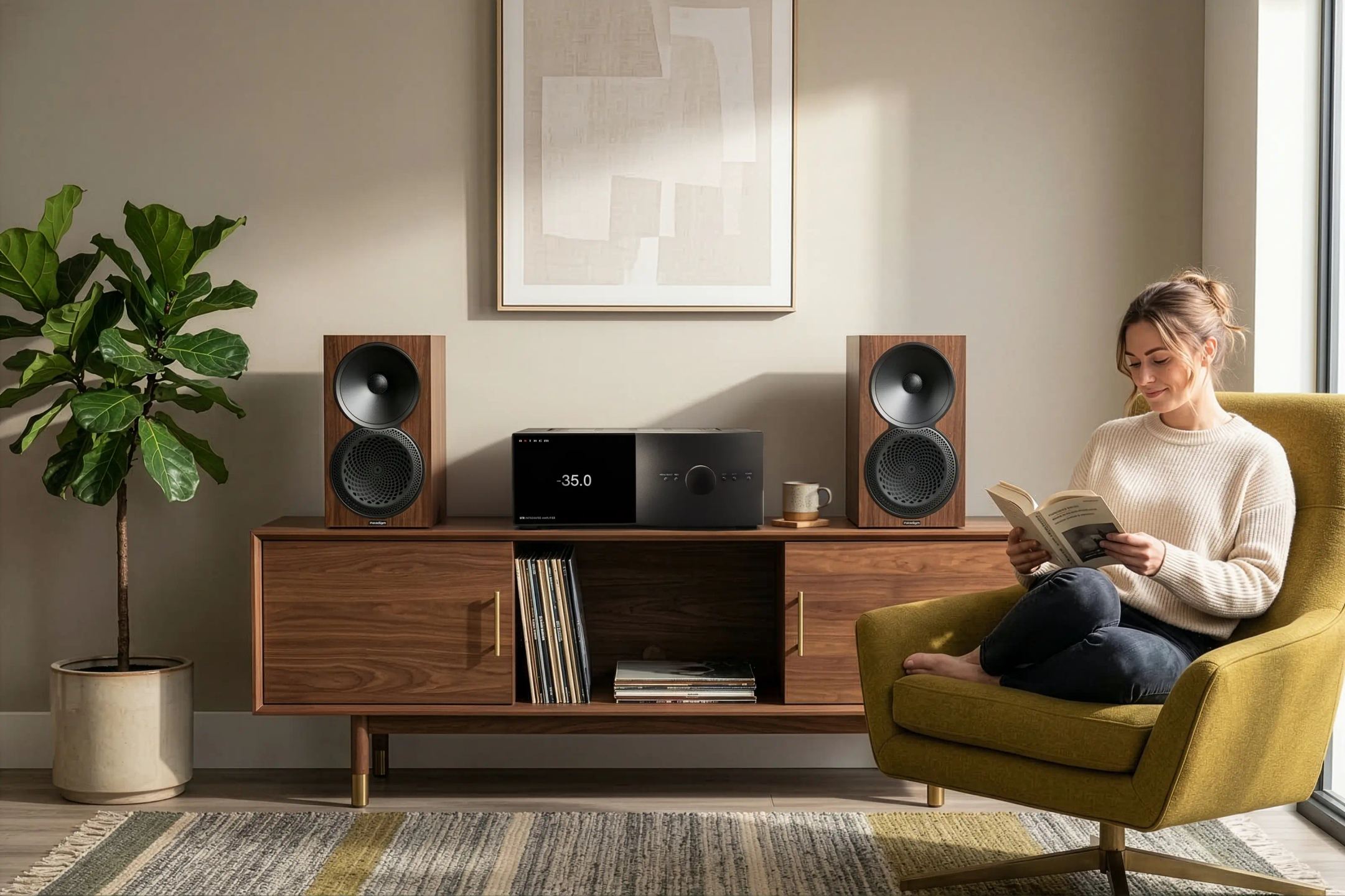
Finishes and cabinet design
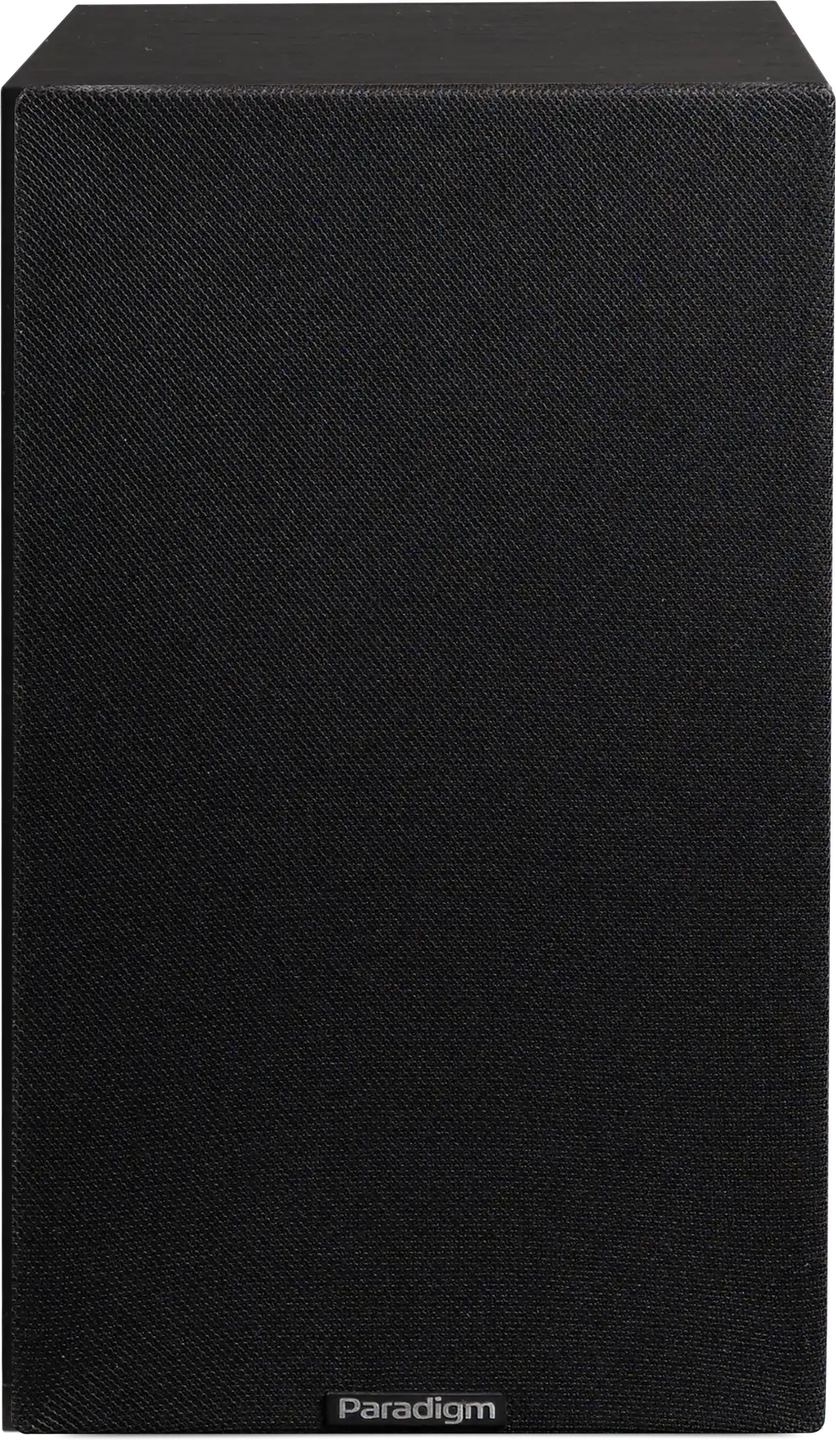
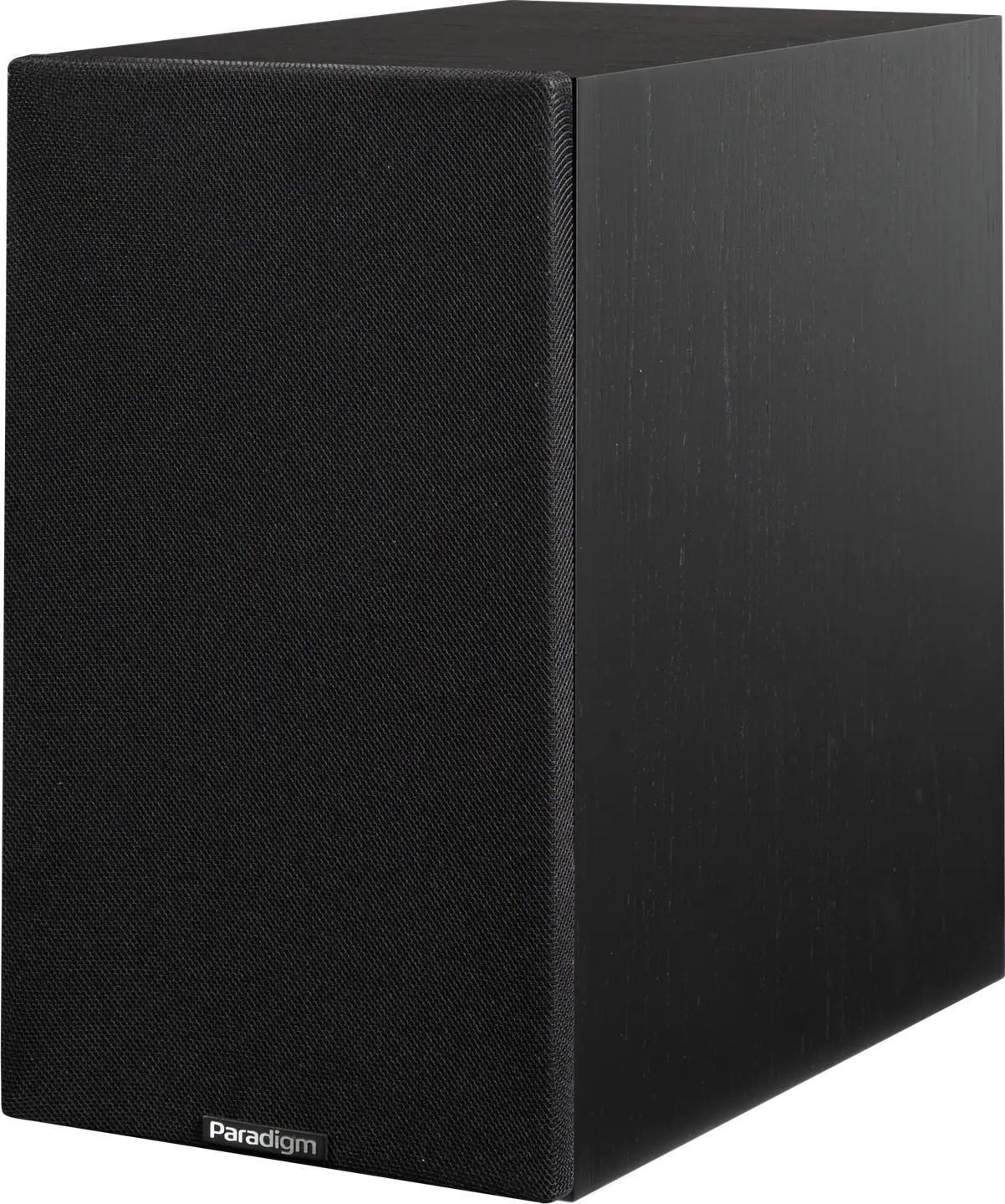
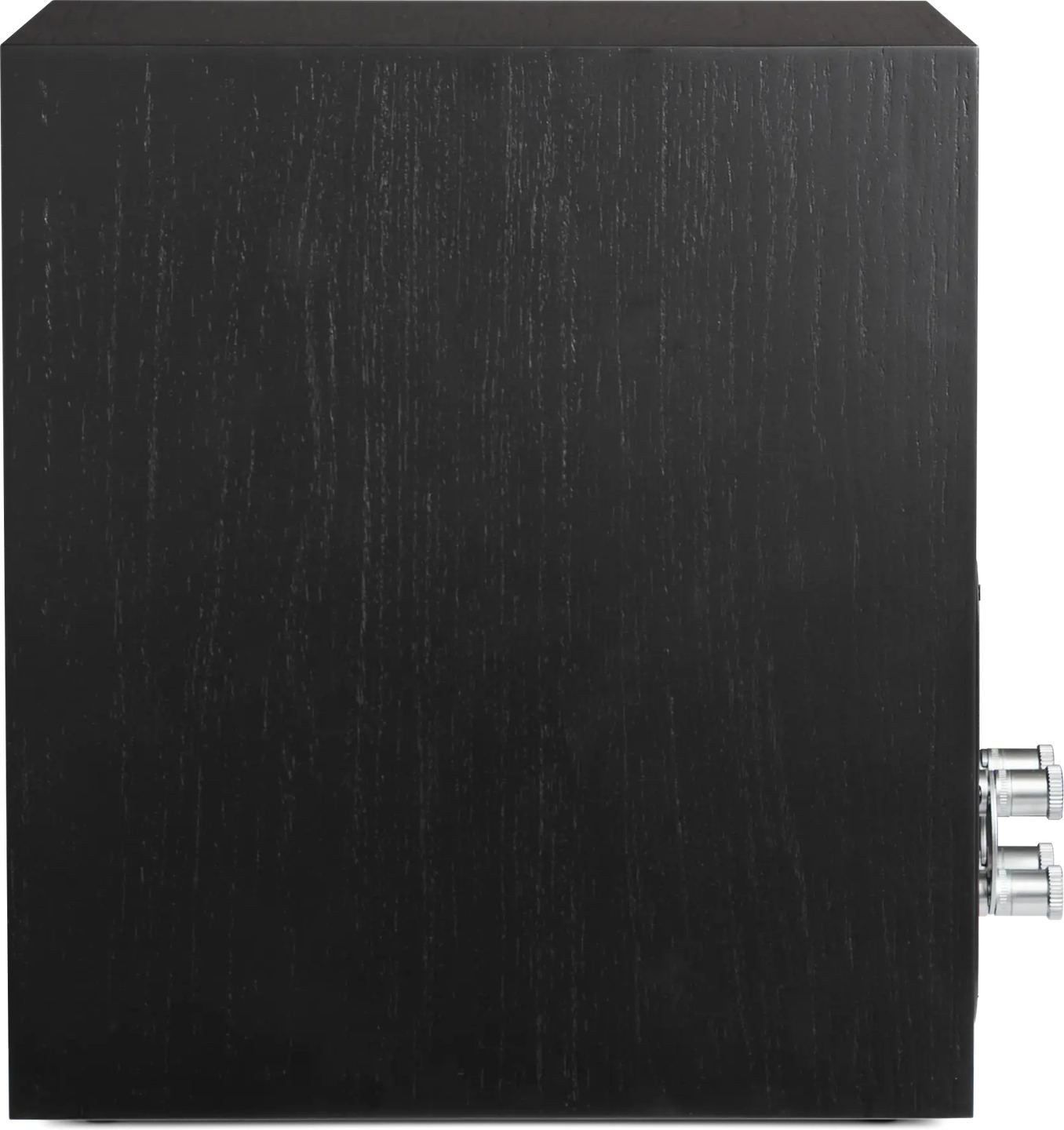
The cabinet is made of MDF with internal bracing. Paradigm offers the 120B v2 in four finishes: piano black gloss, black walnut, natural walnut, and satin white. The trim and driver rings feature an aluminum and stainless steel treatment that contrasts with the wood or lacquer depending on the selected version. A magnetic grille attaches to the front for listening when the speaker is not in direct view.
The package includes isolation pads. Placed on a shelf or on stands not included, the speaker benefits from decoupling its cabinet from the support: the pads limit the transmission of vibrations from the woofer-midrange driver to the supporting structure. On less rigid supports, the effect is noticeable, since a cabinet placed directly on them transmits part of the bass to the furniture.

Technical specifications
General design
- Type: 2-way bookshelf speaker with 2 drivers
- Enclosure: bass-reflex
- Integrated technologies: AL-MAC, AL-MAG, OSW, PPA
- Crossover: 2nd-order electro-acoustic at 1.2 kHz (tweeter / woofer-midrange)
Drivers
- Tweeter
- 25 mm AL-MAC ceramic dome
- Oblate spheroid waveguide (OSW)
- Perforated phase-aligning lens (PPA)
- Ferrofluid-damped and cooled
- Woofer / midrange driver
- 140 mm AL-MAG cone with very high excursion
- Perforated phase-aligning lens (PPA)
- Active Ridge Technology Gen3 (ART) with vertical surround mounting system
- 25 mm high-temperature multilayer voice coil on ventilated Apical former
Acoustic performance
- Frequency response (on-axis): ±3 dB from 62 Hz to 23 kHz
- Frequency response (30° off-axis): ±3 dB from 62 Hz to 20 kHz
- Low-frequency extension: 39 Hz (DIN)
- Sensitivity: 90 dB in-room, 87 dB anechoic
Electrical characteristics
- Recommended amplifier power: 15 to 130 W
- Maximum input power: 70 W
- Impedance: 8-ohm compatible
Dimensions and weight
- Dimensions (H × W × D): 30.5 × 17.8 × 30.7 cm
- Weight: 7.4 kg each
Available finishes
- Gloss Black, Black Walnut, Walnut, Satin White
Frequently Asked Questions
Should dedicated stands be planned, and what height should they be?
Stands are not included. For proper positioning, choose a height that places the tweeter at the seated listener’s ear level, between 60 and 75 cm depending on the listening position. A weighted stand (sand or lead shot) limits tube resonance and stabilizes the cabinet. Some stands are sold with a top plate drilled to the dimensions of the 120B v2, which simplifies fastening and improves coupling.
Does the 120B v2 work with an entry-level amplifier?
Yes, as long as the amplifier delivers at least 15 watts per channel into 8 ohms. An integrated amplifier around 50 watts per channel more than covers the needs in a medium-sized room. The 90 dB sensitivity under home conditions makes the 120B v2 more forgiving than average in its segment with modest amplifiers. The impedance curve has not been published by Paradigm, but the mention “compatible with eight ohms” suggests the absence of problematic dips across the audible spectrum.
What is the difference compared with the 220B v2 in the same series?
The 220B v2 is the bigger sister of the 120B v2 in the range. Its woofer-midrange driver increases to 15.2 cm instead of 14 cm, its cabinet volume is larger, and its low-frequency extension reaches 36 Hz according to the DIN standard versus 39 Hz for the 120B v2. The tweeter and overall philosophy remain identical. The 220B v2 is intended for larger rooms or louder listening, at the cost of taking up more space on a shelf or stands.
Can it be used as a rear speaker in a home theater system?
Yes. Its linear response and high sensitivity make it a coherent speaker for the rear channels of a 5.1 or 7.1 system, complementing front speakers from the same series. For maximum consistency, pair the 120B v2 with a 520LCR v2 or 620C v2 center speaker and 720F v2 or 820F v2 front speakers, which share the same tweeters and the same crossover design. An external subwoofer handles the LFE channel and relieves the main speakers below 60 Hz.
Does the front grille affect sound performance?
The 120B v2 comes with a magnetically attached grille. In principle, a grille placed in front of the drivers always introduces slight diffraction and a bit of treble absorption. Paradigm generally calibrates its frequency response curve with the grille in place, but the effect remains audible during careful listening. For refined musical stereo listening, removing the grilles gives a slightly more open treble. For everyday use or in a household with children or pets, putting them back on protects the drivers without any prohibitive degradation.
- Eco-contribution included in the sale price.