

Feliks Audio Envy Performance walnut




Overview
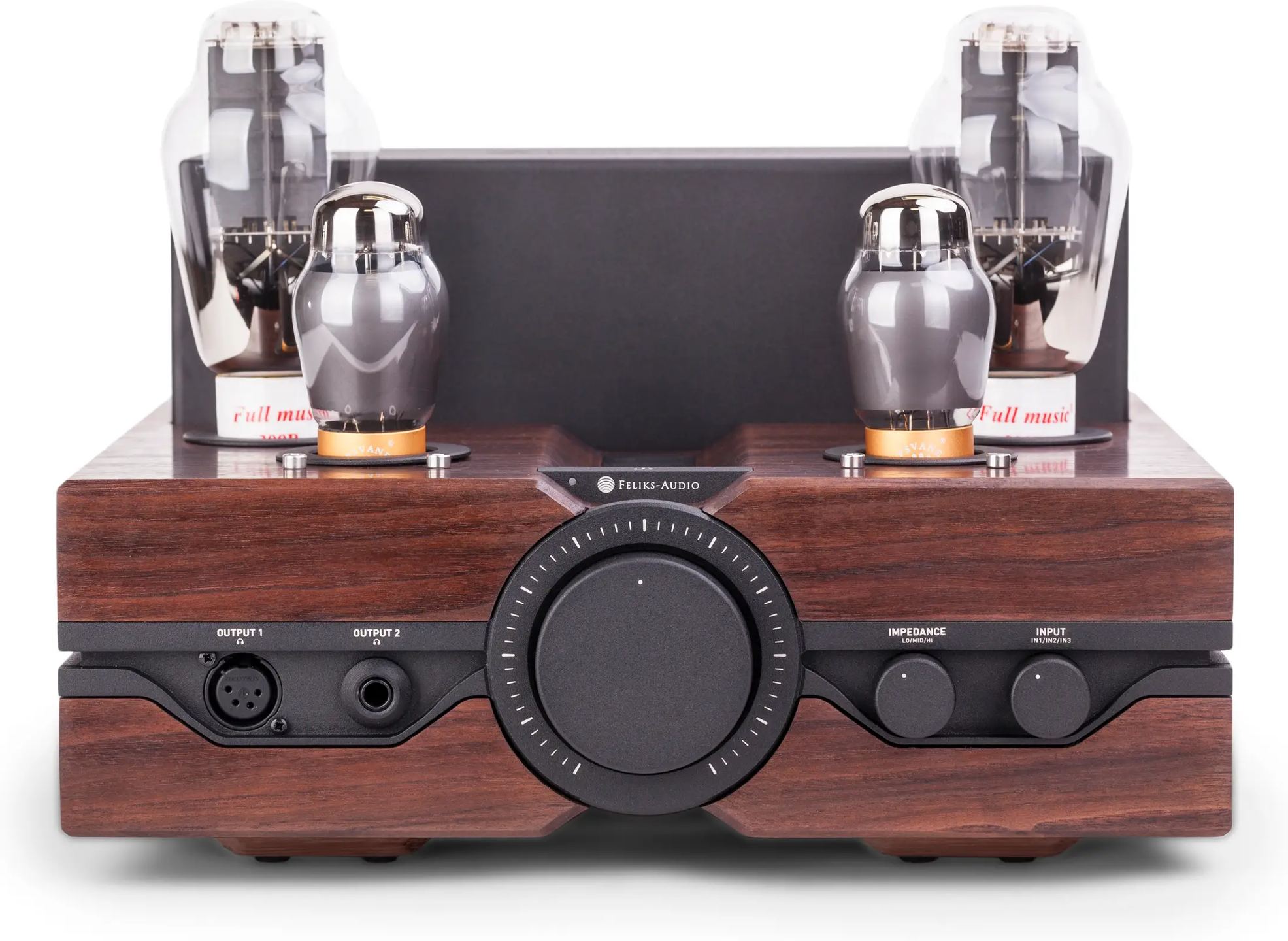
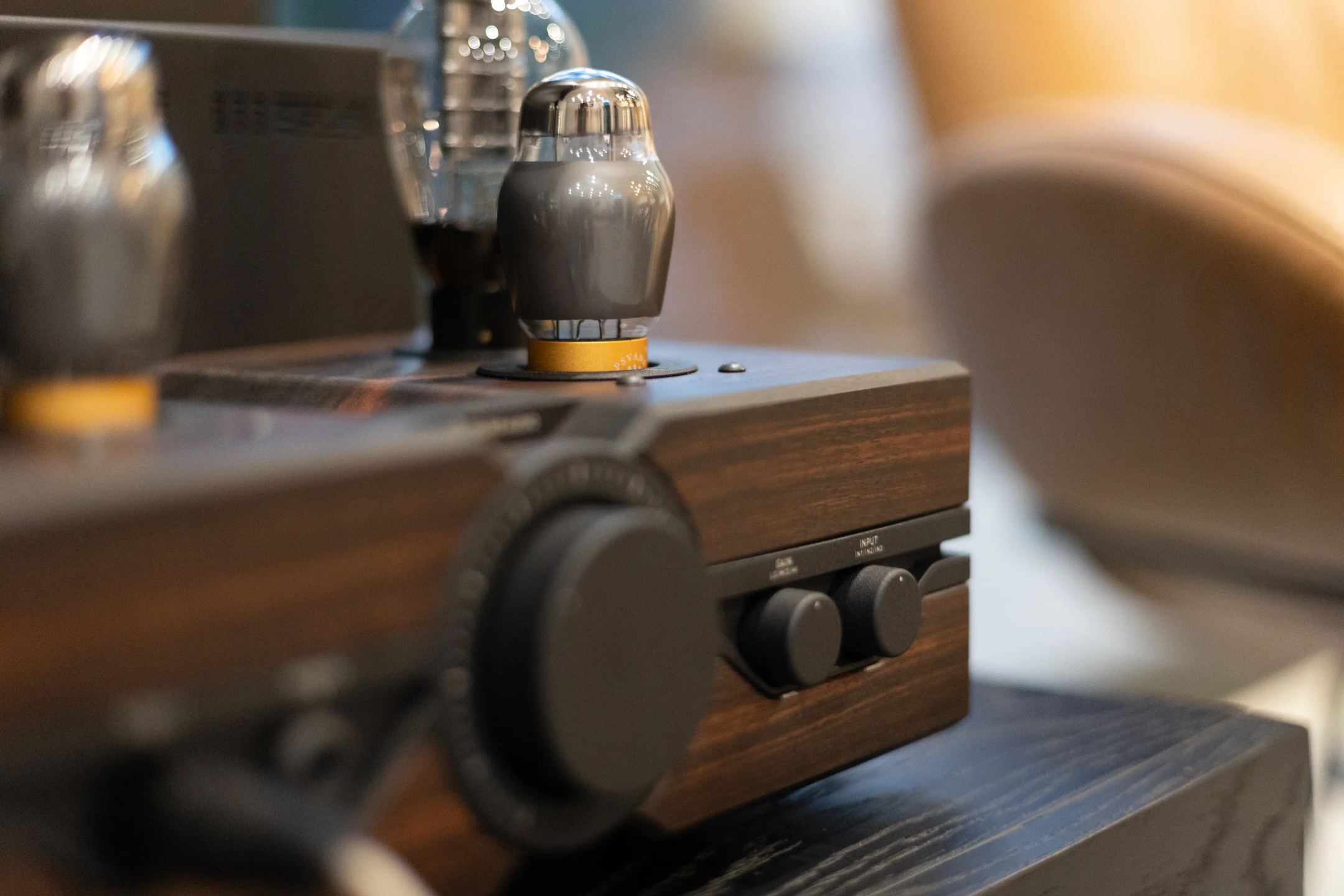
Building a headphone amplifier around two 300B tubes is a deliberate choice: prioritizing the harmonic richness of a directly heated triode over brute power. Feliks Audio takes this logic all the way to transformer coupling and point-to-point wiring, in a solid aluminum chassis topped with a stabilized wood plate. The walnut finish here dresses the most advanced version in the range, hand-assembled in Poland.

The bet on the 300B triode in Single-Ended
The 300B is a directly heated triode introduced in the 1930s, prized for the smoothness of its midrange and the coherence of its timbre. The Envy Performance runs it in pure class A, in a Single-Ended configuration, with output transformer coupling. This design does away with feedback: the signal is never reinjected to correct deviations, which preserves the tube’s character at the cost of higher distortion than a transistor design. Total harmonic distortion stays around 0.5% under normal operating conditions (600 ohms, 5 V) and rises toward 5% at full power, an accepted hallmark of an uncorrected tube circuit. Biasing is automatic and the filaments of the power tubes are supplied with direct current by a circuit isolated from the audio path, to keep hiss under control. Power reaches 8 watts into 16 ohms, enough to drive current-hungry planar magnetic headphones. Frequency response extends from 8 Hz to 100 kHz.
Four carefully selected tubes
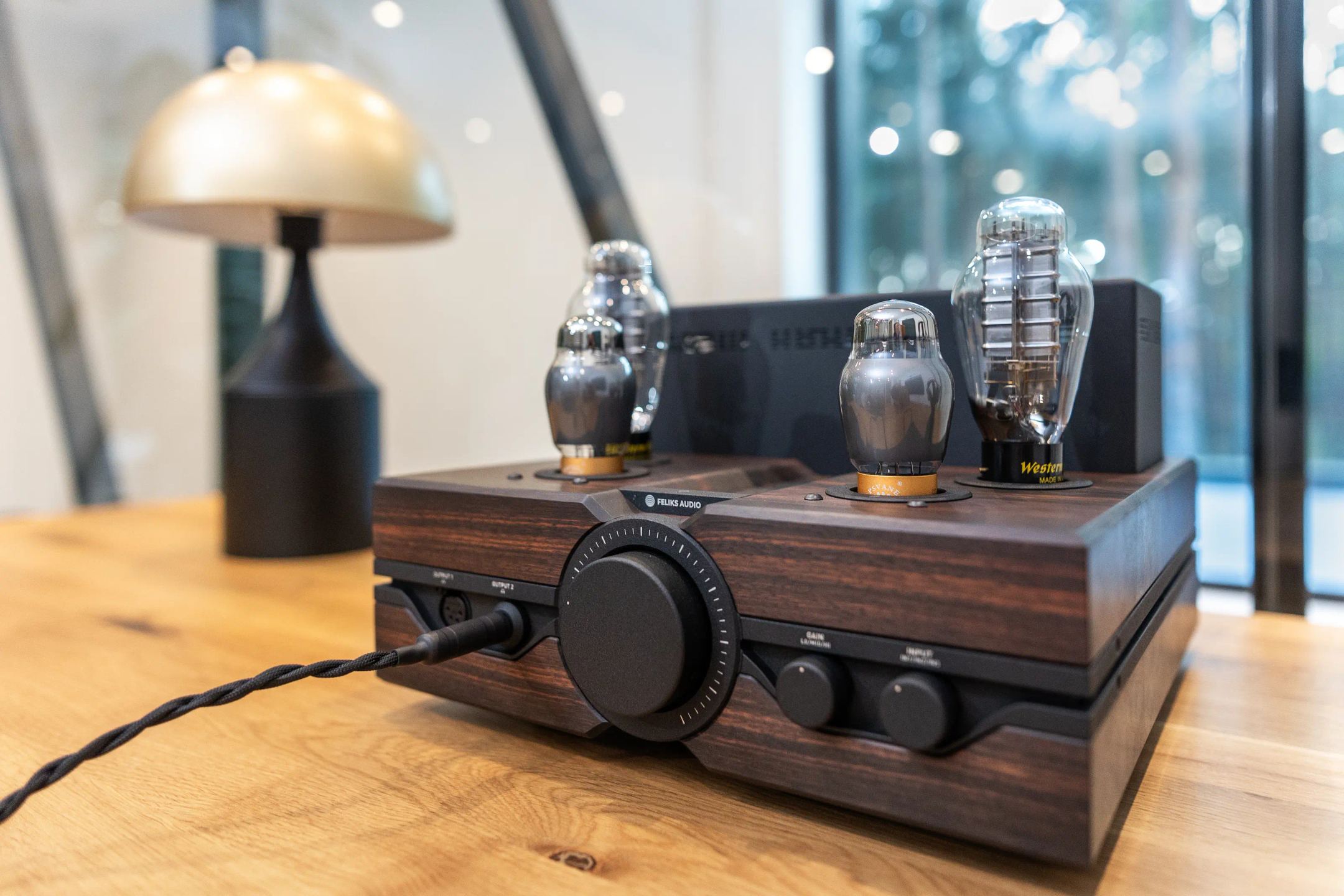
The power stage is based on two Psvane WE300B Full Music tubes, a high-end replica of the original Western Electric tubes, supplied as a matched pair. Upstream, two Psvane CV-181 Mk2 tubes handle the drive stage: this is the equivalent of the 6SN7 dual triode, selected for this driver role. The use of matched tubes is intended to ensure symmetry between channels, a condition for a stable stereo image. The tubes remain visible on top of the enclosure, with small protective grilles designed to prevent burns from contact with the drivers when the Envy is operating.
A fully hand-wired design
No printed circuit boards: the connections are soldered point to point, using an “air wiring” technique. On the Performance version, this internal wiring uses Teflon-insulated UPOCC single-crystal copper, whose continuous structure limits internal breaks in the conductor. The coupling capacitors are Mundorf Supreme units, in their Silver, Gold, and Oil versions. Selected Lundahl transformers handle the balanced conversion of XLR connections. Everything is assembled by hand in Poland, where the brand has been designing and tuning its electronics for more than twenty years.
Three gain settings for 16 to 600 ohms
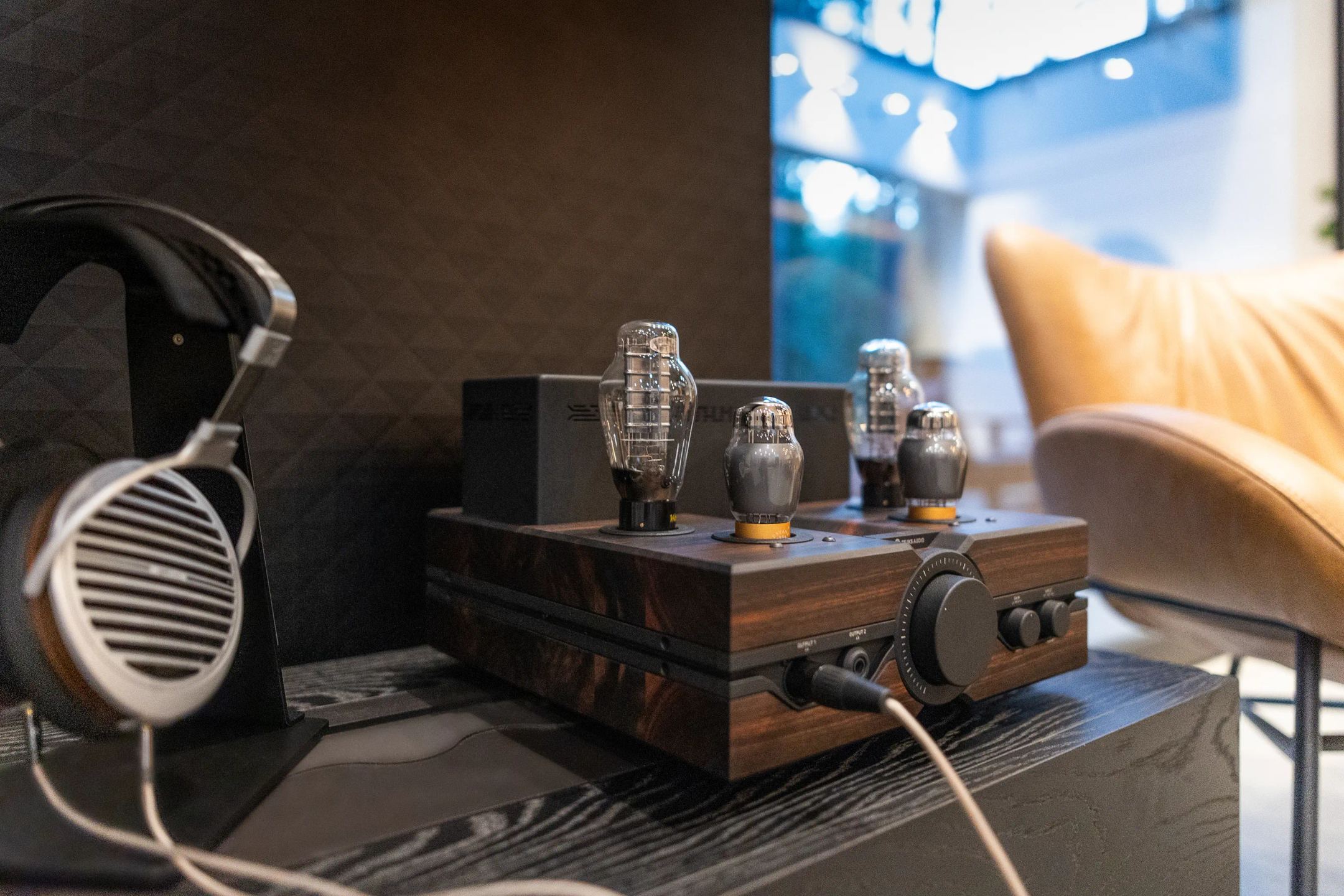
A three-position gain selector adjusts the output voltage to the impedance of the connected headphones. The LO position covers models up to 60 ohms, MID takes over from 60 to 300 ohms, and HI handles the 300 to 600 ohm range. On paper, the Envy accepts any impedance between 16 and 600 ohms, whether dynamic or planar magnetic headphones. Setting the gain too high on sensitive headphones can lead to audible background noise or a shortened volume range: the right setting depends on the headphones, not once and for all.
A preamplifier in addition to the headphone amp
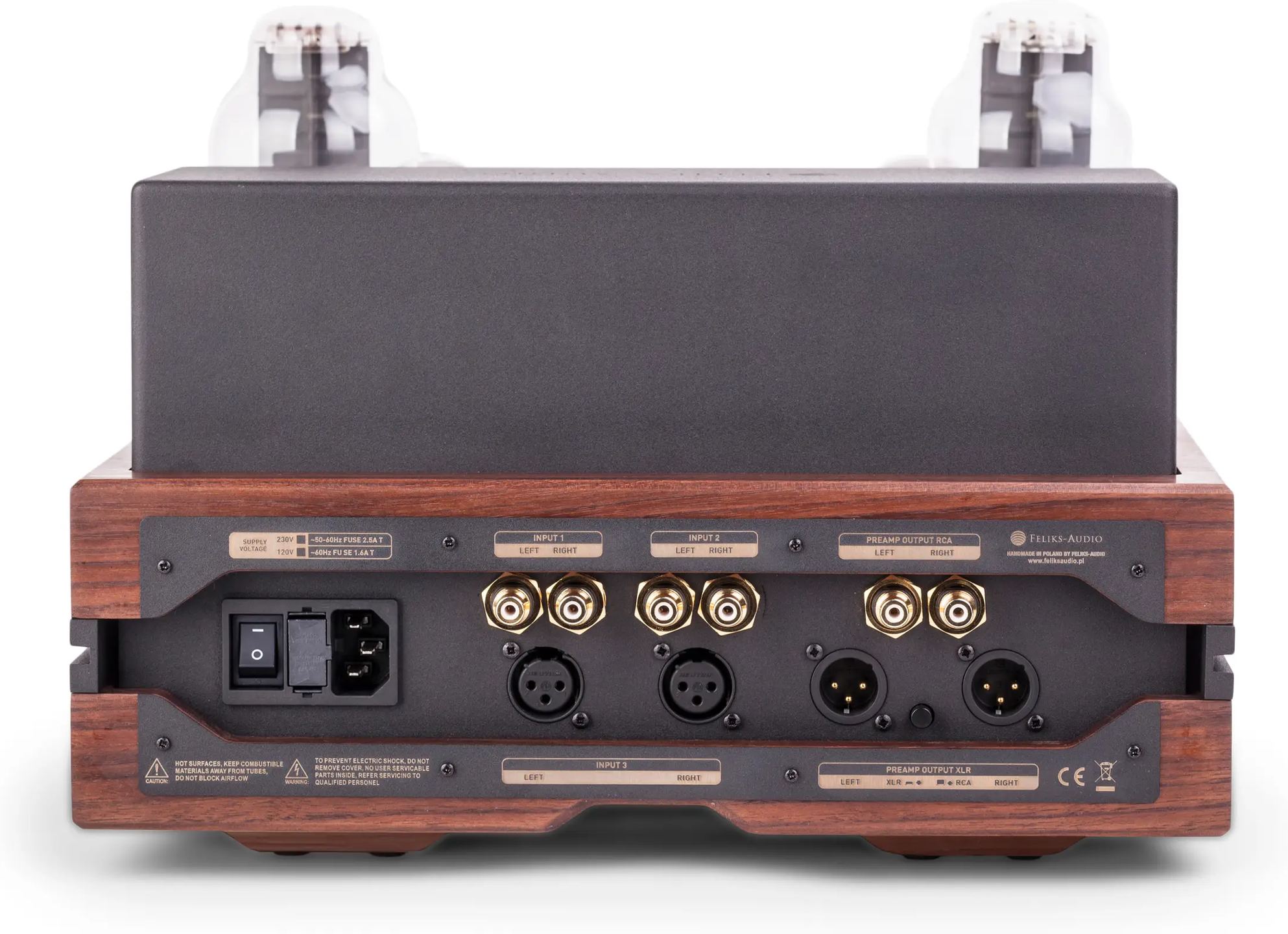
On the front panel, two headphone outputs coexist: an unbalanced 6.35 mm jack and a four-pin XLR socket for balanced connection, often preferable on this type of electronics for its lower background noise. At the rear, the Envy accepts up to three sources: two unbalanced RCA inputs and one balanced XLR input, with an input impedance of 100 kΩ on RCA and 10 kΩ on XLR. The preamp outputs, one RCA pair and one XLR pair, open up a second use: driving an external power amp connected to speakers. In this role, output voltage rises up to 10 V RMS, controlled by the volume.
Solid aluminum and walnut plate
The chassis is machined from a block of solid aluminum, topped with a stabilized wood plate. The walnut finish brings a dark grain, treated to resist variations in humidity. At 355 mm wide, 245 mm high, and 333 mm deep for nearly 15 kg, the Envy requires a clear surface on a desk or low cabinet, tube height included. Standby is controlled by a touch-sensitive button placed on top, near the logo: elegant, it can be triggered accidentally, by an animal for example, hence the usefulness of the physical switch placed at the rear for completely cutting the power supply.
Technical specifications
Design and manufacturing
- Type: tube headphone amplifier, pure Single-Ended Class A, fully balanced
- Output transformer coupling
- Point-to-point wiring, point-to-point soldering
- Handmade in Poland
Tubes
- Power tubes: 2x Psvane WE300B Full Music (high-end Western Electric replica), matched pair
- Driver tubes: 2x Psvane CV-181 Mk2 (6SN7), selected
Audio performance
- Output power: 8 W RMS into 16 ohms
- Frequency response: 8 Hz to 100 kHz
- THD: 0.5% (600 ohms, 5 V), maximum 5% (8 W)
- Input sensitivity: 1 V RMS
- Maximum preamp voltage: 10 V RMS
Headphone compatibility
- Supported headphone impedance: 16 to 600 ohms
- Optimal headphone impedance: 16 to 600 ohms
- Three-position gain selector
- LO: up to 60 Ω
- MID: 60 to 300 Ω
- HI: 300 to 600 Ω
Connectivity
- Inputs
- 2x unbalanced RCA (IN1, IN2)
- 1x balanced XLR (IN3)
- Input impedance: 100 kΩ (RCA), 10 kΩ (XLR)
- Front headphone outputs
- 1x 6.35 mm unbalanced jack
- 1x 4-pin balanced XLR
- Rear preamp outputs
- 1x RCA (Single Ended)
- 1x XLR (Balanced)
Components
- Capacitors: Mundorf Supreme Silver / Gold / Oil
- Transformers: selected Lundahl
- Internal wiring: UPOCC single-crystal copper (Single Crystal Copper), point-to-point
Chassis and finishes
- Chassis: machined solid aluminum
- Top plate: premium stabilized wood
Physical characteristics
- Dimensions (W x H x D): 355 x 245 x 333 mm
- Weight: approximately 15 kg
Frequently Asked Questions
Do you need a separate digital source to use the Envy Performance?
Yes. The Envy is an analog amplifier: it includes neither a digital-to-analog converter nor a network player. It therefore needs an upstream source, whether a DAC connected to a computer or network player, a turntable routed through a phono preamp, or another line-level source. The connection is then made to one of the RCA inputs or to the balanced XLR input.
How long should the tubes warm up before listening?
A tube amplifier benefits from running for about fifteen minutes before a listening session, giving the components time to warm up and stabilize. The sound tends to gain coherence and foundation once this warm-up period has passed. Cutting the power with the rear switch between extended periods of non-use avoids unnecessarily stressing the tubes, which remain consumable parts.
What distinguishes the Performance version from the standard Envy?
The Performance version receives Full Music 300B power tubes in place of the Electro-Harmonix tubes of the standard version, and its internal signal wiring uses UPOCC single-crystal copper rather than conventional OFC copper. The circuit, power, and connectivity remain identical between the two. The difference therefore comes down to the quality of the tubes and the conductors in the audio path.
Do 300B tubes wear out, and are they replaceable?
Yes, tubes are wear parts whose lifespan is measured in thousands of hours depending on usage. They can be replaced without any particular difficulty, and the Envy’s automatic biasing avoids manual bias adjustment with each change. The driver-stage CV-181 tubes and the 300B power tubes can be replaced independently, each having its own lifespan.
Can other tubes be fitted besides those supplied?
The 300B and the 6SN7 (of which the CV-181 is the equivalent) are standardized types, manufactured by several makers. Compatible tubes from other brands can therefore be fitted in the Envy, with automatic biasing handling variations between references. This practice alters the tonal character depending on the tubes chosen. It is best to verify the electrical compliance of each model before installing it.
- Eco-contribution included in the sale price.
- Manufacturer reference: FELIKS-ENVY-PERF-WLT




