Philips OLED 810 and 910: what are the differences between these two series?
May 26, 2025
Contents
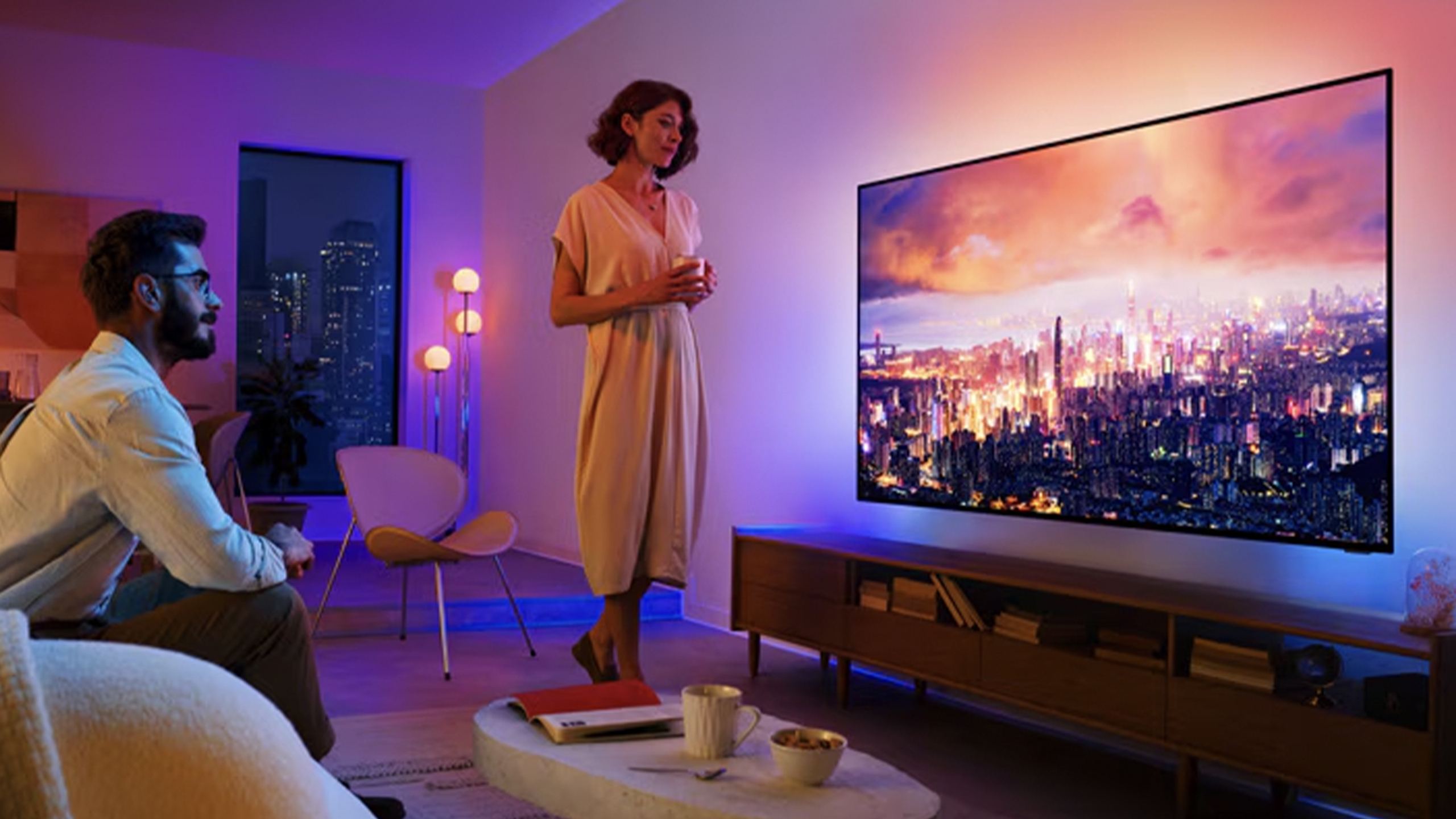
Philips unveils its new OLED 810 and 910 series for 2025, marking a significant evolution in its product strategy. These televisions feature distinct panel technologies and target complementary market segments, from mid-range to high-end. The OLED 810 retains the proven OLED EX technology, while the OLED 910 adopts LG Display’s new Primary RGB Tandem panel, positioning each series with technical features and pricing tailored to their respective audiences.
Panel Technologies: Two Distinct Approaches
The OLED 810 series relies on LG Display’s OLED EX technology, an evolution of traditional OLED panels that incorporates deuterium to improve luminous efficiency. This technology achieves a peak brightness of 1500 cd/m² on the 55, 65, and 77-inch models, while the 42 and 48-inch versions are limited to 1000 cd/m² with classic OLED panels. The native refresh rate is 144 Hz, providing smoothness appreciated for gaming and sports content.
The OLED 910 marks Philips’ adoption of LG Display’s Primary RGB Tandem technology, also known as META 3.0. This revolutionary panel abandons the three-layer architecture of previous generations for a four-layer structure, separating the red and green elements into distinct layers positioned between two blue layers. This configuration achieves a peak brightness of 3700 cd/m² in small windows and 350 cd/m² in full screen, a significant leap compared to previous generations.
The new panel also offers extended color coverage with 99.5% of the DCI-P3 space and 83% of BT.2020. An ultra-efficient anti-reflective coating blocks 99% of unwanted reflections, greatly improving readability in bright environments.
Processors and Artificial Intelligence
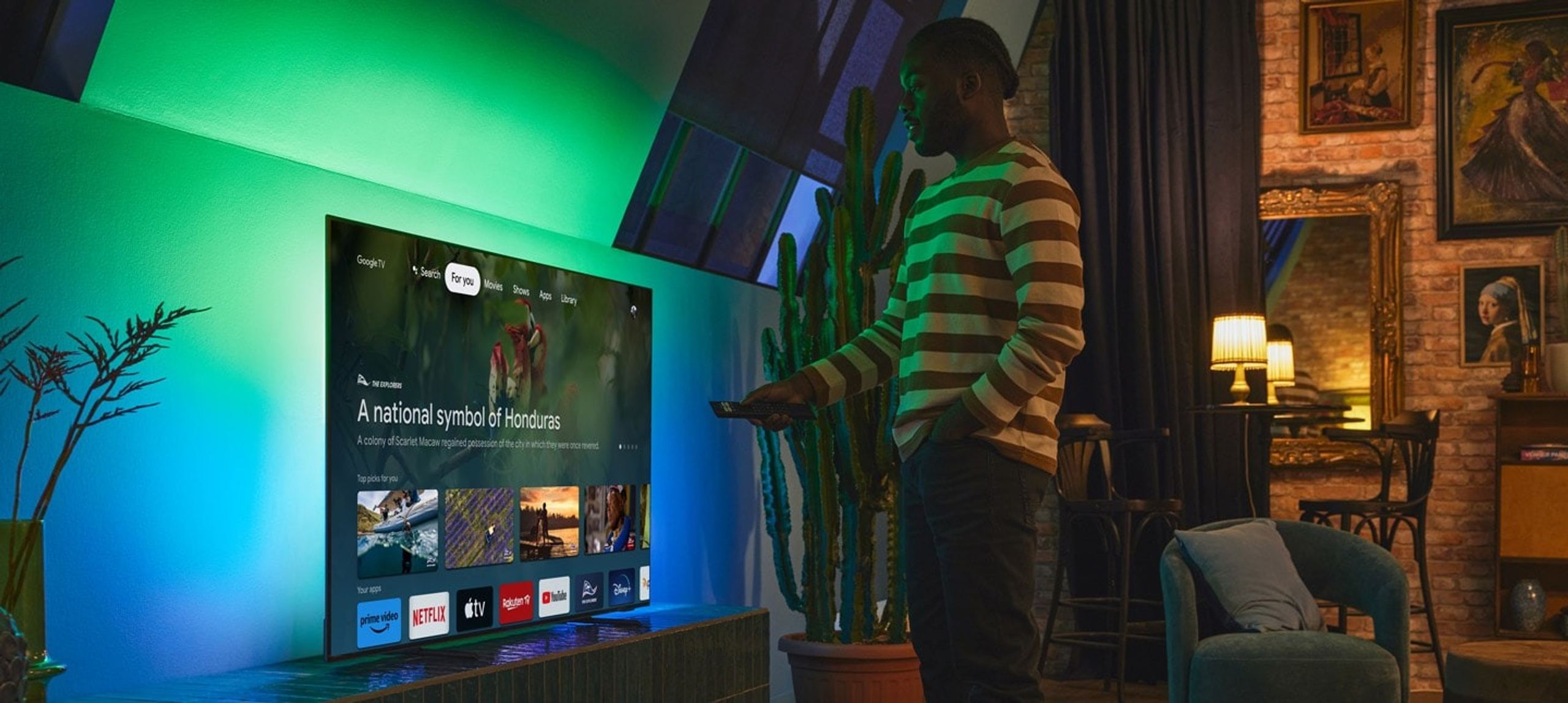
Both series benefit from the ninth-generation P5 AI Perfect Picture Engine processor in identical configurations. The processor introduces several notable innovations, including Adaptive Intelligence, which analyzes metadata, source information, and the environment to automatically optimize display settings. The AI Adaptive Gamut Enhancer is a particularly interesting new feature: it extends the panel’s native color gamut to Rec.709 content without altering skin tones, with three adjustment levels (natural, balanced, vibrant).

Image Enhancement Features
The processor also includes improved versions of Philips’ proprietary algorithms: Machine Learn Sharpness V3, AI Smart Bit Enhancement V4, and AI Perfect Reality V4. These systems use machine learning to analyze and optimize sharpness, compression, and overall image rendering in real time. Both series also support Calman AutoCal automatic calibration and manual calibration for advanced users.
Integrated Audio Systems
The OLED 810 features a 2.1 audio system delivering a total power of 70W (50W for the 42-inch model). The configuration includes four 10W speakers for mid-high frequencies and a 30W subwoofer with balanced Triple Ring Quad PR technology. This architecture provides balanced sound for everyday use without the need for external audio equipment.
The OLED 910 stands out with its 3.1 audio system developed in partnership with Bowers & Wilkins, delivering a total power of 80W. This setup includes six 8.5W speakers for mid-high frequencies and a 30W subwoofer. The main speakers feature B&W technology with bi-directional midrange drivers and tweeters, while the subwoofer benefits from B&W’s balanced Quad PR technology. This premium audio signature offers superior sound spatialization and increased dynamics compared to the 810 series.
Connectivity and Gaming Compatibility
Both series include four HDMI ports with a hybrid configuration: HDMI ports 1 and 2 support the HDMI 2.1 standard with full 48 Gbps bandwidth, allowing 4K signals up to 144 Hz, while HDMI ports 3 and 4 are limited to HDMI 2.0. eARC (enhanced Audio Return Channel) compatibility on HDMI-2 enables high-definition audio transmission to compatible soundbars.
VRR (Variable Refresh Rate) operates in a range from 40 to 144 Hz, ensuring optimal synchronization with gaming consoles and PCs. The OLED 810 is FreeSync Premium certified, while the OLED 910 boasts FreeSync Premium Pro certification, offering an extended dynamic range for HDR gaming. Both series support G-Sync and ALLM (Auto Low Latency Mode), which automatically activates game mode when a gaming source is detected.

Ambilight and Exclusive Features
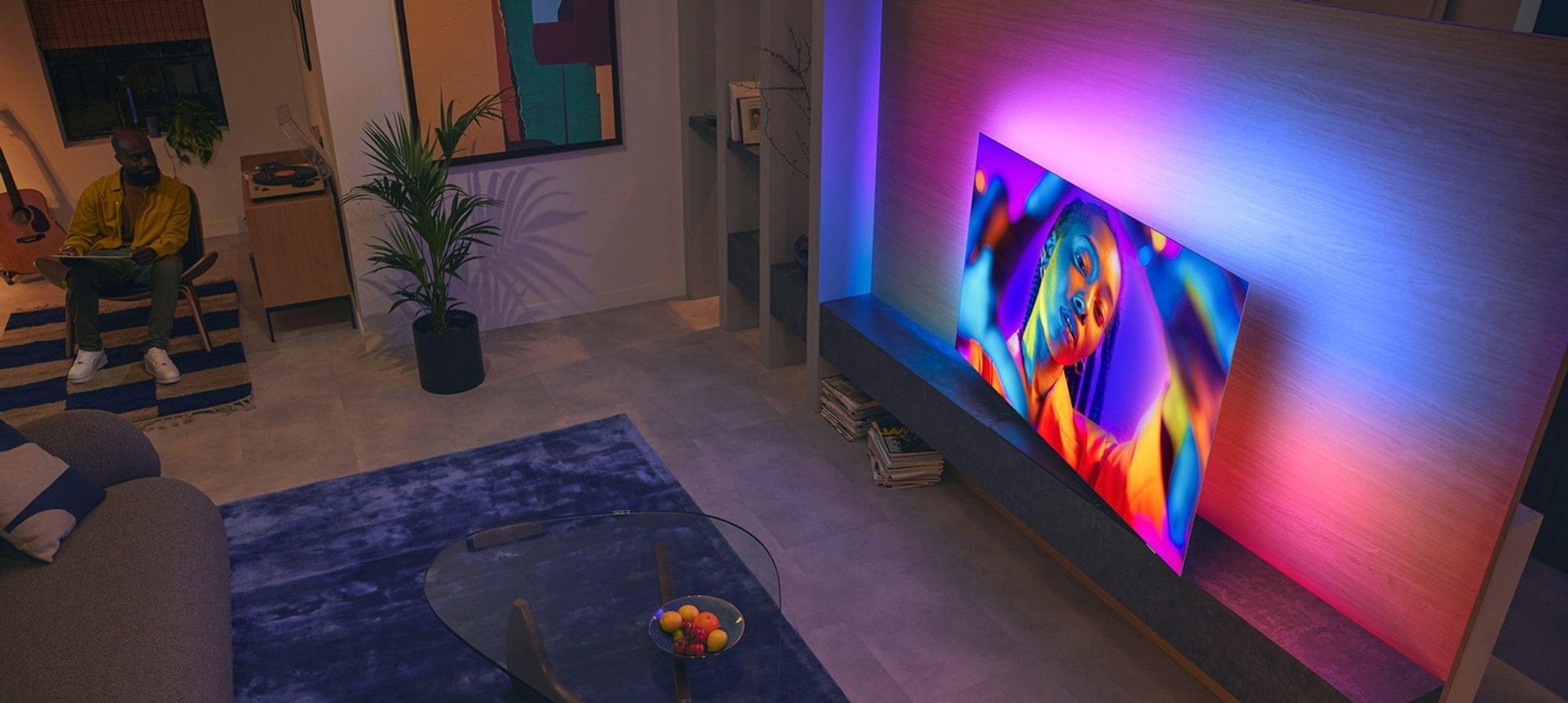
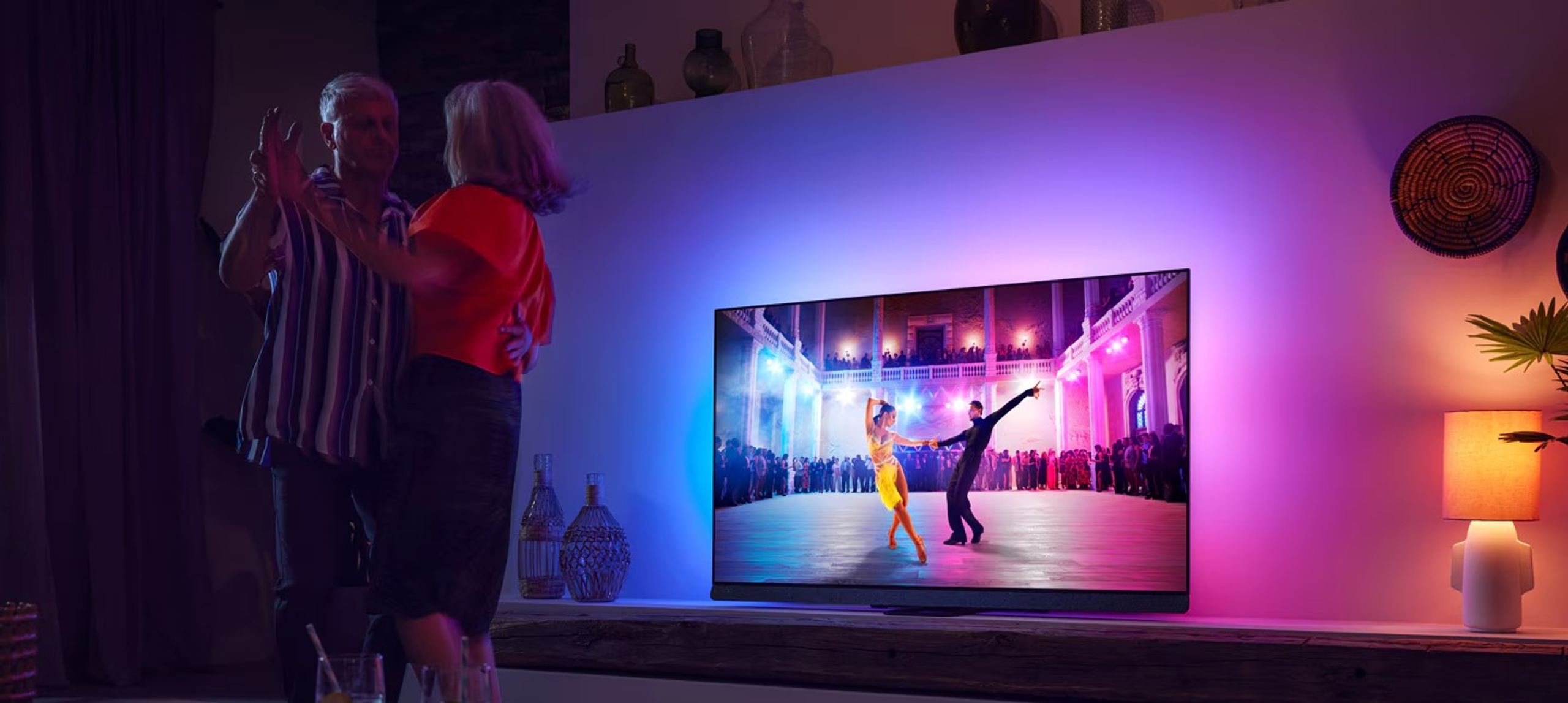
The OLED 810 features three-sided Ambilight, synchronizing the peripheral LEDs with the colors displayed on the screen. This proprietary Philips technology projects the dominant hues of the image onto the rear wall, creating a consistent ambient lighting effect. Available modes include wall color adaptation, game and music modes, as well as the full Ambilight suite.
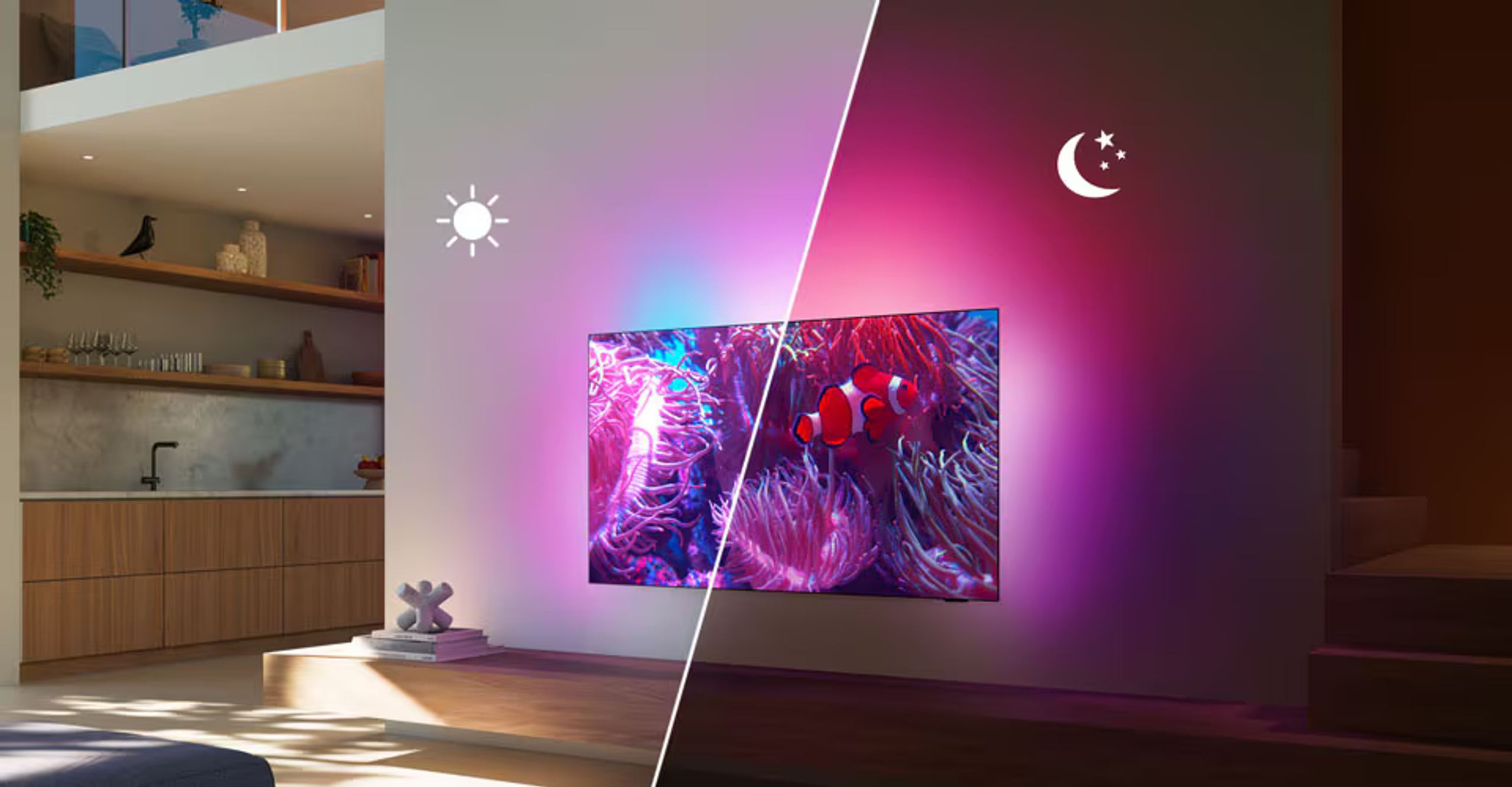
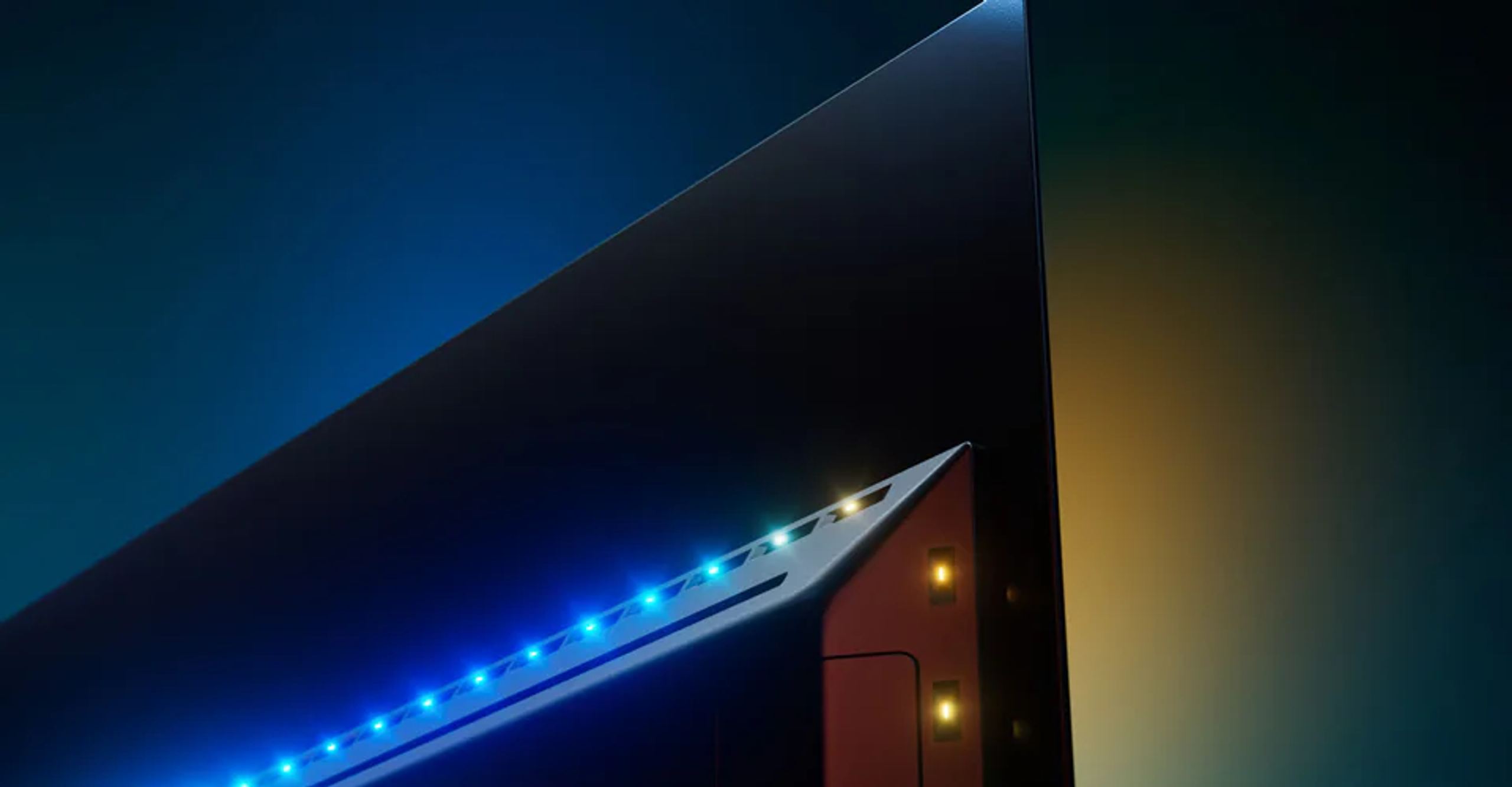
The OLED 910 features four-sided Ambilight, extending the lighting effect around the entire perimeter of the TV. This series also introduces the AmbiSleep function, a new feature that uses Ambilight lighting to create a relaxing atmosphere conducive to falling asleep, with gentle transitions of color and intensity.
Advanced Game Bar
Both series benefit from Game Bar 2.0, a dedicated gaming interface that automatically recognizes popular titles and applies the corresponding optimized settings. This feature allows you to save custom profiles for each game and quickly access performance settings. An integrated frame rate counter makes it easy to optimize settings.
Connected Ecosystem
Both series run on Google TV with 32 GB of flash memory and support major streaming apps (Netflix, Disney+, Amazon Prime Video, YouTube, Apple TV). Integration with Hey Google and Alexa voice assistants enables full voice control, while compatibility with Apple Home, Control4, and Apple AirPlay makes it easy to integrate into existing smart home ecosystems.

Product Range Strategy
This structure allows Philips to effectively cover the OLED market, with the OLED 810 positioned against the LG C5 and Samsung S90, while the OLED 910 competes with premium models like the LG G5 and Panasonic Z95B. The adoption of differentiated panel technologies and distinct audio signatures provides a coherent gradation while preserving the technical specificities of each segment.
Both series will be available from June 2025, with the OLED 810 offering five sizes (42, 48, 55, 65, and 77 inches), while the OLED 910 is limited to 55, 65, and 77 inches, reflecting its premium positioning.
Frequently Asked Questions
Technical comparison between OLED 810 and OLED 910: major differences The OLED 910 stands out from the 810 with higher brightness, a next-generation P5 AI processor, and more advanced Dolby Vision compatibility. It also features a Bowers & Wilkins sound system on certain models and four-sided Ambilight, compared to three for the 810.
How does the Ambilight function adapt to different modes like music or gaming? Ambilight analyzes the displayed content in real time. In game mode, it favors dynamic colors to enhance immersion, while in music mode, the LEDs react to rhythms and beats to create a synchronized and immersive atmosphere.
Technological advancements compared to previous generations The OLED 810/910 feature brighter panels, optimized image processing via the P5 AI Perfect Picture Engine, and better real-time contrast management. Latency times have also been reduced, offering a smoother gaming experience.
What are the differences between AmbiSleep and classic Ambilight mode on the 910? AmbiSleep is designed to promote falling asleep by emitting soft, gradually dimming light. Unlike classic Ambilight, which follows the content, AmbiSleep uses a palette of soothing colors independently of the on-screen image.
How does the P5 AI Perfect Picture Engine optimize the image for each display mode? The P5 AI engine analyzes the type of content (sports, movies, games, etc.) and adjusts sharpness, colors, contrast, and motion in real time. It uses artificial intelligence to enhance details while avoiding over-sharpening.
What improvements have been made to image and sound management on both products? Updates have refined HDR processing, corrected certain artifacts in dark scenes, and improved white balance. On the audio side, automatic equalization and compatibility with immersive formats (Dolby Atmos, DTS) have been enhanced.

You may also like to read
 PS5 and Xbox Series X: the best HDMI 2.1-compatible TVsComparisons and buying guides
 QLED, OLED, Mini LED, QD-OLED: which TV technology should you choose?Comparisons and buying guides
 Panasonic unveils its 2026 TVs: what are the differences between the W80C, W90C, W92C and W95C?Hi-fi and home cinema news
 How high should you mount your TV on the wall (and why everyone mounts it too high)Tutorials and practical guides
 Amplifier or speakers: how to allocate your hi-fi budgetConcepts and technologies
 OLED image: Is burn-in still a real risk in 2026?Concepts and technologies