

Phono Preamps for Turntables
The phono preamp amplifies the very weak signal delivered by the phono cartridge of a turntable and applies RIAA equalization, essential for restoring the correct tonal balance. Without it, no vinyl record can be played on a hi-fi system. Separate audio unit or circuit built into the amplifier or turntable: we explain how to choose your phono preamplifier according to your cartridge, MM or MC, your budget, and your equipment. Learn more
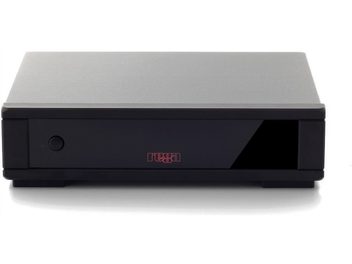
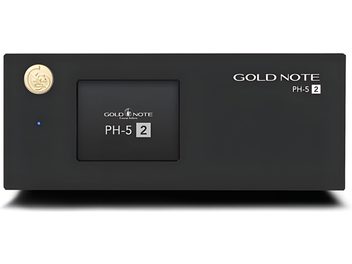
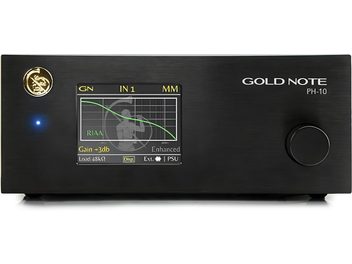
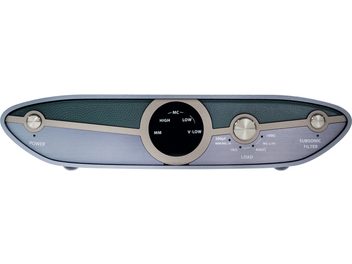
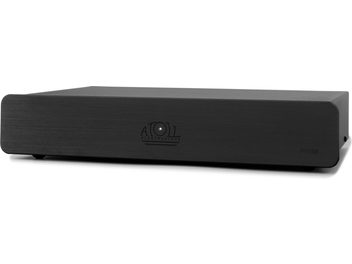
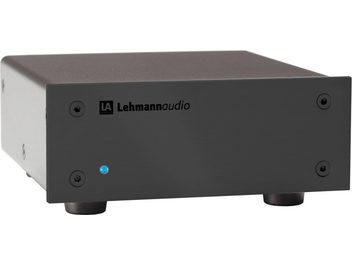
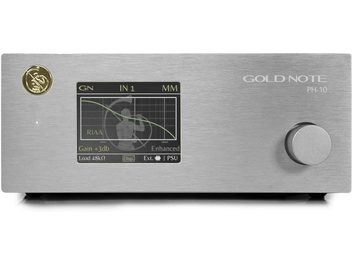
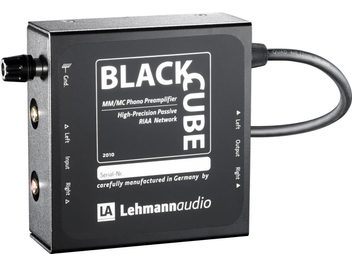
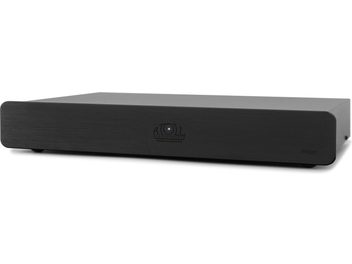
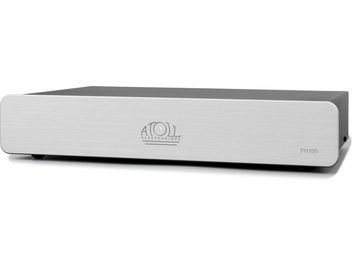
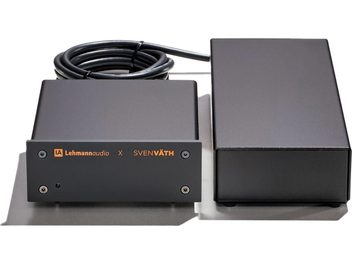
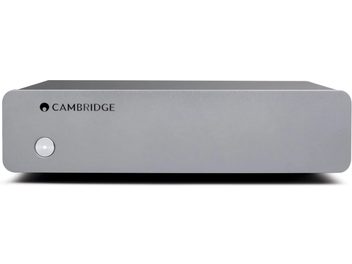
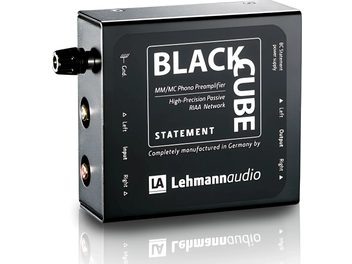

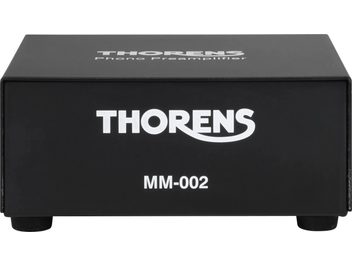
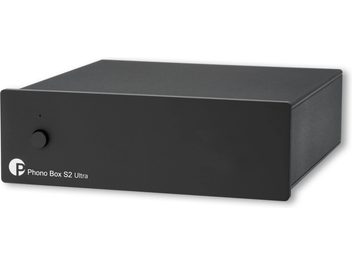
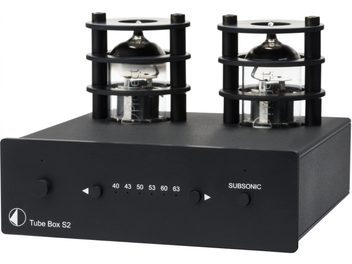
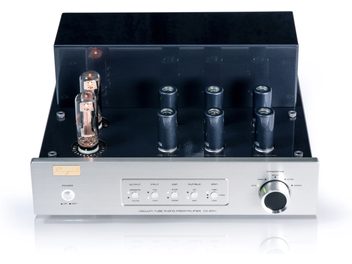
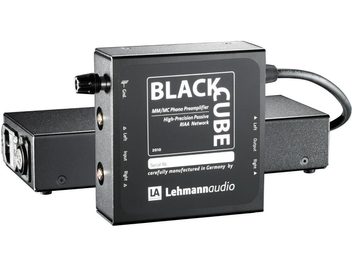
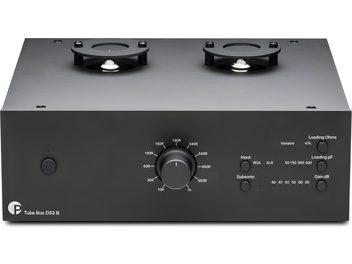
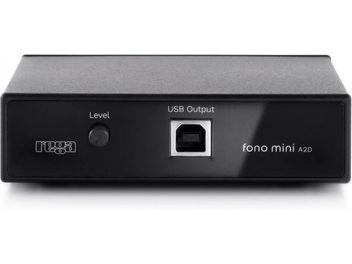
What is a phono preamplifier used for
A phono cartridge produces an analog signal of a few millivolts, sometimes less than one millivolt for moving coil models. That is a thousand times weaker than the output of a CD player or an audio streamer. The phono preamp therefore has a first mission: to amplify this signal up to the line level expected by a stereo amplifier, with as little noise as possible.
Its second mission is just as important. When a vinyl record is cut, low frequencies are attenuated and highs are emphasized according to a standardized curve, the RIAA curve. During playback, the preamplifier applies the inverse curve to restore the original balance. The quality of a phono stage is judged first by the precision of this correction: a difference of a few tenths of a decibel can be heard in the accuracy of the timbre.
Connecting a turntable directly to a line input produces a thin sound, with no bass and barely audible. If you hear this symptom, a phono preamp is simply missing from the chain.
Built-in preamp or separate unit
Three configurations exist. Some turntables include a switchable phono preamp: practical for getting started or for connecting the turntable to a powered speaker, a Bluetooth speaker, or a soundbar. Many hi-fi amplifiers offer a dedicated phono input, often limited to moving magnet cartridges. The third option, the separate unit, offers the best sonic potential: carefully designed power supply, circuits kept away from interference, and the possibility of upgrading your equipment step by step.
An external phono preamp connects between the turntable and the amplifier with a stereo RCA analog cable, plus a ground wire to eliminate hum. A quality phono cable with low capacitance matters in the final result, just like the turntable’s other accessories. Beware of doubling up: if the turntable has an activated built-in circuit, you must use a line input, never a phono input, otherwise you will get double amplification and distortion.
MM or MC cartridge, compatibility above all
Choosing a phono preamp depends first on the type of cartridge mounted on the turntable. Moving magnet cartridges (MM, for moving magnet) deliver about 3 to 6 mV and require a gain of 38 to 45 dB with a standardized load of 47 kohms. Moving coil cartridges (MC, for moving coil) go below one millivolt and require a gain of 55 to 70 dB, with adjustable impedance, generally between 50 and 1000 ohms.
A phono preamp compatible with MM and MC cartridges covers both cases and supports future upgrades to your turntable. MM-only models remain relevant if you never plan to switch to moving coil: at the same price, they concentrate quality on a single circuit. Some devices also accept high-output MC cartridges on the MM input, a useful flexibility.
The settings that change the listening experience
On an advanced phono preamplifier, several parameters can be adjusted, via switches, micro-switches, or front-panel controls.
Gain is chosen according to the cartridge’s output level. Too low, it forces you to turn up the volume and raises background noise; too high, it overloads the amplifier.
Load impedance, on the MC side, directly modifies the treble response. A value that is too low dulls the top end, while a value that is too high makes it aggressive. The right compromise is refined by ear, starting from the cartridge manufacturer’s recommendation.
Capacitance concerns MM cartridges: a few dozen or hundred picofarads, cable included, shift a resonance in the extreme treble and change the perceived presence.
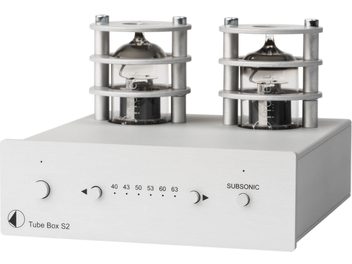
Finally, the subsonic filter cuts the very low frequencies generated by a warped record or vibrations. This filter protects the speakers, especially bass-reflex models, without affecting the audible musical content.
Transistors, tubes, and digital outputs
Most phono preamps use transistors: low background noise, reliability, compact size. Tube models provide a different sound rendering, often described as denser on vocals and strings, at the cost of slightly higher hiss and long-term maintenance (tubes need to be replaced).
Some audio devices add a digital USB output to digitize vinyl records on a computer, a headphone output for quiet listening, or even Bluetooth transmission to wireless speakers or a hi-fi headphone. These features are useful, provided that the analog section remains the design priority: it is what determines the final sound quality.
What price for what level of results
The first decent units can be bought for a few dozen euros: fixed gain, MM input, honest RIAA equalization. That is already a clear improvement over the circuit in an entry-level turntable. Between 100 and 400 euros, component quality improves, power supplies become more robust, and settings appear, often with MC compatibility. Beyond that, a high-end phono preamp focuses on a separate power supply, dual-mono circuits, RIAA precision to within a tenth of a decibel, and a signal-to-noise ratio that preserves all the dynamics of well-cut records.
The usual rule of proportion: the phono preamp deserves a budget comparable to that of the cartridge. An ambitious cartridge connected to a mediocre preamplifier will never deliver what it is worth, and the reverse is just as true.
How to choose in practice
This guide can be summed up in four questions. Which phono cartridge is fitted to your turntable, MM or MC, and what is its output level? Does your amplifier already have a phono input, and of what type? Do you want gain and load settings to fine-tune the listening experience or upgrade the cartridge later? Do you need additional features like USB digitization or a headphone output?
Comparing specifications helps sort the models: signal-to-noise ratio, stated RIAA accuracy, gain ranges, and impedance ranges. Listening remains the final judge, ideally on your own turntable or in-store, with records you know well.
Our selection and our advice
Each phono preamp in this selection has been chosen by our team, fully functional with turntables and cartridges of different levels. The product pages specify the supported cartridge types, adjustment ranges, listening impressions, and sale price. Devices available in stock are shipped with standard or express delivery, with no surprise shipping charges at checkout, and in-store pickup is available for online orders. Every purchase benefits from the manufacturer’s warranty. For personalized advice on compatibility with your hi-fi or home theater equipment, your cartridge, or your phono cable, our team responds by phone, message, and in-store.
Frequently asked questions
Do you need a phono preamp for all turntables? Yes, a phono stage is always necessary. It may be built into the turntable, into the amplifier, or take the form of a separate unit, but a cartridge signal cannot be listened to without amplification and RIAA equalization.
What is the best phono preamp? The one that matches your cartridge and your hi-fi system. A simple, well-built MM model outperforms a device packed with poorly implemented features. The cartridge’s output level, the available gain, and the precision of the RIAA equalization matter more than the length of the specification sheet, and more than the most enthusiastic reviews.
Does an external phono preamplifier really improve the sound? In most cases, yes. The circuits built into affordable turntables and amplifiers are made to a budget. A dedicated unit provides lower background noise, better dynamics, and more accurate timbre, audibly so from the mid-range upward.
What is the price of a phono preamp? From a few dozen euros for a basic MM model, available everywhere online, to several thousand euros for a high-end device with a separate power supply. The mid-range, between 150 and 500 euros, covers the needs of the vast majority of audio systems.




